“Israeli Yiddish literature”
Review
Is it Possible to Escape from the Reality of Israel Through Literature? A Bilingual Review of Tsuzamenbrokh (Breakdown) by Emil Kalin
Zackary Sholem Berger
Translation by Jessica Kirzane
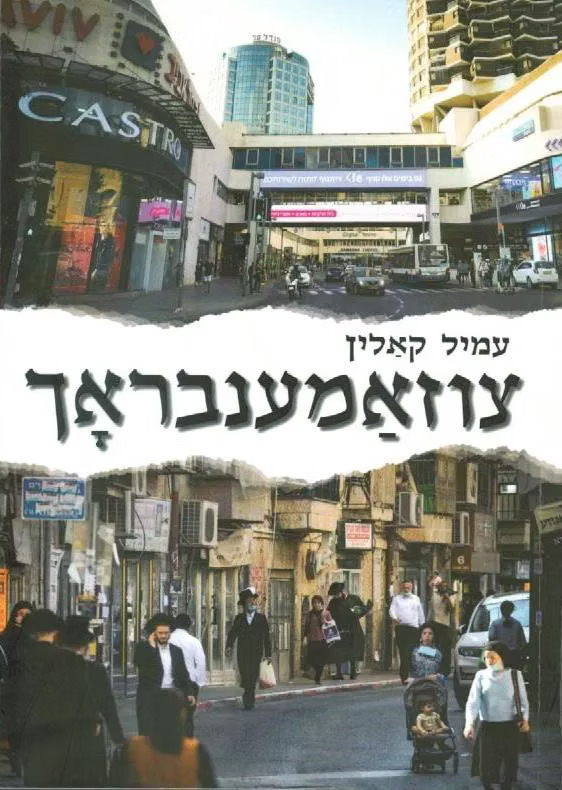
אַ נײַער ראָמאַן פֿון עמיל קאַלין באַקענט אונדז מיט אַ מוזע, אַן אַנטיהעלדינע
A new novel by Emil Kalin introduces us to a muse, an anti-hero
Apr 28, 2026
Review
The Vanguard of Their Peoples: Reflections following Gali Drucker Bar-Am, I Am Your Dust: Representations of the Israeli Experience in Yiddish Prose, 1948-1967, translated by Natalie Melzer
Shachar Pinsker
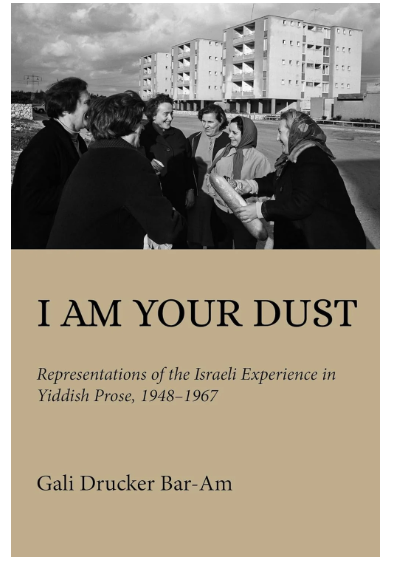
We are discovering that the story of Yiddish in Palestine/Israel is vast, complex, and utterly fascinating, and it’s being written not (yet) by a novelist or filmmaker, but by a group of scholars, librarians, archivists, and translators who stitch the narrative together like a patchwork. Gali Drucker Bar-Am’s book—published in Hebrew in 2021 and in English translation in 2024—adds an important chapter to the story.
Jun 26, 2025
Review
Translating Israeli Literature into Hebrew - Where Yiddish Meets the Land
Betzalel Strauss
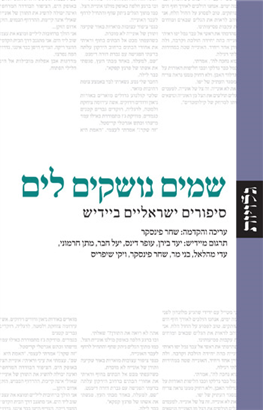
The stories in this collection are an invitation to reexamine what Israeli literature is: to expand the category of Israeli literature beyond just the Hebrew language and in so doing to disrupt expectations about that literature.
Dec 12, 2024
Pedagogy
Resources for Teaching about Israel/Palestine
Jessica Kirzane and Shachar Pinsker

As the war in Israel/Palestine continues to unfold, we aim to support our readers, many of whom are teachers and students of Yiddish, as they look for ways to learn about and discuss these events in mame-loshn.
Oct 25, 2023
Texts & Translation
וְהָיָה הָעולָם
New Creation
Ber Kotlerman
Translation by Jessica Kirzane
A new Yiddish poem by Ber Kotlerman, composed on Motsei Simchat Torah 5784, and translated by Jessica Kirzane.
Oct 17, 2023
Review
Review of Seeds in the Desert by Mendel Mann, translated and with an introduction by Heather Valencia
Shachar Pinsker
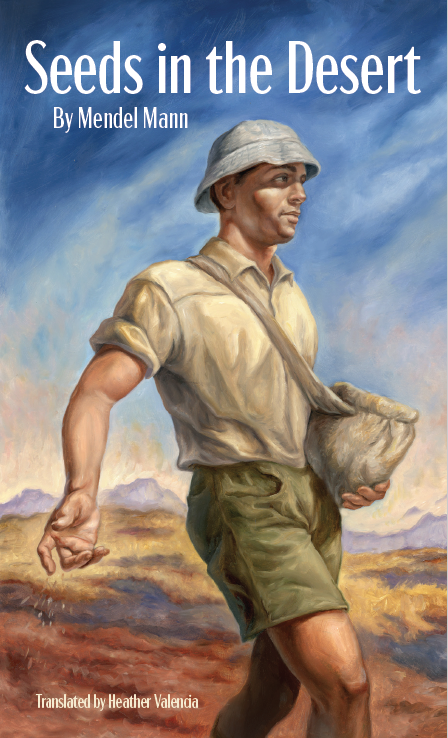
These stories take place in Israeli cities, towns, and villages, in the post-war Soviet Union, and in Poland of the interwar period. However, it is often very difficult to tell where the stories actually take place, because they express an experience of dislocation and total disorientation.
May 20, 2020
Review
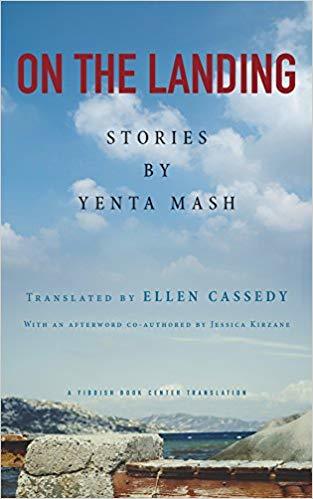
Review of On The Landing: Stories by Yenta Mash translated by Ellen Cassedy
Allison Schachter
Jun 24, 2019
Article
Traveling and Traversing Chabad’s Literary Paths: From Likutei torah to Khayim gravitser and Beyond
Eli Rubin
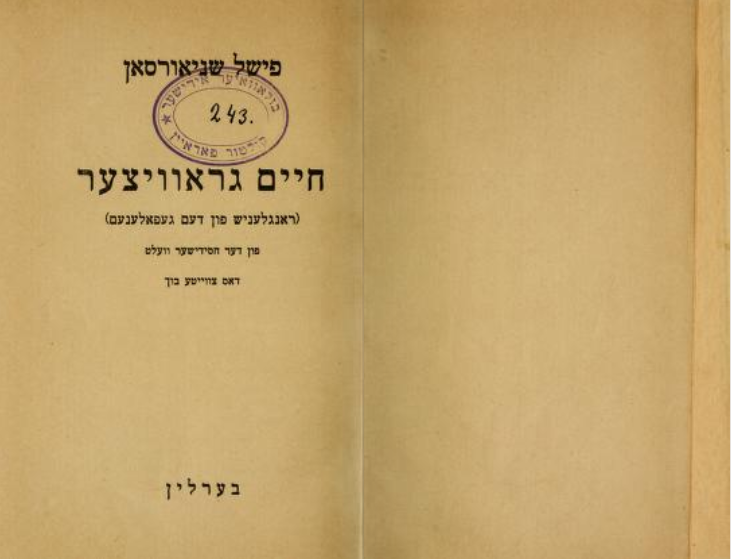
This paper aims to complicate the neat chronology that bifurcates modern Jewish literature from its Hasidic roots, using Fishl Schneersohn's novel Khayim Gravitser and Avraham Shlonsky's Hebrew translation of the novel to demonstrate that these authors continued the Hasidic literary tradition of Chabad even as they embraced alternative literary forms in the cause of new aesthetic agendas.
Oct 09, 2018
Pedagogy
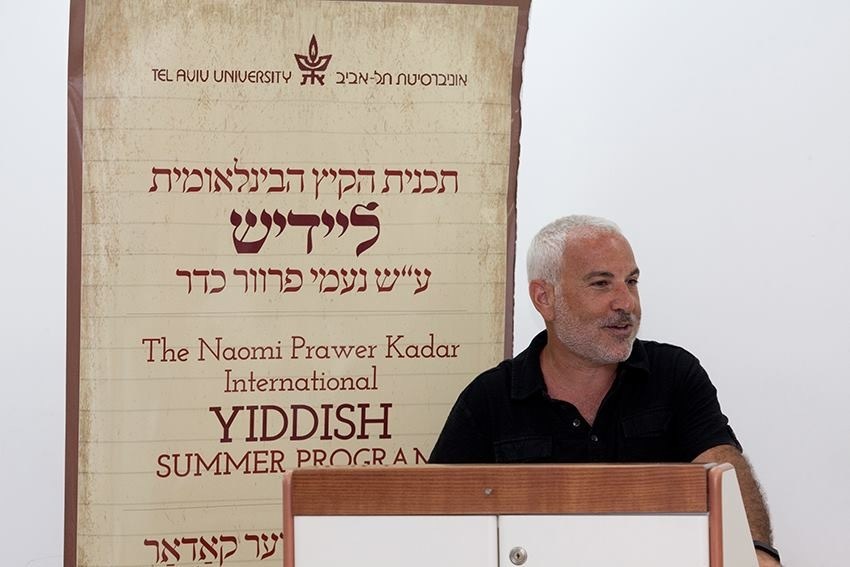
Inhabiting Multiple Homelands: Teaching in a Summer Yiddish Program
Justin Cammy
Nov 13, 2017
Pedagogy
Teaching Guide for Yoysef Kerler’s “Old Fashioned” and “The Sea” (trans. Evrona)
Jessica Kirzane
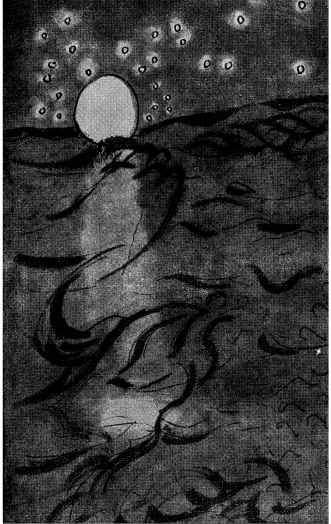
The second in a series of teaching guides, this one for Maia Evrona's translation of Yoysef Kerler's poems "Old Fashioned" and "The Sea" (1979).
Jan 17, 2017
Review
Translingualism Today: A Review of Naomi Brenner’s Lingering Bilingualism
Shachar Pinsker and Yaakov Herskovitz

Naomi Brenner's new book complicates the story of the Hebrew-Yiddish "language wars" and argues that Jewish translingualism continues well into the 20th century.
Sep 18, 2016
Texts & Translation
“אַלטמאָדיש“ און „דער ים„
"Old-Fashioned" and "The Sea"
Yoysef Kerler
Translation by Maia Evrona
Translations of two poems by Yoysef Kerler
Feb 15, 2016
Blog
How to Build Bridges to People? Benjamin Harshav and Yiddish
Shachar Pinsker

An essay on the late Benjamin Harshav, one of the most important literary scholars of the last decades, and how in his work Yiddish served as a bridge between Europe, Israel, and North America, between poetry, translation, and scholarship.
Aug 26, 2015