Articles
Essays and peer-reviewed scholarship in Yiddish Studies, an interdisciplinary field that engages all aspects of Yiddish cultural production, especially in its relationship to other cultures and languages.
Click here for a separate listing of open-access, peer-reviewed articles.
Article
Reading as the Shaping Force of Life: Debora Vogel’s Contributions to Education

The writer and educator Debora Vogel contended with questions raised by avant-garde art in the 1920s and 1930s and, throughout her writings, repeated the following question as a leitmotiv: What does “life” mean and which forms does it assume? This article considers how Vogel engaged with these questions about form in various essays and in her educational work at the Jewish orphanage at Zborowska 8 in Lwów.
Oct 26, 2021
Article
Introduction: Yiddish and the Transnational in Latin America
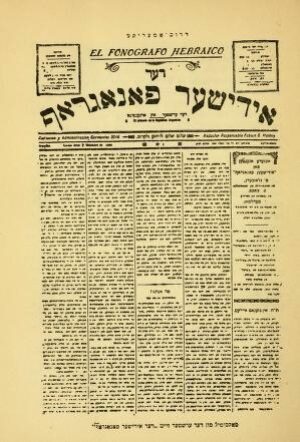
In studying Latin American (and indeed American continental) Yiddish culture, we need to appreciate the effects of encounter and interaction between these two well established transnational languages.
May 02, 2021
Article
Musical Comedy as Compromise Formation: Judío and Judía (1926), by Ivo Pelay
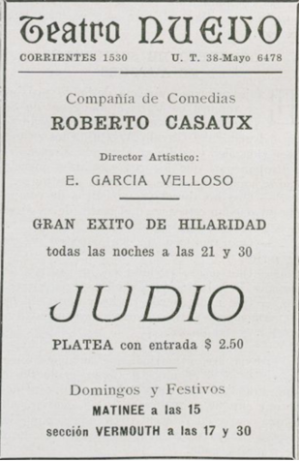
Ivo Pelay’s 1926 plays Judío and Judía, “Jew” and “Jewess,” thematize anxiety not only about the Argentineity of Jews, but also about the Jewishness of Argentina: the promise of assimilation and the threat of subversion.
May 02, 2021
Article
On Yiddish Nuances: Yiddishkayt as Listening Key in the Music of Osvaldo Golijov
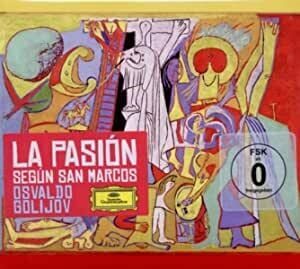
This paper approaches Osvaldo Golijov’s music from the intersection of musicology and Yiddish studies.
May 02, 2021
Article
The Goldenberg Variations: The International “Star System” and the Yiddish Theater of Buenos Aires in 1930
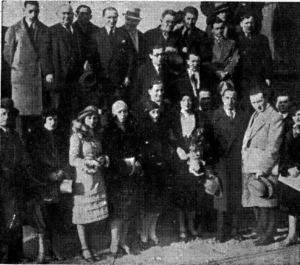
From the 1920s until the 1950s, Yiddish Buenos Aires hosted a thriving theatrical landscape. Critics complained that the public’s adoration of “stars” propelled a preponderance of shund at the expense of “better” (literary) plays.
May 02, 2021
Article
The Image of Streetwalkers in Itzik Manger’s and Debora Vogel’s Ballads
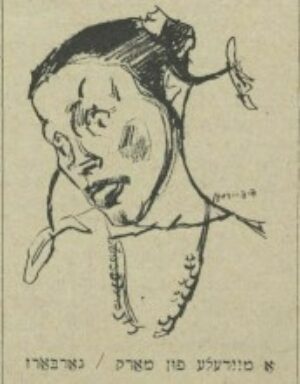
By considering the image of the streetwalker in Manger’s and Vogel’s work, this article deepens the understanding of Yiddish creativity as ultimately multimodal and interconnected.
Dec 02, 2020
Article
Shylock’s Jewish Way of Speaking
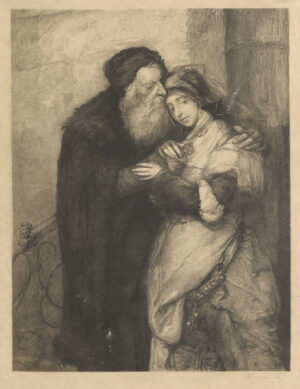
What if Shylock spoke Yiddish? One experimental production of Shakespeare’s “The Merchant of Venice” did just that.
Jul 07, 2020
Article
Cod Yiddish From Across the Pond: Howard Jacobson’s Finklerspeak
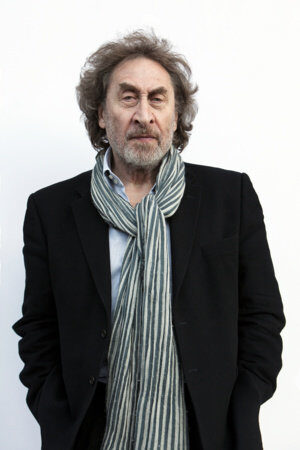
Howard Jacobson tests the limits and contours of a Jewish way of speaking, presenting an Anglo-Jewish dialogue with post-imperial culture.
Jul 07, 2020
Article
Breaking Ground, Broken English: Abraham Cahan’s The Imported Bridegroom
Cahan’s characters speak in broken languages, and in so doing find themselves unable to find stable ground in America.
Jul 07, 2020
Article
The Fourth Child
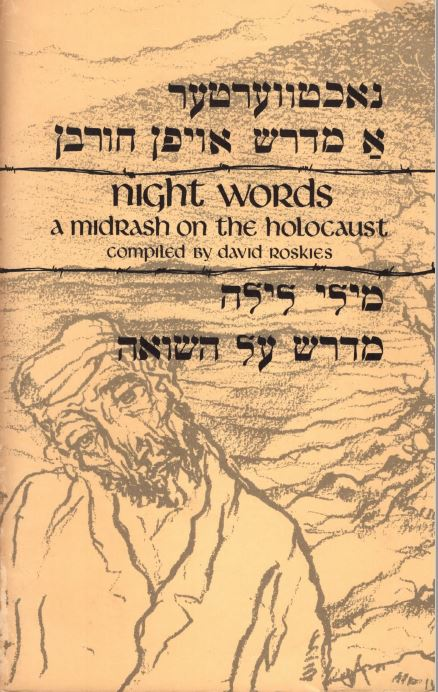
The author reflects on his own experiences encountering David Roskies in the 1960s and collaborating with him in Holocaust remembrance at a very different time than our present context for the memory and commemoration of the Holocaust.
Jun 30, 2020