Reviews
Review
Review of Strange Cocktail: Translation and the Making of Modern Hebrew Poetry by Adriana X. Jacobs

Jacobs (who, in addition to being a scholar of modern Hebrew literature, is also an accomplished translator and poet) offers a rethinking of the modern Hebrew canon as fundamentally shaped by what she calls a “translational poetics.”
May 03, 2021
Review
Strangers in Berlin by Rachel Seelig
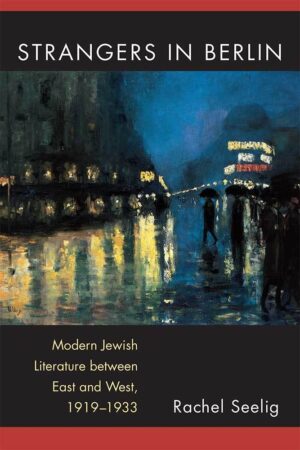
Seelig’s new book explores the city of Berlin during the Weimar period as a “transit station” for Jewish literature written in German, Yiddish, and Hebrew.
Apr 26, 2017
Review
The Marriage Plot

Naomi Seidman’s new book examines the Ashkenazi Jewish experience of modernization through the representation of changing ideas about love and sexuality in literature.
Mar 02, 2017
Review
Translingualism Today: A Review of Naomi Brenner’s Lingering Bilingualism

Naomi Brenner’s new book complicates the story of the Hebrew-Yiddish “language wars” and argues that Jewish translingualism continues well into the 20th century.
Sep 18, 2016