Eli Rubin is the author of Kabbalah and the Rupture of Modernity: An Existential History of Chabad Hasidism [sup.org] (Stanford University Press). He received his PhD from the Department of Hebrew and Jewish Studies, University College London, and is a contributing editor at Chabad.org.
CONTRIBUTOR
Eli Rubin
RELATED ARTICLES
Review
Review of Glenn Dynner’s The Light of Learning: Hasidism in Poland on the Eve of the Holocaust
Eli Rubin
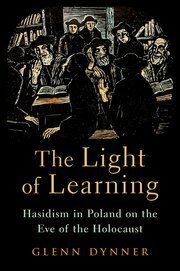
Dynner frames The Light of Learning’s sweeping historical narrative with a crucial theoretical intervention. To think about interwar Polish Hasidism is also to think about the ongoing construction of modern Jewish identity, and the fraught intersections of emancipation, acculturation, assimilation, and colonization.
Oct 14, 2024
Texts & Translation
"בלי קדיש“ או "דער לעבעדיקער יתום"
“Kaddish Denied” or “The Living Orphan”
Avrohom Eliyohu Plotkin
Translation by Eli Rubin
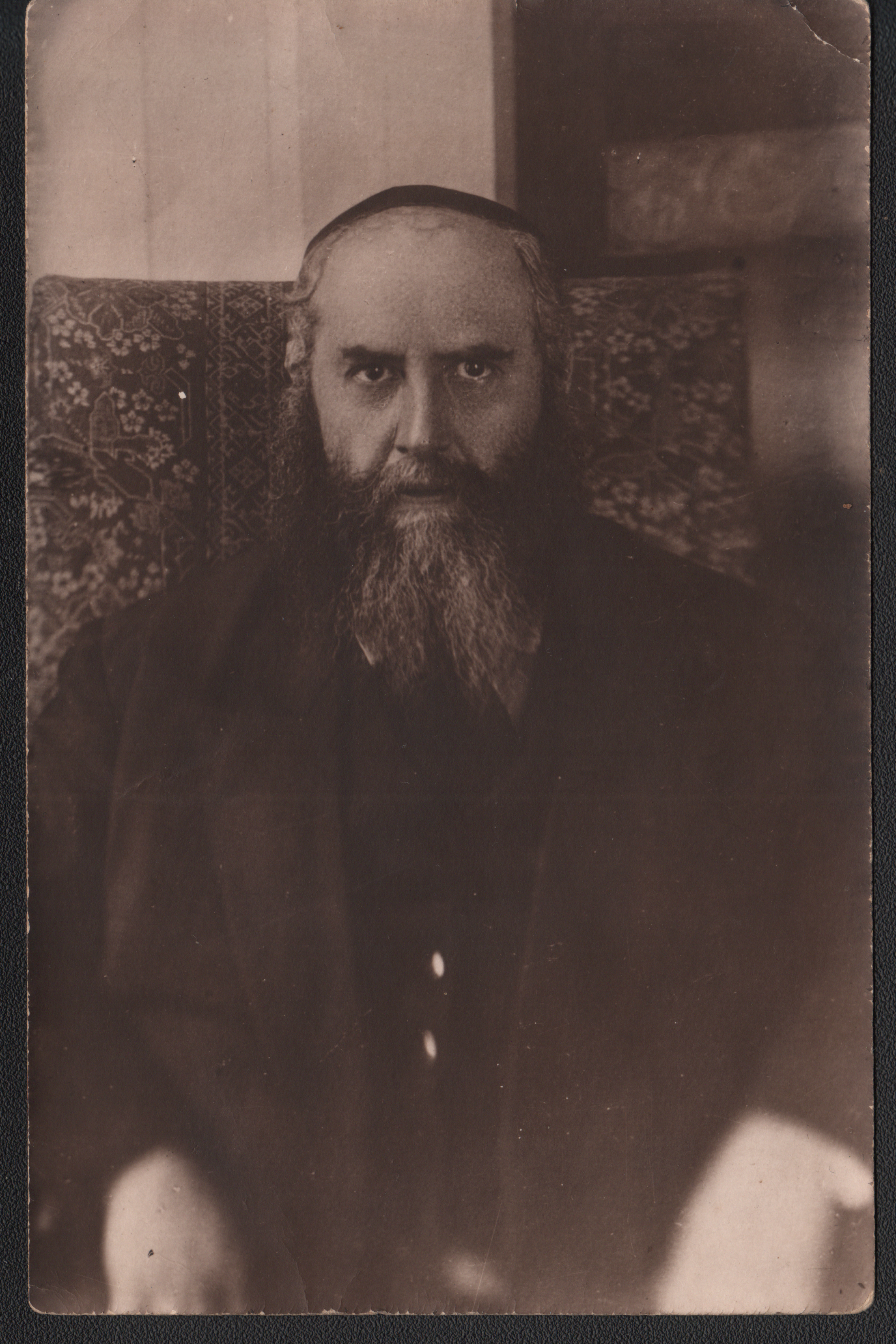
Avrohom Eliyohu Plotkin served as the rabbi of Ostashkov, a provincial town midway between Moscow and Leningrad, after the Russian Revolution, at a time when the Jewish Sections (Evsektsiia) of the Communist Party—supported by other agents of the Soviet state—were forcibly closing all the institutions that made Jewish religious life possible. In 1927, Rayatz was arrested in Leningrad and sentenced to death. An international pressure campaign secured a commutation and safe passage to Latvia. “Kaddish Denied” is a semi-autobiographical tale that unfolds in the aftermath of Rayatz’s arrest and departure.
Apr 11, 2024
Article
A Linguistic Bridge Between Alienation and Intimacy: Chabad’s Theorization of Yiddish in Historical and Cultural Perspective
Eli Rubin
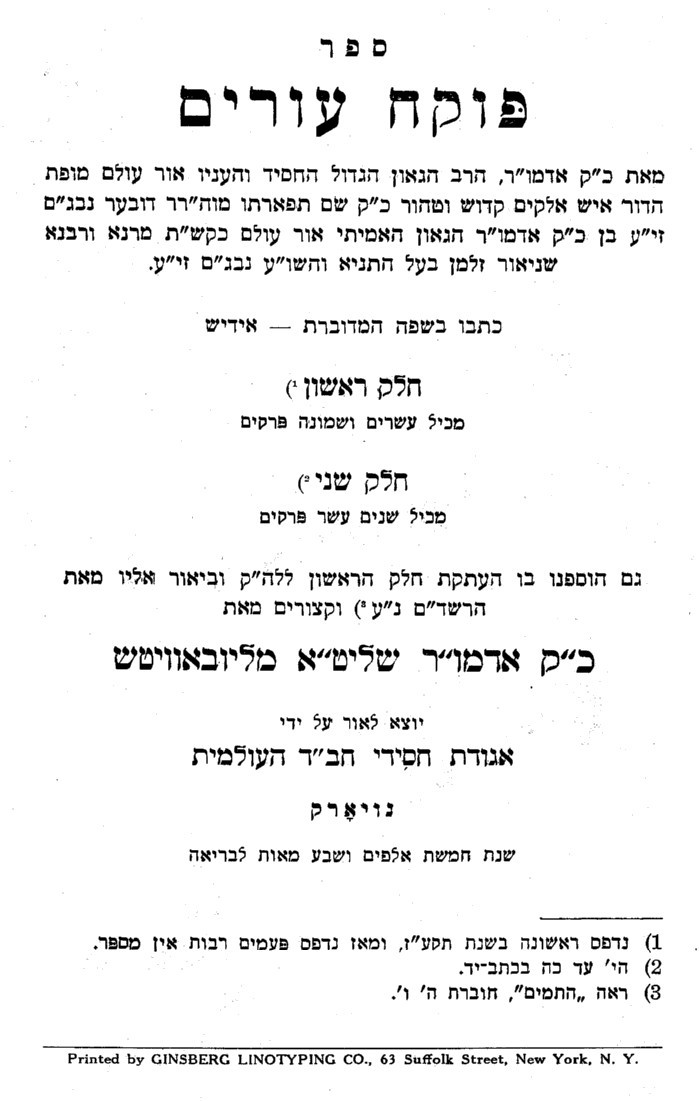
Yiddish has always been the oracular mainstay of Chabad’s intellectual and spiritual trajectory.
Jan 28, 2019
Article
Traveling and Traversing Chabad’s Literary Paths: From Likutei torah to Khayim gravitser and Beyond
Eli Rubin
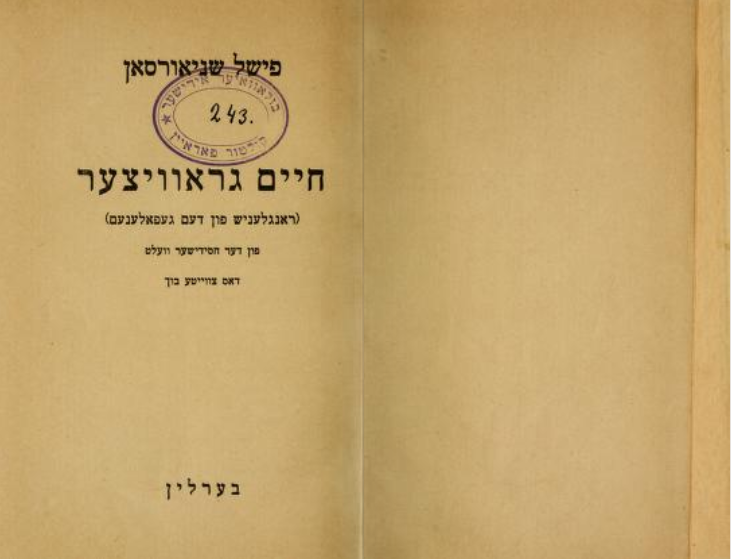
This paper aims to complicate the neat chronology that bifurcates modern Jewish literature from its Hasidic roots, using Fishl Schneersohn’s novel Khayim Gravitser and Avraham Shlonsky’s Hebrew translation of the novel to demonstrate that these authors continued the Hasidic literary tradition of Chabad even as they embraced alternative literary forms in the cause of new aesthetic agendas.
Oct 09, 2018