Apr 30, 2018
INTRODUCTION
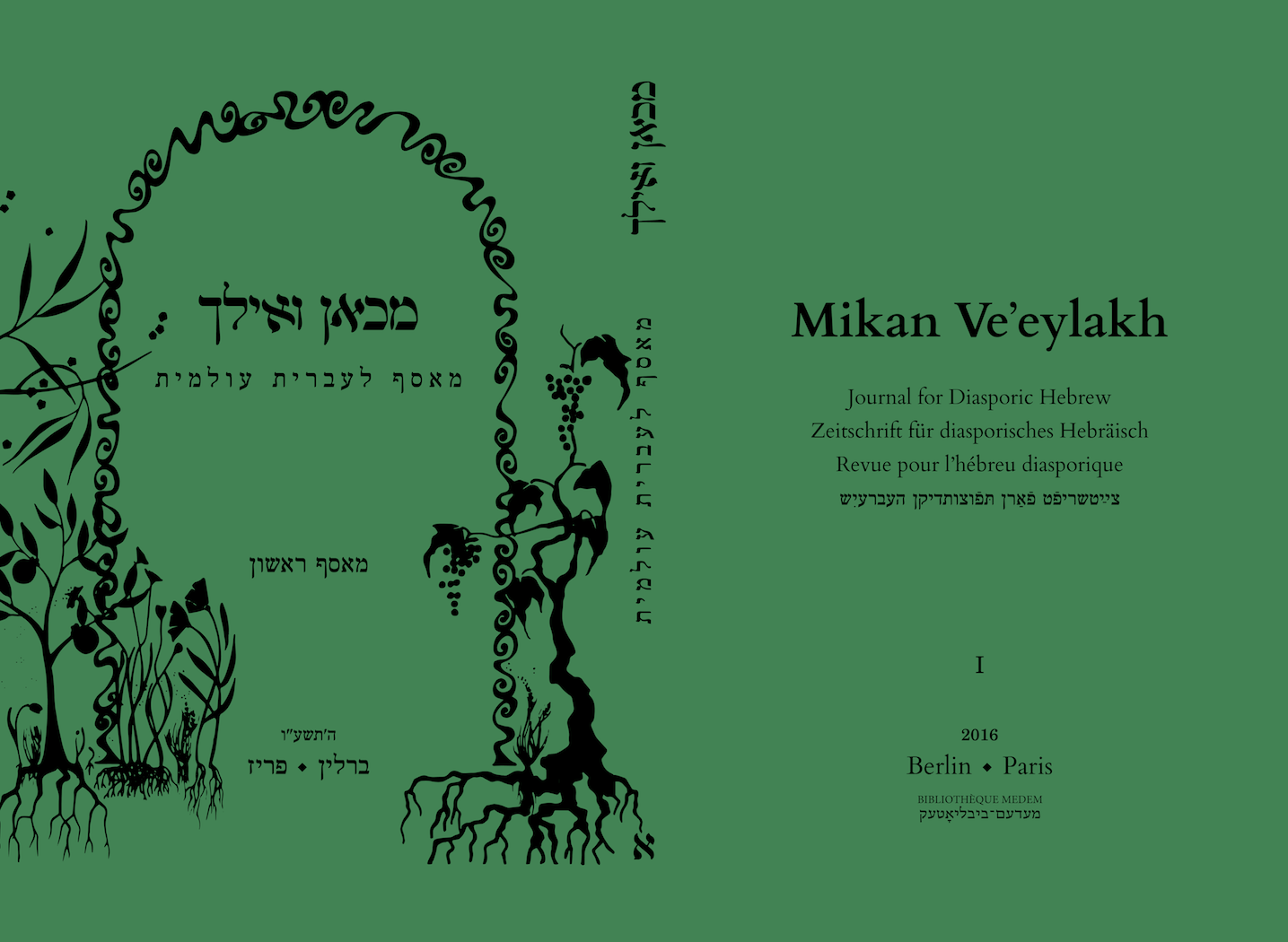
The task of the translator is not an easy one, particularly when the very title of the text in question poses a seemingly insurmountable barrier. This is the case with Mikan Ve’eylakh: me’asef le‘ivrit ‘olamit, a journal established by Tal Hever-Chybowski in Berlin and Paris, and published under the auspices of the Paris Yiddish Center’s Medem Library since 2016. Taken from the Mishnah, the phrase mikan ve’eylakh can be translated as either “from now on” or “from here and beyond,” implying a temporal and spatial connection. The same time-space ambiguity exists in the phrase ‘ivrit ‘olamit, which presents an even more significant translation barrier. Although the journal cover presents “diasporic Hebrew” as an English equivalent, it is clear that “diasporic” does not do justice to the word ‘olami. Derived from the word for “world” (‘olam), the adjective ‘olami conceals a double-entendre that cannot be replicated in English: it means both “worldwide” and “eternal,” as in the term ‘am ‘olam (the eternal/world people), an age-old nomenclature for the Jewish People.
This double-entendre is crucial, for it distinguishes the type of Hebrew that the journal endorses from normative “Israeli” Hebrew, a time- and state-bound language of Jewish territorial sovereignty. In contrast to Israeli Hebrew, ‘ivrit ‘olamit is neither spatially nor temporally tied to the Jewish state, nor is it bound up with a Zionist ethos predicated on the “negation of the diaspora.” Rather, it is a language that has accrued countless layers, layers that reflect the various generations and cultural sites in which Hebrew was, and still is, spoken, read, and written. Moreover, world Hebrew may also exist in Israel, so long as it remains attentive to the languages that have nurtured it in the past and with which it comes into contact in the present. In short, ‘ivrit ‘olamit is Hebrew with a multilingual consciousness.
It is no coincidence that this concept should emerge in Berlin of all places. As a major hub of Jewish literary activity in German, Hebrew, Yiddish, and Russian during the first half of the twentieth century, Berlin has reemerged as a magnet for young Israeli artists and writers seeking to spread their wings beyond the confines of the State of Israel. Many of these cultural nomads have discovered in Germany the multilingual legacy of their literary predecessors. Hever-Chybowski’s introduction celebrates “the return of diasporic Hebrew here – to Europe, to Ashkenaz, to Berlin – not just to the site of its destruction, but also to a place that was once one of the greatest centers of the diasporic republic of Hebrew letters.” Moving beyond concepts of trauma and rupture that have long characterized the perceived relationship between German and Hebrew cultures, Mikan Ve’eylakh seeks to reclaim Berlin as a productive site of diasporic Jewish culture, in which Hebrew represents one among several languages rather than the telos of Zionist “homecoming.”
Viewed in this context, ‘ivrit ‘olamit exists in partnership with Yiddish rather than at odds with it. By hearkening back to a time and place in which Hebrew and Yiddish literary cultures coexisted, overlapped, and interpenetrated, this concept in fact doubles as a celebration and defense of Yiddishism. Though published entirely in Hebrew, Mikan Ve’eylakh takes up the banner of doikayt, or “hereness,” to borrow the Yiddish watchword of early twentieth century Diaspora Nationalism, thereby transforming Hebrew from the language of Jewish sovereignty into a language of diaspora consciousness. 1 1 Translator’s note: Tal Hever-Chybowski points out that the original Hebrew title, mikan ve’eylakh, can be translated as both “from now on” and “from here and beyond,” conveying a temporal and spatial connection. He attributes the journal’s “diasporic position” in part to the influence of doikeyt (Yiddish for “here-ness,”) a term used by early twentieth century diaspora nationalists to refer to the ideal of rootedness throughout the diaspora, which was often contrasted with the Zionist emphasis on a “return” to the ancestral biblical homeland in the Land of Israel. I have chosen to retain the original title in the translation and to offer parenthetically the translation “From this Point Onward,” which captures both temporal and spatial dimensions.
Appearing here for the first time alongside the Hebrew original, this translation of Hever-Chybowski’s essay was first published in the volume The German-Hebrew Dialogue: Studies of Encounter and Exchange (De Gruyter 2017). The original publication in Hebrew appeared in Mikan Ve'eylakh: Journal for Diasporic Hebrew (Medem Library: Berlin & Paris, 2016). --Rachel Seelig
Click here to download a PDF of this text and the translation.
הַקּוֹרֵא מִכָּאן וְאֵילָךְ לֹא הִפְסִיד (ברכות א ב)
עברית עולמית
בין כותרת המשנֶה העברית, „מאסף לעברית עולמית“, ובין הלועזית, „כתב־עת לעברית דיאספורית“, יש סתירה כביכול. אך נקודת ההשקה המושגית שבין עברית עולמית ובין עברית דיאספורית היא נקודת המוצא של מפעל עברי זה. ההוגים שביקשו לחייב את העברית שבתפוצות בעת החדשה נקטו במושג „עולם“ ובתואר „עולמי“ במשמעות שחופפת בחלקה, ומרחיבה בחלקה, את מה שיוגדר כאן בהמשך בתור „דיאספורה“ ו„דיאספורי“. הדוגמה המייצגת לשימוש בתואר „עולמי“ ביחס מחייב לעברית שבתפוצות היא „ברית עברית עולמית“ שנוסדה בברלין ב־1931. דוד נתן מאיירס דן במאמרו הנדפס כאן בברית זו ובמפעליו העבריים האחרים של מייסדהּ, שמעון ראבידוביץ' (1896–1957). 2 2 ישנה עמימות ביחס לשם־העצם שאליו משויך שם־התואר „עולמית“ ב„ברית עברית עולמית“. לו היה ביכולתנו לשאול את ראבידוביץ' האם התכוון לייסד ברית עולמית לעברית או ברית לעברית עולמית, היה בוודאי משיב בחיוב על שתי הפרשנויות, שכן בחירתו בשם־התואר „עולמי“ נבעה, ככל הנראה, בדיוק מפאת משמעותו הכפולה.
“One who reads from this point onward has not lost out” (Mishnah Berakhot 1:2)
World Hebrew
There is an apparent contradiction between the Hebrew subtitle “Gatherer of World Hebrew” (Me’asef le‘ivrit ‘olamit)
3
3 and the English subtitle “Journal for Diasporic Hebrew.” Yet the point of contact between world Hebrew and diasporic Hebrew is precisely the point of departure for this enterprise. Those who affirmed the worldwide dispersion of Hebrew during the modern era used the noun ‘olam (world) and the related adjective‘olami (universal, eternal)
4
4 in a partly similar and partly broader sense than what will be termed here “diaspora” and “diasporic.” The representative example for the use of this adjective as an affirmation of Hebrew in the diaspora is the “World Hebrew Union,” established in Berlin in 1931. In an article that appears here, David N. Myers discusses this organization and the other Hebrew projects of its founder, Simon Rawidowicz (1896-1957).
5
5 Ambiguity surrounds the term “world” in the name “World Hebrew Union.” If it were possible to ask Rawidowicz whether he wished to establish a “world union for Hebrew” or a “union for world Hebrew,” he undoubtedly would respond positively to both formulations, since his choice of the term evidently stemmed from its double-meaning.
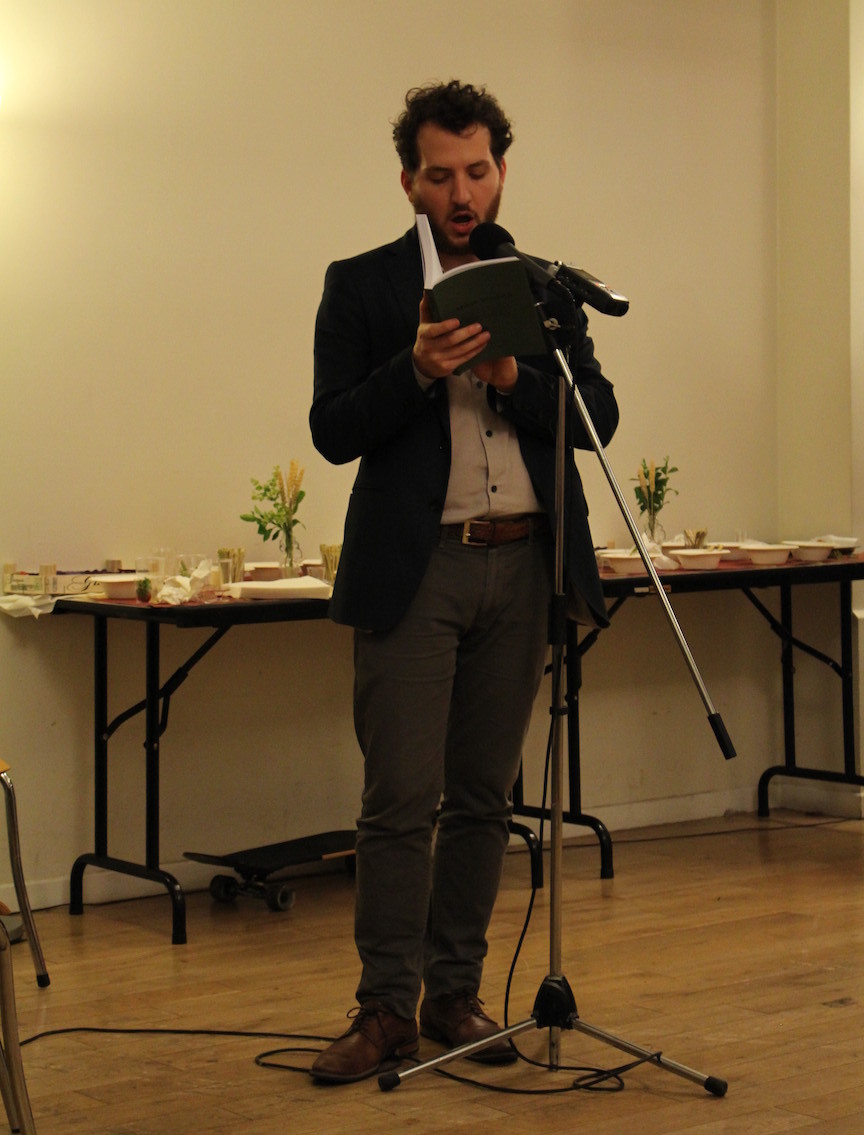
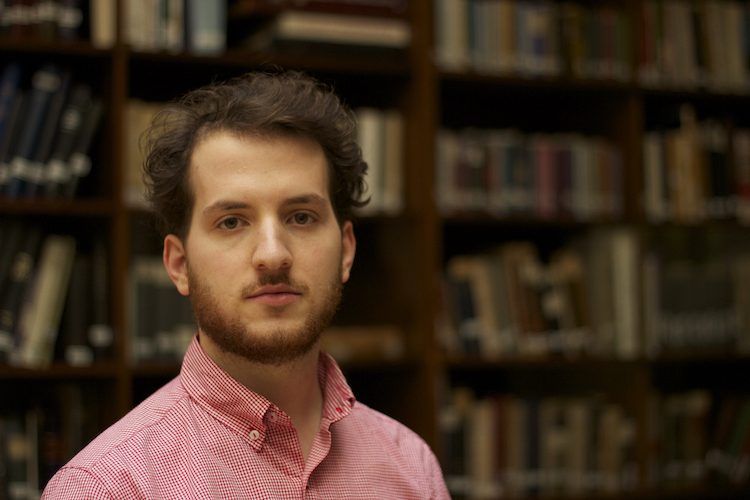
Tal Hever-Chybowski reading from Mikan Ve’eylakh at the journal’s launch party at the Medem Library in Paris, 2016.
למען הסר ספק, שם־התואר שבביטוי „עברית עולמית“ אינו תרגום של המושגים „גלובאלי“, „קוסמופוליטי“ או „בין־לאומי“, אלא נגזר מהמושג העברי הקדום „עולם“ על הוראתו הכפולה — במרחב ובזמן — כפי שהוא בא לידי ביטוי, למשל, באחד מכינויו של ישראל, „עם עולם“. בהקדמה לנוסח העברי של ספרו, דברי ימי עם עולם, כתב שמעון דובנוב (1860–1941), מורו הנערץ של ראבידוביץ', ש„עם עולם“ הוא העם
„שכל העולם הוא מקומו. זהו פשוטו של מקרא, המתאים למציאות עם ישראל בכל הארצות […] ; אבל יש כאן רשות גם למדרש : עם ישראל נקרא „עם עולם“ במובן עם נצחי, שיש לו התפשטות בלתי רגילה לא רק במקום אלא גם בזמן, בהיותו עומד על במת ההיסטוריה מימי קדם עד היום הזה“. 6 6
To avoid any doubt, the adjective contained in the phrase “world Hebrew” is not intended as a translation of “global,” “cosmopolitan” or “international,” but rather is taken from the ancient Hebrew concept “world” (‘olam), which has a double-meaning – referring to both space and time – as demonstrated, for instance, in one of the names for the Jewish people, “people of the world” (‘am ‘olam). In the introduction to the Hebrew version of the book World History of the Jewish People, known in Hebrew as Chronicles of a World People, 7 7 Simon Dubnow (1860-1940), Rawidowicz’s admired teacher, writes that ‘am ‘olam is a people
“whose home is the entire world. This is the literal meaning, which fits the reality of the Jewish people in all lands […]; yet there is another interpretive possibility: the Jewish people is called ‘am ‘olam in the sense of eternity, since this people is unusually wide-reaching not just in space but also in time, in its existence on the stage of history from antiquity until the present day.” 8 8
כשם שישראל הוא עם עולם, כך גם העברית היא לשון עולם. מכיוון שעולמיותה אינה חדשה, עולה השאלה מנין נבע הצורך דווקא בעת החדשה להדגיש את תכונתה זו, הטבועה בה ממילא. חיוב עולמיותה של העברית הפך לנחוץ מיום שתכונתה זו נשללה או הוכחשה. תחילה במובן הטמפורלי ומשם גם במובן המרחבי. שלילת נצחיותה של העברית, שקדמה בזמן (ובמידה רבה אף הכשירה את הקרקע) לשלילת המרחב שלה (קרי שלילת הגלות), באה לידי ביטוי במיתוס מותה של העברית. 9 9
Just as the Jewish people is a people of the world (and of eternity), so too Hebrew is an eternal world tongue. Insofar as its “worldness” (‘olamiut) is not new, 10 10 the question arises as to why the need emerged in the modern era to emphasize this inherent trait. The affirmation of world Hebrew became necessary precisely because this trait was negated and denied, initially in the temporal sense, and later also in the spatial sense. The negation of the eternity of Hebrew, which preceded (and in a significant sense even laid the groundwork for) the negation of its spatial dimension (i.e. the negation of the diaspora), became manifest in the myth of the death of Hebrew. 11 11
מאמרו של אלעד לפידות במאסף זה פותח באריסטו, שהגדיר בני־אדם בתור בעלי־חיים בעלי־שפה; 12 12 כאלפיים שנה לאחר אריסטו, הפכו הומניסטים איטלקיים את הגדרתו על פיה, ותיארו את שפותיהם של בני־אדם כבעלות־חיים. בבית־מדרשם של דנטה אליגיירי (1265–1321), פייטרו במבו (Bembo ; 1470–1547) ובנדטו ורקי (Varchi ; 1502–1565) הלכה והשתכללה המטפורה האורגנית שייחסה חיים מחד גיסא, לשפות־העם המדוברות, ומוות מאידך גיסא, לשפות הקלאסיות שבכתב. 13 13 „בתקופה שבה לטינית ויוונית זכו לכינוי 'שפות מתות'“, כתב הסוציולינגוויסט מקס וויינרייך (1894–1969), „הוכרזה גם העברית כמתה. המשכילים אימצו את ההערכה הזו וייבאו אותה אל החוגים היהודיים“. 14 14 ואולם, עם הזמן נשתכחה הפיגורטיביות שבמטפורה, ומותה של העברית נתפס בקרב רבים, עד עצם היום הזה, כעובדה היסטורית מדעית.
Elad Lapidot’s article in this journal opens with Aristotle, who defined humans as living beings with language; 15 15 roughly two thousand years later, Italian humanists turned Aristotle’s definition on its head and described the languages of humans as living beings. The school of Dante Alighieri (1265-1321), Pietro Bembo (1470-1547) and Benedetto Varchi (1502-1565), refined the organic metaphor, which attributed life, on the one hand, to vernacular languages, and, death, on the other hand, to classical written languages. 16 16 “At the time when the title of dead languages was conferred on Latin and Greek,” wrote the sociolinguist Max Weinreich (1894-1969), “Hebrew too was stamped as dead, and the Maskilim introduced this evaluation into the Jewish milieu.” 17 17 In time, however, the figurative character of the metaphor was forgotten, and the death of Hebrew came to be understood by many, even today, as a historical fact.
אכן, קביעת מותה של העברית פירושה שלילת עולמיותה, שהרי שפה שמסוגלת למות אינה שפה נצחית. אך מתוך השלילה, כאמור, צמח החיוב : ההוגים שהתנגדו לתיאור העברית כשפה מתה הם הראשונים שהעלו על נס את תכונתה העולמית, הן מבחינת הזמן והן מבחינת המרחב, והציבו עבורנו את המסד התיאורטי למה שמומשג כאן כ„עברית עולמית“. דוגמה מוקדמת לחיוב עולמיותה של העברית מופיעה בעין משפט מ־1867 מאת שלום יעקב אברמוביץ' (1836–1917), הלא הוא מנדלי מוכר ספרים :
„אמת כי לשון הקדש איננה שפה מדוברת, אבל בכל־זאת לא מתה היא כיתר לשונות הגוים הקדמונים. שפת כשדי דרך משל כאשר חדלה להיות שפה מדוברת, חדלו אז הכשדים להתקיים עוד, ויתערבו בגוים וילמדו מעשיהם, דתם וחוקותיהם, והלשון הזו היא אך ירושת פליטה מגוי, אשר כבר נכחד ונגזר מארץ החיים. אבל ישראל עוד חי, עוד לא התפרדו ולא בלו עצמיו, אם כי מפוזר ומפורד הוא בין העמים, עוד יעמוד טעמו בו וריחו לא נמר, אם כי בגולה הלך ולא שוקט הוא על שמריו. והוא חיה יחיה בסבת אמונתו ותורת אלהיו, אשר בעת כל אלהי העמים למעצבה ישכבון ואלילי היונים נמו שנתם על האלימפי מקום משכנם, הנה עוד לא ינום ולא יישן שומר ישראל ! עוד לא אבד נצחו וחיה יחיה בסבת תורתו, תורת חיים, אשר היא תתן נשמה לו ורוח לכל נפוצות יהודה, להיות לגוי אחד בארץ“. 18 18
Indeed, the death of Hebrew thesis translates into the negation of its worldness, since a language that is capable of dying cannot be an eternal language. Yet from the negation came forth an affirmation: the thinkers who opposed the description of Hebrew as a dead language were the first to extoll its worldness, in terms of both time and space, in terms of both time and space, and established the theoretical foundation for what is conceptualized here as “world Hebrew.” An early example of the affirmation of Hebrew’s “world character” appears in Well of Judgement (Eyn mishpat, 1867), by Sholem Yankev Abramovitch (1836-1917), known as Mendele Moykher-Sforim:
“It is true that the sacred tongue is not a spoken language, yet it is not dead like the languages of other ancient peoples. When the Chaldean language ceased to be spoken, for instance, the Chaldeans ceased to exist; they assimilated among the nations and learned their customs and laws. Their language is the meager legacy of a nation that had become extinct and removed from the realm of the living. But the Jewish people lives on; it has not splintered and withered: though it is scattered and dispersed among the nations, its flavor will endure and its fragrance will not be diminished; though it has gone into exile, it hath not settled on its lees (Jeremiah 48:11). The Jewish people thrives because of its faith and because of the Torah of its God. While the gods of other peoples lie down in sorrow (Isaiah 50:11), and the Greek idols sleep on Olympus, the place of their slumber, behold, He that keepeth Israel shall neither slumber nor sleep (Psalms 121:4)! [The Jewish people] has not lost its eternity. It lives on because of its Torah, the Torah of life, which grants the people a soul and spirit to all the dispersed people of Judah to be one nation on earth.” 19 19
הטענה שלשון הקודש היתה שפה מתה הביאה את אברמוביץ' לחזור ולטעון את ההיפך. 20 20 עבורו, חַיֶּיהָ של העברית נובעים מחייו של ישראל. אברמוביץ' לא דחה את המטפורה האורגנית ביחס לשפות ואף לא היסס לקבוע את מותה של שפת כשדי, הלא היא הארמית. אך חיוב החיים של לשון הקודש ושל עם ישראל — ואף חיוב נצחיותם — הביאו אותו לחייב גם את המרחב שבו הם מתקיימים. בקביעתו „בגולה הלך ולא שוקט הוא על שמריו“ אפשר לראות מעין חיוב הגולה avant la lettre, 21 21 כלומר עשרות שנים לפני שנשללה הגלות באופן יסודי ומפורש. כך, גם אם אברמוביץ' לא נקט במושג „עולם“, עולים מדבריו יסודות מחשבה הממזגים זמן („עוד לא אבד נצחו“) ומרחב („נפוצות יהודה“ בבחינת „גוי אחד בארץ“, כלומר בעולם כולו), המקרבים אותנו אל מושג „העברית העולמית“.
The claim that Hebrew was a dead language led Abramovitch repeatedly to assert the opposite argument. 22 22 For Abramovitch, the life of Hebrew is tied to the life of Israel. He did not reject the organic metaphor in relation to language, and he did not hesitate to declare the death of the Chaldean language, Aramaic. Yet his affirmation of the life (and the eternity) of Hebrew and of the Jewish people led him also to affirm the space within which they exist. In his assertion that Hebrew has not “settled on its lees” we find an affirmation of the diaspora avant la lettre, 23 23 that is, decades before the diaspora was completely and explicitly negated. Therefore, even if Abramovitch did not use the term “world” (‘olam), his words invoke the merging of time (“it has not lost its eternity”) and space (“all the dispersed people of Judah” in the sense of “one nation on earth,” i.e. throughout the world) that brings us closer to the concept of “world Hebrew.”
שלילת עולמיותה של העברית באה לידי ביטוי לא רק בקביעת מותה, אלא גם בהכרזה על כך שקמה לתחייה, כביכול, בדורות האחרונים. המטפורה האורגנית הפשוטה של חיים ומוות השתכללה בשלב זה לכדי מטפורה חדשה של תחיית המתים : מעין חזון יחזקאל בהגשמתו, עליית משיח מקברו או מעשה־כשפים. אך למרות שמטפורה מופלאה ועל־טבעית זו אינה מתיישבת עם השכל־הישר,
24
24 גם כאן נראה שהלשון הפיגורטיבית נשתכחה עד כדי כך, שאפיונה של „העברית החדשה“ כלשון שקמה לתחייה היה ועודנו, עבור רבים, אפיון בלתי־בעייתי, עובדה ידועה כביכול.
25
25
The negation of Hebrew’s world character was expressed not only in the claim of its death but also in the declaration of its revival in recent generations. At this stage, the simple organic metaphor of life and death was transformed into a new and more sophisticated metaphor: the resurrection of the dead – a kind of realization of Ezekiel’s prophecy, the ascent of the Messiah from his grave, or even an act of sorcery. Although this wondrous and unnatural metaphor does not align with common sense,
26
26 here too figurative language seems to have been forgotten to such a degree that the resurrection of “Modern Hebrew” came to be accepted by many as an unproblematic idea, a known fact, as it were.
27
27
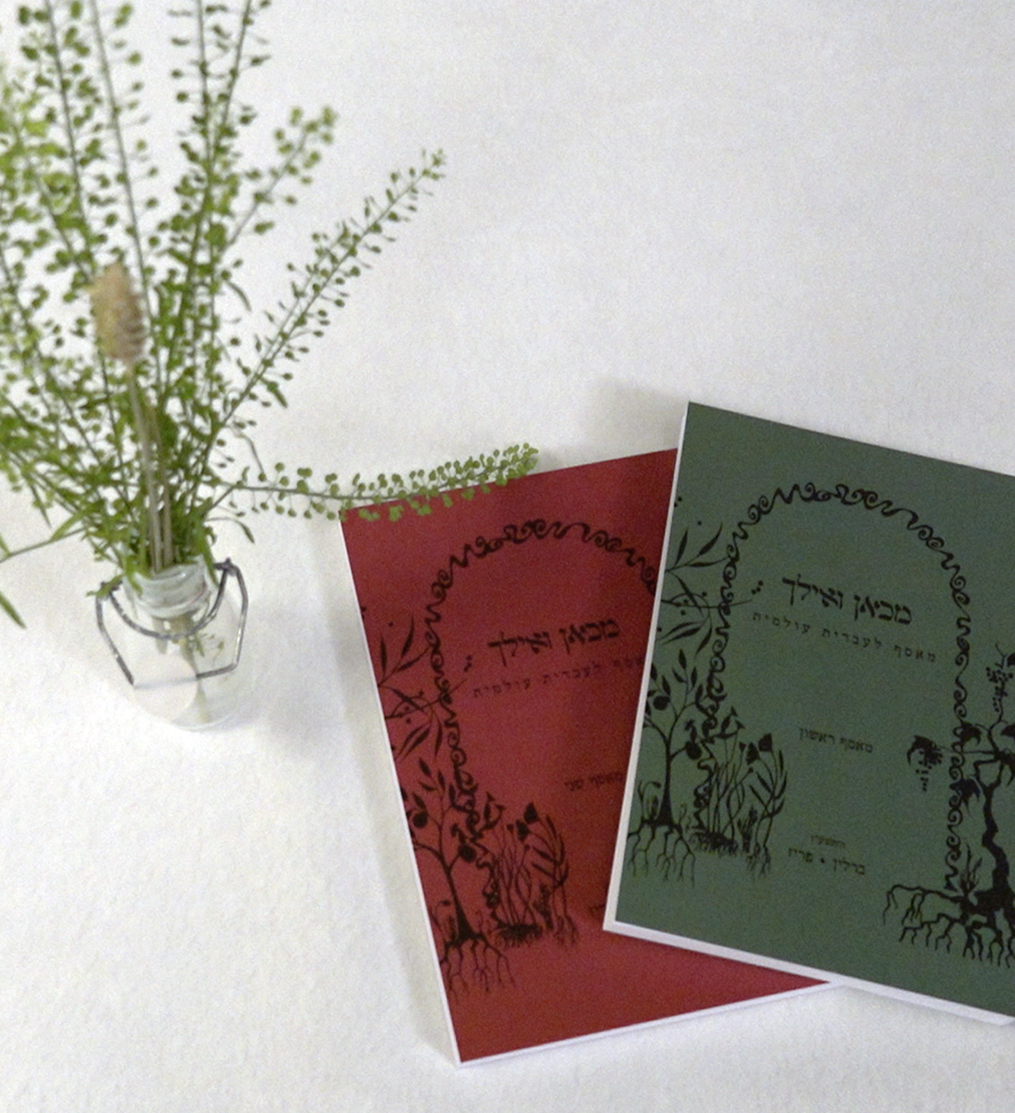
Issues 1 and 2 of Mikan Ve’eylakh
מיתוס תחיית העברית כולל בתוכו ממילא את הנחת היסוד שהעברית היתה שפה מתה וככזה, גם אם אינו שולל את חייהָ בהווה, הריהו שולל את עולמיותה, כלומר, את נצחיותה. גם במקרה זה, תגובת הנגד הרעיונית תרמה לשכלול התיאורטי לקראת המושג „עברית עולמית“, שנעשה נחוץ יותר ויותר. כך, במאמרו „עברית חדשה ?“ מ־1925, דחה פרנץ רוזנצווייג (Rosenzweig ; 1886–1929) את נבדלותה של „העברית החדשה“ מהעברית שקדמה לה, כמו גם את ההבחנה שבין „עברית“ ובין „לשון הקודש“. 28 28 רוזנצווייג הדף את הזיהוי שבין קדושה וקיפאון והדגיש את חיותה של לשון־הקודש מראשיתה ולאורך הדורות :
„קדושת הלשון העברית לא היתה מעולם קדוּשה כמשמעה המדוקדק, משמע של פרישות וּבְדֵלוּת, שאין לו מקום ביהדות. בימי משה ובימי ישעיהו ובכל דור ודור נזרמו לתוך הלשון הקדושה, לשונו של הקדוש־ברוך־הוא, כוחות של חידוש מלשון מדוברת, מלשונות מדוברות, של בשר־ודם. פירושו של דבר, שעם קדושתה לא נקפאה לכעין פסל, אלא שמרה על חיוּתה תדיר“. 29 29
The myth of the revival of Hebrew relies on the premise that Hebrew was a dead language, and thus on the negation of its worldness, its eternity. In this case, too, the negative intellectual reaction contributed to the theoretical refinement of the concept of “world Hebrew,” which became more and more necessary. In his essay “Neuhebräisch?” (New Hebrew?) of 1925, Franz Rosenzweig (1886-1929) renounced the separation of “Modern Hebrew” from the Hebrew that preceded it, as well as the distinction between “Hebrew” and “the sacred tongue” (lashon-hakodesh). 30 30 He rejected the association between sacredness and stagnation and emphasized the vitality of Hebrew from its beginnings and throughout the generations:
“The holiness of the Hebrew language never signified holiness in the original sense of “seclusion,” a meaning which has been overcome in classic Judaism. The holy language, the language of God, has always drawn strength for renewal from the spoken language, from the spoken languages of man; and this was so not only in the times of Moses and Isaiah. In other words, holy though it was, Hebrew never stiffened into something rigid and monumental; it always stayed alive.” 31 31
מאמרה של מירה בלברג במאסף זה שופך אור על הביטויים שבהם נוקט רוזנצווייג : „הלשון הקדושה“ (die heilige Sprache) ו„לשונו של הקדוש־ברוך־הוא“ (die Sprache Gottes). 32 32 במהלך פילוספי מבריק, מגייס רוזנצווייג דווקא את קדושתה של הלשון העברית כדי להציע מודל בלתי־דיכוטומי של יחסי־גומלין מפרים בין כתיבה ודיבור, תוך דחיית הפרדיגמה ההומניסטית המבחינה בין השפה המדוברת החיה והשפה הכתובה המתה. ראוי לתשומת לב דיוקו של רוזנצווייג בדבר כוחות החידוש אשר זרמו אל לשון־הקודש לא רק מלשון מדוברת אחת (עברית), אלא מ„לשונות מדוברות“ רבות. בהמשך, הוא כותב במפורש :
„העברית המדוברת של ימי קדם, הארמית הבינלאומית של התקופה הפרסית, היוונית הבינלאומית של מלכויות הדיאדוֹכים, ולאחר מכן, ביתר שאת, הארמית של מתיבתות ארץ־ישראל ובבל, ובו בזמן לשון צבאותיה וערכאותיה של רומא ולשון שליטיה ונתיניה של הממלכה הפרתית, ולימים הערבית של רופאים ופילוסופים מוסלמיים, לשונות אירופה שהתפלגו והתעצמו בצל אילן הלאטיניוּת הכנסייתית־העולמית — כל אלה העלו חלקם למסכת המלים והמשפטים של פרוכת הלשון המגלה־המכסה לעיני האומות את קודש־הקודשים של ממלכת־כהנים וגוי קדוש“. 33 33
Mira Balberg’s essay in this volume sheds light on the expressions that Rosenzweig employs: “the holy language” (die heilige Sprache) and “the language of God” (die Sprache Gottes). 34 34 In a brilliant philosophical move, Roseznweig invokes precisely the sacredness of Hebrew in order to suggest a non-dichotomous model of fruitful interaction between writing and speech, while rejecting the humanistic paradigm that distinguishes between a living spoken language and a dead written language. Rosenzweig insisted, it is worth noting, that forces of renewal flow into the sacred tongue not just from one spoken language (Hebrew) but from many “spoken languages.” He elaborates:
“…the spoken Hebrew of time immemorial, the common Aramaic of the Persian era, the Greek of the times of the Diadochi, then – stronger and more enduring than all – the Aramaic of the Palestinian and Babylonian academies, and, simultaneously, the language of the armies and law courts of Rome and that of the rulers and subjects of the new Persian empire, the Arabic of the physicians and philosophers of Islam, and the languages of Europe, developing their own structures in the shadow of the widespread tree of the Latin of the universal church. By the fabric of language so wrought, the Holy of Holies of this sacerdotal people is both veiled from and indicated to the eyes of the peoples of the world.” 35 35
לפי רוזנצווייג, רגעי־השיא השונים של היצירה העברית מזמנים וממקומות שונים מצטרפים כולם יחד לכדי שפה אחת ויחידה :
„לשון התורה ולשונה של מגילת אסתר, שגב הביטוי שבתפילות־ראשונים וחיתוך הדיבור שבסגנון המשניות, הבּארוֹק של הקליר והקלאסיציזם של גדולי הספרדים, פיכחונו החרדי של הרמב״ם ושקדנותו המתונה של רש״י, ההעפלה הלשונית של בני־תיבון, סגנונו המרושל של ה„שולחן־ערוך“, ההיסטוריזם של ה„השכלה“ שבמאה הי״ט ההיסטורית — אלה ואלה לשון עברית הן“. 36 36
עד לנקודה זו, התמודדותו של רוזנצווייג עם מיתוס מותה של העברית היתה דומה לזו של אברמוביץ'. כמוהו, במקום לדחות את המטפורה האורגנית מיסודה, הוא הדגיש את „חיוּתה“ של לשון־הקודש. יתרה מזאת, תיאורה של השפה העברית הקדושה כשפה חיה ומתחדשת, 37 37 הניזונה תדיר מהלשונות הסובבות אותה ומשכבותיה הקדומות, הביא אותו לשאול ולקבוע : „ומה בין חיוּת זו ובין חיוּתה של שפה חילונית ? שכאן, משנקלט דבר בלשון, שוב אינו אובד לעולם ; הלשון הולכת ומתרחבת“. 38 38
According to Rosenzweig, the various linguistic apogees of Hebrew creativity in different times and places join together to form one unified language:
“The Hebrew of the Torah and of the Book of Esther, the majesty of the great central prayers, the exquisite proportions of the Mishnah, the baroque of Kalir, the classicism of the great Spanish authors, the pious sobriety of Maimonides, Rashi’s serene yet impassioned instruction, the absence of linguistic scruples of the Tibonides, the crudeness of the Shulhan Arukh, the historicism of the Haskalah in the historical nineteenth century – all this is Hebrew.” 39 39
Up until this point, Rosenzweig’s way of dealing with the myth of the death of Hebrew resembles that of Abramovitch. Like Abramovitch, Roseznweig emphasized the “vitality” of the sacred language rather than reject the organic metaphor altogether. Moreover, his description of Hebrew as a living language that is renewed consistently, 40 40 nourished by the languages that surround it and by its earlier layers, led him to assert: “What differentiates this vitality from that of a profane living language is that nothing adopted [by Hebrew] can ever be discarded; the language becomes richer and richer.” 41 41
ואכן, אין בקבלת מטפורת החיים ביחס ללשון אצל רוזנצווייג משום ניסיון להוכיח שלשון הקודש דומה לשאר הלשונות. להיפך, מבחינת רוזנצווייג, אם יש בכלל מקום לנקוט במטפורה האורגנית ביחס ללשון הקודש, הרי שהיא חיה יותר משאר הלשונות. אך בסופו של דבר, המטפורה האורגנית מתגלה כלא שימושית דיה ביחס ללשון הקודש הייחודית, ומוחלפת במטפורה אחרת, אשר הולמת יותר את „הלשון הנצחית“ (die ewige Sprache) :
„לא רציפות של מיתוֹת ותחיוֹת יש כאן, שרק בה מאריך כל בשר ימיו למעלה מן המועד שקצב לו הטבע, אלא חיה היא, כמו האומה עצמה, מאין יכולת, מאין רצון, מאין היתר למות. את שבא בקרבה אין היא פּולטת לעולם. אין גידולה כגידול אוֹרגאניזם, אלא כבית־גנזים“. 42 42
Indeed, Rosenzweig’s adoption of the life metaphor in relation to language does not emerge from an attempt to prove that the sacred tongue resembles other languages. On the contrary, for Rosenzweig, if the organic metaphor is applicable in any way to the sacred tongue, this is because the sacred tongue is more alive than any other language. Ultimately, however, the organic metaphor proves unviable in relation to the unique sacred tongue and is therefore replaced by a different, more suitable metaphor to the “eternal language” (die ewige Sprache):
“It does not proceed in a sequence of deaths and resurrections, the only expedient whereby everything that lives on earth can prolong its span beyond what nature has allotted. It endures because it cannot, will not, and may not, die. Nothing that has become an integral part of it is every discarded. Its growth is not that of an organism but of a treasure….” 43 43
עבור רוזנצווייג, תיאור העברית כבית־גנזים, או ליתר דיוק, כאוצר (במקור : Hort ו־Schatz), היא מטפורה הולמת יותר לעברית, ועדיפה על־פני המטפורה האורגנית, שהרי העברית לא חדלה מעולם לצבור לתוכה שכבות לשון חדשות בתקופות ובמקומות שונים, אשר לא קמלות או נמוגות לעולם, אלא נותרות בתוכה לנצח. לשיטתו, גם העברית המכונה „עברית חדשה“ וגם זו המדוברת ביישוב החדש בארץ־ישראל אינן אלא חלק מתוך אותה לשון עולמית (בשני המובנים),
„שאין אתה יכול לדבר עברית ככל שעולה רוחך, אלא בעל כורחך אתה נוקט אותה כמות שהיא. וכמות שהיא קשורה היא בעבר וחובקת זרועות עולם (weltverpflichtet), אף זו שבפי עוללים ויונקים בנקודת־התיישבות שנוסדה זה עתה“. 44 44
According to Rosenzweig, the portrayal of Hebrew as a treasure (in the original: Hort and Schatz) represents a more suitable metaphor for Hebrew. It is preferable to the organic metaphor, since Hebrew never ceased to accrue new layers of language in different time periods and places, layers that never fade and whither but rather remain within the language eternally. For Rosenzweig, even the language known as “Modern Hebrew” and the language spoken in the new yishuv are only part of this world language (understood in terms of both time and space):
“The point is that one cannot simply speak Hebrew as one would like to; one must speak it as it is. And it is tied up with the past. It does have obligations to the rest of the world [weltverpflichtet], even when spoken by the youngest child in the most recently founded settlement.” 45 45 דוד נתן מאיירס, „ראבידוביץ’ בברלין“, כאן, עמ’ 49–52.
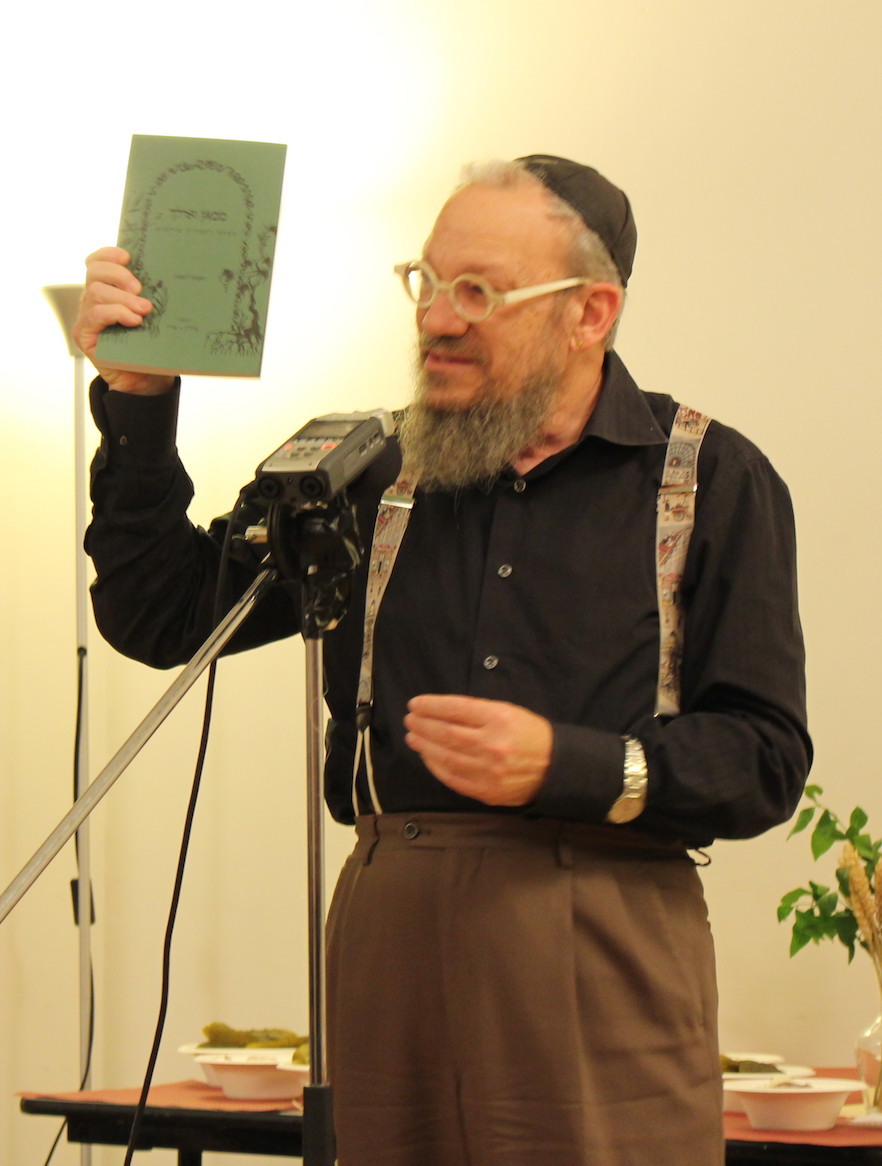
Professor Daniel Boyarin at the 2016 launch of Mikan ve’eylakh in Paris.
עברית דיאספורית
המושג „דיאספורה“ מתאר את התפזרותן של קבוצות בני־אדם במונחים של זריעה והנבטה (המילה היוונית diaspora גזורה מהפועל speirein — ספֵּירֵין — שפירושו „לזרוע“). הופעתו מספר פעמים בתרגום השבעים (דווקא לא כתרגום של „גלות“ או „גולה“), 46 46 שמעון דובנוב, „פתיחת המחבר“, בתוך דברי ימי עם עולם : מראשית היום העם עד סף מלחמת העולם השניה (תל־אביב : דביר, תשכ״ב), עמ’ iii (ההדגשה במקור). אחראית לייחוסו של מושג יווני עתיק זה דווקא לחוויה היהודית ; אולם משנות השבעים של המאה העשרים התרחב והתפשט המושג אל מחוץ להקשרו היהודי והחל להינקט ביחס לעוד ועוד קבוצות בני־אדם המפוזרות במקומות ובאופנים שונים, במעין דיאספורה של המושג עצמו. 47 47 בהרצאתו, “Modern Hebrew: The Uncanny Story of the Life and Death of an Undead Language”, שהתקיימה בכנס Semitic Philology within European Intellectual History בברלין מטעם קבוצת המחקר Zukunftsphilologie (19–21 ביוני 2013), הציע יער חבר ניתוח פרוידיאני למטפורת החיים והמוות ביחס לעברית במסורת הבלשנית המודרנית של העברית. גרסה עברית של ההרצאה תפורסם במאסף הבא. במפנה המאה העשרים־ואחת החלו תיאורטיקנים של דיאספורה להציע מודלים חלופיים למודל המרכז והפריפריה וביקשו להדגיש את המימד החיובי, הפורה והרדיקלי שבדיאספורה כמושג כללי ובדיאספורות שונות בפרט. שכלוליו התיאורטיים של המושג הגיעו לשיא חדש בעבודתו של דניאל בויארין (Boyarin), שהרצאותיו בברלין בשנים 2012־2013 השפיעו השפעה עמוקה על מפעל דיאספורי זה. 48 48 אלעד לפידות „הלשון המשובש : לפנומנולוגיה של לשון הקודש“, כאן, עמ’ 57. דיאספורה „אינה זקוקה לטראומה, לאיזה רגע בראשיתי של גירוש, לגעגועים למולדת, או אפילו לקיומו של מיתוס של מולדת אחת“, 49 49 אני אסיר תודה לסוניה יאמפולסקאיה (Yampolskaya) ששלחה לי את מאמרה, “The Concept of a ‘Dead Languageʼ as Exemplified by Hebrew”, אשר עתיד לראות אור בכתב־העת Vestnik of Saint Petersburg University. כותב בויארין. אך מתוך ההגדרה השלילית (מה שדיאספורה אינה חייבת להיות) מזדקקת אצלו הגדרה חיובית של דיאספורה בתור
„סיטואציה תרבותית סינכרונית, אשר חלה על אנשים שחיים באתר תרבותי (ולעתים קרובות גם לשוני) כפול : הם חולקים את תרבותם הן עם המקום שבו הם שוכנים והן עם קבוצה אחרת של אנשים שחיים במקומות אחרים ; יש להם זהות והבעה מקומיות ועל־מקומיות (trans-local), בעת ובעונה אחת“. 50 50 מאַקס ווײַנרײַך, געשיכטע פֿון דער ייִדישער שפּראַך : באַגריפֿן, פֿאַקטן, מעטאָדן, באַנד 1 (ניו־יאָרק : ייִדישער וויסנשאַפֿטלעכער אינסטיטוט, 1973), ז’ 256 : „אין דער צײַט וואָס מען האָט לאַטײַן און גריכיש מזכּה געווען מיטן נאָמען טויטע שפּראַכן האָט מען העברעיִש אויך געשטעמפּלט פֿאַר טויט, און די משׂכּילים האָבן די דאָזיקע אָפּשאַצונג אַריבערגענומען אין דער ייִדישער סבֿיבֿה אַרײַן“.
Diasporic Hebrew
The term “diaspora” refers to the dispersal of groups of people, in the sense of sowing and germinating (the Greek word diaspora stems from the verb speirein, which means “to sow”). The recurrence of this word in the Septuagint (but never as a translation of “exile” [galut or golah]) 51 51 שלום יעקב אברמוביץ’, עין משפט (ז’יטומיר : א. ש. שאדאוו, 1867), עמ’ 4 (ההדגשה במקור). היבטים נוספים בנושא מטפורת החיים והמוות ביחס לעברית אצל אברמוביץ’ זוכים לסקירה בהרצאתו של יער חבר שעתידה להתפרסם במאסף הבא (ראו הערה 9 לעיל). is responsible for the association of this ancient Greek term with the Jewish experience in particular. However, since the 1970s the term has been expanded and used outside of the Jewish context in reference to an increasing number of groups that experience dispersion not only in different places but also in different senses of the term – a kind of diaspora of the concept itself. 52 52 ראו שם, עמ’ 5 ו־23. עבור אברמוביץ’ המשכיל, שאלת החיים והמוות של השפה חשובה, בסופו של דבר, פחות מאשר עובדת שימושיותה בחינוך : „תחיה לה גם מתה, אנו אין לנו כעת עסק בזה ; אנחנו יודעים רק זאת, כי היא אמצעי טוב ונאמן, להשכיל על ידה בני ישראל“ (שם, עמ’ 26). At the turn of the twenty-first century, diaspora theorists began to propose alternatives to the center/periphery model and sought to emphasize the positive, productive and radical aspects of the term “diaspora” in general and of individual diasporas in particular. The theoretical elaborations of the concept reached a new apex in the work of Daniel Boyarin, whose lectures in Berlin in 2012 and 2013 had a profound impact on this diasporic endeavor. 53 53 ראו, למשל, שמעון דובנאָוו, „‘חיוב הגלות’ (וועגן ‘שלילת הגלות’ פֿון אחד העם)“, איבערגעזעצט פֿון רוסיש דורך ח. ש. קאַזדאַן, אין בריוו וועגן אַלטן און נײַעם ייִדנטום (מעקסיקע, ד. פ. : שלמה מענדעלסאָן פֿאָנד, 1959), זז’ 395–409. המאמר פורסם לראשונה במאי 1909 בכתב־העת הרוסי Еврейский Мир („העולם היהודי“). Diaspora “need not imply trauma, an original scene of forced dispersion, a longing for a homeland, or even the existence of a myth of one homeland,” writes Boyarin. 54 54 השוו לעמדתו של רון כוזר המובאת אצל לפידות, „הלשון המשובש“, עמ’ 60. Yet within the negative definition (of what diaspora need not necessarily be) a positive definition of diaspora emerges as
“a synchronic cultural situation applicable to people who participate in a doubled cultural (and frequently linguistic) location, in which they share a culture with the place in which they dwell but also with another group of people who live elsewhere, in which they have a local and a trans-local cultural identity and expression at the same time.” 55 55 נקודה זו נשענת על הרצאתו של יער חבר (ראו הערה 9 לעיל).
בויארין כותב כאן על קבוצות של אנשים, אך אם נכיל את פיתוחיו התיאורטיים על השפה, נוכל לומר שבכל המקומות השונים שבהן היא שוכנת, ניזונה העברית מהתרבויות ומהלשונות שאיתן היא באה במגע (כפי שטען רוזנצווייג בציטוט שהובא לעיל). הפרייה דיאספורית זו בולטת במיוחד במקומות שבהם עברית היא שפת מיעוט. 56 56 פרנאץ רוזנצווייג, „עברית חדשה ? (לרגל התרגום העברי של ה’אֶתיקה’ לשפּינוזה)“, בתוך נהריים : מבחר כתבים, מגרמנית : יהושע עמיר (ירושלים : מוסד ביאליק, 1960), עמ’ 195. במקור : Franz Rosenzweig, „Neuhebräisch? Anläßlich der Uebersetzung von Spinozas Ethik“, in Der Morgen: Monatsschrift der Juden in Deutschland (1925), S. 105–109. השירים והסיפורים המתפרסמים במאסף זה מעידים, בין היתר, עד כמה ניכרת בעברית השפעתן של תרבויות ושפות הרוב במקומות כמו ורשה, 57 57 רוזנצווייג, „עברית חדשה ?“, עמ’ 195. פריז, 58 58 מירה בלברג, „מ’שפה אחת’ ל’דעת אחת’ : לשון הקודש ותרגום התורה“, כאן, עמ’ 53–55. לוס־אנג'לס 59 59 רוזנצווייג, „עברית חדשה ?“, עמ’ 195. או ניו־יורק. 60 60 שם. להקשר המקומי נועד תפקיד מכריע בברלין העברית כיום, שבה נכתבו ונערכו רוב המאמרים והיצירות הספרותיות הנאספים כאן. 61 61 השוו לאברמוביץ’, שציטט את „החכם הנוצרי“ פרנץ דליטש, שכתב שאפילו הרדר (Herder) בעל הטעם הטוב לא ידע „כי שפת עבר לא מתה, ומימות עולם ועד עתה, הנה תתחדש תמיד כנשר נעוריה“ (עין משפט, ע’ 5). במקור : „Dass die hebräische Sprache nie gestorben sei, sondern in unsterblicher Jugendfrische fortlebe, wusste selbst der geschmackvolle Herder nicht“, Franz Delitzsch, „Vorrede“, in Zur Geschichte der jüdischen Poësie, vom Abschluss der heiligen Schriften Alten Bundes bis auf die neueste Zeit (Leipzig: Karl Tauchnitz, 1836), S. vi. על יחסו של הרדר לעברית, ראו את מאמרו של עפרי אילני : „’Siona Sulamith‚ : הבראיזם גרמני וראשית השירה העברית החדשה“, כאן, עמ’ 82–85, 93–96. יחד עם זאת, מקומות אלה קשורים יחדיו באמצעות השפה המשותפת שאותה הם חולקים בתנאים דומים של קיום מיעוטי. הכפילות שבין הנוכחות המקומית והעל־מקומית של העברית, שמאסף זה מבקש לבטא בשמו ובתוכנו, מאפשרת עברית מיעוטית, היברידית והטרוגנית : עברית דיאספורית.
Boyarin refers here to groups of people, but if we apply his theory also to language we may conclude that, in all the different places in which it resides, Hebrew is nourished by the various cultures and languages with which it comes into contact (just as Rosenzweig argued in the quotation above). This diasporic cross-fertilization is particularly pronounced in places where Hebrew is a minority language. 62 62 רוזנצווייג, „עברית חדשה ?“, עמ’ 195. The poems and stories published in this journal attest to the manifest influence exerted upon Hebrew by majority cultures and languages in places like Warsaw, 63 63 שם, עמ’ 196. Paris, 64 64 רוזנצווייג, „עברית חדשה ?“, עמ’ 197. Los Angeles 65 65 גם המושג „גלות“, בין אם בהקשרו היהודי ובין אם לאו, רלוונטי, ואף שימושי במסגרת הדיון הנוכחי. ראו בעניין זה את הרצאתו של אדוארד ו’ סעיד, „גלות אינטלקטואלית : נוכרים ואנשי שוליים“, כאן, עמ’ 39–47. and New York. 66 66 Rogers Brubaker, “The ‘Diaspora’ Diaspora”, in Ethnic and Racial Studies 28.1 (2005), pp. 1–19. The local context has a decisive role in the Hebrew Berlin of today, where most of the articles and literary texts gathered here were written and edited. 67 67 הרצאותיו אלו שמשו יסוד לספרו : Daniel Boyarin, A Traveling Homeland: The Babylonian Talmud as Diaspora (Philadelphia: University of Pennsylvania Press, 2015). At the same time, the aforementioned cities are connected to Berlin through a shared language and similar conditions of minority existence. The duality between the local presence and the trans-local presence of Hebrew, which this journal seeks to express, facilitates a minor, hybrid, heterogeneous Hebrew: a diasporic Hebrew.
באוהלי יידיש
מרכיב נוסף בתאוריית הדיאספורה של בויארין היא השותפות התרבותית (ובפרט, הבעלות המשותפת על הטקסט). 68 68 דניאל בויארין, „מכורה נודדת“, כאן, עמ’ 34. במקרה, או שלא במקרה, שותפות היתה גם אחד המושגים המרכזיים בתורתו של שמעון ראבידוביץ', גדול ההוגים של הדיאספורה העברית במאה העשרים. 69 69 שם. החלת תאוריית הדיאספורה של בויארין על העברית מאפשרת להכיר לא רק ביחסי השותפות הלשוניים שבין קבוצות המפוזרות במקומות שונים, אלא גם באפשרות של דיאספורה בין השפות עצמן. כפי שמטעים בויארין בעצמו, הכפילות שבדיאספורה יכולה לעתים קרובות לבוא לידי ביטוי גם בכפילות לשונית.
In the Tents of Yiddish
Another component of Boyarin’s diaspora theory is cultural partnership (specifically in the joint custody of the text). 70 70 קיום כמיעוט אכן אינו תנאי מחייב עבור דיאספורה, כפי שרומז בויארין (Boyarin, A Traveling Homeland, p. 152, n. 66), אך עמדה מיעוטית (שאינה טראומטית בהכרח) יכולה דווקא להיות שימושית עבור דיאספורה. ראו „מחווה למשתמטי מלחמת העולם הראשונה בספרות העברית“, כאן, עמ’ 172. Coincidentally (or perhaps not), partnership was also one of the central concepts in the teaching of Simon Rawidowicz, the greatest theorist of the Hebrew diaspora in the twentieth century. 71 71 בוריס גרוס, „קופרניקוס“, כאן, עמ’ 123–127. The application of Boyarin’s diaspora theory to Hebrew allows us to acknowledge not only linguistic partnerships among groups dispersed in different places but also the possibility of a diaspora between languages themselves. As Boyarin stresses, the duality of diaspora can often be expressed through a doubled linguistic location.
לפיכך, מפעל עברי זה, היונק מתוך הקשרו המקומי באשכנז, רואה עצמו כחוליה בשרשרת של שותפות היסטורית בין העברית ובין היידיש. לכל אחת משתי השפות היו וישנן לשונות־שותפות רבות, אך יחסי הקִרבה שבינהן, כאן באשכנז, זה אלף שנה לערך, הופכות אותן ללשונות אחיות. מבין שלל הקשרים ההיסטוריים, הספרותיים, הלשוניים והפוליטיים שהן חולקות, בולטת במיוחד שותפות הגורל ההיסטורי שלהן במאתיים השנים האחרונות, שבמהלכן התפזרו יחדיו על־פני מרחב גיאוגרפי עצום. שתי שפות־מיעוט אלה, שהעולם הוא מקומן, פרחו והצמיחו ספרויות ענפות הקשורות זו בזו עד כדי כך, שמבקר הספרות בעל־מחשבות (שם העט של איזידור ישראל אליַשֵב, 1873–1924) קבע : „שתי לשונות — ספרות אחת ויחידה“. 72 72 ז’יל רוזייה, „שירים להראל“, כאן, עמ’ 147.
For this reason, the present Hebrew enterprise, nourished by its local context in Ashkenaz, 73 73 צבי בן־דור בנית, „תפוח אדמה עם סוֹס“, כאן, עמ’ 107–113. views itself as a link in the chain of historical partnership between Hebrew and Yiddish. Each of these languages has had and remains in contact with many partner-languages, but the close relationship between the two languages here in Ashkenaz for roughly one thousand years makes them sister languages. Among the numerous historical, literary, linguistic and political contexts that they share, what stands out in particular is their shared historical destiny over the last two hundred years, during which both languages were dispersed across a vast geographical space. These two minority languages, whose place is the world, flourished and produced literatures so intimately intertwined that the literary critic Bal-Makhshoves (the penname of Isidor Yisroel Eliashev, 1873-1924) declared them “two languages – one literature.” 74 74 סמי שלום שטרית, „שמש בבקבוק פלסטיק“, כאן, עמ’ 145.
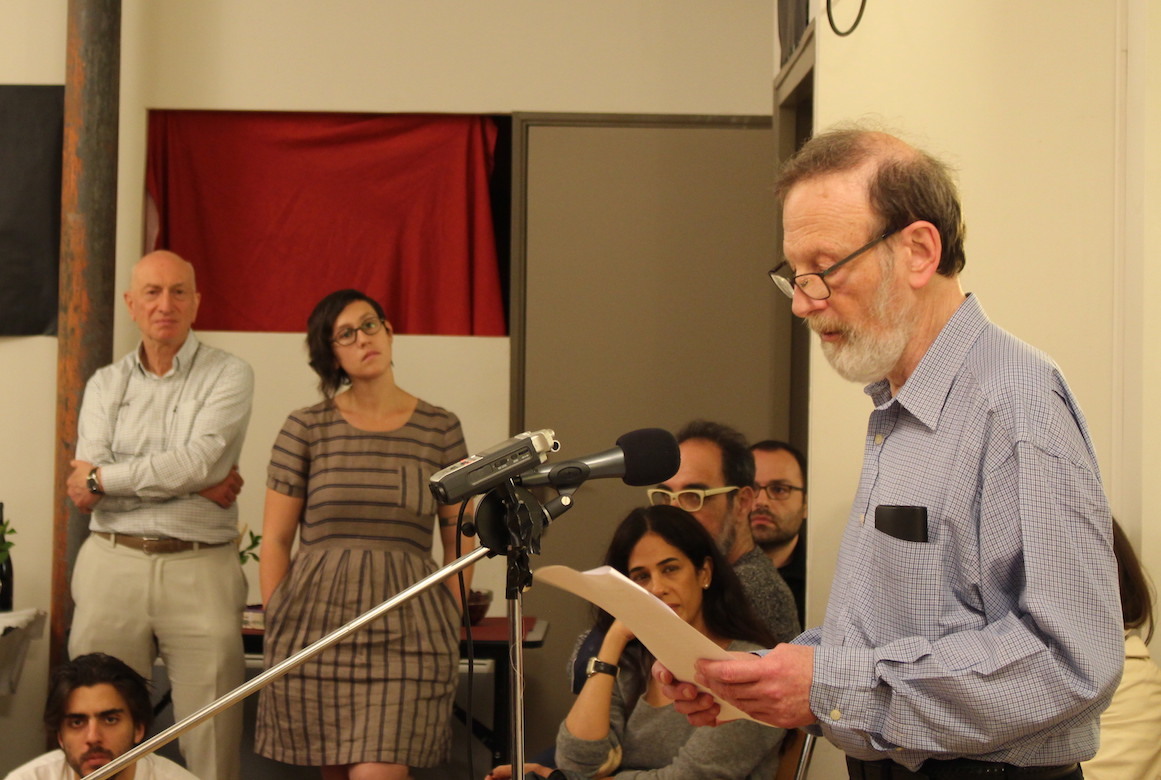
Diasporic Yiddishists supporting diasporic Hebrew at the journal launch in Paris, 2016 (right: Yitskhok Niborski, left: Madeleine Cohen).
שותפות הגורל של שתי השפות בעת החדשה באה לידי ביטוי גם בכך ששתיהן פרחו וצמחו בצל מגמת שלילתן. אותם משכילים ראשונים שקבעו את מותה של העברית הם גם אלה שביטלו את היידיש כ„ז'ארגון עלוב“ שלא היה ראוי מבחינתם לשם „שפה“. 75 75 ראו כאן את מאמריהם של עפרי אילני ואלעד לפידות, את סיפורה של שרון הורודי ואת שיריהם של יער חבר ואדמיאל קוסמן, כמו גם את תרגומיהם של גדי גולדברג („לישון“ מאת איזולדה קורץ), רימו לומס („פוגת מוות“ מאת פאול צלאן) ואת תרגומיי („מכורה נודדת“ מאת דניאל בויארין ; „גלות אינטלקטואלית“ מאת אדוארד ו’ סעיד ו„אירופה“ מאת ויקטור קלמפרר). כמו כן, ראו את הטקסטים מתוך הערב שנערך בברלין ב־1 באוגוסט 2014 המתפרסמים בסוף מאסף זה תחת הכותרת : „מחווה למשתמטי מלחמת העולם הראשונה בספרות העברית“. מגמה זו נמשכה אף ביתר שאת בדורות הבאים, שכן התנועה המשכילית שביקשה „להחיות“ את העברית נשענה, מבחינה רעיונית, על שלילה לשונית כפולה, כפי שניסח זאת לואיס גלינרט (Glinert) :
„כשם שהרצון להחיות מחדש את העברית היה כרוך, בכל גילוייו, ברצון להיפטר מהיידיש, כך הוא גם ביקש לדחות את העברית ה„מיושנת“ של אשכנז, את צלילהּ, את מילותיה — ואת ידיעתה“. 76 76 ראו בויארין, „מכורה נודדת“, עמ’ 29–32.
The shared destiny of Hebrew and Yiddish in the modern era can also be observed in the fact that both blossomed in the shadow of their denial. The very same early maskilim who declared the death of Hebrew also rejected Yiddish as “a miserable jargon” not worthy of being called a “language.” 77 77 מאיירס, „ראבידוביץ’ בברלין“, כאן, עמ’ 51. This tendency intensified in the following generations, since the maskilic movement that tried to “revitalize” Hebrew relied ideologically on a dual linguistic negation, as Lewis Glinert has observed:
“And just as the desire to revitalize Hebrew has ubiquitously been bound up with the desire to be rid of Yiddish, so too it has sought to reject the “old-style” Hebrew of Ashkenaz, its sound and words – and the knowledge of it.” 78 78 בעל־מחשבות (ד״ר עליאַשעוו), „צוויי שפּראַכן — איין איינציקע ליטעראַטור“, אין געקליבענע שריפֿטן, צווייטער באַנד (וואַרשע : „ביכער“, 1929), זז’ 57–64.
שותפות גורל זו של העברית והיידיש הגיעה לשיאה בשנות החורבן במאה העשרים, כאשר גרמניה הנאצית ובעלות־בריתה החלו לכרות את ענפיהן ולעקור את שורשיהן באירופה כולה. צאתו של מכאן ואילך כאן, בברלין ובפריז, היא עדות לסירובם, או לאי־יכולתם, של שורשים אלה להיעקר. צאתו של מכאן ואילך באכסניה יידית בא להדגיש את הבחירה בשותפות בין שתי הלשונות על־פני יחסים של יריבות או של איבה שפגעו אף הן פגיעה אנושה בשתי הלשונות.
79
79
כשם שיצוגייה העולמיים של העברית צמחו כתגובה לשלילת נצחיותה, כך נראה שהשימוש התכוף בביטוי „די ייִדישע שפּראַך“ (השפה היידית) השגור בפי יידישיסטים עד היום, צמח כתגובה להכחשת היותה שפה של ממש.
בדומה לכתב־העת היידי החלוצי, קול־מבֿשׂר (1862), שיצא לאור כמוסף של כתב־העת העברי המליץ, אין זה מקרי שמכאן ואילך העברי מצא את בית־הוצאתו דווקא בהוצאת ספרים יידית, הלא היא הוצאת הספרים של ספריית מֶדֶם בפריז (פּאַריזער ייִדיש־צענטער — מעדעם־ביבליאָטעק).
80
80
Lewis Glinert, “Preface”, in Hebrew in Ashkenaz: A Language in Exile, ed. Lewis Glinert (New York: Oxford University Press, 1993), p. viii.
The shared destiny of Hebrew and Yiddish reached its apex during the years of destruction (khurbn) 81 81 לביקורת על הלוחמנות ההבראיסטית כלפי היידיש כפגיעה־עצמית, ראו בער באָראָכאָוו, „העברעיסמוס מיליטאַנס“ [1913], אין שפּראַך־פֿאָרשונג און ליטעראַטור־געשיכטע (תל־אביב : י. ל. פּרץ־פֿאַרלאַג, 1966), זז’ 365–367. לקשר שבין תכונתה הדיאספורית של העברית ובין עמדות של הימנעות ממלחמה, ראו „מחווה למשתמטי מלחמת העולם הראשונה בספרות העברית“, כאן, עמ’ 172. of the twentieth century, when Nazi Germany and its allies began to cut off the branches and pull up the roots of both languages throughout Europe. The appearance of Mikan ve’eylakh here, in Berlin and Paris, attests to the fact that these roots will not, or cannot, be torn assunder. The decision to publish it under a Yiddish roof is intended to emphasize the choice of a partnership between these two languages, rather than the relation of rivalry and enmity that has harmed both languages in the past. Like the pioneering Yiddish journal Kol mevaser (1862), published as a supplement to the Hebrew journal Hamelits, it is no coincidence that the Hebrew journal Mikan Ve’eylakh found its place with a Yiddish publisher: the Medem Library in Paris (Parizer-yidish-tsenter – Medem-biblyotek). 82 82 גילוי נאות : עורכו של מאסף זה הוא מנהלו של מרכז היידיש בפריז — ספריית־מֶדֶם. במקרה זה, החיפוש אחר עברית דיאספורית באשכנז הוא שהוביל אל היידיש, ולא ההיפך.