Nov 07, 2025
INTRODUCTION
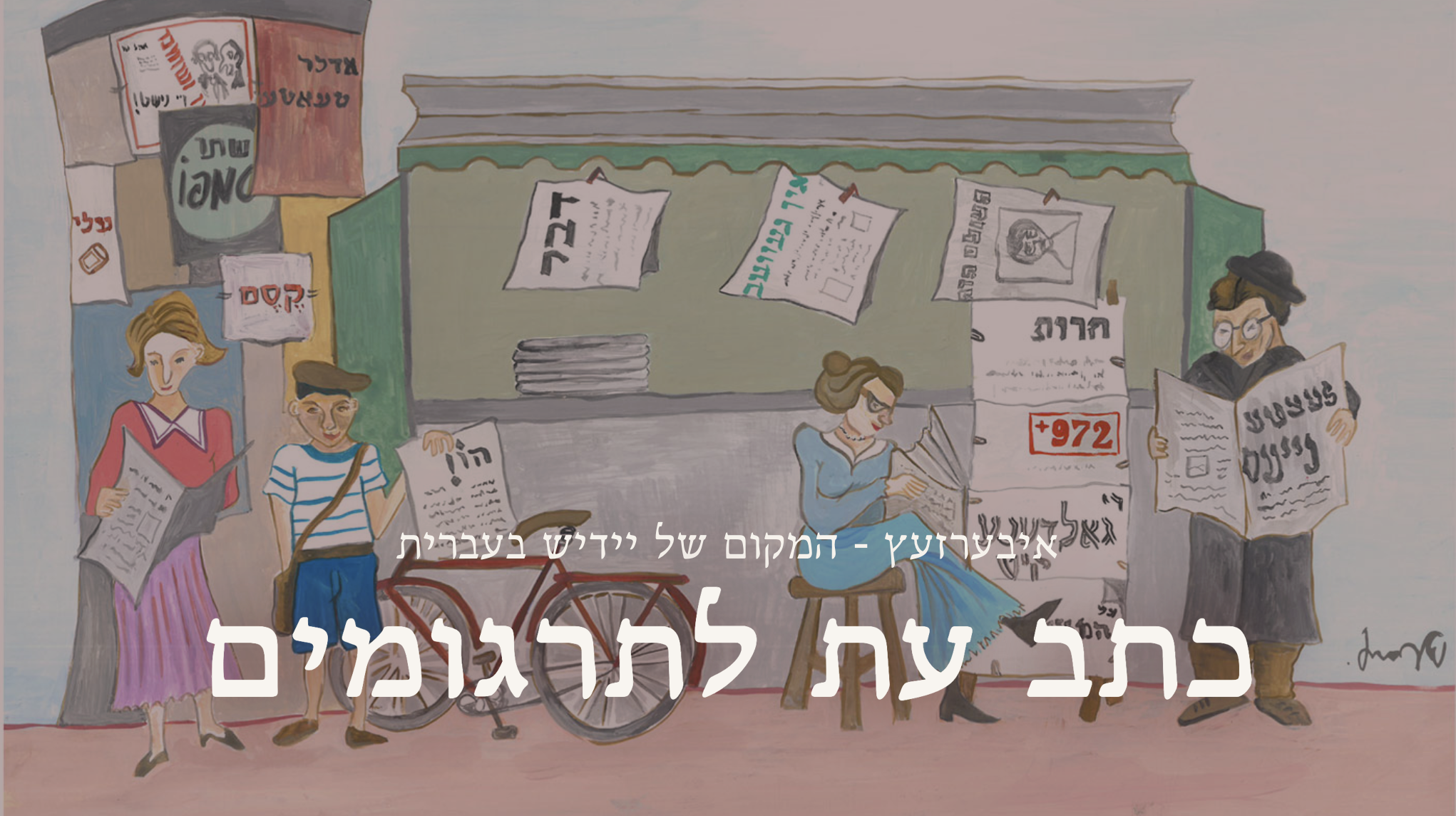
Iberzets, an online magazine for translations from Yiddish to Hebrew, is the result of an initiative by Yiddish literature research students, and is supported by the Jona Goldrich Institute for Yiddish Language, Literature and Culture at Tel Aviv University and the National Authority for Yiddish Culture in Israel (הרשות הלאומית לתרבות היידיש).
In geveb has had a long connection with this initiative, which was created with the guidance and support of its academic advisor, Hannah Pollin-Galay, who serves on – and is a founding member of – the editorial board of In geveb. We recently spoke with its editors to learn more about this project, which we see as a sister project to In geveb, complementing our work by offering an exciting new outlet for translations from Yiddish. The questions below come from the In geveb editorial team, and the answers were composed jointly by the editors of Iberzets.
How did your publication get started? What were your goals?
The idea for Iberzets was born five years ago. We were a group of Yiddish students at Tel Aviv University, and we wanted to find a way to connect the Hebrew-speaking public to Yiddish literature, which we found so fascinating and relevant but felt was underappreciated in Israel.
For us these texts have a contemporary energy and rhythm that makes them feel as relevant as when they were written. The project was also a really great way for us as students to do something bigger together in a field in which students and writers usually work alone.
As our community becomes more international, we have decided to expand our reach to Yiddish-to-English translations as well. We want to highlight that those studying Yiddish at Israeli universities are not all native Hebrew speakers – some of us were born in Russia or Poland, for instance – and translations into Hebrew may not resonate with all of us in the same way.
Are you associated with any other organizations? Where does your funding come from?
We’re formally associated with the Jona Goldrich Institute for Yiddish Language, Literature and Culture at Tel Aviv University, which is our main source of funding, and have been working under the academic supervision of its head, Professor Hannah Pollin-Galay. Our events have been generously hosted by local book shops, libraries, and cultural organizations free of charge, and our friends and colleagues help us combine music, wine, and performance into one-of-a-kind events, including some for for international students who come to the Yiddish summer program. So we are truly a collaboration between academic and cultural organizations.
Where do you find your contributors, or how do they find you?
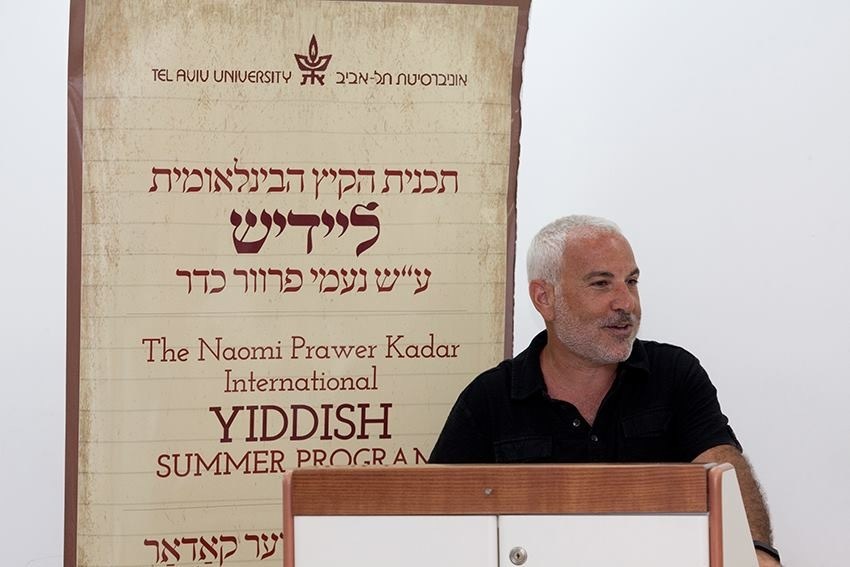
By now we are quite well known by Yiddish translators, who reach out to us on their own initiative. In addition to the general submissions we receive, every six months we prepare a call for proposals focused on a topic that interests us. Our website has several sections; one of them, titled Shpil, is intended for more experimental translations. During the Naomi Prawer Kadar International Yiddish Summer Program we meet a lot of new international students who are part of the Yiddish community; we always encourage them to send us their translations even if it’s only their first year studying the language. We’re always hoping to find the next fresh talent of the Yiddish world!
What is your editorial process like? What are the steps pieces go through from an idea to a publication?
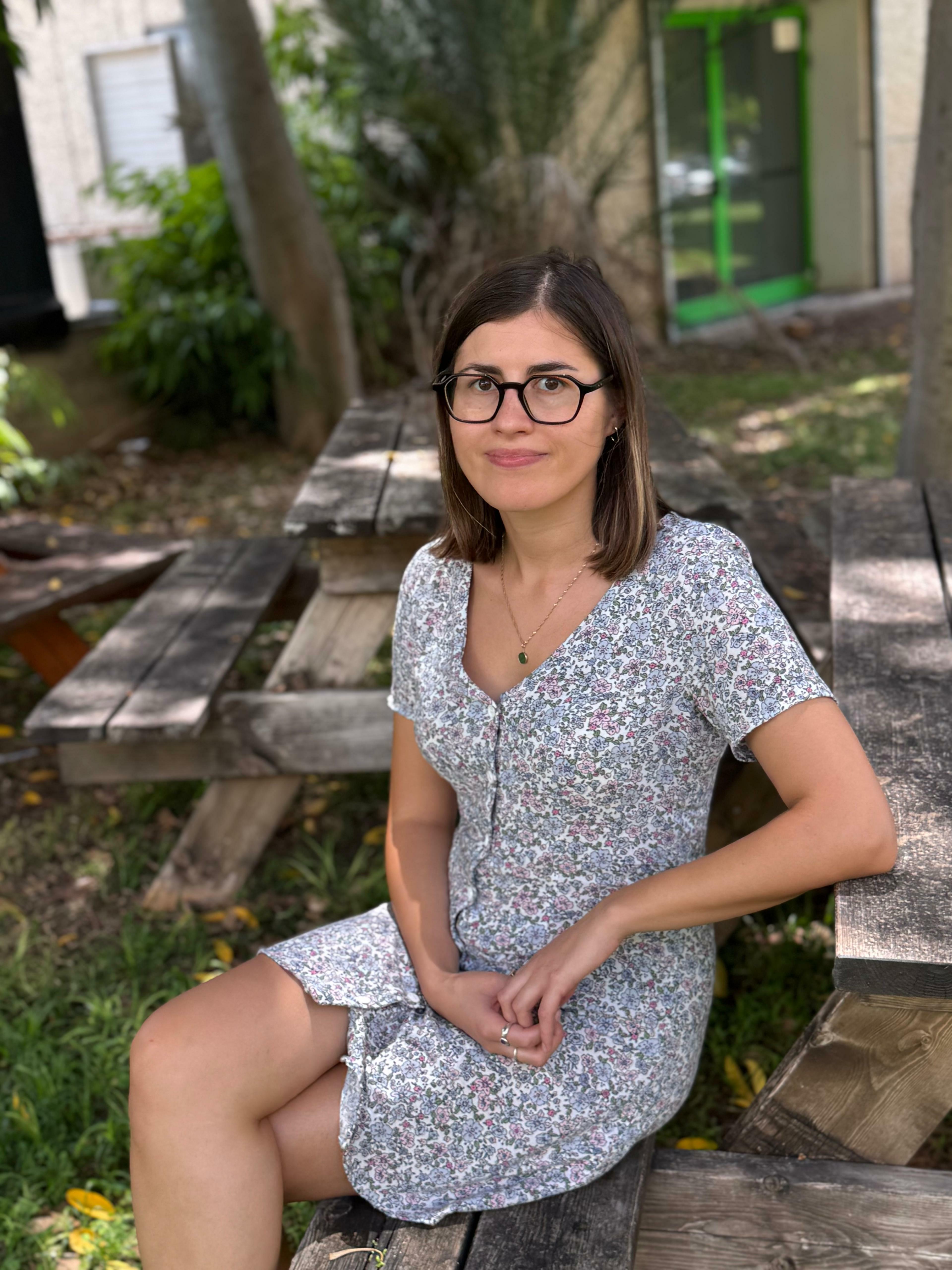
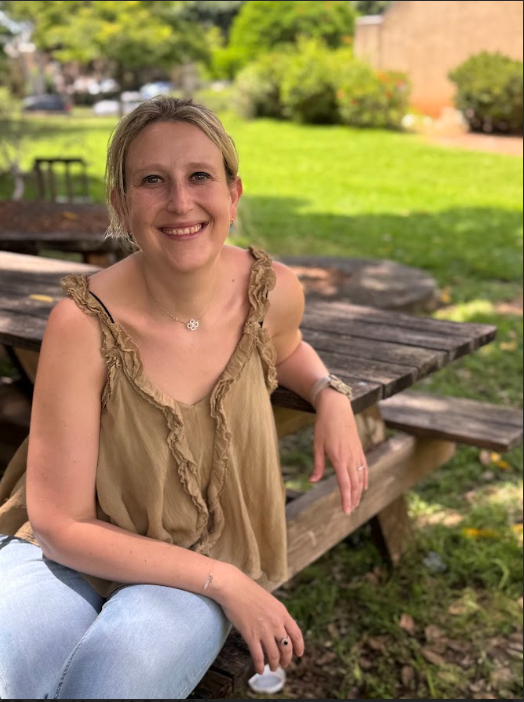
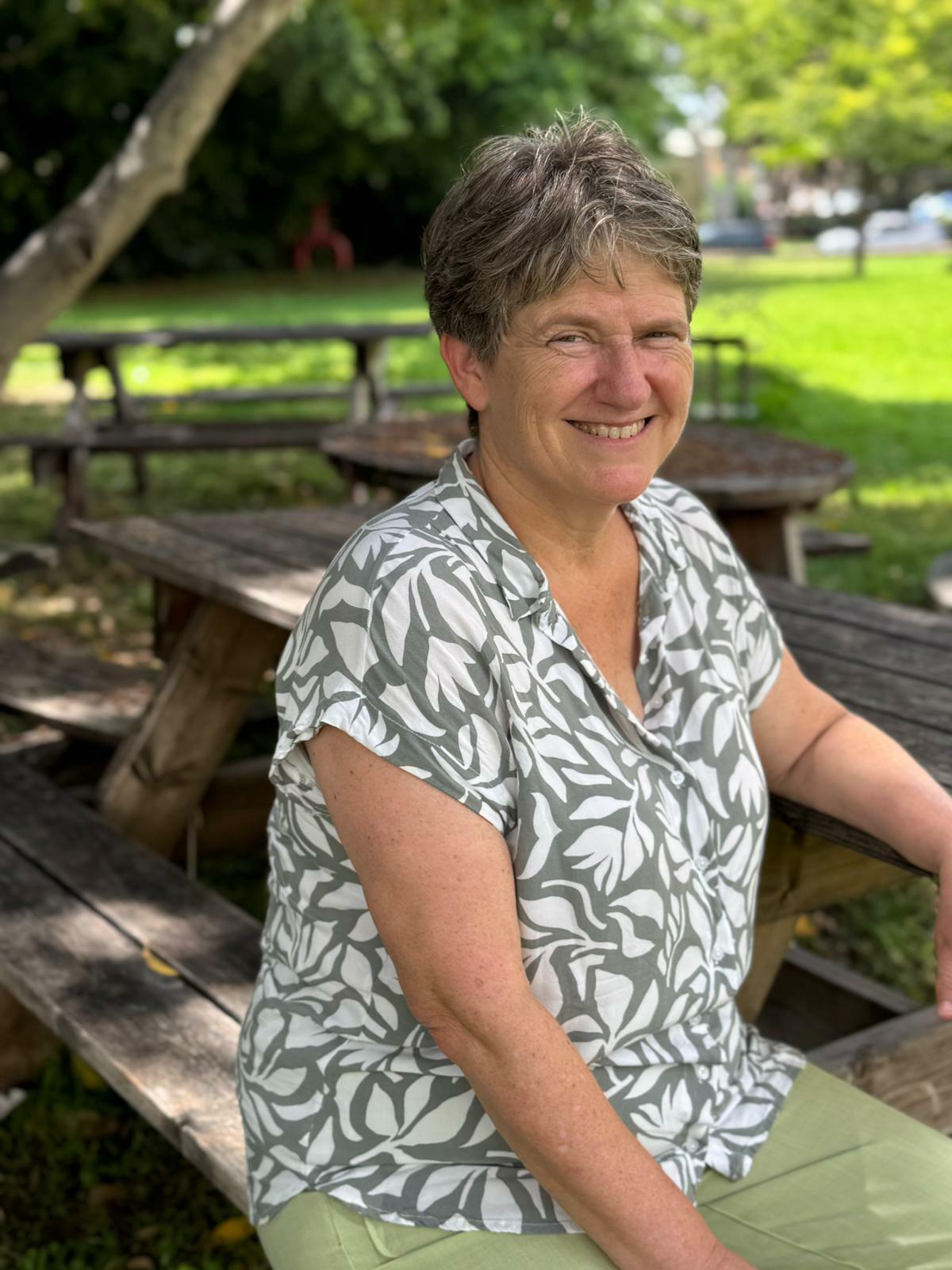
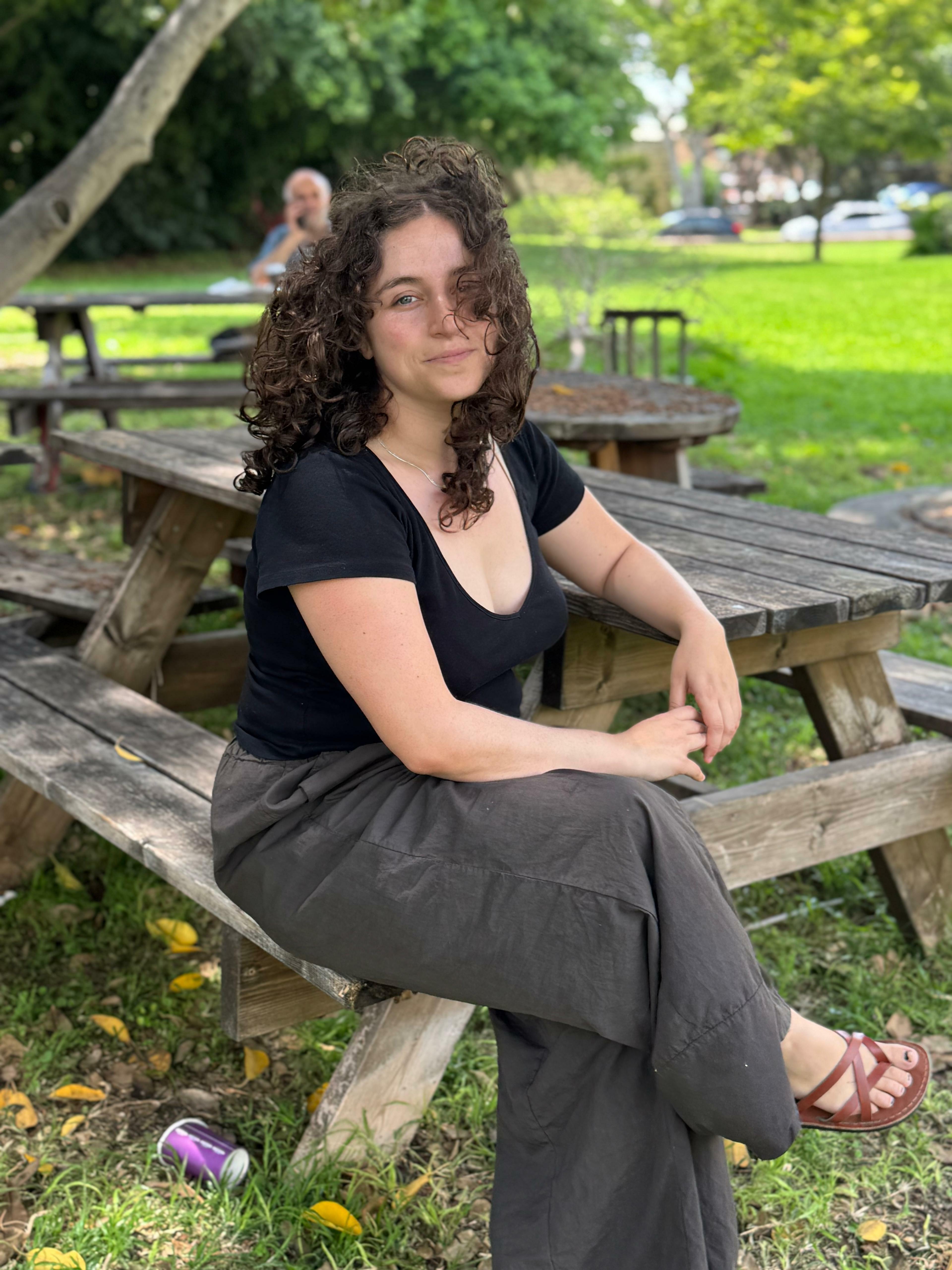
When we receive a proposal, members of our editorial board—we’re currently a group of four women—read the text and decide if it has potential for our journal. If so, we send it to one of our peer reviewers, all of them highly respected Yiddishists, who assesses the translation and recommends acceptance or not. If it is accepted, there is a detailed editing process with the reviewers and translator. While the editing process is underway, we ensure everything is fine with copyrights, and we ask the translator to prepare a short introduction, along with their picture and bio. We also start transcribing the Yiddish text into standard Yiddish, YIVO style, and ask an expert to proofread it. In the case of a poem, when the final draft of the translation is accepted by the translator we send the Hebrew text to a person responsible for adding or editing the vowel signs (nikud), which can be complex. We work closely with Eliezer Niborski, who reviews and approves the final version of each text. The design and look are also very important to us, so before uploading a new text to our website we spend time searching for images that match both the content of the translated text and our website’s visual profile.
We think of this multi-stage process as more than just a technical one; it’s a dynamic and transformative work of co-creation. For example, one of our former editors, Betzalel Dov Strauss, worked on a new translation of the poetry cycle “Yam lider,” by Rikuda Potash. While working on the translation, he was also writing his MA thesis about this subject, and so the translation developed and took shape as he learned more about the tradition of sea songs and the way this specific poem interacts with that tradition. This translation process is described in the introduction to Potash’s poems published on our website.
Who reads Iberzets? Have you received any reader feedback?
The readership of our journal is quite diverse. Among our audience there are students and young researchers but also Israeli heritage speakers. Not many people are aware that there is a new trend of younger people in Israel beginning to take an interest in Yiddish and experimenting with it in post-vernacular contexts like rap lyrics, repertory theater, street art, graffiti, and more. Our website has become the center of a community that includes native speakers and new audiences, and our Facebook page and soon-to-launch Instagram account are where we interact with these audiences. So far, we have received enthusiastic feedback from our readers, who feel that this format manages to make Yiddish culture more accessible—and even cool!
Have you noticed that there are texts that resonate particularly strongly with Israeli audiences?
One of our more personal projects was dedicated to Benjamin Harshav, one of the most important literary theorists and translators of Yiddish. Although Harshav is widely recognized as a scholar, few know about his Yiddish poetry. Our project “Akhshav Harshav” (in Hebrew, “Now Harshav”) tried to bring to light his own creative writing, and after working alongside his family, this publication became one of the most influential projects about Harshav, and it even managed to transform how Harshav is perceived in Israel.
The Hebrew translation of Esther Kreitman’s Di naye velt by legendary translator Dori Parnas has also attracted a lot of interest. This is perhaps the first time that the world of the Singer brothers’ less famous sister was exposed to the broader Hebrew-speaking public.
We were also lucky enough to upload all of the conference lectures from the international conference Yiddish and the Holocaust: New Approaches, which took place online last year. People seem to appreciate the opportunity to watch top quality lectures online in their own time.
Do you have particular texts—or sorts of texts—in mind that you want to represent in the journal? Or do you assess based on what people submit? Do you ever solicit translations around a particular topic or author?
We feel that our most recent project embodies our vision for the site: It’s a project dedicated women’s writing, which we titled “In der froyen velt” after Anna Margolin’s weekly column in Der tog. The submissions we received were either texts written by Yiddish women writers or ones that shed light on the topic. This undertaking was especially meaningful to us as a team of women editors. We wanted to achieve a few things: to introduce new and unfamiliar texts to our readers, to provide a platform for women’s voices, and in so doing to ask questions about what makes women’s writing unique or particular. We’re now in the process of thinking about the themes for our next projects. We are quite open to receiving unsolicited proposals, however, and as mentioned earlier, we’re always happy to receive translations on any topic.
Of course, the current zeitgeist and topical issues impact our translators as they do us, often affecting their choices of what to share with us. For example, it’s not unusual that Yiddish texts written during the Holocaust are taken as a source of resilience and inspiration, providing perspective on our own experiences, and this is especially the case after October 7. This is one more way in which we feel our project is a dynamic venue that reflects the changes we and our translators and readers go through.
How has the project changed over time? What are some things from the past five years that you are particularly proud of?
There’s one moment we’ll never stop being proud of: It was our initial launch event at Beit Ariela (Tel Aviv’s municipal library)—a huge auditorium completely packed with students, professors, and people from the community all making lekhaim and waiting for the program to start. Everyone knew some great Yiddish translations were coming, but they may not have expected to hear the Palestinian singer Miriam Toukan come in and sing “Epele,” a Yiddish song written and composed by Daniel Galay, and then “Imagine” in Arabic, Hebrew, and English. That’s how we established what we believe translation is about, what we want Iberzets to be about on a deeper level.
More broadly, we have reached a lot of our goals, such as expanding our audience and being a platform and home to more than fifty translations and translators. We’ve learned how to manage a journal, how to work in a team and interact with important figures within the Yiddish world—all while we were still students!
You are starting to expand into English-language writing and translations. Why do you want to go in this direction, and why now?
Although we’re an Israeli platform, our editorial team is diverse. In addition to Hebrew speakers, we also have Russian and Polish speakers, and we wanted to bring something of this mix of languages more visibly into our project. This of course is an inherent part of worldwide Yiddish culture, which is global in nature. For example, during the summer courses—when people from all over the world come together to share in the excitement of learning—we saw that speakers of languages other than Hebrew also wanted to contribute and try their hand at translating from Yiddish.
We always knew that at some point we would like to reach an international community and attract new readers. Why now? Maybe because after five years, we feel confident enough and capable of expanding in new directions after establishing strong foundations as a team and as a journal. Also, when borders are closing and it feels like people are refusing to talk to each other, we decided to go against that tide and try to talk to each other even more. While politicians may create more and more hard borders between cultures and peoples, we don’t need to follow those rules.
The Iberzets Team:
Evgenia Batsevitsky, chief editor and project initiator
Mika Cohen, managing editor
Ilana Goldberg, English-language editor
Abigail Morris-Reich, literary editor
Jowita Pańczyk, lead editor of the English section