Feb 27, 2026
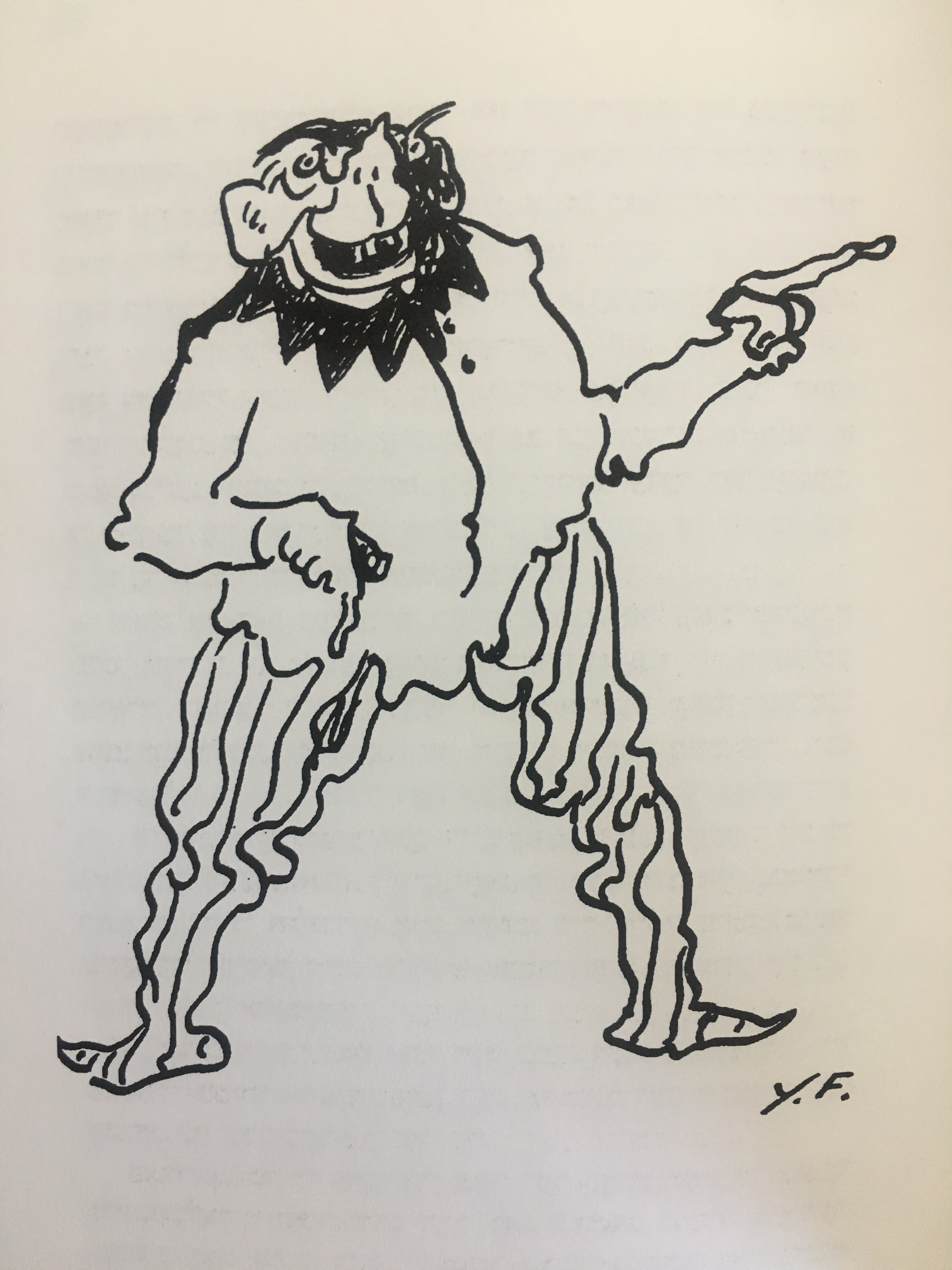
Illustration by Yonia Fain
INTRODUCTION
Yonia Fain (1913–2013) was a writer and painter born in Kamenets-Podolsk. His family moved to Vilnius when Fain was ten years old, and he learned Yiddish and attended art school in the same city. As a young adult he moved to Warsaw but was forced to flee when the Nazi occupation of Poland began. From then on he entered a state of prolonged transience that brought him to Kobe, Japan. In 1941, Fain was transferred to the ghetto in Japanese-occupied Shanghai, where he made a living painting Japanese soldiers. In 1947, Fain left Shanghai and emigrated to Mexico City, where he sought out Diego Rivera, who advocated for his work and eventually curated his first painting retrospective at the Palacio de Bellas Artes. Fain’s other notable project during this time was a mural commemorating victims of the Holocaust at the Panteón Israelita, a Jewish cemetery in Mexico City. Within a year of arriving in Mexico, Fain published his first poetry collection, A tlie unter di shtern (A Gallows Under the Stars). Poems in this volume reference his time in Shanghai and his experience fleeing across Nazi and Soviet territories with fake visas. 1 1 English translations exist of several poems in this collection, including the poignant and moving “A Poem About Shanghai Ghetto.” These were first translated by Irene Eber in her book Voices from Shanghai: Jewish Exiles in Wartime Shanghai (University of Chicago Press, 2008), and then by Sheva Zucker, for the 2018 film Yonia Fain: With Pen and Paintbrush, and Duosi Meng. See Duosi Meng, “Jewish Refugee Poetry in Shanghai,” (PhD diss., University of Illinois Chicago, 2023), 98, 109–110, 114–115, 121–123, 126–127, 134, 136–137, and 140–141, ProQuest (2830277925). While in Mexico City, Fain also taught a Yiddish literature teachers’ seminar at the university. Finally, in 1953, he moved one last time to New York City, where he taught painting first at the Brooklyn Museum and New York University and later at Hofstra University until his retirement in 1983. 2 2 For the most recent archivally sourced biography of Fain, see Meng, “Jewish Refugee Poetry in Shanghai,” 96–105. Sheva Zucker shared her insights on Fain’s biography in our communications as well. See also: Jennifer Stern, “An exciting, new way of thinking about refugee modernist artists like Yonia Fain,” Forward, October 2023, https://forward.com/yiddish-world/562941/refugee-jewish-artists-yonia-fain-modernism-holocaust-pogroms/.
Fain’s drawings and paintings have been exhibited only a few times over the past few decades. The 2018 film Yonia Fain: With Pen and Paintbrush by Josh Waletzky, which features an extensive interview in Yiddish between Fain and Yiddish translator and educator Sheva Zucker on his life as both a painter and a poet, stands out as one of very few significant and in-depth overviews of his life and work. The most recent retrospective of his art was in 2023, in the exhibit Modern-ish: Yonia Fain and the Art History of Yiddishland at the City University of New York Graduate Center. 3 3 Nicholas Heskes, “Yonia Fain: Modern-ish: Yonia Fain and the Art History of Yiddishland,” The Brooklyn Rail, November 2023, https://brooklynrail.org/2023/11/artseen/Yonia-Fain-Modern-ish-Yonia-Fain-and-the-Art-History-of-Yiddishland/.
Speaking in 1999 of his painting career in the United States, Fain declared: “As a painter, I am an outsider in American art.” 4 4 Yonia Fain, “Oral History Interview with Yonia Fain,” United States Holocaust Memorial Museum Collections, part 3, filmed June 9, 1999, https://collections.ushmm.org/search/catalog/irn508235. Fain’s six traumatic years in the Shanghai ghetto, an ad-hoc holding place for Jewish refugees under Japanese/Nazi allyship, had moved him to seek out meaning in creation as a defense against despair early in his artistic trajectory. 5 5 Fain, “Oral History,” part 2. While Fain found success as a mural painter in Mexico, his visual approach of pathos-laden history painting was at odds with the rigidity of the pop art and minimalist avant-garde movements that dominated the New York City art world at the time of his arrival. 6 6 Fain, “Oral History,” part 3. Fain described the difference between his approach and that of his more famous contemporaries: “[It was] after the terrible, terrible disappointment in Europe—concentration camps in Germany, gulags in Russia, death camps in Germany, the Lubyanka in Russia—that the artist turned to a more abstract, a more nonobjective kind of painting. And I found in the works of Jackson Pollock, or of de Kooning, who had some European background, or of Rothko, I found some very exciting accomplishments. But I felt that there are other experiences. There are more direct human experiences, which cannot be painted in the style of Mondrian, or cannot be painted in a very subconscious manner. There are some experiences which have a more direct, not a verbal . . . conversation with events, with recognizable forms, and with historical rhythms.” 7 7 Fain, “Oral History,” part 3.
As a writer, Fain was able to translate his history-driven vision with breadth and nuance into Yiddish. Though his poetry and prose would evolve, the subject matter of his early verses in A tlie unter di shtern and his time in Shanghai would shape the central concern of his entire oeuvre: representing the lives of refugees—those stateless and exiled like himself. 8 8 Meng, “Jewish Refugee History in Shanghai,” 105–149, provides a lovely analysis of Fain’s poems from the Shanghai period and that period’s influence on his later verse. Throughout his career he published short pieces in Yiddish periodicals like the Forverts and Di tsukunft, but it was not until after his retirement that he published additional book-length works: Gute orkhim (Beloved Strangers) (1983), Nyu-yorker adresn: Dertseylungen (New York Addresses: Stories) (1995), and Der finfter zman (The Fifth Season) (2008).
The story translated here, “Der lets” (The Clown), appeared in Nyu-yorker adresn: Dertseylungen, an illustrated compilation of short stories published in 1995 by the Welsh publisher Three Sisters Press in collaboration with the Oxford Institute for Yiddish Studies. The book’s publishing was made possible by funding from the family of South African Yiddish poet Mendel Tabatznik (1894–1975), and the book is dedicated in his memory. Nyu-yorker adresn tells nineteen discrete stories, all set in the same city. The stories follow immigrants in New York caught up in each other’s lives as they navigate personal failures, loss, and complex social networks composed primarily of other immigrants. Prominent examples of these themes appear in “A fotografye in an alter tsaytung” (A Photograph in an Old Newspaper), “Der hotel” (The Hotel), and “Der untererdisher tsimer” (The Underground Chamber). A number of other stories—including “The Clown,” “Di drite hant” (The Third Hand), “Yohanes Vermir” (Johannes Vermeer), 9 9 This story was translated into English by Sheva Zucker for the Forward in 2023 on the occasion of the exhibition at CUNY. “Dray dertseylungen” (Three Stories), and “Foter un zun” (Father and Son)—revolve around art, the art world, and the lives of artists.
“The Clown” is a story about a clown in an avant-garde theater troupe who decides to audition for the role of dictator in a new theater production after every other actor has been turned away by the troupe’s idealistic director. To the director’s surprise, the clown outperforms the dramatic actors by representing the archetype of the evil dictator more authentically than anyone could imagine. The appearance of a benign clown turned malevolent dictator in “The Clown” reflects a long-standing theatrical trope. Origins for the “evil clown” in Western theater can be traced to characters like the harlequin, a unique comic-servant role in commedia dell’arte theater of sixteenth-century Italy and France. 10 10 Laurence Senelick, “Harlequin,” in The Cambridge Guide to Theatre, ed. Martin Banham (Cambridge University Press, 1995) 472. Originally popularized by actor-director Zan Ganassa (Alberto Naselli) in the 1560s and ’70s with his troupe in Mantua, the harlequin would act as rogue comic relief, chasing women and undermining his master’s plans by following his own desires and aims. 11 11 N. D. Shergold, “Ganassa and the ‘Commedia dell’arte’ in Sixteenth-Century Spain,” The Modern Language Review 51, no. 3 (1956): 359–368, ProQuest (1293785853). His mischievousness fashioned the role of the clown into not just an entertainer, but a trickster and a devil. 12 12 Antonio Scuderi, “Arlecchino Revisited: Tracing the Demon from the Carnival to Kramer and Mr. Bean,” Theatre History Studies 20 (2000): 143–155, ProQuest (2158933).
In Fain’s lifetime, the slippage from fool to fascist would have resonated with Western classic films on the rise of Adolf Hitler. One such example is Charlie Chaplin’s first talkie film, The Great Dictator, released in 1940 at the height of the Third Reich’s power. Chaplin’s relentless satire of Adolf Hitler’s infamous mannerisms and oracular style as “Adenoid Hynkel” was a direct provocation that brought awareness to the serious dangers of Hitler’s ideas and influence for an American audience. The film concludes when Hynkel’s Jewish double (also played by Chaplin) replaces the fake Führer and declares the whole hateful enterprise of Hynkel’s regime over and done with. Yonia Fain’s dictator-clown is a decidedly less humorous and more sober treatment of this theme than Chaplin’s slapstick performance of an insolent, selfish man who ultimately gets what he deserves. Another theatrical switch with a similar inversion is Ernst Lubitsch’s To Be or Not to Be (1942), when a Jewish actor infiltrates a Nazi performance of Hamlet with Hitler in attendance. The actor successfully manages to switch places with Hitler in order to sabotage the government, leaving no one the wiser. “The Clown,” with its allegorical narrative, ironic tone, and rapid character transition, encourages the reader to ask related questions about the relationship between comedy, drama, and rhetorics of authoritarianism. Fain’s skill as a concise storyteller stands out in this sardonic and thought-provoking short story that resists closure. The reader is left to interpret the meaning of the clown’s transformation.
Click here to download a PDF of the text and translation.
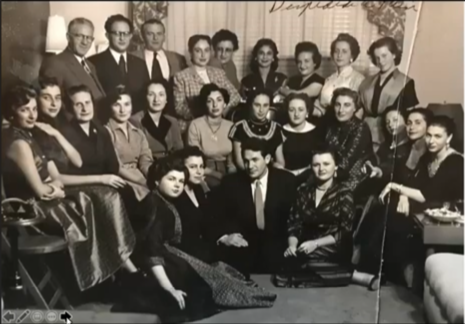
Yonia Fain with his students in Mexico
די טעאַטער־טרופּע איז געווען קלײן אין צאָל און זײער אָרעם אין מיטלען. אָבער אַלע אירע מיטגלידער האָבן זיך באַטראַכט פֿאַר קינסטלער, וואָס גײען קעגן דעם שטראָם פֿון אַ קאָרומפּירטער און צינישער וועלט.
זיי האָבן געפֿילט, אַז זיי רעפּרעזענטירן די צוקונפֿט, און זינט זיי זײַנען געווען זייער יונג איז זיי אָנגעקומען גאַנץ לײַכט אין דעם צו גלייבן. זיי זײַנען זיכער געווען אַז די צוקונפֿט וועט זיי פֿאַרגיטיקן פֿאַר אַלע שוועריקייטן און דערנידערונגען.
זיי האָבן אָנגענומען פֿאַר נאַטירלעך דאָס אונטערהונגערן, דאָס גיין אין אָפּגענוצטע קליידער און דאָס שלאָפֿן אין ניט־געהייצטע, צופֿעליקע דירות.
זיי האָבן דעם עולם אונטערגעטראָגן בלויז עקספּערימענטאַלע און שפּאָגל נײַע שפּילן. זייערע מחברים זײַנען אויך געווען זייער יונג. דער עולם וואָס פֿלעגט איבערפֿילן דאָס קליינע טעאַטערל האָט זיי באַטראַכט ניט נאָר פֿאַר אַקטיאָרן, נאָר אויך פֿאַר קעמפֿער פֿאַר נײַע ווערטן. די אַלע ווערטן האָבן געהאַט צו טאָן מיט פֿרילינג, פֿאַרפֿלייצונגען און פֿרײַהייט. אַלע אינעם קליינעם טעאַטערל — פֿרויען און מענער — האָבן געהאַט בלייכע ביינערדיקע פּנימער און ברייט אויפֿגעריסענע אויגן, וואָס האָבן אַלע זײַטיקע מענטשן באַטראַכט מיט ברוגז, פּונקט ווי זיי וואָלטן געשטאַנען אין זייער וועג. צוזאַמען מיט יונגשאַפֿט האָבן זיי פֿאַרמאָגט אַ נאַכלעסיקע מידקייט, אַפֿילו זייער געלעכטער האָט געטראָגן די דאָזיקע נאַכלעסיקע מידקייט — די וועלט האָט בלויז דערגרייכט צו זייערע קני.
דער רעזשיסער פֿון דער טרופּע איז געווען מיט פֿינף־זעקס יאָר עלטער פֿון די איבעריקע שפּילער. הינטער די אויגן האָט מען אים גערופֿן „דער אַלטער“, אין די אויגן — פּשוט „אַלטער“. זײַן אמתן נאָמען „וואָלטער“ האָט מסתּמא בלויז געוווּסט זײַן הונט, וועגן וועלכן ער פֿלעגט דערציילן פֿאַרשידענע ניט־געשטויגענע געשיכטעס.
דער אַלטער האָט ניט געגלייבט אין אַ „סטאַרן־סיסטעם“ און אין „ראָלעס־ספּעציאַליסטן“. ניט געקוקט אויף דעם האָבן זיך מיט דער צײַט גענומען אַרויסרוקן טאַלאַנטן פֿאַר וועמען געוויסע ראָלעס זײַנען געווען ווי אָנגעמאָסטן. אָבער דער אַלטער האָט עס ניט באַמערקט, ווײַל זײַנע אויגן האָבן בלויז געזען אידייען.
די טראַדיציאָנעלע ראָלע פֿון אַ קאָמעדיאַנט אָדער אַ לץ איז אין דעם רעפּערטואַר פֿון זײַן טעאַטער רעדוצירט געוואָרן צו אַ מינימום. דער אַלטער האָט געהאַט זײַן אַרטיסטישן מאָטאָ: טעאַטער איז ניט קיין צירק… טעאַטער איז אַ שלאַכטפֿעלד.
אין גאַנצן איז מען פֿון דעם לץ ניט פּטור געוואָרן, אָבער זײַן אָנזען צווישן די אַקטיאָרן איז געווען ניט קיין געהויבענער. „אויב פּראַווען שטיק“ — אַזוי האָבן זיי באַצייכנט זײַן שפּילן — „איז קונסט, איז עס זיכער פֿון דער נידעריקסטער מדרגה“.
פֿאַרן אָפּשליסן דעם טעאַטער־סעזאָן האָט דער אַלטער אויסגעקליבן אַ זאַך פֿון אַ יונגן „גאָון“. ס׳איז געווען אַ דראַמע מיט אַ פּאָליטישן אונטערשלאַק, פֿול מיט זאַלפּן פֿון פֿײַער־ראַקעטעס. די צענטראַלע פֿיגור אין דער דראַמע איז געווען אַ דיקטאַטאָר, וואָס איז געקומען צו דער מאַכט דורך אינטריגעס, מאָרד און פֿאַרראַט. מיט איין וואָרט, אַ מין קאָמבינאַציע צווישן מאַקיאַוועליס פּרינץ און קאַליגולאַ. נאָך יעדער פֿאַרשווערונג וואָס ער האָט אַליין קעגן זיך אָרגאַניזירט איז געשטיגן זײַן מאַכט. דער אונטערשייד צווישן טעאָלאָגיע און פּאָליטיק איז פֿאַרשוווּנדן. און ער איז דערקלערט געוואָרן פֿאַר אומשטערבלעך. זײַן הויפּטדאָקטער האָט דערקלערט, אַז ער איז אַ ביאָלאָגישע אוממעגלעכקײט, ווײַל ער ווערט יעדער יאָר ייִנגער. די בירגער פֿון לאַנד האָבן אָנגעהויבן צו גלייבן, אַז סוף־כּל־סוף וועט ער אומברענגען זײַן אייגענעם טויט.
ס׳איז אָן ספֿק געווען אַ ראָלע מיט אַ סך וווּנדערלעכע מעגלעכקייטן, ווי אָנגעמאָסטן פֿאַר איינעם פֿון די „טראַגישע סטאַרן“. אָבער דער אַלטער האָט איינעם נאָכן אַנדערן אויסגעבראַקירט. זײַן טענה איז געווען: — איר האָט אַלע דעם דיקטאַטאָר פֿײַנט… אָבער דאָס איז ניט גענוג. זייער פֿאַרטיידיקן זיך, אַז זיי האָבן טאַקע דעם דיקטאַטאָר פֿײַנט, אָבער ליב די ראָלע האָט דעם אַלטן ווייניק וואָס איבערצײַגט. איין „סטאַר“ האָט זיך אַפֿילו צעשריִען: וואָס ווילסטו פֿון מיר, דו ווילסט כ׳זאָל איבערדרייען מיטן קאָפּ אַראָפּ — פֿײַנט האָבן די ראָלע און ליב האָבן דעם דיקטאַטאָר?
דער רעזשיסער האָט אויף דעם בכלל ניט געענטפֿערט. זײַן מעטאָד איז באַשטאַנען: ווײַזן דעם אַקטיאָר דעם ריכטיקן וועג אָבער ניט לערנען אים ווי צו גיין.
די ליסטע פֿון די אַקטיאָרן פֿאַר דער ראָלע האָט זיך כּמעט אויסגעשעפּט, אָבער וועדליק די אָנגענומענע תּקנות פֿון דער טרופּע האָט אַפֿילו דער לעצטער נומער געהאַט דאָס רעכט אויסגעפּרובירט צו ווערן.
קיינער האָט זיך ניט פֿאָרגעשטעלט אַז דער לץ וועט דאָס דאָזיקע רעכט אויסנוצן. אָבער אַ לץ בלײַבט אַ לץ — צוליב לצנות וועט ער אַלץ אָפּטאָן.
דער לץ איז אַרויף אויף דער סצענע. די ערשטע פּאָר רגעס איז ער געווען דער אַלטער באַקאַנטער פּאַרשוין וואָס פּראַוועט שטיק, בלויז אַ ביסל מער חוצפּהדיק און בייזער. דאַן האָט ער זיך לאַנגזאַם, לאַנגזאַם, כּמעט אומבאַמערקט, גענומען ענדערן. די אַרויסרופֿערישקייט איז געוואָרן מער דראָענדיק, די קאָמישע זשעסטן מער אָפּלאַכעריש. זײַנע קורץ געשאָרענע האָר האָבן זיך אויפֿגעשטעלט ווי נאָדלען, די אויגן זײַנען פֿאַרשוווּנדן אונטער די שווערע ברעמען און די ליפּן האָבן גענומען צוקן. ס׳איז שווער געווען צו וויסן צי ער שטיקט זיך פֿון געלעכטער, צי פֿון צאָרן.
די אַקטיאָרן האָבן געקוקט אויף עמעצן, וואָס איז זיי אין גאַנצן געווען אומבאַקאַנט: אַ קאַרליק און אַ ריז איינצײַטיק. העפֿלעך און העסלעך, זײַן שטימע איז געקומען פֿון פֿאַרשידענע ערטער: פֿון בויך, פֿון דער נאָז, פֿון אונטער די שיך… קלאָר, דער קאָמעדיאַנט איז אַראָפּ פֿון זינען. ער איז געווען אומגלייבלעך, ער האָט פֿאָרגעשטעלט ניט קיין מענטשן נאָר אַ דערשײַנונג, וואָס פֿאַרשווינדט ווי נאָר די אילוזיע ענדיקט זיך.
די גרענעץ צווישן אימיטאַציע, פּאַראָדיע, פֿאַרס, טראַגעדיע און גראָער ווירקלעכקייט איז פֿאַרשוווּנדן.
ווען דער פֿאָרהאַנג האָט זיך פֿאַרצויגן האָבן אַלע געוווּסט: דער לץ איז געוואָרן אַ „סטאַר“.
אָבער דער דיקטאַטאָר האָט ווי ניט געהערט די אַפּלאָדיסמענטן, ער איז אַראָפּגעשפּרונגען פֿון דער סצענע און אַרויסגעטראָגן זיך פֿון זאַל.
די אַקטיאָרן האָבן זיך געוווּנדערט ווי אַזוי אַ קאָמעדיאַנט, אַ לץ האָט געקענט אַרײַנדרינגען אין אַזאַ קאָמפּליצירטן כאַראַקטער ווי דער דיקטאַטאָר. אויך דער רעזשיסער האָט זיך געוווּנדערט אָבער צוליב אַן אַנדער סיבה: ער האָט ניט געקענט פֿאַרשטיין פֿאַר וואָס ער האָט קיין מאָל ביז איצט ניט באַמערקט די אמתע נאַטור פֿון זײַן „לץ“.
The theater troupe was few in number and very poor in means, but its members considered themselves artists fighting the current of a corrupt and cynical world.
They felt that they represented the future, and since they were very young, they arrived at this conviction effortlessly, certain as they were that the future would someday compensate them for all their hardships and humiliations. They took starvation for granted, wore secondhand clothing, and slept in whatever housing was available, no matter how cold or incidental.
They offered their public only the newest, most experimental plays—and written by very young playwrights, as well. The crowds that would fill the modest theater to bursting saw them not just as actors but as the vanguard for new values. All of these values had to do with spring, floods, and freedom. All the people in that little venue—women and men—had pale, bony faces and wide, unyielding eyes that looked around them disdainfully, as though everyone stood in their way. Together with youth, they projected an indolent weariness that could even be heard in their laughter—the world barely reached their knees.
The theater’s director was five or six years older than the rest of the actors. They called him “Old Alter” behind his back, and simply “Alter” to his face. 13 13 “Alter” is a given name in Yiddish that can also mean “old man.” In the original Yiddish text of this story, the director is initially introduced as both “Der alter” (the old man) and just “Alter.” Addition of the definite article before his name changes it from an ordinary given name to the title “the old man,” signifying Alter’s relative age seniority among the younger actors in a way that could be alternately mocking or admiring. The similarity between the director’s two names, Alter and Walter, highlights the slippage of his “real” non-Yiddish legal name and his informal, though more relevant, Yiddish name. I have attempted to reflect the original word play where it appears in the text. His real name was Walter, but only his dog knew that. He would tell various made-up stories about this dog.
Old Alter didn’t believe in “stars” or “specialized roles.” Yet over time different talents emerged that came to fit certain roles just right. But he didn’t notice: He only had eyes for ideas.
In the director’s theatrical repertoire, the traditional role of the clown or the comedian was kept to a minimum. Old Alter had his artistic motto: “Theater is no circus—it’s a battlefield.”
The clown was not missing altogether, but his standing among the actors was not a high one. “If buffoonery”—so they called his acting—“is art, then surely it is the lowest form there is.”
At the close of the theater season Old Alter chose a piece by a young “genius”: a drama with a political thrust, and full of rocket-fire salvos. The central figure of the drama was a dictator who had risen to power through treachery, intrigue, and murder. In a word: a sort of Machiavellian prince/Caligula combination. With every self-organized conspiracy to depose him, his powers multiplied. The difference between theology and politics vanished, and he was pronounced immortal. His chief doctor declared him a biological impossibility: He grew younger by the year. The people became convinced that he would, in the end, dispatch his own death.
It was no doubt a role with many marvelous possibilities, equal to one of the “tragic stars.” But Old Alter rejected one after another. His argument was: “You all detest the dictator . . . but that’s not enough.” Their own defense, that they all hated the dictator but loved the role, didn’t persuade Old Alter. One “star” even lashed out: “What do you want from me? You want me to walk about upside down, hate the part and love the dictator?”
The director didn’t even bother answering. He persisted in his method: Show the actor the right way, but don’t teach them how to walk it.
The list of actors for the role was nearly out of names, but according to the troupe rules, even the last one on the list had a right to audition. No one had imagined that the clown would exercise this right. But once a clown, always a clown—he would do anything for the bit.
The clown got on stage. At first he was the same old character doing his usual shtick, only a bit more mean and insolent. Then slowly, very slowly, almost imperceptibly, he began changing. His punches became more threatening, the jesting more mocking. The close-shaven hair on his head stood up on end like needles, his eyes disappeared under his heavy brows, and his lips began twitching. It was hard to tell whether he was choking with laughter or rage.
Now the actors were watching someone completely strange to them: a dwarf and a giant in one. At once courteous and contemptuous, his voice reverberated from all over his body: his belly, his nose, from under his shoes . . . It was clear the comedian had lost his mind. He was unbelievable: He hadn’t played a character, but a phenomenon that disappears as soon as the illusion reaches its end.
In an instant, the borders separating imitation, parody, farce, tragedy, and gray reality disintegrated.
When the curtains fell, they all knew: The clown had become a “star.”
But it was as though the dictator hadn’t heard the applause. He leapt from the stage and left the hall.
The actors wondered how a comedian, a clown, could penetrate a character as complex as the dictator. The director also wondered to himself, but for a different reason: He couldn’t understand why he had never, until now, seen the true nature of his “clown.”