May 28, 2025
INTRODUCTION
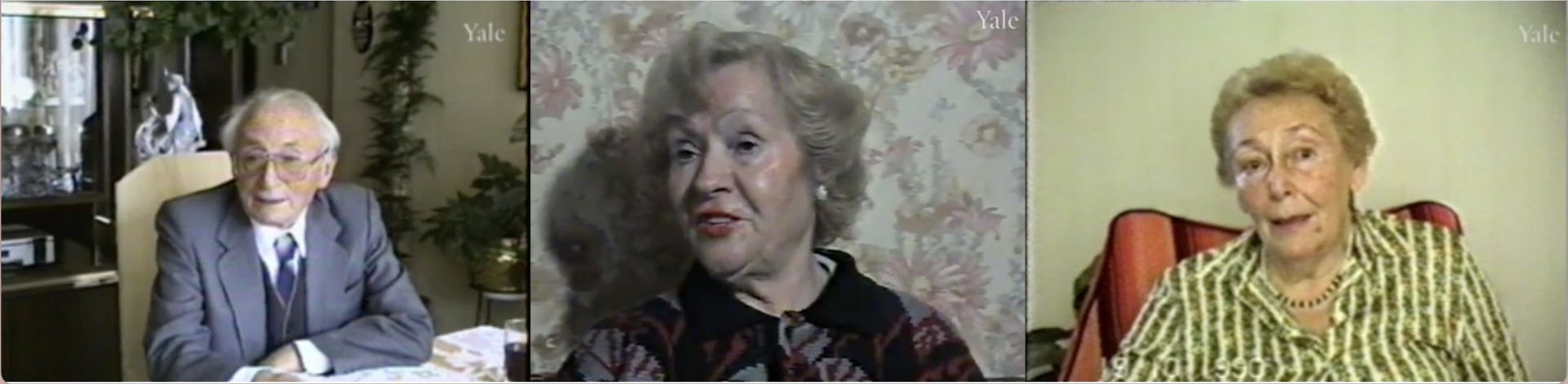
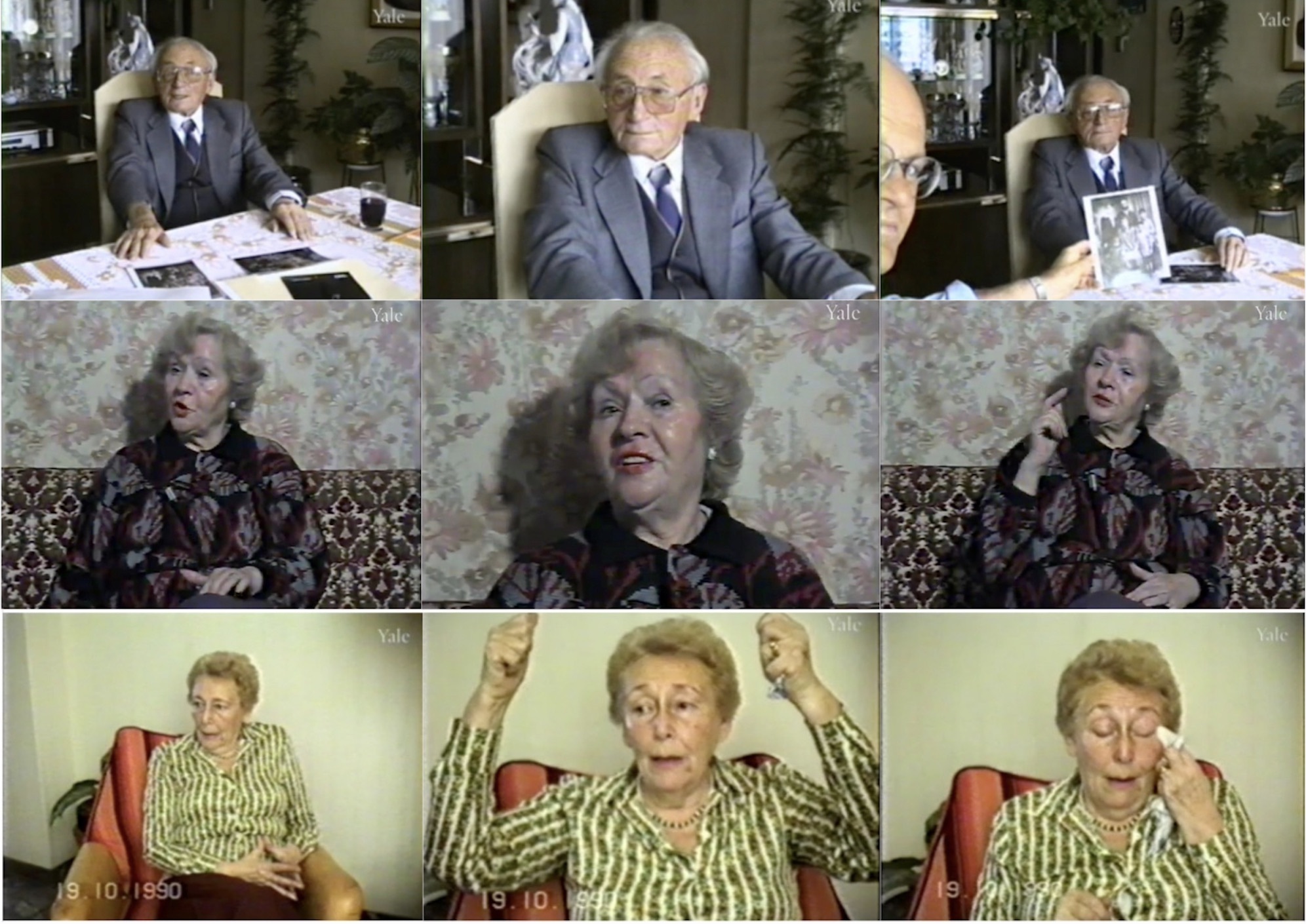
This teaching guide draws upon the oral testimonies held by the Fortunoff video archive of Fiszel Swerdszarf, Sara Proszowska, and Paja Levín (née Wapner), who were all native Yiddish speakers from Poland and young adults at the outbreak of World War II. Though their paths to survival differed significantly, all three ultimately rebuilt their lives in faraway and initially unfamiliar countries, such as Bolivia and Argentina.
The teaching guide is designed for university-level history courses as a resource for working with oral testimony. It facilitates discussions on the process of creating oral histories, their broader implications, and the vital role of language in shaping narratives. It also provides an opportunity to delve into theoretical frameworks that inform the interpretation of oral testimonies. Included are brief biographical profiles of the aforementioned Holocaust survivors. Next, the guide is organized into four thematic sections (time, movement, language, oral history), each featuring a concise introduction for instructors, questions to prompt classroom discussions, a list of recommended readings, and two sample assignments.
The assignments are designed for history students with a foundational understanding of Yiddish, though certain components can be adapted for those with no prior exposure to the language. They are primarily aimed at those with a solid grasp of oral testimony as a historical source, using language (in this case, Yiddish) as one of the key analytical tools in their research, though without a specific focus on linguistics.
For more insights into how this guide was developed, please refer to this accompanying blog post. It can also serve as a longer introduction to each framework.
To access the interviews featured in this teaching guide, please request access through the Fortunoff Video Archive here. Each interview is accompanied by a partial English transcript and an index. The interviews are primarily recorded in Yiddish, with some elements of Spanish, Polish, and German.
The entire teaching guide is available for download as a PDF file here.
BIOS
The short biographies are prepared based on the information survivors provided in their testimonies. Instructors may choose to focus on an individual testimony as a standalone source, allowing for an in-depth examination of a single survivor’s experience. Some may opt for a comparative analysis that considers all three testimonies together, highlighting differences and similarities in their reflections, recollections, and life trajectories.
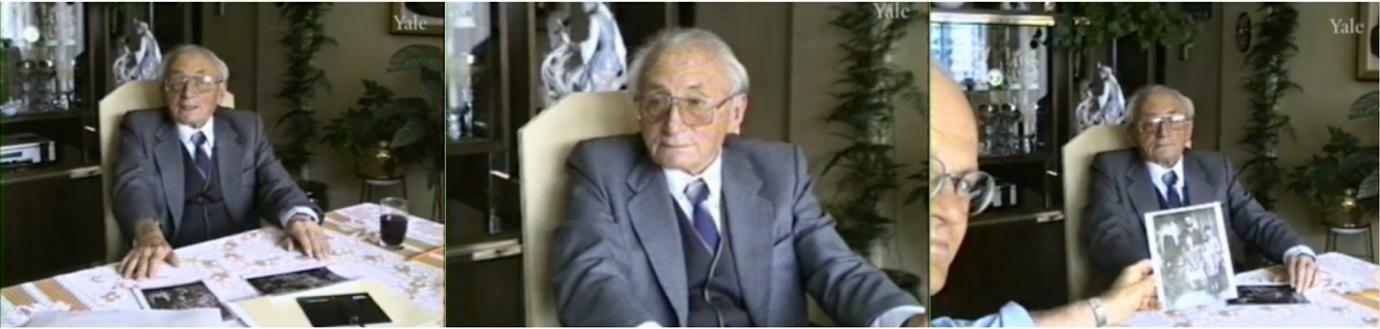
Fiszel Swerdszarf
Fiszel Swerdszarf was born in 1923 in Kraśnik, a town near Lublin, Poland, into a Ger Hasidic family. He received a traditional religious education and studied at a yeshiva in Janów Lubelski. Before the outbreak of the Second World War, several members of his family—including his brother—had already emigrated to Bolivia and Argentina. During the war, Fiszel endured forced labor and was imprisoned in multiple camps, including Budzyń—where his father and another brother were killed—as well as Mielec, Wieliczka, Flossenbürg, Leitmeritz, and Mauthausen-Gusen. After liberation, he remained in the Linz area for a while, followed by a year in Modena, Italy. From there, he obtained a visa and traveled through Paris and the port of Cherbourg, eventually boarding a ship to Brazil. He later flew to Bolivia, settling there in 1946. His oral testimony was recorded in March 1995 by Marianne Hirsch and Leo Spitzer. Fiszel authored a memoir titled Testimonio, originally written in Yiddish in 1946 and later translated and published in Spanish in 1988 in La Paz, Bolivia.
Fiszel’s interview can be found here.
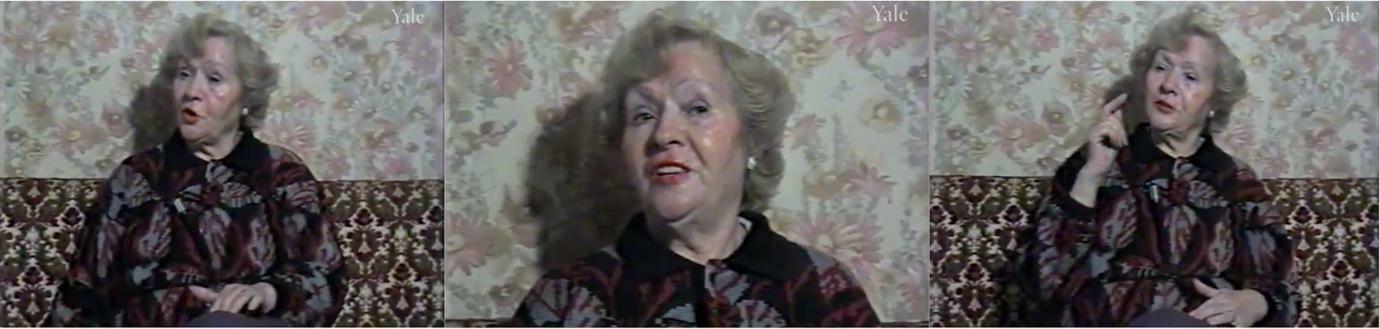
Sara Proszowska
Sara Proszowska was born in 1918 in Przysucha, a town in central Poland, into a religious family as the eldest of six siblings. When she was ten years old, the family moved to Łódź, where they worked in the textile and leather trades. She received both a Jewish and a Polish education and was fluent in Yiddish and Polish. Her father was a follower of the Ger Hasidic dynasty. Shortly before the outbreak of the Second World War, Sara married (and would many years later divorce while living in Argentina). She and her husband survived the brutal realities of the Łódź ghetto, where her husband worked as a tailor. She was later deported to Auschwitz, where she witnessed her child being taken from her and presumably killed. She ultimately survived both Auschwitz and, later, Bergen-Belsen. She was liberated at the Salzwedel camp and later transferred to the Zeilsheim DP camp. After the war, she spent four and a half years in Belgium, where her husband’s sister was living. In 1951, following a brief stay in La Paz, Bolivia, she settled permanently in Buenos Aires, Argentina. Her oral testimony was recorded in June 1994 by Abraham Huberman.
Sara’s interview can be found here.
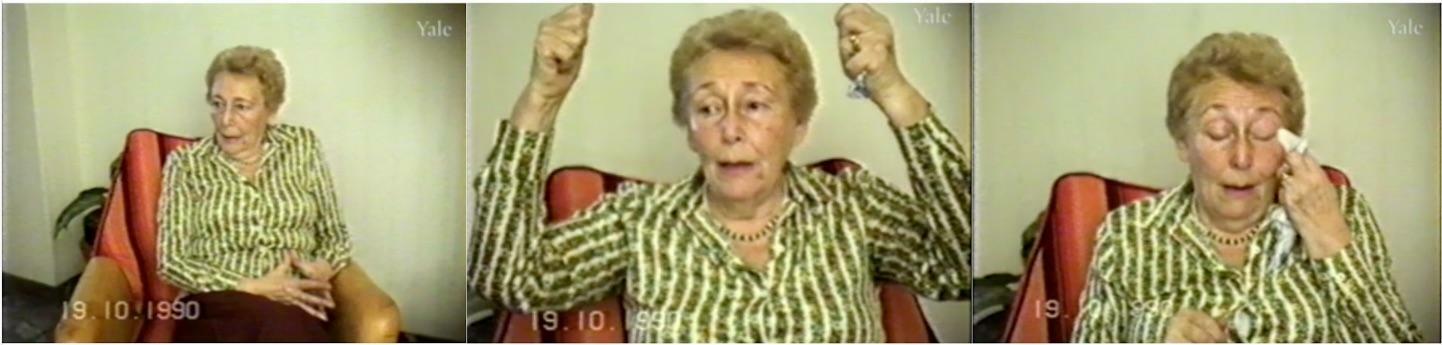
Paja Levín (née Wapner)
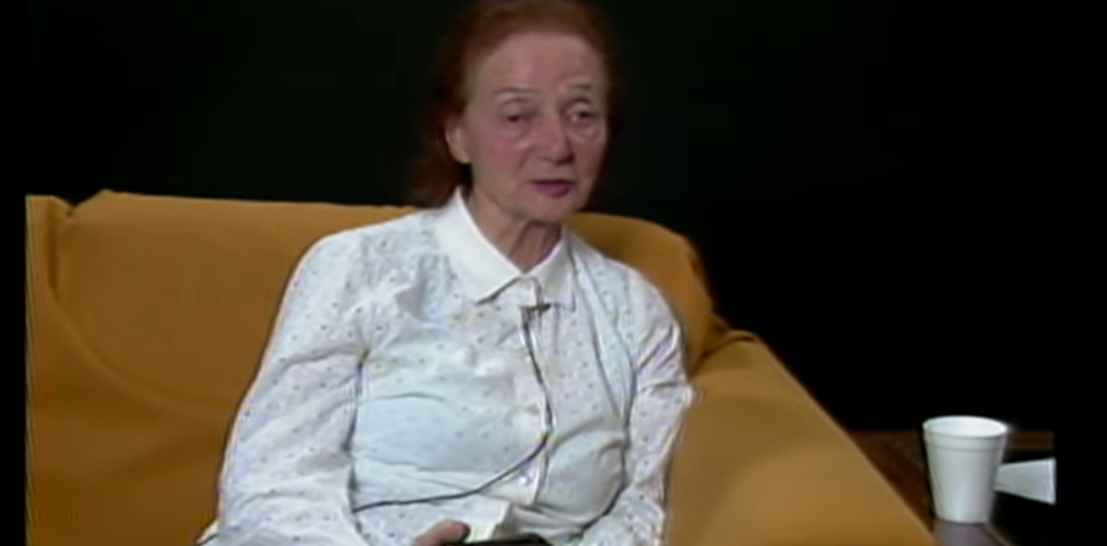
Paja Levín (née Wapner) was born in 1921 in Vilnius, then part of Poland (now Lithuania). She grew up in Vilnius, where she received her education, and was shortly employed in a kindergarten. She remained in the city during the early years of World War II, and in her testimony, she offered vivid accounts of daily life—describing the harsh conditions of the ghetto, mass executions, pervasive antisemitism, acts of resistance, and encounters with partisan leaders. From Vilna, she was deported to the Kaiserwald/Strasdenhof concentration camp near Riga, where she was imprisoned for a year. She was subsequently transferred to Stutthof and then to the Burggraben subcamp. Following severe beatings that left her gravely injured, she was taken to a hospital in Gdańsk, and later to Moscow, where she spent six months recovering and relearning how to walk. With assistance from the Bund, she returned to Vilna and then moved to Łódź. From there, she traveled through Warsaw to Paris, where she lived for a year. Although she had hoped to immigrate to the United States, she ultimately reached Buenos Aires in 1949, following a route through Italy and Montevideo, Uruguay. Her oral testimony was recorded in October 1990 by Abraham Huberman.
Paja’s interview can be found here.
TEACHING GUIDE
TIME
In many Holocaust survivor interviews, the focus is primarily on pre-war experiences and the Holocaust itself, often leaving out the survivors’ post-war lives (which, in the case of these interviews, took place in Latin America). However, by the time these interviews were recorded in the 1990s, survivors had spent decades in countries like Argentina and Bolivia, where their identities were shaped by the social, political, and cultural contexts of their new homes. This extended period of residence in Latin America offers a unique perspective that should not be overlooked. Instructors should guide students to explore not only the Holocaust narratives but also how these survivors’ lives in Argentina and Bolivia shaped their identities and historical understandings.
When introducing this topic, instructors should emphasize the significance of time and chronology in shaping historical narratives. Rather than accepting conventional periodization as universal, students should be encouraged to critically engage with the ways in which historical time is constructed and categorized. Western historiography often imposes rigid temporal frameworks, such as the “interwar” and “post-war” periods, which may not adequately reflect the lived realities of displaced populations, particularly Holocaust survivors who rebuilt their lives outside of Europe. Unlike Europe, where the war and its aftermath defined historical time, Jewish survivors who arrived in Argentina and Bolivia entered societies that had their own historical rhythms, shaped by different political and social dynamics. Argentina, under Perón’s administration, and Bolivia, which was tangentially involved in WWII, dealing with the legacies of the Chaco War, were not as deeply shaped by the immediate aftermath of World War II. These factors shaped how survivors integrated into their new surroundings, how their past was understood (or sidelined), and how they navigated their new lives. By examining these regional contexts, students can better grasp how survivors adapted to worlds with different temporalities—where “postwar” did not hold the same meaning as it did in Europe. A concept of decoloniality can be introduced here to decenter some of the conventional narratives of history and time. Moreover, instructors can encourage students to reflect on how the later ongoing political challenges in these countries, such as military dictatorships and human rights violations, may have influenced the survivors' storytelling and their connections to the Holocaust.
When engaging with the testimonies, instructors should also emphasize the varying narrative styles of survivors. Some, like Fiszel, follow a more chronological sequence, while others, like Sara, shift between different periods in their life. This variability in narrative style provides a unique lens through which students can analyze how individuals process their trauma and construct their memories. Instructors can facilitate classroom discussions about how these narrative shifts—moving between time periods, reflecting with future knowledge—may help survivors cope with trauma or complicate their ability to create coherent, linear narratives.
Additionally, students should explore how the removal from the immediate devastation of the war allowed Yiddish culture to continue in Latin America, maintaining its presence while it faded in Europe. This offers a valuable teaching opportunity to explore cultural preservation in the diaspora.
The proposed questions, readings, and assignments aim to help students analyze Holocaust testimonies through a broader historical and analytical lens, examining how historical events and the passage of time shape survivor narratives. They introduce theoretical frameworks, thereby fostering a more nuanced understanding of how spaces, chronologies, and context mediate survivor testimonies. Moreover, one of the assignments critically engages with oral history methods, emphasizing the historian's role in formulating thoughtful and compassionate questions.
QUESTIONS (Time)
How do survivors blend their personal memories with broader historical narratives, and what challenges arise in this process?
How does the passage of time affect the way survivors recount their stories?
How does the concept of “time” and “chronology” shape historical narratives in survivor testimonies?
How do survivors describe their perception of time during the Holocaust (e.g., did time feel accelerated, stagnant, or fragmented)?
How do narrative techniques, such as non-linear storytelling or fragmented recollections, shape how audiences understand and interpret survivors’ experiences? What role does the Yiddish language play in the way these memories are expressed and understood?
How did the political landscapes of Argentina and Bolivia shape the ways Holocaust survivors rebuilt their lives, and what kinds of possibilities or limitations did these contexts create for them? How did the continued use of Yiddish (or the shift away from it) play a role in their integration into Latin American societies?
How does the political violence and repression in Argentina and Bolivia during the twentieth century complicate or reshape survivors' relationships with their histories of persecution and survival?
What new perspectives emerge when we consider Holocaust history through the lens of Latin American Jewish communities, rather than through a European or North American framework?
SUGGESTED READINGS (Time)
Cole, Tim. “(Re)Placing the Past: Spatial Strategies of Retelling Difficult Stories.” Oral History Review 42, no. 1 (2015): 30-49.
Gruner-Domić, Sandra. “Holocaust Refugees in Bolivia: Immigration Through a Postcolonial and Microhistorical Lens.” The Leo Baeck Institute Year Book, 2024.
Hunfeld, Katharina. “The Coloniality of Time in the Global Justice Debate: Decentering Western Linear Temporality.” Relational Theory: Feminist Approaches, Implications, and Applications 18, no. 1 (2022): 1–28.
Kerner, Amy. “Un peligro difuso: On Remembering Yiddish in Post-Dictatorship Argentina.” Latin American Jewish Studies 2, no. 1 (2023): 129-140.
Mignolo, Walter D., and Katherine E. Walsh. On Decoloniality: Concepts, Analytics, Praxis. Durham: Duke University Press, 2018.
Mittler, Barbara, Thomas Maissen, and Pierre Monnet, eds. Chronologies: Periodisation in a Global Context. Heidelberg: Heidelberg University Publishing, 2024.
Spitzer, Leo. Hotel Bolivia: The Culture of Memory in a Refuge from Nazism. New York: Hill and Wang, 1998.
Tarica, Estelle. Holocaust Consciousness and Cold War Violence in Latin America. SUNY Press, 2022 (Introduction, Chapters One and Two).
ASSIGNMENT 1 (Time)
Exploring Life Beyond the Holocaust in Survivor Testimonies
This assignment invites students to explore the broader context of Holocaust survivors' lives by identifying stories and elements within their testimonies that are not directly related to the Holocaust period. The goal is to help students understand how survivors' experiences beyond the traumatic events of the war contribute to their overall narrative, and how these aspects either intersect with or stand apart from their Holocaust testimony.
INSTRUCTIONS
Watch the assigned survivor testimonies carefully. As you listen, identify and take note of any stories, reflections, or details that do not directly relate to the Holocaust period itself such as memories of life before the war, postwar rebuilding, family relationships, migration journeys, or personal beliefs. These moments might be brief or mentioned in passing, but they are important.
After watching, organize these moments into thematic categories. Consider grouping them by themes like education, professional life, family background, cultural or political involvement, or postwar migration. Note the timestamps or approximate segments where these elements appear in the interview.
Discuss your observations with classmates. Compare findings and reflect on the broader themes that emerge. What do these moments reveal about the survivor’s identity beyond the Holocaust? How do they shape your understanding of their life story? Where do they appear in the testimony?
Building on this, consider how survivors experience time in their testimonies. When does time seem to move forward, and when does it appear to stand still? What moments do they spend the most time on, and what do they skip over? Is the testimony presented chronologically, or does it follow a different structure? What might this reveal about how memory is organized and how survivors make sense of their experiences?
Example:
Paja’s Interview
Part 1 (Segment 1: 00:01:38 – 00:02:04) Paja briefly recalls her education in Vilnius and mentions working in a kindergarten for a year before the war began.
Part 1 (Segment 2: 00:10:05 – 00:10:38) Paja shares that her father was the chairman of the secular school system in Vilnius and that he was 63 years old when the war started.
Sara’s Interview
Part 1 (Segment 1: 00:00:35 – 00:07:12) Sara reflects on her early life in Przysucha and later in Łódź. She describes her education and religious upbringing, the language spoken at home, and her role in helping her family with their work. She also shares details about her siblings and even recalls the exact street they lived on in Łódź.
ASSIGNMENT 2 (Time)
What If I Could Interview You Again? Crafting New Questions
This assignment challenges students to engage critically and empathetically with the post-war experiences of Holocaust survivors in Latin America. Through background research on Jewish immigration and historical events in Argentina and Bolivia, they will refine their historical inquiry skills and learn to craft thoughtful, open-ended questions. This exercise also encourages sensitivity to trauma narratives, fostering a nuanced approach to survivor testimony and oral history methodologies.
INSTRUCTIONS
Imagine you are preparing to interview Fiszel, Sara, and Paja, with a focus on their experiences in the post-war years. Your goal is to create a series of 10 to 12 open-ended questions that explore the survivors' journeys within entirely different cultural, political, and social contexts.
The questions may be tailored to each survivor’s unique experiences, or you can create a set that applies to all. If possible, please present the questions in both English and Yiddish.
To formulate your questions, begin by conducting background research on Jewish life in Latin America. Familiarize yourself with significant historical events in Argentina and Bolivia throughout the twentieth century, as this knowledge will provide essential context for understanding the survivors' experiences.
Your questions should seek to uncover how each survivor adjusted to life in Latin America, how their identities transformed over time, and how they balanced memories of the Holocaust with the unique challenges and opportunities presented by their new environment. One key aspect may be to uncover periodization (how the survivors organize their time into different periods) from the perspective of the survivors themselves, rather than chronological frameworks imposed by historians.
Aim to craft questions that allow the survivors to share their stories in a manner that feels natural and comfortable for them. Focus on open-ended inquiries that encourage reflection on their complex journeys, while avoiding leading questions or overly specific prompts.
Additionally, be mindful of the sensitivity surrounding traumatic memories. Frame your questions to empower the survivors to choose how much detail to share and ensure a respectful and empathetic approach to their narratives.
Example:
האָט איר דערציילט אײַערע קינדער אָדער דער קהילה וועגן אײַערע חורבן-איבערלעבונגען?
Did you share your Holocaust experiences with your children or community?
MOVEMENT
The terminology used to describe migration—terms such as immigration, emigration, migration, and refugeedom—plays a crucial role in shaping both scholarly analysis and public discourse. Each term carries distinct connotations that influence how the movement of people is understood. In academic discussions, these classifications help define the causes, patterns, and consequences of displacement. In public discourse, the language used shapes perceptions of migrants and influences policy responses. When applied to Holocaust survivors, these categories become especially complex. Survivors' experiences often transcend conventional classifications. Whether survivors are referred to as migrants, refugees, or something else shapes the historical narrative, historiography, and contemporary understanding of their identity. Students should be able to critically engage with these terms, highlighting how language shapes the framing of migration and survival.
Holocaust oral testimonies do not necessarily address migration in depth in the conventional sense of the full process of relocation from one part of the world to another. They do provide an understanding of survivors' movements and temporary relocations during the Holocaust and its immediate aftermath. While migration research often focuses on how host countries receive or reject immigrants, oral histories shift the focus to the places survivors left behind. The testimonies reveal survivors' emotional connections—or the lack thereof—to their homelands. They show how survivors remember, redefine, or sever ties with their past, illuminating ruptures and (dis)continuities in their identities. Instructors should encourage students to engage with survivors' voices, recognizing them as invaluable historical evidence that offers unique insights often missing from written records. However, it is crucial for instructors to teach students how to critically analyze these oral histories by cross-referencing them with other sources. This process helps verify facts, uncover discrepancies, and ensure a more comprehensive understanding of the past while acknowledging the subjective nature of memory in oral testimony.
Mapping is an effective tool for visualizing survivors’ journeys, illustrating their routes, modes of transportation, and the locations they passed through. This method enables students to distinguish between key Holocaust spaces—such as ghettos, concentration camps, or displaced persons' camps—each of which had its own distinct conditions. Mapping also serves as an insightful comparative tool, shedding light on the specific hardships survivors endured in different places, such as mistreatment, food scarcity, forced labor, or the roles played by perpetrators. However, instructors should encourage students to use a comparative approach cautiously, ensuring it is contextually appropriate and sensitive. A comparative approach should not be about ranking suffering, but about deepening the understanding of the multiplicity of traumatic experiences.
The proposed questions, readings, and assignments will guide students in analyzing oral testimonies, focusing on the geographical, linguistic, and ethical dimensions of displacement. They will explore both the practical methods of interpreting these testimonies and the larger philosophical questions they raise. Additionally, students will critically engage with digital maps, assessing their value and limitations in Holocaust research and education, and how these tools can enhance our understanding of survivors’ experiences.
QUESTIONS (Movement)
How do the terms used to describe migration and the movement of people—such as immigration, emigration, and refugeedom shape our understanding of these experiences in scholarly analysis, historiography, and public discourse? What unique challenges arise when categorizing Holocaust survivors, whose experiences often transcend conventional definitions of migration?
What role does language—particularly Yiddish—play in shaping the identity of Holocaust survivors? How does Yiddish function both as a symbol of cultural continuity and as a reminder of the ruptures caused by displacement?
How can mapping the movement of people throughout history—whether during the Holocaust or other instances of displacement—deepen our understanding of the human experience of migration? What insights are gained or lost when we visualize journeys in this way?
Why is it important to analyze the modes of transportation used during the Holocaust? What categories of information can be uncovered by studying these transportation methods?
What scholarly expertise is required to effectively map the movements of Holocaust survivors?
What ethical considerations arise when comparing the experiences of different displaced groups across time and geography? Is it possible—or appropriate—to measure the severity of persecution between groups or to assess whether conditions in one camp were worse than in another?
When looking at this map depicting the movements of survivors (Fiszel, Sara, and Paja), consider its approach to representation. What might be the significance of omitting national borders?
How can we map spaces that hold personal significance in Holocaust survivors' testimonies but are impossible to geographically pinpoint? What methods can be employed to represent these intangible or metaphorical spaces in a historical context?
SUGGESTED READINGS (Movement)
Cole, Tim. Holocaust Landscapes. London: Bloomsbury, 2016.
Desbois, Patrick. Holocaust by Bullets: A Priest’s Journey to Uncover the Truth Behind the Murder of 1.5 Million Jews. New York: Palgrave Macmillan, 2008.
Fubel, Janine, Alexandra Klei, and Annika Wienert. Space in Holocaust Research: A Transdisciplinary Approach to Spatial Thinking. Berlin, Boston: De Gruyter Oldenbourg, 2024.
Gigliotti, Simone. Restless Archive: The Holocaust and the Cinema of the Displaced. Bloomington: Indiana University Press, 2023.
Jockusch, Laura, and Avinoam J. Patt. “Holocaust Survivor Diaspora(s).” In The Oxford Handbook of the Jewish Diaspora, edited by Hasia R. Diner. Oxford: Oxford University Press, 2021. Online edition, Oxford Academic, December 8, 2021. https://doi.org/10.1093/oxfordhb/9780190240943.013.29.
Knowles, Anne Kelly, Tim Cole, and Alberto Giordano, eds. Geographies of the Holocaust. Bloomington: Indiana University Press, 2014.
Kushner, Tony. Journeys from the Abyss: The Holocaust and Forced Migration from the 1880s to the Present. Liverpool: Liverpool University Press, 2017.
Sturdy Colls, Caroline. Holocaust Archaeologies: Approaches and Future Directions. New York: Springer, 2015.
ASSIGNMENT 1 (Movement)
Places: A Multilingual Approach to Holocaust Locations
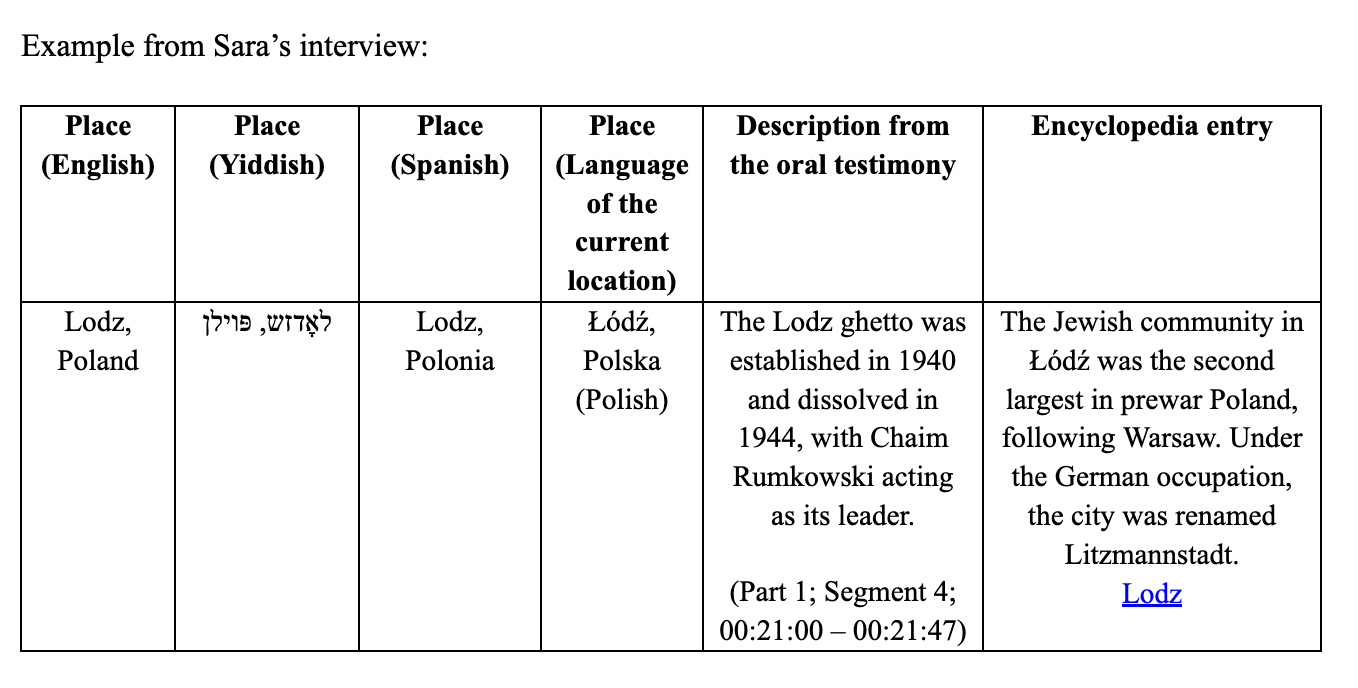
In this assignment, students will compile a list of all the places mentioned by the three Holocaust survivors in their testimonies. For each location, they will provide a brief description of how it is portrayed in the testimony, using a sentence or a few words. Additionally, students will research a short encyclopedia entry for each place and include it in four languages: English, Yiddish, Spanish, and the current language of the location. This task aims to conduct initial research on locations and assist in analyzing oral testimony as a historical source.
INSTRUCTIONS
Carefully listen to the testimonies of the three narrators. As you listen, note down at least 5 different places mentioned, such as towns, cities, concentration camps, ghettos, or any other relevant locations.
Include the name of the place in 4 languages: English, Yiddish, Spanish and the current language of the location.
For each place, write one sentence or a few words that describe it based on the testimony. This could include details about the narrator’s experiences in that location, the atmosphere, the people, or the events that occurred there.
For each location, find an encyclopedia entry—such as in the USHMM Holocaust Encyclopedia here or another reliable source—that offers historical context. Write very briefly about the site's significance, focusing specifically on its connection to the Holocaust.
Present the information in a table format. Below is an example structure for organizing the information gathered.
ASSIGNMENT 2 (Movement)
Mapping the Past: Analyzing Digital Representations of Holocaust History
This assignment invites students to critically engage with digital maps used to represent Holocaust histories. As we increasingly turn to digital tools to understand historical events, it is essential to evaluate how these maps convey complex narratives. By examining the visual presentation, interactivity, and historical accuracy of the provided maps, students will assess both their effectiveness and limitations.
INSTRUCTIONS
1. Divide into small working groups and carefully analyze the following Holocaust maps:
2. Identify three key strengths of each map. Consider how they visualize movement, contextualize historical events, and engage audiences through interactive design or narrative depth.
3. Examine three limitations of each map. Reflect on potential oversimplifications, technological constraints, or gaps.
4. Determine which maps could be used to illustrate different aspects of Fiszel, Sara, and Paja’s experiences. These are some “hint questions” to guide your analysis:
(Refugee Map) Who is considered a refugee? What conditions create refugee status? Were all Holocaust survivors refugees? What defines a place of refuge?
(I Was There) Are there places described in the testimonies—like hiding spots—that may be hard to locate or represent accurately on a conventional map?
(Through Hell to the Midwest) If you wanted to find more documents, photographs, or information about individual survivors, where would you look? What types of sources would be useful?
(Yahad–In Unum) Do the testimonies describe mass executions that took place outside formal camps and ghettos?
(Memento Wien) Do the maps include specific details about where survivors lived before the war? If that information is missing, how might you go about uncovering it? Why does knowing this matter?
5. Prepare to present and discuss your findings in class. Reflect on how these maps both illuminate and obscure survivor experiences, and consider how they balance historical data with the subjectivity of oral histories and individual journeys. You can come up with your own concept for a map that highlights one of the key themes discussed in the interviews.
LANGUAGE
When teaching the Holocaust, instructors often turn to testimonies to provide students with a more personal, humanized understanding of this complex history. These testimonies serve as a vital connection to the past, offering emotional weight and historical insight. However, despite their profound significance, Yiddish testimonies remain underutilized in both research and teaching. The primary reason for this is that relatively few scholars—and even fewer students—possess the skills to understand Yiddish, a language that should be essential to Holocaust studies, as it was spoken by many of the victims.
Engaging directly with Yiddish testimonies highlights the broader importance of language proficiency as an essential tool for historians. The ability to work with primary sources in their original language grants historians access to unfiltered perspectives, capturing nuances and cultural subtleties that may be lost in translation. By encouraging students to learn and engage with Yiddish, we foster a more sophisticated approach to historical inquiry, reinforcing the value of multilingualism in scholarly work.
Incorporating Yiddish into Holocaust education also brings to light important ethical and methodological considerations about oral history practices. Oral historians frequently face the decision of whether to record testimonies in the narrator’s native language or ask them to speak in more widely spoken languages. This decision carries important implications for how these narratives are preserved and understood. For example, choosing a particular language for the testimony may change its tone or exclude cultural nuances crucial to grasping the speaker's lived experience. By analyzing these choices, students can critically examine the documentation process, exploring how linguistic decisions shape collective memory and influence the history of the Holocaust.
Recent advances in digital humanities and artificial intelligence have expanded access to Yiddish materials, making them more available for scholarly study. AI-driven translation models, text analysis tools, and archival digitization projects are uncovering new insights into Yiddish language and culture. These technological tools can significantly complement historians' work by making large volumes of testimonies and documents more accessible and facilitating their analysis on a broader scale. While this teaching guide does not delve into linguistics, it provides examples of current research initiatives, demonstrating how historians can use these innovations to enhance their understanding of Yiddish sources and broaden their analytical frameworks.
The proposed questions, readings, and assignments are designed to foster a creative engagement with the Yiddish language, while simultaneously encouraging students to grapple with core ethical dilemmas that are central to the work of historians and oral historians. This approach invites critical reflection on the responsibilities of those who study and represent the past, while also exploring how collaboration with scholars from other disciplines can enrich historical inquiry.
QUESTIONS (Language)
Should basic knowledge of Yiddish be considered an essential skill for all Holocaust historians?
Considering the linguistic barriers in Holocaust scholarship and education, what targeted strategies can academic institutions implement to promote the learning of Yiddish among scholars and students?
What is the ethical responsibility of historians when working with Holocaust testimonies in languages they do not understand, and how can this influence the accuracy and authenticity of their interpretations?
How do oral historians navigate the ethical challenge of choosing between recording testimonies in a narrator's native language or a more widely spoken one, and what are the implications of this decision for accurately capturing the full spectrum of Holocaust experiences and shaping how contemporary audiences receive these testimonies? (In recent decades, Holocaust survivors have often been organized to give presentations to community and school groups in the language of those groups to promote education and awareness. How might such a presentation, because of the language dimension as well as the educational mission, differ from these Yiddish-language testimonies?)
If the testimonies of Holocaust survivors Fiszel, Sara, and Paja had been recorded in languages other than Yiddish—such as Polish or Spanish—how might the content, tone, and cultural nuances of their narratives have changed? What insights could have been lost or gained through these linguistic shifts?
If Holocaust survivors' testimonies were recorded in their second or third language, rather than their native tongue, would the emotional weight of their experiences be diminished or altered, or might it become easier for them to process and articulate their trauma in a language that feels more distant from their lived reality?
Scholars have noted new Yiddish terms and expressions, or new valences and connotations to existing terms, that emerged specifically during or in the aftermath of the Holocaust. Can you pinpoint any examples of this in the testimonies you have watched?
How could recent developments in AI-driven translation models and text analysis tools transform Holocaust research by enhancing access to Yiddish primary sources, and what challenges do these technologies pose regarding accuracy and the preservation of historical context?
SUGGESTED READINGS (Language)
Bleaman, Isaac L., and Chaya R. Nove. “The Corpus of Spoken Yiddish in Europe: Goals, Methods, and Applications.” Language Documentation & Conservation 19 (2025): 142–157.
Johnson, Matthew. “Julia Pirotte’s Yiddish.” In geveb (April 2025).
Pollin-Galay, Hannah. “The History of My Voice: Yiddish at the Seams of Holocaust Video Testimony.” Prooftexts 35, no. 1 (2015): 58–97.
Pollin-Galay, Hannah. Ecologies of Witnessing: Language, Place, and Holocaust Testimony. New Haven: Yale University Press, 2018.
Pollin-Galay, Hannah. Occupied Words: What the Holocaust Did to Yiddish. Philadelphia: University of Pennsylvania Press, 2024.
Rogers-Fett, Etai. “Veln di verter oykh nern: Continuing Vilna’s Legacy of Cultural Resistance.” In geveb (April 2025).
Shandler, Jeffrey. Holocaust Memory in the Digital Age: Survivors' Stories and New Media Practices. Stanford: Stanford University Press, 2017.
Smith, Mark L. The Yiddish Historians and the Struggle for a Jewish History of the Holocaust. Detroit: Wayne State University Press, 2019.
Veidlinger, Jeffrey. In the Shadow of the Shtetl: Small-Town Jewish Life in Soviet Ukraine. Bloomington: Indiana University Press, 2016.
Margolis, Rebecca. Yiddish Lives On: Strategies of Language Transmission. Montreal: McGill-Queen's University Press, 2023.
ASSIGNMENT 1 (Language)
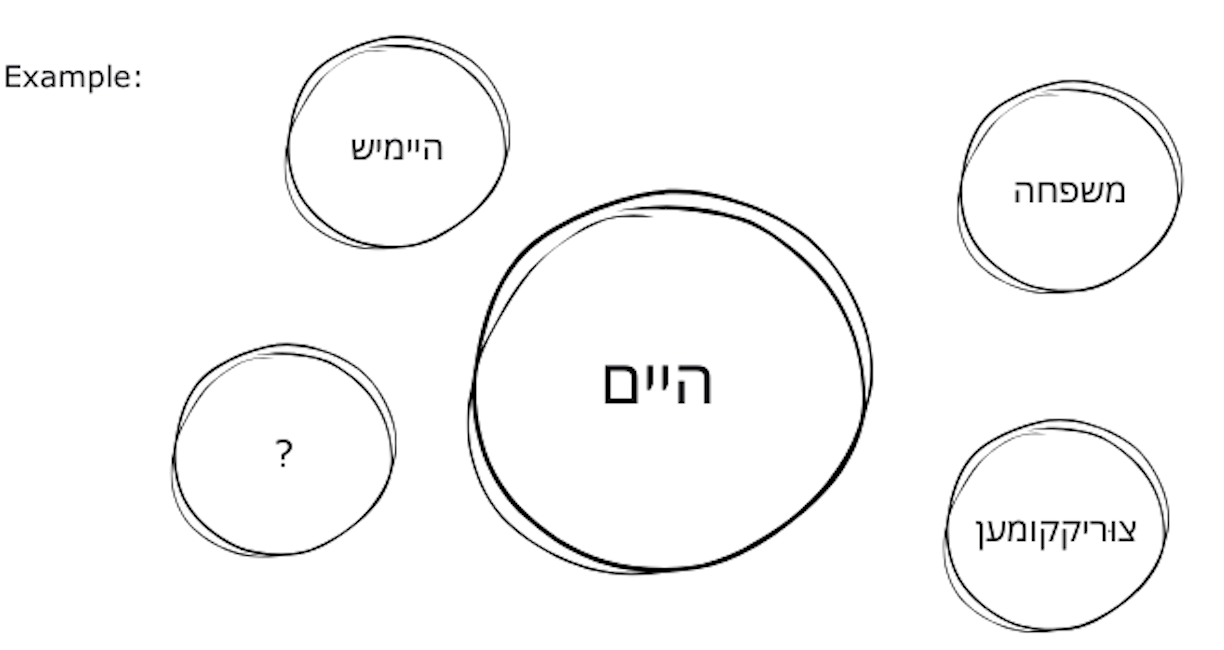
Yiddish Words of Migration and Displacement
This assignment encourages students to explore Yiddish words in Holocaust testimonies that reflect on themes of migration and displacement. Students will select five words, offering their own interpretation, providing English translations, and analyzing their significance in the context of the testimony. They will also explore related Yiddish terms and may create a “word map” to visually connect these words. Finally, students will present one word to the class, sharing their personal insights. This task allows students to engage deeply with language, encouraging creative thinking while enhancing their understanding of the Holocaust.
INSTRUCTIONS
Watch the assigned Holocaust testimonies, paying close attention to Yiddish words that reflect themes of migration and displacement.
Select 5 words that resonate with you and, in your interpretation, connect to these themes.
For each word, provide the English translation, a brief explanation of its meaning, a segment of the interview where the word is mentioned, and a short analysis of its significance within the context of the testimony (max. one sentence).
Expand on each word by identifying related or synonymous Yiddish terms (max. 4 words) that add nuance to its meaning. You may also create a visual “word map” to illustrate connections between your chosen word and its associated terms.
Prepare to present one of your selected words to the class. Share your interpretation, any related terms, and any visual representation you've created.
ASSIGNMENT 2 (Language)
Listening Closely: Language and Digital Tools in Holocaust Oral Histories
The assignments invite students to approach Holocaust testimonies from both a meta and close-up perspective—examining the broader frameworks of oral history and language preservation while also engaging closely with Yiddish-language survivor narratives through digital tools. Students are encouraged to explore how language, memory, and geography intersect within oral history archives, and to reflect on how emerging linguistic and technological methods can shape the ways we analyze, interpret, and preserve these testimonies.
INSTRUCTIONS
Both parts of the assignment are intended to begin with small-group brainstorming and discussion, and then transition into broader, full-class conversations.
Part 1: Exploring Testimonies in the Fortunoff Archive
How many Holocaust survivor testimonies have been recorded in Yiddish in the Fortunoff Video Archive? Begin by conducting a brief search here.
How does the number of Yiddish-language testimonies compare to those recorded in other languages such as English, Hebrew, Spanish, Polish, Russian, Ladino, German, or sign language? Are there any results that surprise or intrigue you?
What patterns emerge regarding when and where Yiddish testimonies were recorded? Specifically, how many oral testimonies were collected in Latin America? During which time periods and in which countries?
Share and discuss your preliminary findings with the class. Reflect on what these patterns might suggest about language, geography, memory, oral history practice, and migration.
Part 2: Bridging Linguistics and History
Begin by exploring the Corpus of Spoken Yiddish in Europe (CSYE) project here and the accompanying interview post here.
Consider the following questions as you review the materials:
What digital tools or methods are being developed or used in this project to work with Yiddish oral testimonies?
How might these tools benefit historians working with Yiddish-language sources?
In what ways can historians help linguists interpret and contextualize their findings?
Now, reflect on the testimonies of Fiszel, Sara, and Paja.
What tools from the project would help you analyze their testimonies? Provide specific examples. (For instance: Can you compare these testimonies with those of other survivors from similar places of origin (map)? What similarities or differences emerge in their life trajectories or dialects?)
ORAL HISTORY
Working with oral testimonies—particularly those grounded in emotionally and historically charged contexts—offers instructors both an opportunity and a responsibility. Teaching this material effectively requires guiding students through both the practical and affective dimensions of oral history. It means exposing them not only to the content of testimony, but also to the complex processes behind its production: building trust with narrators, navigating multilingual and diasporic settings, conducting sensitive interviews, and ensuring long-term accessibility through thoughtful indexing, translation, and archival care.
While not all students will become oral historians themselves, they can still be offered a glimpse into the labor, ethics, and decisions that shape the field. This behind-the-scenes perspective reveals the multilayered nature of oral history—its collaborative, interpretive, and often invisible work—which is too easily overlooked when one engages with finished recordings or transcripts alone. Understanding these layers helps students become more critical and compassionate consumers of testimony.
Rewatching and revisiting testimonies in the classroom is not just a technical exercise—it is a powerful pedagogical strategy. It cultivates what might be called intellectual empathy: a recognition of the narrative complexity, emotional weight, and ethical stakes embedded in every interview. Rather than discouraging emotional responses in the classroom, instructors might instead validate and frame them as part of the interpretive process. Focusing on individual voices in Holocaust education can cut through abstraction and bring specificity and dignity to the forefront. Instructors might encourage students to attend not only to what is said in testimony but also how it is said—through posture, pacing, hesitations, silences, and the presence or absence of personal objects. Finally, the presence and methods of the interviewer—especially when they are trained scholars—play a critical role in shaping the narrative. Highlighting these interactions further reveals the relational and constructed nature of oral history, and invites students to think more deeply about voice, agency, and authorship in historical storytelling.
The proposed questions, readings, and assignments are intended to help students grasp the multifaceted labor involved in oral history work. This includes not only the act of recording testimonies but also the many preparatory and post-production stages. In addition to analyzing what is said, students are encouraged to pay close attention to all the elements that surround and shape oral testimony: tone, body language, silence, setting, emotional expression, and the presence of the interviewer. By attending to these layers of form and context, students will begin to understand oral history not simply as a method of collecting facts, but as a rich, dynamic, and ethically sensitive mode of inquiry.
QUESTIONS (Oral History)
What changes tend to emerge when a testimony segment is rewatched multiple times? How might patterns of attention shift, and what kinds of insights become visible through repetition and close, sustained viewing?
Beyond spoken language, which visual or material elements typically stand out in a testimony? Consider aspects such as body language, spatial setting, clothing, or personal objects, and how these elements contribute to meaning.
In what ways can the physical location of an interview—such as a home, studio, or office—shape the content or emotional tone of a testimony? What symbolic or affective weight might be carried by the surrounding environment?
To what extent does the presence of the interviewer shape the testimony? How might the interviewer’s identity, tone, and line of questioning influence the narrator’s responses? When oral historians are also scholars, how does their academic training influence the structure and content of the interview?
How do translation, indexing, and transcription practices affect the accessibility and interpretation of oral histories? What is made visible—or obscured—through these technical and editorial choices?
What are the linguistic and technical challenges involved in transcribing, annotating, or translating Yiddish-language testimonies? How might these decisions impact the long-term accessibility and scholarly use of these materials?
What range of skills and competencies are required from a team involved in the creation, processing, and preservation of oral testimonies?
How might emotional literacy be integrated into historical training, particularly when engaging with testimonies that involve intense or traumatic content?
SUGGESTED READINGS (Oral History)
Aleksiun, Natalia. “Open Forum in the Dedicated Issue of East European Holocaust Studies on Oral History and the Holocaust.” Eastern European Holocaust Studies 2, no. 1 (2024): 163–168.
Bukiet, Melvin Jules. “The Library of Moloch,” While the Messiah Tarries: Stories. Syracuse University Press, 1997.
Cole, Tim, and Agnes Kaposi. 2024. “Survivor and Historian Building the Past Together: Co-Producing More than Oral Histories of the Holocaust.” Holocaust Studies 30 (4): 564–86.
Courcelle, Thibault, Ygal Fijalkow, and Sandrine Victor. “Introducing Research Through Oral Surveys: French Students Meet Witnesses of the Holocaust by Bullets.” Eastern European Holocaust Studies 2, no. 1 (2024): 95–110.
Fox-Rosen, Benjy. “Centering the Voice of the Witness.” In geveb (April 2025).
Gibbs, Chad S. A. “Holocaust Legacies and Oral History in the Classroom.” Eastern European Holocaust Studies 2, no. 1 (2024): 79–93.
Greenspan, Henry. 2019. “The Humanities of Contingency: Interviewing and Teaching Beyond ‘Testimony’ with Holocaust Survivors.” The Oral History Review 46 (2): 360–79.
Greenspan, Henry, Sara R. Horowitz, Éva Kovács, Berel Lang, Dori Laub, Kenneth Waltzer, and Annette Wieviorka. “Engaging Survivors: Assessing ‘Testimony’ and ‘Trauma’ as Foundational Concepts.” Dapim: Studies on the Holocaust 28, no. 3 (2014): 190–226.
Oral History Association. “OHA Principles and Best Practices.” https://oralhistory.org/principles-and-best-practices-revised-2018/
Sandler, Boris. “Halfway Down the Road Back to You” trans. Barnett Zumoff in Red Shoes for Rachel: Three Novellas, Syracuse University Press, 2017.
United States Holocaust Memorial Museum. “Oral History Interview Guidelines.” https://vault.ushmm.org/adaptivemedia/rendition/id_b840e69ab429c259964cff12f60d99224d3575d2.
ASSIGNMENT 1 (Oral History)
The Art of Indexing: Making History Accessible
In this assignment, students will engage in the art and technique of indexing oral history interviews to make these rich sources more accessible to future researchers, educators, and general audiences. Each student will choose a short segment from one of the oral testimonies, analyzing it carefully to create an index that highlights key themes, emotions, names, and historical events. Through this process, students will explore the essential, yet often unseen, work of turning oral histories into organized, accessible resources. This exercise also encourages students to reflect on the interpretive decisions involved in indexing, such as which details to emphasize or de-emphasize, and how these choices shape future interpretations.
INSTRUCTIONS
Choose a 5 to 10-minute segment from one of the oral testimonies provided.
- Develop a bilingual (English and Yiddish) or multilingual index for the selected segment. This index should include:
Key Themes (e.g., resilience, migration, memory, community).
Names and Places (e.g., individuals mentioned, cities, countries, landmarks).
Emotions (e.g., nostalgia, sorrow, anger, pride) that highlight the speaker's experience.
Historical Events (e.g., specific wars, dates, periods).
Pay attention to different possible spellings or transliterations (e.g., Vilnius, Vilne, Vilna), which are crucial for ensuring the index can be searched accurately.
Finally, write a brief reflection (approximately 200 words) on your experience indexing the chosen oral history segment. In your reflection, address the responsibility of deciding which elements to highlight. Consider the potential impact of your choices in shaping how others understand the testimony and its significance.
Example:
Fiszel’s testimony (Time code: 00:00:10 – 00:01:15)
shtetl; shtetel; Kraśnik, Poland; Krasnik; Krashnik; religion; Judaism; Yidishkayt; Yiddishkeyt; Hasidic Jews; Chasidic; Chasidim; Chasidism; Chasids; Chassidic; Chassidim; Chassidism; Chassids; Hasidic; Hasidim; Hasidism; Hasids; Hassidic; Hassidim; Hassidism; Hassids; khosids; khasidizm; khsidizm; khsidish; Ger Rebbe: Gur Rebbe; Gerrer; Gurer; Lublin, Poland; family; mishpokhe; mishpukhe; home; heym; Jewish community; yidishe kehile; childhood; kindheyt; kindhayt; kinder-yorn;
שטעטל; קרעשניק, פּוילן; קרשניק; קראַשניק; רעליגיע; יידישקייט; חסידיש; חסידים; גערער רבּי; גער רבּי; גור רבּי; לובלין, פּוילן; משפּחה; היים; ייִדישע קהילה; קינדשאַפט; קינדהייט;קינדער־יאָרן;
ASSIGNMENT 2 (Oral History)
Decoding Non-Verbal Cues in Holocaust Testimonies
Oral testimonies offer profound insights into the past, but they also include silences—moments of hesitation, avoidance, or difficulty in articulating traumatic experiences. This assignment invites students to engage with both the unspoken in a selected segment of testimony. Through close listening, students will reflect on why certain experiences may be left out or hard to express, and how historians might interpret these silences. The assignment also asks students to develop a set of thoughtful guidelines for navigating such moments with care and sensitivity in the context of oral history work.
INSTRUCTIONS
Choose a few short segments from the provided oral testimonies. Pay close attention to non-verbal moments—including facial expressions, gestures, posture, tone, silences, and emotional pauses.
Note at least three key moments that involve hesitation, discomfort, or visible emotion. For each, include a timestamp of the moment, a brief description of what is happening, and relevant context—such as the topic being discussed and whether the moment follows a particular question or prompt.
Reflect on how these non-verbal cues deepen or shift the meaning of what is said or unsaid. How do silences function as part of the testimony? What do they reveal, and how should they be interpreted?
Based on your observations, write a short list of min. 3 practical, trauma-informed guidelines for conducting interviews in emotionally sensitive contexts. These should cover the full process: how to prepare thoughtful questions and establish shared expectations in advance; how to respond with care and flexibility during the interview; and how to follow up respectfully afterward.
Example:
Fiszel
(Part 1, Segment 5: 00:23:55–00:24:05 — question and response; followed by a 10-second pause from 00:24:05–00:24:15)
Fiszel usually speaks with energy. While describing the day when 105 men were shot in the Budzyń camp, he reflects, “Things like that you never forget.” But when the interviewer asks specifically about his father and brother, his tone shifts. He explains that they were among those killed—people he never saw again. As he recalls this, he pauses noticeably, and his face tightens into a grimace.
Paja
(Part 1, Segment 3: 00:15:24 - 00:16:08 – describing the fate of his brother)
Before this emotionally charged moment, Paja had described the massacre in Ponary in a relatively calm tone. She then returned to the beginning of the ghetto period, recalling how she was left alone with her mother. At this point, she began to mention her brother, Kalman Wapner, an engineer who had lived in Warsaw before the war. As she spoke about him, she appeared to struggle—pausing for a long moment and making a facial grimace, as if holding back tears. Her brother had been a Bundist, was eventually captured, and was likely killed, though she only learned of his fate after the war.
Guidelines:
If an interviewee begins tearing up or pauses mid-sentence, you might say:
“Would you like to take a moment? We can pause whenever you need—but I’m here if you’d like to keep going.”
“Take all the time you need—I want to be sure we go at a pace that feels right for you.”
“We can skip this part if it feels too difficult, or we can come back to it later—whatever works best for you. I’m grateful for what you’ve already shared.”
In geveb is turning t(s)en! If we want In geveb to continue to grow and thrive and remain a central address for the study of all things Yiddish online, we need your help to launch our second decade. Our goal is to raise $20,000 by our official tenth birthday: August 15, 2025. We invite you to donate to support In geveb and to honor everyone who has got us this far.