Special Issue

The Milgroym Project

Translation, articles, and commentary

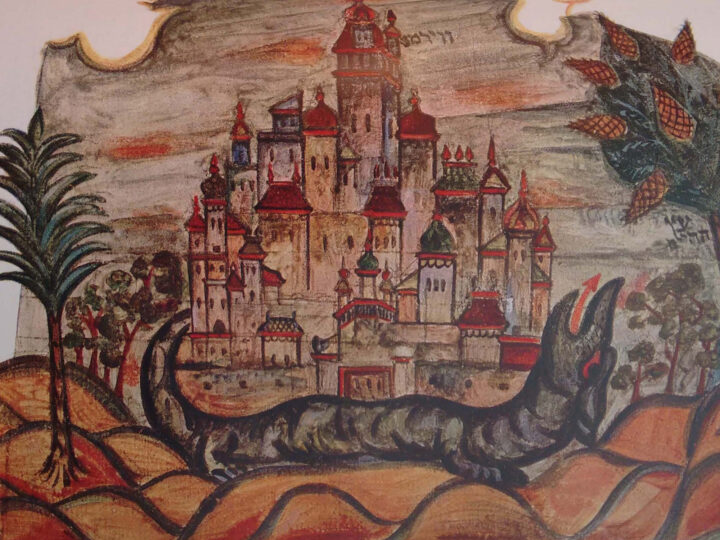
In the interwar period, Yiddish writers and cultural activists produced a number of stunning literary journals. These journals—often short-lived—are a fascinating repository of modernist art, Yiddish literature and criticism, scholarship, and political polemic. Some were the projects of artistic groups, like the Khalyastre, while some were largely or solely the work of an individual, like Uri Zvi Greenberg’s Albatros. Each is an invaluable snapshot of Yiddish culture in a specific time and place, during a period that saw both incredible creative production in Yiddish and dramatic changes for Yiddish, for Jewish life in Europe, and for the course of modern European history.

In geveb has partnered with the Historical Jewish Press to make some of the most important Yiddish literary journals of the interwar period newly accessible. Beginning with Milgroym—arguably the most visually stunning of the interwar Yiddish journals—and its Hebrew language companion, Rimon, we will be publishing translations of selected writing from the journals along with commentary, criticism, and new scholarship exploring the wealth of material these journals published. Full color scans of the journals are available through the JPress website and will be featured throughout these pages. New translations and scholarship will be added to this special issue regularly. And the project will expand to other journals in the future, some of which are already available on JPress. Want to contribute to this collaborative scholarly project? We hope so, and invite you to contact us.
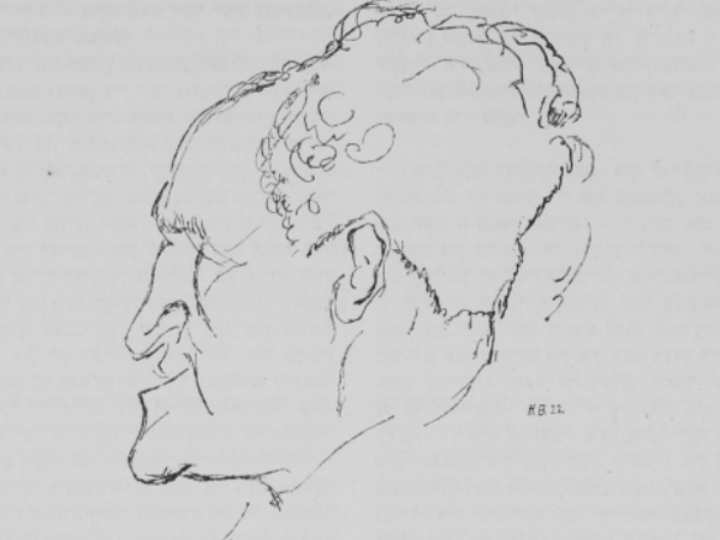
See full scans of Milgroym on the JPress site.

Contents

Introduction
Translations
Peer Reviewed Articles
Commentary

Introduction

Blog

Avant-garde Journals in geveb: A Manifesto for Yiddish Cybernetics, Part 1

Raphael Koenig and The Editors

Announcing a hybrid avant-garde academic project linking the early 20th century with the early 21st.

Translations

Peer Reviewed Articles

Article

Translation, Cosmopolitanism and the Resilience of Yiddish: Wischnitzer’s Milgroym as a Pathway Towards the Global Museum

Susanne Marten-Finnis

Reading Rachel Wischnitzer’s editorial vision for the journal Milgroym as a “global museum.”

Article

Molded Inexorably by the Times: Rachel Wischnitzer’s and Franzisca Baruch’s Collaboration on the Headlines of Rimon/Milgroym

Ishai Mishory

Mishory examines the collaborative work of art historian Rachel Wischnitzer (1885-1989), and Jewish-German designer and typographer Franzisca Baruch (1901-1989), demonstrating that Baruch’s revival of medieval Hebrew letterforms in her work on Rimon/Milgroym and her use of fragmentation as a strategy for visual, textual, and cultural revival was in conversation with Wischnitzer’s scholarship.

Commentary

Blog

Milgroym’s Cultural Context

Naomi Brenner

Weimar Berlin, Yiddish art journals, editorial conflicts—Naomi Brenner explains the cultural context of the journal Milgroym.

Blog

Milgroym and Rimon, Fraternal Twins

Naomi Brenner

A comparison of the Yiddish journal Milgroym and its Hebrew counterpart Rimon, both published in Berlin in the mid-1920s.


Contributors

Raphael Koenig

University of Connecticut

Naomi Brenner

Ohio State University

Susanne Marten-Finnis

University of Portsmouth and University of Bremen

Saul Noam Zaritt

The Ohio State University

Rachelle Grossman

Harvard University

Daniel Kennedy

Farlag Press

Sophie Duvernoy

Yale University

Ishai Mishory

Columbia University

Partners