Apr 22, 2025
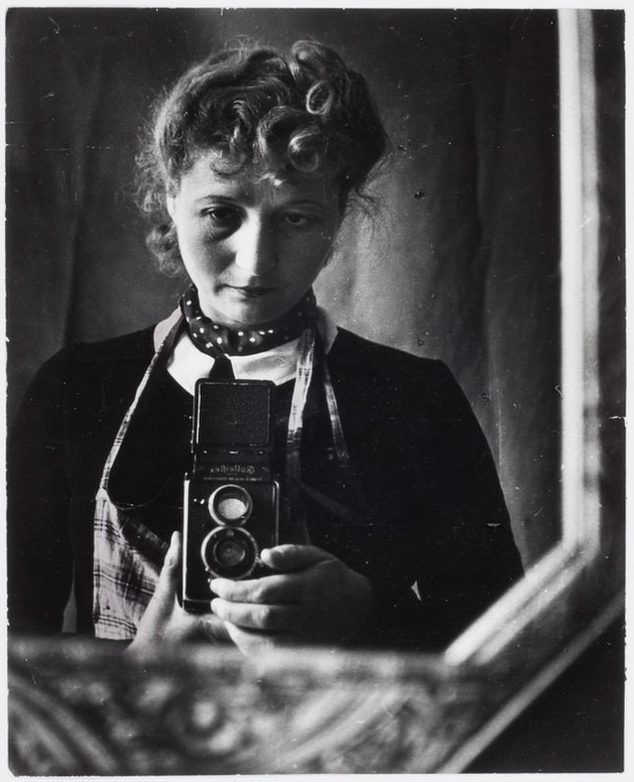
“Self Portrait by Julia Pirotte” (1943) - Wikimedia Commons
INTRODUCTION
In March 2023, In geveb and Yale’s Fortunoff Video Archive for Holocaust Testimonies announced a call for proposals with the goal of unlocking and activating the Yiddish-language materials in the archive’s nearly 12,000 hours of audiovisual survivor testimony. Together we sought to fund meaningful scholarship and creative productions based on these unique Yiddish oral histories. This blog is one in a series from our 2023 In geveb/Fortunoff fellowship cohort. Each fellow writes about the unique and innovative ways they engaged with the Yiddish-language material housed at Yale’s Fortunoff Video Archive for Holocaust Testimonies.
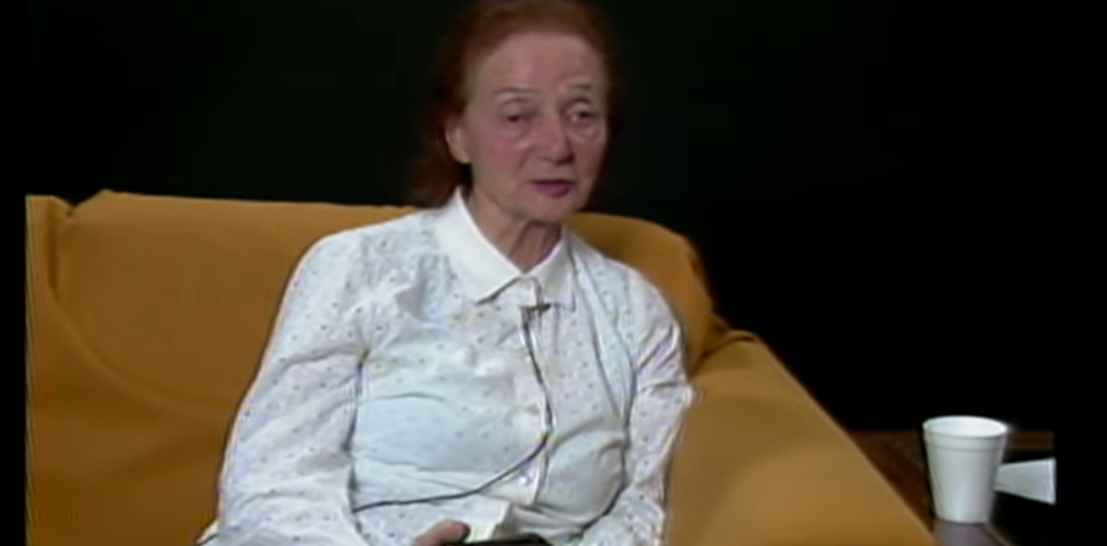
In October 1986, Julia Pirotte, a Polish Jewish photographer, was interviewed by Louis Silbert and Laurel Vlock for the Fortunoff Video Archive in New Haven, Connecticut. Her testimony focuses primarily, though not exclusively, on her experiences during World War II in Marseille. Pirotte’s life and story of survival stand out in multiple respects: born in Końskowola in Poland in 1908 (some sources say 1907), she grew up under conditions of poverty and, as a teenager, became active in left-wing political movements. In her testimony, she describes herself as a “progressive activist,” long involved in “the left-wing progressive movement” (“progresive tuerin […] in der linke-progresiver bavegung”).
After a period of imprisonment and intensifying political persecution, Pirotte fled to Brussels, as “the earth began to burn under [her] in Poland” (“di erd hot zikh gebrent unter mir in Poyln”). It was during this initial period of displacement that, with the encouragement of Suzanne Spaak, Pirotte began to study photography, which would soon become central to her artistic and political work. With the outbreak of war, she soon had to relocate again, this time to southern France, principally Marseille, where she became involved in resistance efforts and continued to take photographs, creating remarkable and even iconic images – of prominent artists and “ordinary” people and of scenes of suffering, armed conflict, and liberation – often with a simple Leica camera. Her work spanned portraiture, journalism, and documentary or humanist photography, as well as the clandestine creation of false identification papers, often in direct service to the resistance effort. She became committed, as Marianne Amar once phrased it, to a form of socially- and politically-engaged photography “in the service of testimony and truth” (“une photographie engagée au service du témoignage et de la vérité”).
1
1
Marianne Amar, “Julia Pirotte, photographe de résistance,” Vingtième Siècle. Revue d’histoire 48 (1995): 153.
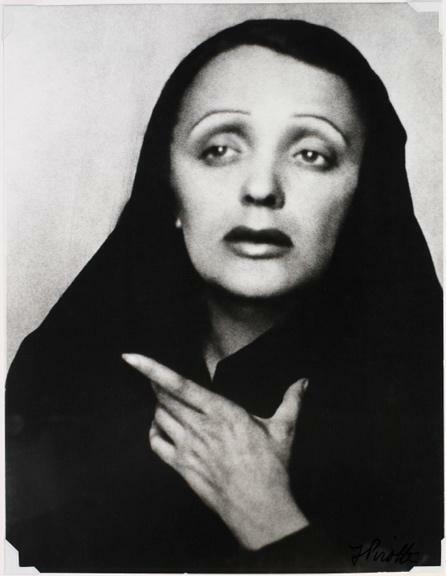
Julia Pirotte, Edith Piaf, Marseille, 1942, FM 1982 017 011
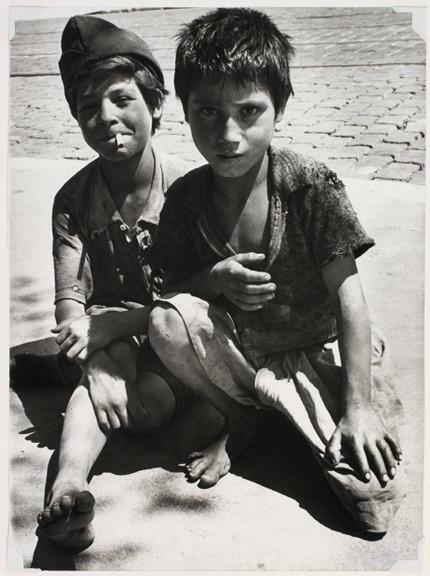
Marseille, 1943, FM 1982 018 004
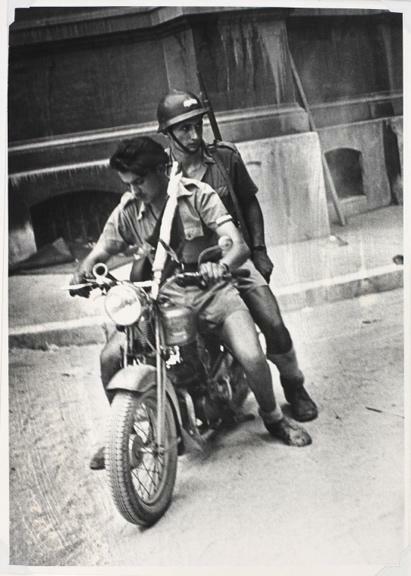
Marseille, 1944, FM 1982 017 001, Moderna Museet, Stockholm.
After the war, Pirotte returned to Poland, where she continued to take photographs, including of the aftermath of the Kielce pogrom, in which over forty Jews were murdered, and where she worked for government agencies and lived, save for periodic trips abroad, until her death in 2000. She did not join the large waves of Jewish emigration out of Poland in the immediate postwar years or in the wake of the so-called “anti-Zionist campaign” in the late 1960s. 2 2 See Dariusz Stola, Kampania antysyjonistyczna w Polsce 1967-1968 (Warsaw: Instytut Studiów Politycznych PAN, 2000). Her photographic work was, moreover, largely unknown internationally – and even within Poland – until the 1980s, when it caught the attention of curators in France, Sweden, the United States, and beyond.
It was in this context that Pirotte was able to travel to the United States, even when the “Iron Curtain” was still intact; and it was there that she gave what appears to be the first of her recorded testimonies. This testimony is significant for a number of reasons, which I will elaborate in a forthcoming critical edition for the Fortunoff Video Archive. But in the brief remarks that follow, I will focus merely on one aspect: its language. In New Haven, Pirotte speaks in Yiddish.
In the grassroots interview project that began in New Haven in the late 1970s and that later became the Fortunoff Video Archive, the majority of video interviews with survivors were conducted in English, while only a handful were conducted in Yiddish. Despite the fact that many survivors grew up speaking Yiddish – as well as Polish, German, Russian, and Ladino, et al. – many began to use English or other “dominating” languages in the decades after the war, as they rebuilt their lives in new and often unfamiliar contexts and as they shared their stories with a broad and increasingly mainstream audience. The historian Annette Wieviorka has argued that “[t]he language of testimony is […] fundamental.” 3 3 Annette Wieviorka, The Era of the Witness, trans. Jared Stark (Ithaca: Cornell University Press, 2006), 32. But the increasingly widespread usage of English in video testimony, in particular, has been interpreted in different and often contradictory ways, including simply as a pragmatic gesture, part of an effort to reach the largest possible audience, as well as an active embrace of “a neutral, uncorrupted, and ironically amnesiac language” 4 4 James E. Young, Writing and Rewriting theHolocaust: Narrative and the Consequences of Interpretation (Bloomington: Indiana University Press, 1988), 160. or, more critically, as reflecting a disinterest on the part of the interviewers in understanding the survivors “as Jews,” 5 5 David G. Roskies, “Holocaust Testimonies, by Lawrence L. Langer,” Commentary (November 1991). contributing to “the absence of Yiddish in what is called ‘Holocaust studies.’” 6 6 Perla Sneh, “Khurbn Yiddish: An Absent Absence,” in Lessons and Legacies XII, eds. Lauren Faulkner Rossi, et al. (Evanston: Northwestern University Press, 2017), 215. In any case, the implications of this linguistic shift are far-reaching, regardless of whether one sees it in a more positive or negative light. And, indeed, in a more recent study, Hannah Pollin-Galay has demonstrated how “contemporary language and context shape the witnessing process,” highlighting the differences between testimonies in English (in the United States), Hebrew (in Israel), and Yiddish (in Lithuania). 7 7 Hannah Pollin-Galay, Ecologies of Witnessing: Language, Place, and Holocaust Testimony (New Haven: Yale University Press, 2018), 1.
In response to the relative marginalization of Yiddish in video testimonies, a number of scholars and institutions, including the Fortunoff Archive, have rightly foregrounded those testimonies that were conducted in Yiddish, motivated, in part, by the conviction that the Yiddish language represents a singular, affectively- and ethically-charged medium for the transmission of Jewish memory. Such a view also extends to the literary field, where it has perhaps found its most memorable articulation. Wieviorka quotes, for example, Elie Wiesel, who remarks that “Yiddish remains the language of the witness par excellence”: “‘It is perhaps necessary to emphasize,’ he writes, ‘that there is no language like Yiddish for remembering the dead. Without Yiddish, the literature of the Destruction would be without a soul. I know that we write in other languages, but no comparison is possible.’” 8 8 Wieviorka, The Era of the Witness, 45. In the short story “The Witness,” Dovid Bergelson likewise insists on the felt authenticity and untranslatability of Yiddish when one of the main characters, a survivor, is asked to judge the accuracy of a Russian-language translation of his Yiddish-language testimony: “‘You ask me to judge? What can I tell you? Our sufferings were in Yiddish’” (“Mikh fregt ir do mevines?.. Vos ken ikh aykh deroyf zogn?.. Di tsores zaynen geven af yidish”). 9 9 David Bergelson, “The Witness,” in An Anthology of Modern Yiddish Literature, ed. Joseph Leftwich (The Hague: Mouton, 1974), 59; Dovid Bergelson, “An eydes,” in Naye dertseylungen, vol. 1 (Buenos Aires: Farlag Ikuf, 1949), 56. See also Harriet Murav, David Bergelson’s Strange New World: Untimeliness and Futurity (Bloomington: Indiana University Press, 2019). In the case of Pirotte’s testimony, however, Yiddish is neither exalted nor a marker of authenticity or deep feeling. It plays a more ambiguous and ambivalent role.
During the first minute of the recording, for example, before the interview formally begins, Pirotte briefly speaks in Yiddish and French before beginning her testimony in Polish, in response to an instruction given in English by Vlock, one of the interviewers. Silbert, the lead interviewer, quickly intervenes, in a mixture of English and Yiddish: “No, no, in yidish, ikh red nisht poylish” (“No, no, in Yiddish, I don’t speak Polish”). Pirotte then switches to Yiddish, which remains the primary – though not exclusive – language for the duration of the interview. In some ways, this is not a remarkable beginning: a multilingual speaker begins in one language (or, in this case, at least two) and then quickly course corrects in response to her dialogue partner. But these opening moments of confusion and interruption also point up the practical limits of the psychoanalytically-informed methods developed by the Fortunoff Archive, which, at least in theory, dictate that “the witness should lead the process, and volunteers should consider themselves ‘empathetic listeners’ rather than ‘interviewers.’” 10 10 Pollin-Galay, Ecologies of Witnessing, 19. Geoffrey Hartman, one of the early theorists of video testimony and an academic director of the Fortunoff Archive, further insisted on the importance of the survivor being able to choose the language in which they spoke. Building on the methods of the earlier audio-recordings of David Boder, which aimed “for the interviewee to ‘talk freely,’” Hartman argued that “[t]he survivors should tell their stories in their own language and in their own voice. Otherwise their humanity is alienated a second time; their very memories are taken from them.” 11 11 Quoted in Alan Rosen, The Wonder of their Voices: The 1946 Holocaust Interviews of David Boder (Oxford: Oxford University Press, 2010), 203-204. In the case of Pirotte, however, there is once again a gap between theory and practice. Rather than being an “empathetic listener,” Pirotte jokes that Silbert, certainly functioning here as an “interviewer,” is a “diktator” (“dictator”). While I do not have direct access to the negotiations that took place before the interview, it is possible that Pirotte was pressured to speak in Yiddish; at the very least, it seems likely that, if she had, in fact, chosen to testify in Yiddish, this would have been a pragmatic choice, not an ideological statement about the significance of the language à la Wiesel’s claim about the “soul.” Indeed, somewhat unusually in the context of video testimony – though it is more typical of the oral and written testimonies collected during and in the initial years after the Holocaust – Yiddish seems to function here, at least in the main, as a language of practical communication and convenience. Pirotte could not testify in English, and Silbert could not understand Polish (or, presumably, French), so they spoke in Yiddish, the language that they shared, at least to a certain degree.
It is not easy to find detailed information about Pirotte’s linguistic biography, but she spoke at least three languages with a high degree of fluency: Polish, Yiddish, and French. In her Fortunoff testimony, she describes her hometown of Końskowola as “a small Jewish town” (“a kleyn yidish shtetele”) – a town that later became the site of a ghetto under German occupation. It is clear that she grew up in a Yiddish-speaking milieu. In her activist work, however, which began already when she was quite young, it seems that Pirotte used Polish just as much as Yiddish – and possibly to a much greater extent; moreover, after her immigration to Belgium and later France, it is evident that the French language began to assume a much more central role in her life and work. In this regard, while it is certainly possible that Pirotte spoke Yiddish with some frequency while she was in Marseille, it is doubtful that the language served as the primary medium of her wartime experience. Later on, it did not seem to function for her as a direct link, as is often the case in the testimony of other Polish Jews, to the “raw” emotions of the period. 12 12 See Hannah Pollin-Galay, “The History of My Voice: Yiddish at the Seams of Holocaust Video Testimony,” Prooftexts 35, no. 1 (2015): 60. In other words, Pirotte’s unusual migrational trajectory, which took her from the shtetl to Brussels to Marseille and then back to Poland, conditioned both her knowledge and experience of the languages she spoke. This tensive link between language and geography is ironically confirmed in the testimony itself when Pirotte repeatedly forgets the Yiddish terms for cardinal directions and, at one point, becomes frustrated when the interviewer is seemingly unable to supply her with the forgotten words. Furthermore, in light of her apparent unease in Yiddish, it is noteworthy that, in later interviews, Pirotte chose – though, again, how much of a choice she really had is not entirely clear – to speak in French and Polish. 13 13 See “Oral history interview with Julia Pirotte” (1993) – RG-90.052.0001, Collections of the United States Holocaust Memorial Museum, and the lecture “Julia Pirotte, une photographe engagée?” by Grégoire Georges-Picot at the Bibliothèques de Marseille (2024): https://www.youtube.com/watch?...
While I would suggest that Pirotte’s use of Yiddish has a certain deflationary effect, insofar as it does not align with the heightened rhetoric – a rhetoric of authenticity and emotion – that often obtains in discourse about Yiddish and the Holocaust, it would also be a mistake to suggest that her Yiddish has no meaning beyond its practical dimension. Rather, the meanings – or, perhaps better, the effects – of Pirotte’s Yiddish are more subtle and coded, shading, in complex ways, the frequent universalism of her rhetoric. In this context, I would hazard that her language use intimates, under conditions of state censorship and geopolitical conflict, an enduring dedication to the experiences and concerns of the Jewish community, though always as part of a larger critique of “nationalism,” “fascism,” and “racism” (terms that she repeatedly uses in her testimony). It is a dedication that is likewise attested in the multiple photographs she took, throughout her career, of various aspects of Jewish life, as well as of Jewish death, in Poland and beyond (e.g., photographs of Jewish cemeteries and, during trips abroad, of Jewish communities in Antwerp and Jerusalem). Strikingly, there is also a visual record of the Yiddish language in some of these photographs, including in those she took of a Jewish worker’s cooperative in Warsaw in 1947. In conjunction with such photographs, Pirotte’s testimony in Yiddish might be heard as a guarded, and perhaps not altogether willing, attempt to voice – and to mourn – the possibility of paths not taken in postwar Poland under Communist rule, while, at the same time, refusing to abandon her commitment to the utopian horizons of the activism of her youth.
Finally, Pirotte’s testimony provides yet another reminder that we should not forget about the shaping force of language – or, more precisely, of languages – when we listen to the testimony of Holocaust survivors. We should not overlook, that is, the translingual modes in which survivors spoke “for themselves,” spanning dozens of languages and encompassing such practices as language mixing, code switching, translation, singing, stuttering, and silence, which were, in turn, conditioned by both blatant and more subtle forms of linguistic coercion or pressure.
14
14
Geoffrey Hartman writes, “An important reason for oral testimonies of the Holocaust is to allow survivors to speak for themselves. We should not speak for them; rather, we have a duty to listen and to restore a dialogue with people so marked by their experience that total integration into everyday life is a semblance – though a crucial and comforting semblance.” Hartman, “Learning from Survivors: The Yale Testimony Project,” in The Longest Shadow: In the Aftermath of the Holocaust (Bloomington: Indiana University Press, 1996), 133.
Pirotte’s testimony further demonstrates how such linguistic diversity confronts the oral historian, as well as later researchers, with a number of ethical and practical challenges, not least how to address, negotiate, and reflect on the gaps between the language(s) of the interviewer and informant, and of those who continue to listen today.
In geveb is turning t(s)en! We need your help to launch our second decade and help In geveb to continue to grow and thrive and remain a central address for the study of all things Yiddish online. Our goal is to raise $20,000 by our official tenth birthday: August 15, 2025. We invite you to donate to support In geveb and to honor everyone who has got us this far.