Feb 08, 2026
INTRODUCTION
“The Birds of the Square,” a short story by dramatist and novelist Sholem Asch, is presented here in the version published in Warsaw in 1924. Framed by a depiction of the scrappy denizens of Trafalgar Square, it describes two Jewish immigrants finding a way to make a living on their own terms, as streetwalkers in London. The story takes a sympathetic view of the societal pressures that forced young women from their birth communities in Eastern Europe. It also examines, realistically but empathetically, the economic and sexual exploitation that they encountered in interwar England.
Historians have noted that Asch’s contemporaries reached something of a moral panic about the involvement of Jews, particularly young Jewish female immigrants, in prostitution. 1 1 See, for example, “‘Protecting the Jewish Daughters’: Mass Migration, Trafficking, and the Crisis of Traditional Jewish Society, the 1880s–1914,” Gal-Ed Journal: On the History and Culture of Polish Jewry 26 (2021), 15–39. Amongst his contemporaries, Asch was neither the first nor the only one to write about the issue. Sholem Aleichem’s short story “Der mentsh fun Buenos Aires” (1909), 2 2 “The Man from Buenos Aires” is one of Sholem Aleichem’s Railroad Stories. It is available in English in Tevye the Dairyman and the Railroad Stories, trans. Hillel Halkin (Schocken Books, 1987). for example, has to be read in the context of women being forcibly trafficked to Argentina. In the story here, Asch introduces the young women as rational, autonomous actors who reject the drudgery, difficulty, poverty, and harassment of workshops and their owners in the East End in favour of sex work in the more glamorous, and remunerative, surrounds of the West End. Indeed, Asch repeatedly uses the word באַשעפטיקונג (basheftikung), that is, an occupation or employment, to describe what they do and to acknowledge its remunerative value. This theme, and this perspective, is a thread in Asch’s infamous play Got fun nekome (1907). It is noteworthy that it is the female characters—both of the two central women, Rosa and Dusha, but also the minor female characters around them—that have personality and agency in the story. The men are caricatures, merely foils for the exploits of the women.
Although he was based in Warsaw in the early 1920s, Asch travelled widely and spent several weeks in London in the spring of 1922 (possibly in conjunction with the performance of Got fun nekome there in the early 1920s). 3 3 See the memoirs of Moysheh Oyved who, it seems, spent much of that time with him. Oyved, Moysheh, Visions and Jewels (Ernst Benn Limited, 1925), 104–111. In the version of the memoirs published in Yiddish װיזיאָנען און אײדעלשטײנער (1931) see 87–92. This story was written that year and first published shortly afterwards in the Forverts in August 1922. It was later republished in December 1923 in the Nayer haynt. 4 4 Available at https://www.nli.org.il/en/newspapers/hyt/1923/11/30/01/article/42. These versions differ slightly from the version we have chosen to present here—the last edited one—from a collection of Asch’s short stories, Naye ertseylungen, by the Kultur-lige in Warsaw in 1924. Such original publication in installments, and republication with further editing along the way, was commonplace at the time, especially for a popular author such as Asch. In one instance, however, we have used the 1922 text, since there appears to be an error in the grammar and the sense of the 1924 text.
Despite Asch’s time in London, however, he seems only passingly familiar with the city: His name for Trafalgar Square (in the original Yiddish) is Admiral’s Square; his description of the National Gallery recalls more correctly the façade of the British Museum (which is some distance away). It would have been much likelier that streetwalkers would have congregated around Piccadilly Circus (which is adjacent to what was the Café Royal, one of the locations mentioned in the story), but that area is not quite so well known for its pigeons as Trafalgar Square.
We suspect that some of Asch’s obfuscation may be deliberate. Asch’s choice to portray this site, with its particular characters, is notable in its departure from more well-known Yiddish imaginaries of London. We look here to the history of the Jewish East End of London, as studied by one of the translators, Sima Beeri, 5 5 Sima Beeri, “Anglo-Jewish Culture in Anglo-Jewish Newspapers 1920–1930” (MA diss., Jewish History and Culture, Dept. of History, University of Southampton, 1999). Much of this work has been published as Sima Beeri, “Volkskultur in der anglo-jüdischen Presse (1920–1930)” in Die jüdische Presse im europäischen Kontext, 1686–1990, ed. Susanne Marten-Finnis and Markus Winkler (Edition Lumière, 2006), 235–245. and more recently by the historian Vivi Lachs. 6 6 Her most recent work, in collaboration with Barry Smerin, is a collection of translations of “felyetons” (feuilletons): East End Jews: Sketches from the London Jewish Press (Wayne State University Press, 2025). The original sources cited in that scholarship were published in and focused on the central districts and community institutions of Jewish London. This story, on the contrary, looks at its margins: young women who work far away in the West End and do not (and cannot) speak of that work back home. Indeed, the few glances we get of the East End are anything but complimentary. Asch is careful to let the readers see, and hear, the perspective of his protagonists.
Sensitive to Asch’s choice of locating the story in London, and his centering of the young women, we have chosen to render it in a largely British English register. We note two aspects where Asch is clearly familiar with that language, which he would have heard in London. First, Asch uses (and highlights by quotation marks, which we have retained in appropriate instances) many professional words that such young women would likely have used, whether speaking English or even assimilating English into their Yiddish conversation, such as “gentlemen” and “by appointment.” Second, Asch is sensitive to the accents and grammatical infelicities they would have retained, which we too have placed in quotation marks, as in the original, but with spelling that copies Asch’s reproduction of their mode of speech: “steh-dee kostomer” [steady customer], “soh-sai-eh-ti” [society].
We, the translators, enjoyed collaborating. We found it particularly useful that one of us, Sima Beeri, is a native Yiddish speaker, and the other, Barry Burland, a native (British) English speaker; we were therefore immediately able to understand the idiomatic use of many phrases and convey them similarly in the equivalent translation. For example, זײ װעלן זיך שוין אַן עצה געבן אָן אונדז: the words are comprehensible (“They can find a solution without us”) but make much more sense as “They’ll manage without us.” Moreover, generally throughout the story, Asch has used the terms די ייִנגערע and די עלעטערע for the two women. We have generally translated that as “the younger one” and the “older one,” despite those phrases sounding a little clunky; in the Yiddish, to our ear, the usage is similarly stilted. While the errors and infelicities remain our own, we would also like to thank, especially, Barry Smerin, who had many helpful suggestions on the translation, as well as the editors of In geveb.
A final note on birds: Asch seems to have been fascinated all his life by pigeons, or at least their use as a metaphor. His later novel East River (1946) begins with an extended discourse on the birds and their fanciers in the Lower East Side of New York. We cannot say how Asch would feel about the pigeons no longer being in Trafalgar Square; some years ago they were deemed a nuisance, feeding them was prohibited, and, most effectively, a hawk was brought to live in the square and scare them away. 7 7 See, for example, the answer of the Mayor of London to a question posed in meeting of the London Assembly, available at https://www.london.gov.uk/who-we-are/what-london-assembly-does/questions-mayor/find-an-answer/trafalgar-square-pigeons. The present translators have no information about the situation after sunset.
Click here to download a PDF of the text and translation.
I
איבער דעם באַליבטן סקװער פֿון לאָנדאָן, אויף װעלכן עס שטײט דער באַרימטער דענקמאָל פֿון אַדמיראַל נעלסאָן, האָבן זיך פֿון קדמונים אָן אויפֿגעהאַלטן טויבן. די טויבן מאַכן זיך זײערע נעסטן אין די הויכע געזימסן פֿון דעם װעלט באַרימטן קונסט־מוזעום, די נאַציאָנאַל־גאַלערײ, װאָס שטײט אין פֿראָנט פֿון סקװער, װוּ עס איז אויסגעהאַמערט פֿון שטײן די גרויסע פֿיגורן פֿון די גריכישע געטער און געטינס. די טויבן זשענירן זיך נישט און מאַכן זיך זײערע הײמען צװישן די געטער, אַפֿילו אונטער דעם הוט פֿון גרויסן אַדמיראַל, פֿון דעם נאַציאָנאַלן העלד, האָבן זײ זײערע נעסטן. שוין אָפּגערעדט, אַז זײ באַנוצן זײַנע ברײטע שליפֿענע אַקסלען פֿאַר אַ גוט אָפּרופּלאַץ נאָך אַ גאַנצן טאָג אַרומלויפֿן.
איבער דעם סקװער װוינען די טויבן פֿון װײַטע, לאַנג פֿאַרגעסענע יאָרן. די טויבן זענען אַזוי צוגעװוינט צו דער שטאָט, אַז זײ אַנטלויפֿן נישט פֿאַר די מענטשן. זײ האָבן זיך אָפּגעלערנט אַראָפּצועסן פֿון מענטשנס הענט, אָדער פֿון די קינדער, װעלכע די מאַמעס ברענגען אַהין מיט קרישעלעך ברויט די טויבן צו שפּײַזן. עס געפֿינען זיך אַזעלכע „משוגעים“, װעלכע זאַמלען געלט אין די קירכעס פֿאַר שפּײַז צוליב די טויבן פֿון סקװער, און טראָגן זײ יעדן טאָג זײער טאָג־טעגלעכע חיונה. זײ זענען אַזוי צוגעװוינט צום רעש און געפּילדער פֿונעם באַליבטסטן סקװער פֿון שטאָט, אַז זײ שטעלן זיך אויף די געזעסן, אויף די מאָטאָרן פֿון די אויטאָבוסן, װעלכע לויפֿן אַדורך אין די הונדערטער צו יעדער צײַט פֿון טאָג דורך דעם סקװער. זײ פֿליִען אַרונטער געדיכט אונטער די רעדער אויפֿצופּיקן אַ ברעקעלע, אָדער שטעלן זיך אָפּ אויפֿן טראָטואַר אין מיטן געדרענג פֿון די מענטשן, פֿליִען פֿאַרבײַ די דורכאײַלנדיקע אויטאָמאָבילן און עס דאַכט זיך, אַז אָט־אָט װערט די טויב איבערגעפֿאָרן, װערט די טויב צעקװעטשט אונטערן ראָד, צעטראָטן פֿון מענטשנטריט. אָבער עס טרעפֿט קיין מאָל נישט, אַז מען זאָל אַ טויב איבערפֿאָרן, צעקװעטשן, צעטרעטן, אָדער עס זאָל װעמען אײַנפֿאַלן אַ טויב צו כאַפּן. זײ זענען אַזוי געניט, אַזוי אײַנגעװוינט צו דעם האַסטיקן רויש אין װעלכן זײ לעבן, אַז זײ מײַדן אויס דעם טויט פֿון פֿאַר די אויגן, און גײען אַרויס פֿון די אויטאָמאָביל־רעדער אומבאַרירט. דאָס רובֿ פֿון די טויבן זענען טאַקע געבוירענע און אויסגעהאָדעװעטע אין סקװער. זײערע עלטערן האָבן זײ אויסגעבריט אין די רעדער פֿון „זעוס“ רײַטװאָגן, אָדער צװישן די שײנע פֿיס פֿון „אַפּאָלאָ“, װאָס איז אויסגעסקולפּטירט אין דעם גריכישן געזימס איבער דעם קינגס־מוזעום, װאָס שטײט אין סקװער. אַנדערע װידער האָבן געזען דעם טאָגשײַן אין דעם הוט פֿון אַדמיראַלישן דענקמאָל, אָדער אויף די פּלײצעס פֿון „נאַציאָנאַלן העלד“. אָפֿט מאָל מאַכט זיך, אַז אַ „זי“ פֿון די סקװערטויבן לאָזט זיך אַרויס פֿון שטאָט און פֿאַרפֿירט אַן „ער“ פֿון דאָרף אין שטאָט אַרײַן. די פֿרעמדע טויב פּרוּװט זיך אײַנלעבן מיט די שטאָטטויבן, אין רעש פֿון שטאָט. טײל מאָל טרעפֿט, אַז אַזאַ פֿרעמדע טויב פֿון דאָרף געװוינט זיך ביסלעכװײַז אײַן צום שטאָטלעבן, לערנט זיך אויס צו ליגן צװישן די אויטאָמאָבילן־רעדער. אָבער אין מערסטע פֿאַלן װערן די פֿרעמדע טויבן פֿאַרשװוּנדן. אָדער זײ פֿליִען צוריק אין די דערפֿער, פֿון װאַנען זײ זענען געקומען, אָדער מען געפֿינט זײ אין אַ פּאָר טעג אַרום צעקװעטשטע צװישן די רעדער פֿון די אויטאָבוסן, אָדער אויסגעמוטשעטערהײט פֿאַלן זײ אַראָפּ מידע פֿון הויכן פּעדעסטאַל, אויף װעלכן עס שטײט די פֿיגור פֿון אַדמיראַל, און באַשפּריצן מיט זײער בלוט דעם טונקעלן פֿאַרשטויבטן מאַרמאָר פֿון דעם באַשטאַנד. נאָר קײנער באַמערקט עס נישט און קײנער זעט דאָס נישט.
אַז עס קומט פֿאַר נאַכט, װען די זון הײבט זיך אָן צו זעצן ערגעץ װײַט הינטער דער שטאָט, און אין דער שטאָט אַלײן װײסט מען נאָר דערפֿון, װאָס מען הײבט אָן אָנצוצינדן די גאַסנלאָמפּן, באַהאַלטן זיך די טויבן אין זײערע נעסטן, זוכן שוץ צװישן די גריכישע „געטער“ און „געטינס“ פֿון מוזעום־געזימס, אין דעם גרויסן הוט פֿון אַדמיראַל נעלסאָן. דענצמאָל הײבן זיך אָן איבער די טראָטואַרן פֿון סקװער צו באַװײַזן זיך גאַנץ אַנדערע טויבן, נאַכטטויבן אין געשטאַלט פֿון יונגע מײדלעך, אָנגעטאָן אין זײער עלעגאַנטע קלײדער, אויפֿפֿאַלנדיק קורצע ספּאָדניצעס, פֿון װעלכע עס זעען זיך אַרויס די לאַנגע געטאָקטע פֿיס, באַצויגן מיט פֿלײשיק קאָלירטע זײַדענע זאָקן, אין שװאַרצקאָלירטע גריכישע שיכלעך, און הויכע ברײט־רונדיקע מיט שפּיצן באַזוימטע קאַפּעליושן, פֿון װעלכע עס קוקן אַרויס שװאַרצע אויגן, קאַרשנאויגן, בלויע סאַפֿירן און בורשטין־שײַנענדיקע קאַרע אויגן, און רײצן און ציִען נאָך זיך יונג און אַלט.
די מערסטע פֿון די מײדלעך, װעלכע דרײען זיך איבער דעם סקװער אין אָװנט, זענען הײמישע, אַזוי װי די טויבן, געבוירן אין סקװער, אויפֿגעצויגן צװישן די רעדער פֿון די אויטאָמאָבילן און מאָטאָרן פֿון די אויטאָבוסן און שטויב פֿון די געמויערטע הײַזער אויף אַספֿאַלטגאַסן, אויסגעבריט אויף דער שטאָטזון. און אַזוי װי די טויבן גײען זײ דורך צװישן די מענגע מענטשן, דרײען זיך הינטער די פֿיס פֿון פֿאַרבײַגײער, מישן זיך אויס מיט די נאַציעס פֿון דער װעלט, װאָס שפּאַצירן אין די אָװנטן אויפֿן סקװער, און קומען אין לײַבלעכער באַרירונג מיט אומבאַקאַנטע, פֿרעמדע װעזנס און גײען אַרויס גאַנץ אומבאַרירט, נישט פֿאַרלירנדיק דערבײַ דאָס מײדליש־טויבנדיקע, װאָס זײ באַזיצן. נאָר טײל מאָל מאַכט זיך, אַז עס פֿאַרבלאָנדזשעט צװישן די הײמישע מײדלעך אַ פֿרעמדע פֿון דאָרף… אויפֿן סקװער, אין גרעלן פֿאַרנאַכטלעכן עלעקטרישן שײַן, צװישן די פֿיל פֿאַרבײַגײענדיקע, האָבן געשפּאַצירט צװײ מײדלעך; בײדע געקלײדטע אין יענעם אויפֿפֿאַלנדיקן שיק און רײץ, מיט װעלכע עס נעמען זיך אויס אַ געװיסע סאָרט מײדלעך, און װאָס אַנדערע פֿרויען, נישט פֿון זײער פּראָפֿעסיע, מיִען זיך זײ נאָכצוטאָן און קענען נישט… די מײדלעך, װאָס האָבן אויסגעזען אויסערלעך װי צװײ גלײַכע אין יאָרן – כאָטש אין דער אמתן נישט אַזוי – האָבן פֿאַרגעסן דעם ציל פֿון זײער גאַנג און גערעדט צװישן זיך פֿאַרטרוילעך, פֿון הײמישע זאַכן.
– און די מאַמע האָט זײער געװײנט, װען דו ביסט אַװעקגעגאַנגען? – האָט אײנע געפֿרעגט די אַנדערע אויף ייִדיש.
– נײן, געװײנט האָט זי ניט, פֿאַר װאָס זאָל זי װײנען, זי האָט דאָך געװוּסט, אַז איך פֿאָר צו דיר.
– און װאָס מײנט מען אין דער הײם אויף מיר? װאָס זאָגט מען, װאָס טו איך דאָ? – האָט די עלטערע װידער איבערגעפֿרעגט דער ייִנגערער, פֿילײַכט צום הונדערטסטן מאָל.
– דער פֿאָטער האָט דאָך דערצײלט אין שולכל, װאָס דו האָסט אַהײם געשריבן אין בריװ, אַז דו ביסט אָנגעשטעלט אין אַ גרויס געשעפֿט פֿון װײַסװאַרג, און אַז דו פֿאַרדינסט שײן געלט. די עלטערע האָט אַ מינוט שטיל געשװיגן.
– מײנסט אפֿשר, אַז איך האָב ניט געאַרבעט אין אַ װײַסגעשעפֿט? צװײ יאָר האָב איך זיך אָפּגעפּלאָגט בײַ יאָסלס זון פֿון דער הײם, דעם געלן ברוך, ער האָט אויף װײַטשעפּל אַ סטאָר. צו ערשט האָב איך געאַרבעט בײַ אים אין שאַפּ, פֿאַר צװאַנציק שילינג אַ װאָך, דערנאָך האָט ער מיר געזאָגט, אַז איך װעל זײַן אַ „גוד גוירל“, װעט ער מיר צולײגן צו צװײ „גינעס“, נאָר איך זאָל נישט אויסזאָגן די אַנדערע. אָנגעטשעפּעט זיך צו מיר, אויף אַ מינוט האָט ער מיך נישט אָפּגעלאָזט. דערנאָך, אַז ער האָט מיך אַרײַנגעשטעלט אין סטאָר אַרײַן, בין איך דאָך שוין גאָר געװען „זײַנע“, פֿאַרקויפֿט װי אַ הונט, אײדער בחינם איז דאָך שוין גלײַכער פֿאַר געלט, – האָט מען דאָך עפּעס דערפֿון.
– און גלײב מיר, עס איז גאָר ניט אַזוי דער מער מיט די שאַפּמײדלעך, אָדער די אָרנטלעכע סטאָרמײדלעך. עס איז דען דאָ אײנס פֿון זײ אַן אָרנטלעכס? זײ באַלאַנגען דאָך אַלע צו די „מענעדזשערס“, װי אויך צו די „באָסעס“ – זײ קענען דען טאָן, װאָס זײ װילן?
די ייִנגערע האָט װידער געשװיגן.
– און דאָ װײס איך דאָך כאָטש פֿאַר װאָס און פֿאַר װען. גײ אַרויס אין סקװער אויף אַ פּאָר שעה, מאַך מיר מײַנע פּאָר „גינעס“ און בין מיר אַ פֿרײַער מענטש. קײנער „באַדערט“ מיך ניט, גיב דעם פּאָליסמאַן אַ פּאָר שילינג אַ װאָך, בין איך דאָך אַ פֿרײַער פֿויגל, װוין זיך װוּ איך װיל, קלײד מיך אויס.
– און קײנער װײסט ניט דערפֿון? – פֿרעגט זיך די אַנדערע.
– װאָס מײנסטו, דאָ איז קראַצניץ, װאָס יעדער װײסט װאָס דו טוסט? דאָ איז יעדער פֿאַר זיך.
די יונגע האָט װידער געשװיגן.
– און מיט װאָס פֿאַר אַ דזשענטלמענס דו טרעפֿסט זיך דאָ, מײנסטו עס זענען אַזעלכע לײַט, װי בײַ אונדז אין קראַצניץ? דאָ גײט ניט אַבי װער אויס מיט אַ „לײדי“. דאָ גײט נאָר אויס אַ „דזשענטלמאַן“, פֿירט דיך אויף סאַפּער אין אַ פֿײַנעם רעסטאָראַן אָדער אין אַ טאַנצזאַל. אַ מאָל קען מען מאַכן די בעסטע „פּאַרטי“. װיפֿל „שאַנסעס“ האָב איך שױן געהאַט. װיפֿל דזשענטללײַט פֿון די „הױכע סאָסײַטי“ מיט גוטע „פּאָזישאָנס“ זענען געלעגן צו מײַנע פֿיס און געגאַנגען פֿאַר מיר די כּפּרה, געבעטן זיך בײַ מיר, אַז איך זאָל גײן מיט זײ „נעמען רומס“.
– און פֿאַר װאָס האָסטו נישט געװאָלט?
– עס איז נישט גוט, – לערנט די עלטערע די יונגע, – צו פֿיל זיך אַרײַנלאָזן מיט אַזאַ „דזשענטלמאַן“ טױג נישט. דאָס איז נישט פֿאַר אונדזערס אײנער. אונדזערס אײנע איז אַזױ: געטראָפֿן אַ דזשענטלמאַן, װיל ער גײן מיט דיר אױף סאַפּער – גוט, געגאַנגען מיט אים, געװען מיט אים, אָפּגעצאָלט. איך גײ מיר מײַן װעג, דו – דײַן װעג. איך קען דיך נישט, דו – מיך נישט. אַז נישט, װײסטו נישט, מיט װעמען דו קענסט זיך אַרײַנלאָזן און דו קענסט נאָך אַרײַנפֿאַלן אין „טראָבל“ – די פּאָר „גינעס“ פֿון דיר צונעמען, אָדער אַנדערע צרות אָנטאָן. עס איז נישט גוט.
אין דעם איז דער יונגער־מאַן, װאָס איז שוין אַ פּאָר מאָל פֿאַרבײַגעגאַנגען פֿאַרבײַ זײ װידער צוגעקומען צו די מײדלעך, געקוקט זײ אין פּנים אַרײַן, און אַלץ נישט געקענט אָפּמאַכן זײַן מײן, צוצוגײן צו זײ, צי נישט.
– גיב נאָר אַ קוק װי דער גרינהאָרן האָט זיך צוגעטשעפּעט צו אונדז. קום שוין אַהער גרינע אוגערקע, – האָט זיך אָנגערופֿן די עלטערע.
דער יונגער־מאַן האָט געגעבן אַ װײכן סאַמעטן בליק אויף דער ייִנגערער, װעלכער האָט אויסגעדריקט שרעק און װי עפּעס בעטנדיק זיך, אַז עס האָט זיך געדאַכט, אַז אָט שטעלט ער זיך שוין אָפּ, װידער האָט ער נישט געװאַגט און װײַטער געגאַנגען.
– כלעבן, דו געפֿעלסט אים, דושע, – האָט געזאָגט די עלטערע, – און פֿון אַזאַ „העכט“, אַז מען כאַפּט, קען מען אַרויסציִען עטלעכע שײנע „גינעס“, עס איז גאָר אַ גרינע חיה – זאָלסט נאָר קענען פֿון אים אַרויסציִען.
די ייִנגערע איז פֿאַרשעמט געװאָרן און דערשראָקן אַ ביסל, און האָט נישט געװוּסט װאָס צו ענטפֿערן.
– שאַ, אָט קומט ער נאָך אַ מאָל , דו מאַך זיך גאָר נישט קוקנדיק אויף אים, האָב אים אין דר׳ערד. װאָס װינציקער דו װעסט קוקן אויף אים, אַלץ טיפֿער װעט ער ליגן צו דײַנע פֿיס. נאָר טאָמער װיל ער אַװעקגײן, דאַן גיב אײן בליק אויף אים. אָבער אַזאַ קוק, אַז דו זאָלסט אים דער מוטערס מילך אַרויסנעמען מיט דעם קוק.
די ייִנגערע איז שטיל געװען און דערשראָקן. דער יונגער־מאַן האָט זיך יעצט דערנענטערט צו זײ, אָפּגעשטעלט זיך.
דער ייִנגערערס האַרץ האָט אָנגעהויבן צו קלאַפּן׃
– קען מען אײַך באַגלײטן? – האָט דער יונגער־מאַן אָנגעהויבן צו שטאַמלען.
די ייִנגערע האָט געקוקט אויף דער עלטערער.
– עס באַלאַנגט װוּהין – האָט זיך די עלטערע אָפּגערופֿן.
דער יונגער־מאַן איז צעטומלט געװאָרן פֿון אַזאַ ענטפֿער און האָט געשטאַמלט.
– יאָ, װוּהין?
– אין קאַפֿע ראָיאַל, דאָרט שפּילט שײנע מוזיק.
– יאָ, אין קאַפֿע ראָיאַל – האָט דער יונגער־מאַן געשטאַמלט.
דער יונגער־מאַן האָט אָנגעהויבן מיט זײ מיטצוגײן.
– זעסט, װי מען מאַכט עס? – האָט די עלטערע צעביטן דעם זאַץ אין ייִדיש צו דער ייִנגערער. די ייִנגערע האָט געשװיגן, נאָר איר האַרץ האָט געקלאַפּט.
– נאַ, גײ דו בײַ זײַן זײַט, דו געפֿעלסט אים – האָט די עלטערע קונציק געגעבן זיך אַ דרײ און צוגעשאַרט די ייִנגערע צו דער זײַט פֿון דעם יונגן־מאַן.
די ייִנגערע איז געבליבן פֿאַר אַ מינוט דערשטוינט; דאָס קלאַפּן פֿון איר האַרץ האָט זיך געהערט אין דער הײך.
– האָב נישט קײן מורא, איך װעל שוין רעדן פֿאַר דיר. דו קוק אים נאָר אין די אויגן אַרײַן, – האָט די עלטערע געלערנט די ייִנגערע.
זײ זענען אַלע דרײַ געגאַנגען אין קאַפֿע ראָיאַל.
I
Pigeons have flocked to London’s beloved Trafalgar Square since time immemorial. Under the gaze of Admiral Nelson, erect on his column, they build their homes high up in the cornices of the National Gallery, the world-famous art museum bordering the square, where Greek gods and goddesses are carved grandly in stone. The pigeons are not bothered by the gods; they make their nests among them. They’ve even settled under the hat of the great admiral himself, the national hero, whose broad epauletted shoulders make a comfortable resting place after a frenzied day.
The pigeons took up residence in the square many moons ago. They are so used to city life that they don’t shy away from people. They have learned to eat out of the hands of adults and of children whose mothers bring them to the square carrying breadcrumbs to feed the birds. Some loonies even collect money for the Trafalgar Square pigeons in their local churches and bring the birds their daily keep. The noise and clamour of the square are just background noise to the pigeons as they perch on benches and on engines of the hundreds of buses that rush around the square all day long. The birds chase each other between the wheels, fighting in droves over a crumb of bread; they alight on the pavement right in the throng, then fly back into the thick of the busy motor traffic. It seems that at any moment a pigeon will be run over, crushed beneath the wheels, trampled by the foot traffic. But it never happens that a pigeon is run over, crushed, trampled, or even grabbed. They are so experienced, so skilled in the daily hustle and bustle, that they outwit certain death and emerge, unscathed, from under the tyres.
Most of the pigeons were born and raised in the square. Their parents conceived them between the wheels of Zeus’s chariot or under the shapely legs of Apollo, whose figures are sculpted on the Greek pediment above the portico of the square’s royal museum. Others first saw the light of day in Admiral Nelson’s hat or on the national hero’s shoulders. Every now and then, one of the square’s she-pigeons goes against the current and entices a he-pigeon from the country into the city. The country pigeon tries his best to join the square’s pigeons in the city hubbub. Sometimes, he slowly adjusts to city life and learns how to survive between the car wheels. But in most cases, the bumpkins disappear. They either fly back to their towns or are found a few days later, squashed between the wheels of the buses. Sometimes, exhausted, out of sorts, they tumble from the Admiral’s column, and their blood splatters onto the dusty marble of the pedestal below. No one notices, no one sees.
At dusk, when the sun begins to set far beyond the city (which the city dwellers only note when the street lamps are lit), the pigeons hide in their nests, taking refuge among the gods and goddesses on the pediment and in the large hat of Admiral Nelson. Then, birds of a very different feather make their appearance in the square: nocturnal birds in the shape of young women, wearing very elegant dresses with noticeably short skirts that reveal long graceful legs in flesh-coloured silk stockings and black Grecian shoes; from under high wide-brimmed hats adorned with lace, their black, sapphire, amber, and chestnut eyes cast seductive gazes at young and old.
Most of the young women roaming the square in the evening are local, like the pigeons, born on the square, raised between car wheels and bus engines, in terraced houses on asphalt streets, hatched under the street lights. Just like the pigeons, they slip through the throngs, weaving between the feet of passers-by and mingling with visitors from all over the world who stroll around the square in the evenings. They brush up against the foreign kind, but remain unaffected, never losing their birdlike girlishness. Now and then, however, a country girl wanders in amongst the town dwellers . . .
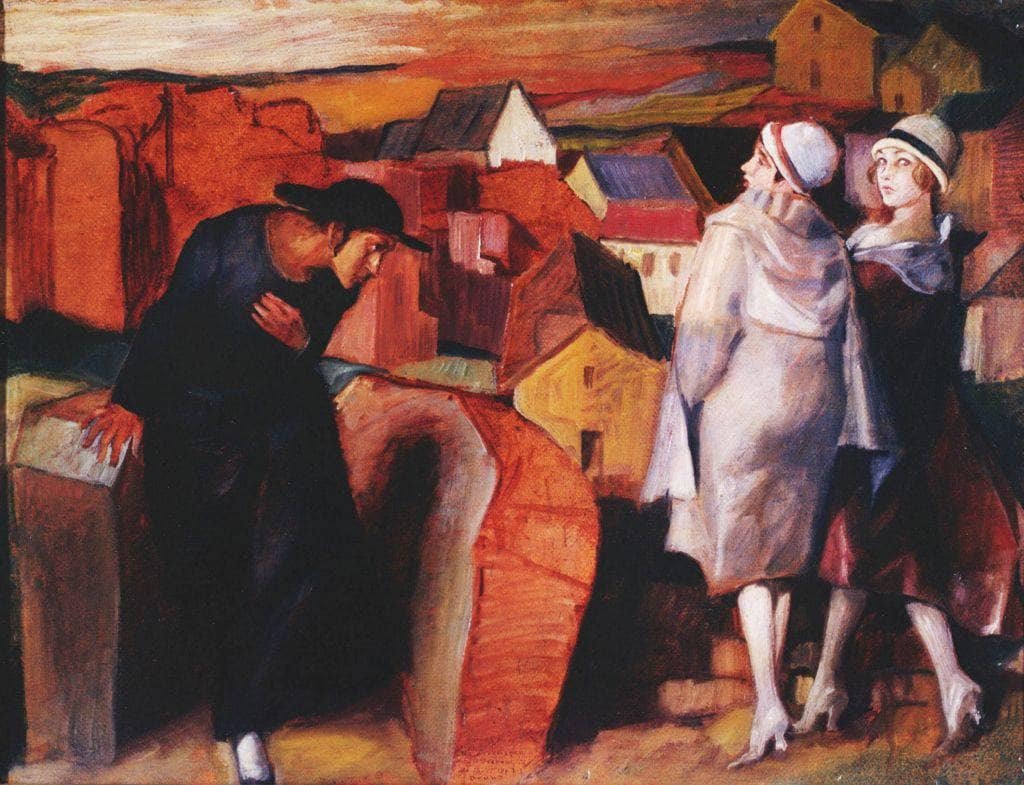
One evening, in the glare of the electric lamps, two such girls could be found strolling in the square among the many passers-by. Both were dressed in the striking, provocative style popular with a certain type of woman—a style which other women, not of their profession, strive to copy without success. The two girls looked about the same age, though one was actually older than the other. Lost in a conversation about personal matters, they’d forgotten why they had come . . .
“Did Mother cry a lot when you left?” one asked the other in Yiddish.
“No, she didn’t cry. Why should she, when she knew I was coming to you?”
“And what do they think of me at home? What do they say I’m doing here?” the older one inquired, probably for the hundredth time.
“Father told everyone in our shul what you wrote in your letter, that you work in a large linen store and are making a pretty penny.”
“And they believe that at home? Do they, really?”
“Why shouldn’t they believe it, if that’s what you wrote.”
The older one was silent for a moment.
“Maybe you don’t believe me? That I actually worked in a linen store? For two years I slaved away for that redhead Boruch, Yosl’s son, from back home in Kratsnits. He has a store in Whitechapel. At first, I slogged away in the workshop for twenty shillings a week, 8 8 A shilling is twelve pence. There are twenty in a pound. Rosa’s wage was on the low end for this type of work, which would have ranged from twenty to thirty-six shillings a week. then he told me that if I was a ‘good girl’ he’d add an extra two guineas, 9 9 A guinea was one pound and one shilling. An extra two guineas would have more than tripled Rosa’s wages. on condition I didn’t tell the others. Once he got his hooks into me he didn’t leave me alone for a minute! From the moment he moved me into the store, I was already ‘his,’ sold like a dog. So, I thought, rather than give myself for free, better to do it for money. Then at least you get something in return.”
Now the younger one fell silent.
“And believe me, there isn’t much of a difference between a workshop girl and a respectable store assistant. Is either one of them really respectable? All of them belong to the managers, and to the ‘bosses’ too. Can they just do as they please?”
The younger one still said nothing.
“Here, I at least know what’s what. I stroll around the square for a few hours, earn a couple of guineas, 10 10 That is, more than a week’s wages, but in a few hours’ work. and I’m a free woman. No one bothers me. I give the policeman a couple of shillings a week, and I’m as free as a bird, living where I want and wearing what I like.”
“And no one knows about it?” the younger one asked.
“You think this is Kratsnits, where everyone knows what you’re doing? Here everyone minds their own business.”
The younger one was quiet again.
“And when it comes to the kind of gentlemen you meet here—you think they’re like the men in Kratsnits?” the older one continued. “Here, not just anyone goes out with a lady. Here only a real gentleman goes out with you, takes you out for supper in a fine restaurant or a dance hall. It can become a real ‘party’ sometimes. I have had so many ‘chances,’ so many ‘high society’ gentlemen, with good ‘positions,’ worship at my feet and suggest to me that we have an arrangement.”
“So why wouldn’t you?”
“That’s the wrong way,” explained the older to the younger, “to associate with such gentlemen so much. It’s not for the likes of us. We should just meet a ‘gentleman’ for supper, go out with him, be with him, and get paid. Then you go your way and he goes his. I don’t know you, you don’t know me. Otherwise, you wouldn’t know who you were getting involved with. You could get into trouble, have your couple of guineas taken off you, or find yourself in even bigger trouble. That’s no good at all.”
In the meantime, a young man who had passed by them several times already drew nearer again. He looked into their faces, but still could not make up his mind whether to approach them or not.
“Look at this greenhorn hanging around us,” whispered the older girl and then called out to him, “Come here, sonny.”
The young man shot a silky, if nervous, glance at the younger girl. For a moment it seemed as if he might stop and speak to her, but again his courage failed him and he walked on.
“I’d swear he fancies you, Dusha,” the older girl said. “You could get a good few guineas out of a prize catch like him. He’s a complete novice. You only need to know how to go about it.”
The younger girl, embarrassed and a bit frightened, didn’t know what to say.
“Quiet—here he comes again. Pretend you don’t see him and aren’t the least bit interested. The less attention you pay him, the lower he’ll throw himself at your feet. But if he seems about to back off, give him just one glance, but make it a look that pierces him to the core.”
The younger one was silent and fearful. Then the young man plucked up his courage, approached, and stopped right in front of them. Her heart began beating faster.
“May I escort you?” the young man stuttered.
The younger girl looked at her older companion.
“That depends where to,” the older girl replied.
The young man, confused by the reply, stammered in response: “Well, where to?”
“To the Café Royal. They play nice music there.”
“Yes, to the Café Royal,” the young man stammered, and started walking along next to them.
“You see how it’s done?” the older girl prompted the younger in Yiddish. The younger girl said nothing, but her heart was pounding.
“Come on, walk next to him. He likes you,” said the older one, and twisted away skillfully so that her younger companion was by his side.
The younger one stood stunned for a moment. She was sure her heart could be heard beating loudly enough for everyone to hear.
“Don’t be afraid, I’ll do the talking. You just look him in the eyes,” the older girl instructed.
And the three of them walked off together in the direction of the Café Royal.
II
חיים פֿישער האָט געהאַט שײנע מױדן, מױדן מיט געדיכטע, שװאַרצע צעפּ האָר, און מען האָט געזאָגט, אַז אַ בױם מיטן װאָרצל װאָלט אַזאַ מױד געקענט אַרױסרײַסן מיט אירע צעפּ. רױטע געזונטע באַקן און גלאַנציקע אױגן. די מױדן האָבן געשמט איבער דער מדינה. האָט טאַקע חיים פֿישער מיט זײ גוטע שידוכים געטאָן. אײנע האָט ער אױסגעגעבן קײן קרושנעװיץ, גענומען אַ רײַכן פֿערד־סוחר אַ מאַן, אַן אַלמן. אַן אַנדערע האָט ער חתונה געמאַכט פֿאַר אַ קצבֿס אַ זון, און נאָך דרײַ האָבן זיך בײַ אים אין שטוב אַרומגעדרײט. דינען װעט ער זײ ניט שיקן, עס פּאַסט ניט פֿאַר חיים פֿישער, אַז זײַנע טעכטער זאָלן דינען. האָבן די מױדן פֿאַרפֿירט אַ שטאָט מיט יונגען. אַ גאַנצן טאָג גאָרנישט געטאָן, נאָר זיך אױסגעזעצט אַלע דרײַ, װי די ליאַלקעס, אױפֿן גאַניקל, אין שמאָלן געסל, זומערלעב, אין די בלױזע העמדער, אין די רױטע אונטערקלײדער, מיט די נאַקעטע הענט און בוזעמס אַרױס פֿאַר דער אָפֿענער שײַן, און זיך אױסגענײט געהאָפֿטענע װעש און געזונגען לידער. פֿאַר נאַכט, װען די װאַלקאַזשעס מיט די שטעפּן־מאַכער און די סוביעקטן פֿון די געשעפֿטן זענען אַהײמגעקומען פֿון דער אַרבעט, האָבן זײ זיך אָפּגעװאַשן מיט שמעקנדיקן זײף. װער עס האָט געהאַט האָט זיך אױסגעפּוצט אין די שבתדיקע קראַװאַטן און געקליבן אַרום זיך די מױדן. דאָס גאַנצע געסל האָט געשװיבלט מיט יונגען אַ גאַנצן אָװנט, געדרײט זיך אַרום די מױדן, װי בינען אַרום האָניק. אַ טײל האָט געהאַט דאָס גליק צוגעלאָזן צו װערן, זענען זײ געזעסן אױף די טרעפּלעך פֿון גאַניקל און געזונגען לידער. אַנדערע האָבן זיך געדרײט אין געסל. אַזױ האָט דאָס יונגװאַרג געברױעט אַ גאַנצע נאַכט און ניט געלאָזט דאָס גאַנצע געסל װײַבער און ייִדן קײן אױג צוטאָן, ביז דער פֿישער איז אַרױסגעקומען אױפֿן גאַניקל אין די גאַטקעס, און מיטן פּאַסיק אַרײַנגעיאָגט די מױדן אין שטוב אַרײַן. און צו די יונגען האָט ער געזאָגט:
– איר גײט אַהײם. איר װעט זיך אַ כאָליערע אַװעקלײגן!
און אַז די יונגען האָבן געזען, אַז די מױדן זענען אין שטוב פֿאַרשװוּנדן, זענען זײ זיך צעגאַנגען, און דאָס געסל האָט געקענט אײַנדרעמלען.
אין די זומערדיקע שבתים נאָך מיטאָג, װען די גאַנצע שטאָט זאָגט „פּרק“, האָבן די מױדן צוזאַמענגענומען די יונגען און האָבן געמאַכט אַ טאַנץ. איז דער רבֿ דערפֿון געװויר געװאָרן, האָט ער געשיקט נאָך חיים פֿישער און אים געסטראַשעט, אַז ער װעט אים די פֿיש אַסרן, אױב ער װעט די „נײַע מאָדע פֿון טאַנצן“ ניט אונטערברענגען. האָט חיים צעטריבן די יונגען און עס איז געװאָרן אױס טאַנץ.
האָבן זיך די מױדן נישט געהאַט װוּ אַהינצוטאָן אין שטעטל. האָבן זײ אָנגעהױבן צו טראַכטן װעגן אַװעקפֿאָרן פֿון דער הײם אין דער גרױסער שטאָט. איז אײנע אַװעקגעפֿאָרן צום זמן נאָך לאָדזש און איז דאָרט געבליבן אַ גאַנצן װינטער. אױף פּסח איז זי צוריקגעקומען און האָט מיט זיך געבראַכט אַ פֿולן קאַסטן מיט װעש און קלײדער, מיט אַ װינטער־מאַנטל און אַ פּאָר שיך מיט אַ פּאָר קאַלאָשן. זי האָט געזאָגט, אַז זי אַרבעט אין אַ גרױסן װאַרן־געשעפֿט, אַ פֿאַרקױפֿערין איז זי דאָרט. אין שטעטל האָט מען גערעדט, אַז זי איז פּשוט אױף אַ שטעל פֿאַר אַ דינסט. און אַנדערע האָבן נאָך ערגערס געזאָגט…
איז חיים פֿישער דערפֿון געװויר געװאָרן. איז ער שױן אַרױסגעגאַנגען אין גאַס שלאָגן די װאָס רעדן, איז געװאָרן אַ גרױס גערודער יום־טובֿ אין שולכל, װוּ עס דאַװנען די פֿישערס. איז חיים געקומען פֿון שול אַ בײזער און האָט געשװיגן אַ גאַנצן יום־טובֿ. אַז די מױד האָט זיך געקליבן װידער צו פֿאָרן קײן לאָדזש, האָט חיים פֿישער געזאָגט, אַז ער װעט זי נישט לאָזן. זי זאָל זײַן אין דער הײם. און װען עס געפֿעלט איר נישט די הײם, לאָז זי גײן פֿאַר אַ דינסט, נאָר נאָך לאָדזש װעט ער זי נישט לאָזן. און ער האָט אײַנגעשלאָסן דער מױדס קלײדער מיט די װעש, מיט די שיך און די נײַע פּאָר קאַלאָשן. האָט זיך די מױד אַרויסגעגנבֿעט בײַ נאַכט, אַ יונג האָט איר געהאָלפֿן אַרױסצוגנבֿענען דעם קאַסטן מיט די זאַכן. און זי איז אַנטלאָפֿן.
אַ לאַנגע צײַט האָט מען פֿון דער מױד ניט געהערט. אין יאָרן אַרום איז אָנגעקומען פֿון איר אַ בריװ פֿון לאָנדאָן מיט אַ טשעק אױף אַ פּאָר פֿונטן, װאָס די עלטערן האָבן נישט געװוּסט װאָס דאָס איז. אין דעם בריװ שרײַבט זי, אַז זי האָט זיך ניט, גאָט צו דאַנקען, צו באַקלאָגן. עס גײט איר נישט שלעכט. זי איז אין אַ געשעפֿט פֿון װײַסװאַרג. און דער בעל־הבית איז צו איר גוט. זי האָפֿט נאָך אין גיכן אירע עלטערן צו דערפֿרײען מיט פֿרײלעכע נײַעס… זי שטײט אין שידוכים, שרײַבט זי מיט פֿיל־מײנענדיקע פּינטעלעך…
דער פֿאָטער האָט געטראָגן דעם בריװ אין שולכל אַרײַן און האָט אים געגעבן אַלעמען צו לעזן.
איז דורכגעגאַנגען װידער אַ לאַנגע צײַט, און די „פֿרײלעכע נײַעס“ האָבן זיך נישט געהערט. און װען די עלטערן האָבן זיך שױן געהאַט מיאש געװען דערפֿון, איז אָנגעקומען אױף ראָש־השנה אַ װוּנטשקאַרטע אַזױ גרױס װי אַ טעלער, מיט אַ שיף און טױבן און אַלערלײ געמעלן – און קײן אײן װאָרט ניט מער. אין אַ געװיסער צײַט אַרום, אױף אַ פּסח, איז אָנגעקומען אַ טשעק אױף פֿינף פֿונט, אָן אַ װאָרט, דאַן איז באַלד װידער אָנגעקומען אַ בריװ: „טײַערער טאַטע און טײַערע מאַמע“, און זי שרײַבט, אַז גײן גײט איר גוט, עס פֿעלט איר חלילה קײן זאַך נישט, נאָר אײנס פֿעלט איר יאָ – דאָס איז „אַ מאַמעס האַרץ“. עס איז שלעכט צו זײַן צװישן פֿרעמדע מענטשן אַלײן, װי אַ פֿאַרבלאָנדזשעטער שעפּס פֿון דער סטאַדע. און ערשט איצט װײסט זי װי אָפּצושאַצן װאָס עלטערן זענען פֿאַר אַ קינד. אין דער פֿרעמד װײסט מען דאָס װי צו שעצן… און זי שרײַבט, אַז װען זי װאָלט געקענט האָבן אַ נאָענטן מענטשן מיט זיך, װאָלט איר קײן אײן זאַך ניט געפֿעלט… אין דער משפּחה האָט מען געװײנט אױף דעם בריװ, װי צו תּישעה־באָבֿ… נאָר קײן „טײַערע מאַמע“ איז שױן נישט געװען, װאָס זאָל באַגיסן דעם בריװ מיט הײסע טרערן. די מוטער איז דורך דער צײַט שױן געשטאָרבן.
אין דער הײם, בײַם אַלטן חיים, איז נאָך איבערגעבליבן דעם פֿעטער זרחס, עליו־השלום, אַ מײדל, װאָס דער אַלטער פֿישער האָט נאָך דעם ברודערס טױט צו זיך אין שטוב אַרײַנגענומען און געהאַלטן װי אַן אײגן קינד. װאָרעם זײַנע אײגענע טעכטער האָט ער שױן געהאַט אױסגעגעבן. און דער אַלטער פֿישער איז געקומען אױף דער עלטער, און קײן נדן פֿאַר דעם ברודערס טאָכטער האָט ער אויך ניט געהאַט, און קיין שידוך פֿאַר דער מױד האָט זיך נישט געמאַכט, האָט מען אַװעקגעשריבן אַ בריװ צו דער שװעסטער אין לאָנדאָן: אַז „די מאַמע, אין ליכטיקן גן־עדן זאָל זי זײַן, לעבט שױן נישט מער און דער טאַטע איז שױן צו אַלט אַלײן אַרױסצופֿאָרן צו די אָזערעס נאָך פֿיש… אַז עס װאָלט װער צוגענומען דעם פֿעטער זרחס טאָכטער, װעלכע איז בײַם טאַטן, װאָלט ער געגאַנגען צום אײדעם נאָך קרושנעװיץ. בלױז העלפֿנדיק אים בײַ דער יאַטקע, װאָלט ער זיך פֿאַרדינט זײַן שטיקל ברױט.“
איז באַלד אין אַ פּאָר װאָכן אַרום אָנגעקומען אַ בריװ פֿון לאָנדאָן, מיט אַ טשעק אױף פֿונטן, אַז דעם פֿעטער זרחס טאָכטער, דושע, זאָל נישט אַנדערש טאָן, נאָר גלײַך קומען צו פֿאָרן צו איר קײן לאָנדאָן. „זי װעט דאָ, שרײַבט זי, גליקלעך װערן.“
האָט מען דער מױד אײַנגעפּאַקט אַ קאַסטן מיט זאַכן, מושװה געװאָרן מיט נטען דעם פֿורמאַן פֿאַר גנבֿענען די גרענעץ. און נטע האָט געשװאָרן בײַ זײַן „װײַב און קינד“, אַז ער װעט די מױד אָפּהיטן װי אַן אױג אין קאָפּ ביז איבער דער גרענעץ. און איבער דער גרענעץ װעט ער זי מיטגעבן מיט אַ פּאַרטיע „ליטװאַקעס“, װעלכע פֿאָרן נאָך לאָנדאָן.
II
Khaym the fishmonger had beautiful daughters, girls with ruddy cheeks and shining eyes and plaits of black hair so thick, people said they could wrap them around a tree and pull it out by the roots. His girls were known throughout the country, so Khaym the fishmonger was able to arrange good matches for them. He married one off to a widower from Krushnevits, a wealthy horse dealer; another he paired with a butcher’s son. Three were still rattling around with him at home. 11 11 “Rattling around” means “hanging around” in British English, but with a much stronger sense of having nothing to do or no purpose in it. He wouldn’t send them off to work as housemaids; it wouldn’t be appropriate for any daughter of his to work as a servant. So the three girls spent their time flirting with all the young men in town. They did nothing all day long. In the summertime, all three would lounge there on the porch in the narrow street, dressed only in open blouses and colourful skirts, with their bare arms and bosoms exposed to the sunshine, embroidering their linen dresses and singing songs. In the evening, the fullers, the young quilt makers, and the shop workers headed home and washed up with scented soap. Whoever had a necktie would don his best one to attract the young women’s attention. All evening the whole street teemed with young men, swarming around the girls like bees around honey. Some were lucky enough to be allowed near, and they’d sit on the steps of the porch singing songs. Others just hung around in the street. The young people would make a racket till late at night, so that none of the neighbours, man or woman, could get a moment’s sleep. In the end, the fishmonger would come out onto the porch in his underpants and drive his girls into the house with a belt. And to the young men he’d shout: “Clear off home! To hell with the lot of you!”
And when the young men saw that the girls had disappeared into the house, they would disperse, and the street could finally get some sleep.
On summery Sabbath afternoons, while the whole town was reciting the season’s Pirkei Avot, the girls would gather the young men together for a dance. When the rabbi found out, he sent for Khaym the fishmonger and threatened to declare that his fish weren’t kosher unless he put an end to the “new dance trend.” So Khaym drove the young men away, and there was no more dancing.
Then the girls had nothing to do and nowhere to go in the little town. So they began to think about leaving home for the big city. One of them left for Lodz immediately after the holidays and stayed there the whole winter. The next Pesach, she came home, bringing along a trunk full of underwear and dresses, a winter coat, a pair of shoes, and a pair of galoshes. She said she’d been working in a large store as a sales assistant. But in town, people said she was just a housemaid. And some hinted at even worse …
Well, Khaym the fishmonger got wind of the gossip. Soon he was out in the street giving the rumormongers a dressing down. When the holiday came around, there was a mighty row at the fishmongers’ synagogue. Khaym came home very angry and refused to speak for the rest of the holiday. When his daughter started packing for Lodz again, the fishmonger said he would not let her go. She would remain at home. And if she didn’t like it at home, she could go and work as a maid in someone else’s house, but he was not letting her go back to Lodz. He locked away the girl’s clothes and underwear, along with the shoes and the pair of new galoshes. But his daughter sneaked off in the night. A young man helped her get the trunk with her things, and so she ran away.
For a long time, no one heard anything from the runaway. A few years later, a letter arrived from her from London. Inside was a cheque for a few pounds; her parents had no idea what it was. In the letter, she wrote that she had nothing to complain about, thank God. Things were not so bad. She had a job in a linen store and her boss treated her well. She hoped to share some good news soon that would make her parents happy. She was getting engaged, she wrote, adding three little dots, full of meaning.
Her father took the letter to the synagogue and let everyone read it.
A long time passed again, but no “good news” was forthcoming. Just as the parents were giving up hope, a Rosh Hashanah card arrived. It was big as a dinner plate, with illustrations of a ship, doves, and all sorts of other pictures, but not a single word. Some time later, around Pesach, a cheque for five pounds arrived, again without a word. But soon afterwards a letter came, addressed to “Dear Father, Dear Mother.” She wrote that things were going well. She lacked nothing, God forbid, except one thing: “a mother’s love.” It was hard living among strangers, like a sheep that has wandered far from her flock. Only now, for the first time, did she realise what parents mean to a child. In a strange land, you learn what to value. If only she had a loved one with her, she would have everything she needed . . . How the family wept at this letter, as mournfully as on the ninth of Av. There was no longer a “dear mother” to dampen the letter with hot tears—she had already passed away.
At home, the daughter of Uncle Zorech, may he rest in peace, was still living with the elderly Khaym. Having already married off his own daughters, Khaym had taken the girl in after his brother’s death and looked after her like his own child. But the elderly fishmonger was getting even older, and there was no dowry for his niece, and he could not arrange an engagement for the girl. So a letter was sent to the sister in London: “Our mother, may she rest peacefully in heaven, is no longer alive, and Father is too old to make a living from fishing in the lakes. If someone could take in Uncle Zorech’s daughter, who is living with our father, he could go and live with his son-in-law in Krushnevits. He could assist him a little in the butcher shop, and so earn his daily bread.”
Only a few weeks letter, a letter—and a cheque in pounds—arrived from London. Uncle Zorech’s daughter, Dusha, the letter said, should come to London as soon as possible. “She will be happy here,” the sister wrote.
So a trunk was packed with everything for the girl, and an agreement was reached with Note, the coachman, that he would smuggle her across the border. Note swore on the lives of his wife and child that he would look after the girl like the apple of his eye until he had got her over the border safely. And once over the border, he would entrust her to a party of Litvaks who were also bound for London.
III
אַז די קוזינע איז אַראָפּגעקומען קײן לאָנדאָן, האָט ראָזע נישט געװוּסט װאָס צו טאָן מיט איר. ראָזע האָט זיך געמאַכט איר כּשר שטיקל ברױט פֿון דעם, װאָס זי איז געװען אַ גאַסן־מײדל, אַ בכּבֿודיק גאַסן־מײדל. קײן פֿרײַנד האָט זי נישט געהאַט, װײניק באַקאַנטע, אַחוץ איר בעל־הביתטע, די דזשעניטאָרין, אַ גוטע אַלטע אײַרישע פֿרױ, מיט װעלכער ראָזע האָט זיך גוט באַפֿרײַנדט. אָפֿט מאָל איז די גויע אַרױפֿגעקומען צו איר, געגעסן בײַ איר, און ראָזע האָט איר מתּנות געגעבן. די גוטע אײַרישע האָט אַלץ געהאָפֿט, אַז ראָזע װעט אָננעמען דעם אמתן קריסטוס־גלױבן, און װערן אַ באַפּטיסטין, װי זי איז אַלײן. ראָזעס פּראָפֿעסיע איז איר נישט אָנגעגאַנגען: „יעדן אײנעם קומט נישט אָן דאָס שטיקל ברױט לײַכט“. נאָר ראָזעס גלױבן האָט איר נישט געלאָזט רוען, און זי האָט אַלץ געהאָפֿט, אַז די שײנע ייִדין װעט װערן אַרונטערגענומען אונטער קריסטוסעס פֿליגלען און נישט אַנדערש, װי אונטער זײַנע „באַפּטיסטישע“ פֿליגלען.
ראָזע אָבער האָט געזאָגט: טאַקע, זי איז אַ גאַסן־מײדל, אָבער דעם גלױבן פֿון אירע עלטערן װעט זי נישט בײַטן, אַפֿילו װען מען זאָל איר אַװעקגעבן דעם „קינגס פּאַלאַץ“.
אײגנטלעך האָט ראָזע נישט פֿאַרשטאַנען, פֿאַר װאָס עס איז אַזאַ שלעכטע זאַך צו זײַן אַ גאַסן־מײדל. נאָר אַלע האָבן געהאַלטן, אַז אַ גאַסן־מײדל איז אַ שלעכטע און אַ מיאוסע זאַך, האָט זי אױך אַזױ געהאַלטן און זי האָט זיך געהיט דערמיט פֿאַר באַקאַנטע און לאַנדסלײַט. דורך דעם איז זי ניט געגאַנגען אין די גאַסן, װוּ זי האָט געקענט באַגעגענען אַ לאַנדסמאַן, זי האָט אױסגעמיטן „װײַטשעפּל“ און דעם גאַנצן „איסטענד“, זי האָט גערעדט ענגליש, און געהאַלטן זיך פֿאַר אַ לײדי. אָנטאָן האָט זי זיך געקענט נאָך פֿון דער הײם. פֿון שטענדיק איז זי אַרײַן אין די הױכע גאַסן אַלס „פּיקאָדילי“ – צום אַדמיראַל־סקװער, געזעסן אין די לאָביס פֿון די האָטעלן. מיט דער צײַט געקראָגן איר שטענדיקע „קונדשאַפֿט“, אַ פּאָר „דזשענטללײַט“, מיט װעלכע זי איז אױסגעגאַנגען אױף סאַפּער נאָר דורך „אַפּױנטמענטס“.
געװױנט האָט זי אין איר אײגן צימער, בײַ איר אײַרישער פֿרײַנדין. קײן מאָל האָט זי קײנעם ניט געבראַכט אַהײם צו זיך אין צימער, אַחוץ אירע פֿרײַנדין־„לײדיס“. די שכנים האָבן אײגנטלעך ניט געװוּסט, מיט װאָס זי באַשעפֿטיקט זיך , פֿון אירע קלײדער און מאַנירן האָט מען עס אױף איר אױך נישט אָנגעזען.
צו ערשט האָט זי געהאַלטן איר „קוזינקע“ בײַ זיך, זי איז צוליב דער „קוזינע“ נישט אַרױסגעגאַנגען אין די אָװנטן, און זי האָט זעלבסט־פֿאַרשטענדלעך נישט געזאָגט דער קוזינע מיט װאָס זי באַשעפֿטיקט זיך. אָבער באַלד האָט זיך דאָס אָפּגערופֿן אױף אירע פֿינאַנסן. קײן געלט האָט זי נישט געהאַט, געלעבט װי יעדער „פּראָלעטאַריער“ פֿון דער האַנט אין מױל. דאַן האָט זי גענומען פֿאַרלירן קונדשאַפֿט. האָט זי פֿאַר דער קוזינע געדונגען אַ באַזונדער צימער ערגעץ װוּ אין די ייִדישע געגנטן, און אַלײן האָט זי זיך װײַטער באַשעפֿטיקט מיט איר באַשעפֿטיקונג.
דעם פֿעטער זרחס טאָכטער האָט געפּרוּװט פֿאַרדינען, געגאַנגען אין שאַפּ אַרײַן אַרבעטן. קײן אַרבעט איז ניט געװען, און דאָס װאָס זי האָט יאָ געקענט פֿאַרדינען, האָט ניט געקלעקט אױף איר אױסהאַלטן, און דערבײַ איז די אַרבעט געװען אַזאַ שװערע, אַז זי האָט אין די ערשטע פּאָר װאָכן אױפֿגעגעסן „דאָס גרינע מײדל“, און די „רױטע באַקן“, װאָס זי האָט מיטגעבראַכט פֿון דער הײם, זענען בלײך געװאָרן, און די ליפּן גרעבער, און די אױגן אױסגעלאָשן, און אַז ראָזע האָט דערזען, װאָס עס איז געװאָרן פֿון דער קוזינע, איז איר האַרץ צעשניטן געװאָרן.
דערװײַל איז די ייִנגערע אױך געװױר געװאָרן, מיט װאָס די עלטערע באַשעפֿטיקט זיך. קײן גרױסן אײַנדרוק האָט עס אױף איר נישט געמאַכט, דערפֿאַר, װאָס זי האָט נישט געזען קײן אָפּשטױסנדיקס, און האָט נאָר געזען, װי איר קוזינע װױנט אין אַ פֿײַנער װױנונג, טוט זיך אָן אין זײַדנס, אין אױסגעהאָפֿטענע העמדער, די שענסטע היט, טוט גאָרנישט אַ גאַנצן טאָג און האָט נישט קײן „באָס“ איבער זיך, און דאַרף נישט זיצן אין שאַפּ אין די הײסע זומערטעג – אין אָװנט גײט זי אױס סאַפּער עסן מיט פֿײַנע לײַט װעלכע באַהאַנדלען זי אַזױ פֿײַן, און אַזױ אָנשטענדיק – אַדרבא, דער קוזינעס פּראָפֿעסיע האָט איר אימפּאָנירט, זי איז שטאָלץ געװען, װאָס זי האָט אַ קוזינע אַזאַ „גרױסאַרטיקע לײדי“ – און זי פֿלעגט אָפֿט אַרױסקומען צו איר, זיצן בײַ איר און באַװוּנדערן אירע קלײדער, אירע שיך און אירע היט. – ענדלעך האָבן די מײדלעך געװױנט צוזאַמען.
צו ערשט האָט די עלטערע פֿאַרדינט, און די ייִנגערע איז געבליבן אין דער הײם. זי האָט זיך אָנגעטאָן אין דער קוזינעס געניצטע קלײדער, געגעסן גוט – און באַלד אָנגעהױבן אױסצוזען פֿריש און שײן. דער שאַפּ איז אַװעקגעשװוּמען, װי אַ בײזער חלום – שױן קײן מאָל נישט צוריקצוקומען. פֿון קײן אַנדער פּרנסה האָט מען נישט געקלערט. עס איז זיך נישט געװען צו װאָס צו נעמען. און קײן פּרנסה האָט נישט אױסגעזען בײַ איר אַזױ גרינג, אַזױ פֿײַן און אַזױ אָנשטענדיק װי איר קוזינעס… און אַ מאָל האָט בײדע מײדלעך געטראָפֿן אױף דער גאַס אײנער פֿון ראָזעס פֿאַרערער, אַן עלטערער דזשענטלמאַן שױן – זײער אַן אָנשטענדיקער „דזשענטלמאַן“, ער האָט זיך זײער געפֿרײט מיט רחלען, ראָזעס שװעסטער, אַזױ האָט זי ראָזע פֿאָרגעשטעלט, און ער האָט אָפֿט בײדע „שװעסטער“ אײַנגעלאַדן צו „סאַפּער“ אין „מאָנאָקאָ“. עס איז געװען אַזױ אָנשטענדיק… און ביסלעכװײַז האָט ראָזע מיטגענומען איר קוזינע און אָנגעהױבן איר איבערצוגעבן די סודות פֿון איר פּראָפֿעסיע – ביז מיר האָבן זײ געטראָפֿן אױף פּיקאָדילי, בײַ דעם סקװער פֿון די טױבן… ביז ראָזע האָט מיטגענומען איר קוזינע אױף דער גאַס און געפֿירט זי אין „קאַפֿע ראָיאַל“.
IV
נאָך דעם װי זײ זענען אַלע דרײַ אָפּגעזעסן אַ געװיסע צײַט אין „קאַפֿע ראָיאַל“, געטרונקען קאַװע און ליקער, האָט ראָזע געזאָגט צו די ייִנגערע:
– װאָס װעט זײַן דער סוף פֿון זיצן, איך װעל אײַך לאָזן אַלײן – איר װעט זיך שױן אַן עצה געבן אָן מיר.
– נײן, ראָזע־לעבן, איך בעט דיך, גײ נישט אַװעק – האָט די ייִנגערע אָנגעכאַפּט די עלטערע בײַ דער האַנט, – איך האָב מורא צו זײַן אַלײן.
– מורא, אין לאָנדאָן האָט מען נישט קײן מורא, – האָט די עלטערע געלאַכט – גײ שױן נאַר, בלײַב אַלײן מיט אים, ער װעט דיך נישט אָפּבײַסן, דזשענטללײַט האָבן ליב צו זײַן אַלײן מיט זײערע לײדיס. „איז'נט סאָ?“ – האָט זי געזאָגט צום יונגן־מאַן אױף ענגליש.
– שור, יו אַר רײַט – האָט דער יונגער־מאַן געשטאַמלט פֿאַרלעגן.
– און פֿריִער געלט, דו הערסט. נישט װינציקער אַזױ װי איך האָב דיר געזאָגט, און מאַך נישט מיט אים קײן לאַנגע מעשׂיות. – האָט זי געזאָגט צו דער ייִנגערער אױף ייִדיש, אַז דער דזשענטלמאַן זאָל נישט פֿאַרשטײן…
די ייִנגערע איז רױט געװאָרן, איר האַרץ האָט אָנגעהױבן צו קלאַפּן נאָך העכער: טיק־טאַק, האָט אױף אַלע געקוקט אין קאַפֿעהױז, אױף די געסט, אױף די מײדלעך אַרום די טישן, װאָס זיצן און רײכערן סיגאַרלעך, נאָר נישט אױף איר „באַשערטן“, װאָס איז געזעסן קעגן איבער איר.
דער יונגער־מאַן האָט באַשטעלט נאָך קאַװע, נאָך ליקער, גערעדט האָט ער מיט ראָזען אין ענגליש, װאָס די ייִנגערע האָט האַלב פֿאַרשטאַנען.
– זי איז נישט לאַנג אין לאָנדאָן, און װײס נאָך נישט װי אומצוגײן מיט „דזשענטללײַט“ – האָט ראָזע פֿאַרענטפֿערט איר קוזינע פֿאַרן גאַסט.
– אָבער דערפֿאַר איז זי אַ שײנע – האָט דער גאַסט געזאָגט קוקנדיק אױף איר.
– זי איז דאָס שענסטע מײדל פֿון סקװער, – האָט ראָזע געזאָגט, און שטופּנדיק הינטער אַרום איר קוזינע, האָט זי צוגעלײגט אױף ייִדיש:
– דער גױ איז פֿאַרליבט אין דיר. קענסט רײַסן פֿון אים אַ פּאַס, דו גרינע אוגערקע.
אָבער די ייִנגערע איז געבליבן זיצן אַ פֿאַרשעמטע, רױט־טױט מיט אַ קלאַפּנדיק האַרץ און נישט געװוּסט, װאָס צו טאָן און װאָס צו זאָגן.
– זאָל איך רעדן פֿאַר דיר, איך װעל טאַפּן דעם דופֿק, אױב עס לוינט זיך, – האָט די עלטערע געזאָגט.
– ראָזע־לעבן, איך בעט דיך – האָט די ייִנגערע אָנגעכאַפּט די עלטערע בײַ דער האַנט און געבעטן זיך, אַז זי זאָל שװײַגן.
– װאָס װעט זײַן דער סוף? עס װערט דאָך שפּעט, אַז איך װאָלט אַזױ געזאָלט בײַ יעדן גאַסט באַלעמוטשען, מאַכן חנדלעך, װאָלט איך שײן אױסגעזען! איך װאָלט אױף קײן שיך נישט געהאַט!
– ראָזע־לעבן, איך װיל אַהײמגײן, – האָט די ייִנגערע געזאָגט.
– פֿאַר װאָס?
– איך װײס נישט פֿאַר װאָס, איך האָב מורא.
– פֿאַר װאָס האָסטו מורא?
– איך װײס נישט, איך האָב מורא.
– עס איז נישט שײן צו באַלײדיקן אַ גאַסט, ער האָט געלט געספּענדעט.
– מײַן פֿרײַנדין איז קראַנק, פֿילט זיך ניט מיט אַלעמען – דער דזשענטלמאַן װעט דאָך מיט מיר בלײַבן – האָט זי זיך געװענדט מיט אַ פֿאַרשאַרט שמײכעלע צום גאַסט.
– אַז די פֿרײַנדין װעט נישט אײפֿערזיכטיק זײַן – האָט דער „דזשענטלמאַן“ געזאָגט.
מײַן פֿרײַנדין איז נישט קיין אייפֿערזיכטיקע – האָט ראָזע געלאַכט, – ס'װאַר? נאַ, נעם די שליסל און גײ אַהײם – גיט זי איבער דער קוזינע די שליסל – איך װעל זיך באַלד מיט אים אָפּפֿאַרטיקן – גיט זי צו צו דער ייִנגערער אױף ייִדיש…
שפּעטער, אַז ראָזע איז צוריקגעקומען אין װױנונג, װוּ זײ האָבן געװױנט, האָט זי אַרױסגעװאָרפֿן פֿון זײַדענעם זאָק אַ פּאַפּירענעם פֿינף־פֿונט־שטיק און האָט עס צוגעװאָרפֿן צו דער ייִנגערער.
– נאַ זעסט, װאָס איך האָב אַרױסגעקריגן פֿון דעם הונט.
די ייִנגערע איז נישט געשלאָפֿן. זי איז געלעגן אױפֿן בעט אַן אָנגעטאָנענע, מיט די צעפּלאָשעטע האָר. זי האָט געלאָזט פֿאַלן דעם פֿינף־פֿונט־שטיק און איז רױט געװאָרן.
– נאַ, נעם צו, עס איז דײַן געלט.
די ייִנגערע איז נאָך מער רױט געװאָרן.
– מײַן? – האָט זי געשמײכלט.
– יאָ, איך בין געגאַנגען פֿאַר דיר.
די ייִנגערע האָט געשװיגן.
– פֿאַר װאָס ביסטו נישט געגאַנגען מיט אים? „אַ נײַס דזשענטלמאַן“ געװען.
– ער איז מיר נישט געפֿעלן, – האָט די ייִנגערע געזאָגט.
– נאַר אײנע, דו האָסט דען חתונה מיט אים? ביסט זיך משדך מיט אים, צי װאָס? הײַנט קענסטו אים, מאָרגן נישט. װאָס אַרט עס דיך?
די ייִנגערע האָט געשװיגן.
– װײסטו װאָס, די באַשעפֿטיקונג איז נישט פֿאַר דיר, – זאָגט ראָזע, אױסטוענדיק זיך די זאָקן, – צו דער באַשעפֿטיקונג באַדאַרף מען האָבן אַ גאַנץ אַנדערן סאָרט כאַראַקטער. מען באַדאַרף װיסן װי דערמיט זיך אומצוגײן, אַזױ װי איך. איך האָב מורא, אַז דו װעסט עס קײן מאָל נישט קענען.
די ייִנגערע האָט געשװיגן.
– דו כּלהסט זיך צו פֿיל מיט זײ, אַזױ װי עס װאָלט געװען דײַן חתן. איך װאָלט זיך דורך דער צײַט מיט דרײַ אָפּגעפֿאַרטיקט – זאָגט די עלטערע, אױסטוענדיק דעם צװײטן זאָק פֿון פֿוס.
– נו, איך הײב דאָך ערשט אָן, איך װעל זיך אַװדאי צוגעװױנען, פֿאַרענטפֿערט זיך די ייִנגערע.
– איך האָב מורא, אַז נישט, צו דעם באַדאַרף מען האָבן אַ גאַנץ אַנדער סאָרט כאַראַקטער… – זאָגט די עלטערע, אױסטוענדיק זיך דאָס קלײד.
III
When her cousin arrived in London, Rosa had no idea what to do with her. Rosa made a decent living as a streetwalker, no less. She had no friends and few acquaintances other than her landlady, the caretaker, a kindly old Irishwoman with whom she had become quite close. The Irishwoman often came up to Rosa’s room and ate with her, and Rosa gave her gifts. All along, the good woman hoped that Rosa would embrace the true faith in Christ and become a Baptist, like her. 12 12 The Yiddish term used here can be translated as “baptized” or “Baptist.” In the translators’ view, however, the word baptistin is best translated to “Baptist.” Both the poor Irish and the poor Jews of the East End of London were the targets of a great deal of evangelical and missionary work around the era of this story, by various Church denominations. See Curtis, R. “Evangelical Anglican missionaries and the London Jews Society: Palestine Place at Bethnal Green and related developments, 1813–1895,” Jewish Historical Studies, 50:1 (2018), 69–100; and Gilley, S. “The Roman Catholic Mission to the Irish in London, 1840–1860,” Recusant History 10:3 (1969), 123–145. By the early twentieth century, the East London Tabernacle, an enormous Baptist church, as well as Baptist tabernacles in Shoreditch, Woolwich, and Poplar, all parts of the East End, were the most prominent of such evangelising communities, and they particularly focused on their missionary work on the Jewish community. See: https://university.open.ac.uk/arts/research/religion-in-london/resource-guides/baptist#:~:text=The%20Daily%20News%20census%20of,training%20Baptists%20ministers%20in%20London. and https://eltbaptistchurch.org/about/our-history/. Rosa’s profession didn’t bother her: “It’s not easy for anyone to make a living,” she told herself. But the fact of Rosa’s religion would not let her rest in peace, and she persisted in the hope that the beautiful Jewish girl would be taken under Christ’s wings, and under his Baptist wings especially. But Rosa would respond that she was a streetwalker, true enough, but she would never abandon her parents’ religion, even for a king’s ransom.
Rosa did not really understand why streetwalking was such a bad thing, but because everyone considered it a shameful occupation, she bowed to the general opinion and was careful to hide it from her acquaintances and people from the old country. So she never walked any streets where she might meet a compatriot and avoided Whitechapel and all of the East End entirely. She spoke English and behaved like a lady. She already knew how to dress from back home. She always worked high-class streets—from Piccadilly to Trafalgar Square—or sat in hotel lobbies. Over time she acquired a steady clientele, a few “gentlemen” who would take her to supper “by appointment only.”
She lived in her own room, in her Irish friend’s house. She never brought anyone, besides her other “lady” friends, to her room. The neighbours had no idea how she made a living, neither could anyone tell from her clothes or manners. When her cousin first arrived, she stayed with her, and so Rosa did not walk the streets in the evenings. Needless to say, she didn’t tell her cousin how she made a living. But the situation soon took a toll on her finances. Money was short, and she had to live like every proletarian, from hand to mouth. Then her regular clientele began to drift away. So she rented a separate room for her cousin elsewhere in the Jewish neighbourhood and resumed her professional activities.
Uncle Zorech’s daughter tried to earn some money by getting a job in a workshop. But there was little work to be had, and what she did manage to earn was not enough to support her. Moreover, the work itself was so hard that in the first few weeks the young greenhorn lost her fresh complexion, and the rosy cheeks she had brought with her from the old country grew pale. Her lips became drawn and her eyes lost their glitter. It broke Rosa’s heart to see what had become of her cousin.
Meanwhile, the younger woman had become aware of how her older cousin made a living. But she didn’t mind, since she did not see anything disagreeable about it, quite the opposite: Her cousin lived in a nice flat and wore silk dresses, embroidered blouses, and the most beautiful hats. Her cousin did nothing all day, had no “boss” telling her what to do, didn’t have to sit in a workshop for hours in the heat of the summer. In the evenings she went out to have supper with fine gentlemen who treated her with great care and respect. On the contrary, her cousin’s profession impressed her—she was proud to have such a fine lady for a cousin. Dusha would often come over to Rosa’s flat, sit with her, and admire her clothes, shoes, and hats. In the end, she moved back in and the two young women began living together once more.
At first, only the older girl brought in any money, and the younger one stayed at home. She dressed in her cousin’s used clothes, ate well, and soon recovered her fresh complexion. The memory of the workshop faded like a bad dream, never to return. She gave no thought to any other occupation, nor was there any available. No other type of work seemed as easy, as pleasant, and as respectable as her cousin’s. Then one day the two young women bumped into one of Rosa’s regulars on the street, an elderly “gentleman” of a very respectable type, who was delighted to make the acquaintance of Rosa’s sister, Rachel (for that is how Rosa introduced her). And he often invited the two “sisters” to “supper” at the Monaco Hotel. Yes, all very respectable. Gradually Rosa began taking her cousin along and sharing the secrets of her trade. That brings us back to Piccadilly, where we met them near the square with the pigeons, with Rosa taking her cousin with her on the street and now leading her to the Café Royal.
IV
The three of them had already been sitting for a while in the Café Royal, and had drunk coffee and liqueurs, when Rosa said to the other two: “What’s the point of us all just sitting around? I’ll leave you two alone for now. You can manage by yourselves.”
“No, Rosa my love, please don’t leave,” said the younger one, grabbing her cousin by the arm. “I’m scared of being on my own.”
“Scared? No one’s scared in London,” the older girl laughed. “Go on, silly. Stay with him by yourself. He won’t bite you. Gentlemen like to be left alone with their ladies.”
“Iznt so?” she asked the young man, in her English.
“Sure. You’re right,” the young man stammered in embarrassment.
“And take the money first, you hear. No less than I said you should. And don’t drag it out with him,” she said to the younger woman in Yiddish, so the gentleman wouldn’t understand.
The younger one blushed. Her heart began thumping even louder. She looked all around the café, at the other customers, at the other young women sitting at the tables smoking cigarettes, at everyone but her own “intended” sitting right across.
The young man ordered more coffee and drinks. He was speaking with Rosa in English, which her younger cousin only half understood.
“She hasn’t been in London very long. She still doesn’t know how to go out with ‘gentlemen,’” said Rosa, apologising for her cousin to their host.
“On the contrary, that’s what makes her so beautiful,” said the young man, gazing at her.
“The most beautiful girl in the square,” said Rosa, and, giving her cousin a little shove in the back, she added in Yiddish: “The goy has fallen in love with you. You could fleece him good and proper, my little greenhorn.”
But her younger cousin just sat there in embarrassment, her cheeks burning, her heart pounding, not knowing what to do or say.
“Shall I do the talking, size things up, see if it’s worth it?” said the older cousin.
“Rosa, my dear, I’m begging you,” her cousin replied, grabbing the older girl’s arm to try to silence her.
“How is this going to end? It’s getting late. If I made such a big deal of things and messed around like this with every man I came across, I wouldn’t look so beautiful. I wouldn’t have any nice shoes to wear, that’s for sure.”
“Rosa, my dear, I want to go home,” said the younger one.
“Why?”
“I don’t know why. I’m scared.”
“What are you scared of?”
“I don’t know. I’m just scared.”
“It’s not nice to insult a customer. He’s already spent money on us,” Rosa said, then turned to the young man with a provocative smile.
“My friend isn’t feeling well. She’s a little out of sorts. Perhaps the gentleman would like to stay with me, after all.”
“As long as your friend isn’t jealous.”
She laughed.
“Okay? Here, take the key and go home.” She handed over the key to her cousin and added quickly in Yiddish, “I’ll finish with him soon.”
Later that night, when Rosa got back to their flat, she took a five pound note out of her silk stocking and tossed it to her young cousin.
“Here! See what I managed to drag out of that pig.”
The younger girl was wide awake. She was lying on the bed, still dressed, with her hair down. She let the five pound note fall, her cheeks burning.
“Go on, take it. It’s your money.”
The younger girl blushed even redder.
“Mine?” she asked, with a smile.
“Yes, I went with him for you.”
The younger one said nothing.
“Why didn’t you go with him? He was ‘a nays djentlman.’”
“I didn’t like him,” the younger one replied.
“But, silly, you don’t have to marry him. Are you getting engaged, or what? Today you know him, tomorrow you don’t. What do you care?”
The younger one again said nothing.
“You know what? This profession isn’t for you,” said Rosa, taking her stockings off. “In this line of work you need a different kind of personality. You have to know how to deal with it, like I do. And I don’t think you’ll ever be able to.”
The younger one remained silent.
“You acted too much like a bride with him, like he was your groom. I could have got through three customers in that time,” the older cousin said, removing her second stocking.
“But I’m just a beginner. I’ll surely get used to it,” said the younger girl.
“I’m afraid not. You need a very different kind of personality for it,” said the older cousin, taking off her dress.
V
אין די נעקסטע פּאָר װאָכן האָט ראָזע טאַקע איר קוזינע נישט מיטגענומען צו איר באַשעפֿטיקונג. די מײדלעך האָבן געװוינט צוזאַמען, געגעסן צוזאַמען. דושע האָט אָנגעטאָן ראָזעס האַלקעלעך און בלוזקעלעך און ראָזע האָט איר געגעבן קלײנגעלט. ראָזע האָט זיך װידער באַשעפֿטיקט בײַ איר באַשעפֿטיקונג, אַרויסגעגאַנגען יעדן אָװנט צו אירע באַשטעלונגען. איז נישט געװען קײן „באַשטעלונגען“, איז זי געגאַנגען אויפֿן סקװער זוכן באַשעפֿטיקונג, װאָס זאָל איר און איר קוזינע געבן אויף חיונה. די קוזינע האָט גאָרנישט נישט געטאָן. בײַ טאָג האָבן די מײדלעך זיך געקאָכט, גענײט, אויפֿגעהאָפֿטן זיך שײנע, געשטיקטע װעש. זיי פֿלעגן זיך דערצײלן מעשׂיות פֿון דער הײם, לאַכן און פֿרײען זיך, אָבער בײדע האָבן געבענקט נאָך עפּעס – נאָך װאָס, האָבן זײ אַלײן נישט געװוּסט. אַ מאָל פֿלעגט מען אויך רעדן װעגן ראָזעס באַשעפֿטיקונג. ראָזע האָט איר דערצײלט פֿון די „דזשענטללײַט“, מיט װעלכע זי האָט נעכטן געגעסן סאַפּער און נישט אײן מאָל געמאַכט צוזאַמען דאָס געלעכטער פֿון זײ, דערצײלנדיק דערבײַ די אינטימסטע זאַכן, אָן זיך עפּעס צו זשענירן, צו פֿאַרשעמען זיך, אָדער צו פֿילן, אַז זי זאָגט עפּעס נישט שײנס…
צי דערפֿאַר, װאָס דושען איז פּריקרע געװען צו לעבן אויף ראָזעס חשבון, צי צוליב אַנדערע אורזאַכן – װער קען װיסן? דושען האָט זיך פֿאַרגלוסט צו גײן צוריק צו דער אַרבעט אין שאַפּ. און אַז ראָזע האָט געהערט דערפֿון, האָט זי געזאָגט צו איר׃
– װאָס פֿאַלט דיר אײַן? דאָס געזונט און לעבן אַװעקלײגן פֿאַר צװעלף שילינג אַ װאָך? װאָס װעסטו האָבן דערפֿון?
די ייִנגערע האָט געשװיגן אַ װײַלע, דאַן האָט זי זיך אָפּגערופֿן מיט האַרצקלאַפּונג׃
– ראָזע, װײסטו װאָס איך װעל דיר זאָגן… – און האָט אָפּגעהאַקט.
– װאָס װילסטו זאָגן?
– איך גלוסט אויך נישט צו גײן צוריק אין שאַפּ.
– װער הײסט דיר דען? – זאָגט די עלטערע און שװײַגט.
– און װאָס דען װעל איך טאָן?
– װאָס זאָלסטו טאָן?
און דאַן האָט דאָס געשפּרעך זיך אָפּגעהאַקט.
*
אין אַ פּאָר טעג אַרום, האָט ראָזע געקראָגן אַ באַשטעלונג פֿון אַן אַלטן באַקאַנטן, אַ „סטעדי קאָסטאָמער“ אויף אַ „ראַנדעװוּ“. דער „סטעדי קאָסטאָמער“ האָט זי געבעטן, אַז זי זאָל מיטברענגען אירס אַ פֿרײַנדין, וואָרעם ס׳וועט זײַן נאָך אַ „דזשענטלמאַן“, אַ פֿײַנער מאַן, זײַנס אַ פֿרײַנד. זײ װעלן זיך אַלע טרעפֿן אין דער „לאָבי“ פֿון אַ באַװוּסטן האָטעל. די פֿרײַנדין, האָט דער „סטעדי קאָסטאָמער“ געבעטן, זאָל זײַן אַ „נײַס לוקינג גוירל“, װאָס קען זיך „ביהײװן“ אין אַ „סאָסײַטי“. די פּאַרטי װעט האָבן סאַפּער צוזאַמען אין אַ פֿײַנעם פּלאַץ. לאַנג האָט ראָזע געקלערט װעמען מיטצונעמען. דושע האָט געװוּסט פֿון דער פּאַרטי. דושע האָט געהאָלפֿן ראָזען זיך אָנצוטאָן צו אָט דער „פּאַרטי“. מיט איר האָט זיך ראָזע מישבֿ געװען, װעלכע קלײד זי זאָל אָנטאָן, װי אַזוי זי זאָל פֿאַרלאָקן אירע האָר, װי אַזוי זי זאָל דראַפּירן אירע שאַלן. אָנטוענדיק זיך, האָט ראָזע גערעדט צו זיך׃
– װעמען נעמט מען דאָס מיט?
האָט זיך דושע אָפּגערופֿן אין דער שטיל, האַלב מיט געלעכטער און האַלב שעמעװדיק׃
– אַז דו װאָלטסט געװאָלט, װאָלט איך מיטגעגאַנגען.
– דו? – האָט זיך געװוּנדערט ראָזע – עס איז נישט פֿאַר דיר.
– פֿאַר װאָס? – האָט געפֿרעגט די יונגע דושע און איז רויט געװאָרן.
– מען דאַרף זיך קענען מיט דעם אומגײן. עס איז נישט פֿאַר דײַן כאַראַקטער.
– דו מײנסט פֿאַר דענצמאָל?.. איך בין געװען אַ גרינע, איך האָב נאָך ניט געװוּסט – האָט דושע געזאָגט.
– אַז דו װילסט דווקא מיטגײן, קום – האָט ראָזע געזאָגט – נאָר מאַך עס שנעל, זײ װאַרטן שוין אויף אונדז.
– ראָזע „דיער“ – איז דושע אַרויפֿגעפֿאַלן אויף ראָזעס האַלדז און האָט זי אָנגעהויבן צו קושן און צו האַלדזן.
– מען דאַרף זיך אָבער אָנטאָן אַזוי, אַז זײ זאָלן די כּפּרה װערן – זאָגט ראָזע און האָט אָנגעהויבן אַרויסצושלעפּן פֿון אירע קאַסטנס אַלע אירע באַהאַלטענע אוצרות, זײַדענע קאָלירטע אונטערקלײדלעך, קלײדער אין פֿאַרשײדענע פֿאָרמען און מאָדעס׃ געהאָפֿטענע שפּיצן, בראַסלעטן, אוירינגלעך, פּאַסקעס – און פֿון דעם אַלעמען אויסגעפּוצט דושען אַזוי, אַז זי האָט טאַקע אויסגעזען, אַז מען האָט געקענט „פֿאַר איר די כּפּרה װערן“…
דער „סטעדי קאָסטאָמער“ האָט מיטגעבראַכט אַ פֿרײַנד, אַ יונגן־מאַן. אַלע פֿיר האָבן זיך באַגעגנט אין דער „לאָבי“ פֿון האָטעל. ראָזע האָט באַקענט דושע מיטן יונגן־מאַן און אַלײן האָט זי גענומען איר „סטעדי קאָסטאָמער“ אונטערן אָרעם, דענקענדיק, אַז די צװײ הינטער זײ, דושע מיטן יונגן־מאַן, װעלן זיך שוין אַן עצה געבן אַלײן. ערשט בײַם עסן האָט זיך װידער אַרויסגעװיזן, אַז דושע הײבט װידער אָן אירע שטיק… זיצט בײַם טײ װי אַ כּלה־מײדל, האַלט דעם קאָפּ אַראָפּגעבויגן צו דער ערד, גנבֿעט בליקן צום יונגן־מאַן. אַנשטאָט זי זאָל אים קוקן אין די אויגן און לאַכן, שעמט זי זיך פֿאַר אים. װערט רויט, בלײך… ענטפֿערט ניט…
דעם יונגן־מאַן, זעט אויס, איז דאָס קלײן־שטעטלדיקע כּלה־שפּילן פֿון דעם גאַסן־מײדל געפֿעלן און ער האָט אויך מיטגעהאָלפֿן שפּילן דאָס חתן־כּלה־שפּיל, ראָזען איז עס נישט געפֿעלן, אָבער זי האָט זיך נישט געקענט העלפֿן. זי האָט געװוּנקען צו דושען, געשטופּט זי, האָט געברומט צו איר אין ייִדיש. און דושע האָט געטאָן דאָס איריקע, האַלטנדיק דעם קאָפּ אַראָפּגעבויגן צו דער ערד, פֿאַרשעמט, מעשׂה כּלה, נאָר שיקנדיק גנבֿישע בליקן אויפֿן יונגן־מאַן.
באַלד, אָבער, האָט ראָזע אָן זײ פֿאַרגעסן. זי איז שוין געװען האַלבלעך שיכּור און פֿאַרנומען מיט איר „סטעדי קאָסטאָמער“. און אַז מ׳האָט געהאַלטן בײַם אַװעקגײן, האָט ראָזע גענומען איר „סטעדי קאָסטאָמער“ אונטערן אָרעם און איבערלאָזנדיק די צװײ הינטער זיך, האָט זי געזאָגט מיט אַ קאָקעטיש שמײכעלע׃
– זײ װעלן זיך שוין אַן עצה געבן אָן אונדז.
נאָר דושע האָט אויפֿגעהויבן אירע אויגן און אָנגעקוקט ראָזען מיט אַזאַ געבעט, מיט אַזאַ פֿאַרצװײפֿלטן בליק, װי ראָזע װאָלט זי איבערגעלאָזט אין דער טויטנשטוב פֿון אַ געפֿענקעניש.
– װאָס איז?
– ראָזע־לעבן! – האָט זיך דושע אָנגעהויבן צו בעטן.
– הײבסט שוין װידער אָן צו פֿאַרשעמען מיך פֿאַר מענטשן? האָסט נישט באַדאַרפֿט אָנהײבן… פֿאַרטרײַבסט מיר אַלע „קאָסטאָמערס“… – האָט ראָזע געזאָגט בײז.
דושע האָט געהאַלטן דאָס פּנים אַראָפּגעלאָזן צו דער ערד.
– אַ, קום! זײ װעלן זיך שוין אַן עצה געבן אָן אונדז – האָט געזאָגט ראָזע און איז אַװעקגעגאַנגען, איבערלאָזנדיק דושען מיטן פֿרעמדן יונגן־מאַן אַלײן…
*
אויפֿן צװײטן טאָג, װען ראָזע איז שפּעט אַהײמגעקומען אויף איר װוינונג, האָט זי געפֿונען דושען ליגן אין בעט, מיט דער קאָלדרע איבערגעצויגן איבערן קאָפּ און װײנענדיק. האָט זיך ראָזע דערשראָקן, איז צוגעלאָפֿן צו איר, זיך אַװעקגעזעצט בײַם ראַנד פֿון בעט און אַרומגענומען דושען.
– װאָס איז דיר, װאָס? ביסט נישט געזונט?
דושע האָט נישט געזאָגט קײן אײן װאָרט, נאָר אײַנגעגראָבן איר פּנים אין ראָזעס ברוסט און געװײנט, און געװײנט…
– ראָזע… ראָזע־לעבן…
– װאָס איז דיר געשען?
דושע האָט געהאַלטן אָבער אין אײן כליפּען׃
– ראָזע… ראָזע־לעבן…
– איך האָב דיר באַלד געזאָגט, אַז עס איז נישט פֿאַר דיר. די באַשעפֿטיקונג איז נישט פֿאַר דײַן כאַראַקטער, און דו האָסט מיר נישט געװאָלט פֿאָלגן… – האָט ראָזע געזאָגט מיט אַ פֿאָרװוּרף.
דושע האָט אַ מינוט געשװיגן, דאַן האָט זי זיך אָפּגערופֿן, אין טרערן, נאָך טיפֿער, טיפֿער אײַנגראָבנדיק איר קאָפּ אין ראָזעס בריסטן.
– ראָזע־לעבן… איך האָב דיר עפּעס װאָס צו זאָגן…
– װאָס?
– איך האָב אים ליב – האָט דושע אַרויסגעװײנט.
– װעמען? – האָט זיך ראָזע געװוּנדערט.
– אַלעקסן…
– װער איז אַלעקס? – װוּנדערט זיך ראָזע.
– דער יונגער־מאַן, װאָס דײַן פֿרײַנד האָט געבראַכט.
– אַ, דאָס איז אַלץ? – האָט ראָזע געלאַכט – אַהאַ, דאָס איז אַלץ… כאַ־כאַ־כאַ!
דושע האָט זי אָנגעקוקט פֿאַרװוּנדערט׃
– פֿאַר װאָס לאַכסטו?
– פֿאַר װאָס איך לאַך? – זאָגט ראָזע, – אונדזערס אײנע טאָר נישט ליב האָבן. דאָס איז גוט פֿאַר „גוירלס“… אונדזערס אײנע האָט ניט קײן צײַט זיך אַרײַנצולאָזן אין אַזעלכע זאַכן – הײַנט דאָ, מאָרגן אויס. צו פֿיל זיך אַרײַנצולאָזן מיט אײנעם איז נישט גוט.
דושע איז שטיל געװאָרן און טרויעריקער, און זי האָט אָנגעקוקט ראָזען.
– איך האָב אויך אַ מאָל ליב געהאַט, נאָר דאָס איז שוין געװען אַזוי לאַנג… – האָט זי געזאָגט ציִענדיק זיך פֿאַר שלעפֿעריקײט.
און אַז דושע האָט זי װידער אָנגעקוקט מיט אירע גרויסע אויגן, האָט זי צוגעלײגט׃
– איך האָב דאָך דיר געזאָגט, אַז די באַשעפֿטיקונג איז נישט פֿאַר דיר. בײַ דער באַשעפֿטיקונג טאָר מען נישט ליב האָבן – אַנישט, קומט גאָרנישט אַרויס דערפֿון.
דושע איז געבליבן זיצן אויפֿן בעט, אירע צװײ אויגן האָבן ערגעץ װוּ געקוקט פֿאַרקלערט…
V
For the next few weeks, Rosa didn’t take her cousin along to work. The girls lived and ate together, Dusha dressed up in Rosa’s petticoats and blouses, and Rosa gave her spending money. Rosa resumed her occupation, going out for appointments every evening. If she didn’t have any “appointments” she went to Trafalgar Square looking for business, to earn a living for herself and her cousin. Her cousin didn’t work at all. During the day, the girls cooked, sewed, and embroidered pretty undergarments, telling each other stories of home. They laughed together happily, but they both felt some sort of longing, though they could not tell what for. Sometimes they talked about Rosa’s occupation. Rosa told stories about some of the “gentlemen” she had had supper with the previous night, and more than once made fun of them, sharing the most intimate details without shame or embarrassment, without a feeling of saying something indecent.
Whether because she felt uncomfortable living on Rosa’s earnings, or for whatever other reason—who knows?—Dusha suddenly felt an urge to go back to the shop. When Rosa heard of her plans, she exclaimed: “What on earth are you thinking? Sacrificing your health and your life for twelve shillings a week? What good will it do you?”
The younger girl was silent for a moment. Then, her heart beating fast, she replied: “What I really want to say, Rosa, is—” and broke off abruptly.
“What do you want to say?”
“I don’t really want to go back to the shop either.”
“So, who’s making you?” the older girl replied, and fell silent.
“Then what shall I do?”
“What should you do?”
And there the conversation ended.
*
A couple of days later, Rosa received a request for a “ran-deh-voo” from a “steh-di kostomer.” The “steh-di kostomer” asked her to bring a friend, because he would bring along another “djentlman,” a fine man, one of his friends. They were all to meet in the “lob-ee” of a well-known hotel. The “steh-di kostomer” asked that the friend be a “nays-lookeeng goyrl” who knew how to behave in “soh-sai-eh-ti.” The party would have supper together in a nice restaurant. Rosa spent a long time thinking about who to bring. Dusha knew about the occasion and helped Rosa prepare and get dressed for the “pahr-ti.” Rosa consulted with Dusha about what dress to wear, how to do her hair, how to arrange her shawls. While she was getting dressed, Rosa muttered to herself: “Who should I take with me?”
Dusha responded quietly, shyly: “I could come with you, if you like?”
“You?” Rosa replied in astonishment. “This isn’t something for you.”
“Why not?” Dusha asked, blushing.
“You have to know how to handle it. It isn’t suitable for someone with your personality.”
“Is this about what happened the last time?… I was a greenhorn, I didn’t know anything.” Dusha said.
“Well, come, if you insist,” said Rosa, “but you’ll have to be quick, they’re already waiting for us.”
“Rosa, ‘di-ehr’!” Dusha fell on Rosa’s neck, kissing and hugging her.
“But you’ve got to be dressed to kill,” said Rosa, pulling out hidden treasures from her trunks—brightly coloured silk skirts, dresses of various shapes and styles, embroidered lace, bracelets, earrings, belts—and helping Dusha dress like a lady, so that men would fall at her feet.
The “steh-di kostomer” brought a friend with him, a young man. The four of them met in the hotel lobby. Rosa introduced Dusha to the young man. Then she took her “steh-di kostomer” by the arm, confident that the new couple behind her, Dusha and the young man, would manage all right on their own. Only at supper did she see that Dusha was back to her old ways. She was sitting there like a blushing bride, head lowered, stealing sideways glances at the young man, instead of looking him straight in the eyes and smiling. She was shy. She blushed, grew pale, and wouldn’t say a word.
The street girl’s “small-town blushing bride” act seemed to amuse the young man, who was playing along and acting like a shy bridegroom. Rosa didn’t like this at all, but there was nothing she could do. She winked at Dusha, nudged her, and murmured to her in Yiddish. But Dusha ignored her, keeping her head lowered to the ground, stealing glances at the young man, for all the world like a shy bride.
Rosa soon forgot about them anyway. She was already a bit tipsy and preoccupied with her “steh-di kostomer.” When they were about to leave, Rosa again took the “steh-di kostomer’s” arm and left the other two behind. “They’ll manage without us,” she said with a coquettish smile.
Dusha raised her head and looked at Rosa with such despair and desperation that Rosa might as well have been leaving her behind in a death cell.
“What is it?”
“Rosa, dear!” Dusha pleaded.
“You’ve started embarrassing me again in front of ‘kostomers,’ haven’t you? You shouldn’t have started this. You’re scaring them all away,” Rosa hissed.
Dusha stared at the ground.
“Let’s go!” said Rosa, “They can manage without us!” And she swept out with her own customer, leaving Dusha with the young stranger.
*
The next day Rosa came home late and found Dusha in bed crying, with the blanket pulled up over her head. Rosa ran over in a fright, sat down on the edge of the bed, and wrapped the girl in her arms.
“What’s the matter? Are you ill?”
Dusha didn’t say a word, only buried her face in Rosa’s chest and cried on and on.
“Rosa, Rosa dear …”
“What happened?”
Dusha couldn’t stop sobbing. “Rosa, Rosa dear . . .”
“I told you from the start it wasn’t for you. This occupation doesn’t suit your character. But you wouldn’t listen,” said Rosa reproachfully.
Dusha was silent for a minute, then, snuggling deeper into Rosa’s chest, she whimpered: “Rosa dear, I’ve got something to tell you …”
“What?”
“I love him,” Dusha sobbed.
“Who?” Rosa asked in astonishment.
“Alex.”
“Who’s Alex?” asked Rosa in surprise.
“The young man your friend brought along.”
“Oh, that’s it?” Rosa said with a laugh. “So, that’s all it is—ha-ha-ha!”
Dusha stared at her in amazement: “Why are you laughing?”
“Why am I laughing?” Rosa smiled ruefully. “Our kind, we can’t let ourselves fall in love. That’s all right for ‘goyrls,’ we have no time for such foolishness. Here today, gone tomorrow. Getting too involved with one man is not a good idea.”
Dusha looked even quieter and sadder now, and just went on staring at Rosa.
Rosa stretched and yawned. “I was once in love too, but that was so long ago.”
But Dusha kept staring at her with those big eyes, so she added: “I told you, this profession is not for you. In this profession you can’t fall in love. No good can come of it.”
And Dusha sat on the bed, lost in thought, staring into the distance . . .