Jun 09, 2026
תּשובֿה
דער טיטל איז אַ ביסל פּראָוואָקאַטיוו — אַ ביסל אין שפּאַס און אַ ביסל ערנסט. עס פֿאַרשטייט זיך, אַז עס איז נישטאָ קיין „בעסטער דיאַלעקט” פֿון אַן אָביעקטיוון קוקווינקל. אָבער עס איז מער אינטערעסאַנט צו לייענען אַ פּראָוואָקאַטיוון עסיי מיט אַ שטאַרקן אַרגומענט, איידער דאָס געוויינלעכע בלאַ־בלאַ. מײַן אַרגומענט איז, אַז מיר וואָלטן געדאַרפֿט זיך לערנען פּויליש ייִדיש — צוליב אָביעקטיווע סיבות.
קודם־כּל, מוז איך מודה זײַן, אַז איך האָב יאָרן לאַנג גערעדט ווי אַ ליטוואַק, אָדער אַ כּמו־ליטוואַק. ייִדיש רעד איך נישט פֿון דער היים, נאָר איך האָב עס זיך אויסגעלערנט, לכתּחילה, כּדי צו רעדן מיט באָבע־זיידע אין ישׂראל. דער זיידע איז געווען אַ ליטוואַק, פֿון דער שטאָט פּינסק אין ווײַסרוסלאַנד. די באָבע איז געווען אַן אוקראַיִנישע.
אַזוי ווי ס׳רובֿ ייִדישיסטן, האָב איך זיך געלערנט ייִדיש בײַ אַ סך לערערס, וואָס כּמעט אַלע רעדן „כּלל־ייִדיש“ מיט דער ליטווישער — אָדער כּמו־ליטווישער — אויסשפּראַך. כּמו־ליטוויש ווײַל די כּלל־ייִדישע אויסשפּראַך האָט נישט דעם ey אין „תּורה“ teyre, וואָס דאָס איז דער סימן־מובֿהק פֿונעם אמתן ליטוואַק.
ליטוויש הייסט „צפֿון־מיזרח־ייִדיש“ אין דער לינגוויסטיק, אָבער געוויינלעך רופֿן עס ייִדישיסטן פּשוט ליטוויש. מע האָט נישט אין זינען דאָ די ליטווישע שפּראַך ממש. מיר איז גרינגער צו רעדן כּלל־ייִדיש , ווײַל אַזוי רעד איך אַלע יאָרן זײַט איך האָב אָנגעהויבן לערנען זיך ייִדיש.
ווען איך האָב געאַרבעט בײַם „פֿאָרווערטס“, האָב איך פּראָבירט צו שרײַבן אויף אַ מער ליטווישן שטייגער, כאָטש דער אַמאָליקער רעדאַקטער, באָריס סאַנדלער, איז אַליין אַ באַסאַראַבער און רעדט אַ סאָרט אוקראַיִניש ייִדיש. די הײַנטיקע רעדאַקטאָרשע, שׂרה־רחל שעכטער, רעדט אויך אַ סאָרט אוקראַיִניש ייִדיש. אָבער איך האָב אַלע יאָרן געמיינט, אַז ליטוויש קלינגט מער ראַפֿינירט.
יעצט שלאָג איך מיך על־חטא פֿאַר מײַנע ליטווישע יאָרן. איך האָב מיך פֿאַרזינדיקט קעגן פּויליש ייִדיש און יעצט וויל איך תּשובֿה טון.
ערשטע סיבה: אַ סך מער ייִדן רעדן פּויליש ייִדיש
קודם־כּל, עטלעכע טערמינען: דער דיאַלעקט, וואָס מע רופֿט „פּויליש ייִדיש“ הייסט אויך „צענטראַל־ייִדיש“, ווײַל מע האָט אים גערעדט נישט נאָר אין פּוילן. אין טיילן פֿון אוקראַיִנע, סלאָוואַקײַ, אונגערן, און רומעניע, האָבן ייִדן אויך גערעדט פּויליש ייִדיש. דער סאָרט פּויליש ייִדיש וואָס ייִדן האָבן גערעדט אױף דרום פֿון פּוילן הייסט אַ מאָל „אונגעריש ייִדיש“, ווײַל יענע טעריטאָריעס האָבן אַ מאָל געהערט צו אונגערן (ביז דער ערשטער וועלט־מלחמה). מע רופֿט אים אויך „אונטערלענדיש ייִדיש“ אָדער „מיזרח־טראַנסקאַרפּאַטיש ייִדיש“. יענע ייִדן האָבן גערעדט אַ ביסל אַנדערש ווי אין פּוילן גופֿא.
די מערסטע אַמעריקאַנער חסידים רעדן אַ דיאַלעקט וואָס איז ענלעך צום אַלטן אונגערישן ייִדיש, ווײַל זייערע משפּחות שטאַמען מערסטנס פֿון יענע קאַנטן. די אייראָפּעיִשע חסידים, ווידער, רעדן אויף אַן אופֿן, וואָס איז אַ ביסל ענלעכער צו דעם, ווי ייִדן האָבן גערעדט אין פּוילן. אַ טייל חסידים אין ישׂראל אויך. למשל, רעדן די אייראָפּעער מיטן גאָרגלדיקן ריש, אַזוי ווי אויף פֿראַנצויזיש אָדער עבֿרית. זיי רעדן נישט אַרויס דעם ריש נאָך אַ וואָקאַל, אַזוי ווי די ענגלענדער און אויסטראַליער. אַזוי האָבן די מערסטע פּוילישע ייִדן אַ מאָל גערעדט. די אַמעריקאַנער חסידים, ווידער, רעדן אַרויס דעם ריש מיטן שפּיץ צונג, אַזוי ווי אויף שפּאַניש אָדער אונגעריש.
עס לעבן אויף דער וועלט אַרום דרײַ־פֿערטל מיליאָן חסידים. נישט אַלע רעדן ייִדיש, ספּעציעל אין ישׂראל, וווּ מע רעדט מערסטנס עבֿרית. אָבער די חסידישע באַפֿעלקערונג איז רעלאַטיוו יונג און מע קען האָפֿן, אַז זיי וועלן ווײַטער רעדן ייִדיש נאָך אַ סך יאָרן.
אַ טייל חסידים און אַנדערע חרדים רעדן ליטוויש, למשל, די ליובאַוויטשער חסידים, אָדער חרדים פֿון אַלטע ירושלימער משפּחות (וואָס מע רופֿט זיי „טשאַלמערס“). אין דער אמתן, זענען פֿאַראַן מער ליטוואַקעס, ווי עס זעט אויס אויפֿן ערשטן קוק — מע דאַרף נאָר וויסן, וווּ צו זוכן. אָבער זיי זענען פֿאָרט אַ קליינע מינדערהייט אין פֿאַרגלײַך מיט די פּוילישע און אונגערישע חסידים.
די צאָל װעלטלעכע ייִדן, וואָס רעדן מיט דער פּויליש־אונגערישער אויסשפּראַך, וואַקסט אויך שנעל, ווײַל אַ טייל יונגע חסידים גייען „אַראָפּ פֿון דרך־הישר“ און ווערן װעלטלעך אָדער מאָדערן. אַזעלכע געוועזענע חסידים רעדן ווײַטער דעם זעלבן דיאַלעקט ווי פֿריִער. אַ סך זענען פּאָליטיש ליבעראַל, אַ טייל זענען געי. אין דער צוקונפֿט וועלן זײַן צענדליקער טויזנטער אַזעלכע מענטשן. ווען ייִדישיסטן זוכן מיט וועמען צו רעדן, זענען דאָ שוין הײַנט אַ סך מער געוועזענע חסידים, וואָס רעדן מיט דער פּויליש־אונגערישער אויסשפּראַך, ווי װעלטלעכע ייִדן וואָס רעדן אַנדערע דיאַלעקטן.
צווייטע סיבה: דער ליטווישער סטאַנדאַרד איז פֿאַרעלטערט
ייִדישיסטן און ייִדיש־לערערס טראַכטן פּראַקטיש: וואָסער סאָרט ייִדיש זאָל מען לערנען מיט די תּלמידים?
עס איז דאָ אַ לאַנגע טראַדיציע פֿון לערנען מיט דער ליטווישער אויסשפּראַך, מסתּמא פֿון איבער הונדערט יאָר. ייִדישיסטן האָבן אָנגעהויבן שאַפֿן די וועלטלעכע ייִדישע שולן אַ ביסל פֿאַר דער ערשטער וועלט־מלחמה. אַ סך אַקטיוויסטן און לערערס זענען געווען ליטוואַקעס, ווײַל דער בונד און די פּאַרטיי פֿון די לינקע פּועלי־ציון זענען געווען שטאַרקער אין דער ליטע, אין ווײַסרוסלאַנד, און אין צפֿון־מיזרח פּוילן. אין אַנדערע טיילן פֿון פּוילן זענען די ייִדישע שולן געווען שוואַכער. מער עלטערן האָבן געשיקט די קינדער אין די חדרים אָדער אין די מלוכישע שולן אויף פּויליש.
אין די וועלטלעכע ייִדישע שולן האָבן די לערערס אָפֿט גערעדט מיט אַ ליטווישער אָדער כּמו־ליטווישער אויסשפּראַך. אָבער סך־הכּל איז בלויז אַ קליינער פּראָצענט ייִדישע קינדער געגאַנגען אין יענע שולן. אַ סך מער קינדער — מסתּמא איבער 95% — האָבן געלערנט אָדער אין חדר אָדער אויף פּויליש אָדער אויף אַנדערע שפּראַכן. אויב זיי האָבן גערעדט ייִדיש פֿון דער היים, האָבן זיי ווײַטער גערעדט זייער פּויליש־ייִדישן דיאַלעקט און האָבן נישט געוווּסט פֿון קיין „ליטווישן סטאַנדאַרד“.
לערנען די ליטווישע אויסשפּראַך איז הײַנט אַן אַנאַכראָניזם. פֿאַר דער מלחמה און אין די ערשטע יאָרן נאָך דער מלחמה, זענען נאָך געווען מער ליטוואַקעס, אפֿשר האָט מען געקענט עס באַרעכטיקן. הײַנט זענען פֿאַראַן אַ סך ווייניקער ליטוואַקעס און עס לייגט זיך נישט אויפֿן שׂכל צו לערנען זייער אויסשפּראַך. ייִדיש־לערערס וואָלטן געדאַרפֿט זיך צופּאַסן צו דעם נײַעם מציאות.
אוריאל ווײַנרײַך, דער ערשטער ייִדיש־פּראָפֿעסאָר בײַם קאָלאָמביע־אוניווערסיטעט, האָט קאָדיפֿיצירט „כּלל־ייִדיש“ מיט דער ליטווישער אויסשפּראַך אין זײַן לערנבוך „קאַלעדזש־ייִדיש“. ווײַנרײַך איז געווען נאָר 23 יאָר אַלט און נאָך אַ סטודענט אין אוניווערסיטעט, ווען זײַן לערנבוך איז אַרויס אין 1949. (זײַן טאַטע, מאַקס ווײַנרײַך, דער דירעקטאָר פֿון ייִוואָ, האָט אים זיכער געהאָלפֿן.) אוריאל ווײַנרײַך פּרעזענטירט „כּלל־ייִדיש“, ווי עס וואָלט שוין עקסיסטירט, ווי אַן אָנגענומענע זאַך. אַזוי שרײַבט ער אויך שפּעטער אין זײַן ווערטערבוך און אין זײַן אַרטיקל וועגן ייִדיש אין דער Encyclopedia Judaica. אָבער דאָס האָט ער זיך אײַנגערעדט פֿייגעלעך אין בוזעם, ווי מע זאָגט. די „כּלל־שפּראַך“ האָט באמת נישט עקסיסטירט פֿאַר דער מלחמה. עס איז אַ גוזמא — אָבער מיט אַ ביסל אמת — צו טענהן, אַז די ווײַנרײַכס האָבן אַליין געשאַפֿן די כּלל־שפּראַך.
פּינקטלעכער געזאָגט, איז פֿאַר דער מלחמה די ליטעראַטור־שפּראַך שוין געווען פֿאַראיינהייטלעכט אין אַ געוויסער מאָס אין די בעסערע אינטעלעקטועלע זשורנאַלן. אין סאָוועטן־פֿאַרבאַנד האָבן די דאָרטיקע ייִדישיסטן געשאַפֿן אַן אייגענעם סטאַנדאַרד מיט אַן אַנדער אָרטאָגראַפֿיע. די ייִוואָ־לינגוויסטן האָבן געהאַלטן אין דיסקוטירן פֿאַרשידענע אַספּעקטן פֿון אַ סטאַנדאַרד און האָבן אָנגענומען אַן איינהייטלעכע אָרטאָגראַפֿיע אין 1936. וועגן אַן איינהייטלעכער אויסשפּראַך האָט מען נאָך גערעדט אַפֿילו נאָך 1949. אוריאל ווײַנרײַך איז אַוודאי נישט געווען דער ערשטער צו שרײַבן, אַז די ליטווישע אויסשפּראַך איז די „ריכטיקע“. שוין אין 1913 האָט דער ייִדישיסט בער באָראָכאָוו געשריבן, אַז „די ליטווישע אויסשפּראַך איז די ‚'ריכטיקע', ד״ה די 'ליטעראַרישע'“. 1 1 בער באָראָכאָוו, “די אויפֿגאַבן פֿון דער ייִדישער פֿילאָלאָגיע”, דער פּנקס (1913): 15; Ber Borochov, “Di oyfgabn fun der yidisher filologye,” Der Pinkes (1913): 15.
נאָך דער מלחמה האָט מען געלערנט די „כּלל־שפּראַך“ אין אַ סך קורסן איבער דער וועלט, אין אַ סך אוניווערסיטעטן. אָבער בלויז געציילטע מענטשן האָבן גערעדט די „כּלל־שפּראַך“ נאַטירלעך פֿון דער היים. אוריאל ווײַנרײַך איז געווען איינער פֿון זיי, ווײַל זײַן טאַטע איז אויך געווען אַ ייִדיש־פּראָפֿעסאָר, און ער האָט זיך געלערנט אַלע יאָרן אין די ייִדישע שולן.
אַפֿילו אין 1949 האָבן אַנדערע ייִדישיסטן געהאַט טענות צו ווײַנרײַך, וואָס ער האָט געמאַכט די ליטווישע אויסשפּראַך פֿאַרן סטאַנדאַרד. מי סמך? ווער האָט דיך געמאַכט פֿאַר אונדזער בעל־הבית?
פֿאַר דער מלחמה האָט דער ייִוואָ־פֿילאָלאָג נח פּרילוצקי, אַ געבוירענער אין באַרדיטשעוו, געהאַלטן, אַז אוקראַיִניש ייִדיש איז בעסער צוגעפּאַסט, ווײַל אַזוי האָט מען שוין גערעדט אינעם ייִדישן טעאַטער. 2 2 קלמן ווײַזער רעדט אַרום פּרילוצקיס צוגאַנג צו אַ נאָרמירטער אויסשפּראַך: / Kalman Weiser discusses Pryłucki’s approach to a standardized pronunciation in: Kalman Weiser, Jewish People, Yiddish Nation: Noah Prylucki and the Folkists in Poland (University of Toronto Press, 2011): 239.
שלמה בירנבוים, וואָס איז געוואָרן דער ערשטער ייִדיש־פּראָפֿעסאָר אין האַמבורג, האָט אַלע יאָרן געהאַלטן, אַז עס איז באמת נישטאָ קיין סטאַנדאַרד־אויסשפּראַך, און אַז ייִדיש דאַרף אַזוינס נישט האָבן. ער שרײַבט אין זײַן לערנבוך Yiddish: A Survey and a Grammar „עס איז נישטאָ קיין סטאַנדאַרד־אויסשפּראַך אין ייִדיש“. אָבער „אויב מע האַלט, אַז אַ סטאַנדאַרד־אויסשפּראַך איז טאַקע נייטיק, וואָלט זי געדאַרפֿט זײַן די אויסשפּראַך פֿון דער דרײַ־פֿערטל־מערהייט“, ד״ה פֿון די ייִדן, וואָס רעדן פּויליש און אוקראַיִניש ייִדיש.
דער ייִוואָ־פֿילאָלאָג חיים גינינגער, וואָס האָט געאַרבעט פֿופֿצן יאָר לעבן ווײַנרײַך ווי דער ייִדיש־לעקטאָר בײַם קאָלאָמביע־אוניווערסיטעט, האָט אָנגעשריבן אַ קריטישע רעצענזיע פֿון „קאַלעדזש־ייִדיש“: „פֿון וואַנעט האָט אוריאל ווײַנרײַך געדרונגען מיט אַזאַ זיכערקייט, אַז ליטוויש, אָדער אַ כּמו־ליטוויש, האָט מנצח געווען אין דער הבֿרה פֿון כּלל־ייִדיש?“ 3 3 חיים גינינגער, רעצענזיע פֿון “קאַלעדזש ייִדיש”, ייִוואָ־בלעטער 33 (1949): 208; Chaim Gininger, Review of College Yiddish, YIVO Bleter 33 (1949): 208.
פֿאַר דער צווייטער וועלט־מלחמה האָט מאַקס ווײַנרײַך אָנגעשריבן אַן אַרטיקל וועגן „אויסשפּראַך“, וווּ עס שטייט: „קיין איינהייטלעכע ייִדישע אויסשפּראַך איז נאָך ניטאָ“, אָבער אַז עס איז דאָ אַ „טענדענץ“ צו ליטוויש צו. 4 4 מאַקס ווײַנרײַך, “אויסשפּראַך”, אַלגעמיינע ענציקלאָפּעדיע, באַנד 1 (1934); Max Weinreich, “Oysshprakh,” in Algemeyne entsiklopedye (Paris, France, 1934), vol. 1.
עס איז אמת, אַז אין די ייִדישיסטישע קרײַזן איז געווען אַזאַ טענדענץ, אויך נאָך דער מלחמה. אָבער די שטאַרקערע טענדענץ פֿונעם גאַנצן ייִדישן שפּראַך־קיבוץ — פֿון אַלע ייִדן, וואָס רעדן ייִדיש — איז געווען פֿאַרקערט אין משך פֿון די לעצטע אַכציק יאָר: אַוועק פֿון ליטוויש.
הײַנט קען מען זען, אַז אוריאל ווײַנרײַך האָט געהאַט אַ טעות, און אַז ער האָט אויסגעקליבן דעם נישט־ריכטיקן דיאַלעקט, צום טייל דערפֿאַר, ווײַל די ווײַנרײַכס און זייערע ייִדישיסטישע פֿרײַנד זענען מערסטנס געווען ליטוואַקעס. ער האָט אויך נישט געקענט וויסן מיט 80 יאָר צוריק, אַז פּויליש ייִדיש וועט מנצח זײַן. אָבער הײַנט ווייסן מיר.
דריטע סיבה: פּויליש ייִדיש איז שיין
עס איז דאָ אַ מיינונג, ספּעציעל בײַ ליטוואַקעס, אַז פּויליש ייִדיש קלינגט נישט שיין, אַז עס קלינגט פּראָסט, נישט אַזוי איידל און ראַפֿינירט ווי ליטוויש. (איך האַלט נישט אַזוי, פֿאַרשטייט זיך.)
די „פּראָסטקייט“ פֿון פּויליש ייִדיש איז מסתּמא אַן אַלטער סטערעאָטיפּ, וואָס גייט צוריק אויף די השׂכּלה־צײַטן אין 19טן יאָרהונדערט. די השׂכּלה איז לאַוו־דווקא געווען שטאַרקער אין דער ליטע ווי אין פּוילן, אָבער אין געוויסע פּרטים האָבן די ליטוואַקעס זיך מאָדערניזירט גיכער. דערפֿאַר האָט מען אין פּוילן גערופֿן אַ ליטוואַק „צלם־קאָפּ“, ווײַל אַ ליטוואַק האָט אַ צלם אין קאָפּ: ער איז אַ משומד, אַן אַפּיקורס.
עס פֿאַרשטייט זיך, אַז אַ שפּראַך אָדער דיאַלעקט קען נישט זײַן מיאוס אָדער פּראָסט. אַזעלכע סטערעאָטיפּן דריקן באמת אויס געפֿילן לגבי די מענטשן וואָס רעדן די שפּראַך אָדער דעם דיאַלעקט.
איין סיבה, פֿאַר וואָס מע האָט געהאַלטן ליטוויש פֿאַר שענער און ריכטיקער איז ווײַל ליטוויש קלינגט ענלעכער צו דײַטש. די ליטווישע וואָקאַלן זענען אָפֿט ענלעכער צו די דײַטשע, און דײַטש איז געווען דער „באַהאַלטענער סטאַנדאַרד“ פֿאַר ייִדישע שרײַבערס און רעדאַקטאָרן אין 19טן און אָנהייב צוואָנציקסטן יאָרהונדערט. 5 5 See Mordkhe Schaechter, “The Hidden Standard: A Study of Competing Influences in Standardization,” in The Field of Yiddish: Studies in Language, Folklore, and Literature, Third Collection, eds. Marvin. I. Herzog and Uriel Weinreich (Mouton & Co., 1969). זיי האָבן געוויינלעך געניצט די ווערטער און פֿאָרמען, וואָס זענען ענלעכער צו דײַטש.
פּויליש ייִדיש איז מער ספּעציפֿיש ייִדיש, מער אַנדערש פֿון דײַטש. פּויליש ייִדיש איז מער ייִדישלעך — און דאָס איז הײַנט אַ מעלה.
עס איז אמת, אַז די ליטווישע אויסשפּראַך איז אַ ביסל גרינגער פֿאַר די תּלמידים אין אָנהייב. אָבער אין לעצטן סך־הכּל איז זי באמת נישט גרינגער — צוליב דער ליטווישער קלאַנגען־סיסטעם.
שפּראַכן ווי ענגליש, דײַטש, און שוועדיש האָבן לאַנגע און קורצע וואָקאַלן, אָבער ליטוויש האָט זיי נישט. ליטוויש האָט וואָקאַלן, וואָס זענען נישט קורץ און נישט לאַנג, אַזוי ווי פֿראַנצויזיש און שפּאַניש. דאָס מיינט, אַז תּלמידים וואָס רעדן ענגליש פֿון דער היים, למשל, רעדן געוויינלעך „כּלל־ייִדיש“ נישט מיט די ריכטיקע וואָקאַלן. זיי זאָגן געוויינלעך ווערטער ווי „קינד“, „ביטער“, און „זיצן“ מיט אַ קורצן [ɪ], און ווערטער ווי „ליב“, „זיס“, און „בריוו“ מיט אַ לאַנגן [iː]. דאָס איז די ריכטיקע אויסשפּראַך אויף פּויליש ייִדיש, אָבער נישט אויף ליטוויש אָדער אויף „כּלל־ייִדיש“. אַפֿילו געבוירענע ליטוואַקעס — חסידים און ייִדישיסטן, וואָס רעדן ליטוויש ייִדיש פֿון דער היים — רעדן אָפֿט מיט לאַנגע און קורצע וואָקאַלן, אויב זיי שטאַמען פֿון ענגליש־רעדנדיקע לענדער.
נאָך אַ בײַשפּיל: דער נאָמען פֿונעם זשורנאַל „אין געוועב“. אויף ליטוויש קלינגט דער וואָקאַל e אַ ביסל לענגער ווי דער קורצער ɛ אין ענגליש web. אַ פּוילישער ייִד האָט דאָרט אַ דיפֿטאָנג: [gəveɪb].
מיט דעם וויל איך אַרויסברענגען, אַז די תּלמידים רעדן אַ מאָל שוין נישט־ווילנדיק מיט אַ פּויליש־ייִדישן „אַקצענט“. תּלמידים וואָס רעדן פֿון דער היים עבֿרית, פֿראַנצויזיש, אָדער פּויליש האָבן די פֿאַרקערטע סיטואַציע: זייערע שפּראַכן האָבן נישט קיין לאַנגע און קורצע וואָקאַלן, רעדן זיי נאַטירלעך מיט אַ ליטווישן אַקצענט.
לערנען פּויליש ייִדיש העלפֿט אויך די תּלמידים בעסער צו פֿאַרשטיין ייִדישע פֿילמען, ייִדישע לידער, כּמעט אַלעס אויף ייִדיש. אין די אַלטע ייִדישע פֿילמען האָבן די אַקטיאָרן גערעדט ווי אינעם אַמאָליקן ייִדישן טעאַטער, אויף „טעאַטער־לשון“. דאָס איז אַ סאָרט אוקראַיִניש ייִדיש, וואָס איז נעענטער צו פּויליש ייִדיש ווי צו ליטוויש. כּמעט אַלע אַקטיאָרן זאָגן דאָרט „אַ גוט בוך“ [a gɪt bix] און „אַ פּאָר יאָר“ [a pur jur].
לויט מײַן אויער, קלינגט פּויליש ייִדיש אויך שענער ווי ליטוויש. פּויליש ייִדיש איז רײַכער אין קלאַנגען און פֿאַרבן. ליטוויש האָט נאָר איין e קלאַנג:
Repentance
This title is a little provocative—partly for fun, but partly in earnest too. Obviously, objectively speaking, there is no “best dialect.” But it is more interesting to read a provocative essay with strong claims than the usual blah-blah. My argument is that we should be studying Polish Yiddish—for objective reasons.
Before I get to the reasons, I must first admit that I have spoken Yiddish like a Litvak—or a pseudo-Litvak—for many years. I am not a native speaker but first learned the language in order to speak to my grandparents in Israel. My grandfather was a Litvak, from Pinsk in Belarus. My grandmother was from Ukraine.
Like most Yiddishists, I have studied with many teachers, almost all of whom speak so-called “Standard Yiddish” with the Litvish—or pseudo-Litvish—pronunciation. Pseudo-Litvish because “Standard Yiddish” lacks the ey in teyre ‘Torah’, which is the distinctive feature of the true Litvak. Called “Northeastern Yiddish” in linguistic scholarship, Lithuanian Yiddish is often called Litvish by Yiddishists even in English. In Yiddish proper, of course, Litvish also refers to the Lithuanian language. It is easier for me to speak “Standard Yiddish,” because that is the way I began learning the language.
When I worked at the Forward, I would try to write in a more Litvish way, even though the former editor, Boris Sandler, is a Bessarabian and speaks a type of Ukrainian Yiddish. The current editor, Rukhl Schaechter, also speaks a type of Ukrainian Yiddish. But I always thought that Litvish sounded more refined.
Now I reproach myself for my years as a pseudo-Litvak. I sinned against Polish Yiddish and now I would like to make amends for it.
Reason 1: Many more Jews speak Polish Yiddish
First some terminology: the dialect commonly called “Polish Yiddish” is also called “Central” or “Mideastern Yiddish,” because it was not only spoken in Poland. In parts of Ukraine, Slovakia, Hungary, and Romania, Jews also spoke varieties of Polish Yiddish.
The type of Polish Yiddish spoken south of Poland is sometimes called “Hungarian Yiddish” because that region once belonged to the Kingdom of Hungary (until World War I). It is also called “Unterland Yiddish” or “East Transcarpathian Yiddish.” In any case, it was a little different from the Polish Yiddish that was spoken in Poland itself.
Most American Hasidim speak a variety that is similar to Hungarian Yiddish because their families mainly originated in that region. On the other hand, European Hasidim usually speak a variety of Yiddish that is a bit closer to the old Polish Yiddish, as do some Hasidim in Israel. For example, European Hasidim mostly speak with the uvular R, as in French or Modern Hebrew. They also tend to drop their Rs after a vowel, much like the British and Australians. That is how most Polish Jews once spoke. American Hasidim, on the other hand, mostly pronounce R with the tip of the tongue, as in Spanish or Hungarian.
There are about 750,000 Hasidim in the world. Not all of them speak Yiddish, especially in Israel, where they mainly speak Hebrew. But the Hasidic population is relatively young and it is reasonable to hope that they will continue to speak Yiddish for many years into the future.
Some Hasidim and other Haredim speak Litvish, for example, the Lubavitcher Hasidim, or Haredim from old Jerusalem families (who are called “Chalmers” locally). In reality, there are more Litvaks around than it might seem—you just have to know where to look for them. But they are still a small minority compared to the Polish and Hungarian Hasidim.
The number of secular Jews who speak with the Polish pronunciation is also growing quickly, because a certain percentage of young Hasidim go “off the derech” and become secular or modern. These ex-Hasidim continue to speak the same dialect as before. Many of them are politically liberal; some are gay. In the future, there will be tens of thousands of such people. When Yiddishists look for somebody to speak Yiddish with, there are already many more ex-Hasidim who speak with the Polish-Hungarian pronunciation than there are secular Jews who speak the other dialects.
Reason 2: The Litvish Standard is Outdated
Yiddishists and Yiddish teachers think in practical terms: what sort of Yiddish should students be taught?
There is a long tradition, probably over a century old, of teaching with the Litvish pronunciation. Yiddishists began to create secular Yiddish schools shortly before World War I. Many of the activists and teachers were Litvaks because the Bund and the Left Poalei Zion party were stronger in Litvak territory (Lithuania, Belarus, and northeast Poland). In other parts of Poland, the Yiddish schools were not as successful. Parents sent their children to the traditional khayder or to the state schools in Polish.
In the secular Yiddish schools, teachers often spoke with a Litvish or pseudo-Litvish pronunciation. But ultimately only a small percentage of Jewish children attended those schools. Many more children—probably over 95%—went to khayder or to schools that taught in Polish or in other languages. If they knew Yiddish from home, they continued to speak their Polish Yiddish dialect and knew nothing about any “Litvish standard.”
Teaching Litvish pronunciation has become an anachronism. Before the war and in the first years after the war, when there were more Litvaks, perhaps one could justify it. But today, there are very few Litvaks and it does not make sense to teach their pronunciation. Yiddish teachers ought to adapt to the current reality.
Uriel Weinreich, the first Yiddish professor at Columbia, codified “Standard Yiddish” with the Litvish pronunciation in his textbook, College Yiddish. Weinreich was only twenty-three years old and still a student when his textbook appeared in 1949. (His father, Max Weinreich, the director of YIVO, no doubt must have helped him.) Uriel Weinreich presents “Standard Yiddish” as if it already existed, as if it were an accepted norm. He makes the same impression later in his dictionary and in his article in the Encyclopedia Judaica. But that was wishful thinking: “Standard Yiddish” did not actually exist before World War II. It is an exaggeration—but with a grain of truth—to say that the Weinreichs themselves created “Standard Yiddish.”
To be precise, before the war, the literary language was unified, to some degree, in the better intellectual journals. In the Soviet Union, the local Yiddishists created their own standard with a different orthography. The YIVO linguists were in the middle of discussions about various aspects of a standard and had adopted a standardized orthography in 1936. Even in 1949, a standard pronunciation was still a topic of discussion. Of course, Uriel Weinreich was not the first to write that the Litvish pronunciation is the “correct” one. The Yiddishist Ber Borochov wrote in 1913 that “the Lithuanian pronunciation is the ‘correct’ one, i.e., the ‘literary’ one.”
After the war, “Standard Yiddish” was taught in many courses around the world, in many universities. But only a small number of people have ever spoken “Standard Yiddish” natively. Uriel Weinreich was one of them, given that his father was also a Yiddish professor, and that he spent many years in the secular Yiddish schools.
Even in 1949, other Yiddishists objected to Weinreich making the Litvish pronunciation the standard. Who put you in charge?
Before the war, the YIVO philologist Noah Pryłucki, who was born in Berdychiv (Ukraine), argued that Ukrainian Yiddish was best suited for standardization, since it was already in use in the Yiddish theater.
Solomon Birnbaum, who became the first Yiddish professor in Hamburg, argued all his life that there really was no standard pronunciation, and that Yiddish didn’t need one. He wrote in his book Yiddish: A Survey and a Grammar: “There is no standard pronunciation in Yiddish.” But “if a standard pronunciation is regarded as necessary, then it ought surely to be the speech of the three-quarter majority,” that is, of the Jews who spoke Polish and Ukrainian Yiddish.
The YIVO philologist Chaim Gininger, who worked under Weinreich for fifteen years as the Yiddish lecturer at Columbia University, wrote a critical review of College Yiddish: “How did Uriel Weinreich deduce with such certainty that Litvish, or pseudo-Litvish, is the winner when it comes to the pronunciation of Standard Yiddish?”
Before World War II, Max Weinreich, wrote an article about pronunciation in which he stated that “there is still no unified Yiddish pronunciation,” but that there was a “tendency” towards Litvish.
It is true that in Yiddishist circles there was such a tendency, and also after the war. But the stronger tendency of the speech community as a whole—of everyone who speaks Yiddish—has been the opposite for the past eighty years: away from Litvish.
Today it is clear that Uriel Weinreich made a mistake and that he picked the wrong dialect, in part because the Weinreichs and their Yiddishist friends were mostly Litvaks. Also, he couldn’t have known eighty years ago that Polish Yiddish would win out. But today we do know.
Reason 3: Polish Yiddish is Beautiful
There is an opinion, especially among Litvaks, that Polish Yiddish sounds ugly, that it sounds uncouth, not as noble and refined as Litvish. (Of course, that’s not what I think.)
The “uncouthness” of Polish Yiddish is probably an old stereotype that goes back to the Haskalah, in the nineteenthth century. The Haskalah was not necessarily stronger in Lithuania than it was in Poland, but when it came to certain things the Litvaks modernized faster. That is why a Litvak was called a tsaylem-kop in Poland, because the stereotypical Litvak had a cross in his head: he was an apostate, an atheist.
Obviously, a language or dialect cannot be ugly or uncouth. Such stereotypes really reflect attitudes towards the people who speak such a language or dialect.
One reason why people considered Litvish prettier and more correct is because Litvish sounds more similar to German. The Litvish vowels are often more similar to the German ones, and German was the “hidden standard” for Yiddish writers and editors in the nineteenth and early twentieth century. They generally used words and forms that were more similar to German.
Polish Yiddish is more specifically Yiddish, more different from German. Polish Yiddish is more Jewish, more Jewy—and today that is an advantage.
It is true that the Litvish pronunciation is a little easier for students at the beginning. But ultimately it is actually not easier—because of the nature of the vowels in Litvish.
Languages like English, German, and Swedish have long and short vowels (or tense and lax), but Litvish does not have them. Litvish has vowels that are neither short nor long, like French and Spanish. As a result, students who are native speakers of English, German, or Swedish usually speak “Standard Yiddish” with the wrong vowels. They say words like kind, biter, and zitsn with a short [ɪ], and words like lib, zis, and briv with a long [iː]. That is the correct pronunciation for Polish Yiddish, but not for Litvish or “Standard Yiddish.” Even Hasidim and Yiddishists raised in Litvish-speaking homes often speak with short and long vowels, if they come from English-speaking countries.
Another example: the name of the journal In geveb. In Litvish the vowel e sounds a bit longer than the short ɛ in English web. A Polish Jew has a diphthong there: geveyb.
In other words, students often already speak with a Polish Yiddish “accent,” even without meaning to. Students who are native speakers of Hebrew, French, or Polish have the opposite situation: their languages do not have long and short vowels, so that they naturally speak like Litvaks.
Learning Polish Yiddish also helps students to understand Yiddish films, Yiddish songs—almost everything in Yiddish. In old Yiddish movies, the actors spoke in the so-called “theater dialect” (teater-lushn). That was a sort of Ukrainian Yiddish that is closer to Polish Yiddish than to Litvish. Almost all the actors said a git bikh (a good book) and a pur yur (a few years).
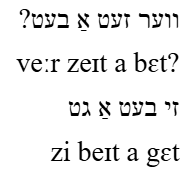
To my ear, at least, Polish Yiddish sounds nicer than Litvish. Polish Yiddish is richer in sounds and nuances. Litvish has only one E sound:
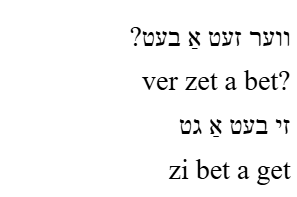
פּויליש ייִדיש האָט דרײַ פֿאַרשידענע e קלאַנגען:
Polish Yiddish has three different E sounds:
דערפֿאַר שרײַבט בירנבוים, אַז עס קומט נישט אויפֿן זינען פֿאַר אַ פּוילישן אָדער אוקראַיִנישן ייִד, ער זאָל טוישן זײַן „רײַכע פֿאָנעמישע סיסטעם“ (ד״ה זײַנע וואָקאַלן) מיט דער „אָרעמער“ ליטווישער סיסטעם. 6 6 “If he happens to be a Southerner he does not exchange his rich phonemic system for the meagre one of the Northern dialect.” Solomon Birnbaum, Yiddish: A Survey and a Grammar (University of Toronto Press,1979) Second edition, 2016: 100.
דערפֿאַר ווײַל אַ טייל ייִדן האָבן אַ מאָל געהאַלטן, אַז פּויליש ייִדיש קלינגט פּראָסט, זענען געווען פּוילישע ייִדן, וואָס האָבן זיך געשעמט צו רעדן זייער היימיש לשון, אָדער וואָס האָבן פּראָבירט צו רעדן מער אויפֿן ליטווישן שטייגער, ווען זיי האָבן גערעדט פֿאַר אַן עולם. מע קען הערן אַזאַ געמישטן דיאַלעקט אין די רעקאָרדירונגען פֿון אַ טייל פּויליש־ייִדישע שרײַבערס, וואָס לייענען פֿאָר זייערע ווערק. אָבער הײַנט דאַרף מען זיך נישט שעמען! פֿאַרקערט, איך מיין, אַז וואָס לענגער די וואָקאַלן, וואָס מער פּויליש עס קלינגט, איז אַלץ בעסער.
פֿערטע סיבה: פּויליש ייִדיש האָט ייִחוס
ייִדיש האָט זיך אַנטוויקלט ווי אַ שפּראַך, דער עיקר, אין פּוילן — בעסער געזאָגט, אינעם אַלטן פּוילישן קעניגרײַך, וואָס האָט עקסיסטירט ביזן 18טן יאָרהונדערט. דאָרט האָבן ייִדן געוווינט לכל־הפּחות זײַט דעם 11טן יאָרהונדערט.
דערפֿאַר זענען אַרײַן אַ סך פּוילישע ווערטער אין ייִדיש, אין אַלע ייִדישע דיאַלעקטן, אויך אַזעלכע וואָס ייִדן האָבן גערעדט אין לענדער, וווּ מע האָט נישט גערעדט קיין פּויליש. ווערטער ווי: כאָטש, כאַפּן, שמאַטע, קאַטשקע און נאָך אַ סך. ייִדן אין אוקראַיִנע, אין טיף רוסלאַנד, אין רומעניע, און אונגערן, האָבן געניצט יענע ווערטער, ווײַל זיי זענען אַרײַן אין דער שפּראַך זייער פֿרי, ווען די מערסטע ייִדן האָבן נאָך געוווינט אין פּוילן.
ווערטער פֿון דער ליטווישער שפּראַך זענען כּמעט נישט אַרײַן אין ייִדיש אַחוץ אינעם לאָקאַלן דיאַלעקט, וואָס ייִדן האָבן גערעדט אין דער עטנאָגראַפֿישער ליטע, ד״ה דאָרט וווּ די ליטווינער וווינען. דאָס זענען זעלטענע ווערטער, וואָס מע האָט זיי כּמעט נישט געניצט אין דער ליטעראַטור.
אויספֿיר
צום סוף וויל איך איבערחזרן די פֿאַקטאָרן, פֿאַר וואָס פּויליש ייִדיש איז דאָס בעסטע ייִדיש: דעמאָגראַפֿישע סיבות, היסטאָרישע, לינגוויסטישע, און עסטעטישע.
פּויליש ייִדיש האָט די גרעסטע צאָל רעדערס. פֿאַר דער מלחמה האָבן דרײַ־פֿערטל גערעדט פּויליש און אוקראַיִנניש ייִדיש. הײַנט רעדן איבער 90% מיט דער פּויליש־אונגערישער אויסשפּראַך. 7 7 די השערה פֿון איבער 90% איז אויף מײַן אייגענעם אַחריות. אין מײַן פֿאָרשונג פֿון די הײַנטיקע חרדישע דיאַלעקטן, האָב איך דערווײַל אויסגעהערט 439 רעדערס און 70 האָבן גערעדט ליטוויש — אָדער 16%. נאָך 54 (אָדער 12%) רעדן געמישטע דיאַלעקטן, וואָס זענען אַ מאָל ענלעך צו אקראַיִניש ייִדיש. אָבער די אמתע פּראָצענטן פֿאַרן גאַנצן שפּראַך־קיבוץ זענען זענען אַ סך קלענער, ווײַל איך האָב ספּעציעל געזוכט רעקאָרדירונגען פֿון ייִדן, וואָס רעדן נישט דאָס געוויינטלעכע „חסידישע ייִדיש“. בײַ די הײַנטיקע ליטוואַקעס און צום טייל אויך בײַ די גרופּעס וואָס רעדן אַ געמישטן דיאַלעקט איז די טענדענץ, אַז אַ טייל רבנים דרשנען אויף ייִדיש, אָבער אין דער היים רעדט מען געוויינלעך אַן אַנדער שפּראַך; The figure of over 90% is my own estimate. In my research of contemporary Haredi varieties, I have so far heard recordings of 439 speakers, of whom 70 (or 16%) speak neo-Litvish varieties. Another 54 (or 12%) speak mixed dialects which are sometimes similar to Ukrainian Yiddish. But the real percentages for the speech community as a whole are much smaller, because I have made special efforts to find recordings of speakers who do not speak the usual “Hasidic Yiddish.” Among contemporary Litvaks and also probably among groups that speak a mixed dialect there is the tendency for some rabbis to give sermons in Yiddish, but most of the congregation speaks a different language at home.
פּויליש ייִדיש האָט אַ רײַכערע סיסטעם פֿון קלאַנגען ווי די אַנדערע דיאַלעקטן. עס איז בעסער צוגעפּאַסט פֿאַר תּלמידים, וואָס רעדן פֿון דער היים שפּראַכן מיט לאַנגע און קורצע וואָקאַלן, אַזוי ווי ענגליש, דײַטש, אָדער שוועדיש.
פּויליש ייִדיש איז שענער ווי ליטוויש. עס האָט אַן אמתן ייִדישן טעם און קלינגט מער ייִדישלעך. עס איז מער ספּעציפֿיש ייִדיש, מער אַנדערש פֿון דײַטש.
אונדזערע הײַנטיקע ייִדישיסטן ווייסן וועגן די אַלע פֿאַקטאָרן, אָבער זיי טראַכטן נישט גענוג אַרײַן אין זיי. אַנדזערש וואָלטן זיי שוין אַריבערגעגאַנגען צו פּויליש ייִדיש מיט יאָרן צוריק. וואָס שטערט זיי צו רעדן פּויליש ייִדיש?
איין פּראָבלעם איז די אינערציע: עס איז שווער צו טוישן ווי אַזוי מע רעדט. מיט הונדערט יאָר צוריק זענען די ערשטע ייִדיש־לערערס געווען מערסטנס ליטוואַקעס — און אַזוי איז געבליבן. זיי האָבן פֿאַרליטווישט זייערע תּלמידים פֿון דור צו דור. הײַנט איז שווער צו רעדן אַנדערש.
אַ צווייטע פּראָבלעם איז, וואָס עס זענען נישט פֿאַראַן קיין סך לערן־מאַטעריאַלן פֿאַר פּויליש ייִדיש. דאָס בעסטע וואָס מיר האָבן איז שלמה בירנבוימס לערנבוך און די „דואָלינגאָ“־אַפּליקאַציע. די תּלמידים און די לערערס דאַרפֿן פּשוטע לערן־מאַטעריאַלן און אַ פּשוט ווערטערבוך, וואָס זיי קענען פֿאַרשטיין און ניצן.
פּויליש ייִדיש איז דאָס ייִדיש פֿון הײַנט און דאָס ייִדיש פֿון מאָרגן. אָבער מע דאַרף שאַפֿן מער מיטלען, כּדי מע זאָל עס קענען לערנען. אם־ ירצה־השם וועט דער עסיי באַלד זײַן פֿאַרבונדן מיט אַ קורצן אַרײַנפֿיר אין דער פּויליש־ייִדישער אויסשפּראַך.
That is why Birnbaum writes that it would not occur to Polish and Ukrainian Jews to exchange their “rich phonemic system” (i.e., their vowels) for the “meager” Litvish system.
Because some Jews once thought that Polish Yiddish sounds uncouth, there were Polish Jews who, when speaking to an audience, were ashamed to speak their home dialect or who tried to speak in a more Litvish way. You can hear a sort of mixed dialect in recordings of some Polish Yiddish writers reading from their works. But today there is nothing to be ashamed of! Quite the opposite, I think: the longer the vowels, the more Polish it sounds—the better it is.
Reason 4: Polish Yiddish has deep roots
Yiddish developed as a language, mainly, in Poland—to be precise: in the old kingdom of Poland, which existed until the eighteenth century. Jews lived there since at least the 11th century.
That is why a lot of Polish words were borrowed into Yiddish, in all Eastern Yiddish dialects, even those spoken in countries where nobody spoke Polish. Words like khotsh, khapn, shmate, katshke, and many more. Jews in Ukraine, deep in Russia, in Romania, in Hungary, used those words, because they entered the language very early, while most Ashkenazim still lived in Poland.
Hardly any words from the Lithuanian language were borrowed into Yiddish except in the local dialects that Jews spoke in the part of Litvak territory where ethnic Lithuanians lived. Those are rare words which were very rarely used in literature.
Conclusion
Finally, let me review the factors that make Polish Yiddish the best Yiddish: demographic, historic, linguistic, and aesthetic.
Polish Yiddish has the largest number of speakers. Before the war three quarters of Yiddish speakers spoke Polish and Ukrainian Yiddish. Today over 90% speak with the Polish-Hungarian pronunciation.
Polish Yiddish has a richer system of sounds than the other dialects. It is better suited for students who speak languages with long and short vowels, like English, German, or Swedish.
Polish Yiddish is beautiful. It has a real Jewish flavor and sounds more Jewy. It is more specifically Yiddish, more different from German than other dialects.
Contemporary Yiddishists are aware of all this, but they don’t think much about it. Otherwise, they would have switched to Polish Yiddish years ago. What prevents them from speaking Polish Yiddish?
One problem is inertia: it’s difficult to change the way you talk. A century ago, the first Yiddish teachers were mostly Litvaks—and that is how it stayed. They Litvicized their students from one generation to the next. Today it is difficult to speak Yiddish differently.
A second problem is that there are few pedagogical materials for Polish Yiddish. The best that we have is Solomon Birnbaum’s book and Duolingo. Students and teachers need simple materials and a simple dictionary that they can understand and use.
Polish Yiddish is the Yiddish of today and the Yiddish of tomorrow. But more tools to teach it have to be created. Hopefully, this essay will soon be linked to a short introduction to Polish Yiddish pronunciation.