Jun 25, 2026

In geveb is proud to present you with our 10 most widely read pieces of our 10th publishing year. Our readers appreciate a wide range of writing from translations of Sholem Asch and Joseph Opatoshu to Laurence Rosenwald’s review of protest songs, to Purim parody articles. We’re so glad we kept you laughing, thinking, and reading. Our breadth of coverage - and your eclectic reading preferences - display the interdisciplinary nature of Yiddish Studies itself across literature, art, music, anthropology, and education.
And with that, In geveb closes out its 10th annum. We are thrilled to come back rejuvenated and reinspired as we enter our second decade of life in September.
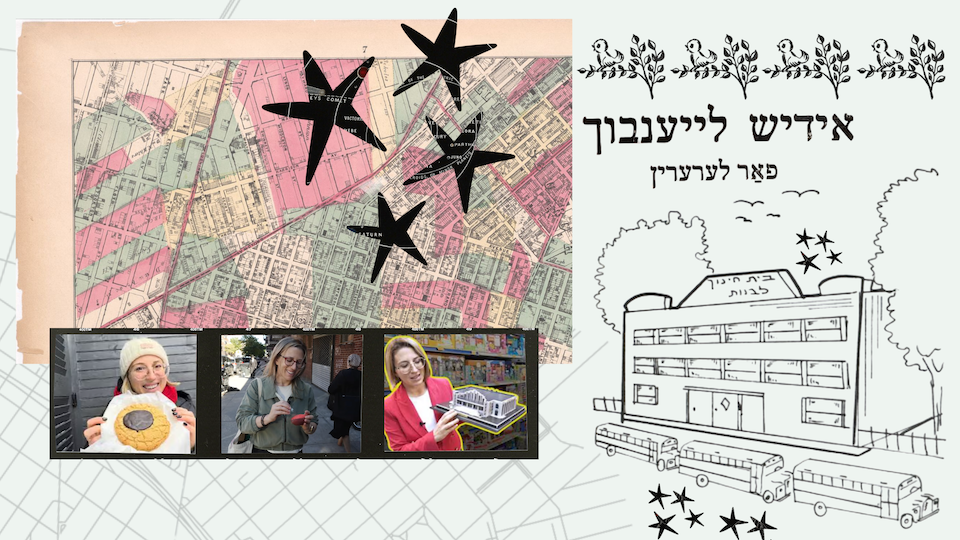
Graphic by Judy Goldstein
10.
Frieda Vizel Talks Hasidic Williamsburg, YouTube, and Being an Educator
Frieda Vizel was raised in Kiryas Joel, the Hasidic village, in a large family. She left when she was 25. Interested in human stories, the complexities of Hasidic life, and anthropology, she documents all of these areas as a digital storyteller and a tour guide. In this lively conversation with Judy Goldstein, Vizel shares her work with In geveb’s readers.
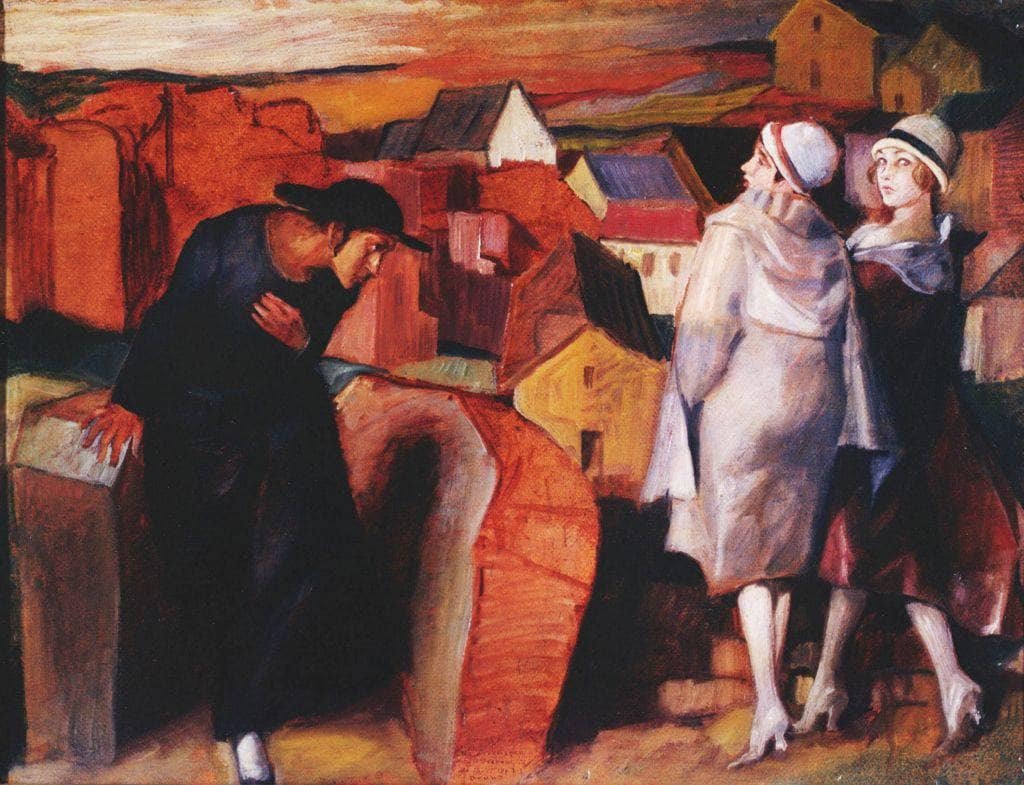
“A Meeting. Jewish Youth and Two Women in the Town Alley” (1920) by Bruno Schulz
9.
די טויבן פֿון סקװער | The Birds of the Square
Translated by bi Sima Beeri and Barry Burland, “The Birds of the Square” is a short story by dramatist and novelist Sholem Asch presented in Warsaw in 1924. It describes two Jewish immigrants finding a way to make a living on their own terms, as streetwalkers in London, taking a realistic yet sympathetic view of the societal pressures that forced young women from their birth communities in Eastern Europe.
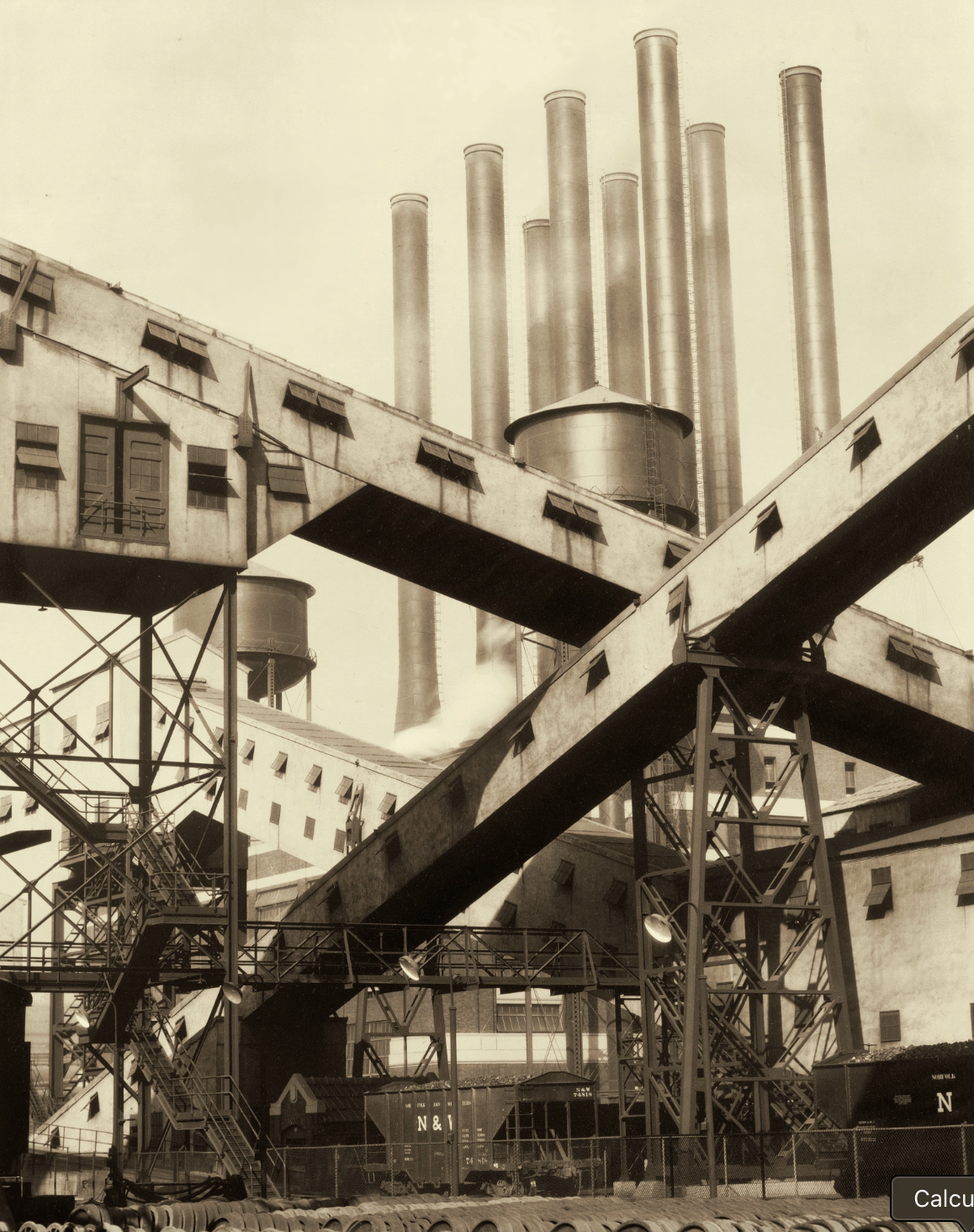
Criss-Crossed Conveyors, River Rouge Plant, Ford Motor Company, 1927, by Charles Sheeler. Image courtesy of Wikimedia Commons, MoMA Lane Collection.
8.
בײַ פֿאָרדן אין פֿאַבריק | In Ford’s Factory
Opatoshu’s “In Ford’s Factory” appeared in Der Tog in 1929. Approaching his assignment with his characteristic empathy and eye for injustice, his focus on the human backbone of Fordist production is the moral throughline of the story. As translator Nadav Pais-Greenapple writes, “The reader is left with a sense of unease and concern for the “blunted and dulled” workers who suffer and toil in the shadow of great machines, risking their lives and their humanity ‘in Ford’s factory.’”
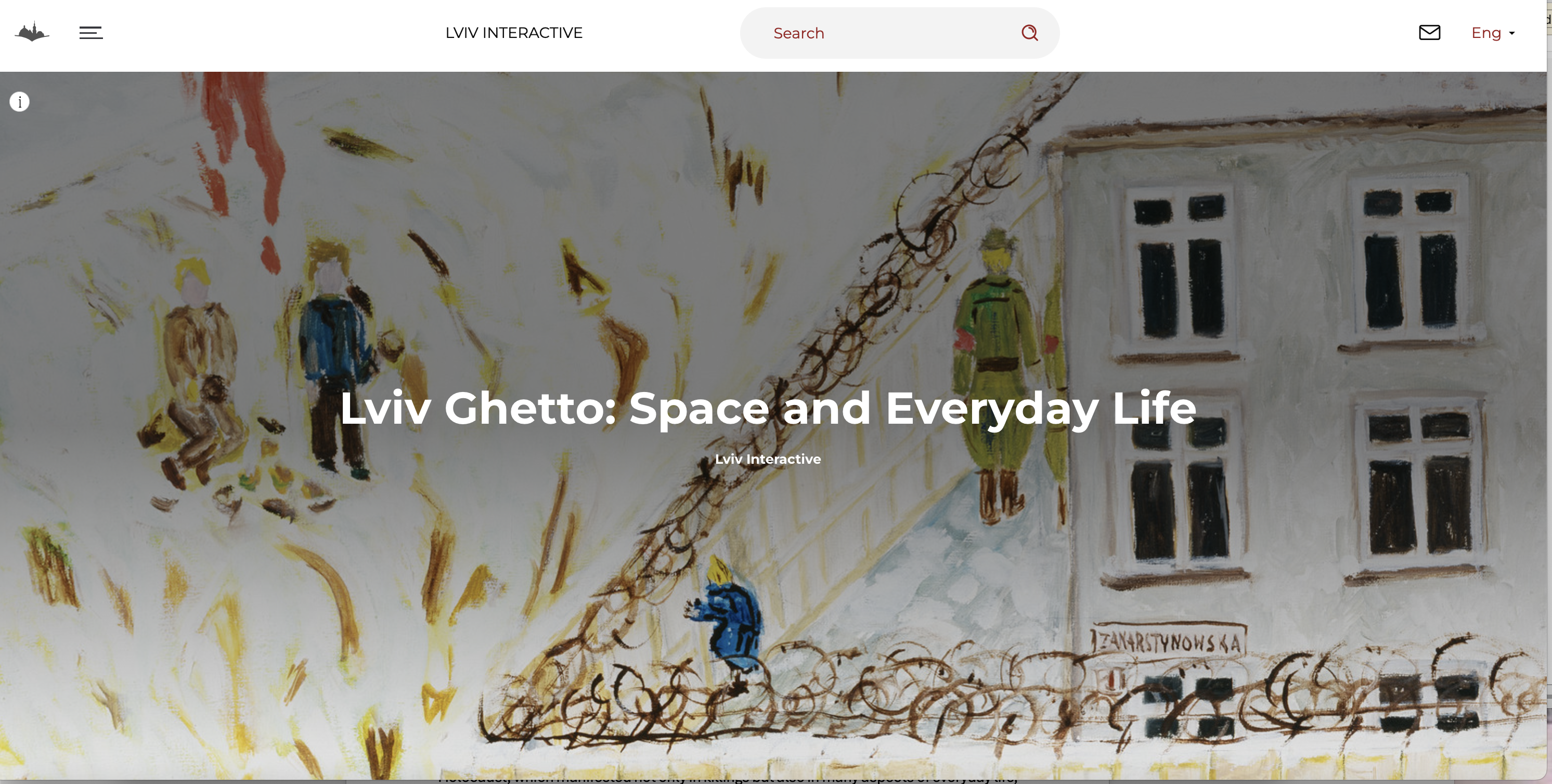
“Lviv Ghetto: Space and Everyday Life,” Lviv Interactive, Center for Urban History, 2025, https://lia.lvivcenter.org/en/themes/lviv-ghetto-everyday-life.
7.
Teaching and Commemorating the History of the Ghetto Through Digital Mapping
An example of the very best of In geveb’s pedagogy section, Senior Lecturer at Ukrainian Catholic University Vladyslava Moskalets details the project of a digital map representing daily life in the Lviv ghetto using spatial illustration. This project combined service learning and the digital humanities, bringing Yiddish Studies out of its history and into the present.
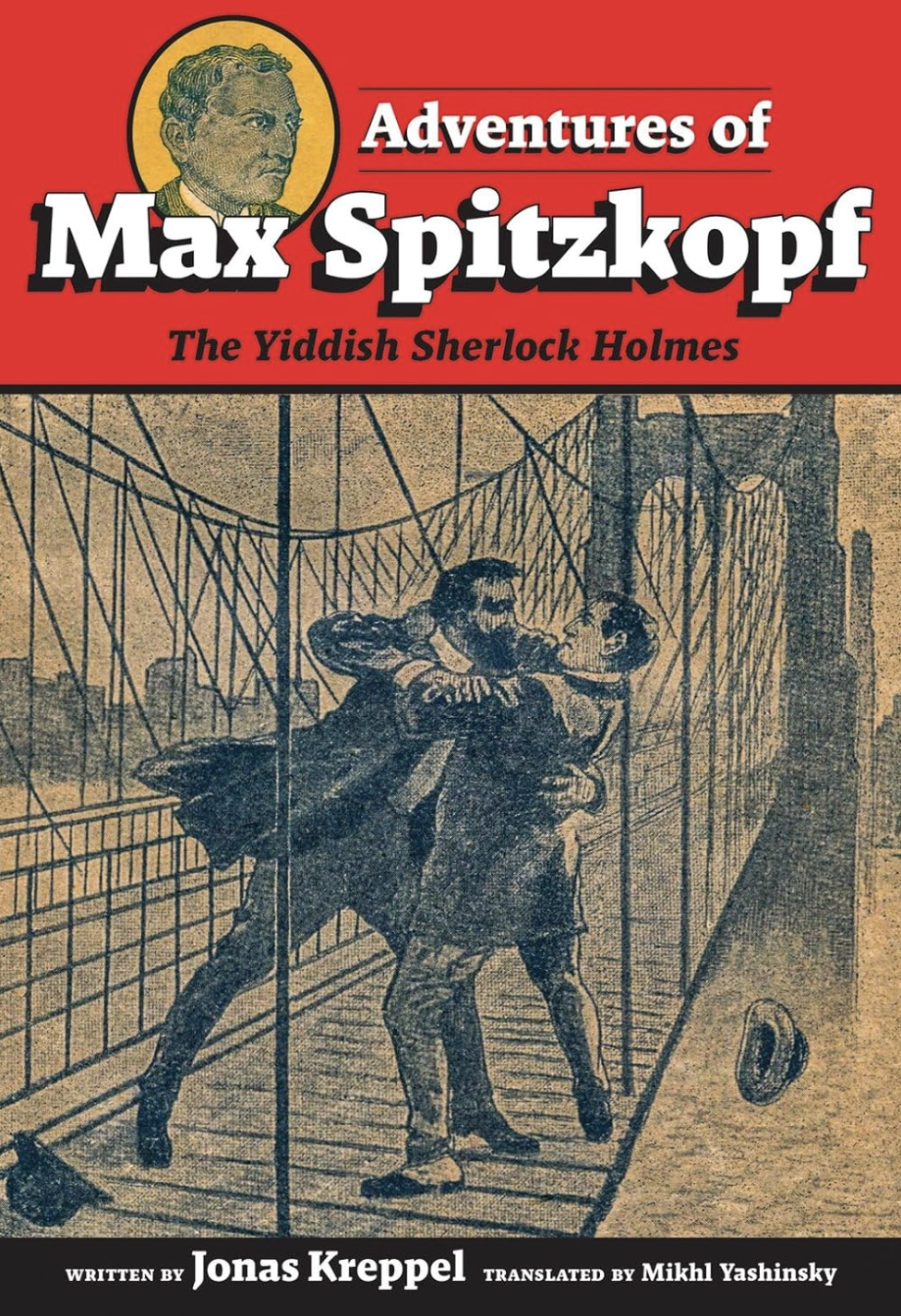
Book cover
6.
Isadore Kianovsky offers an incisive review of Jonas Kreppel’s latest work in translation. She reminds that “detective stories such as Kreppel’s were meant to appeal to ordinary readers, and this [particular] translation serves to remind us of the ordinariness of the Yiddish reader rather than placing them in some kind of exceptional, nostalgic frame of reference.”
boo hoo!
5.
You can now hear people crying in Yiddish in bars all over Berlin
A well-appreciated yearly tradition, In geveb celebrates Purim with a release of ‘fake news,’ so to speak, in the spirit of the holiday.
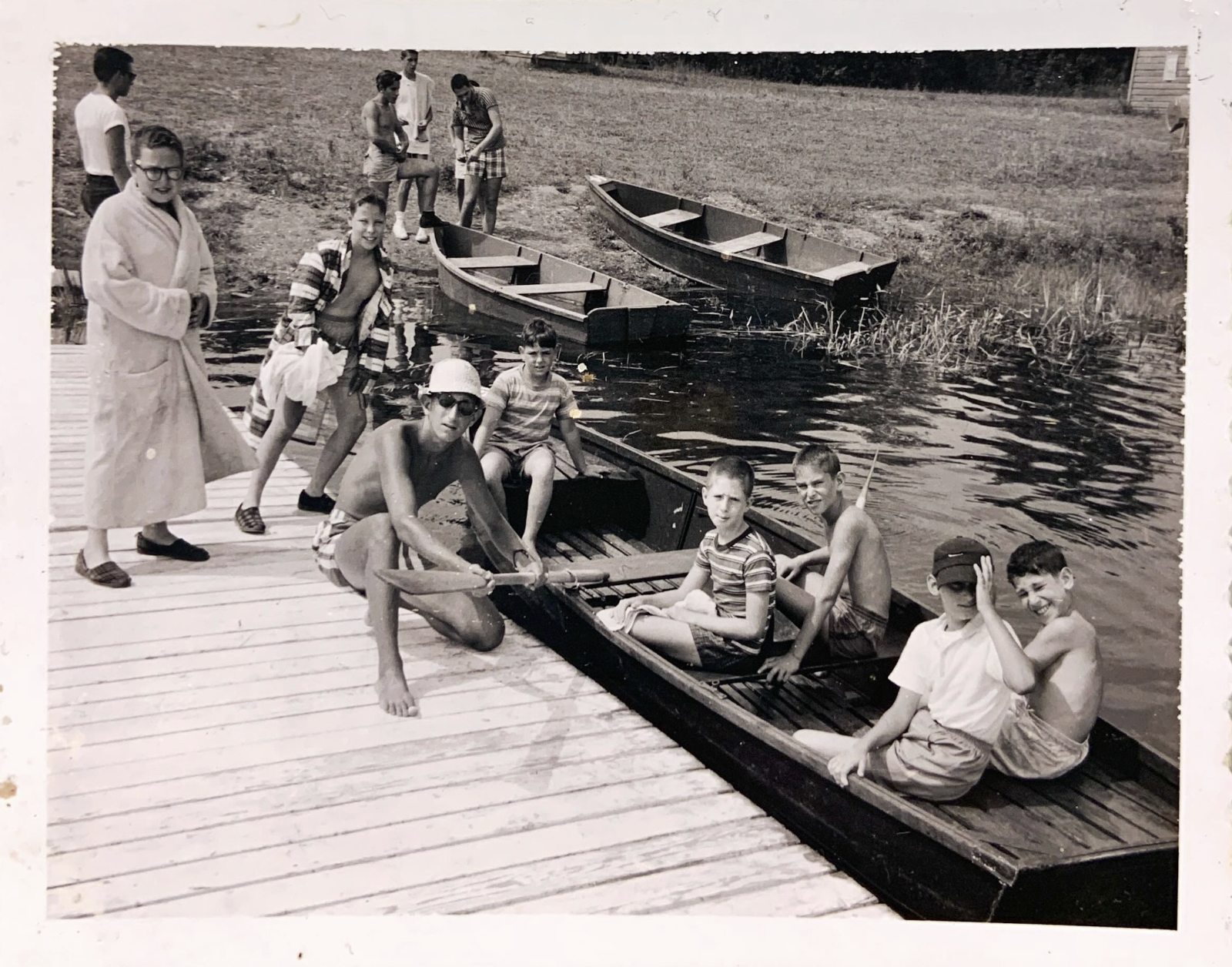
Photographs, 1959. Sholem Aleichem Folk Institute (SAFI), Camp Boiberik (RG 659.1). YIVO.
4.
Yiddish in ale lender! Yiddish Summer Programs Roundup 2026
An In geveb tradition, the editors present a comprehensive list of summer Yiddish programs to inspire readers to go out and get their Yiddish fix. Sorted by region (U.S., Europe, Israel) and program type (festival, camps), there is something for every leyener.
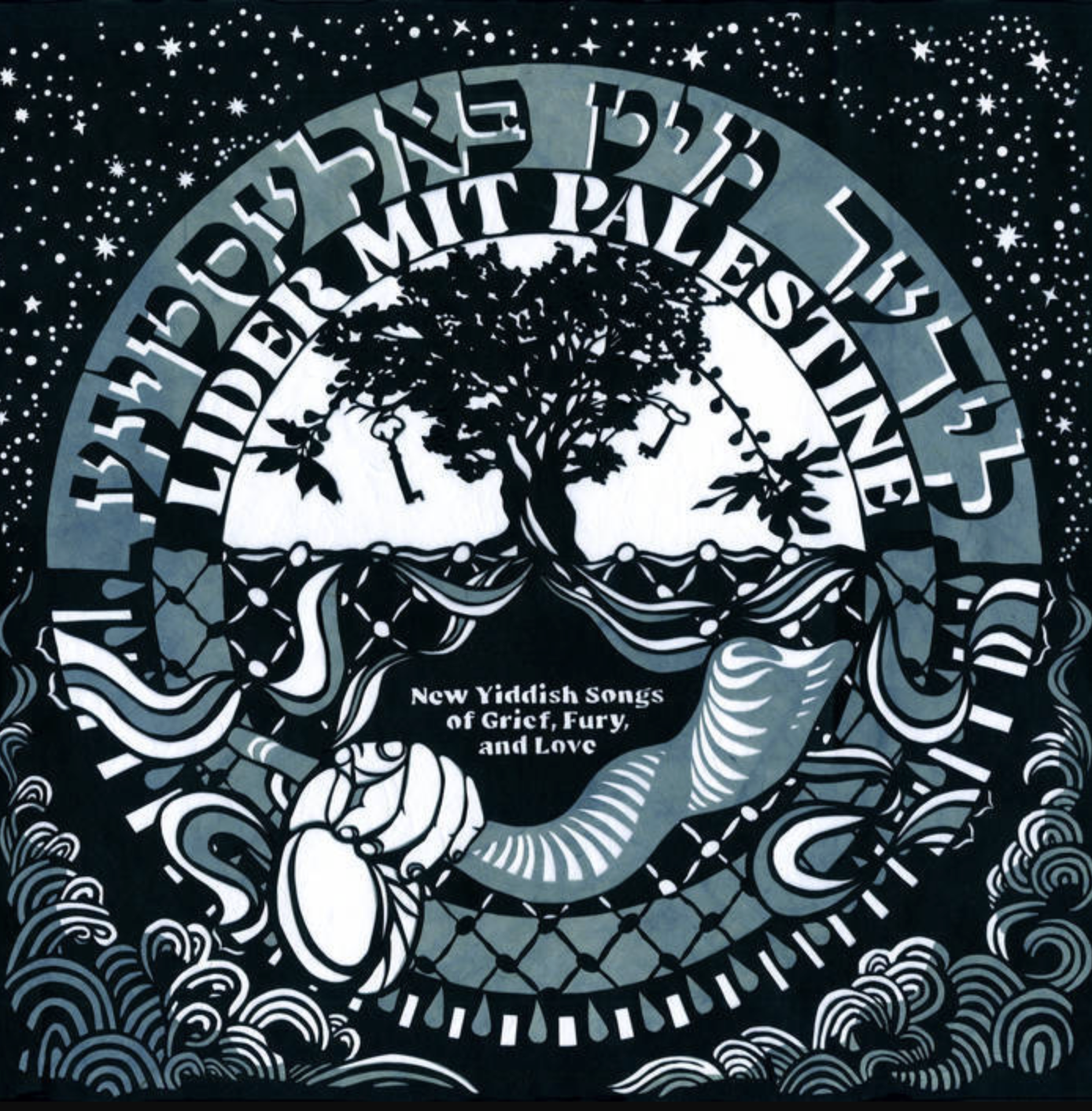
Lider mit Palestine album cover
3.
They’re Here: Protest Songs for Palestine
Singer and literary critic Laurence Rosenwald attends to the politics and aesthetics of the album LIDER MIT PALESTINE לידער מיט פּאַלעסטינע: New Yiddish Songs of Grief, Fury, and Love, produced by Joe Dobkin, Josh Waletzky and Isabel Frey. He concludes, “Taken together, these materials offer a glimpse of a flourishing, active, diverse radical left Yiddish community, reaching from New Mexico to Paris to Vienna … Whatever one thinks of these songs and these singers, their strengths and weaknesses, zey zenen do, they are here.”
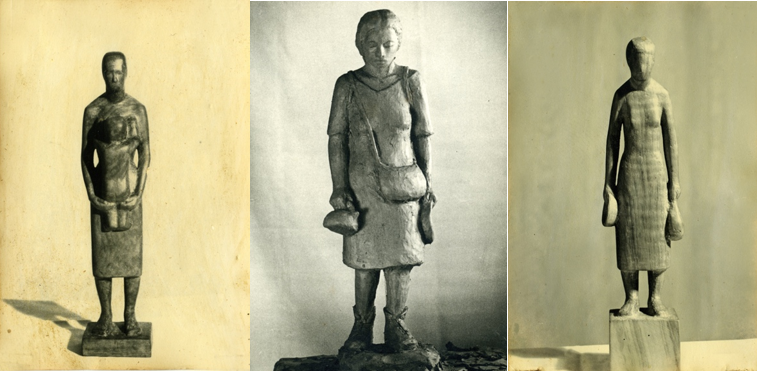
Zenia’s early sculptures, ca. 1948, from the Zenia Marcinkowska Archives, discovered in 2023 and now being organized at Stockholm’s Holocaust Museum (Sveriges museum om Förintelsen).
2.
Within the Swedish literary context, Zenia Marcinkowska Larsson emerged as one of the most significant voices articulating Holocaust experience from the position of exile and survival. Ulla Urszula Chowaniec introduces In geveb’s readers to her oeuvre in this essay, written on the occasion of the publication of Letters from the Afterlife, edited by Goldie Morgentaler, which contains English translations of the correspondence of Larsson and her lifelong friend, postwar Yiddish writer Chava Rosenfarb.
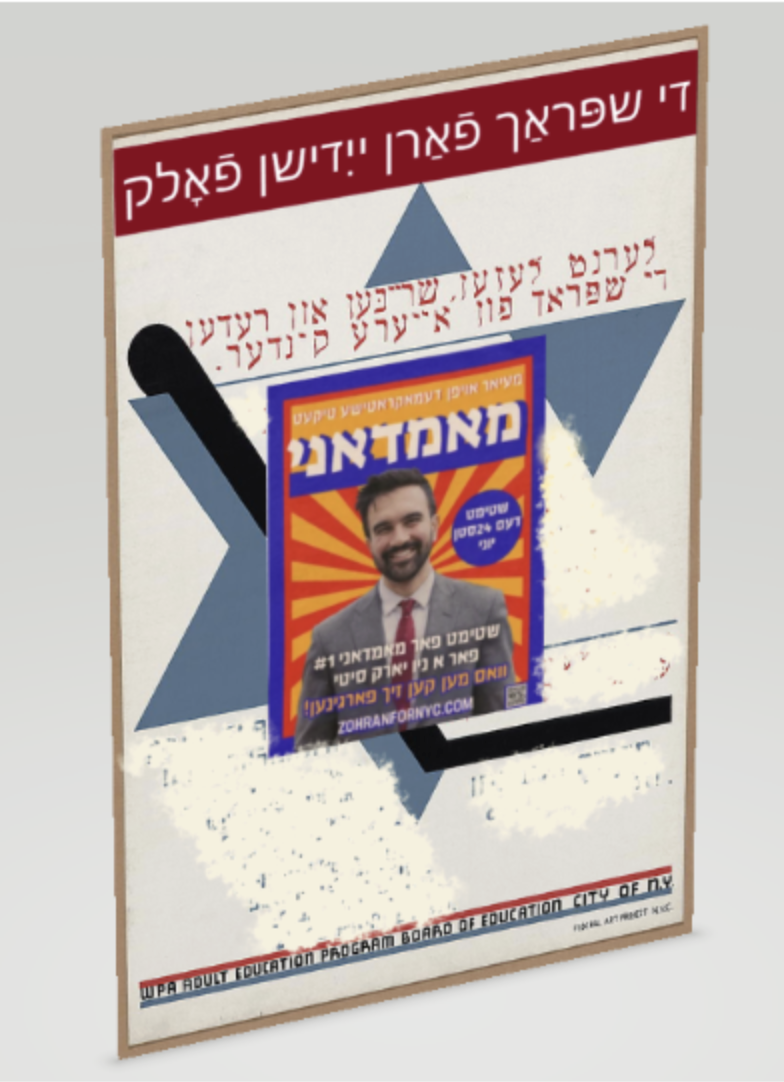
campaign poster
1.
Controversy Over Mamdani’s Declaration of Yiddish as THE Official Jewish Language
You'll just have to read it to believe it.