Jun 17, 2024
INTRODUCTION
Esther Singer, a Yiddish teacher based in Naarm (Melbourne, Australia), speaks with Tomas Woodski, a Yiddish cultural activist working in Sweden.
Esther Singer: Tomas, I'm excited to talk to you. I've been following your work over the years and seeing what you bring to the Yiddish world which always seems so interesting and, well, fun. To begin, I know you're an artist and and arts educator. You’ve done work creating queer community spaces and in different collectives. How does that inform your approach to the work you do with Yiddish?
Tomas Woodski: So, first of all, it's nice to hear “you're an artist” — I am a trained arts educator but I'm also sort of a jack-of-all-trades. But I think if you've had the experience of being a teacher or working with a group, that's an asset, whether it's a queer group or a group of kids learning Yiddish. So that’s what I bring to my role as a “language promoter.” That’s my current title, which sounds a bit weird in English maybe? I also work part-time as a librarian.
Perhaps my arts background informs how I've always longed to work visually with Yiddish. I think it's important for kids to be around languages that look different, like Chinese or Arabic or Tamil or Yiddish — you get some kind of visual inspiration. It does something to us — to look at text, at the font, at the graphic design of it. And not just for kids; I also noticed the same thing for adults. A few years ago a theatre company here started printing their posters advertising their plays in Yiddish, not the whole poster but maybe just the title of the play. And it just had this impact on people. And I think it's because people long for it, it's this language that they sort of tucked away in a corner. But when they can see that it's visible in society, that makes an impact on people here, not only kids, but adults too.
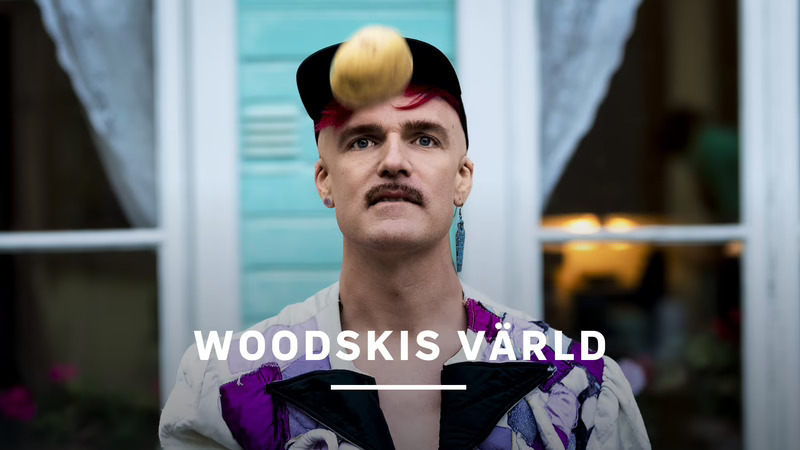
ES: I notice that visual sense of yours in your TV show Woodski’s Velt. It has this artistic character to it. It's very colourful. Compared to most other Yiddish I've seen on screen, it felt contemporary. And it felt like a representation of this intersection of queerkayt and Yiddish enthusiasm that we see in the younger international Yiddish world that we know, but that isn't represented as much. So that was really exciting to me. How did you see that project? What kind of intervention were you making there into the Yiddish world?
TW: To tell you the truth, it's nice to get feedback and words of praise but I was just the conduit for the show. I was really just doing my part. It came about when I was working on a different program a few years ago and the producer, Ron Lipsker, was like “What if we make a show where we travel around and meet people and speak Yiddish?”
For context, due to the law in Sweden, public service television and also public institutions in general need to work latoyve the five different national minority communities, and the five national minority languages. So that's a little bit of a blessing because then things can happen.
So the producer asked, “Can you do it?” My response was like,“Whoa! Probably, but there are other people that speak better Yiddish.” There are for sure other people that can represent Jewishness, which is also important.
But then I said “Well, I do actually do that whenever I travel.” Whenever I went somewhere I was always seeking out Yiddish speakers. We know that it’s like that; people get in touch. Sometimes they're a friend of a friend. I had somebody coming in from Poland the other day, somebody that I've never met, but it was a friend of Sarah Biskowitz, so we connected. And that's how it works.
ES: Yes, definitely!
TW: So I was like “that's totally doable.” In that sense, the show is very real. Most of those people I meet with on screen I've met because of that Yiddish network.
When working with people outside Yiddish, we often have to contextualize it. One funny anecdote: The producer called me in for a meeting and asked “Where should we go?” and I tried to really lay it down that with Yiddish you can go anywhere. You can definitely go to South America, Finland, or north of Sweden or you can go to Kyoto and meet Satoko Kamoshida, or to Mexico, or Los Angeles. You can do all these different things. I think that's something that maybe people that aren't into Yiddish don't realize, how global the network is. And thanks to the internet, maybe now more than ever.
ES: Yeah, I think it is. It does come up a bit in the histories as well. This international pre-Internet, pre Second-World War scene where Yiddish speakers were traveling around all the time. You know the Yiddish theatre troupes came here, to Melbourne, so far from Poland, right? Imagine making that trip in the 1930s. You know Melekh Ravitch visited the community here — all these writers were travelling all over the world. So maybe what you’re doing, what we’re doing these days is part of a continuity in the international nature of language.
TW: Yeah and now you can easily find a few connections by just asking. People will randomly ask: Does anybody know anybody around Moscow? And then all of a sudden, there's 15 people that are telling you, “Yes! Get in touch with this person.” It’s so easy.
ES: So in the first season you meet with Yiddishistn in various cities but the second season, for people who didn't see it, is more locally based, I guess because of the pandemic. But it gives us a more intimate sense of Yiddish in a representation of what might be your daily life.
TW: Right, it was during COVID and it was actually a bit more fun to to work on, having had the previous experience. I learned how to work with the producers, how to point out what’s important that maybe the Swedish speaking team wouldn’t pick up. For example, I have these two kids that I’m teaching the Alef-Beys and they’re identifying Yiddish as a way of being Jewish and I feel that that's super important, that a kid gets to say that. So I was trying to get better at saying “make sure that this comes through, make sure that this won’t be left out” and luckily the producers, Adam and Therese, were very open to this feedback.
Because I feel in the first season there were little things that maybe people who don’t speak Yiddish don't pick up on. Somebody had made a new taytsh of Oyfn Pripetshik. And you know, the song itself isn't maybe the most exciting song you've ever heard but anybody who knows anything about Yiddish knows “oh, this is really funny because this person has done something with the most iconic song that we all need to sing.”
Another thing that I want to say is that I was never really interested in being seen on television or anything like that. It was actually quite the contrary. When I watched the first draft I had a huge anxiety attack. So that's been a challenge, that's not a secret in itself.
But I think it's important to try to bring out these wonderful people. I'm trying to think of it as “Okay, we're doing this together” and I'm really proud that we've made these programs that are television in Yiddish because I felt that was an achievement. But personally, being seen on television has never been anything that I coveted.
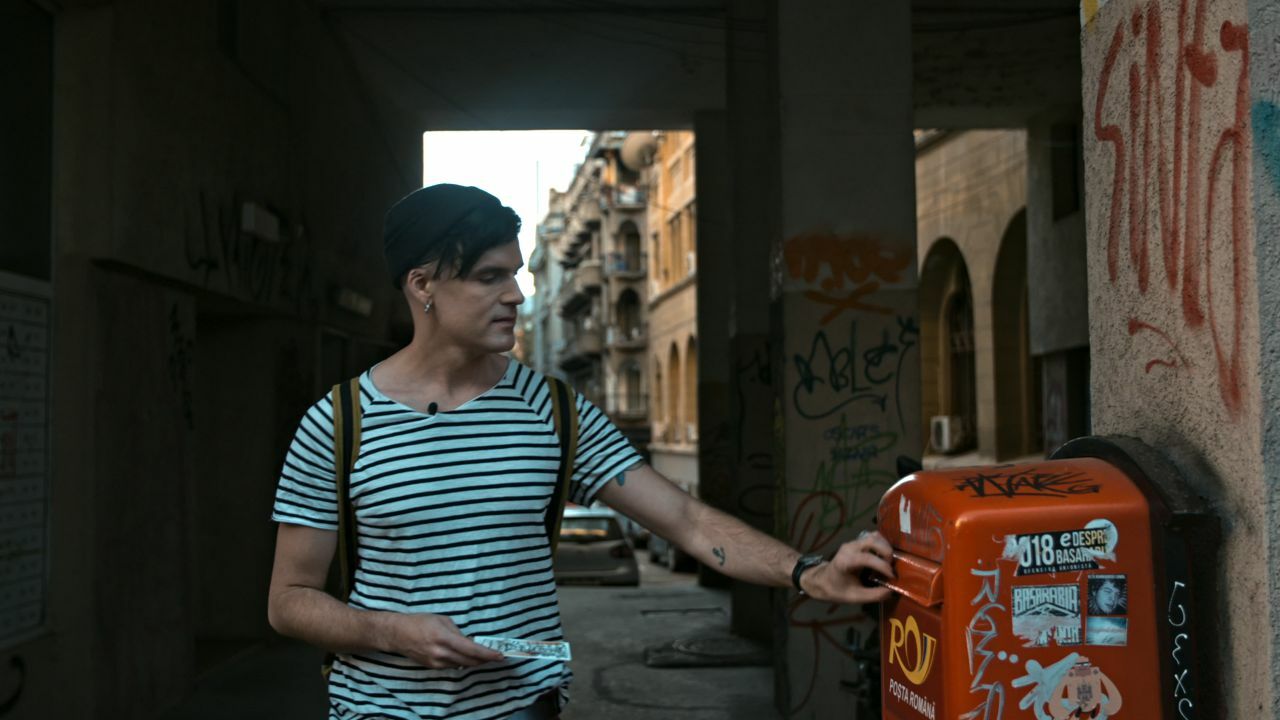
Woodski visits Bucharest and explores the Yiddishist scene there in episode 1, season 1 of Woodskis värld.
ES: Interesting, because from the outside you’re so identified with the shows, but of course television is a collaborative medium. So you're not comfortable in that? Is it related to self consciousness about having learned Yiddish later in life? I know personally, I still consider myself a Yiddish learner and when I speak or I'm recording I do worry excessively about errors and my speech being not natural.
TW: I think one of my assets is realizing I do make tons of mistakes and that is the way it has to be while hopefully improving. I think it's important to also convey that there are environments where people can just shmues in Yiddish and it's okay to make mistakes and actually that doesn't bother me at all, whatsoever. Because I think if there is going to be a chance for Yiddish then we're going to have to be a little bit more allowing. That's definitely something that I'm not here to do — to correct anybody here. It's nice if somebody corrects me sometimes and gives me a little bit of feedback. I don't mind at all. But I do think that my only asset is to talk away.
Also in the community here, I don't actually know anybody that doesn't really make mistakes from time to time. Maybe the local Orthodox Rabbi. But aside from him and his partner, not really, so I think that's in a way comforting. But also I don't think we can really afford to be nitpicking at each other, at least not here, maybe in other places, but here I don’t think so.
ES: Yeah, I don't think it's generally helpful for creating a supportive, welcoming environment where people want to speak. I do understand people have their views about correctness or standards but that's really good that you don’t let that limit you.
Now you have a new show out - Möte med… (Meeting with...) and it was quite striking watching it, it's a lot more traditional and sorry, I don't know if this is rude but it feels like you're watching quite old-fashioned TV. So how did you end up in this world of talk-show?
TW: Yeah, so public service television and radio here are obliged to produce some kind of content in minority languages. And the new series is a lot cheaper because it's filmed in a studio. I think it's still important, I understand that it's less vivid, it’s perhaps less fun in a sense. On the other hand, it's also nice to not be so much in focus – as I was saying, I want to sort of zoom in on the other person. And the guests are quite lovely and brilliant so it is definitely worthwhile!
That show is done in pretty much the same format in Romani Chib and in Meänkieli and in Finnish. And I don't know what the situation is like for you in Australia, probably different, but here it's hard to find enough people that actually feel comfortable speaking Yiddish on television. I always say to make it heymish, use whatever words or expressions you feel comfortable with, if you want to switch to Swedish or make a mistake that’s fine. But I think because people are sort of keeping an eye on each other and who says what about whom it’s sometimes hard also to get people to participate.
ES: Yeah, that makes sense. And I understand the Jewish community in Sweden is not huge. I think probably less than half of the size of the community in Melbourne, so people must really know each other.
TW: Of course, and Yiddish is a minority within the minority.
ES: Yeah, but it is exciting for all of us around the world, what comes out of Sweden. You said, “Oh I made television in Yiddish.” And that's something that the wider world doesn't generally have government support for or the financial capacity to do. Obviously now we have YouTube and other streaming options, but I think Sweden has this kind of mythic status in Yiddishland because of the minority language policy.
TW: I think that's interesting that you say that and I’d like to add that there are other shows from Sweden too that maybe aren't as well known, that have voices in Yiddish. So, I'm not the only one. But I feel that we’re a little bit like ek velt, you know, we're way up there in the north. There's a little bit of a momentum right now. Something has happened in the last two or three years, so there's all of a sudden tons of projects and things happening in Yiddish. For sure every weekend there's events here in the city [Stockholm], but also throughout Sweden: Malmö, Borås, Göteborg.
On the one hand there's that interest but I also sometimes feel that the word doesn't really get out as much from here, compared to other places.
ES: From the US particularly?
TW: Yeah, so much focus on one single place. For instance we had this fantastic singer and actress here: Basia Frydman. She was a grand diva and she recently passed away. I don't know why it’s not noticed elsewhere in the Yiddish press. Sometimes I'll ask if somebody can cover this, as I'm not a writer myself. I understand that people have their limited time as well, but I do feel that there's a lot that that doesn't really get out there.
ES: Yeah, maybe that’s true. I mean, at least me – I only read Yiddish and English so I'm very reliant on things that come out of the US. But compared to what comes from Melbourne I feel like “all eyes are on Sweden.” I remember discovering Alter Karton when I was teaching kids. At the time I thought it was a miracle — a television show made for kids in Yiddish. I realised later it was dubbed into Yiddish.
TW: Yes [laughing], it was me and my friend Sarah. We did that in one day. I did 4 episodes in the morning and she did 4 in the afternoon.
ES: Wow, that was you too? So, I remember that was being shared around by parents on blogs and in groups — “There’s television for kids in Yiddish,” which was kind of a dream for people trying to raise their kids in Yiddish. But I suppose you're right on another level – we don't really hear much of the actual Yiddish world, Yiddish speakers and things like that.
TW: Right. I sometimes feel that the reason why this or that doesn't make it through to the wider world could be that it's not academic enough or not edited enough. I don't know if this is true or not, but based on what we just talked about before about feeling self-confident about the Yiddish.
Now there’s this new Yiddish academia building up here. There's been classes for a long time in the south of Sweden, in Lund. And now Eliezer Niborski is putting together an academic program with new people coming in. So it's stronger than ever, and there was an article in the Forverts that acknowledged that, but otherwise I feel that there's a lot of Yiddish activity that actually is very heymish. The community here is very allowing and welcoming and I think that both modes are important. It's important to have access to proper texts, to get to listen to native speakers.
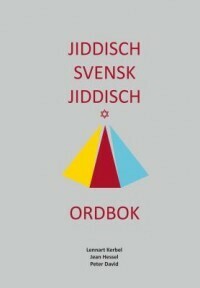
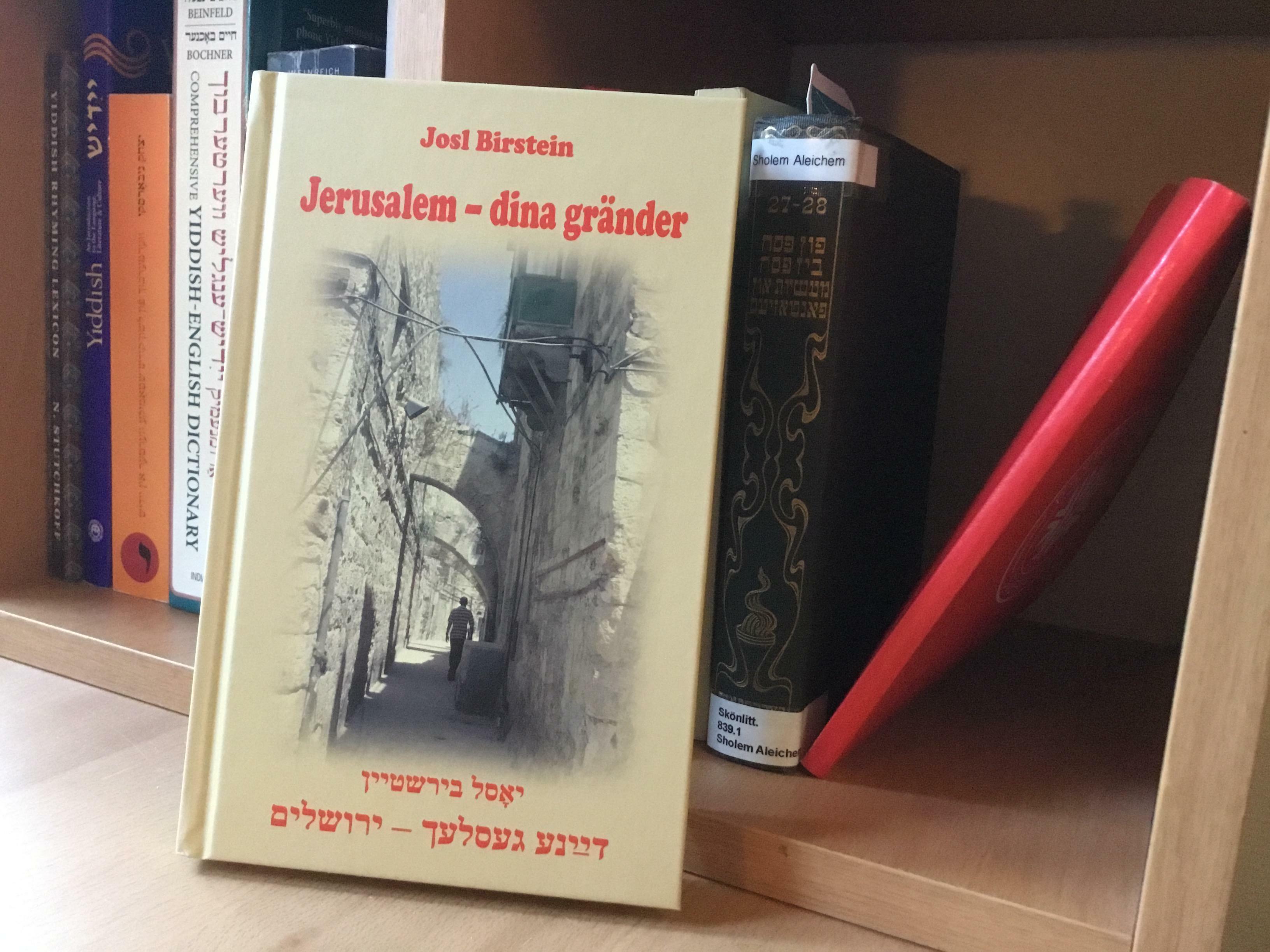
The Yiddish-Swedish-Yiddish dictionary is an updated and expanded version of the dictionary that was first published by the Megilla publishing house in 2005.
ES: I also wanted to talk a bit about what the financial support for Yiddish from the government means in Sweden. Obviously we see publishing companies, books coming out of Sweden, radio programs, television. There’s a notable amount of properly produced and funded culture coming out of Sweden, possibly outsized compared to the number of Yiddish speakers. I’m curious, do you think it’s an effective way to support Yiddish revival? How does that look from inside Sweden?
TW: Well, first of all, the five official national minority languages have been recognised since 2000. Since then, things have gradually changed due to new legislation. One aspect is the national radio and television. Another is the library law that says that all the libraries across the country need to work for and acknowledge the national minorities and national minority languages.
People that speak Yiddish, they’re sprinkled across the country. After the shows air people who live in the countryside sometimes get in touch with me and might say, “I haven't spoken Yiddish with anybody in 25 years. And I saw your show and it pulled a heart string”. The law also means that there is an actual market for Yiddish books because the libraries have to try to promote and show Yiddish.
However, it's taken a long time for things to really get moving. I feel that right now there's a very, very active group of people working on it and not only people that are Yiddishists themselves. As with the television show, the producers weren't Yiddish speakers; they were just like, “we want to do something in Yiddish.” Of course it's a way to get funding for a program but I think that they had a genuine interest also in actually making some kind of Yiddish content, especially in the second season.
It really makes a difference that there is a way to get funding for different projects. Some of them might be a little bit bigger, like the publishing house Olniansky that published Harry Potter in Yiddish. But there are also others. There's a national annual book fair here in September and last year it had a Jewish theme. And I was just thinking about the publishing houses that were represented there and I could count at least six small farlagn that published a book or several in Yiddish, probably more. Some of them might be translations, some of them might be written in Yiddish. So that's interesting. Because if it's only one producer or publisher then there's a risk that all output will follow the same path, but the fact that there are several allows for different kinds of storytelling.
ES: I'm really interested in what the landscape looks like with the different supports. I know that through the Minority Language Act, there's also an education mandate so that people should be able to access education in Yiddish. Is that something that your new role covers?
TW: Well, not really in my role, though I have taught through the public school system here for kids before. But the thing that's really great about that mandate is that if there is a kid in a class, regardless of where in the country, it might just be one student — that's enough. You have the right to receive education in Yiddish. The problem is that even though it's been around for a while now I still meet people every week and tell them about this — not all parents know about it yet.
My new role is also trying to help with information or connecting people. But also trying to repeat that learning Yiddish is a gift, it can be a really good asset to anybody to learn another language. Often the case will be that the parents that might be in my generation, don't speak it themselves or they might just know a few words. They ask “how am I going to teach my kid Yiddish if I don't really speak it myself?” So what we're trying to do is gather little testimonials and research that has been done in many different languages, Maori and other minority languages across the world, and show that it makes sense in several different ways. We say to parents “you can set the level yourself. Do you want to just throw in five words or do you want to be more flisik?”
There's a point to both. And I think especially with kids as a way of finding something out about their identity that really, really, makes sense. I'm into everyone learning Yiddish, I think it's also fun for people who are in their 80s. But I think especially if you're a teen, then it might be interesting to learn about Yiddish. There's different ways of being Jewish or Yiddish or whatever you want to be. And also a community that's so small that — well, you know what it's like with the Yiddishists, there's always queers, there's always somebody that's keeps kosher…
ES: Yeah, you can find your people.
TW: Yeah, yeah.
ES: My experience with teaching kids Yiddish is they usually khap on to some aspect of it. It's a really good bridge to culture especially for Jewish kids who are maybe not growing up surrounded by Jewish community.
TW: Right.
ES: I've noticed in Sweden that the government policy has maybe led to some strange choices - there’s the website for the police that you can access in Yiddish and things that I'm guessing are not exactly necessary - there's probably not a lot of Yiddish speakers who don't also speak Swedish there.
TW: Either that or English or something else. The translations are in a sense perhaps not necessary but on the other hand they are signaling, in a some way, the will to include the national minority languages.
ES: Right, so from where you're sitting now, within government, how do you see that? Is the policy being usefully directed towards supporting the revitalization of Yiddish, do you think?
TW: There’s no yes or no answer to that. There’s the decision that was made that Yiddish needs to be a functional language and so the translations are an attempt to cater to that. It's usually in a context with some of the bigger immigrant languages here as well and/or a topic that concerns national minorities or minority language speakers. I sometimes see that a municipal or government document has been translated into substandard Yiddish and that sucks. I feel that if someone paid for this translation, just at least make sure that the text delivered is what was asked for even if only a few people might be reading it (and people do read it sometimes for fun — I know people that are like “oh, I was looking at the tax revenues webpage in Yiddish”. Including myself…. I suppose that’s my idea of fun [laughs].) But when the tax revenue site has a page that's poorly translated, it’s a bit of a shame. You know, if it's something small and local then maybe it's okay if something is off. But if it's the tax revenue site that needs a translation with instructions, I think it makes sense to have it done properly.
ES: It looks kind of shoddy if the government’s Yiddish is bad?
TW: A little bit, yeah. But I have had documents translated into languages I can’t proofread too - like Tigrinya for example, I’m going to have to trust the translator… or find gelt to pay a proof reader..
But I don't think that's necessarily making anything better or worse. The bigger project is trying to work for the communities and the status of the language. To encourage people to use Yiddish more and try to facilitate that. The publishing houses publishing books in Yiddish here, is more relevant than whether or not the National Gallery has a web page in Yiddish or not. They can have it or not have it. It may not make the biggest difference. However, if anybody is interested in working with translating texts, there's always a big demand here in Sweden for ambitious translators, so that's a good thing to throw in here in the conversation.
ES: Good to know. Good tip for translators who want a government contract.
TW: One of the things that I think is important to mention is that the recognition of the national minority language status was something that didn't just come out of the blue, it was the result of people really working hard — activists. One of the ladies, Susanne "Sore" Sznajderman, she’s sometimes called the Grand Dame of Yiddish here, she wrote a letter to the Prime Minister at the time where she said “Yiddish is not in the draft for the new law.” At the time people said “there’s not too many Jews here, why Yiddish? Not everybody’s Ashkenazi, or maybe Hebrew makes more sense because it's the language of Israel,” or whatever. But it wasn't about that, right? It was about Yiddish being a European language that had been spoken here for at least 100 years. And also that the community themselves wanted it acknowledged with that status. Susanne said “Please don't help finalize the Nazi project by erasing Yiddish from the map.” It didn't happen out of nowhere; it was the result of work by active members of the Jewish community.
ES: Right, there was a struggle to attain that status. I do want to acknowledge that this is part of a broader EU project about minority languages and other countries in Europe also have Yiddish as a minority language and support it in various ways. I know in Poland they also support Yiddish education and that’s something we can all learn from too.
TW: Maskim. I think it looks different too in how the resources are being distributed. I'm interested in Poland too. Here the system has a few levels. You can apply for funding for your own project regardless of whether you are a Yiddish speaker or Jewish yourself. But we also have the government agency where I work with people that are hired to go out and lecture or talk or answer questions, anything in regards to Yiddish. The national library has appointed a resource library for Yiddish and Jewish culture to inform and help the other regional and municipal libraries and what they do. And I think that those things in combination are interesting here.
But then again some people are angry at that approach because of state interference in national minorities in general. Which makes sense in the context of some of the other minority languages, such as indigenous languages, where people have been physically hindered from speaking the language by the state.
ES: Do you want to talk more to what your role looks now? Because I think the idea of a government office promoting Yiddish might be hard for people to get their heads around or is novel in itself – are you just running around like, “Hello, I'm a Yiddish promoter from the government!”
TW: There are four of us working in the office and I think that's kind of a lot, which means that we have an office where we can speak Yiddish to each other. And there's a fifth person, Jean Hessel, who also speaks Yiddish who's in charge of official terminology in Yiddish to make sure that the tax revenue, for example, actually has the word to use for whatever function they need.
ES: That person does lexical work in Yiddish? New words?
TW: Yeah, and recommendations if somebody has a question on which word to use. That person was busy during COVID because there was a lot of government texts that needed them. We work very closely. The projects are one thing that take time and there's a lot of answering petitions, giving lectures, talking in different regions and things like that. But another thing that I think is fun is to try to do pop-ups in Yiddish. For Pride we did a little dictionary that was sort of a mashup of other projects. It was just the littlest thing but I wanted to use the logo of the National Language Centre in Yiddish but still have words that might connect to love, or lack of love, and BDSM and words like “fuck,” to show people do that in Yiddish too. And also to introduce zey, a gender neutral pronoun. I wanted to show people that this is a language that you can use to describe your reality. It may not be as big as it was back in the day, but there's still people that put the time into making sure that new dictionaries are being printed, that language is evolving and able to describe the situations that we live in.
What I like about the new job is that we’re four people who have four different backgrounds and approaches to Yiddish. We work together well but also when we reach out to people we have different tonalities or different ways that we reach people. My work has been trying to reach out to kids and families and talk about Yiddish, remind them about Yiddish, trying to say that there are options for you with Yiddish. I want them to know that whether or not they’re interested in Yiddish right now, or perhaps later, there's a path. There's a way that you can look into this if you're interested in it.
ES: So do you have a kind of a sales pitch for Yiddish?
TW: [Laughing] No. Do you have one that I could use?
ES: Haha! No, I was curious if you’re calling up these families just saying “Yiddish is really cool.”
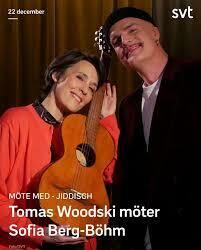
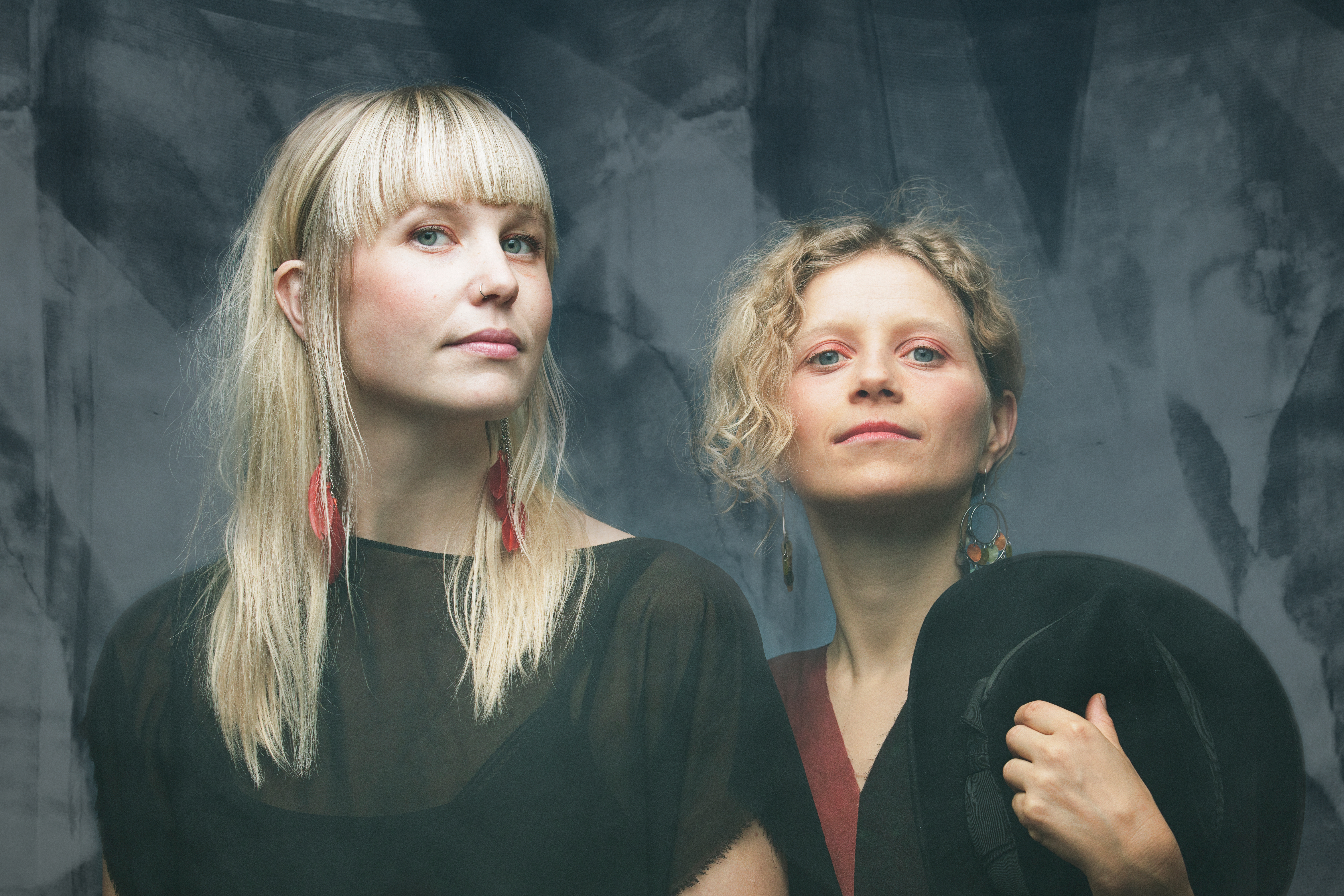
Sofia Berg Bohm with Tomas Woodski on Möte med (SVT, December 2023)
TW: It's not like that actually. There's a national organisation called Farband far Yiddish in Sweden, and I'm on a project right now with them. I’ve joined force with Sofia Berg Bohm, a singer and we've been meeting different groups of kids. With older groups we have a version of the Golem story we share and they read in Yiddish. And for the younger kids, we sing and do other things. Even though the community isn’t huge, we've reached around 400 kids and students through this project.
The national Yiddish language center is still under construction but basically we're trying to make sure that we can match different people with different projects and encourage Yiddish usage. Because of the minority language status, many people have questions about Yiddish. They might be Yiddishists themselves or it might just be “we're the municipality in northwest Sweden, who can we get in touch with to make sure that we get this in Yiddish?” So there's all of that. But we’re also considering different methods for revitalization and researching that.
We do all we can to connect people. Because Yiddish is still a language that, if you learn it in school, you have a teacher and sometimes somebody at home but maybe you have nobody else that speaks it. So I think it makes sense for all of us to try to see how we can connect people, to make a svive. That could be online or it could be ponim al ponim.
ES: Yeah, I think that's such a big thing worldwide for non-Hasidic Yiddishists — the connections. We started out talking about this kind of international queer young-ish network that we are part of and that we meet people through, but for my students often they learn Yiddish, maybe they learn it online, and they never meet another person to speak to. So I think any organization or group that can create spaces and networks and groups and give people access to — as you said, a svive — that's just a huge part of the picture, right?
TW: Yeah.
ES: It's very cool to have the National Yiddish office though. I think anyone outside of Sweden would be thinking “Wow, imagine if we had five people working for Yiddish on a government salary.” Even part-time, that's just awesome.
TW: Right. But then you know, some people will say “Why do you meet with the minister of culture? You should meet with the students today, they’re the future.” But you know, we’re trying to do both. These things engage people and in a way that's great but it's also a challenge to try and keep up.
ES: Yeah this is the other not fun element of Yiddish, right? Everybody's entire Holocaust trauma, the loss of millions of speakers and the decline of Yiddish is on you.
TW: Yeah, yeah.
ES: Like “what are you not doing to save Yiddish today?” And obviously you just can't take that on really.
TW: Well, I don't know. In the second season of Woodski’s Velt I talk about this lady who I taught the alef-beys and actually, she was one of those people that literally grabbed me by the hands and she said [Yoda voice] “it's your responsibility that Yiddish lives on, that you teach Yiddish.” And I was thinking, “how is this my responsibility?”
ES: Too much!
TW: She passed away but then we did the show and in it I go to the beys oylem and I put a little stone on her grave. It was an honest scene, because I wanted to reconnect with her, even though she passed, and say “Yeah, you know what? I hear you. I'm trying my best here. You know, it could be the TV show or the alef-beys for kids or the National Minority Language Centre, But I'm trying to make something of what you told me to do.”
However, it's a little bit intrusive to be like “it's your responsibility, you need to make sure Yiddish lives.” Because my Yiddish learning just started in Canada and I wasn't connected to the community here at all. So, it was a new thing that all of a sudden I had responsibility for the future of Yiddish!
ES: Yes, I think that’s a lot to take on. But look, to tie it back in to what we talked about earlier — when I hear criticisms, that this Yiddish was wrong, that Yiddish was wrong, when they come from people born in Europe, from that generation, I try to remember that that’s where it's coming from — that anxiety of the language slipping away from us. And frankly I feel that sadness too, but if we don't come to terms with language shift, with the fact that Yiddish is going to be spoken by new speakers who don't have that day-to-day world of Yiddish — if we don't come to terms with that, we can't do anything. So we have to accept it and work on it. People are speaking from this place of loss, when they're grabbing your hand and telling you to save Yiddish. But we can only do what we can do with Yiddish today, contemporarily.
TW: Well, these criticisms are interesting because when you study Yiddish people will say “nobody said Sholem-Aleykhem in the old world, they said this or that, or nobody said that, they said this.” And then you read texts that are 100 years old and you're like “this makes sense, I can read this, but this also looks a little bit like klal-yiddish. It is modern.” I find it comforting to know that even the people that inform you might be wrong in their information.
ES: For sure, especially when I have students who are just saying “this is what I heard at home, so it must be right!”
TW: Yeah! I think that most people just want to say “this is how I used to say it.”
ES: I just try and keep an open mind about all the Yiddish I hear because language diversity is so important, especially if someone is not saying flat out “you're wrong.” Okay, maybe I’m wrong but also not all Yiddish speakers in the past sounded the same.
TW: Yeah, there’s a Yiddish theatre troupe here which has been around for 117 years. They had to take a vote: “What aroysred should we use for the Yiddish?” What they all agreed on was, “Okay, everybody do their thing. Okay do your Polish, you do whatever you have, you can do it with your heavyRussian accent. Fine. Everybody do their thing. Probably in a town or city people also came with their different dialects, let's just keep it.” And that was what made sense.
ES: I like that idea. Just a polyglot symphony.
Was there anything else you wanted to have a chance to say either about your role or your work generally with Yiddish?
TW: I want to encourage In geveb and its readers: Don't forget about countries that are smaller. Not necessarily my own work, as people have shared that. But you know, I'm sure there are interesting projects happening in Czechia or Moldova right now too that we should find out about, we should try to boost each other. Let’s make sure that there's a pluralistic cacophony of different voices. We keep on speaking Yiddish in our different ways and our projects small or big can also be interesting to learn about.