Jun 19, 2026
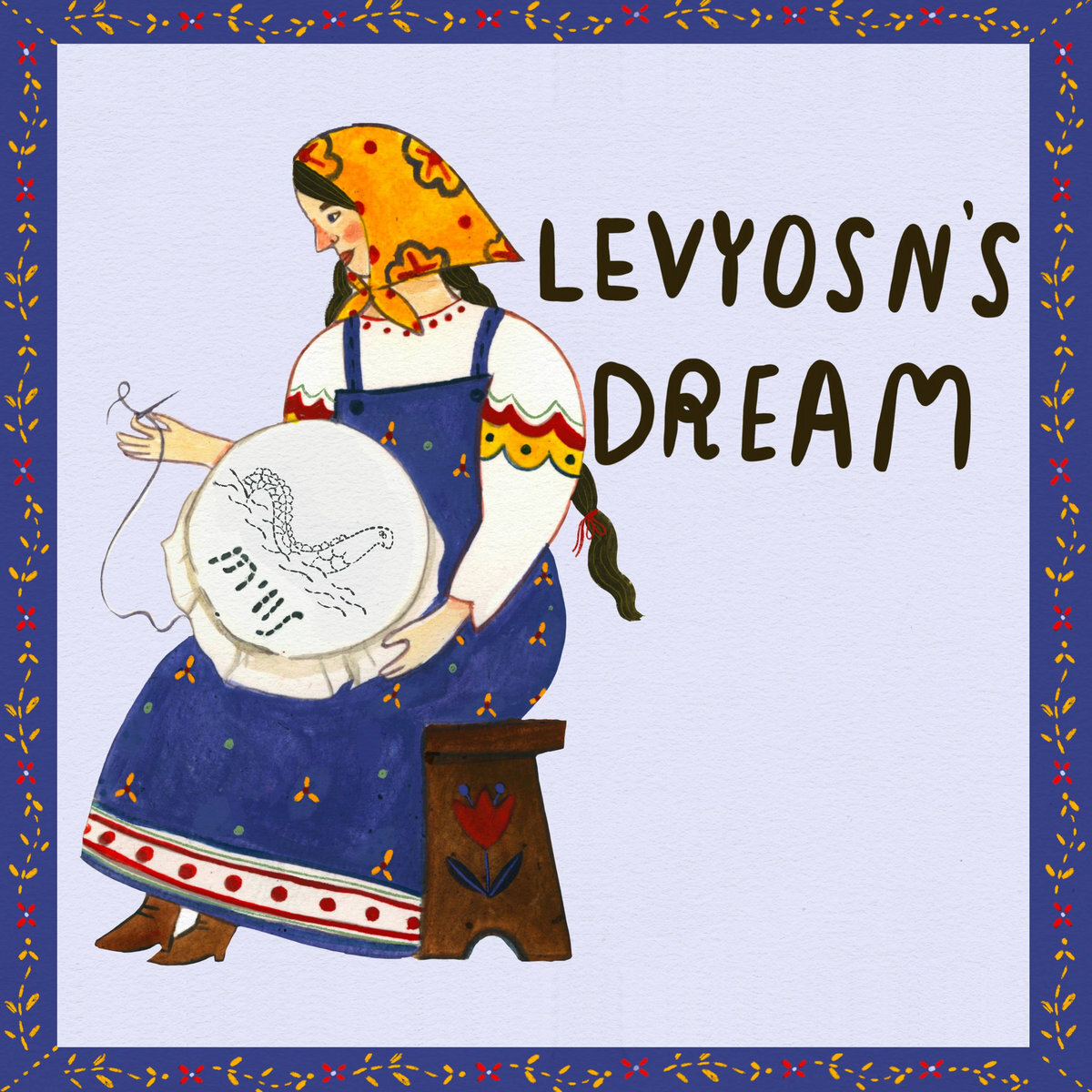
Levyosn, Levyosn’s Dream. Borscht Beat, 2026.
- The Singer as Translator
Writing about music is necessarily incomplete, so I urge you to begin reading this review by listening to how the Boston-based ensemble Levyosn transformed this a cappella field recording of “Geyen Mir Spatsirn,” collected by Ruth Rubin, into a lush full-band track. In Levyson's hands, “Geyen Mir Shpatsirn” has all the momentum and movement of a cozy road trip. The vocal harmonies are gorgeous and tight, and the camaraderie between musicians is evident.
At this point in the klezmer revival there is considerable attention being paid to the repertoire of unaccompanied songs like “Geyen Mir Shpatsirn,” mostly songs sung by women, that largely sit in archives. Musicians who take on the task of arranging songs like this for a band have relatively free reign of the material, since they are often arranging music that has never been recorded instrumentally at all. The work of balancing the context of the original song and the context of the performing environment and influences of the current day is full of choices and opportunities. On Levyosn’s Dream, the band brings old songs into the current moment with beautiful modern production value and a broad folk sensibility.
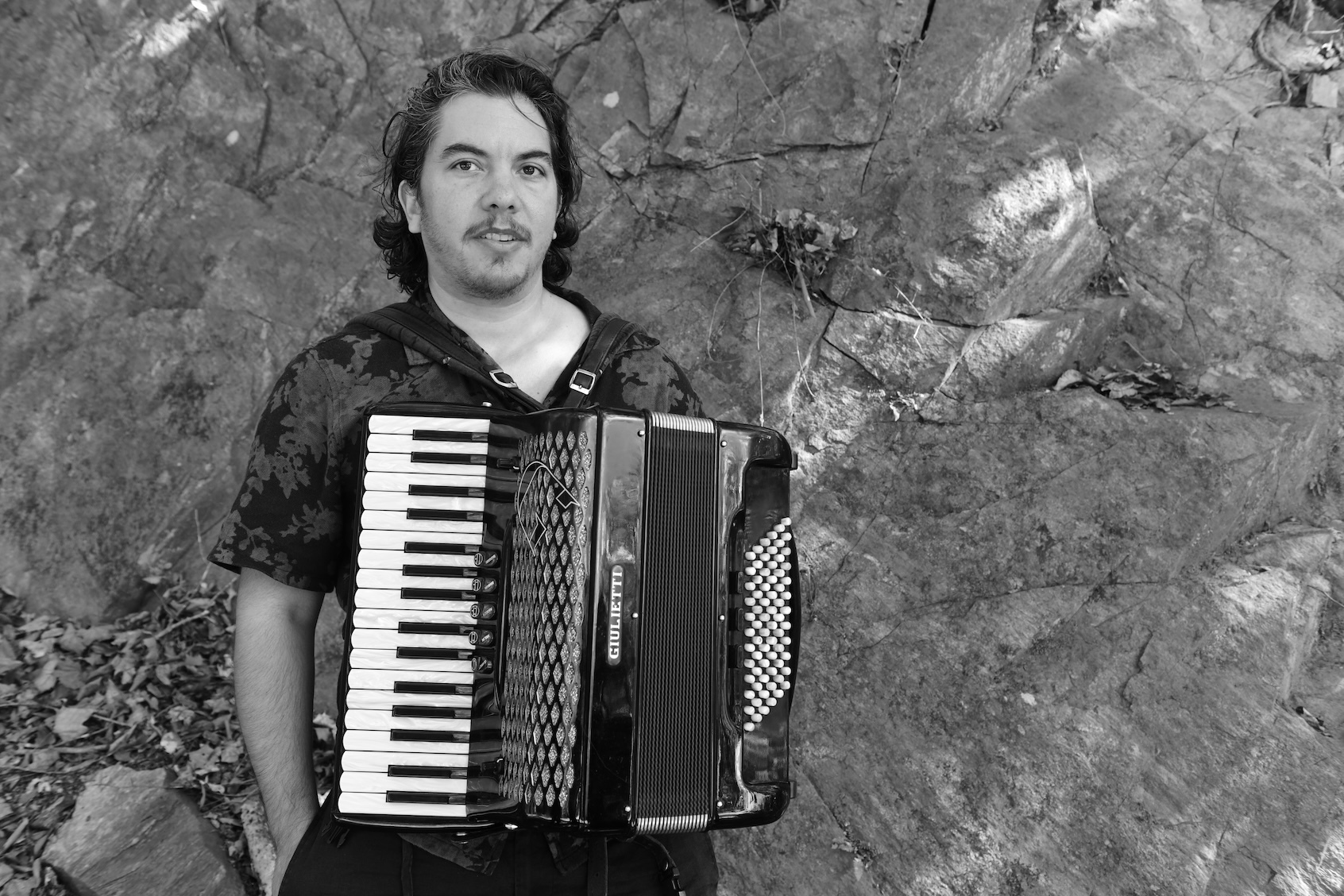
There are a host of musicians from the panoply of the American folk scene on the Dream album, with klezmer, Balkan, and Irish influences. Adah Hetko, who sings and plays guitar as part of the ensemble, alongside Lysander Jaffe, Lexi Ugelow, and Raffi Boden, told me that she wanted to bring to this album “some hopefulness, we’re all in this together, we’re-gonna-do-it energy.” Hetko is a dance leader as well, a good role for an encouraging leader.
The album brims with the sweetness of community life. In “Fayerdike Libe” (Fiery Love), a traditional song here arranged by Jaffe, Hetko asks:
אין אַ קליין שטייטעלע
צװישן פֿרעמדע מענטשן
װער זשע װעט אונדז צו דער חופּה פֿירן
און װער זשע װעט אונדז בענטשן?
אין אַ קליין שטייטעלע
צװישן פֿרעמדע מענטשן
מלאכים װעלן אונדז צו דער חופּה פֿירן
און דער זיסער גאָט װעט אונדז בענטשן
In a small shtetl
Among strangers
Who will leads us to the khupe
And who will bless us?
In a little shtetl
Among strangers
Angels will lead us to the khupe
and sweet God himself will bless us
The breadth of the album shows the band’s vision: that sweetness is born not through bypassing what is difficult but instead through working on it, giving it sonic space—and through thoughtful and imaginative rewriting of lyrics and musical arrangements.
In “Zhumen Binen,” a song about Jewish beekeepers in Soviet Birobidzhan, we hear one example of Levyosn’s ingenuity. While the lyrics speak to the sweetness of beekeeping as a profession, the landscape in which it takes place, and honey itself, Jaffe’s arrangement leans heavily into dissonance, placing the lyrics within a strikingly dangerous harmonic field in a way that brings up pain and stasis. Birobidzhan was an important part of Soviet ideology—a solution to the Jewish Question and proof that the USSR could support the existence of independent minority cultures. Materially, not very many Jews moved there, Jewish cultural organizing was still met with resistance, and by 2009 only one Yiddish speaker lived there. Jaffe’s songwriting, as he described it to me, is meant to bring the listener into the contradiction between the romantic ideal of Birobidzhan, that Yiddish-speaking Jews would have a place within the USSR where their particular culture was honored and valued, and its reality.
Hetko and I talked about how she re-translated Avrom Reisen’s “A Sukele a Kleyne.” In Reyzen’s original poem, we are introduced to a small suke (sukkah), and the singer is surprised and happy that the air he can feel though the boards that make the walls doesn’t make his candles go out. Over time, other verses have been added in the folk tradition, including one in which a woman in the suke fears that the suke will be blown down in the wind, and her husband reassures her: “Zay nisht keyn nar, hob nisht keyn tsar”—don’t be silly, don’t be afraid. To avoid a trope of a man shutting down a woman’s feelings, Hetko rewrote the song so that the dialogue is between performer and audience. In discussing her translation of “A Sukele,” she wondered out loud, “How do we de-entrench” from violent and fear-based narratives in our community?
Hetko and Alta Gitty Jakubo add these lines to Reisen’s:
אוי האָב נישט קיין צאַר
נישטאָ קיין געפֿאַר
גיב נאָר אַ האַנט אויפֿן ברייט
אין צײַטן פֿון נויט
אייביק איבערגעבויט
לאָז דיר דער װינט נישט אָנגיין
װיפֿל װינטן ס’װעלן ברומען
װיפֿל דורות ס’װעלן קומען
דאָס סכּהלע װעט אייביק שטיין
Have no fear
There’s no danger
Put a hand on a board
In times of need
We always rebuilt
Don’t let the wind bother you
However many winds may roar
However many generations may come
The sukkah will always stand
2. Music as a Healer for our Communities
To make Yiddish community, we need the zamlers, the collectors of songs. But we also need the shleppers—the musicians who haul songs around from audience to audience.
Levoysn is carrying on the tradition of the pakn tregers who “traveled from shtetl to shtetl in Eastern Europe bringing books and news of the world,” according to the Yiddish Book Center’s description of their magazine which bears that name.
An early musical experience for Hetko was working for Musicmobile, a mobile performance space and workshop founded in 1977 in Albany, NY. Both Hetko and Jaffe grew up in extremely musical families, which meant early exposure but also early expectation—about how they would use music, and about where music could be performed. Musicmobile expanded the universe of song for Hetko, she says: “We would play and also make instruments with participants, and people were coming and going and had baby siblings—it was in a totally public space and not a controlled environment.”
This experience had an impact on the tenor of Hetko’s music itself. There is in Hetko’s arrangements a sense of relaxed control, a motor so strong and pleasant that it can accommodate a wide variety of audiences.
Hetko’s lyricism is direct and easy to follow, which is a gift to language learners and teachers alike. She is a prolific teacher of Yiddish songs, including her own, and her songs are being used in Yiddish language classes taught by other teachers as well. The first song on the album, “A Bletele Vert a Bletl,” is especially useful because it explains the grammatical form of the Yiddish diminutive. (Note: all lyrics to the album, in Yiddish, English, and transliteration, can be found on Levyosn’s website, an added benefit for those who want to teach or sing these songs themselves.)
Hetko and Jaffe met as teenagers in the learning and performance group Village Harmony. A longstanding performance and learning organization, Village Harmony builds a community of young American singers interested in global harmony traditions, then brings in master singers from those traditions to teach, and does tours to learn songs and to perform as a group. Lexi Ugelow, a new Levyosn addition as of this album, met Jaffe as a young adult on a Village Harmony tour. Jaffe explained to me that Levyosn takes from Village Harmony the desire to create interlocking harmonies that are as satisfying for the singer as they are for the listener, and the inspiration to work in many styles at the same time. What Jaffe and Hetko needed from elsewhere was to develop their Yiddish.
Levyosn reflects our larger Yiddishist community in that everyone sings in Yiddish, with different levels of experience. Hetko is the most experienced. Long enveloped in an American folk scene, Hetko first encountered the Jewish branch of that scene in 2013 at KlezKamp, a klezmer and Jewish culture festival that ran in the Catskills from 1985 to 2015. Seeing Sarah Gordon and Daniel Kahn perform gave her a model of what could be done with translation in a live context. The way they sang English translations as part of the performance of their songs gave the audience a kind of access to the Yiddish material that was different from translating the material before or after the song, as many singers do. Since Levyosn’s previous album, Levyosn’s Lullaby, Hetko has been studying with Judy Bressler, a third-generation Yiddish singer who is a founding member of the Klezmer Conservatory Band and a major force in the revival of Yiddish song. From Bressler she has taken, among other things, the imperative to be emotionally present in every word of her singing. This presence and heart comes through deeply, including on “A Sukele a Kleyne,” which Bressler sings with the group.
3. What Is the Dream?
When I asked Hetko and Jaffe, “What is the dream?” they didn’t hesitate. “Collaboration.” For the first half of the album, we are treated to the tight, yearslong collaborations between Hetko and Jaffe, Jaffe’s long-term collaborator Ugelow, and Levyosn stalwart Boden. Weaving between Hetko’s Irish- and American-tinged folk language that she internalized growing up in upstate New York, and Jaffe’s pan-European explorations, we are grounded in a deep, informed eclecticism. Mid-album, the sound opens up to show us the Boston scene Levyosn grew out of, and we’re introduced to a proliferation of fiddlers. To start, Abigale Reisman, Max Rothman, and Rebecca Mac are all there. Cantor Becky Khitrik and Zach Mayer bring their clarinet and saxophone chops, respectively. Kirsten Lamb on bass holds the feel down masterfully. And Uri Schreter plays piano, adds vocals, and arranged “A Sukele a Kleyne.”
In Schreter’s arrangement we step briefly outside the world of the klezmer string band, the world of Village Harmony, and the world of a community band altogether. The exuberant setting of “Sukele” is a song created for an alternative universe, which seems to conjure, in music, the effect of a film montage that would describe the important political and relational work happening during the holiday of Sukkes. Couples fall in love! Children are born! Resistance units are deployed! Like a suke itself, this is a humble song that packs a big punch, and fans of the Suki & Ding recording will find much to bite their teeth into.
From there, the album pulls us back into Levyosn’s folk orbit, with the gorgeous “Vaser on Loshn,” and takes a jaunt to Northampton to feature Weaver on the already described “Geyen Mir Shpatsirn.”
What is the dream? To sing in Yiddish, in America, today. To sing with our creative contemporaries, to sing in the styles around us and the styles that were around our ancestors. To support one another with song, and to soak the earth with our sweetness.