Jun 03, 2026
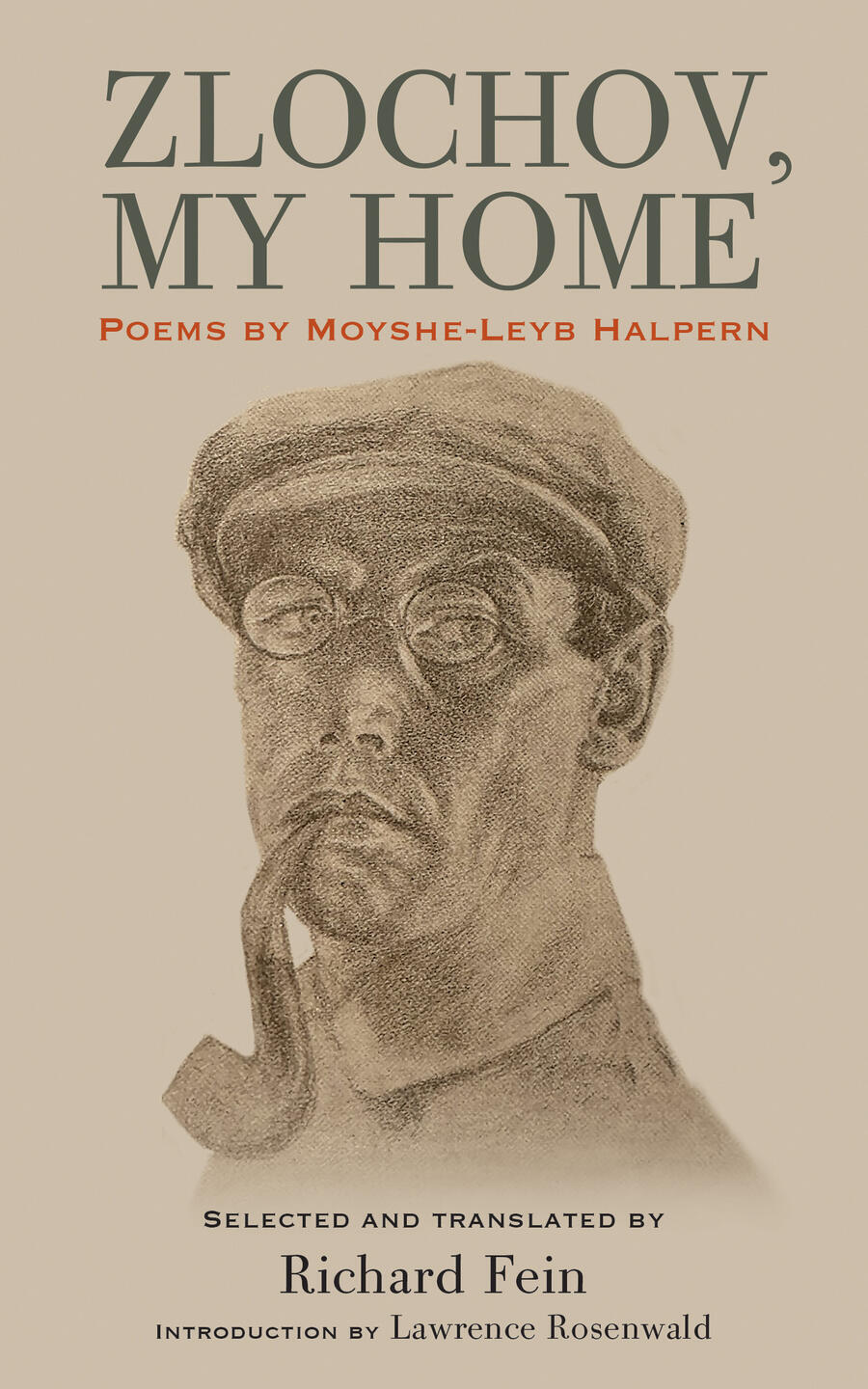
Moyshe-Leyb Halpern, Zlochov, My Home: Poems by Moyshe-Leyb Halpern, selected and trans. by Richard Fein. Excelsior Editions, 2026. 185 pp. $24.95 [paperback].
Moyshe-Leyb Halpern, one of the greatest and strangest poets in the history of Yiddish literature, was born in the Galician shtetl of Zlochov, 40 miles from Lviv, in 1886. He spent his teen years as an artist’s apprentice in Vienna, wrote German poetry before switching tentatively to Yiddish—he published his first poems in his native tongue under his sister’s name, Frida—and attended the Czernowitz Language Conference in 1908, where the example of I.L. Peretz and others inspired him to commit to Yiddish.
Soon afterwards, in order to escape military conscription, Halpern emigrated to New York City. He joined the circle of avant-garde Yiddish writers known as Di Yunge and revolutionized Yiddish verse with his colloquial idiom, his lyrical sadness, and his self- and world-lacerating humor. Halpern’s four books of poetry—two published during his lifetime, and two posthumously—along with his prolific contributions to the Yiddish press and strident, cantankerous presence in his literary community, changed the course of Yiddish writing.
These, at least, are the prosaic facts of Halpern and his influence. But they do not account for the sheer wildness of his art and his life, a wildness on exhilarating display in Zlochov, My Home, the wonderful new bilingual book of Halpern’s poems selected and translated by Richard Fein. Unwilling or unable to maintain employment, and uncomfortable in polite society, Halpern never adjusted to life in America. One has the sense, reading Halpern’s poems and Fein’s translations, that he was too uncompromisingly idiosyncratic to have adjusted to life anywhere. Ruth Wisse paraphrases his poetic colleague, Mani Leib, who recalled that “no one [within their emigrant community] was as outspoken as Halpern, and no one seemed quite so lost.” 1 1 Ruth R. Wisse, A Little Love in Big Manhattan (Harvard University Press, 1988), 83.
On October 14, 1932, six weeks after Halpern died in New York City, the actor Alexander Granakh offered a more honest and expressive lineage for this poet’s strange and solitary power. Writing in Warsaw’s influential journal Literarishe Bleter (Literary Pages), Granakh titled his tribute “Moyshe-Leyb, the Wolf”:
מיט אַ סך, אַ סך טױזנטער יאָרן צוריק איז ערגעץ אין אַ סיבירישן סטעפּ פֿאָרגעקומען אַ געראַלנג צװישן װעלף און יעגער. פֿיל יעגער זענען אומגעקומען, נאָר אַ טייל פֿון די איבערגעבליבענע האָבן אַנטדעקט גרױסע נאָרעס מיט קליינע װעלפֿישע קינדער, האָבן זיי אַהיימגענומען צו זיך אין דאָרף, זיי געלייגט אין קייטן און זיי אױפֿגעהאָדעװעט. און פֿון דעמאָלט אָן זענען אױף דער װעלט פֿאַראַן הינט. איז אַמאָל דער װאָלף מקנא דעם הונט צוליב זײן זאטקייט, זײן צופֿרידנקײַט, זײַן זיכערקײַט. אָבער שטענדיק איז דער הונט מקנא דעם װאָלף צוליב זײַן נישט געבונדנקייט, צוליב זײַן אינסטינקט־זיכערקײַט, צוליב זײַן פֿרײַקײַט. און פֿון דעמאָלט אָן הערשט צװישן דעם איין און דעמזעלביקן מין אַן אייביקע קנאה־שנאה . . .
אַ װאָלף איז געװען משה לייב האַלפּערן. האָט געװאָיעט, װי זײַנע ברידער, אין די פֿראָסטיקע װעלדער און פֿעלדער אױף די הינטישע שטעט. 2 2 Alexander Granakh, “Moyshe-Leyb — der volf,” Literarishe Bleter 42 (1932): 664. Translation by the author.
Thousands and thousands of years ago, somewhere on the Siberian steppe, a conflict between hunters and wolves took place. Many of the hunters were killed, but some of the survivors discovered small wolf cubs in large dens. They took the wolf cubs home to their village, bound them in chains, and raised them. And from then on, there were dogs in the world. Sometimes the wolf envies the dog for his satisfaction, his happiness, his security. But always the dog envies the wolf for his unboundedness, the certainty of his instincts, his freedom. And from this an eternal hatred and jealousy rules within this single species.
Moyshe-Leyb Halpern was a wolf. He howled, like his brothers in the cold forests and fields, in the city of dogs.
A wild animal among domesticated poets, Halpern was both blessed and condemned to refuse security and fellowship in favor of freedom and solitude, and, Granakh’s imagined genealogy suggests, to howl his poetry from within a community that could only regard him with awe, envy, or fear.
As Fein’s new translations demonstrate, Granakh did not invent this analogy, but followed Halpern’s own example. "Who has grasped the hunger-song / the wolf sings on the white steppe at night?” Halpern asks in “In the World,” originally published in the posthumous 1934 collection Moyshe-Leyb Halpern: Volume One, before continuing, in Fein's translation:
װי אַ שטערן נאָענט פֿון דער װײַסער ערד,
װיינט אַ פֿײַערל ערגעץ אין דער װײַט,
און אַהין מיטן האַלדז און מיט אױגן, װי בלוט,
זינגט דער װאָלף אין סטעפּ זײַן הונגערליד.
און נישט חיים הייסט דער װאָלף אין דער װעלט;
און נישט סטעפּאַן הייסט דער װאָלף אין דער װעלט
און ער האָט נישט קיין װאַרעמע היים אין דער װעלט, ––
בלױז די אױפֿגעשטעלטע האָר אױף זײַן פֿעל
בײַ דער שײַן פֿון לבנהס בלוטיקן גאָלד
און אַזױ װי אַ גאָלדענער ים זעט אױס אַרום אים.
Like a star close to the white earth,
a small fire mourns, off in the distance,
where the wolf, with his throat and eyes, like blood,
sings his hunger-song on the steppe.
And Chaim is not the name of the wolf in the world,
and Stepan is not the name of the wolf in the world,
and he doesn’t have a warm home in the world,
just the hair standing up on his skin
under the blood and gold of the moon,
and the white emptiness at the core of the world
surrounds him like a yellow sea . . . (142–143)
One might be tempted to name the wolf, but naming is a form of domestication, and neither a Jewish (Chaim) nor a gentile (Stepan) framework for meaning-making can contain or express his wildness. For Halpern, the wolf—the poet—sees what others cannot: “the white emptiness at the core of the world,” the void beneath all human ideologies, and therefore he sings a “hunger-song” beyond the comprehension of society, and cannot have “a warm home in the world.”
This poem is a kind of programmatic ars poetica, and it exhibits several of Halpern’s virtues as a writer. His visual imagination, perhaps a cross-pollination from his years as an artist’s apprentice and his ongoing practice as a painter, gives his poetry an uncommon vividness and immediacy. Consider, for example, the colors in this short excerpt, where a lesser poet would devolve into vagaries or abstractions: “the white earth,” “the blood and gold of the moon,” “a yellow sea.” They invite visualization, rendering the world of Halpern’s imagination visible and unassailably real even in its strangest moments, like the sudden introduction of “Chaim” and “Stepan,” or in its lines that threaten to veer towards the pathetic fallacy, like the “small fire [that] mourns.”
The poem’s astonishing conclusion deepens the resonance of its themes, and demonstrates the fearless idiosyncrasy of Halpern’s associations, as he transitions abruptly from his description of the wolf to introduce another figure of wildness and isolation:
און יעזוס האָט דאָך נישט אױסגעזען אַנדערש,
װען ער איז אױף די װאַלן פֿון ים
בײַ דער לבנהס בלוטיקן גאָלד
מיט אױגן, צום הימל, אַרױפֿגעשטרעקטע
געשטאַנען — איינער אַליין.
And Jesus didn’t look any different
when he walked on the waves of the sea
under the blood and gold of the moon,
his eyes strained toward heaven—all alone (142–143).
Here Halpern has articulated a new trinity: Through the power of modernist art, Jesus walking on water, a wolf howling at the moon, and the poet writing from within his poverty and isolation are one.
Halpern’s poems in New York’s Yiddish press scandalized his reading public, less for his imagery, which many simply struggled to understand, than for his often coarse colloquialism. The first poem Fein includes in Zlochov, My Home, “A Rogue’s Prayer,” originally from Halpern’s 1919 debut collection, In New York, exemplifies his rebellious vulgarity, which was unlike anything Yiddish poetry had previously seen: “Oh, help me, God,” the poet prays. “[L]et my speech be disgusting, / like a dead cat in the garbage.” (“O, helf mir, got, / az eklen fun mayn reyd, / vi fun a toyter kats in mist.”)
But this vulgarity was not for the sake of scandal alone. It was Halpern’s tool to puncture the pretensions of a world whose cruelty was (and is) magnified by its self-congratulation. That same poem continues:
אָ, העלף מיר, גאָט,
אַז ברענענדיק און האַרב אַזױ,
װי בײַ אַ שיסל פֿרישן כריין,
זאָל האַרב זײַן דער פֿרומאַק װאָס װעט
אין מײַנע דלתּ אַמות שטיין.
Oh, help me, God,
let something bitter and biting,
like a bowl of fresh horseradish,
grate on the pious hypocrite
who nosies into my space (6–7).
Halpern’s language itself is the horseradish he prays for as a weapon against hypocrisy. And the verb “nosies” in this stanza is an inspired translation, as Fein allows his own colloquial idiosyncrasies, and their play against Latinate words like “grate” and “pious,” to reenact Halpern’s tone.
Halpern has received excellent English translations before, most notably by Kathryn Hellerstein, in her 1982 volume In New York: A Selection (Jewish Publication Society of America). In his introduction to Zlochov, My Home, Lawrence Rosenwald offers a helpful approach to evaluating new versions of previously translated work. Rather than exalting a new edition as the definitive version that renders earlier translations obsolete, as translation reviews often do, pitting one translation against the other, Rosenwald suggests that
[a] better way is to think of new translations the way we think of new performances of enduring roles or pieces of music. Vikingur Ólafsson’s performance of Bach’s Goldberg Variations is terrific, but it erases neither Glenn Gould’s two recordings of the work, nor Murray Perahia’s, nor Pierre Hantaï’s. In reviewing such a performance, we would try simply to say what each performer offers, all the performances contributing in their various ways to our understanding of the piece and its afterlife (3).
With his new translations, Fein revels in Halpern’s complicated and peculiar idiom, its unique combination of religion, irony, sadness, and slang. In choices like “nosies,” above, Fein’s delight in the slippery tone Halpern enables him to access is palpable—and why should delight, in itself, not be a valid principle to shape poetry translations, or to evaluate them?
Fein’s rendering of “Isaac Leybush Peretz,” Halpern’s eulogy for the great writer and one of his strongest earlier poems, exemplifies his strengths. Two wonderful English versions of this poem, one by Hellerstein, in In New York, and one by Robert Pinsky, have already been published, each with tremendous virtues. In Halpern’s original Yiddish, however, the rhythm of the poem’s opening is crucial: A short, four-word sentence precedes a long sentence that spills across six lines, its syntax galloping breathlessly like the horse it describes, and like the news of Peretz’s death frantically and relentlessly disseminating across the Yiddish world. Both Hellerstein's and Pinsky’s translations break up this sentence, while Fein’s accomplishes the technical feat of maintaining its rhythm and sprawling structure:
און דו ביסט טױט. און נאָך האָט דיך נישט צוגעדעקט די ערד
און איבער טױזנט גאַסן װײַט װי אַ גאַלאָפּ פֿון פֿערד
צעטראָגט זיך דאָס געלױף פֿון יונג און אַלט װאָס אײַלן זיך
און באָטן אָן צום קױף דאָס בלאַט װוּ טעלעגראַפֿיש גיך
אַנטפּלעקט מען אונדז מיט מאַרקגעשריי, אַז ס'קלאַפּט ניט מער דײַן האַרץ,
און װי אַ גרױסער פּועצרעקלאַם איז אײַנגעפֿאַסט אין שװאַרץ
דײַן גרױער קאָפּ.
And you are dead. And even before the earth has covered you
the news like a runaway horse sends the young and the old
stampeding over a thousand streets to offer up coins
for the newspaper that with telegraph-speed and pushcart-cry
reveals to us your heart doesn’t beat anymore,
your gray head decked out in a black frame, like a full-page ad (37–8).
While Hellerstein’s In New York selected poems only from Halpern’s first collection, and maintained the structure with which he organized that book, Fein has chosen from across Halpern’s career, guided by his own instinct and pleasure, including only “those poems of Moyshe-Leyb Halpern’s that [he] had a need to possess in English,” as he writes in a brief introductory note. Halpern meticulously ordered the poems in his first two collections, and one of the disadvantages of Fein’s approach is that, unlike Hellerstein’s, it obscures the architecture of Halpern’s broader poetic vision. But this is a necessary sacrifice, enabling Fein to present a wider selection of Halpern’s work, including many previously untranslated poems that number among his best; of these, “In the World,” discussed above, and “The Hasidic Rebbe” are particular highlights.
In this, Fein has provided a remarkable service to English readers, and to Halpern himself. But Halpern has provided a service to Fein as well, as the latter acknowledges in his afterword. Instead of a conventional translator’s reflection, Fein offers an original Yiddish poem, and its English translation. In “Moyshe-Leyb Confronts Me,” Fein allows Halpern to accuse him of usurpation, of exploitation, of being a “narcissistic” and a thief of Halpern’s voice.
This poetic afterword transforms translation into a high-stakes and acerbic dialogue, collapsing the expected power dynamics and borders between poet and translator. Halpern launches a screed against Fein in this poem, but his polemic gives way to mutual recognition, as he identifies Fein’s “heist” as no more or less than the authentic labor of a fellow poet. The poem, and the book, concludes: “I Moyshe-Leyb turned into Richard Jacob. / You goniff, you, if I could come back, I would return the favor.”
Fein’s final statement of mutual recognition is a bold choice, and would be arrogant if it were not well-earned. But all of Zlochov, My Home testifies to the intimacy Fein feels with Halpern, an intimacy that is paradoxical in its appreciation of Halpern’s unassailable solitude. Halpern insists that no one can grasp his howl, and perhaps this is true, but Fein has reenacted Halpern’s wild Yiddish with an English howling of his own.