May 26, 2026
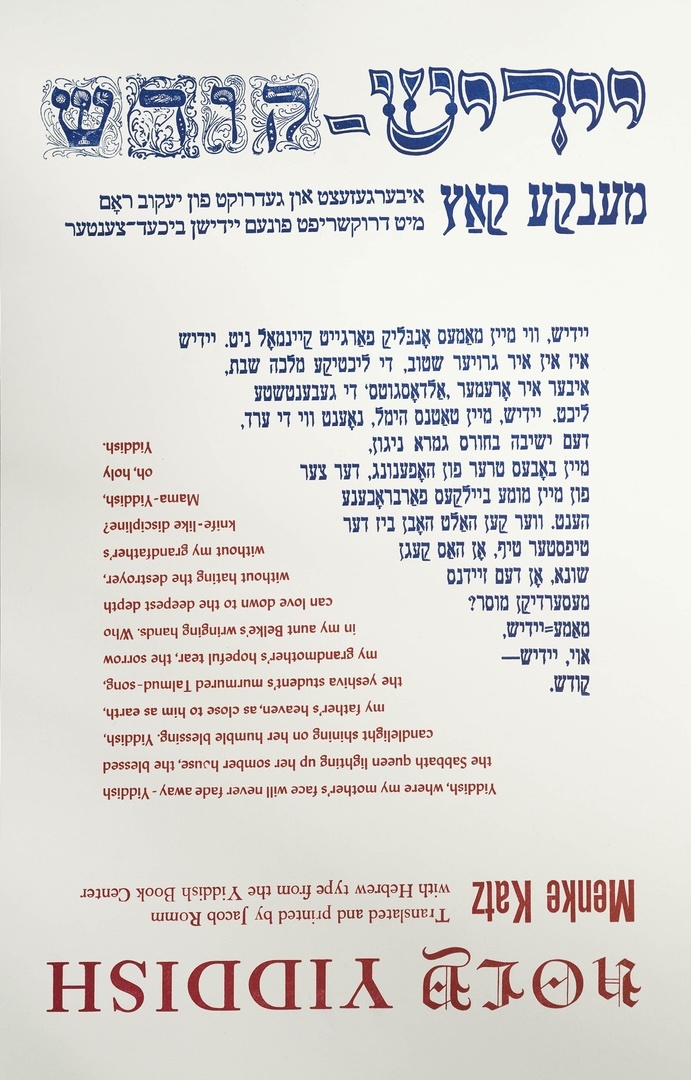
An image of a broadside created by Jacob Romm of Menke Katz’s “Yidish koydesh,” “Holy Yiddish,” in Katz’s Yiddish and Romm’s English translation.
INTRODUCTION
Menke Katz was born in 1906 in Svintsian, a Jewish shtetl in the Lithuanian countryside. By his own account, his early childhood was idyllic, surrounded by extended family and enchanted by Jewish legends. The start of World War I caused a traumatic rupture: Menke’s beloved older brother Eltsik was forced into labor by the Germans and froze to death in an army barracks. Stunned by this loss, the Katz family emigrated to New York, where Menke spent decades trying (and largely failing) to earn a living repairing watches, teaching Kabbalah at the Jewish Theological Seminary, and writing prolifically in both Yiddish and English. In the 1950s, Katz brought his wife and young children to Tsfat, a city in the north of Israel known as the birthplace of Jewish mysticism, but the family returned to New York after an Israeli police officer arrested him for speaking Yiddish on the street.
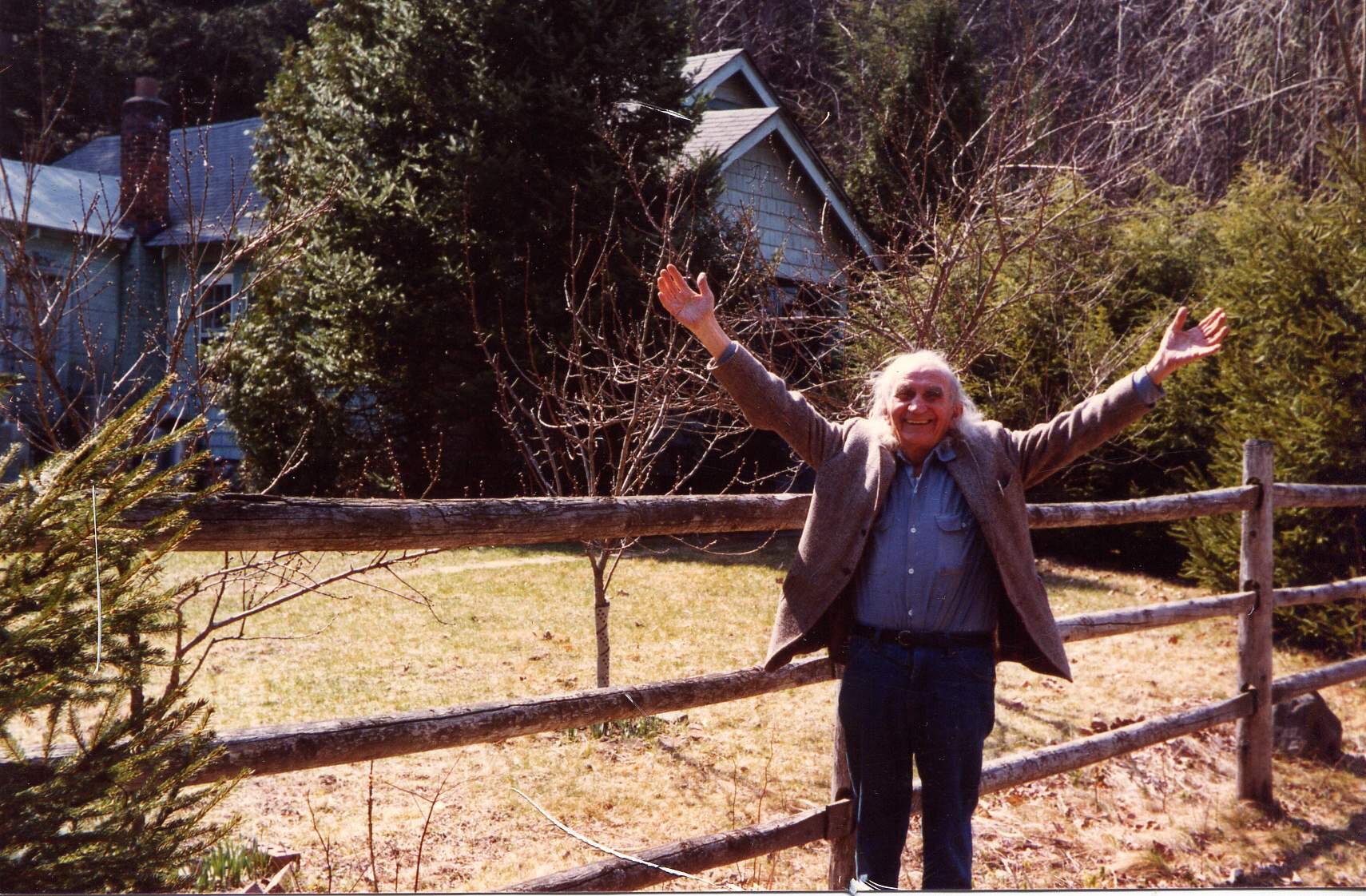
Katz, a diminutive man with a wild haircut and a wide smile, struggled to find a home in the politically polarized Yiddish literary world of his time. Originally a member of a leftist writers’ group called Proletpen, Katz was ostracized for his rejection of gritty socialist realism in favor of modernist, formally experimental poetics rooted in Jewish legend and the cultural texture of Jewish life. In a 1938 poetic manifesto entitled Der braver pakhdn, “The Brave Coward,” Katz issued a trenchant and controversial critique of the compulsory triumphalism of so-called “proletarian poetry.” “I will not lead my poem into battle,” he insisted, and invoked benkshaft, heartsickness, as a crucial ingredient of emotionally convincing Yiddish verse. Though the readers of the leftist newspaper that published Der braver pakhdn saw this as an unforgivable attack on the proletariat, Katz’s oeuvre testifies to the poetic capacity of sorrow, delicately integrating deep grief with humor, mysticism, outrage, eroticism, and buoyant resilience.
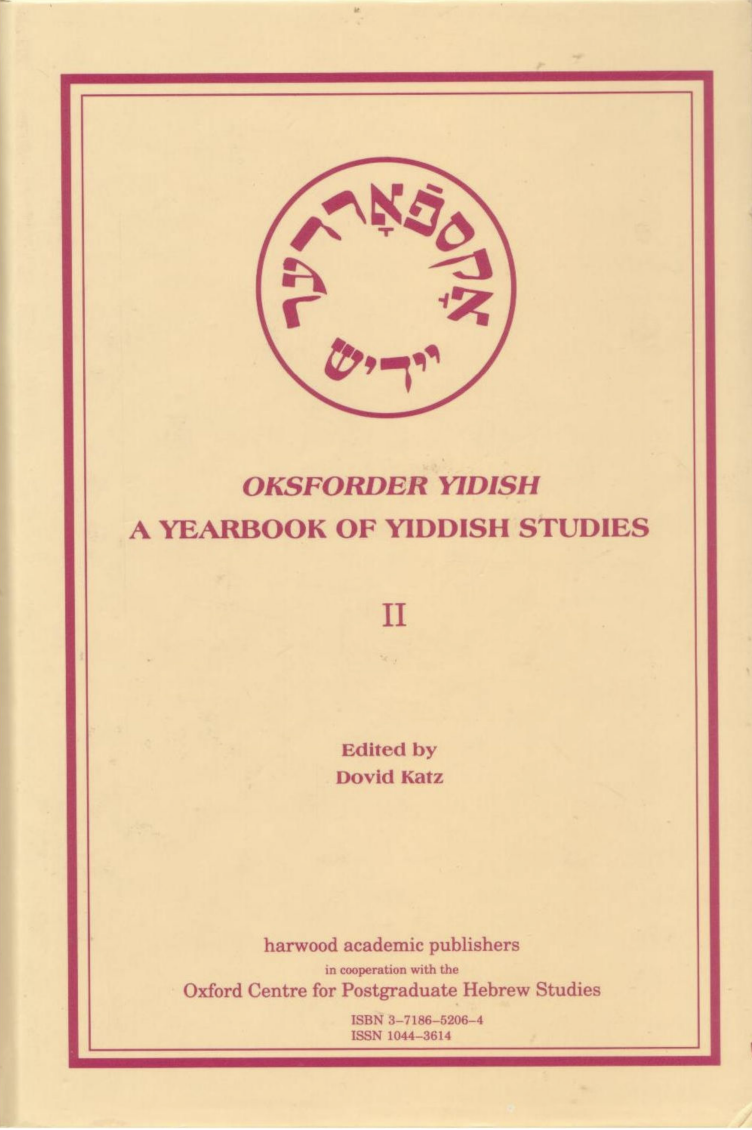
Katz’s refusal to toe the line of socialist literature led to his eventual isolation from the Yiddish literary sphere. Frustrated by the dominance of politics over poetry, Katz abandoned Yiddish for English in the 1960s. He did not return to his native language until 1990, when his mother appeared to him in a dream and told him to begin writing in Yiddish once more. In the final months of his life, Katz worked on a collection of “triangular sonnets,” fourteen-line poems beginning with a two-syllable line and adding a syllable per line to end with fifteen, or vice versa. Several of these poems, published posthumously, were reworkings of sonnets which had appeared in Tsfas (1979), a volume which also contained an essay entitled “A vort vegn ferz-takt in Yiddisher poezye” (“A Word on Meter in Yiddish Poetry”). Katz returned to this piece as well, expanding it for publication in the 1991 issue of Oxforder Yiddish: A Yearbook of Yiddish Studies, a journal founded and edited by Menke’s son Dovid, a prominent Yiddish linguist in his own right. According to an editor’s note at the end of the essay, Menke passed away on the day that the proofs arrived and never gave the piece a title. The editors named it for him: “Form in poezye un natur,” “Natural and Poetic Form.”
The first section of this essay, added in the later revision, compares the meters of English and Yiddish poetry, suggesting that English poetry is fundamentally iambic, while Yiddish is trochaic. Quickly, however, it becomes clear that writing about Yiddish meters is a way for Katz to contend with the horrors of the Holocaust and its impact on Yiddish poetry. This is the core of the 1978 essay, which becomes the second section of the revised version. In it, Katz cites several examples of metrical poems written by poets who lived through or perished in the Holocaust, marveling that “the poets who wrote in the shadow of Hitler’s gas ovens mustered the strength to give their poetry form, rhythm, and meter.” It seems that, for Katz, appreciating the technical craft of these poems was a way to honor the memory of their authors and to recognize their strength in the face of unimaginable suffering. For example, Katz points out that the final quatrain composed by an anonymous writer before the Nazis took her to her death was “in trochaic meter, with carefully counted syllables.” For Menke, perhaps this symbolized the unconquerable resilience, not only of individual Jews, but of Yiddish literature itself.
The third section, also added in 1990, turns from the past to the present. The meters Katz is preoccupied with here are not fragments by long-dead poets but the rhythms of the natural world: streams, birdsong, mountains, dogs, stones. Still, the presence of the past is tangible: Katz jumps quickly from the stream flowing by his house in the Catskills to bats flying through the ruins of Tsfat to nightingales serenading the very poets whose work he cites in the first two sections—Leyb Naydus, Fraydl Shtok, Mani Leyb, and, curiously, John Keats. It’s as if Katz, at the end of his life, is moving backwards in time, simultaneously enchanted with the beauty of upstate New York and haunted by the places and people populating his memory. Fittingly, the essay closes by returning to Michaleshik, where Katz grew up, and to the Jewish legends and folksongs which so deeply influenced his imagination.
The logic of this essay, particularly its final section, is associative rather than analytic: It is better read as a window into Menke’s mind than as a systematic or exhaustive account of Yiddish meters. In this translation, I do my best to capture the idiosyncrasies of Katz’s prose, which flits freely between topics and time periods, as well as to preserve the rhythms of the excerpts he cites, so that they can continue to serve as examples of different metrical schemes as well as powerful fragments of poetry. In some cases, I have prioritized sound and rhythm over exact semantic correspondence and noted instances of significant departure from the literal meaning of the Yiddish in footnotes.
I’ve transliterated these excerpts as well as translating them, so that some sense of the stress patterns of the Yiddish originals can come through for those who don’t read Yiddish. For the first line of the Yiddish transliteration, a more detailed breakdown of syllables and stress is given, and audio recordings of the Yiddish excerpts are provided. My hope is that the many citations Katz includes in this essay can serve both as useful exemplars of various meters and as a kind of tasting menu of twentieth-century Yiddish poetry, offering short glimpses of the style and subject matter of a wide range of poets, some well known and some all but forgotten.
I פֿאָרם אין ייִדישער און ענגלישער פּאָעזיע
אַלץ האָט פֿאָרם, אַלץ װאָס מיר פֿאַרנעמען מיט אונדזערע פֿינף חושים. פֿאַראַנען צענדליקער פֿאָרמען אין פּאָעזיע. פֿאַרשטייט זיך צוליב פֿאָרם װערט ניט דער טאַלאַנט פֿון פּאָעט גרעסער אָדער קלענער. פֿאַראַן פּאָעטן װעלכע שרײַבן לידער אין גראַמען, פּאָעטן װעלכע שרײַבן אין װײַסן פֿערז (די פֿאָרם װאָס שעקספּיר האָט גענוצט אין זײַנע דראַמען). פֿאַראַן פֿאָרם אַפֿילו אין די פֿאָרמלאָזע לידער װעלכע פּאָעטן שרײַבן פֿראַנק און פֿרײַ, אָן גראַמען, אָן יעדער מין פֿאָרם אָבער אין די לידער פֿון גוטע פּאָעטן איז די פֿאָרם אין אימאַזש, אין מעטאַפֿאָר, אין געדאַנק. װען מיר האַלטן אין האַנט אַ כּוס װײַן איז דער כּוס די פֿאָרם, װײַן – דאָס ליד.
װען אַ דורשטיקער אין מידבר טרינקט װאַסער פֿון אַ קװאַל דאַרף ער, פֿאַרשטייט זיך, ניט קיין גלאָז אָבער יעדער קװאַל פֿליסט מיט זײַן אייגענער פֿאָרם. יעדע פֿאָרם מוז זײַן צוגעפּאַסט צום ליד, פֿאָרם און ליד מוזן װערן פֿאַרצװילינגט.
איצט לאָמיר זען װי אַנדערש ייִדישע און ענגלישע פּאָעטן נוצן פֿאָרם פֿאַר זייערע לידער. אין ייִדישער פּאָעזיע דאָמינירט דער כאָריי (trochee), אַ װאָרט מיט צװיי טראַפֿן, דער טראָפּ אױפֿן ערשטן טראַף; לאָמיר אָנהייבן מיט אַ מוסטער פֿון דעם פּרינץ פֿון ייִדישע פּאָעטן מאַני לייב. אָט איז אַ סטראָפֿע פֿון פֿינף כאָרייטאַקטן אין גאַרטלגראַמען:
טױבן שטילע, בלױע, אָװנטשטונדן
שפּרייט פֿאַר מיר מײַן אָװנטטרױם צעשפּרייטער.
איצטער גליִען ציטעריקער, רױטער,
מײַנע שטילע רױזן – מײַנע װוּנדן.
כאָריי איז פּונקט פֿאַרקערט פֿון יאַמב – דער טראָפּ אױפֿן צװייטן טראַף. אָט איז אַ סטראָפֿע אין יאַמבטאַקט פֿון דעם ענגלישן פּאָעט לאָרד בײַראָן, פֿון זײַנע Hebrew Melodies:
She walks in beauty, like the night
;of cloudless climes and starry skies
and all that’s best of dark and bright
.meet in her aspect and her eyes
אין דער ענגלישער פּאָעזיע געװעלטיקט דער יאַמב, דער טראָפּ אױפֿן צװייטן טראַף.
אַפֿילו די פּאָעטן װעלכע האָבן געשריבן לידער בײַ די היטלערישע גאַזאױװנס האָבן זיך גענומען די מי דאָס ליד זאָל חוץ טראַגישן אינהאַלט פֿאַרמאָגן אױך פֿאָרם, ריטעם, פֿערזפֿוס. די אַנאָנימע פּאָעטעסע װעלכע האָט אַװעקגעװאָרפֿן איר ליד, „אַ קאַפּיטל תּהילים“ בעת די נאַציס האָבן זי געפֿירט צום טױט האָט געשריבן איר לעצט ליד, סײַ אין כאָרייטאַקט, סײַ אין אױסגעציילטע טראַפֿן:
װאַרשע, װאַרשע, מוטער שטאָט,
מיט בלוט־פֿאַרשפּריצטע מױערן:
זעט ניט דײַנע װוּנדן גאָט,
די מתים אין די טױערן.
די ערשטע און די דריטע שורה זײַנען געשריבן אין דרײַ און אַ האַלב כאָרייטאַקטן, די צװייטע און די פֿערטע שורה, אין אַכט טראַפֿן. (איר ליד איז דערשינען אין זשורנאַל מיר אין יוני 1944, אױך אין עליכם שלום, אין אָקטאָבער 1973.)
1 Form in Yiddish and English Poetry
Everything has form, everything that we can perceive with our five senses. There are scores of poetic forms—but it should be understood that form can neither improve nor impair a poet’s ability. There are poets who write in rhyme, and poets who write in blank verse (as Shakespeare did in his plays). There is form even in the formless poems that are written freely, without rhyme or any hint of structure. In the work of good poets, the form is in the image, the metaphor, the thought itself.
When we hold a glass of wine in our hand, the glass is the form, and the wine—the poem. It’s true that someone dying of thirst in the desert can drink from a spring without a glass, but each spring flows according to its own form. Each form must be suited to its poem: poem and form must match each other.
Now let’s examine how differently Yiddish and English poets use form in their poetry. In Yiddish, the trochee (khorey) reigns supreme: a word with two syllables, the stress on the first syllable. Let’s begin with an example from the prince of Yiddish poets, Mani Leyb. Here’s a stanza of five trochaic feet in girdle-rhyme: 1 1 The original text read “kreytsgortlgramen,” but in Yiddish prosody, kreytsgram refers to ABAB rhyme schemes, and gortlgram to ABBA (see Kalmon Marmor, Dovid Edelshtat [New York: Ikuf, 1950], 280). Since the Mani Leyb poem matches the later scheme, we have emended the text to gortlgramen.
ᐟ ˘ ᐟ ˘ ᐟ ˘ ᐟ ˘ ᐟ ˘
Evening’s hours, quiet gray-blue pigeons,
spread their evening-dream out wide before me.
Now my wounds, my silent roses, blossom
still more scarlet and more tremulous.
2
2
Mani Leyb, untitled poem in Lider [Poems] (Inzel, 1918), 100. Katz’s original essay did not include bibliographic citations for these excerpts, but I have added them in order to facilitate deeper engagement with these poets and their work for readers who are interested.
ᐟ ˘ ᐟ ˘ ᐟ ˘ ᐟ ˘ ᐟ ˘
(TOY-bn SHTI-le, BLO-ye, O-vnt-SHTUN-dn)
Toybn shtile, bloye, ovntshtundn
shpreyt far mir mayn ovnttroym tseshpreyter
itster glien tsiteriker, royter,
3
3
In Katz’s Litvish dialect, this would have been pronounced reyter, and rhyme with tseshpreyter.
mayne shtile royzn—mayne vundn.
The trochee is the exact opposite of the iamb—the stress is on the second of two syllables. Here is a stanza in iambic meter from the English poet Lord Byron’s Hebrew Melodies:
˘ ᐟ ˘ ᐟ ˘ ᐟ ˘ ᐟ
She walks in beauty, like the night
of cloudless climes and starry skies;
and all that’s best of dark and bright
meet in her aspect and her eyes.
In English poetry the iamb reigns, with the stress on the second syllable.
Even the poets who wrote in the shadow of Hitler’s gas ovens mustered the strength to give their poetry form, rhythm, and meter despite its tragic contents. The anonymous poetess who left behind her poem “A Psalm” as the Nazis took her to her death, wrote that final poem in trochaic meter, with carefully counted syllables:
ᐟ ˘ ᐟ ˘ ᐟ ˘ ᐟ
Warsaw, Warsaw, mother-town—
does God not see you’re bleeding?
Corpses sprawling on the ground—
does God not hear your pleading?
4
4
A literal translation would read “Warsaw, Warsaw, mother-town / Your walls splattered with blood: / Does God not see your wounds / The corpses in the thresholds?” “A kapitl tehillim [A Psalm],” in Froyen in di getos zamlbukh [Women in the ghettos anthology], ed. Leib Spizman (Pionern Froyen Organizatsye, 1946), 34–35.
ᐟ ˘ ᐟ ˘ ᐟ ˘ ᐟ
(VAR-she, VAR-she, MU-ter SHTOT)
Varshe, Varshe, muter shtot,
mit blut-farshpritste moyern:
Zet nit dayne vundn got,
di meysim in di toyern.
The first and the third lines consist of three and a half trochaic feet; the second and the fourth lines are octosyllabic. (This poem was published in the journal Mir in June of 1944, also in Aleykhem Sholem, in October 1973.)
II פֿאָרם בײַ ייִדישע פּאָעטן
הירש גליק האָט אַפֿילו אין טױטן־לאַגער פּאָלירט זײַנע לידער אין געמאָסטענעם פֿערז, אין יאַמבטאַקט. דער יאַמבטאַקט פּאַסט זיך צו זײַן ליד, האָפֿערדיק, אַפֿילו אױג אױף אױג קעגן טױט:
זאָג ניט קיין מאָל אַז דו גייסט דעם לעצטן װעג,
הימלען בלײַענע פֿאַרשטעלן בלױע טעג;
קומען װעט נאָך אונדזער אױסגעבענקטע שעה,
ס׳װעט אַ פּױק טאָן אונדזער טראָט, מיר זײַנען דאָ.
פֿון גרינעם פּאַלמענלאַנד ביז װײַסן לאַנד פֿון שניי,
מיר זײַנען דאָ מיט אונדזער פּײַן, מיט אונדזער װיי
און װוּ געפֿאַלן ס׳איז אַ שפּריץ פֿון אונדזער בלוט
װעט נאָך אַ שפּראָץ טאָן אונדזער גבֿורה, אונדזער מוט.
דער פּאָעט אָשר שװאַרצמאַן װעלכער איז געפֿאַלן אױפֿן שלאַכטפֿעלד פֿון אוקרײַנע אין 1919 אין דעם עלטער פֿון דרײַסיק יאָר איז געװען אַ מײַסטער פֿון פֿערזטאַקט. אָט איז אַ סטראָפֿע פֿון זײַנס אַ ליד אין נצחונדיקן יאַמבפֿוס, װען ער איז געװען אַ קאַװאַלעריע־רײַטער:
אױף גיך צום פֿערד
די האַנט שטאָל אָן
ס׳איז איצט די שװערד,
די שפּיז – אַ פֿאָן.
דער אַנאַפּעסט איז אַ פֿערזטאַקט פֿון דרײַ טראַפֿן. דער טראָפּ איז אױפֿן דריטן טראַף. די רױמישע פּאָעטן האָבן גענוצט אָט דעם פֿערזטאַקט מערסטנס אין דראַמע. אױף ענגליש האָבן הנאה געהאַט פֿונעם אַנאַפּעסט אַזױנע קלאַסישע פּאָעטן װי בײַראָן, סקאָט, בראַונינג, סװינבױרן. דער אַנאַפּעסט איז געװען אַ מיטל אױסצודריקן שװוּנג, טאַנץ, גערודער: די ייִדישע פּאָעטן האָבן גענוצט דעם אַנאַפּעסט אָפֿט פֿאַרקערט, אין צער, עלעגיע. אָט איז אַ זעלטענע דוגמא פֿון דער אייביק פֿאַרליבטער פּאָעטעסע אַנאַ מאַרגאָלין (זי האָט געשריבן אונטערן נאָמען ראָזע לעבנסבױם, פֿלעגט אױך שרײַבן אין טאָג, אונטערן פּסעװדאָנים קלאַראַ לעװין) פֿון איר עלעגיש ליד: „מאַרי און דער טױט“. דאָס ליד איז אַזױ גרינג אין ריטעם, מאָס און װאָג אַז דער פֿערזפֿוס־אַנאַפּעסט נייטיקט זיך ניט אין אָט די צײכנס ˘ ˘ ⸌ צו װײַזן דעם טראָפּ אױף דעם דריטן טראַף:
ס'האָט מאַרי זיך געזעגנט מיטן ליכטיקן הױז
פֿאַר די װענט זיך גענייגט, גענייגט און אַרױס,
און אַװעק אין דער נאַכט, װי מען גייט אין אַ װאַלד
װוּ גאָטס אָטעם איז נאָענט און ס׳שרעקט יעדע געשטאַלט
און געגאַנגען נאָך איר זײַנען פֿריילעך און בונט
בעטלער און שיכּור און װאַגאַבונד.
דער פֿערזטאַקט־דאַקטיל פֿאַרמאָגט אױך דרײַ טראַפֿן, איז אָבער פּונקט פֿאַרקערט פֿונעם אַנאַפּעסט. דער טראָפּ פֿאַלט אױף דעם ערשטן טראַף אָנשטאָט אױף דעם דריטן. דאַקטיל מיינט אַ פֿינגער, ס׳װאָלט געװען ריכטיקער צו זאָגן, אַן אײַנגעבױגענער פֿינגער, װײַל װען מיר בײַגן אײַן אַ פֿינגער זענען מיר דרײַ געלענקען, װי דרײַ טראַפֿן, דער ערשטער געלענק, שפּיציק, אַקצענטירט, װי דער ערשטער טראַף פֿונעם דאַקטיל, די אַנדערע צװיי געבױגן, ניט באַטאָנט: ⸌ ˘ ˘.
ניט װיסנדיק האָט דאָס זינגענדיקע פֿאָלק באַשאַפֿן פֿאָלקסלידער אין כּלערליי פֿערזטאַקטן. אָט איז אַ סטראָפֿע פֿון אַ פֿאָלקסליד אין פֿערזפֿוס־דאַקטיל:
קום צו מיר
שׂרהלע,
כ׳בענק נאָך דיר
ליבינקע.
2 Form Among Yiddish Poets
Hirsh Glik, even in the death camps, polished his poems, weighing out their iambic meter. Iambs suit this poem, which is hopeful, even eye-to-eye with death. 5 5 The poem from which these stanzas were excerpted became a well-known song of Jewish resistance, written after the Warsaw Ghetto Uprising and adopted as the official anthem of the Vilna Partisans.
˘ ᐟ ˘ ᐟ ˘ ᐟ ˘ ᐟ ˘ ᐟ
Don’t call this present path your final way:
Blue skies will soon break through these cloudy days!
The hour we have longed for can’t be far—
our marching steps declare that we are here.
Under palm trees and in fields of gleaming snow,
we persist despite our anguish and our woe,
and from whatever ground is watered with our blood,
we will spring up even stronger and more bold.
6
6
Hirsh Glik, “Partisaner Lid,” in Lider fun getos un lagern [Songs from ghettos and camps], ed. Shmerke Kaczerginski (Tsiko, 1948), 3.
˘ ˘ ᐟ ˘ ᐟ ˘ ᐟ ˘ ᐟ ˘ ᐟ
(zog nit KEYN mol AZ du GEYST dem LETS-tn VEG)
Zog nit keyn mol as du geyst dem letstn veg,
himlen blayene farshteln bloye teg;
kumen vet nokh undzer oysgebenkte sho,
s’vet a poyk ton undzer trot, mir zaynen do.
Fun grinem palmenland biz vaysn land fun shney,
mir zaynen do mit undzer payn, mit undzer vey
un vu gefaln s’iz a shprits fun undzer blut,
vet nokh a shprots ton undzer gvure, undzer mut.
The poet Osher Shvartsman, who fell on the battlefields of Ukraine in 1919 at the age of thirty, was a master of meter. Here is a stanza of his in victorious iambs, written when he was a cavalry rider:
˘ ᐟ ˘ ᐟ
Quick! Mount your horse
and steel your arm—
your spear and sword
are now a flag!
7
7
Osher Schvartzman, “Der soyne bay di toyern [the Enemy at the Gates],” in Lider fun der milkhome anthologie [Anthology of poems from the war], ed. I. Kissin (Bibliotek fun poezye un eseyen, 1943), 36.
˘ ᐟ ˘ ᐟ
(af GIKH tsum FERD)
Af gikh tsum ferd
di hant shtol on
s’iz itst di shverd,
di shpiz—a fon.
The anapest is a foot with three syllables, with the stress on the third syllable. The Roman poets mostly used this meter in drama. In English, classic poets such as Byron, Scott, Browning, and Swinburne delighted in the anapest: it was a way for them to express zest, dance, tumult. Yiddish poets used the anapest in the exact opposite way, in sorrow and elegy. Here is an extraordinary example of the always-amorous poetess Anna Margolin (who wrote under the name Rosa Lebensboym and used to publish in Tog under the pseudonym Clara Levin 8 8 Katz seems to have misremembered this information: Rosa Lebensboym is actually the given name of the poet who published under the pen name Anna Margolin. She did write journalistic articles for Der Tog under the name Clara Levin and occasionally Sofia Brandt. ) from her elegaic poem “Mari and Death.” 9 9 This poem is from Margolin’s Mary cycle, which transgressively steps into the voice of the Christian Virgin Mary. In Yiddish, however, the name would have been pronounced “Ma-REE”, with the stress on the second syllable. Because this excerpt is intended as a demonstration of the anapest, I have used a version of the name closer to the original pronunciation, transliterating rather than translating it. Several other translations of Margolin’s Mary cycle exist, including by Shirley Kumove (Drunk from the Bitter Truth: The Poems of Anna Margolin, SUNY Press, 2005) and Kathryn Hellerstein (A Question of Tradition: Women Poets in Yiddish, 1586–1987, Stanford University Press, 2014). Hellerstein has also written about the process of translating Anna Margolin in an article entitled “Translating as a Feminist: Reconceiving Anna Margolin” (Prooftexts 20, no. 1–2 [2000]). Footnote 9 of that article has a helpful discussion of the significance of the name Mari and considers different ways of rendering it in English. The poem is so clear in its rhythm, meter, and weight that it’s not necessary to use the signs ˘ ˘ ᐟ to demonstrate the anapest, with its stress on the third syllable: 10 10 The translator has applied the scansion marks below, which did not appear in the Yididsh original.
˘ ˘ ᐟ ˘ ˘ ᐟ ˘ ˘ ᐟ ˘ ˘ ᐟ
Then Mari said goodbye to her brightly lit house,
gave a nod to the walls—a quick nod, and then—off!
She went into the night as if into the woods,
where God’s breath feels quite close, and each shadow sparks fear.
And after her tumbled a merry bright band
of penniless drunkards and prodigal sons.
11
11
Anna Margolin, “Mari un der toyt [Mari and Death]” in Lider [Poems] (Orion Press, 1929), 113.
˘ ˘ ᐟ ˘ ˘ ᐟ ˘ ˘ ᐟ ˘ ˘ ᐟ
(S’hot ma-RI zikh ge-ZEGNT mit-n LIKH-ti-kn HOYZ)
S’hot Mari zikh gezegnt mitn likhtikn hoyz
far di vent zikh geneygt, geneygt un aroys,
un avek in der nakht, vi men geyt in a vald
vu gots otem iz noent un s’shrekt yede geshtalt
un gegangen nokh ir zaynen freylekh un bunt
betler un shiker un vagabund.
The dactylic meter also has three syllables, but it’s the exact opposite of the anapest. The stress falls on the first syllable instead of the third. Dactyl means a finger, but it would be more accurate to say a bent finger, because when we bend our finger we see three joints, like three syllables: the first joint is pointed, accented, like the first syllable of the dactyl, but the other two are bent, not emphasized: ᐟ ˘ ˘.
Our folk musicians have unknowingly created folksongs in all sorts of meters. Here is a stanza from a folksong in a dactylic meter:
ᐟ ˘ ˘
Come to me,
Sorele.
I long for you,
little love.
ᐟ ˘ ˘ ᐟ ˘ ˘
(KUM tsu mir / SO-re-le)
Kum tsu mir
Sorele,
kh’benk nokh dir,
libinke
לאָמיר זיך אָפּשטעלן איצט אַ װײַלינקע אױפֿן טריאָלעט. מיר װילט זיך כאָטש דערמאָנען דעם מײַסטער פֿון טריאָלעט: לייב נײַדוס.
דער טריאָלעט פֿאַרמאָגט אַכט שורות: די פֿערטע און די זיבעטע שורה, די זעלביקע װי די ערשטע; די צװייטע שורה חזרט זיך איבער אין דער אַכטער. בײַ מעכאַנישע טינטלער װערן די איבערחזרונגען שקלאַפֿן פֿון דער פֿאָרם, בײַ לייב נײַדוסן איז דער טריאָלעט סימפֿאָניש:
אלול
אַ שטרענגע, גאָלדענע עצבֿות קוקט אַרײַנעט
פֿון דרױסן דורך דער בלאַנקענדיקער שױב.
פֿון פּורפּור־בלעטער און פֿון געלן שטױב.
אַ שטרענגע, גאָלדענע עצבֿות קוקט אַרײַנעט.
בײַם שױב דער טאָפּאָל פֿליסטערט װאָס און טענהט,
װי ער װאָלט װעמען אײַנרױמען: „נישט גלױב!“
אַ שטרענגע, גאָלדענע עצבֿות קוקט אַרײַנעט
פֿון דרױסן דורך דער בלאַנקענדיקער שױב.
און װער דערמאָנט איצט פֿראַדל שטאָק, די לאַנג פֿאַרגעסענע פּאָעטעסע װעלכע האָט פֿאַרצװילינגט דעם גורל פֿון מענטש און חיה אין אירע עכטע לידער, האָט געהערט אין דעם מיאַוקען פֿון אַ קאָטער אַ קינדיש געװיין, האָט געזען אַ מענטשן ערגעץ הענגען װען דאָס לעמפּל האָט געצאַנקט און דער װינט האָט געקלאָגט, האָט פֿאַרטרױט די פֿאַרנאַכטן אַז:
אומעטיק איז מיר אַזױ,
אומעטיק צום שטאַרבן.
ניט נאָר אין טרױער, אױך אין פֿרייד האָט זי דורך אירע סענסיטיװע חושים דערשפּירט װי גאָט עפֿנט די זאַנגען אין פֿעלד, באַגלייט פֿון „דעם פּאַסטוכס ליד“ װי דער סאָק רינט, װי רױטער װײַן „פֿון צײַטיק־פֿולע קאַרשן“, נאָר אין עלנט האָט זי גערעדט צו דער בין װעגן זיך אַליין:
איך װייס דו האָסט קיין האָניק נישט,
דו װילסט די גיפֿט מיר געבן.
פֿראַדל שטאָק, װי לייב נײַדוס, װי צענדליקער אַנדערע קערנדיקע, ייִדישע פּאָעטן האָבן איבערגעלאָזט זייערע לידער, זייער האָב־און־גוטס אױף גאָטס באַראָט. װעמען אַרט עס װאָס אַזױנע פּאָעטן װעלכע װאָלטן באַדאַרפֿט פֿאַרנעמען דעם אױבנאָן, בײַ דער מיזרח־װאַנט פֿון אונדזער פּאָעזיע װערן צעגעסן פֿון אַש און פּאָרעך?
כּדאַי צו דערמאָנען אַז פֿראַדל שטאָק איז געװען פֿון די ערשטע אַרײַנצוברענגען דעם סאָנעט אין דער ייִדישער פּאָעזיע. איר סאָנעט װאָס כ׳װעל דאָ ציטירן ליגט שױן בײַ מיר זינט מײַנע ייִנגלשע יאָרן. דאָס פּאַפּיר איז שױן אַזױ פֿאַרגעלט, צעפֿאַלן אַז די צײַט האָט שױן פֿאַרשניטן דעם טיטל, װי אַן אָפּגעהאַקטן קאָפּ. איר סאָנעט איז שױן אַ הױפֿן שטױב, זעט אױס אַז אױך לידער זײַנען צװישן די יורדי־עפֿר:
צי זאָל איך מיך פֿאַרבאָרגן ערגעץװוּ
און װיינען שטיל, דעם קאָפּ אַראָפּגעבױגן;
און אױסװישן צוריק די מידע אױגן
װאָס האָבן קיין מאָל, קײן מאָל נישט קיין רו.
און לאָזן װאַנדערן אַװעק מײַן בליק,
װי ביז אַהער אין גרױע, גרױע װײַטן;
און װאַרפֿן אים דערנאָך אױף אַלע זײַטן,
אין קראַנקער אומרו, יאָגן זיך נאָך גליק.
צי זאָל איך מיך אַ װאָרף טאָן װילד אַרײַן,
אין מיטן גאַס, מיט אָנגעצונדענע אױגן
און ברומען װי אַ טיגערין פֿון פּײַן.
די דוכנדיקע נאָזלעכער צעפֿלױגן –
צי זאָל איך ערגעץ װוּ פֿאַרבאָרגן זײַן
און װיינען שטיל, דעם קאָפּ אַראָפּגעבױגן.
מיר דאַכט אַז די פֿאַרװאָרלאָזטע פּאָעטן לייב נײַדוס און פֿראַדל שטאָק דאַנקען מיר אַפֿילו אין זייערע קבֿרים װאָס איך האָב אױסגעגראָבן פֿון דער פֿינצטערניש כאָטש אַ פֿונק פֿון זייערע לידער, כּדי זיי זאָלן װי פֿאַרגעסענע טױטע פּאָעטן פֿאַרזוכן כאָטש דעם טעם פֿון אַ פּיצל ליכט פֿון אַ פֿאַרלאָשענעם דור.
װי שטאַרק ס׳איז דער דראַנג בײַ פּאָעטן, געבענטשט מיט טאַלאַנט צו שרײַבן לידער אַפֿילו פֿאַרן װינט, אַפֿילו אױג אױף אױג מיטן טױט האָט באַװיזן די פּאָעטעסע ריװע קװיאַטקאָװסקאַ װעלכע איז געפּײַניקט געװאָרן אין די נאַצישע מאָרדלאַגערן: אױשװיץ, שטוטהאָף, קאָקאָשקו (לעבן דאַנציק), אַפֿילו מיט אַמפּוטירטע הענט און פֿיס האָט זי געשריבן איר ליד (װי דער געליימטער פּאָעט חיים קרול, מיט דער פּען אין מױל) „אַ תּפֿילה פֿון אַ געטאָ־ייִד“, אין װיטמאַנישן פֿרײַען פֿערז בעט זי בײַ גאָט זי זאָל מגולגל װערן אין אַ פֿערד, אַ הונט, אַ שטיין נאָר ניט אין אַ מענטש:
גרױסער גאָט,
פֿאַרװאַנדל מיך אין אַ שטיין,
נאָר אַ מענטש,
אַ מענטש קאָן איך ניט זײַן.
Now let’s dwell on the triolet for a little while. I can’t help but at least mention the master of the triolet, Leyb Naydus. The triolet has eight lines, the fourth and seventh line identical to the first and the second line repeating itself in the eighth. For mechanical poetasters, the repetitions become slaves to the form, but Leyb Naydus’s triolet is like a symphony.
Elul
A stern and golden sorrow filters in
from outside through the shining windowpane.
through crimson leaves and glowing motes of dust,
a stern and golden sorrow filters in.
The poplar by the window’s grumbling
as if whispering to someone, “Don’t believe!”
A stern and golden sorrow filters in
from outside through the empty windowpane.
A shtrenge, goldene atsves kukt araynet
fun droysn durkh der blankendiker shoyb.
Fun purpur-bleter un fun geln shtoyb.
A shtrenge, goldene atsves kukt araynet.
Bam shoyb der topol flistert vos un taynet,
vi er volt vemen aynroymen: “nisht gloyb!”
A shtrenge, goldene atsves kukt araynet
fun droysn durkh der blankendiker shoyb.
12
12
First-line metrical notation is not included for this and the following citations, because Katz is discussing their form rather than their meter.
And does anyone remember Fradl Shtok anymore? The long-forgotten poetess who linked the fates of man and beast in her poems, who heard a child’s cry in a tomcat’s yowl, who saw a hanged man in the lamplight’s flicker and the wind’s wail, and who confided in the dusk:
I am lonely thus
lonely enough to die.
Umetik is mir azoy,
umetik tsum shtarbn.
In joy as well as sorrow, she could feel, with her sensitive faculties, how God ripened corn in the fields, and described in “The Shepherd’s Song” how the juice ran like red wine “from cherries ripe to bursting.” But when she felt lonely, she’d speak of herself to the bee:
I know you have no honey left,
you want to give me poison.
13
13
Fradl Shtok, “Farnakhtn [Twilights]”, in Yidishe Dikterins [Yiddish Women Writers], ed. Ezra Korman (L. M. Stein, 1928), 96–7.
Ikh veys du host keyn honik nisht,
du vilst di gift mir gebn.
Fradl Shtok, like Leyb Naydus, like scores of other vibrant Yiddish poets, abandoned her poems, her goods and possessions, to God’s care. Whom does it concern that these poets, who should have taken their rightful place of honor by the eastern wall 14 14 The mizrekh-vant or eastern wall of the synagogue marked the direction congregants would face in prayer and often featured decorative plaques reading “mizrekh.” of our poetics, are disintegrating into earth and ashes?
It’s worth noting that Fradl Shtok was one of the first to introduce the sonnet into Yiddish poetry. I’ve had my copy of the sonnet which I cite below since I was young. By now, the paper is so yellowed and brittle that time has cut off its title, like a severed head. Her sonnet will soon be a pile of dust. See? Even poems are among the yordey ofer, those who return to the dust.
So should I find myself some secret nest,
to weep in silence with my head bent low,
to dry my tired eyes a thousand times—
the eyes that never, never close in rest?
And should I let my gaze wander away,
as it has before, to the gray distance,
and cast my frantic glance in all directions,
a sick and restless search for happiness?
Should I hurl myself straight into madness,
standing in the street, my eyes on fire,
roaring like a wounded lioness?
The breath in my flared nostrils flies away—
so should I find myself some secret nest
to weep in silence with my head bent low?
15
15
Fradl Shtok, “Sonnet 4,” in Antologye finf hundert yor idishe poezye [Anthology of five hundred years of Yiddish poetry], ed. Morris Bassin (Dos Bukh, 1917), 301. Also appears in Yidishe dikhterins [Yiddish Women Writers], ed. Ezra Korman (L. M. Stein, 1928), 100.
Tsi zol ikh mikh farborgn ergets vu
un veynen shtil, dem kop aropgeboygn;
un oysvishn tsurik di mide oygn
vos hobn keyn mol, keyn mol nisht keyn ru.
Un lozn vandern avek mayn blik,
vi biz aher in groye, groye vaytn;
un varfn im dernokh af ale zaytn,
in kranker umru, yogn zikh nokh glik.
Tsi zol ikh mikh a vorf ton vild arayn,
in mitn gas, mit ongetsundene oygn
un brumen vi a tigerin fun payn.
Di dukhendike nozlekher tsefloygn—
tsi zol ikh ergets vu farborgn zayn
un veynen shtil, dem kop aropgeboygn.
It seems to me that the neglected poets Leyb Neydus and Fraydl Shtok thank me, even from their graves, for unearthing even a line of their poetry from the darkness, so that they, dead and forgotten poets, might catch even the slightest glimmer of light from an extinguished generation.
The impulse to write is strong for gifted poets, even when they write only for the wind. The poetess Rive Kviatkovska proved this when face to face with death in the Nazi murder-camps: Auschwitz, Stuthof, and Kokoshki, near Gdansk. Even with her hands and feet amputated 16 16 There is no evidence to support Katz’s claim that Kviatkovska’s hands and feet were amputated, though after the liberation of the concentration camps she was hospitalized with frostbitten hands for almost a year. (perhaps, like the paralyzed poet Chaim Krol, she held the pen in her mouth), she wrote her poem, “The Prayer of a Ghetto-Jew,” in Whitmanesque free verse, begging God to be transformed into a horse, a dog, a stone—anything but a human being.
Mighty God,
transform me into a stone.
But human?
I’m done being human.
17
17
Rivka Kviatkowski Pinchasik, “Onshtot a hakdome” [Instead of an introduction], in Hent [Hands] (Os Cooperative Press, 1956), 6. According to a note in that publication, the poem itself was written in the Łódź Ghetto in 1942.
Groyser got,
farvandl mikh in a shteyn,
nor a mentsh,
a mentsh kon ikh nit zayn.
III דער פֿערזטאַקט אין דער נאַטור
די זעלביקע פֿערזטאַקטן װאָס געפֿינען זיך אין פּאָעזיע געפֿינען זיך אױך אין דער נאַטור.
איצט איז פֿרילינג, 1990. איך הער זיך צו צו די פֿערזטאַקטן פֿונעם טײַכעלע איבערן װעג פֿון אונדזער װאַלדהױז. די װאַסערלעך אײַלן זיך אָנצוזאָגן אַלץ װאָס לעבט אַז דער סעזאָן פֿון בלי, ליכט, פֿרייד איז שױן דאָ. דאָס טײַכעלע רעדט אין פֿערזטאַקט: י א מ ב מיט דעם קול פֿון שיר־השירים:
זאָל ער מיך קושן מיט די קושן פֿון זײַן מױל,
װײַל בעסער איז דײַן ליבע פֿון װײַן.
אַ בונט מירע איז מיר מײַן געטרײַער,
צװישן מײַנע בריסט זאָל ער נעכטיקן.
(איבערזעצונג פֿון שיר השירים א׳: ב׳, י״ג)
איטלעך פֿרילינג הער איך דאָס טײַכעלע דערצײלן אינעם פֿערזטאַקט־יאַמב כּלערליי מעשׂהלעך װעגן די װאַסערלעך װאָס זײַנען שױן דורכגעלאָפֿן ביז איצט און װעגן די װאַסערלעך װאָס װעלן נאָך אָניאָגן אַלע קומענדיקע פֿרילינגס. די מעשׂהלעך װאָס דאָס טײַכעלע דערציילט אין פֿרילינג זײַנען לױטער פֿרייד. דער יאַמב, דער צװייטראַפֿיקער פֿערזטאַקט: אומבאַטאָנט, באַטאָנט, ˘ ⸌ איז האָפֿערדיק װי דאָס טײַכעלע אין פֿרילינג.
דאָס טײַכעלע אין האַרבסט פֿליסט טרױעריק אין פֿערזטאַקט־כאָריי: באַטאָנט, אומבאַטאָנט, ⸌ ˘.
אַ מענטש אין אַ דערהױבן געמיט גייט אין פֿערזטאַקט: יאַמב, אַדרבא, באַטראַכט דעם יום־טובֿדיקן גאַנג פֿון אַ מיידל װעלכע איז נאָר װאָס אַװעק פֿון איר באַשערטן מיט אַ צוזאָג אַז ער װעט זי האָלט האָבן, עד סוף כּל הדורות. דער יאַמב איז זיך מחיה װען ער גייט אין דעם פֿערזפֿוס פֿון אַזאַ פֿאַרליבט מיידל.
פּאָעטן זײַנען ניט נאָר מענטשן, נאָר אױך פֿלעדערמײַז, הינט, נאַכטיגאַלן. פֿלעדערמײַז צװיטשערן זייערע לידער אין כאָרייטאַקט װען זיי פֿלאַטערן אַרױס פֿון די פֿאַרװאָרלאָזטע חורבֿות פֿון צפֿת, דורך די פֿאַנטאַסטישע פֿאַרנאַכטן פֿון גליל. היימלאָזע הינט בילן אױס זייערע לידער אַנטקעגן דער לבֿנה אין פֿערזטאַקט־דאַקטיל דעם עלנט פֿון אַלע פֿאַרװאָגלטע.
⸌ ˘ ˘ ⸌ ˘ ˘
האַ–או–או–האַ–או–או
דער יאַמב און אַנאַפּעסט זײַנען האָפֿערדיקע פֿערזטאַקטן אין דער נאַטור װי אין לידער; דער כאָריי און דאַקטיל — באַגלייטער פֿון צער, עלנט.
צו װעמען זינגען נאַכטיגאַלן זייערע לידער אין יאַמב און כאָריי, אױב ניט צו אַזױנע פּאָעטן װי לייב נײַדוס, פֿראַדל שטאָק, מאַני לייב, דזשאָן קיטס?
די ראָב װאָס איז אַ גראַפֿאָמאַן װי די גריל, די פּאָפּוגײַ איז אין חלום פֿון עדגער עלען פּאָו מגולגל געװאָרן אין אַ מיסטישן פּאָעט װאָס װערט ניט מיד צו קראַקען אַ גאַנצע נאַכט אין כאָריי איר איינציק װאָרט װאָס זי פֿאָרמאָגט:
⸌ ˘ ⸌ ˘ ⸌
קיינמאָל, קיינמאָל ... ניט!
דער איינציקער ענטפֿער פֿון דער ראָב אױף אַלע פֿראַגעס פֿון פֿאַראָבֿלטן געליבטן בשעת ער טרױערט אױפֿן טױט פֿון זײַן געליבטער װעמען די מלאָכים האָבן אַ נאָמען געגעבן: לענאָר. די שװאַרצע ראָב קראַקעט אין כאָריי.
דער יאַמב איז מערסטנס פֿאַרצװילינגט מיט פֿרייד, דער כאָריי מיט ייִאוש. מענטשן אױף חתונות גײען, לאַכן, טאַנצן אינעם פֿערזטאַקט: יאַמב; מענטשן בײַ לװיות טרױערן, װיינען, רײַסן קריעה אין כאָריי.
פּרובירט װאַרפֿן אַ שטיין אױף אַ באַרג און איר װעט הערן דעם שטיין קײַקלען זיך צום באַרגשפּיץ אין יאַמב:
˘ ⸌ ˘ ⸌
אַרױף! ארױף!
און איר װעט הערן דעם שטיין פֿאַלן באַרג־אַראָפּ, אין כאָריי:
⸌ ˘ ⸌ ˘
אױ װיי, אױ װיי!
איך האָב זיך אױסגעלערנט פֿאַרשטיין דאָס לשון פֿון שטיינער. איך הער שטיינער ריידן. װען אַ שטיין ליגט אומבאַרירט איז ער אַ שטומער פּאָעט. אָבער װען אַ מענטש, אַ חיה, אַ שטורעם יאָגט דעם שטיין װערט ער לעבעדיק, קריגט ער לשון, קען ער ריידן אױף כּלערליי לשונות, אױך אױף זײַן אייגן לשון: שטיין־לשון.
שטיינער האָבן אַ שטיינערנעם מזל, מ׳פֿאַרזעט דאָס גוטס אין זיי, פֿון שטיינער קען מען בױען שטיבעלעך, מצבֿות, פּאַלאַצן.
אין מײַן מומע ביילקעס לעגענדעס באַװעגן זיך שטיינער לױט זייער אייגענעם װילן, שטיינער חלומען תּמיד פֿון גיין, פֿון לױפֿן. זי פֿלעגט זאָגנ: „אױף לױפֿנדיקע שטיינער װאַקסט ניט קיין מאָך. שטיינער װעלן ניט אייביק געבאָרן שטײנער, אין משיח־צײַטן װעט אַ שטיין געבאָרן אַ נײַעם אָדם.“ בלומעלע, דאָס בעטלער־מיידל פֿלעגט מיט מײַן מומע ביילקע ניט מסכּים זײַן, פֿלעגט זינגען אױף אַלע געסעלעך און שטעגעלעך פֿון מיכאַלישעק:
צי דען בין איך פֿון אַ שטיין געבאָרן?
צי דען האָט מיך קיין מאַמע געהאַט?
3 Meter in Nature
The same meters that are found in poetry are also found in nature.
It is now the spring of 1990. I listen to the meters of the rivulet across the road from our country house. The waters hurry to announce to every living thing that the season of bloom, light, joy has arrived. The stream speaks in the meter I A M B, in the voice of the Song of Songs.
Let him kiss me with the kisses of his mouth,
for your love surpasses even wine.
I liken my love to a bundle of myrrh—
may he nestle all night between my breasts.
18
18
Songs of Songs 1:2–3. The Yiddish version of the Song of Songs that Katz cites here is his own translation, published in Der posheter kholem [The Simple Dream], (New York, 1947), 109–110.
˘ ᐟ ˘ ᐟ ˘ ᐟ ˘ ᐟ ˘ ᐟ ˘ ᐟ
(zol ER mikh KU-shn MIT di KU-shn FUN zayn MOYL)
Zol er mikh kushn mit di kushn fun zayn moyl,
vayl beser iz dayn libe fun vayn.
A bunt mire iz mir mayn getrayer,
tsvishn mayne brist zol er nekhtikn.
Each spring, I hear the stream speak in iambs, telling all sorts of stories about the waters that have run past before now, and the waters that will flow into the springtimes to come. The stories that the stream tells in springtime are pure joy. The iamb, the two-syllable foot—unstressed, stressed—is as hopeful as the rivulet in spring.
But the autumn rivulet flows sadly past in trochees: stressed, unstressed.
Someone in a joyful mood walks in an iambic meter. Indeed, think of the celebratory gait of a girl who has just now seen her beloved and left with a promise that he will love her until the end of the ages. The iamb is delighted to walk in the footsteps of a maiden so in love.
It is not only people who are poets, but also bats, dogs, nightingales. Bats chirp their songs in trochees as they flit from the abandoned ruins of Tsfat, through the fantastical twilights of Galilee. Homeless hounds howl their song to the moon in dactyls, the lonely sound of all wanderers:
ᐟ ˘ ˘ ᐟ ˘ ˘
Ha-oo-oo, ha-oo-oo!
The iamb and anapest are hopeful meters in nature, just as they are in poetry. The trochee and dactyl, meanwhile, accompany sorrow and loneliness.
To whom do nightingales sing their songs of iambs and trochees, if not to poets such as Leyb Naydus, Fraydl Shtok, Mani Leyb, John Keats?
The raven, a graphomaniac like the cricket or the parakeet, was transformed into a mystical poet in the vision of Edgar Allan Poe, tirelessly croaking the only word she knows throughout the night in trochees:
ᐟ ˘ ᐟ ˘ ᐟ
Keynmol, keynmol . . . nit!
Never—nevermore!
The raven’s call is the only answer to all the questions of the bereaved lover, who mourns the death of his beloved whom the angels named Lenore. That black bird croaks back in trochee.
The iamb is primarily linked with joy, the trochee with despair. Wedding guests walk, laugh, and dance in iambs. Mourners at a funeral lament, weep, tear their clothes in trochees.
Try throwing a stone up a mountain, and you will hear it clatter its way to the top in iambs:
˘ ᐟ ˘ ᐟ
Aroyf! Aroyf!
Ascend! Ascend!
And you will hear the stone fall all the way down in trochees:
ᐟ ˘ ᐟ ˘
Oy vey, oy vey!
I have taught myself to understand the tongue of stones. I hear them converse. When a stone lies untouched, it’s a mute poet. But when a man, a beast, a storm disturbs the stone, it comes alive, gains speech, learns to speak all sorts of languages in addition to its own language: stone-language.
Stones have a stony destiny. We overlook the goodness in them. With stones you can build houses, gravestones, palaces.
In my aunt Belke’s legends, stones move according to their own volition, stones constantly dream of walking and running. She used to say: “No moss grows on a running stone. Stones will not always beget stones. When Moshiach comes, a stone will give birth to a new Adam.” Blumele, the beggar girl, used to disagree with my Aunt Belke. She used to go around all the streets and alleys of Michaleshik, singing:
Did a stone give birth to me, then?
Did I really have no mother at all?
Tsi den bin ikh fun a shteyn geborn?
Tsi den hot mikh keyn mame gehat?
הערה: די קאָרעקטור פֿון אָט דער אַרבעט איז מעינקע קאַצן געבראַכט געװאָרן אין זײַן װאַלדהױז אין ספּרינג גלען, ניו־יאָרק, מיטװאָך דעם 24סטן אַפּריל 1991, אינעם טאָג פֿון זײַן פּלוצעמדיקן טױט. האָט ער ניט באַװיזן לייענען קאָרעקטור און דאָ און דאָרט בײַטן און איבעראַרבעטן, װי ער האָט עס בדעה געהאַט צו טאָן. דער געדרוקטער נוסח האַלט זיך דעריבער בײַם כּתבֿ־יד מיט תּיקונים װאָס דער מחבר האָט געהאַט אָנגעצײכנט אױף פֿריִערדיקע אָפּגעקלאַפּטע נוסחאָות. נאָר דעם נאָמען פֿון דער אַרבעט, װאָס דער מחבר האָט יענעם טאָג געזאָלט פֿעסטשטעלן, האָט ער ניט באַװיזן לאָזן װיסן. האָט די רעדאַקציע געגעבן אַ נאָמען װאָס שפּיגלט אָפּ, מיר האָפֿן, דעם תּוכן. דער מחבר װאָלט זיכער געגעבן אַ מער ליטעראַרישן נאָמען. –רעד׳
Note: The proofs of this work reached Menke Katz in his country house in Spring Glen, New York, on Wednesday, the 24th of April 1991, on the very day of his sudden death. He was unable to read the proofs to revise and make corrections here and there, as he had intended to do. The printed version is faithful to what the author’s hand wrote, with corrections that the author had outlined on earlier typewritten versions. The only thing that the author did not have time to make known was the title of this work, which he should have established on that day. The editor gave it a title that we hope reflects its content, knowing that the author would certainly have given it a more literary name. —The Editor 19 19 Menke’s son Dovid Katz is the editor of this volume and author of this note.