Jun 18, 2025
INTRODUCTION
This blog post was written in Yiddish by Lucas Fiszman and translated into English by Ben Sadock. In geveb welcomes submissions in Yiddish! We always publish bilingually because many of our readers are Yiddish-adjacent and may not be able to read the Yiddish text.
אַרײַנפֿיר
אינעם 20סטן יאָרהונדערט איז געװען אַ סתּירה אַרום דער אָרטאָגראַפֿיע פֿון דער ייִדישער שפּראַך, און געראַנגלט האָבן זיך קודם־כּל צװײ קעגנערס: פֿון אײן זײַט, דער ייִװאָ, און פֿון דער צװײטער זײַט, דער אינסטיטוט פֿאַר ייִדישער פּראָלעטאַרישער קולטור בײַ דער אוקראַיִנישער װיסנשאַפֿטלעכער אַקאַדעמיע, בפֿרט זײַן פֿילאָלאָגישע סעקציע. מע דאַרף נישט באַשרײַבן דאָ די פּאָלעמיק, װײַל אַנדערע האָבן עס געטאָן פֿריִער. איך װיל זיך פֿאַרנעמען מיט אַן אַנדער ענין: װער האָבן זיך צוגעהערט צו דער פּאָלעמיק? װי אַזוי איז אָנגעקומען די פּאָלעמיק צו יענע, װאָס האָבן אַרויסגעגעבן ביכער, צײַטונגען, אאַז׳׳װ? פֿאַרשטײט זיך אַז אַזאַ לאַנגע און קאָמפּליצירטע פּאָלעמיק קען מען נישט באַנעמען פֿולשטענדיק אין אַ קורצער אַרבעט, דערפֿאַר װעל איך אַנאַליזירן די אָרטאָגראַפֿישע אויסגעהאַלטקייט פֿון אײן לערנבוך, „מײַן לערן־בוך“, װאָס דער ייִדישער קולטור־פֿאַרבאַנד (פֿון איצט אָן: „איקוף“) האָט אַרויסגעגעבן אין בוענאָס אײַרעס אין 1958, און אין אַ הײַפֿעלע „שול־העפֿטן“ װאָס די אײגענע גרופּע האָט אַרויסגעגעבן אין די 50ער יאָרן.
מע דאַרף געדענקען אַז דער אַרגענטינער איקוף איז געװען ספּעציעל פֿאַרבונדן מיט דער היגער קאָמוניסטישער פּאַרטײ און מיטן ראַטן־פֿאַרבאַנד, און דאָס בוך האָט מען אַרויסגעגעבן נאָך דעם װי די צענטראַלע ייִדישע אָרגאַניזאַציע אין אַרגענטינע (אַמיאַ) האָט אַרויסגעטריבן פֿון דער פֿאַרװאַלטונג די פֿאַרטרעטער פֿון איקוף. דאָס הײסט, דאָס בוך איז (אַ פּנים) דאָס ערשטע לערנבוך װאָס דער איקוף האָט אַרויסגעגעבן „אומאָפּהענגיק“ פֿון קהל.
Introduction
In the twentieth century there was a debate over the orthography of the Yiddish language, in which two opponents initially clashed: on one side, the Fundación IWO, and on the other, the Institute of Jewish Proletarian Culture at the Ukrainian Academy of Sciences, specifically its philology department. There is no need to rehash this conversation here, since much has already been written about it. I wish to concern myself with another issue here: Who was listening to this conversation? How was the conversation received by those publishing books, newspapers, etc.? Of course such a conversation cannot be limited to or encompassed by this paper, so I will analyze the way it was applied in one textbook, published by the Yidisher Kultur-Farband (henceforth IKUF) in Buenos Aires in 1958 and in several issues of Shul-Heftn, published by the same organization in the 1950s.
It is important to explain at the outset that the Argentinian IKUF was closely tied to the local Communist Party and the Soviet Union, and this book was published after the Asociación Mutual Israelita Argenita (AMIA) had expelled from its leadership the traitors of the IKUF. That is, this book was (apparently) the first that the IWO published “independently” of the community.
די אָרטאָגראַפֿיע אין „מײַן לערן־בוך“
מע קען משער זײַן, אַז די „גרופּע לערער באַם שולראַט פֿון איקוף“, װאָס האָט צוגעגרײט צום דרוק דאָס דאָזיקע בוך, איז געװען מסכּים מיט דער בראָשור פֿון דער סאָװעטישער ייִדישער אָרטאָגראַפֿיע (1932), וואָס מע קען לײענען אין איר אַז „אָרטאָגראַפֿיע איז דאָכ (!) ניט בלויז טעכניק — זי האָט אונטער זיכ (!) אַ געװיסע אידעאָלאָגיע“. מען קען פֿאַרשטײן אַז די גרופּע לערער האָט אויסגעהאַלטן אַן אײגענעם שטײגער: די אויסגעהאַלטנקײט פּאַזע דעם בוך איז שטאַרק, אָבער זי שפּיגלט נישט אָפּ דעם גאַנצן שטײגער פֿון דער סאָװעטישער אָרטאָגראַפֿיע.
די סיבות צו שאַפֿן אַן „אײגענעם שטײגער“ זײַנען נישט בולט דערקלערט אין בוך, נאָר די אַמאָליקע, סאָציאַלע לאַגע קען אפֿשר פֿאַרגרינגערן צו פֿאַרשטײן דעם ענין: נישט אַלע משפּחות האָבן אױסגעקליבן אַ שול צוליב דער פּאָליטישער אָריענטירונג: פֿאַר אַ סך פֿון זײ איז געװען װיכטיקער די נאָענטקײט צו דער שול, די שװעריקײטן (אָדער די גרינגקײטן) אָפּצופֿירן די קינדער, און אַפֿילו דער פֿאַקט, צי אין דער שול לערנט מען נאָר ייִדיש אָדער אויך עבֿריתּ. די שולן האָבן דערפֿאַר אויך געאַרבעט אױף אופֿנים, װאָס זאָלן אַרײַננעמען װאָס מער קינדער.
אין די װײַטערדיקע רשימות קען מען פֿאַרגלײַכן װאָס עס שטימט און װאָס עס שטימט נישט:
א) אײַנשטימיקייטן מיט דער סאָװעטישער ייִדישער אָרטאָגראַפֿיע,
פֿאָנעטישער אויסלייג בײַלשון־קודש־שטאַמיקע װערטער,
נישטאָ קײן שטומער אַלף אין מיטן װאָרט. װוּ מעגלעכע צװײטײַטשיקײטן בײַ די װאָקאַלן /i/ און /u/, װערן זײ דערקלערט מיט נקודות (יִ און וּ) , ,
די פּרעפּאָזיציעס בײַ און אויף ווערן אויסגעלייגט באַ און אַף,
נאָר אײן װאָרט בײַ פּעריפֿראַסטישע אַדװערבן (אינײנעם אָנשטאָט אין איינעם –אַפֿילו אָן דעם שטומען אַלף–), צורו אָנשטאָט צו רו, אינדערהײם אָנשטאָט אין דער הײם, א.ד.ג.),
-ן װי אַ פֿעמינינער סופֿיקס (אָנשטאָט -ין).
ב) נישט־אײַנשטימיקייטן מיט דער סאָװעטישער ייִדישער אָרטאָגראַפֿיע
די שלאָס־אותיות ך, ן, ם, ף און ץ, װערן נישט אױסגעלײגט כ, נ, מ, פֿ, צ.
קאָנטראַסט א ≠ אַ ≠ אָ ( אין דעם סאָװעטישן אױסלײג איז נישט געװען קײן פּתח אונטערן אַלף),
פֿ (אָנשטאָט פ): דאָס איז פֿאָרט אַ ביסל פּראָבלעמאַטיש: די געדרוקטע אותיות האָבן אַ קאָנטראַסט פּ/פ, בעת די בײַשפּילן אין האַנטשריפֿט שטעלן פֿאָר אַ קאָנטראַסט פּ/פֿ,
דער קאָנװערב אויף ווערט ניט אויסגעלייגט אוף,
ניט־אויסגעהאַלטנקייט לגבי דעם אויסלייג פֿונעם נעגאַטיװן אַרטיקל קײן (קיין/קײַן),
װײניק (אָדער נישט קײן) חילוק צװישן די דיפֿטאָנגען ײ און ײַ,
װײניק אויסגעהאַלטנקײט אין די קאָמבינאַציעס פֿון סובסטאַנטיװן (אײן װאָרט/צװײ װערטער, מיט אָדער אָן אַ מקף)
Orthography in Mayn Lern-Bukh
We can infer that the “group of teachers of the IKUF school committee” that prepared this book for publication agreed with the brochure of Soviet orthography (1932), in which one reads that “orthography is not merely technical—it is supported by a specific ideology.” In that sense, we can gather that this group of teachers maintained their own ideology: the book is quite consistent, but it does not reflect all the conventions of Soviet orthography.
The reasons for creating their “own ideology” are not clearly delineated in the book, but the social context of the time may help to explain. Not all families chose their school for its political orientation. For many of them, other reasons were more significant such as their distance from the school, how difficult (or easy) it was to send their children there, and even whether or not the school taught only Yiddish or Hebrew. For that reason, the schools operated in ways that would attract more students.
The following list compares where the textbook agrees and where it does not agree with Soviet orthography:
Agrees:
1. Loshn-koydesh-origin words spelled phonetically
2. Khirek-yud and melupn-vov to avoid ambiguity; silent alef not used
3. Prepositions ba and af (instead of bay and oyf)
4. Preposition + noun compounds written as one word (“ineynem”), even without a silent alef (“tsuru” instead of “tsu ru”, “inderheym” instead of “in der heym”, etc.)
5. Feminine suffix -n (instead of -in)
Disagrees:
1. Final khof, nun, mem, fey, and tsadek
2. Contrasting alef, pasekh-alef, and komets-alef (instead of just alef and komets-alef)
3. Fey written with a royfe (handwritten)
4. Separating prefix oyf (instead of uf)
5. Uncertainty around the negative article: keyn or kayn?
6. Little (or no) distinction between ey and ay
7. Inconsistency regarding noun + noun compounds (one word? two words? with or without a hyphen?)
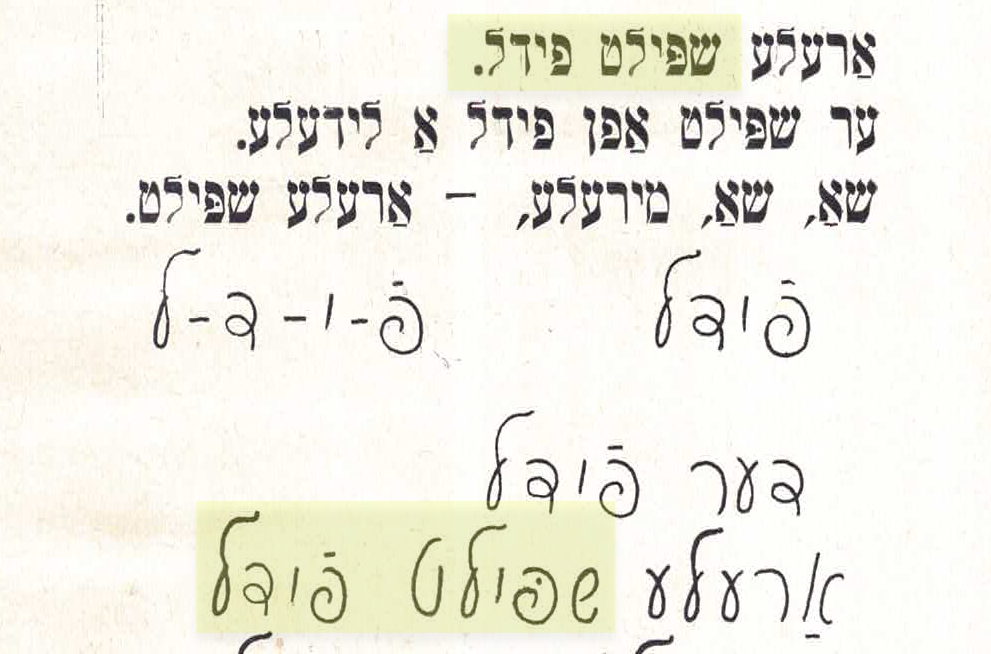
אַ בײַשפּיל פֿונעם פּראָבלעם פֿון ב3) געפֿינען מיר אױפֿן זײַטל 18 פֿון בוך
An example of fey written with a royfe (handwritten) (Mayn Lern-Bukh, p. 18)
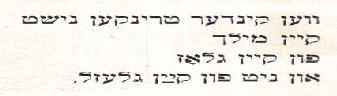
די ניט־אויסגעהאַלטנקייט פֿון ב5) דערשײַנט, למשל, אין אַ גרינג ליד (מײַן לערן־בוך, ז׳ 113):
Uncertainty about keyn/kayn appears in a simple poem (Mayn Lern-Bukh, p. 113):
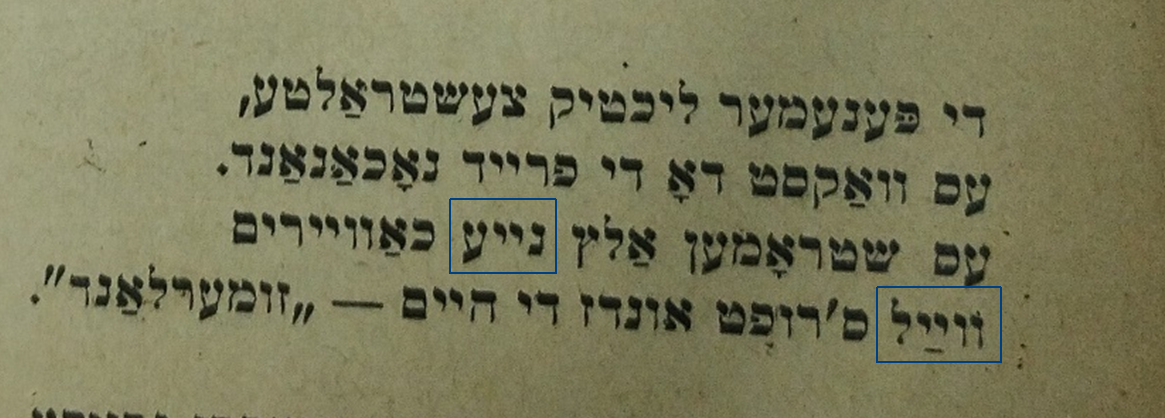
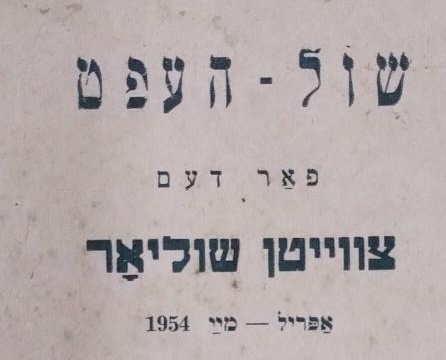
אױך אויף אײן זײַטל פֿון אַ שול־העפֿט (אַפּריל – מײַ 1954) קען מען באַמערקן אַז די שװעריקײטן פֿון ב6) װענדן זיך נישט אין קײן טיפּאָגראַפֿישן דוחק, נאָר מסתּמא אין די ספֿקות פֿון די רעדאַקטאָרן:
On one page of a Shul-heft (April-May 1954) we can see that the difficulty regarding ey/ay is not the result of a typographical deficiency, but probably from editorial uncertainty:
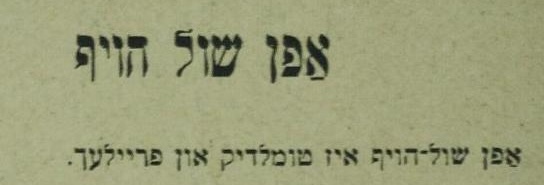
די שװעריקײטן פֿון ב7) קען מען זען בולט אינעם װאָרט שול אין צװײ זײַטלעך פֿון אײן אײנציקער העפֿט
We can see the difficulty with compounds clearly thanks to the word shul on two pages of one issue: Shul-Heft and Afn Shul Hoyf.
דער אויסקלײַב פֿון אַ דיאַלעקט
כאָטש די טעקסטן שפּיגלען אָפּ בדרך־כּלל אַ סטאַנדאַרדיזירטן דיאַלעקט (מיט דער װאָקאַלן־סיסטעם װאָס סײַ ייִװאָ, סײַ דאָס סאָװעטישע ייִדיש האָבן אָנגענומען), זײַנען פֿאַראַן לידער װאָס זײערע גראַמען זײַנען נישט שטענדיק אַזוי קלאָר, צום בײַשפּיל (מײַן לערן־בוך, ז׳ 82):
Selecting a Dialect
Although the texts reflect a generally standardized dialect (with the vowel system adopted by both YIVO and Soviet Yiddish), there are poems in which the rhymes are not always clear, for example (Mayn Lern-Bukh, p. 82):
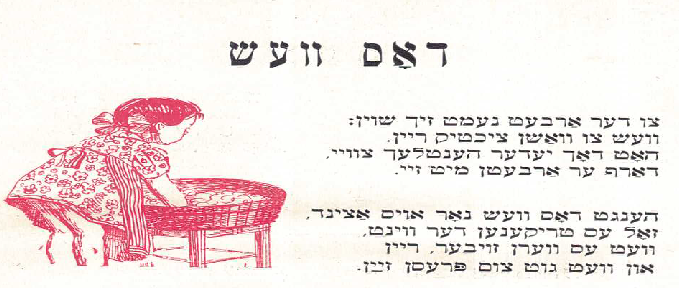
װאָס גראַמט זיך מיט װאָס? די ערשטע סטראָפֿע האָט אַ קלאָרע גראַם־סטרוקטור:
A, B, C, C,
אָבער די צװײטע סטראָפֿע איז ווייניק קלאָר:
A, A, B, B?
„רײן“ גראַמט זיך מסתּמא מיט „זײַן“, װי אין דרומדיקע דיאַלעקטן (צום בײַשפּיל, אין לאָדזשער דיאַלעקט). אָבער אויב אַזוי, וואָלט די ערשטע סטראָפֿע געקענט האָבן אויך אַזאַ סטרוקטור, און אין אַזאַ פֿאַל װאָלט „שוין“ זיך געדאַרפֿט גראַמען מיט „רײן“, װי אין דעם ליטװישן דיאַלעקט (אָבער אין דעם ליטװישן דיאַלעקט אַרבעט נישט דער גראַם „רײן/זײַן“).
בקיצור: „שוין“ און „ריין“ גראַמען זיך לויטן ליווטישן דיאַלעקט, בשעת „ריין“ און „זײַן“ גראַמען זיך לויטן דרומדיקן דיאַלטעקט. דעריבער איז שװער צו טראַכטן װי אַזוי די קינדער האָבן (פֿאָר)געלײענט דאָס ליד.
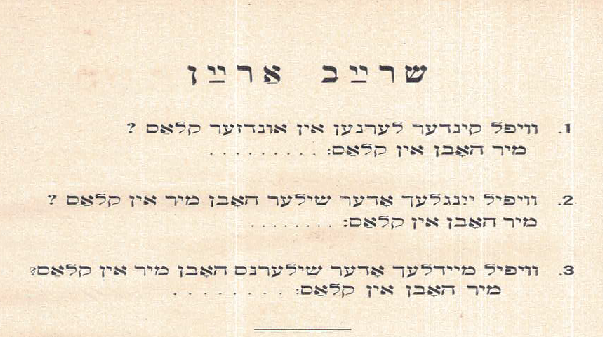
אין אַנדערע ערטער געפֿינען זיך פֿאַרעלטערטע, דײַטשמערישע פֿאָרמעס, װי „װיפֿיל“, אַ מאָל געמישט מיט „װיפֿל“ (מײַן לערן־בוך, ז׳ 112):
What rhymes with what? The first stanza seems to have the rhyme scheme A, B, C, C, but the second stanza is A, A, B, B(?), with reyn likely rhyming with zayn, as in the southern dialects (for example, the Lodzh dialect). But this leads us to consider whether the first stanza might also have this structure, in which case shoyn would rhyme with reyn, as in the Litvish manner (although in the Litvish dialect reyn and zayn do not rhyme).
In short, shoyn and reyn rhyme according to a Litvish dialect, while reyn and zayn rhyme according to the southern dialects. It’s therefore difficult to know, how the children would have read (aloud) this poem.
In other places we find antiquated, Daytshmerish forms, like vifil, sometimes mixed with vifl (Mayn Lern-Bukh, p. 112):
די „באַהאַלטענע“ אותיות
בײַם סוף פֿון בוך שטײט אַ ליד װעגן דעם אַלף־בית, וואָס דערקלערט די נעמען פֿון יעדן אות, און ס׳איז קלאָר אַז מע האַלט (מיט אַ פֿאָנעטישן אויסלייג) די טראַדיציאָנעלע נעמען (אַנדערש װי אין דער סאָװעטישער ייִדישער אָרטאָגראַפֿיע, װוּ די אותיות באַקומען נײַע נעמען לויט דעם אַרויסרעד), אָבער אין דעם ליד דערשײַנען צװײ אותיות (ח און תּ), װאָס װערן נישט דערקלערט פֿריִער אין בוך, װוּ מע לערנט יעדן אות באַזונדערש (מײַן לערן־בוך, ז׳ 120):
The Hidden Letters
At the end of the book is a poem about the Yiddish alphabet, which explains the names of each letter, and it is clear that the traditional names of the letters (albeit spelled phonetically) have been retained, unlike in The Soviet Yiddish Orthography, in which the letters are given new names based on their pronunciation, but in this poem two letters appear (khes and tof) that are not explained in the first part of the book, which teaches each letter in turn (p. 120):
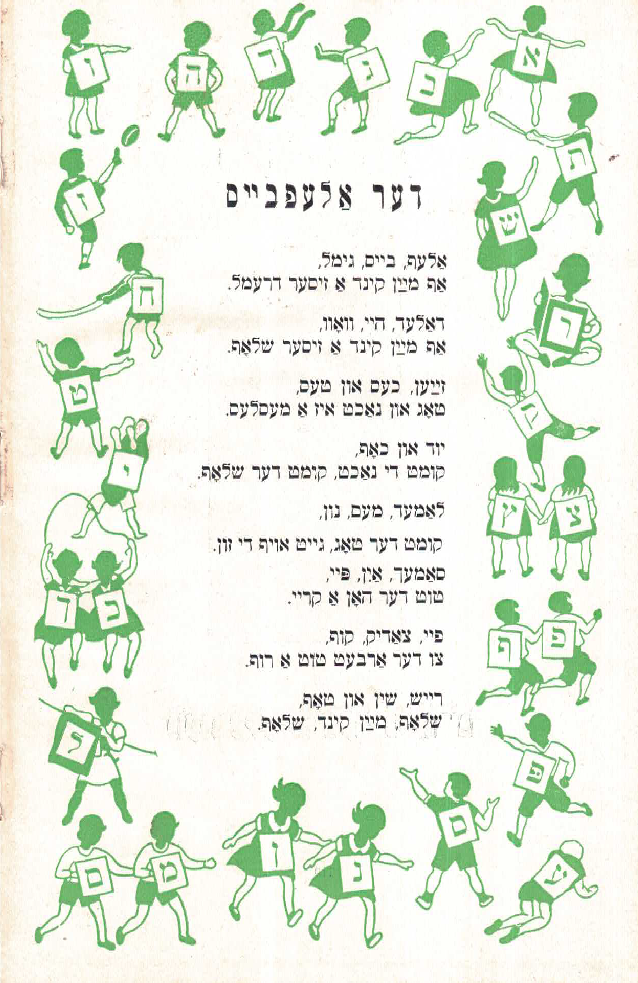
און אין די לעצטע צװײ זײַטלעך שטײט (צוויי מאָל) אַ טאַבעלע מיט אַלע אותיות, אַפֿילו כּ און ת, צוזאַמען מיט דרײַ פֿאָרמעס ש, שׁ און שׂ, אַ קאָנטראַסט בּ / ב װאָס שטימט אַפֿילו נישט מיטן טיטל פֿונעם אײגענעם זײַטל, אַ מאָדנעם דיפֿטאָנג יִיִ, און אַ גרופּע נקודות (צוזאַמען מיט פּתח און קמץ דערשײַנען שװאָ, צירי און קובוץ). אין די טאַבעלעס פֿעלט אַ רפֿה אויפֿן האַנטשריפֿטלעכן פֿ, אַנדערש װי אין די פֿריִערדיקע זײַטלעך.
לעצטע װערטער
אין דעם גיכן, קורצן אַנאַליז קען מען זען אַז נישט געקוקט אויף אידעאָלאָגישע באַציִונגען צוםראַטן־פֿאַרבאַנד, האָבן די לערערס און רעדאַקטאָרן פֿונעם אַרגענטינער איקוף געזוכט אַן אײגענעם נוסח, װאָס זאָל אויך זײַן קלאָרער, עפֿענער, פֿאַר די שילער/ינס (דאָס קען מען אויך באַמערקן אין די טעמעס װאָס זיי האָבן אויסגעקליבן), און גלײַכצײַטיק אַ נוסח װאָס זאָל נישט שטיין אין קאָנטראַסט צו אַנדערע פּובליקאַציעס פֿונעם זעלביקן פֿאַרלאַג: מע מוז געדענקען, אַז אין די זעלביקע יאָרן האָט דער איקוף אַרויסגעגעבן אַלע װערק פֿון שלום־עליכם, (אַרײַננעמענדיק טעקסטן װאָס מע האָט נישט אַרויסגעגעבן אין ראַטן־פֿאַרבאַנד) מיט אַ טראַדיציאָנעלערן אויסלײג (דאָס הײסט, מיטן טראַדיציאָנעלן אויסלײג פֿון לשון־קודש־שטאַמיקע װערטער, אָבער מיט די פּרעפּאָזיציעס באַ און אַף, און מיט צונױפֿגעשטעלטע פּעריפֿראַסטישע אַדװערבן װי צורו, אַלעמאָל, אינאײנעם –און נישט „אינײנעם“).
מען קען מאַכן אַ שנעלן, קורצן אויספֿיר, אַז נישט אַלץ װאָס איז געקומען פֿון „צענטער“ איז געװען אַ דין, און די היגע לערער/ינס האָבן זיך נישט געפֿילט אין קײן „פּעריפֿעריע“, נאָר זײ האָבן געהאַלטן פֿון זײערע קענטענישן און פֿעיִקײטן צו אַנטװיקלען אײגענע מעטאָדעס.
and on the last two pages there is a table (doubled) with all the letters, including kof and sof, together with the three forms of sin and shin with and without a dot, a beys/veys contrast with a dagesh in the beys, which conflicts with the title at the top of that page [in which the beys in alefbeys has no dagesh], the strange diphthong ii, and a group of vowel markers (along with pasekh and komets there is shvo, tseyre, and kubets). Thes table lacks a royfe in the handwritten form of fey, unlike in the preceding pages.
Last Words
In this quick, brief analysis, we see that regardless of ideological ties to the Soviet Union, the writers and editors sought their own style, one that would be clearer and more open to the students (this can also be noted in the topics selected) and simultaneously a style that would not conflict with other publications from the same press: remember that in these years the IKUF published the complete works of Sholem Aleichem, which included texts that were not published in the Soviet Union, with traditional spelling (that is, with the traditional spelling of loshn-koydesh-origin words, but with the prepositions ba and af and with preposition and noun compounds written as one word such as tsuru, alemol, ineynem - the latter written without a final alef).
One can infer that not everything that came from the “center” was law, and the local teachers did not consider themselves to be peripheral but trusted in their own knowledge and ability to develop their own methods.