Jun 21, 2024
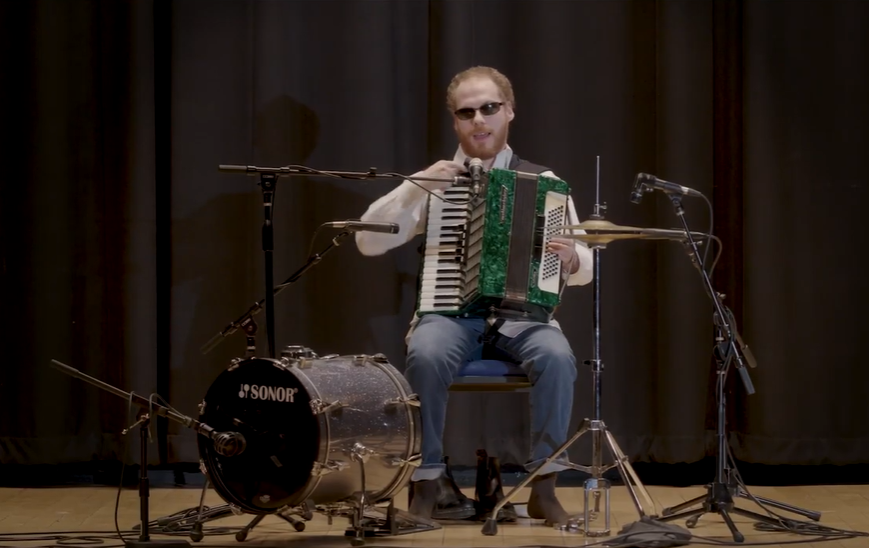
Matthew Shifrin performs “Rhyming Dictionary,” from his one-man musical in English and Yiddish, My Grandma’s Mind Is Like An Ocean, which was awarded Best Musical at the United Solo Theatre Festival on Theatr Row in NYC.
Recently, I applied for a grant from a Jewish arts organization. As I filled out the application I knew one thing: my submission had to be Jewish, very, very, Jewish. A musical! No, that wasn't Jewish enough. It had to be something quintessentially, irresistibly, unabashedly Jewish. And then I had it! Why not try my hand at a bilingual musical in English and Yiddish about my Holocaust-surviving grandma! It couldn't get more Jewish than that!
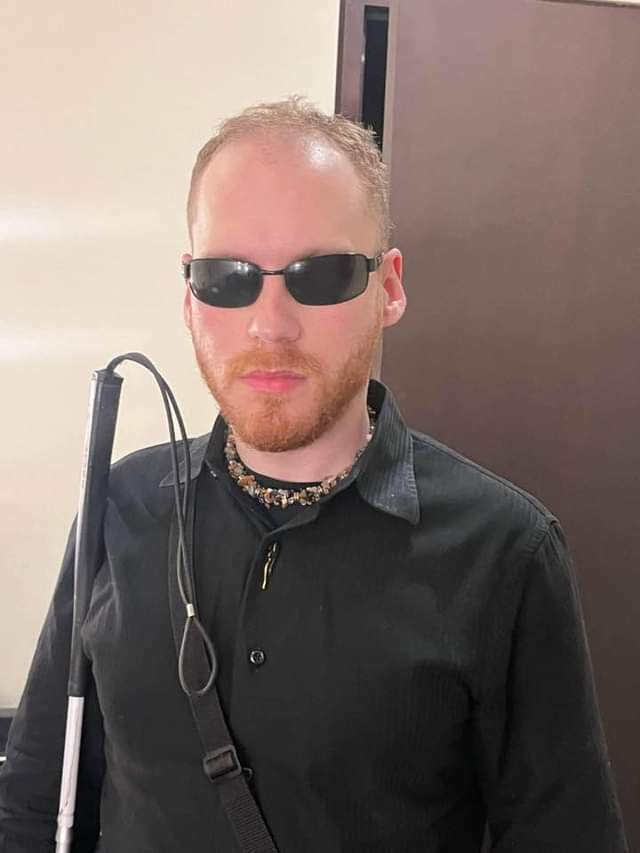
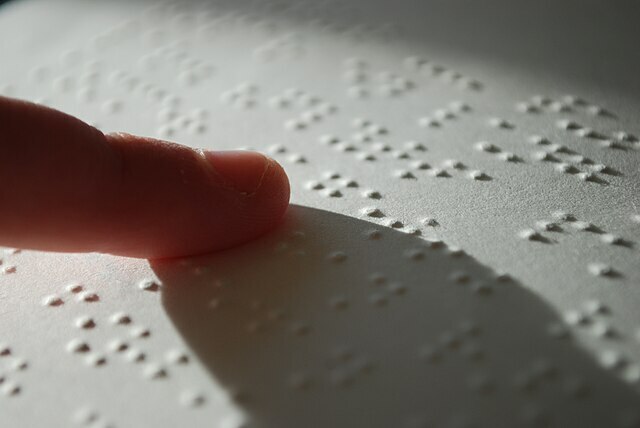
A few months later, I got the grant and realized that there was just one problem. I didn't speak any Yiddish. Sure, I'd sung in it a little, but that wouldn't cut it. I had to learn some. Since I'm blind, I learn languages aurally, or by reading them. The Yiddish audiobooks I found were too advanced for me, so I went to Google, and typed in Yiddish Braille. Hebrew Braille had been used since the mid-twentieth century, so there had to be Braille for Yiddish, right? Bubkes, complete, utter, and absolute bubkes. When Google doesn't tell you anything, you know things are bad, really bad.
That's when the panic set in. I needed a company that could create Yiddish Braille and a teacher, and I needed them now. Duxbury Systems, a company specializing in Braille translation software, creates Braille for languages from Amharic to Zulu. I got in touch with Caryn Navy, their head of languages, who happens to be a Yiddish speaker, and she started working on a possible Braille system, but it was slow going. In the meantime, I still had to actually learn the language.
And that's where Abby Howell, a Yiddish teacher at the Boston Workers Circle, comes in. Abby's been teaching Yiddish for over a decade, and is a masterful computer programmer. She took my ridiculous predicament as a challenge, an exciting puzzle to be solved, and got to work, figuring out how braille for different languages is made. Her Yiddish class was reading Kadya Molodowsky’s Fun Lublin biz New York, an angsty teenager's diary set in 1939, and as I tried to participate I found I was in way over my head because of accessibility issues. But Abby soon figured out how Yiddish braille could work and she built on what Duxbury systems was doing, creating a program to transliterate Yiddish texts using Hebrew Braille characters. Two weeks later, I was stumbling my way through a Lubliner's misadventures in NYC. It was fantastic!
The speed with which Abby created this stopgap measure was astounding. Her transliterator did have its idiosyncracies: there was no differentiation between pasekh and komets aleph, so one had to guess whether words had “ah”s or “oh”s in them, the same with vov vov and tsvey yudn, so you never quite knew if you were aying, eying, or oying, but eventually reading became more intuitive.
While all this was going on, I was hard at work on my musical, featuring accordion, tap-dancing, and lots of Yiddish rhymes. Soon, it was time to send it off to festivals. It won the award for Best Musical at the United Solo Theatre Festival on Theatre Row in NYC!
Once our Yiddish Braille solution gets finalized, we'll be able to convert any Yiddish book into braille — I'm hoping to start an online Yiddish Braille Library For The Blind, so that any blind person can learn Yiddish quickly and easily with the help of Yiddish Braille.