Mar 12, 2026
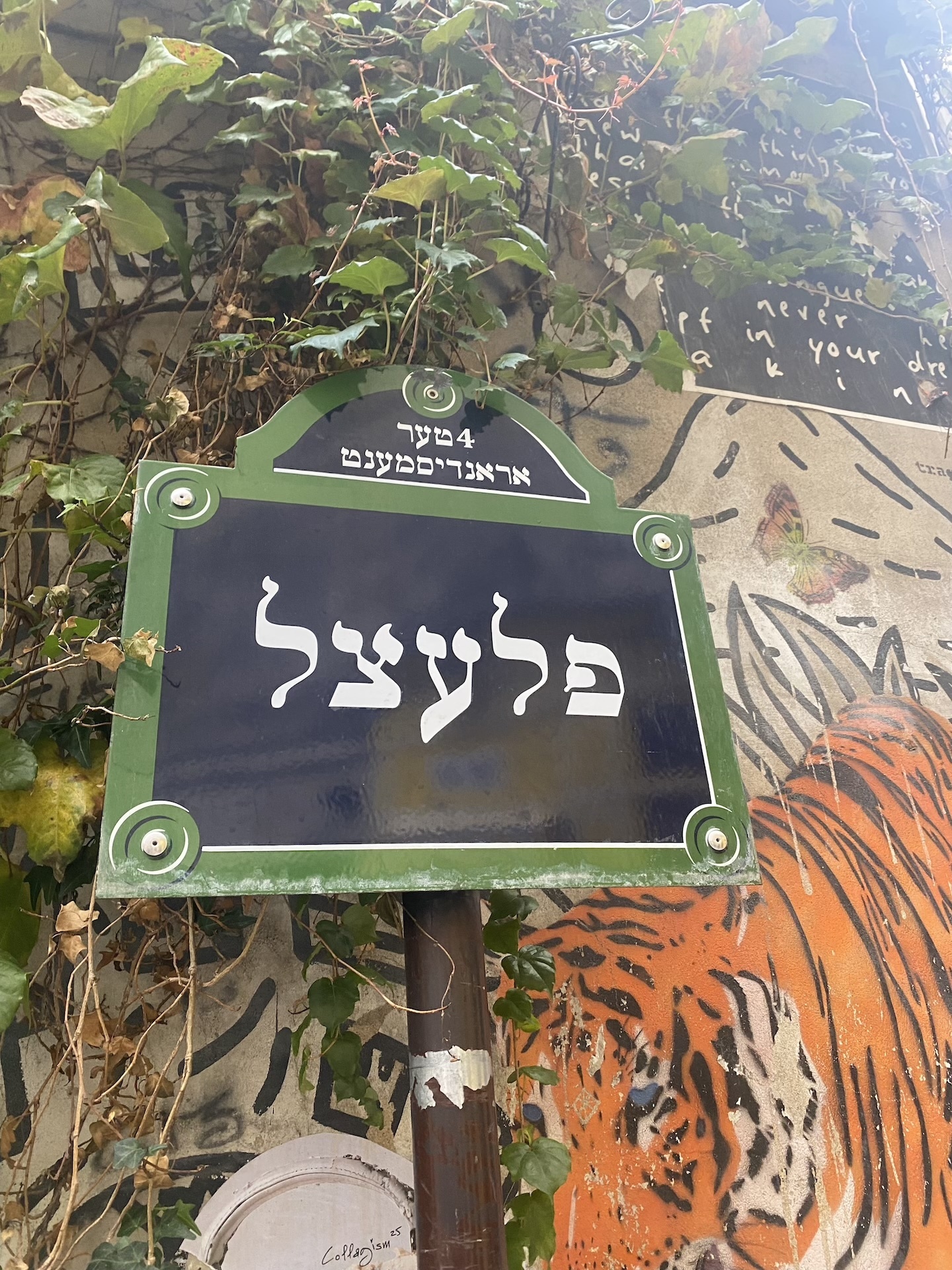
“Pletsl” street sign on Rue des Rosiers in Paris’s historic Jewish Quarter.
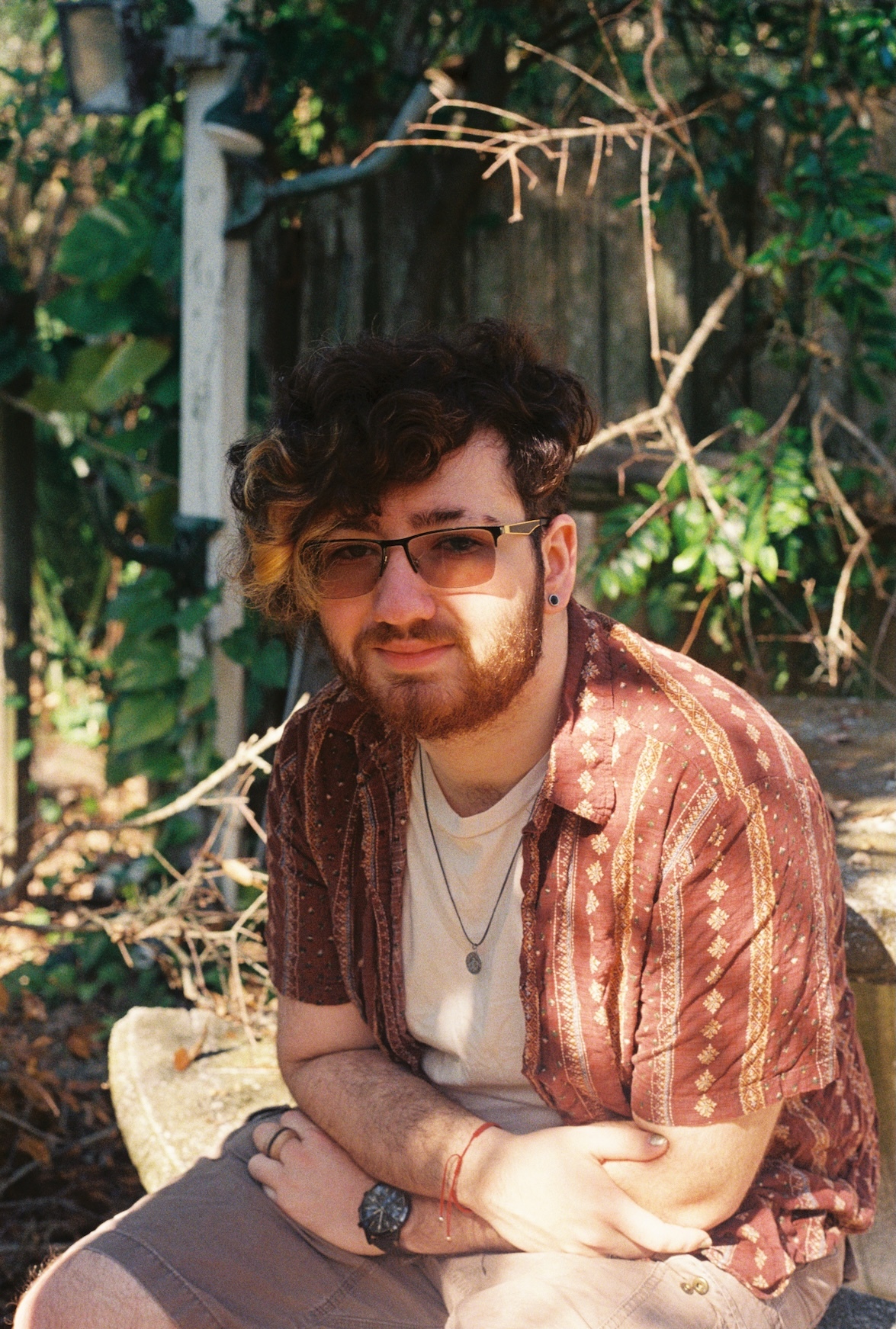
The immersion program at the Paris Yiddish Center-Medem Library in Paris is one of the hardest things I have done in my academic career. Less like a summer intensive and more like a semester at a liberal arts college, the immersion program is intended to be, from my understanding, primarily an avenue to learn af yidish vegn yidish (in Yiddish about Yiddish). It is one of the closest things we have to studying abroad in Yiddishland.
The structure of the course is as follows: Applicants must send an email outlining their experience and interests written in Yiddish. Once accepted, students are expected to select four courses in their level; the program is limited to students with a high intermediate or advanced level of Yiddish. Funding is not provided by the Paris Yiddish Center-Medem Library, but students from non-EU countries might be able to receive funding through universities or grants. Upon completion of the course, students are awarded thirty ECTS credits from the University of Wrocław in Poland, which is roughly fifteen credits in the US system. On top of the four weekly courses, students are paired with a tutor, either to work on a personal research project or for a tutorial in a subject of the student’s choice. Students of the program are also expected to join a daylong seminar which meets on the first Sunday of each month. These seminars often focus on topics related to the exhibitions run by the Paris Yiddish Center-Medem Library, which run for six months and often focus on topics of Yiddish culture and academic research. While I was there, the seminars were on the one hundredth anniversary of YIVO and Yidish Kino.
My four classes were: "Reading Bashevis’s Der shrayber klub," a novel serialized in the Forward, with Arnaud Bikard; “Avrom Reyzen’s World” with Nadia Déhan-Rotschild; “Warsaw, The Bronx, Paris, and Other Cities in Yiddish literature” with Rubye Monet; and “Mishne af yidish” with Ephraim Kahn. I expressed an interest in early twentieth-century New York Yiddish writers and writing in Yiddish, so for my one-on-one tutorials I was paired up first with Natalia Krynicka and, later, Sharon Bar-Kochva for literature; Yitskhok Niborski was my writing tutor.
The majority of classes were held in the evening here in Paris, but taught in a hybrid format to accommodate students across the world. In my classes, texts were often projected on the wall and read aloud by students with support from the professors. Tutorials met once a week throughout the program and were built around the student’s interests but guided by the tutor. While these tutorials were, in many ways, more casual than the classes, the workload was much more rigorous. Each week, Dr. Krynicka or Dr. Bar-Kochva would assign me a text, I would read it at home before our tutorial, and come to class prepared with thoughts. We would read through the text again together to make sure I understood it, and then discuss the images and themes present in the text.
My tutorials with Dr. Krynicka and Dr. Bar-Kochva were often on Saturdays, the same day many activist groups staged protests in Place de la République. Each week my walk from République station to tutorials was set to the protest music of movements from around the world, from Gen Z Madagascans, to Kurdish freedom fighters, to queer European mental health advocates. Upon arriving at my meetings with Dr. Bar-Kochva I was greeted by her dog, Olive. Olive is tiny. According to Dr. Krynicka, she is a כּזית 1 1 A כּזית (kezayes) is a Talmudic unit of food which is roughly the size of an olive. A kezayes is the bare minimum amount of food that counts towards a mitzvah, and Olive is the smallest one can be and still be a dog. of a dog, with long ears and a long feather duster tail. She’s a Phalène, a breed that looks like a Cavalier King Charles that shrank in the wash. Olive is a curious and affectionate dog, but in lectures and tutorials she turns off, curling up in Dr. Bar-Kochva’s lap. She is a constant calming presence.
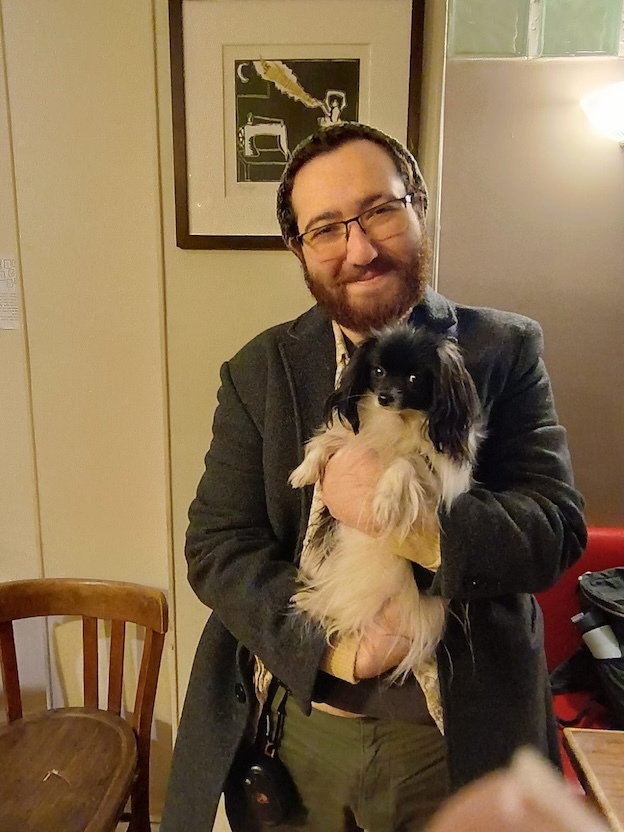
Misha and Olive in the Paris Yiddish Center-Medem Library. Photo credit: Sharon Bar-Kochva
Around halfway through the program, Dr. Bar-Kochva instructed me to read Jacob Glatstein’s poem “1919” at home, aloud, multiple times, as if I were memorizing it for recitation. During class, she had me recite it aloud, as if I were an actor before an audience. The goal was to help me slow down, improve intonation, and to compensate for how much I struggle with reading aloud. I turned to Olive, using her as an audience. Seeing her curled up, almost foxlike, I found it easier to recite the poem to her without feeling the pressure to be correct, which, in the end, helped me read and recite better.
Dr. Niborski is a kind, generous, and intelligent man, whose commentary on my Yiddish writing has been invaluable. I spent the first half of my tutorial with Dr. Niborski working on an essay entitled “Vos iz mayn khoyv tsu durem-mizrekh-yidish?” (What’s My Obligation to Southeastern Yiddish?). I had first written the essay in the couple weeks between the 2025 YIVO summer program (which I attended as a student) and a lecture Dr. Miriam Trinh gave on Chaim Grade's Sons and Daughters at YIVO in New York, a lecture that I assisted with as an intern at the League for Yiddish. My essay was a result of long conversations I’d had with two YIVO classmates, and it explored the question of dialect revival and its place in modern Yiddish education. I had been fighting with this issue for years: If we do not teach and speak these dialects they will die. But speaking like our ancestors would not be “authentic”; it would be an altered version of their dialect. What’s better: a gilgul (reincarnation) or a mes (corpse)? At a kaboles-ponim (reception) the day after the lecture, Dr. Trinh put out feelers for young Yiddishists interested in writing for Afn Shvel, having been tipped off about my interest in writing by my mentor, Dr. Cecile E. Kuznitz. I sent the essay to Dr. Trinh, but didn't hear back from her right away, so decided to bring it to Dr. Niborski as part of my tutorial. Months later, just as I had finished my final round of edits on the essay, Dr. Trinh emailed me asking if I would be interested in having the essay published in the upcoming issue of Afn Shvel. Thanks to my tutorial with Dr. Niborski I was able to give Dr. Trinh a much improved draft which was later published in the 2025 Fall–Winter edition of Afn Shvel about YIVO’s Centennial.
My tutorials with Dr. Niborski were supposed to be one hour each week, but we often got so deep into the text that we worked for about two hours. Each week we would read through the text I had sent him, going line by line, stopping whenever we encountered one of my many errors. Dr. Niborski would give me a lecture “on one foot” about each error, I would write them down in my notebook, and we would continue. Most of my notes from Dr. Niborski were in relation to my tsores (troubles) with der/di/dos/dem, that is to say, my struggles with grammatical gender and case declination. Once prompted, I was often able to correct these issues on my own, upon which I would be met with Dr. Niborski’s raised fist and his command “Oyto-redaktor!” (be your own editor!). If there was any part of the program that could have broken me, it was my weekly meetings with Dr. Niborski and the endless editing. I spent hours in my apartment spinning around sentences, trying to ensure that not a single error would slip through. I wanted to feel proud of what I was giving him to read. Each week, I felt as if I was relearning Yiddish from the basics. Even though it was a hard and often demoralizing kind of work, I wouldn’t trade the meetings, jokes, lessons, and yidishe bildung (Yiddish education) for anything. My tutorials with Niborski were a deeply humbling and educational experience, one I will carry with me though my future career as a Yiddishist.
The Paris Yiddish Center-Medem Library is an invaluable resource for anyone interested in Yiddish, Ashkenazi culture, and the academic tradition that forms the backbone of intergenerational transition. The walls are lined with old Yiddish books, many of which are for sale. In the leyenzal (reading room), students and community members have access to valuable Yiddish linguistic, academic, and cultural resources. Between the books are photos and busts of famous writers, including Peretz Markish, Miriam Ulinover, Sholem Aleichem, and Kadya Molodowsky. In the center of the Paris Yiddish Center-Medem Library is a cafe where you can have conversations with both native Yiddish speakers and fellow students. It is a truly intergenerational space, a third space for Yiddish speakers to gather and naturally strike up conversations together in Yiddish. This provides the many onheybers (beginners) with a brick-and-mortar, organic place to practice and improve their Yiddish, possibly the most vital resource for new speakers and something we lack in the US.
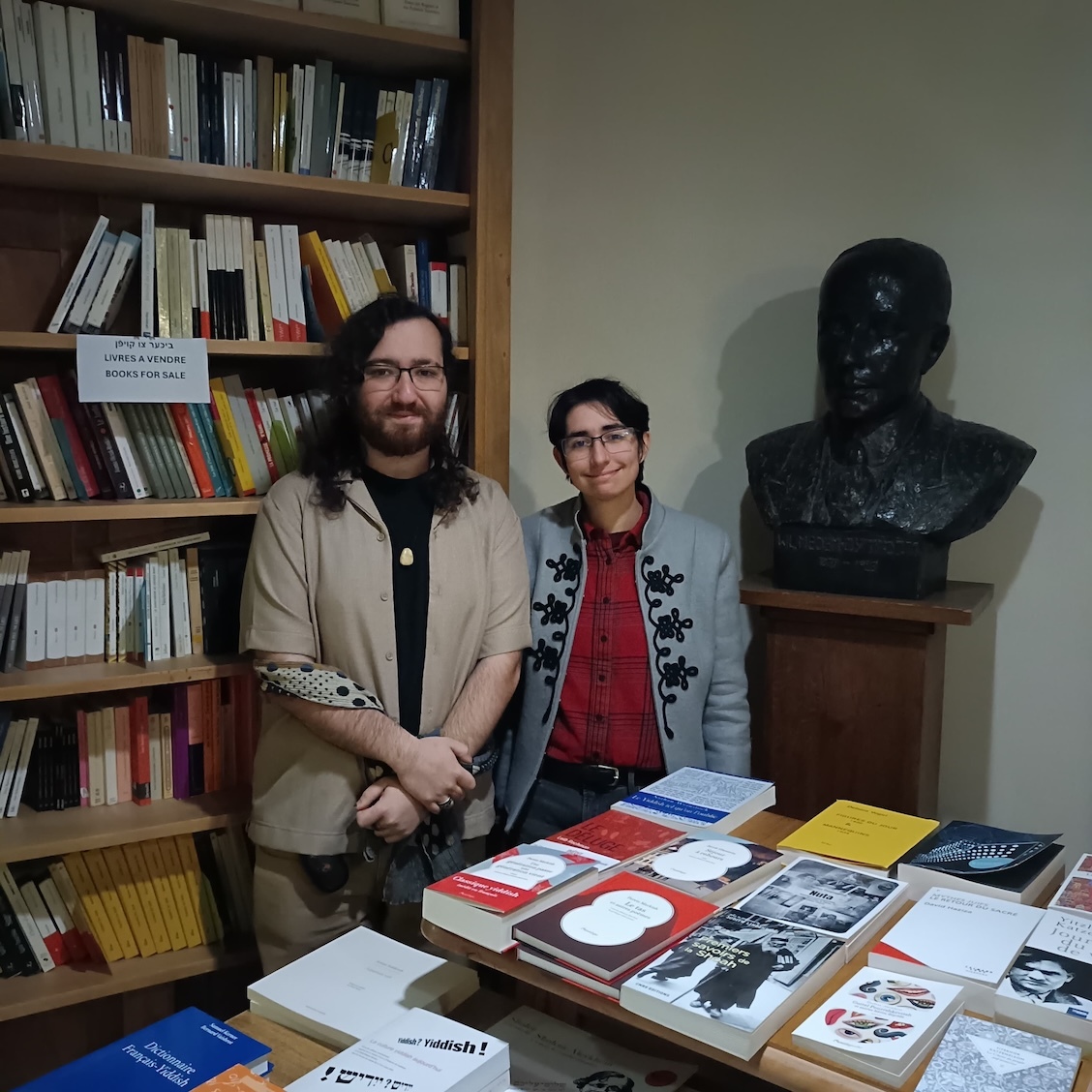
Misha and scholar/writer Sam “זלמן–צפּרה” Hirshberg standing in front of the Paris Yiddish Center-Medem Library’s bust of Vladimir Medem.
There is an active, excited, and intelligent group of young Yiddishists at the Center. In the Yiddish spaces I occupy back home, I am often the youngest, but at the Paris Yiddish Center-Medem Library I felt like I was not alone in my age group. Despite not knowing much, if any, French I never felt left out even if there were conversations around me which I did not understand. The Center attracts a diverse community, with people coming from all over the world. There is a clear connection between those of my grandparents’ generation who remember a childhood in Yiddish, the teachers of my parents’ generation who tirelessly work to connect students to our heritage, and my fellow students who are now taking our place in the golden chain of Yiddish tradition.
On a rainy Monday afternoon one of my classmates, an older man named Velvl, asked me to come along to a gathering of elderly Parisian Jews. He told me, in Yiddish, to “tell them why you speak Yiddish.” I happily agreed and was introduced to the group as “Michel, who only speaks Yiddish and a little English.” All of them had been spoken to in Yiddish as children, but most were instructed by their parents to respond in French, so they spoke a childish Yiddish, the kind I spoke for most of my time as a Yiddish student, which felt comforting to me. Partway through, I realized, as I had realized in my classes at the Center, that almost all of the Jewish elders I know in Paris speak a variant of Central Yiddish, what we colloquially call “Galitsianer” in the U.S. Coming from the US, where most of my teachers and classmates speak a klal (standard) Yiddish informed by our diverse Yiddish dialectical heritages, I was almost taken aback by this widespread use of Central Yiddish.
This realization about dialect hit me at the same moment as another: If everyone here was my grandfather’s age, my grandmother’s age, then most of them survived the Holocaust. As we went around in a circle providing our family history and background, they told me that they were the hidden children, or the few evacuees, or those born in exile in Kazakhstan, or after the war in DP camps. For many, it wasn’t just their parents who survived an unimaginable hell; they too had survived. This was also true of my classmates: Many of their parents had been immigrants before the war, and were either lucky enough to return to France, or had settled in France instead of returning to Poland. There was an immediateness to this experience, to these conversations af yidish, that I had not felt anywhere else. It was both a reminder of the vital threat of antisemitism and a warning against letting it become the sole focus of who we are. They taught me that there is so much more to being Jewish than reacting to antisemitism, because the Yiddish culture of this generation was a positive form of Jewishness defined by being for Yiddish, being for Ashkenazic culture, being for a deeper understanding of ourselves rather than being defined by who we are against. This generation of Yiddish speakers represented a living Yiddish culture that, despite being born and raised in the early days of a post-Holocaust Europe, was not defined by the Holocaust or the fight against antisemitism, and it was stronger for it because it provides young Jews with a path forward.
This is also what I learned at the Paris Yiddish Center-Medem Library’s immersion program: that I needed to root my learning more deeply in the Jewish past and present, instead of remaining stuck in a purely reactive or fearful pose. Those intense feelings and fears around the political situation had driven me and many others in the US toward Yiddish. This semester abroad in Yiddishland gave me a glimpse of what the Yiddish world was like not so long ago, and what it can be in the future. The Paris Yiddish Center-Medem Library captures the feeling of an intensive summer course with its vibrant, erudite, and immersive environment but is unique in the fact that it is a community space, providing Parisian Yiddishists something that we do not have in the US but are desperately in need of: a third space for Yiddish. It is truly the closest we can get to an academic yidishe gas (Jewish street/Jewish quarter). I am extremely grateful to the Paris Yiddish Center-Medem Library for the opportunity to experience that yidishe gas for myself.