Mar 16, 2022
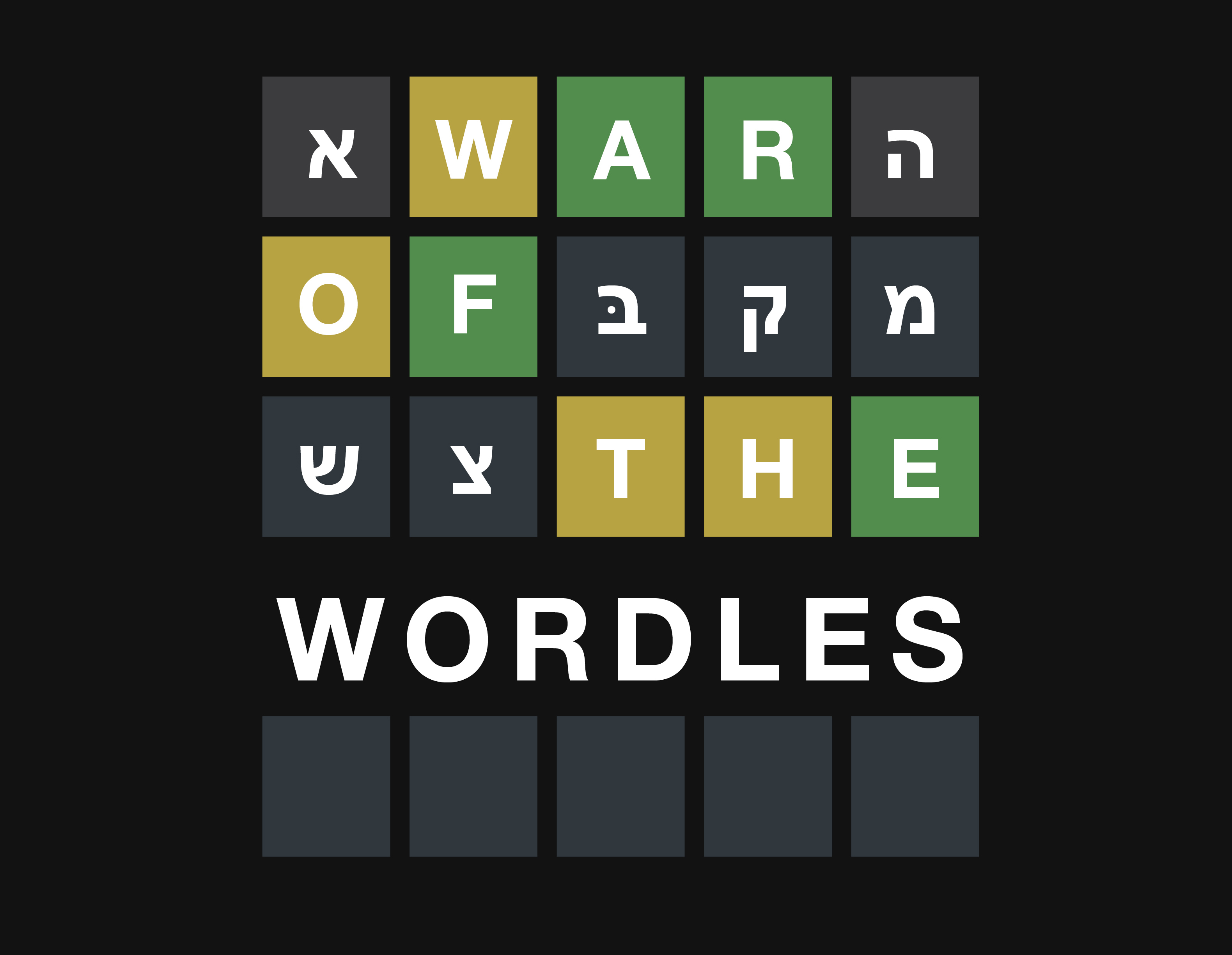
Upon hearing that there are two Yiddish versions of Wordle, many of us are reminded of the old joke about a Jewish Robinson Crusoe building two synagogues on a desert island: there’s the Wordle I play and the one I wouldn’t be seen dead playing. Now there are countless variants of the game offering a daily dose of procrastination in every conceivable language, dialect, jargon, and idiom, from the vernacular to the spectacular and everywhere in between.
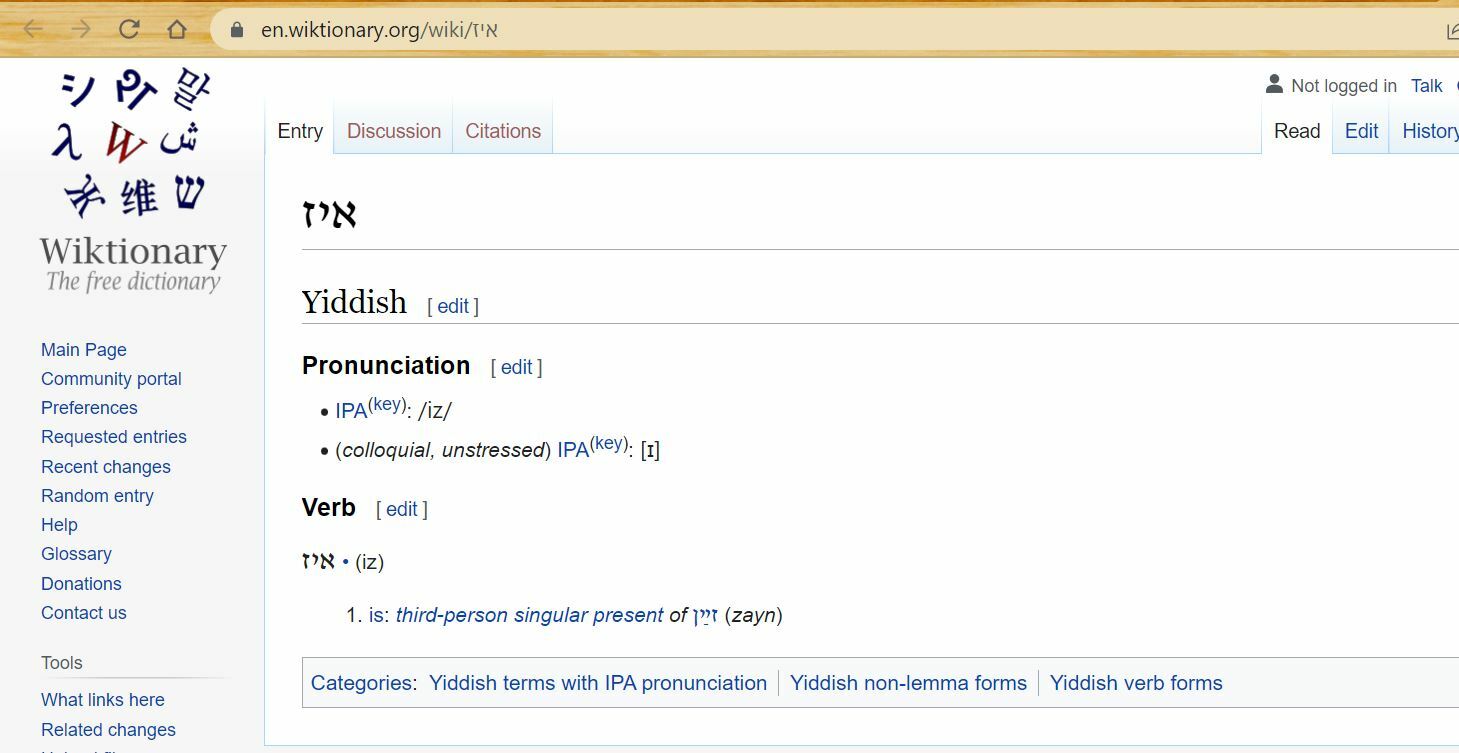
The layperson might well be under the impression that these games appeared in late 2021 before being swallowed up by publishing behemoths [exhibit a] [exhibit b]—a common misconception!
The first Yiddish Wordle was created accidentally in 1862 by Yitskhok Vertlboym, an Odessan baker, when his oven became infested with graphemes. His tile-shaped biscuits, though largely inedible, proved popular with locals eager to distract themselves between outbreaks of cholera. It wasn’t long before Vertlboym was offered a three figure sum by the editors of Kol Mevaser for the rights to distribute his ludic lexical treats in newspaper form.
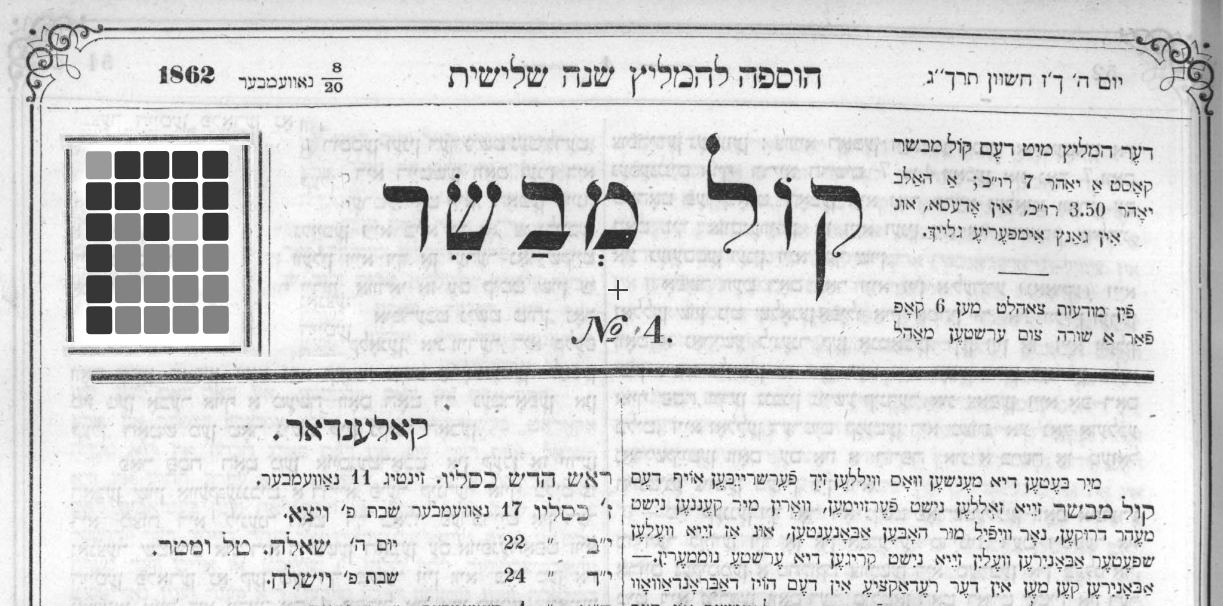
Vertlboym’s groundbreaking contribution to Kol Mevaser.
Yeder vertl hot zikh zayn ertl (every Wordle finds its girdle) as they say, and as the years went on every newspaper, journal, periodical and militant organ in the Yiddish world required its own Wordle. Wordles in Amsterdam and St. Petersburg were soon joined by Varsovian, Viennese, and Vilner vertlekh. There were Zionist Wordles, Bundist Wordles, Folkist Wordles, Anarchist Wordles, Territorialist Wordles, Communist Wordles, and Somnambulist Wordles. The First International Czernowitzer Wordle Conference took place in 1908 in the city of Chernivtsi, Ukraine with delegates and guests coming from the four corners of the world to settle the Wordle Problem. After fierce debate about nikudes, shtumer heys, loyter alefs and the like the delegates came to the amicable compromise accepting the best of all Wordles, so to speak, announcing that: ale vertlekh zenen glaykh.
Naturally the pronouncements of a few dedicated Wordle-ists have largely been ignored in traditional circles where misnagdish Wordles continue to vie with Hasidic Wordles, Gerer Wordles with Skverer Wordles. Orthographic skirmishes—every bit as acrimonious as the Duolingo Wars of 2021—continue to erupt periodically between YIVO Wordles and Heimish Wordles, with pockets of resistance from Daytshmerish Wordles and Soviet Wordles.
The Kabbalists, as usual, had to take things too far: realizing that Wordles could be Gematrified they began using them to inscribe amulets, to breath life into golems and to battle with the Sitra Achra, leaving our world vulnerable to incursions from countless demons, satans, imps, harpies, liliths, hobgoblins, succubi, klipes, draculas, qliphoth, devils, clippers, werewolves, kelipot, dybbuks, calipers, and other undesirable synonyms, resulting in their Wordles being put behind a paywall for everyone’s safety.
In the meantime may the united Wordles of the world remain safe from paywalls and may they continue to distract us from the scarier parts of newspapers for many years to come.
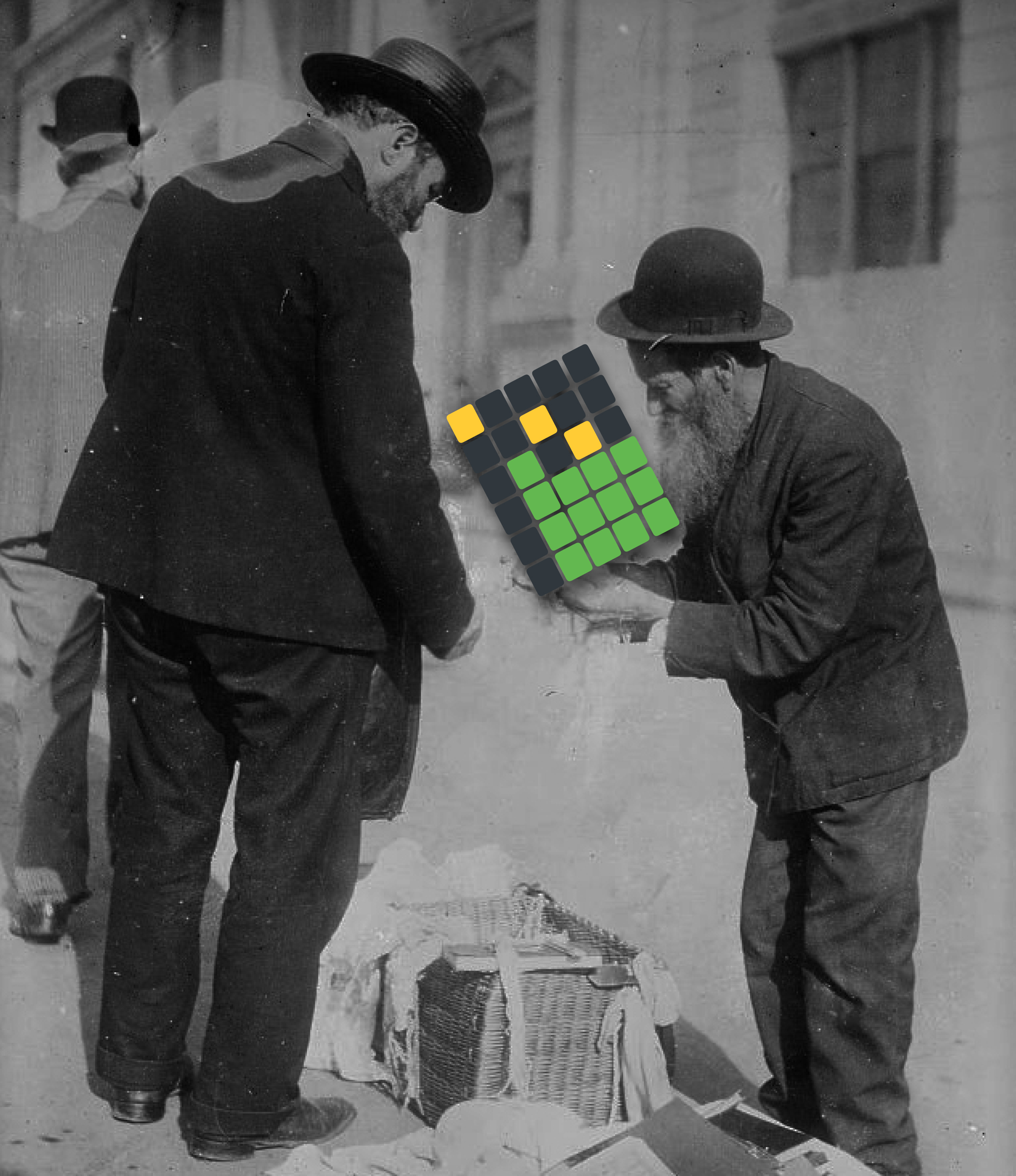
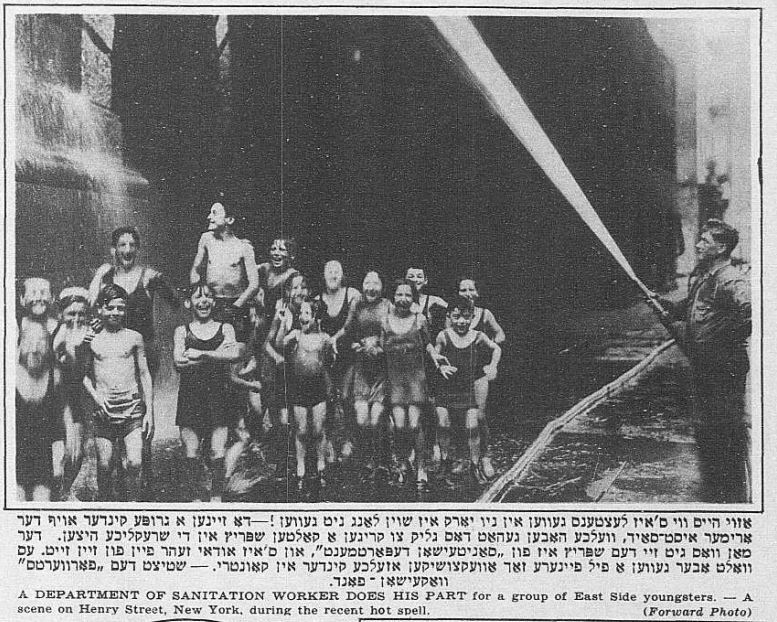
Yiddish readers examine a Wordle, circa 1931.