Dec 10, 2024
INTRODUCTION
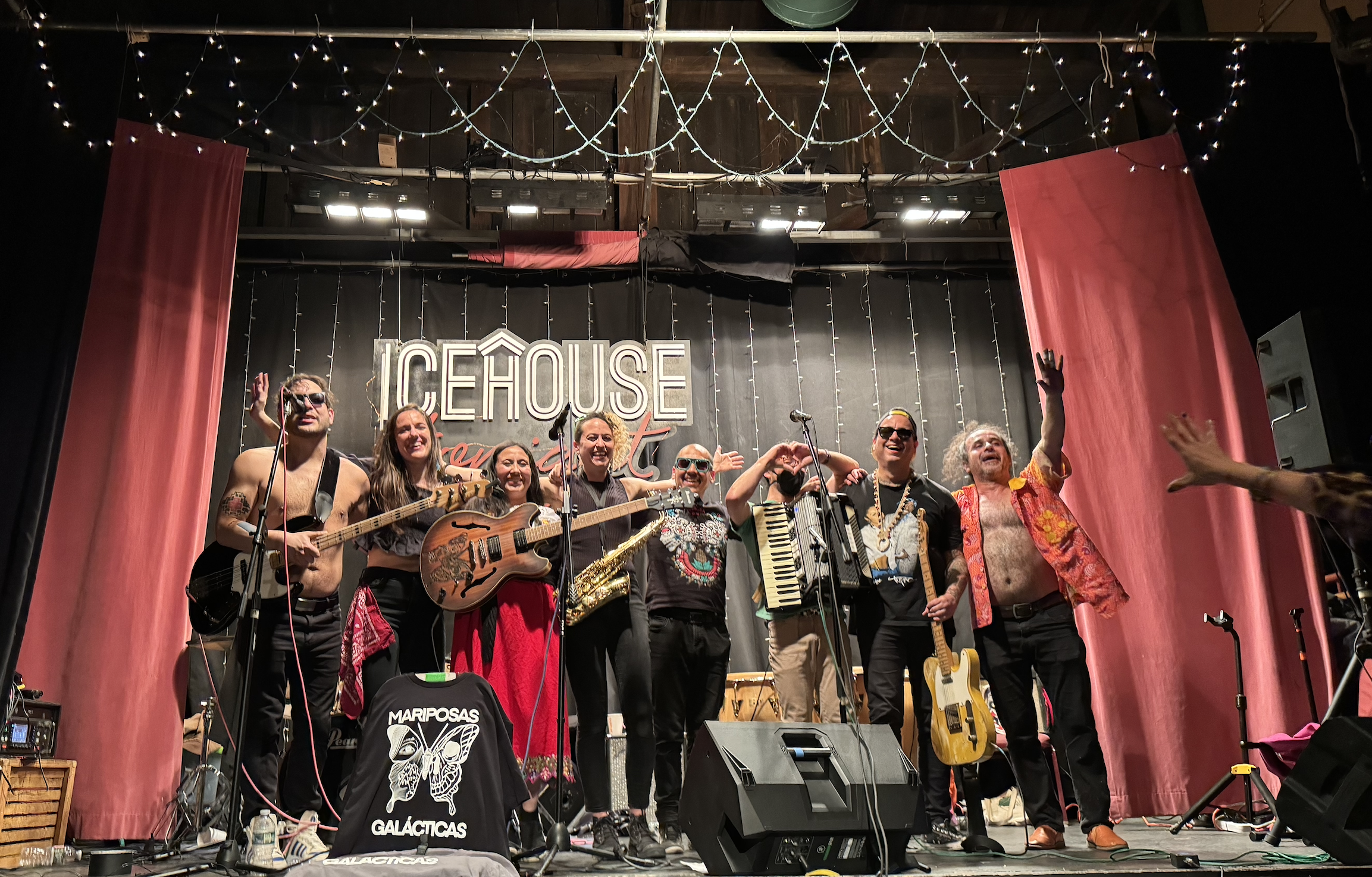
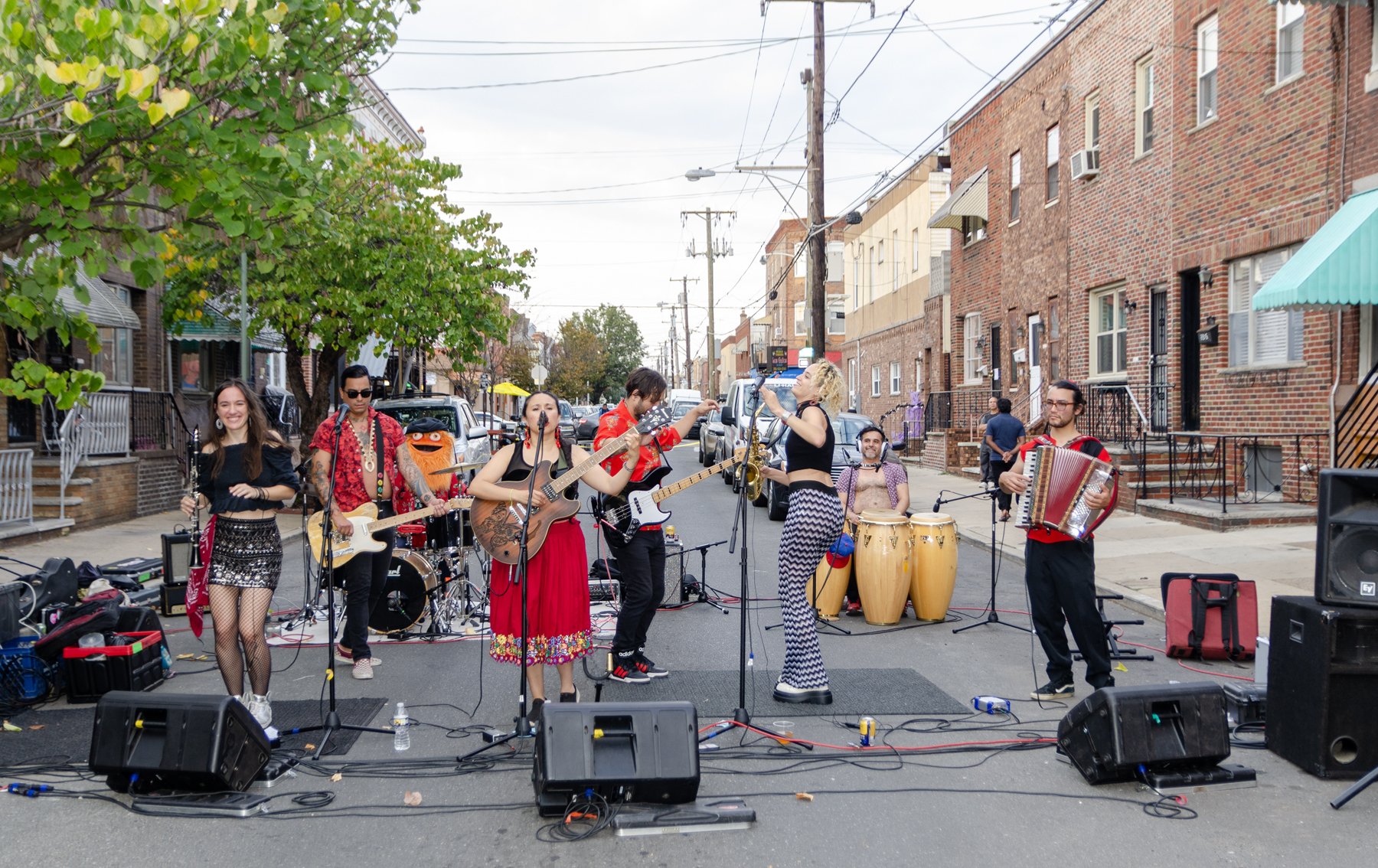
Mariposas Galácticas [Galactic Butterflies] is an eight-piece band from Philadelphia that performs a fusion of kumbia [folk music from Latin America], punk, and klezmer music. When I saw them perform in Somerville, MA, this September, I had never seen this fusion of music, language, and radical political messages before. I spoke about the band over e-mail with the accordionist Jonathan (Joni) Sidharta-Leibovic.
Sarah Biskowitz: How did the band come together?
Jonathan (Joni) Sidharta-Leibovic: Las Mariposas Galácticas came together through old friendships and new relationships that formed through our shared musical journeys and ancestries. Our clarinet player Ariel and lead vocalist and guitarist Maria Paz met in Ecuador, where Maria Paz is from. She taught Ariel about kumbia music [a type of folk music from Latin America], which has been played in her family for generations, and Ariel taught her about klezmer music, which has been played in her family for generations. The two went on to play music together on the 7 train in Queens, but always dreamed of having a band. Two years ago, they decided to throw a house party for their joint birthdays in West Philadelphia, and assembled a group of musicians (half of whom they had never even met before) who have been involved in related musical projects in Philly and NYC to come play for the party. Through what can only be described as divine ancestral intervention, this birthday party led to the creation of the band, which includes an incredible lineup of musicians: Gary Galapagos (lead guitarist), Daniel Acevedo Alfaro (Bass), Pelai (Drums), Simón Martínez Abadía (Congas), Cara Tratner (Vocals + Saxophone), and Jonathan Sidharta-Leibovic (Accordion) [myself] who is primarily responsible for these interview responses!
SB: Why did you decide to fuse kumbia, punk, and klezmer music? Where do you take musical and artistic inspiration from?
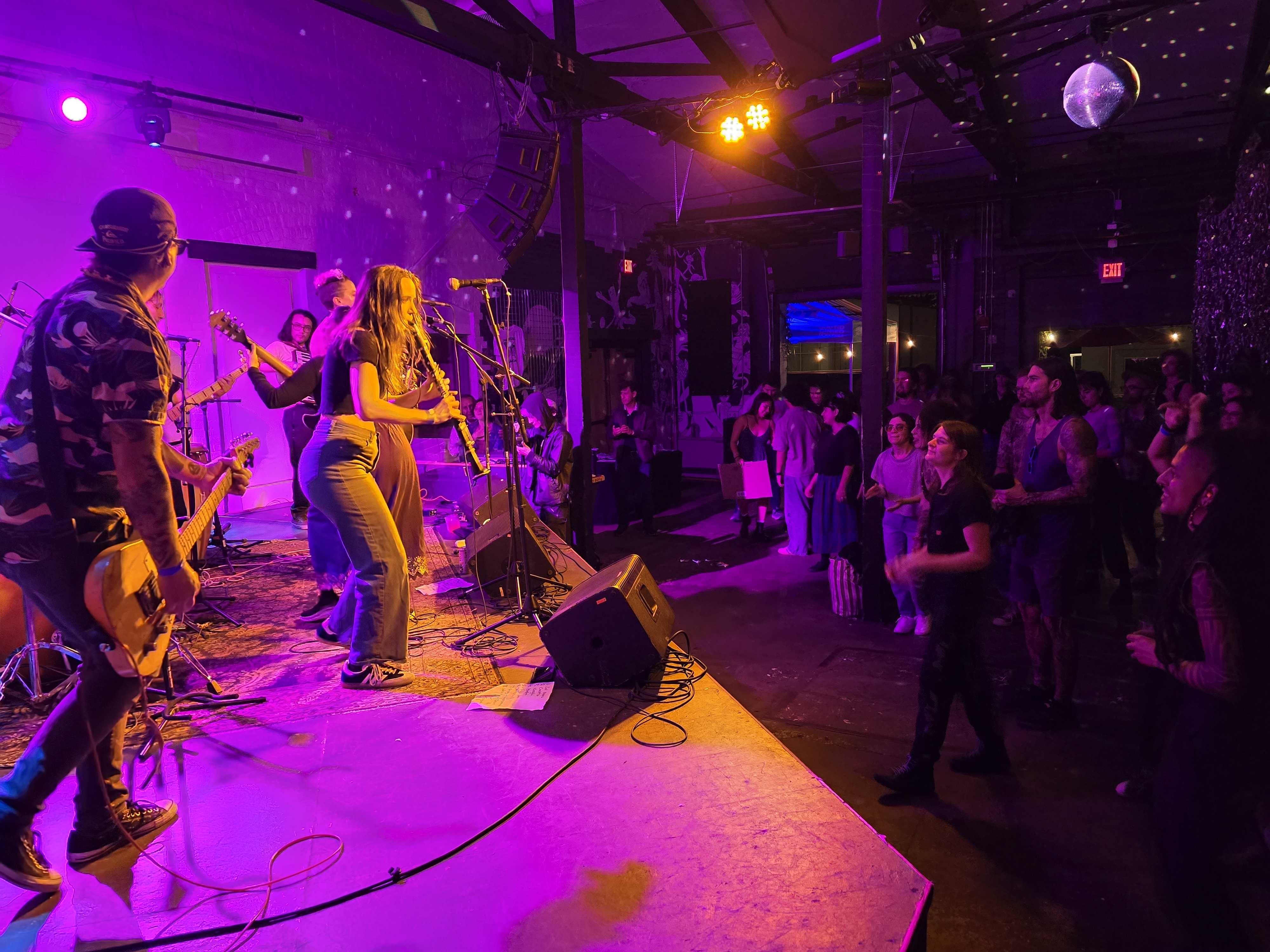
JSL: On one level, we didn’t “decide” to fuse these musics - that’s just what happened when we started playing together! But we found that they meshed well, and sometimes in unexpected ways. Klezmer and kumbia share several elements in common, including certain scales, instrumentation, and of course they’re both forms of dance music, so they have a similar range of tempos. (Our band’s choice to spell “kumbia” with a k, instead of the more commonly used “cumbia”, is an homage to the Kichwa language, which is part of our band’s multicultural ancestry.)
But on another level, the decision to fuse these musical styles made sense on many levels: aesthetically, culturally, politically. All three of these genres have strong traditions of community, celebration, and revolution. And these are the values that we want to exemplify as a band. It sounds cliche, but in times like these, it’s important for us to come together as folks from diverse backgrounds to hold space together, to sing and dance and scream and create together.
As far as inspiration, you could ask the eight members of the band and get eight different answers. Speaking for myself as the accordionist, here’s what I’ve been listening to lately: Dhafer Youssef, a Tunisian oud player whose 9-minute jazz odyssey “Les ondes orientales” I first heard on a Jewish Voice for Peace playlist; Chopin’s Waltz in C# minor (Op. 64 No. 2) which I’m re-learning on piano; and everything by Eight Foot Manchild, a 5-piece doom-brass band who we had the privilege of playing with on our New England tour this fall. For klezmer and klezmer-fusion albums, I love Golem’s Fresh Off Boat, Hasidic New Wave’s Kabalogy, Klezperanto’s self-titled, and of course, Klezmer Nutcracker. Our bassist Dani introduced me to Astor Piazzolla, an incredible tango composer and bandoneon player (bandoneon is a relative of the accordion) who I’m listening to right now.
SB: How do the band members’ different cultural backgrounds influence your sound?
JSL: In so many ways! In fact, if you go to a Mariposas Galácticas show, most of the songs you will hear us play are based on traditional tunes, whether they are arrangements, remixes, mash-ups, or even straight-up covers. Simón, our conga player, studied percussion in Cuba for many years, and has an encyclopedic knowledge of different Afro-Caribbean grooves. Dani, our bassist, dances between genres from surf rock to salsa to swing, often over the course of a single song. One of my favorite parts of being in this band is when we get to learn more deeply about each other’s musical heritage, like when we taught the rest of our band how to play an introductory doina (instrumental solo section without a pulse or beat) to some of the Jewish tunes; or when half the band spontaneously erupts in a Spanish meme song that I’ve never heard, and then we get to learn its history. “Cultural background” is so much more than just klezmer or kumbia, though. We reference PBS theme songs, Nintendo soundtracks, and Rocky as well — these are part of our shared culture, too!
SB: Can you talk about how you express your pro-diaspora, anti-fascist, and anti-colonial politics in your music?
JSL: It’s in everything we do: the choice of songs, including the lyrical modifications we make to the original texts; the intercultural nature of our band and our audiences; the sense of unbridled joy and chaos and pure energy that we co-create with the audience. We’re proudly immigrants, proudly Jewish, proudly queer, proudly anti-Zionist. And we throw a hell of a party and we’d love for you to join us. The author Toni Cade Bambara said “The job of the artist is to make the revolution irresistible,” and I’d like to think that on a good night, that’s what we do.
SB: You honor your Philadelphia roots by including the Rocky theme song and the Philadelphia NHL Flyers’ mascot Gritty. What can you tell us about the music scene in the band’s home city and how you fit in it?
JSL: We love the Philly music scene! It’s so vibrant, and because we play a fusion of different styles, we have the privilege of playing with all different kinds of artists, from Balkan brass bands to kumbia DJs. We’ve also been blessed to be able to play with international acts that we love and respect, including Kumbia Queers and Son Rompe Pera. There’s actually a long and rich history of klezmer music in Philadelphia specifically - Hankus Netsky wrote a book all about it.
SB: The band speaks and sings in Spanish and Yiddish. Why is it important to perform in these languages and not just in English? How does the band engage with these languages? Is Spanish a mother tongue? Yiddish a second language?
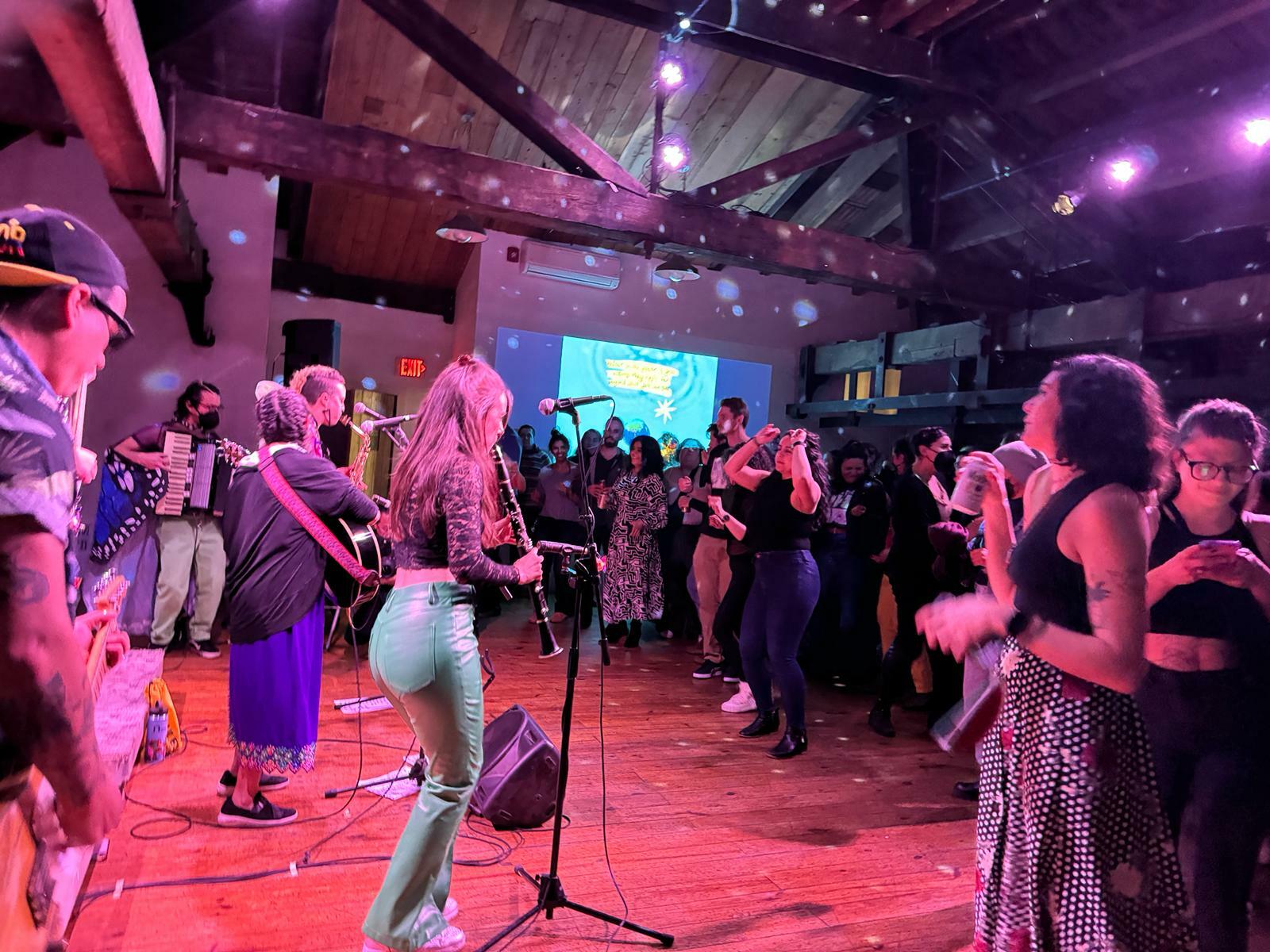
The lingua franca of the band is definitely Spanglish (o quizás mejor, engspañol). None of us grew up speaking Yiddish, but at various points we all fell in love with klezmer music and Yiddish song, so it was only natural that we would learn to sing in Yiddish as well. We aren’t conducting band meetings or texting in the group chat in Yiddish, though. At any given show, there will probably be some native Spanish and some native English speakers. I don’t think we have too many native Yiddish speakers in the audience, but I would love to be wrong about that.
It’s important for us to sing in these languages for several reasons: aesthetically, culturally, and politically. Aesthetically, because these are songs we love, and singing these melodies and these words in their original language carries a power that is deeper than the literal translations could ever be. Culturally, these songs connect us with others across space and time; singing traditional songs in traditional languages reminds us that our ancestors (literal and spiritual) have always survived through struggles not so different from what we’re facing today, and have always found ways of resisting, large and small. And politically, it’s important to sing in these languages because non-dominant languages challenge the very idea of hegemony. As my Chinese-Indonesian grandmother (who speaks six languages) likes to say, every language you speak is a new way of seeing the world. Singing in diverse languages reminds us that the world is diverse and full of possibilities, and that there’s never only one way of looking at the world — and yet also that no matter what language you speak, you can still understand these basic universals of human experience in any language, through the universal language of music: the joy, the anger, the grief, the hope; the hips, the hands, the mosh pit; the melody, the harmony, the beat.
SB: What Yiddish songs have resonated in particular with your band and your audience?
JSL: Our audiences are mixed, so it’s a very interesting experience to play Yiddish and Jewish music for crowds with varying degrees of familiarity. In places with a strong Jewish community and/or Yiddish cultural scene, folks are always very ready to dance and sing along. For other crowds, sometimes Ariel [Goodman, clarinet player/singer/ Spanish-English translator/tour manager/schmoozer extraordinaire] has to jump-start the dancing, but once they get the hang of it, you can’t stop them.
It’s the world’s worst cliche, and the lyrics are not in Yiddish, but we always play Hava Nagila to warm up the crowd because it’s a Jewish dance tune that everyone recognizes. And of course, our version comes with a special kumbia twist. We also play an epic 8-minute version of S’iz Nito Keyn Nekhtn, an old Yiddish drinking song about living in the present moment, with a melody that will stay in your head for weeks.
SB: What is next for Mariposas Galácticas?
JSL: This winter we are working on our first-ever studio recordings and maybe even a music video. In the longer term future we would love to do a tour in South America where many of our members have roots! For our upcoming shows, you can always follow us on instagram @MariposasGalacticas.