Apr 15, 2026

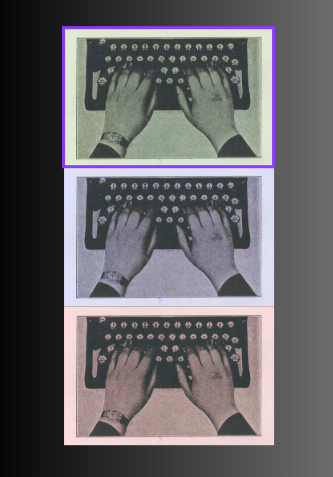
(image from S. Morshok, Nekhtn un haynt, illustrated by M. Akselrod. Moscow: Shul un Bukh, 1927).
INTRODUCTION
This piece is part of a series of reflections celebrating the 10th anniversary of In geveb’s publication. Biz hundert un tsvantsik, In geveb!
During my time editing In geveb’s peer review section, I often found myself plagued by the problem of the detail. In the first years of In geveb, as we fretted over establishing the journal’s reputation while celebrating our youth and inexperience, I consoled myself by looking for stray commas and erroneous transliterations, broken html and renegade citations. Like many scholars, I fantasized that if we got the details absolutely right then the academic world wouldn’t dismiss us out of hand. This sometimes meant that it was hard to return to the larger arc of an article’s argument, to find my way back to the question that still animates the journal: what does this article have to say about Yiddish studies and its adjacent fields?
And then sometimes it happens that even when you’re lost in the details, you come across a pair of sentences that shock you into immediate recognition, with reverberations that seem to extend beyond what you imagined possible. You remain immersed in the details and yet it’s clear that something has shifted in the surrounding structures of knowledge:
It may well be that Israeli literature—in tandem with the society it writes about—is conspicuously non-dialogical. There is abundant speech but little true conversation.
These words appear in Alan Mintz’s “Viva Voce: Vicissitudes of the Spoken Word in Hebrew Literature,” written in 2016 and published in 2020 as part of In geveb’s Festschrift in honor of David Roskies, There’s a Jewish Way of Saying Things. Alan Mintz, z”l, was a scholar of Hebrew literature, a pillar of that field and of Jewish studies more broadly. He was also a member of my dissertation committee, a beloved mentor, and a longtime family friend. His sudden passing in 2017 was an immense loss. As I edited “Viva Voce” for publication three years later, I could only focus on the details, ever cognizant that I could not ask Mintz to expand on the stunning questions he embedded in the essay. The essay explores the problem of speech for Yiddish and Hebrew literatures, taking up the charge of his friend and colleague, Roskies, and his long study of “Jewspeak” with graceful and critical acumen. He begins by discussing the challenge nineteenth- and early twentieth-century writers faced in inventing Hebrew speech, focusing on S.Y. Abramovitsh (Mendele Moykher-Sforim) and Y. H. Brenner, before turning to the contemporary to make the daring and startling critique of Israeli culture I’ve just quoted.
The details of these sentences are important to me. First, there is the initial hesitation: “It may well be.” Mintz was aware that this was an essay meant for a Festschrift, where the standards of peer review and the burdens of citation are somewhat lax. During the 2010s, Mintz had embarked on writing several essays like this—memoiristic but still critically engaged, offering personal reflections on his life with Hebrew while still coming to each piece with the full weight of his scholarly career. This “it may well be” is an essayistic admission that fully proving this claim would require an entire scholarly and rhetorical apparatus inappropriate to a piece of “occasional” writing.
I do think, though, that there is another side to this equivocation. One could also view this “it may well be” as an attempt at disavowing, or at least softening, the consequences of the argument he is about to present. The phrase functions as a warning that the sentences to come are dangerous, that they strike at the foundation of an entire field of study, an entire cultural project. It is surprising, then, how rapidly Mintz zooms out from this careful phrase of warning. Within a few words, not only has Mintz moved from Hebrew literature of the early twentieth century to contemporary Israeli literature, he has also put the entirety of Israeli culture on the line.
Brevity like this is dangerous. I am hesitant even now to overinterpret the rest of the passage. If these sentences weren’t explosive in 2016, then they certainly are today. I must emphasize that Mintz remained a committed Hebraist and Zionist, placing the Hebrew language at the very foundation of nothing less than “Jewish civilization.” I do not mean to question or undo those lifelong commitments and passions. But in a post-Oslo world, following the seeming exhaustion of “dialogue,” and the repeated failures of communication within the asymmetrical binary of “Israel-Palestine,” making the claim that modern Hebrew is not equipped for true conversation is shocking, if not also prescient. To explain the insularity and defensiveness of Israeli society, the wayward and seemingly blind confidence of Hebrew speakers, Mintz does not use terms like “civility” or “incivility” so popular nowadays, nor does he turn to current handwringing around truth, fake news, or the ideological bubbles of contemporary technology. No, he argues that it may well be that the Hebrew language itself tends to close in on itself, to feast on its own mythologies and linguistic storehouses; Hebrew facilitates a monologic mode of thinking, a stream of babble, even prophetic babble, that never becomes a language of empathy and interpersonal intimacy. In reading these sentences it is hard not to think of a recent image that captures the ultimate posture of hasbara and symbol of Israeli isolation: Bibi Netanyahu giving a strident monologue to a nearly empty room at the United Nations. “Conspicuously non-dialogical.”
Mintz is not alone in this critique of modern Hebrew. One could say that he joins a long tradition of discomfort with Hebrew’s “rebirth,” a tradition populated by figures who remained, despite their profound reservations, deeply invested in the language’s past, present, and future. Mintz’s argument mirrors the famed pronouncements of Gershom Scholem made in a letter to Franz Rosenzweig in 1926, a text also meant to be included in a Festschrift for the ailing philosopher:
The moment the power stored at the bottom of the language deploys itself, the moment the “said,” the content of the language, assumes its form anew, then the sacred tradition will again confront our people as a decisive sign of the only available choice: to submit or go under. In a language where he is invoked back a thousandfold into our life, God will not stay silent. But this inescapable revolution of the language, in which the voice will be heard again, is the sole object of which nothing is said in this country. Those who called the Hebrew language back to life did not believe in the judgment that was thus conjured upon us. 1 1 Gershom Scholem, “Confession on the Subject of Our Language,” trans. Gil Anidjar in Jacques Derrida, Acts of Religion (Routledge, 2002), 226.
What happens when the monologic, the voice of a sacred and violent tradition, is made to serve devastating genocidal ends? What becomes of a society that claims to speak in the name of—and in the language of—an angry and vengeful god? Who and what must perish with the celebration of the Hebrew monologic?
These are not Mintz’s questions, at least they weren’t yet. He likely held out hope for conversation, a conversation that he was more than willing to initiate himself. The essay’s final sentences make a call for further exploration and scholarly collaboration around the question of speech in Hebrew literature. His stance is firmly and proudly dialogic: he presents his English-language critique of Hebrew as a tribute to a friend and colleague in a journal of Yiddish studies.
It may very well be that the opportunity for dialogic speech has passed, for Hebrew as for many other languages, Yiddish included. Tsu shpet, as the poet Anna Margolin puts it. The world becomes more and more monological, with recent calls for civil debate often serving to silence critique, reaffirm entrenched hierarchies, and normalize (if not celebrate) the rhetorical brutality of white supremacy, misogyny, and transphobia, obscuring the continued suffering of Palestinians, women, queer folk, and so many others. Mintz’s Bakhtinian esteem for dialogue feels in this moment nearly utopian. Indeed, as I write these lines, I find myself drawn back to details, for distraction and comfort—to plunge headfirst into deep waters and only emerge later, gasping for air and calling out to anyone who might respond, in whatever language comes to the tongue.