Feb 15, 2026
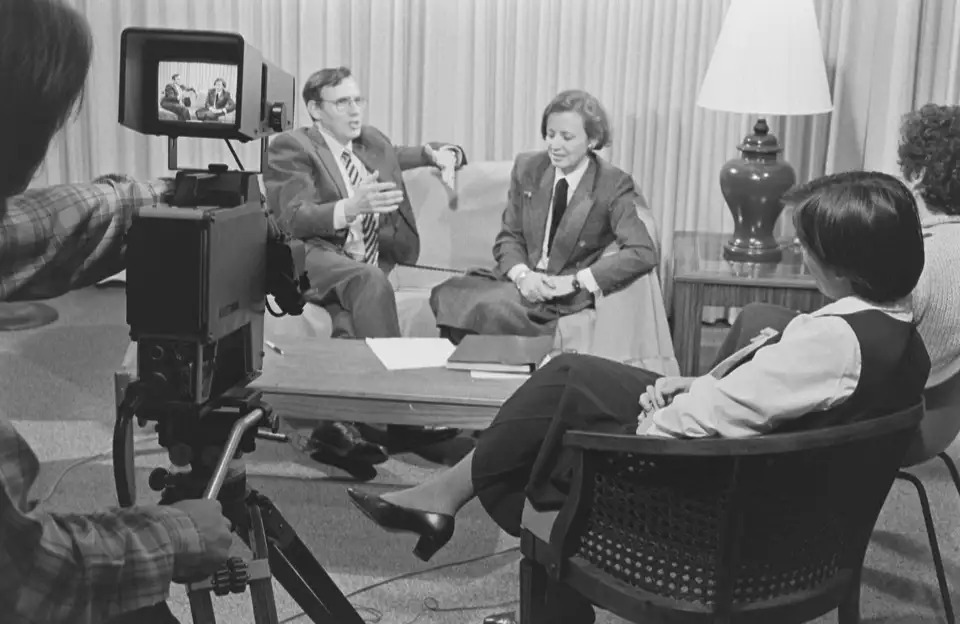
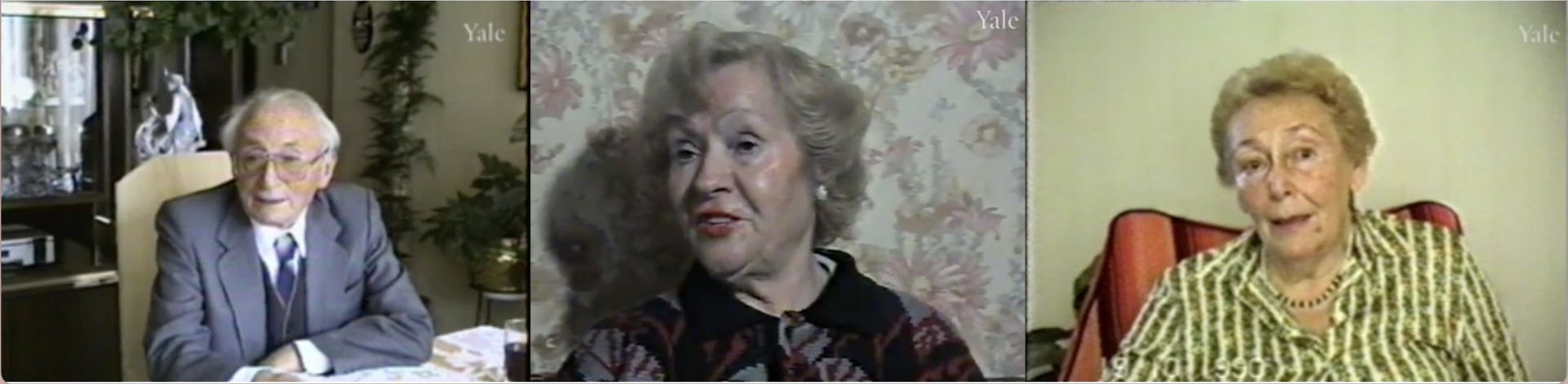
An early taping during establishment of Yale’s Fortunoff Video Archive for Holocaust Testimonies.
INTRODUCTION
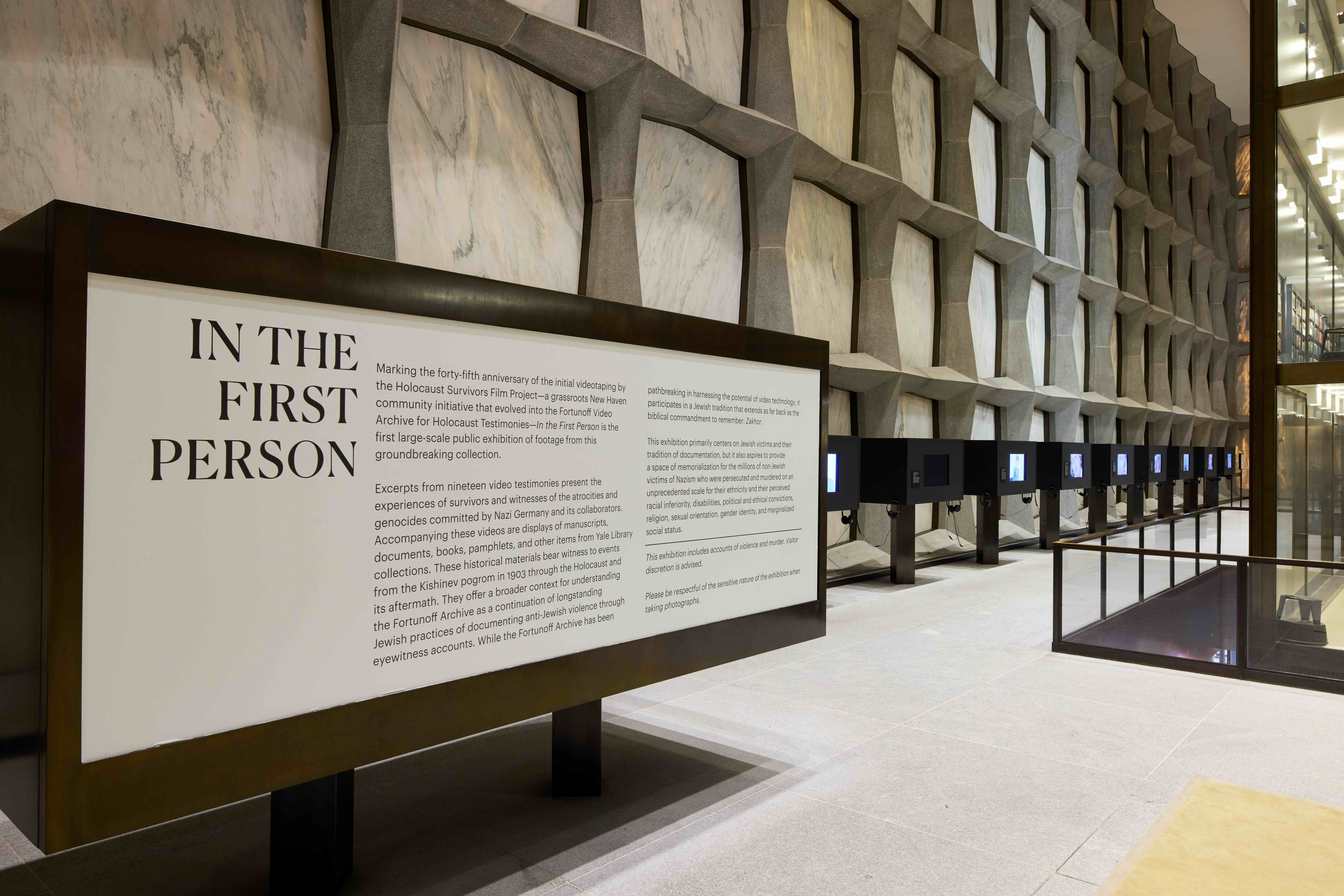
Last spring, In geveb was very proud to present the projects that emerged from our partnership with the Fortunoff Video Archive for Holocaust Testimonies at Yale University. You can read about them here.
In geveb and the Fortunoff Archive established this fellowship with the goal of unlocking and activating the Yiddish-language materials in the archive’s nearly 12,000 hours of audiovisual survivor testimony. Our goal is to fund meaningful scholarship and creative productions based on these unique Yiddish oral histories.
We are pleased to announce that we have chosen three finalists from a pool of excellent responses to our second call. You can read about them below.
Congratulations to our 2026 In geveb/Fortunoff Fellows! We look forward to learning from the work they will produce.
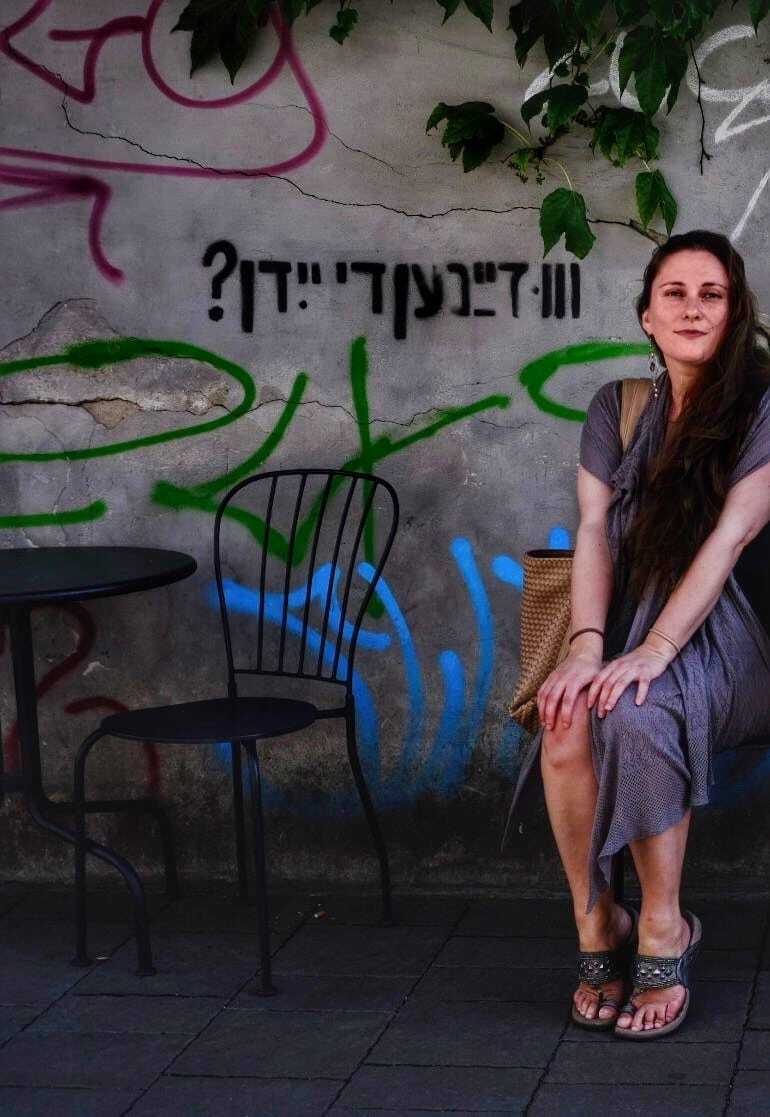
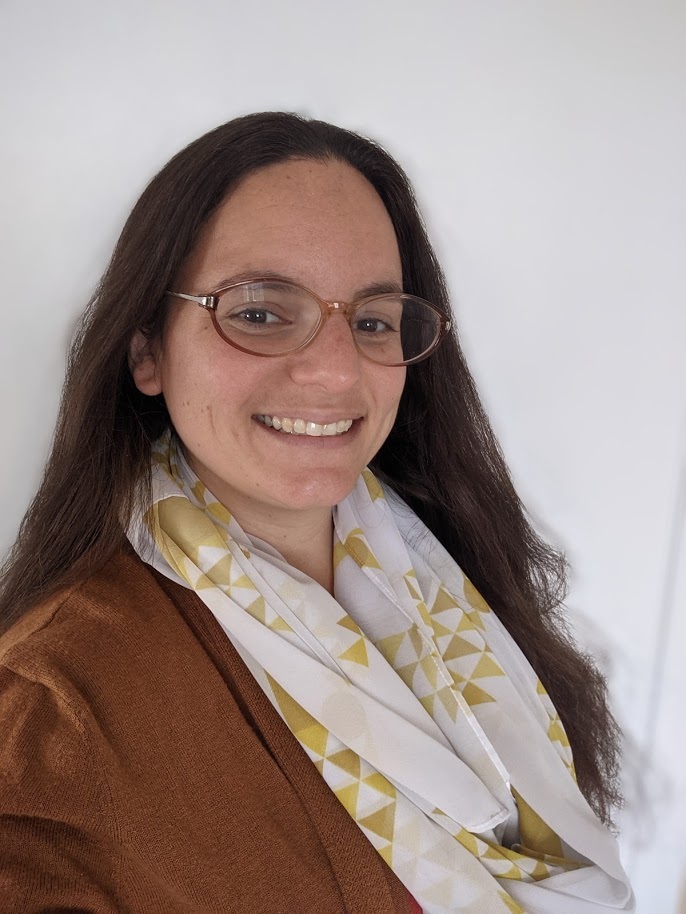
Photo of Maia Evrona in Krakow, taken by an anonymous passerby.
Maia Evrona has been characterized as a representative of a “new generation of Yiddish poet-translators.” Over a hundred of her translations of individual Yiddish poems—by poets such as Avrom Sutzkever, Anna Margolin, Dovid Hofshteyn, and more—have appeared in literary journals, as well as other venues. In 2023, White Goat Press published her first full-length translation, From a Bird’s Cage to a Thin Branch: The Selected Poems of Yosef Kerler. Her translations have been supported with fellowships from the National Endowment for the Arts, the Yiddish Book Center, and the American Literary Translators Association. Some of her translations have been set to music.
Evrona studied Yiddish in the summer program at Vilnius University, and her original poetry is deeply influenced by her immersion in the Yiddish language as a translator. She has published her original poetry in both English and Yiddish, and her poems have appeared widely in literary journals. Her poetry has been supported with two joint Fulbright Scholar Awards to Spain and Greece, as well as with a grant from the Massachusetts Cultural Council. In 2025, she was a UNESCO City of Literature poet-in-residence in Gothenburg, exploring the status of Yiddish as an official Swedish minority language. She is also an essayist and has published nonfiction on Yiddish literature and culture. She has given readings of her work on several continents.
As an In geveb/Fortunoff fellow, she will immerse herself in the Yiddish-language testimonies of Holocaust survivors, with the aim of formulating original poetry out of their testimonies. All of the poems Evrona writes with the support of this fellowship will have both an English version and a Yiddish version. Evrona also plans to write several essays on the experience of visiting Yiddishland through listening to these testimonies. While the goal of her project is written work, it will likely be disseminated beyond the page through readings, as well as collaborations with musicians, filmmakers, and other artists.
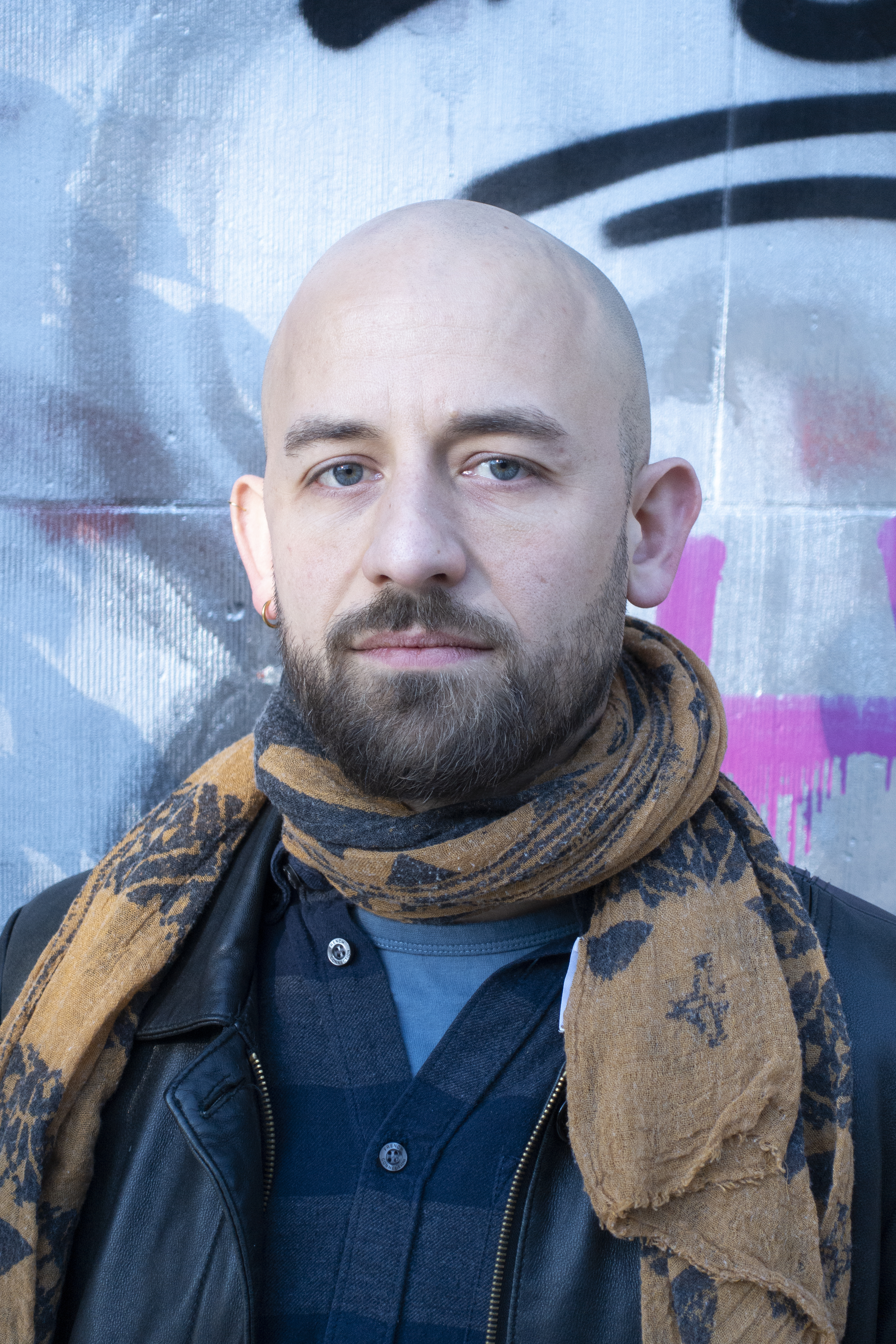
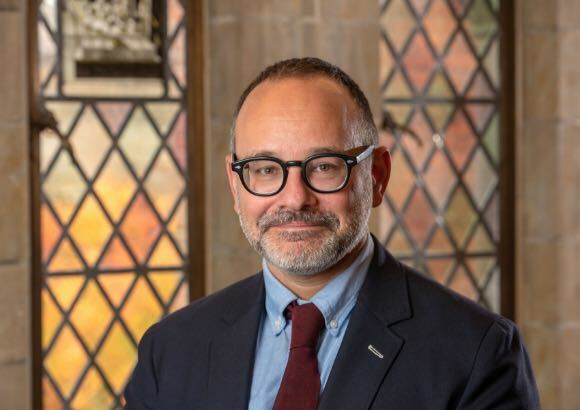
Jake Schneider, photo by Arndt Beck
Jake Schneider is a Berlin-based Yiddish poet, translator, journalist, cultural organizer, and independent researcher. He is the founding gabbai of the Yiddish-speaking social club Shmues un Vayn, initiator of the Yiddish Hoyz immersion program at Yiddish Summer Weimar, and a member of the community Yiddish.Berlin. Together with Adrien Smith, he is also co-creator of The New Zamlers, an initiative that combines oral history methods with the Yiddish tradition of recruiting amateur collectors to document present-day Yiddish life for the archive. Before turning his focus to Yiddish culture, Schneider spent five years as editor-in-chief of the English-language literary journal SAND: Literature & Art, and he continues to collaborate on Yiddish and multilingual chapbooks and zines, such as the contemporary poetry anthology Lokshn un Lebn. Yiddish poems from his manuscript Tsaytzone (Time Zone) have appeared in the Forverts, Afn Shvel, Yiddish Branzhe, Yiddishland, and Di Goldene Pawe and have been translated into seven languages. Alongside his writing, he creates collages that repurpose historical printed materials for living Yiddish cultural contexts. He also gives talks and walking tours on Yiddish culture and history in Germany, partly inspired by the flâneur-poet A. N. Stencl, whose memoirs he is translating as a Translation Fellow of the Yiddish Book Center.
For his In geveb/Fortunoff Arts and Culture Fellowship project, Jake Schneider will create Defiant Tongues (Tselokhesdike Tsungen), a bilingual illustrated zine drawing on Yiddish-language testimonies at the Fortunoff Video Archive by survivors who passed through Jewish displaced persons (DP) camps in postwar Germany and Austria. These transient communities of Holocaust survivors were among the last places in Europe where Yiddish briefly re-emerged as a vernacular public language of education, press and publishing, radio, theater, and daily life. For Defiant Tongues, Schneider will compose a new creative text in Yiddish that considers that fleeting postwar moment in light of the personal stories captured in these testimonies, reflecting more broadly on the language’s role in Germany as a medium of both individual and cultural survival. The resulting zine, in both Yiddish and English translation, will be illustrated with original collages of printed materials from DP camps. The zine will be freely distributed through grassroots networks: at a launch event in Berlin, at Yiddish gatherings and cultural festivals, through the mail, and at the sites of former DP camps. Schneider will also report back on the whole process of research, writing, collaging, and zine-making here on the In geveb blog.
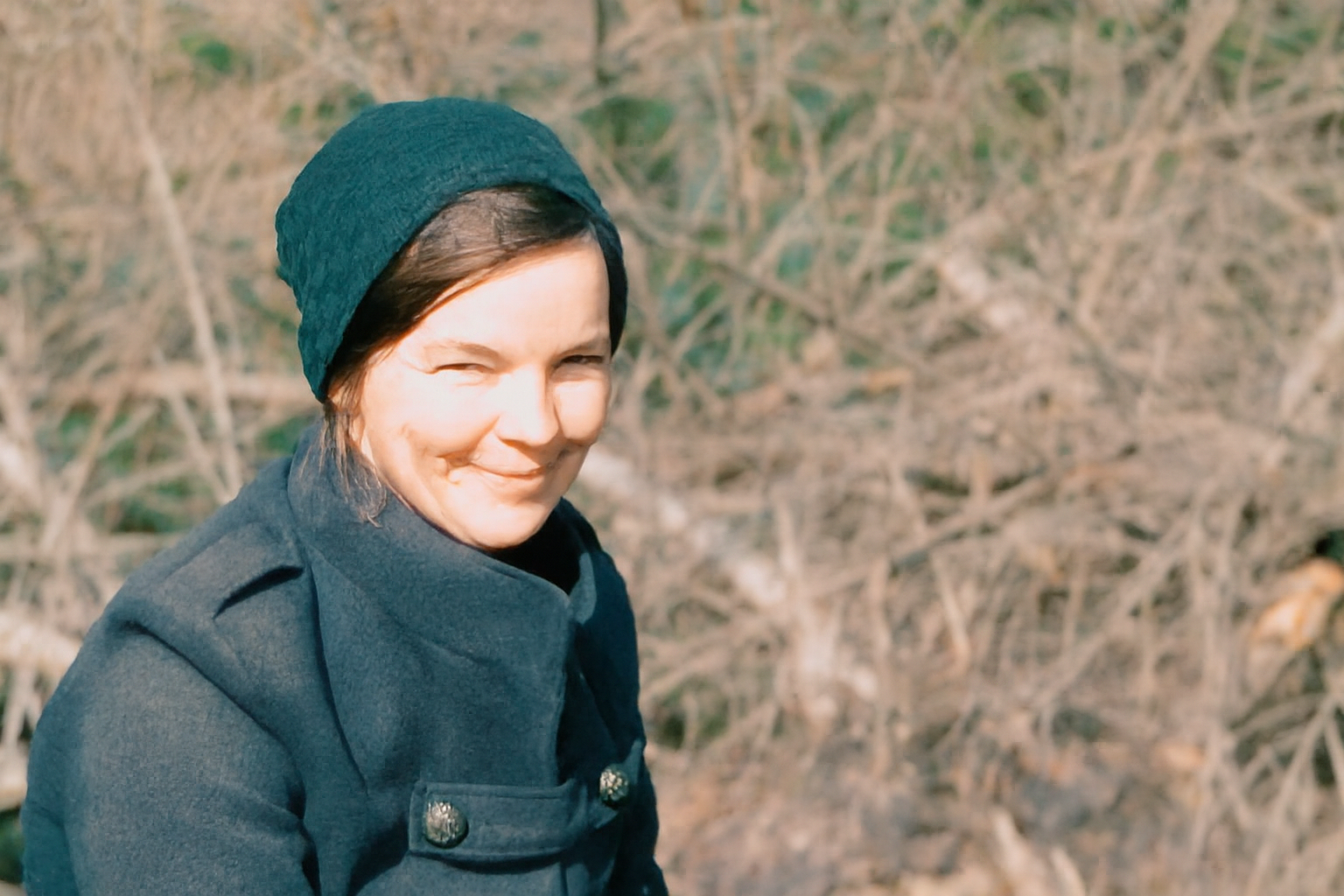
Sandra Israel‑Niang
Sandra Israel‑Niang is a Germany-based translator, artist, lecturer and therapeutic educator. She studied Yiddish language and literature at Lund University and is a member of the Shloyme-Birnboym-Gezelshaft in Hamburg. Her research interests focus on Yiddish literature of the interwar period, the Holocaust, and questions of cultural geography.
Her publications include a volume of translations of selected writings by Chava Rosenfarb, as well as editions of works by Perec Opoczynski, Moyshe Kulbak, Yiddish children’s poetry, and articles in journals such as Afn Shvel. Her art and educational projects have been presented in various exhibitions and supported by federal and EU funding programs.
For her In geveb/Fortunoff Fellowship project, which has the working title Pritsche 321, Kaiserwald, she will examine twelve archived Yiddish testimonies of former inmates of the concentration camp near Riga and translate them into a visual representation in portraits, drawing upon the details of their individual lived experiences. The resulting visual storytelling informed by recorded testimony will focus on the diverse personal, cultural, and national backgrounds of twelve testimony narrators who were incarcerated at Kaiserwald before being catapulted further into forced labor and concentration camps. These stories will be treated as representative of the diverse lives and trajectories of Holocaust survivors before and after the war.