May 27, 2026
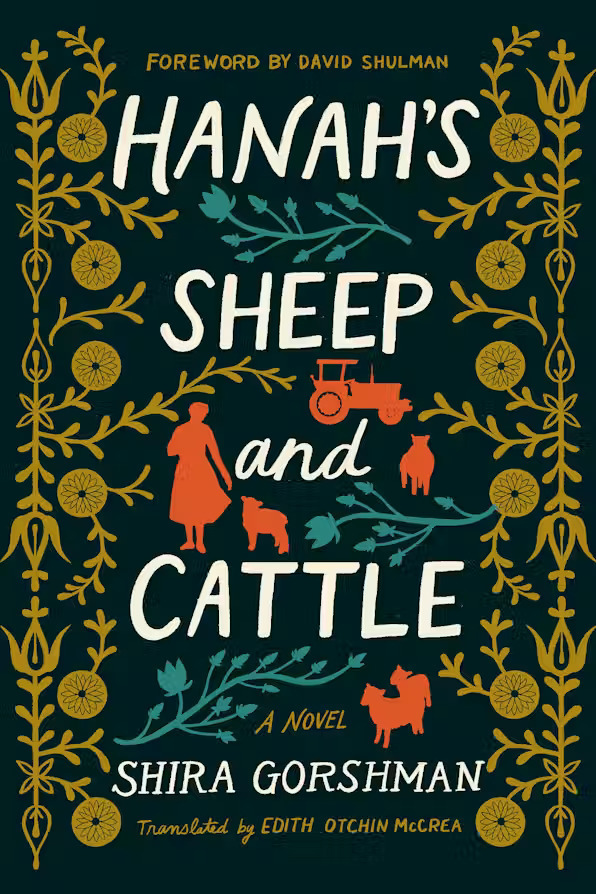
Shira Gorshman, Hannah’s Sheep and Cattle, translated by Edith Otchin McCrea. Northern Illinois University Press, 2025. 222pp. $23.95 [paperback].
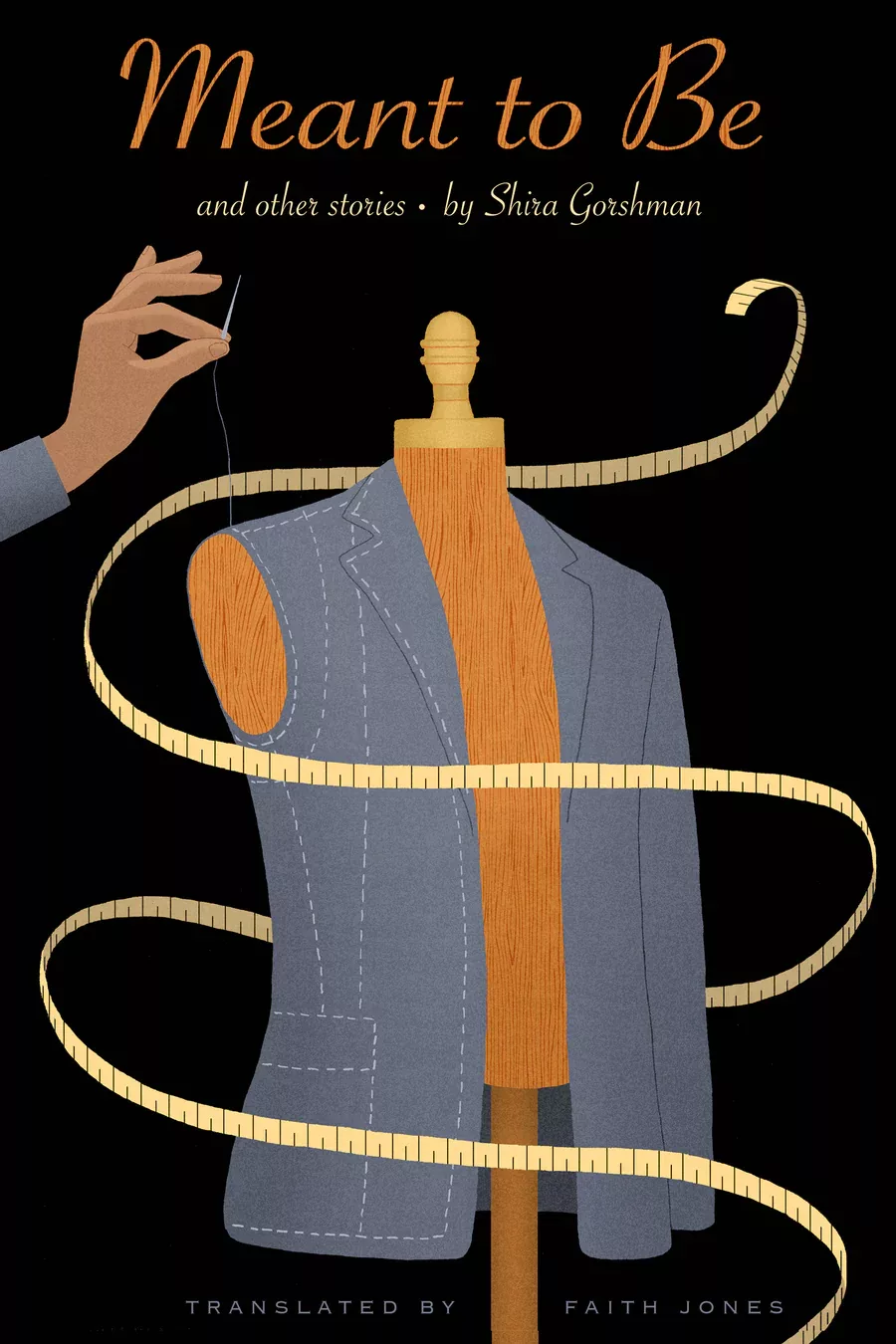
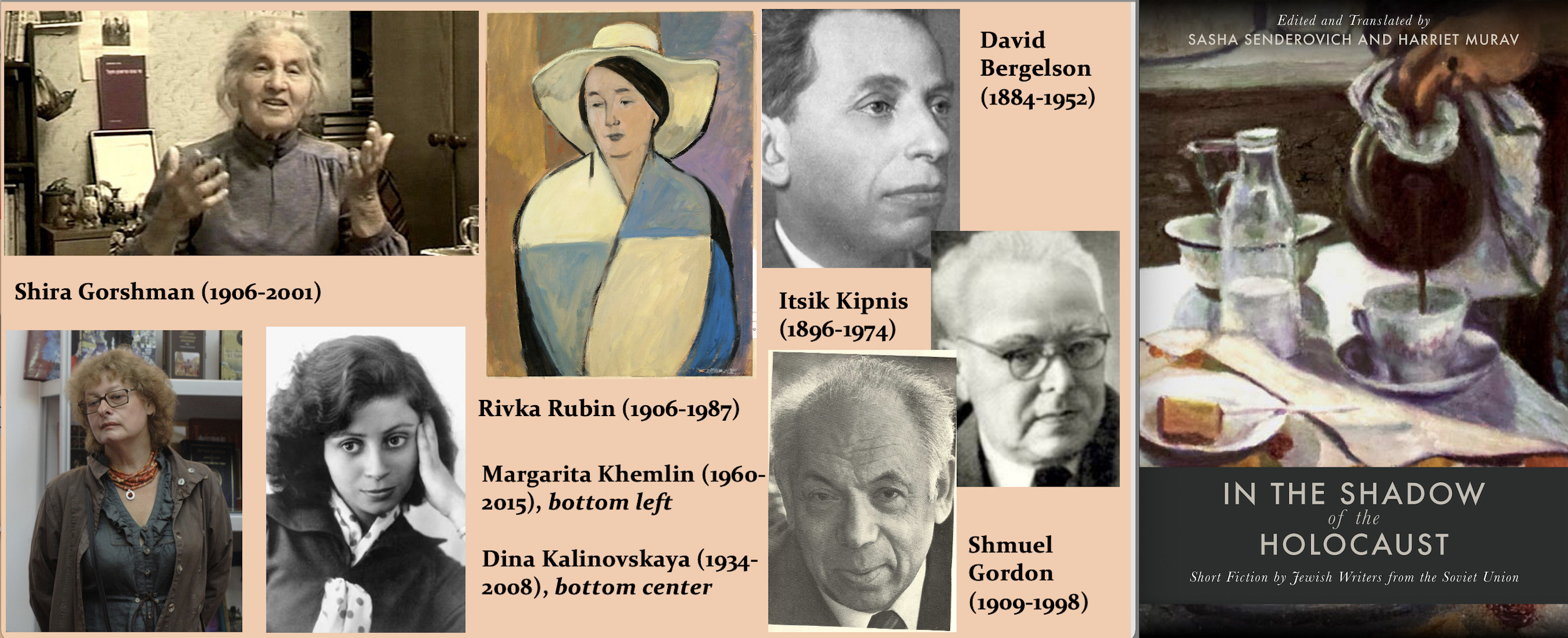
Yiddish literature by women authors, long overlooked by scholars, translators, editors, and publishers, has come into new prominence. New translations of Fradl Shtok’s short stories by Allison Schachter and Jordan Finkin (From the Jewish Provinces: Selected Stories, 2021) and Anita Norich’s translation of Kadya Molodowsky’s short works (A Jewish Refugee in New York, 2019) are some outstanding examples. Soviet Yiddish writers generally are among the most neglected. The Soviet Yiddish author Shira Gorshman, in contrast, is having a moment, as evidenced by Faith Jones’s translation of Gorshman’s stories in the collection Meant to Be and Other Stories, my co-translation with Sasha Senderovich of two Gorshman stories in our edited collection of short fiction In the Shadow of the Holocaust, and the subject of this review, Edith Otchin McCrea’s translation of Gorshman’s autobiographical novel, Hanah’s Sheep and Cattle.
Gorshman, born in 1906, grew up in the shtetl Krakes in Lithuania, moved to Mandate Palestine, then to an agricultural settlement in Crimea called Vojo Nova, Esperanto for “New Life” (oh, what utopianism in the name alone!), before moving to Moscow with her second husband, the artist Mendl Gorshman. In 1989, she relocated to Israel and remained there until her death in 2001. McCrea’s detailed and historically contextualized “Afterword” provides abundant information about Gorshman’s life and the upheavals of her time. The glossary explains important terms and references found in the narrative.
Hanah’s Sheep and Cattle (Khanes shof un rinder) appeared in various formats at different times in Gorshman’s long and productive career, as McCrea helpfully explains. It began as a novella in a Yiddish collection published in the Soviet Union in 1974, then ten years later also in the Soviet Union in Yontef in mitn vokh (Mid-week holiday), and finally was published again in 1993 in Israel. The work takes us from Gorshman’s life on the agricultural settlement through her life in Moscow in the 1930s to the period the Soviets called “The Great Patriotic War” and its aftermath. We read about daily life in Vojo Nova and the relationships among the commune members. The availability of round-the-clock day care in the settlement’s “Children’s Home” frees the protagonist, Hanah, from the unceasing tasks of taking care of her three children. Gorshman’s work emphasizes the pleasures and dangers of the freedom of life in the new Jewish space of the commune on the steppe. Or, as the heroine says, “For quite some time now, I’ve made a point of doing what I want to do, whenever possible” (21).
Knowledge of Yiddish, which was crucially important to Gorshman as it was to her fellow Soviet Yiddish writers, is an explicit theme in her novella. Gorshman met Mendl Gorshman when the Soviet government sent him to Vojo Nova as part of a group of visual artists documenting new construction sites and agricultural enterprises to celebrate what was called the building of socialism in the 1930s. She uses their interactions to emphasize the importance of the Yiddish language, having Hanah correct the mistakes made by Mendl’s fictitious stand-in Nehemyah, such as saying “childrenhood” instead of “childhood” (28). Hanah informs Nehemyah that he will learn to speak Yiddish properly by living in the agricultural commune.
After a brief long-distance relationship while Mendl was in Moscow, the heroine reunites with her husband in the capital. This was a fortunate turn of events, because Vojo Nova was disbanded in 1937. Gorshman herself, like her autobiographical heroine, had not lived in a city of any size before, and the sight and sound of the tram line frightened her at first; she thought the trams would fly off their tracks. The Moscow section of the narrative describes the birth of Gorshman’s life as a writer. Working by day at a children’s daycare, Gorshman wrote at night, often staying up all night. In the novel the protagonist refers to stories she wrote earlier about life in the shtetl and her first foray into publication. These stories, one of which is referenced in the novella, describe the sometimes brutal conditions of daily life imposed by poverty, superstition, and ignorance. Although Gorshman’s husband was initially unsupportive of her work, she received encouragement from the poet Leyb Kvitko and the literary critic Meir Viner. The affinity Kvitko felt for her stories is easy to understand. He had also experienced an extremely harsh childhood, which he describes in his novel Tsvey khaverim: Lyam un Petrik (Two friends: Lyam and Petrik) published in 1930. 1 1 I discuss these stories in my own scholarship. See Harriet Murav, Music from a Speeding Train: Jewish Literature in Post-Revolution Russia (Stanford University Press, 2012).
The subject of motherhood, introduced in the first two parts of the narrative, continues in the subsequent sections describing the writer’s life in Moscow, the war years, and beyond. The protagonist, like Gorshman herself, experiences terrible conflict with her mother, especially when she gives birth to her first child. The author does not shy away from depicting the conflict in all its bitterness. She likewise shares the difficult relationship she had with her own daughter. In an episode that appears in various versions of this novel, Shira Gorshman and her daughter visited Gorshman’s native shtetl on the very cusp of the German invasion of the Soviet Union, and while Gorshman and her daughter left, her parents remained and were killed by the Nazis. Gorshman’s daughter blamed her mother for the death of her grandparents and stopped eating. She died of anorexia. This incident of Holocaust trauma illustrates the terrible personal consequences that echoed over generations.. Like other Yiddish women writers of her era, Gorshman weaves the great historical catastrophes of the time into her account of daily life. How women write about war and violence is sadly not a topic limited to Gorshman’s time.
Determining how to render an author’s style in another language is a key step in the process of translation, and the task of rendering idioms and sayings in the target language is one of the pleasures and challenges in this process. The challenge looms especially large when it comes to Gorshman’s Yiddish. Gorshman’s language is full of with homey expressions. These include phrases like: “work always goes down easier when it’s smeared with butter” (37); “a wild bird’s no trouble, but two in a cage costs double” (41); “the last minutes dragged by as though through tar” (58); “they need me like a frog needs an umbrella” (107); and “may you grow like a nettle” (137). Approaches to this problem have changed over the years. Translators have increasingly shifted to modifying the target language to reflect the original, leaving other languages in the translation—as is the case here. For example, the Russian word for artist, “khudozhnik,” appears in Yiddish transliteration in the original and in this translation. The newer trend makes readers confront the fact that they are reading a translation. I applaud the introduction of Russian and other non-English words in an English translation from Yiddish.
“Like a frog needs an umbrella” is delightful, but I find some of McCrea’s other choices confusing. The expression about the slow pace of time, “the last minutes dragged by as though through tar” is a word for word rendering of the original Yiddish that could have been conveyed with a phrase more natural to English readers, such as “time passed at a snail’s pace.” The phrase about growing like a nettle may convey the opposite of what is intended, at least for an English speaker who associates nettles with stinging thorns. “May you grow like a weed” would have been a happier alternative. A similar problem arises when it comes to “work goes down easier when it’s smeared with butter.” Swallowing something smeared with butter may not make sense or appeal to a twenty-first-century reader, and thus the point of the expression is lost.
I am also puzzled by McCrea’s transliteration system. McCrea explains in the translator’s note that she used “ah” for Hebrew-derived words ending in the letter hey, even though in Yiddish they are pronounced “e.” McCrea used the common English spelling for Yiddish words that already have appeared in English, for example, “challah.” Every English version of Yiddish results in some form of inconsistency; there is no way to avoid it. I find it surprising, however, that the translator chose “Hanah” instead of the English spelling of this name “Hannah.” “Simches” (simkhes), the term for Rabbinic ordination is difficult to understand for those not already familiar with it. Googling this spelling, for example, sent me in various odd directions.
These are minor questions, however, given the scope of McCrea’s accomplishment in producing this translation. English-language readers now have an unflinching account of a woman who lived a passionate and committed life at a time of enormous destruction and chaos—a Soviet Yiddish woman writer who did what she wanted.