Dec 09, 2025
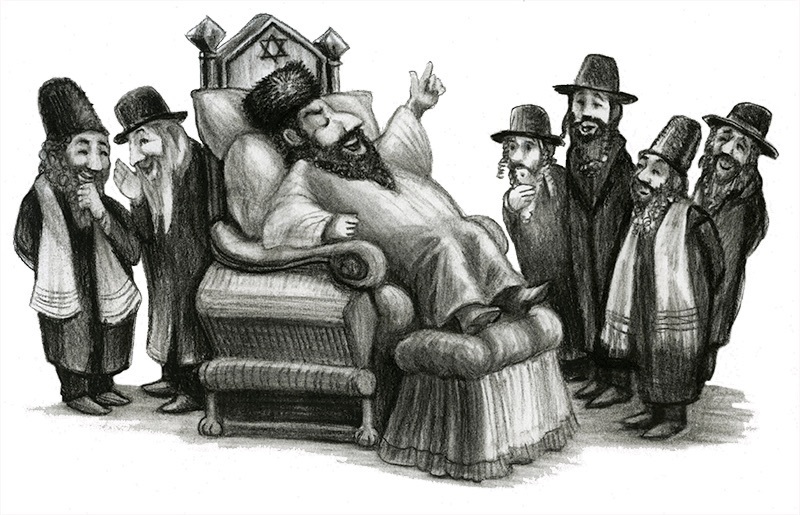
An illustration by Bridget Starr Taylor for Chapter 6 of Reb Simkhe Plakhte or The World Swindler, originally published on jacobmorgenstern.com.
INTRODUCTION
For readers of twentieth-century Yiddish literature, Itzik Manger hardly needs an introduction. Born Yitzkhok Helfer (1901–1969), Manger is celebrated as the great champion of Yiddish folk literature and the preeminent modernist folk bard. The same, however, can’t be said of the writer Yankev Morgenshtern (1820–1890)—a.k.a. Yankl Lerer, a.k.a. Y. Katchko, a.k.a. Jacob Kaczka—the subject of the eponymous “pen portrait” presented here for the first time in English translation.1
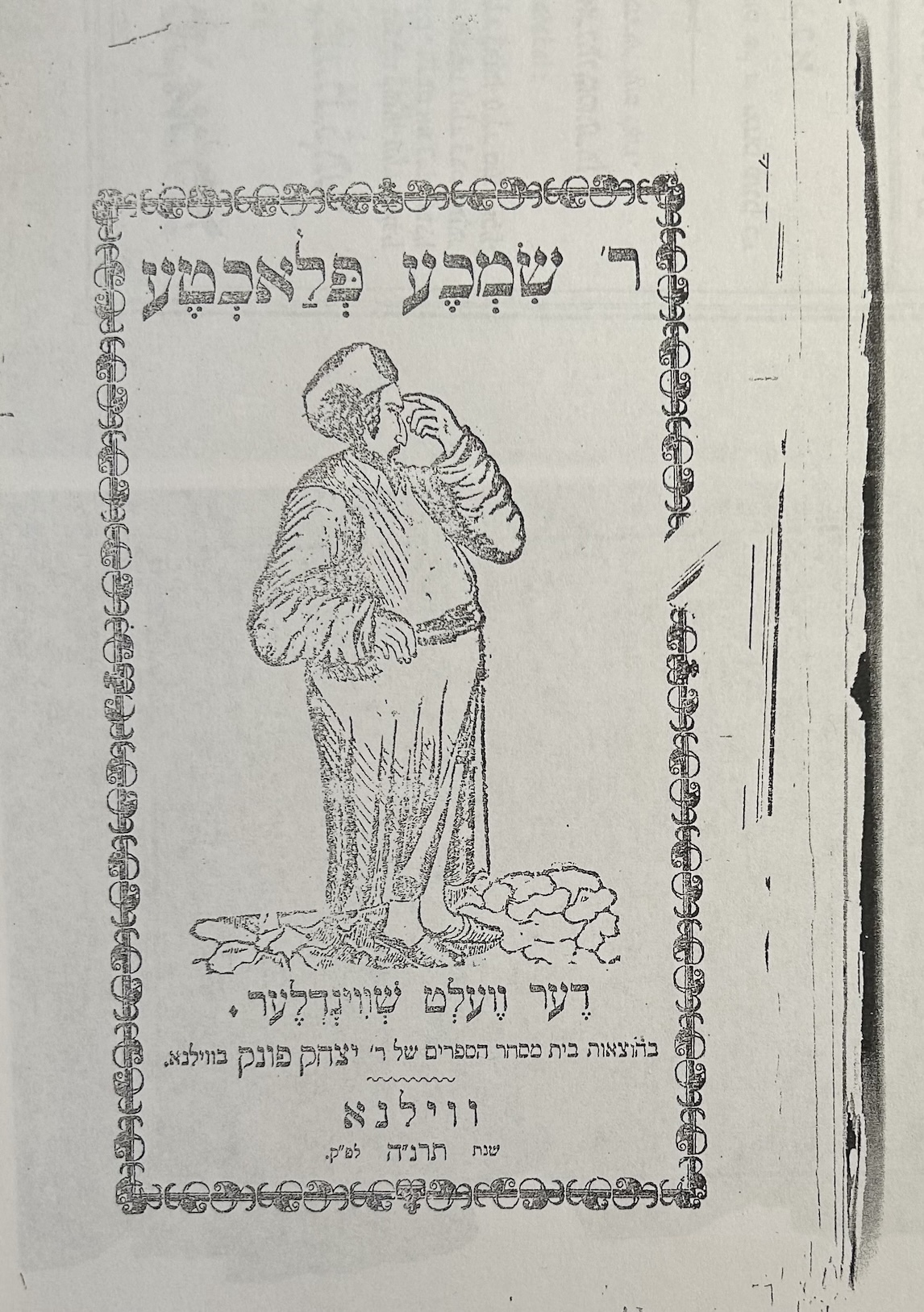
As noted in this biographical portrait, during (and for a while after) Morgenshtern’s lifetime his Jewish folktales were widely read; he also wrote poetry and translations of German literature. Yet today his work has largely faded into obscurity, a situation that Miro Mniewski has done much to correct with, for instance, their translation of Reb Simkhe Plakhte, oder Der velt shvindler (Reb Simkhe Plakhte, or The World Swindler), one of Morgenshtern’s most popular tales.2 It’s our hope that the following translation of Manger’s imaginative biographical sketch—as well as the accompanying blog post by the poet Rachel Morgenstern-Clarren, a descendant of Jacob Morgenstern (as he is often referred to in English)—will further contribute to reviving public interest in Morgenshtern’s life and writings.
On the assumption, which I share, that “every portrait is a self-portrait,”3 we can legitimately wonder to what extent the sympathy that Manger shows for his “model” actually stems from some personal affinity with Morgenshtern, his literary forebear. The facts of Morgenshtern’s life and works as depicted in Manger’s portrayal are historically accurate. Despite the immense popularity of his stories, published as chapbooks in the latter half of the nineteenth century, Morgenshtern eked out a living as a jack of many trades: teacher of the poor, scribe, matchmaker, wedding jester, poet, and translator. He was, in other words, a man of the people. This alone must have endeared him to Manger. The son of a tailor, Manger left school at an early age and, during his migrations across Europe and beyond, gained a reputation as poet, scholar, troubadour, playwright, essayist, and (according to his colleague Melekh Ravitch) troublemaker. What’s more, as a Bundist, Manger could naturally identify with Morgenshtern’s intimate connection with the lives of so-called “ordinary” Jews.
The sense of closeness to Morgenshtern and his milieu no doubt helped Manger create the true-to-life depictions of the characters encountered in this biographical miniature, particularly when it comes to the linguistic idiosyncrasies of working-class Yiddish speakers, more specifically those from Lodz, Morgenshtern’s home city.
Sima, for example, the sassy cook of wealthy businessman Zelig Goldman, curses “Fonye,” i.e., the tsar, for his “machinations,” wishing him “eighteen cupfuls of convulsions for Purim” and “a brutal death.” Her colourful vocabulary and resonant turns of phrases bring to mind the cockney-ish accents of the Lodzers I’ve known, not to mention the recordings of the renowned comedy team Dzigan and Shumakher, both native Lodzers, that I enjoyed hearing as a child. To this end I’ve injected a British flavor into my translation of Sima’s speech patterns.
Then, of course, there’s the water carrier Simkhe Plakhte and his folksy Yiddish, rendered here as nonstandard English: “. . . always you tells me tomorrow. . . . I gets no money, be bad, very bad.” Such linguistic markers of Simkhe’s humble social standing heighten the comic effect of the central role that Manger assigns to the water carrier in the final tableau. There, Morgenshtern laughs out loud upon discovering in Simkhe the inspiration for what would become his famous anti-Hasidic satire featuring Reb Simkhe Plakhte and its sequel, Der glikhlekher nar, oder Der khaver fun Simkhe Plakhte (The Happy Fool, or Simkhe Plakhte’s Friend). At this point in the narrative, Manger’s voice virtually merges with that of his predecessor, to the point where he seems to be walking shoulder to shoulder with Morgenshtern, laughing along with him.
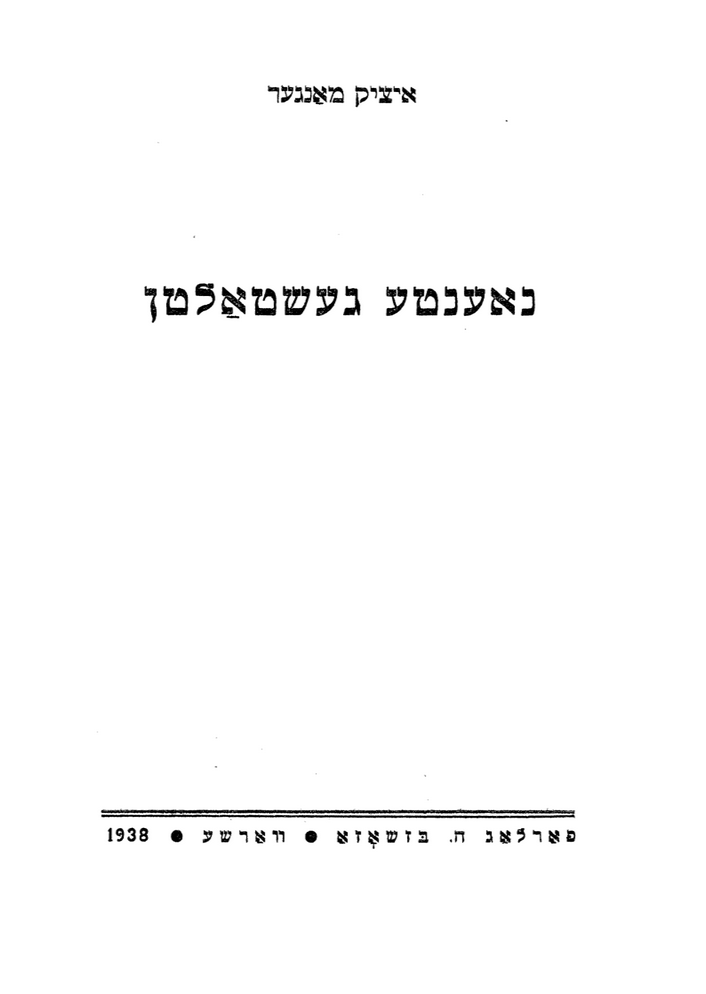
It’s worth pointing out by way of conclusion that Morgenshtern was one of the many literary forebears to whom Manger pays similar tribute in Noente geshtaltn (Familiar Portraits), the collection of biographical sketches where “Yankev Morgenshtern” was included (H. Bzshoza, 1938).4 Significantly, this collection was twice republished over the years,5 testifying not just to Manger’s lasting popularity but also to the enduring desire of readers of Yiddish literature to discover or rediscover through him the writers on whose shoulders he stood.
Click here to download a PDF of the text and translation.
This English translation is published with the permission of The Manger Fund through its chairman Professor Avraham Novershtern.
This translation is accompanied by a companion blog post by Rachel Morgenstern-Clarren about her family’s geneological research to uncover their long-lost writer relative Jacob Morgenstern. Read that essay here.
רב שיִעלע קאָלושקער, דער זאָקן־פֿאַבריקאַנט, אַ הויכער ברייטפּלייציקער ייִד מיט אַ רויטלעך־געקרויזטער באָרד און בלאָע וואַסערדיקע אויגן, גייט אַרום איבערן צימער אַהין און צוריק. ער פּיפּקעט די ליולקע, שפּײַט אַלע מאָל אויס אין אַ זײַט און רעדט ווי צו זיך אַליין:
„נישט איז נישט, מי לנו גדול. אַ קלייניקייט, אַ קלייניקייט, ר' יאָסעלע בזשעזאָווסקי... איר הערט, ר' יאַנקל – ס'איז נישט געפֿידלט און נישט געפֿאָרן.“
יעקבֿ מאָרגנשטערן, אַ מיטל־וווּקסיק מאָגער ייִדל, סאַמע הויט און ביינער, זיצט בײַם טיש. די גאַנצע צײַט האָט ער געוואַרט, אַז ר' שיִעלע זאָל אים געבן אַ תּשובֿה.
„איר האָט עפּעס געזאָגט ר' שיִע?“
דער זאָקן־פֿאַבריקאַנט גייט צו צום טיש. זעצט זיך אַוועק אַנטקעגן איבער דעם שדכן, באַטראַכט אים מיט זײַנע וואַסערדיקע אויגן און זאָגט נאָך אַ מאָל הויך אויף אַ קול, ציילנדיק די ווערטער:
„כ'האָב פֿײַנט יחסנים, ר' יאַנקל. מײַן בת־יחידה איז בײַ מיר דאָס אויג אין קאָפּ. כ'האָב געזאָגט, אַז איך גיב כּך־וכּך נדן. כ'נעם דעם יונגן־מאַן צו זיך אין פֿאַבריק, כ'וויל אים מאַכן פֿאַר אַ מענטש. איז וואָס בלאָזן זיי זיך אַזוי, די בזשעזאָווסקיס? שטעקן זיך פֿעדערן אין ... איך בעט איבער אײַער כּבֿוד.“
יעקבֿ מאָרגנשטערן פֿאַרשטייט דעם כּעס פֿון ר' שיִעלע קאָלושקער. אַז מען וויל, איז ער אַפֿילו גערעכט. קיין שום שידוך איז אים נישט אָנגעקומען אַזוי שווער, ווי דער איצטיקער. אייגנטלעך וואָלט ער געדאַרפֿט שפּײַען קלעק אויף דער גאַנצער מעשׂה. נאָר ער קאָן נישט, ער טאָר נישט, זײַן פּלוניתטע איז לעצטנס שטאַרק נישט מיט אַלעמען, מען דאַרף זי קורירן. דער ווינטער איז צוגעפֿאַלן מיט שנייען און פֿרעסט און די קינדער זײַנע גייען אַרום נאַקעט און באָרוועס. דער באַלעבאָס פֿון דער דירה, וווּ ער וווינט, האָט אים געגעבן אָנצוהערענישן, אַז מער איז ער נישט מחויבֿ צו וואַרטן. דער דאָזיקער שידוך צווישן יאָסעלע בזשעזאָווסקיס זון און שיִעלע קאָלושקערס בת־יחידה קאָן אים ראַטעווען. ער האָט שוין אַ סך אַרײַנגעאַרבעט, געפֿלויגן אַהין און אַהער, געפּרוּווט אויסגלײַכן, אויסגלעטן, כּדי ס'זאָל צו שטאַנד קומען. נאָר תּמיד, ווען ס'האַלט שוין אויף אַ דרך, טוט אָפּ דער שׂטן, ימח שמו, אַ שפּיצל און ס'ווערט קאַליע, האַלט אין גאַנצן בײַם פֿונאַנדערפֿאַלן.
„איר זענט אַוודאי גערעכט, ר' שיִע, – זאָגט ער צום פֿאַבריקאַנט, – ר' יאָסעלע בזשעזאָווסקי בלאָזט זיך טאַקע, אָבער ס'איז פֿאָרט אַ גלײַכער שידוך – אַ זיווג־מן־השמים. פֿאָלגט מיך, ר' שיִע, און לאָזט אײַערס איבערגיין. איר וועט זען, אַז ס'וועט זײַן גוט, גאָט און לײַט וועלן אײַך מקנא זײַן.“
ר' שיִעלע קאָלושקער שווײַגט, פּיפּקעט די פּיפּקע און קוקט אויף די וואָלקנס רויך, וואָס קרײַזלען זיך איבערן צימער און ווערן צערונען.
„הייסט עס, – זאָגט יעקבֿ מאָרגנשטערן, – אַז מאָרגן מערצעשעם כאַפּ איך זיך אַריבער צו יאָסעלע בזשעזאָווסקי און וועל אים זאָגן, אַז איר זענט מסכּים און מען קאָן שוין ברעכן טעלער אין אַ גוטער און מזלדיקער שעה?“
דער מאָגערער שדכן מיטן רונד געשוירענעם בערדל הייבט זיך אויף פֿון זײַן אָרט, פֿאַרקנעפּלט דעם אָפּגעריבענעם פּאַלטן און לאָזט זיך גיין צו דער טיר.
ר' שיִעלע קאָלושקער הייבט זיך אויף פֿון זײַן אָרט, גייט צו פּאַמעלעך, נישט געאײַלט זיך, צו יעקבֿ מאָרגנשטערן, וואָס האַלט שוין די האַנט אויף דער קליאַמקע פֿון דער טיר:
„פֿון מײַנעט וועגן קאָנט איר נאָך אַ מאָל אַרויפֿגיין צו די בזשעזאָוווסקיס. נאָר זאָגן זאָלט איר צום סאַמע לעצטן מאָל, אַז איך בין גרייט צו סילוקן דעם נדן פֿאַר דער חופּה, נאָר אַזוי פֿיל, וויפֿל איך האָב געזאָגט און נישט וויפֿל זיי הייסן זיך אָנמעסטן. וועלן זיי מסכּים זײַן איז גוט, אַז נישט, – ר' שיִעלע ציט זיך אויס אין זײַן גאַנצער לענג, – אַז נישט, איז נישט.“
„ס'וועט שוין זײַן רעכט, ר' שיִע. ס'איז בפֿירוש אַ זיווג־מן־השמים און דאָרט, וווּ ס'איז אַ זיווג־מן־השמים, מעגן זיך די מחותּנים שטעלן אויפֿן קאָפּ, וועט זײַן אַ מזל־טובֿ. אַ גוטן תּמיד, ר' שיִע.“
יעקבֿ מאָרגנשטערן גייט אַוועק. פֿאָרזיכטיק שאַרט ער זיך אַראָפּ פֿון די טרעפּ. דאָס נאַפֿטלעמפּל, וואָס הענגט אין דרויסן, צאַנקט געל און טרויעריק און איז נישט בכּוח צו באַלויכטן די טונקעלע, גליטשיקע טרעפּ.
אין דרויסן שנייט. אַ פֿײַכטע, נודנע קעלט, וואָס עסט זיך אײַן אין די ביינער, נעמט אים אַרום. ס'איז שוין שפּעט אין אָוונט, ער לאָזט זיך גיין מיט אײַלנדיקע טריט.
פֿון דעם שידוך וועט שוין, ווײַזט אויס, גאָרנישט ווערן. ער זעט עס בחוש. אַזוי פֿיל מי אַרײַנגעלייגט אומזיסט. דאָס שדכנות־געלט וואָלט אים איצט שטאַרק צו נוץ געקומען. נאָר גיי פּועל בײַ גבֿירים, וואָס אַז זיי עקשנען זיך אײַן, וועסטו שוין גיכער רירן אַ מויער פֿונעם אָרט.
און אפֿשר איז גאָר ער שולדיק. אַ געניטער שדכן וואָלט שוין געפֿונען אַ וועג, ווי אַזוי אויסצופֿירן זײַנס. און סך־הכּל איז ער גאָר אַ לערער. אַ מענטש, וואָס לערנט קעכינס און דינסטן לייענען און שרײַבן און פֿון דעם ציט ער זײַן חיונה, מישטיינס געזאָגט. אַז מען טרינקט זיך, כאַפּט מען זיך אָן אין אַ שטרוי. עטלעכע מאָל איז אים געלונגען דורכצופֿירן שידוכים, איז פּרוּווט ער, אפֿשר וועט עס גיין אויך ווײַטער. די איצטיקע קאָרט איז אים נישט געראָטן. אײַ, ווען ס'געלינגט אים, וואָלט ער כאָטש אַ ביסל געקאָנט אָפּאָטעמען! אַ גבֿיר איז טאַקע בטבֿע אַ חזיר. נאָר, אַז מען האָט צו טאָן מיט צוויי, וועט שוין איינער דערלייגן, וואָס דער צווייטער האָט נישט דערגעבן.
ער שטעלט זיך אַ ווײַלע אָפּ, כאַפּט אָפּ דעם אָטעם. וואָס האָט ער זיך אַזוי צו אײַלן, וואָס? אַלע „לעקציעס“ האָט ער שוין הײַנט געגעבן. אויסגעווען אין אַ צענדליק קיכן, געוויזן פֿאַרהאָרעוועטע דינסטן, ווי אַזוי מען האַלט אַ פּענע אין דער האַנט. מיט וואַסער אויף קאַשע איז ער שוין פֿאַרזאָרגט. איצט וווּ נעמט מען אויף קאַשע?
דער שניי שיט און שיט און ווערט תּיכּף צערונען. די גאַס־לאַמטערנס ברענען טריב און אָרעם. ווען מען וואָלט זיי אַרײַנגענומען אין אַ וואַרעמער שטוב אַרײַן, וואָלטן זיי זיך פּשוט מחיה געווען.
אָפּגעכאַפּט דעם אָטעם, לאָזט ער זיך גיין ווײַטער. סימע די קעכין פֿון דעם מאַנופֿאַקטור־סוחר זעליג גאָלדמאַן, האָט אים געשיקט זאָגן, אַז ער זאָל אַרויפֿקומען צו איר. זי דאַרף, ער זאָל איר אָנשרײַבן אַ בריוו. די צען קאָפּיקעס וועלן זײַן אַזוי ווי געפֿונען.
„אַ סך מלאָכות, איז ווייניק ברכות“ – מורמלט ער. סײַ דער שדכן, סײַ דער לערער, סײַ דער מעשׂה־שרײַבער, פֿאַרדינען אַזוי פֿיל, אַז ס'קלעקט קוים־קוים אויף איבערצוקומען די וואָך.
און ער ווייסט, אָט דער יאַנקל לערער, ער ווייסט עס אויף זיכער, אַז ער איז אַ גוטער מעשׂה־שרײַבער. זײַנע מעשׂיות ווערן צעכאַפּט, ווי מצה־וואַסער, און מען לייענט זיי מיט גרויס הנאה. זײַנע מעשׂיות „שבת־קודש אין גן־עדן“ און „די מעשׂה משני שותּפֿים און שני קצבֿים“ געפֿינט מען כּמעט אין יעדער ייִדישער שטוב, סײַ דאָ אין לאָדזש, וווּ ער וווינט און מוטשעט זיך, סײַ אין דער גאָרער וועלט.
ווער שמועסט נאָך זײַן „מעשׂה־פּליאות מג' אַחים, איין זייער שיינע, וויכטיקע, וווּנדערלעכע געשיכטע פֿון דרײַ ברידער גרויסע לײַט“ – האָט גאָר אַ גרויסן שם איבער דער וועלט. די דאָזיקע מעשׂה האָט מען שוין עטלעכע מאָל איבערגעדרוקט. און אַלע מאָל האָט מען די ביכעלעך פֿאַרצוקערט. נאָר אין אים, דעם מחבר, האָט מען, ווײַזט אויס, פֿאַרגעסן. פֿון זינט ער האָט באַקומען די פּאָר רובל פֿאַר דעם דרוק, האָט ער שוין מער נישט געזען קיין פּרוטה. און פֿאַר וועמען זיך צו קלאָגן איז נישטאָ. און יושר – עט.
ער דערמאָנט זיך יענעם ווינטער, ווען ער האָט געשריבן די „מעשׂה מג' אַחים“. אַ שווערער ווינטער געווען. אין זײַן אָרעמער שטוב אויף באַלוט האָט זיך צעלייגט דער דלות, ווי בײַ זײַן טאַטן אין ווײַנגאָרטן, דאָס ווײַב איז נאָך נישט געקומען צו זיך פֿון דער לעצטער קימפּעט. אויפֿן האַרצן איז אים געווען אָנגעזאָליעט ביז גאָר. און אין אָט יענע לאַנגע, אומעטיקע ווינטערנעכט איז אים אײַנגעפֿאַלן די מעשׂה מיט די דרײַ ברידער, וואָס יעדער פֿון זיי האָט זיך גענומען אַ מיצווה מקיים צו זײַן. מיט זיי צוזאַמען האָט ער זיך געלאָזט אין דער וועלט אַרײַן, איבערגעלעבט צוזאַמען מיט זייערע וואַנדערונגען, די מניעות, וואָס האָבן זיך זיי אַנטקעגנגעשטעלט. און אַז גאָט האָט זיי געהאָלפֿן, זיי זענען עולה־לגדולה געוואָרן – יעדער פֿון זיי האָט חתונה געהאַט מיט אַ בת־מלכּה און געירשנט אַ קעניגרײַך – האָט ער, דער אָרעמער יאַנקל לערער, פֿאַרגעסן אין זײַן אייגענער אָרעמקייט. ער האָט זיך געפֿרייט מיט דעם גליק פֿון די ג' אַחים.
די דאָזיקע וווּנדערלעכע מעשׂה האָט אים דעמאָלט באַפֿרײַט פֿון זײַן אומעטיקייט, געמאַכט אים פֿאַרגעסן זײַן אָרעמקייט, און נישט אומזיסט קוויקן זיך מיט דער דאָזיקער מעשׂה די אָרעמע ייִדן און ייִדענעס, די קעכינס און די דינסטן, די בעל־מלאָכות פֿון גאָר דער ייִדישער וועלט.
„אפֿשר – טראַכט יאַנקל לערער – אפֿשר זענען אַלע וווּנדערלעכע און פֿאַנטאַסטישע מעשׂיות געבוירן געוואָרן אין אָרעמע שטיבער? די אָרעמקייט פֿון אַלע צײַטן און בײַ אַלע פֿעלקער האָט אין שײַן פֿון די פֿאַרביקע און וווּנדערלעכע פּאַסירונגען אָפּגעאָטעמט אויף אַ ווײַל, פֿאַרגעסן וועגן איר אייגענער נויט.“
ער אַליין האָט אַ סך וווּנדערלעכע מעשׂיות איבערגעזעצט אויף ייִדיש: „מאַגעלאָנאַ די קרוין־פּרינצעסין פֿאָן נעאַפּאָל“, „די שיינע העלענאַ“ און „די שיינע בלומכע גענאָוועפֿאַ“.
טראַכטנדיק די דאָזיקע מחשבֿות, פֿילט יאַנקל לערער נישט די קעלט, וואָס עסט זיך אים אײַן אין די ביינער. ער פֿילט נישט די נעץ, וואָס קריכט אַדורך די אָפּגעריבענע זוילן פֿון זײַנע שיך. ער באַמערקט אַפֿילו נישט, אַז ער איז שוין פֿאַרבײַגעגאַנגען דאָס הויז וווּ די קעכין וואַרט אויף אים, כּדי ער זאָל איר אָנשרײַבן אַ בריוו.
ערשט ווען ער כאַפּט זיך אויף פֿון זײַן טראַכטן, באַמערקט ער, אַז ער איז פֿאַרקראָכן. ער בטלט אויס אַלע חלומות צו זײַן אייגענעם קאָפּ און קערט זיך אום צוריק.
אָט איז דאָס הויז, וווּ ס'וווינט דער מאַנופֿאַקטור־סוחר זעליג גאָלדמאַן. יאַנקל לערער גייט אַרײַן אין הויף, מײַדט אויס דעם פּאַראַדנעם אײַנגאַנג און מיט די הינטערשטע טרעפּ, וואָס פֿירן צו דער קיך, לאָזט ער זיך אַרויפֿגיין.
סימע די קעכנע, אַ יונג שוואַרץ־חנעוודיק ווײַבל מיט קלוגע, לעבעדיקע אויגן, דערפֿרייט זיך מיט אים, ווי מיט אַן אבֿן־טובֿ.
„איך האָב געמיינט, אַז זי וועלן שוין הײַנט נישט קומען, ר' יאַנקל. איך דאַרף אויף גענייטיק זי זאָלן מיר אָנשרײַבן אַ בריוו צו מײַן מאַן, וואָס דינט בײַ פֿאָניען, אַ מיתה־משונה זאָל ער אײַננעמען. מאַנעוורעס גלוסט זיך אים, זי הערן, ר' יאַנקל, מאַנעוורעס. אָן מאַנעוורעס דוכט זיך אים, פֿאָנקעלע גנבֿ, וועט ער ווערן בדיל־הדל. מײַן מענדל שרײַבט מיר, אַז איך זאָל אים למען־השם זען צושיקן אַ פּאָר קערבלעך. מען שיקט זײַן ראָטע אַוועק אַזש קיין סימביר, אַז שיקן זאָל מען פֿאָניען אַכצן טעפּלעך קדחת אויף שלח־מנות...“
אין דער וואַרעמער קיך פֿילט יעקבֿ מאָרגנשטערן, ווי די קעלט, וואָס האָט זיך אײַנגעגעסן אין זײַנע ביינער, טרעט פֿון אים אָפּ. ער רײַבט זיך די פֿאַרפֿרוירענע הענט און זאָגט צו דער באַרעדעוודיקער קעכין:
„זײַען זי אַזוי גוט, סימע, און דערלאַנגען זי מיר טינט און פֿעדער מיט אַ בייגעלע פּאַפּיר, וועל איך אין אָנשרײַבן אַ בריוול צו אינס מאַן.“
סימע נעמט אַפֿער אַ בייגעלע פּאַפּיר פֿון אונטער דער צעראַטע, וואָס דעקט צו דעם קיכטיש. זי שטעלט אַוועק טינט און פֿעדער אויפֿן טיש.
„ווי אַזוי ווילן זי זאָל איך שרײַבן דעם בריוו, אויף פּראָסט ייִדיש, צי אויף מאָסקוויטעריש?“ – פֿרעגט יאַנקל לערער.
„אויף מאָסקוויטעריש, ר' יאַנקל. מען זאָגט, אַז מען שרײַבט אויף מאָסקוויטעריש, גיט מען גיכער אָפּ דעם בריוו. אויף ייִדיש קאָן נאָך פֿאַרפֿאַלן ווערן.“
יאַנקל לערער זעצט זיך אַוועק, טונקט אײַן די פּענע אין טינטער און וואַרט סימע די קעכין זאָל אים זאָגן, וואָס ער זאָל שרײַבן.
סימע זעצט זיך אַקעגן איבער אים, שפּאַרט אָן די עלנבויגנס אויפֿן טיש און טראַכט פֿון וואָס אָנצוהייבן.
„שרײַבן זי אים, ר' יאַנקל, אַז זײַן בריוו האָב איך באַקומען, אַז קיין נחת פֿון זײַנע בריוו האָב איך נישט, אַז איך וואָלט שוין געוואָלט דערלעבן די מינוט, ווען ער וועט זײַן פֿרײַ. שרײַבן זי, אַז איך פֿאַרשטיי, אַז ס'איז אים גענוג ביטער צו דינען פֿאָניען. זאָל ער פֿאַרשטיין, אַז דינען בײַ אַ חזיר, ווי זעליגל גאָלדמאַן, איז אויך נישט קיין קלייניקייט. איידער מען דערזעט בײַ אים די פּאָר גילדן, קריכן גוט אַרויס די אויגן פֿונעם קאָפּ.“
סימע זיפֿצט אָפּ. יעקבֿ מאָרגנשטערן ציקלט די אותיות פּאַמעלעך, פּאַמעלעך. סימע רעדט אויף ייִדיש. ער אָבער שרײַבט אויף רוסיש. און רוסיש איז דיר נישט קיין קלייניקייט.
„און דאָס, וואָס ער הייסט זיך שיקן אַ פּאָר רובל, – דיקטירט ווײַטער סימע, – וואָלט איך אים גערן געשיקט, האָב איך אָבער נישט, און געבן אויף פֿאָרויס, איז מײַן באַלעבאָס, אַ מיתה־משונה זאָל ער אײַננעמען, נישט קיין בעלן. סײַדן גיין צו אַ פּראָצענטניק, וואָס רײַסט דערנאָך שטיקער. האָב איך אים שוין געשריבן אין פֿריִערדיקן בריוו, אַז דאָס לעצטע געלט, וואָס איך האָב אים געשיקט, האָב איך טאַקע גענומען אויף פּראָצענט, און איך קאָן זיך נישט אויסצאָלן ביז צום הײַנטיקן טאָג.“
סימע פֿאַרטראַכט זיך. אין דרויסן הערט מען שווערע טריט. די טרעפּ קרעכצן. די טיר עפֿנט זיך און עס קומט אַרײַן אַ הויכער, משונהדיקער מענטש מיט אַ קאָלטענעוואַטער באָרד און גרויסע קעלבערנע אויגן. ער איז אָנגעטאָן אין ברודיקע שמאַטעס.
סימע די קעכין גיט אַ פּאַטש מיט די הענט:
„ט'אָסטו דיר אַ גאַסט. אין מיצקע דרינען, שׂמחה פּלאַכטע. סקאָצל קומט! וואָס פֿאַר אַ רוח האָט דיך אָנגעטראָגן?“
„הײַנט איז דאָנערשטאָג, סימע. איך בין געקומען, ר' זעליג זאָל באַצאָלן פֿאַר דער וואָך, וואָס איך האָב געטראָגן וואַסער. אויב ר' זעליג מיר נישט באַצאָלן, מײַן ווײַב וועט שרײַען, שעלטן, שלאָגן, און שׂמחה פּלאַכטע וועט נישט האָבן אויף שבת.“
„וועסט קומען מאָרגן אין דער פֿרי, שׂמחה, איצט איז דער באַלעבאָס נישטאָ אין דער היים. קום מאָרגן אין דער פֿרי פֿאַר זיבענע. הערסט, וואָס מען זאָגט דיר, שׂמחה?“
שׂמחה קראַצט זיך מיט ביידע הענט דעם געדיכט באַוואַקסענעם קאָפּ.
„מאָרגן, מאָרגן. תּמיד דו מיר זאָגסט מאָרגן. איך מאָרגן קומען. מיר נישט געבן געלט, זײַן שלעכט, זייער שלעכט.“
„איך זאָג מאָרגן, בהמה. דער באַלעבאָס זאָגט מאָרגן, זאָג איך מאָרגן. גיי שוין גיי, שׂמחה. זעסט דאָך, אַז מען שרײַבט אַ בריוו.“
יעקבֿ מאָרגנשטערן באַטראַכט דעם מאָדנעם פּאַרשוין. וווּ האָט ער אים געזען אַ מאָל? די געשטאַלט, דאָס פּנים? אַהאַ! ניין, ס'איז נישט געווען ער, נאָר אַן ענלעכער צו אים. דענצמאָל נאָך, ווען ער, יאַנקל, איז געווען אַן אַלעקסאַנדער חסיד. איצט ווייסט ער שוין אויף זיכער, דעם רבינס גבאי. שׂמחה פּלאַכטע האָט אים דערמאָנט דעם אַלעקסאַנדער גבאי, ר' בערעלע גאָראָדאָוווי.
און יעקבֿ מאָרגנשטערן, דער לערער, דער בריוושרײַבער, דער שדכן, דער בדחן און דער מעשׂה־שרײַבער, מאַכט צו די אויגן אויף אַ ווײַל און דערזעט אַ מאָדנע זעונג. דער גולם שׂמחה פּלאַכטע, דער וואַסער־טרעגער, זיצט אין אַ שטרײַמל, פּראַוועט טיש. חסידים שטופּן זיך צום אויבנאָן, ווי ער זיצט, און זיי רופֿן אים „רבי“.
„נו, ר' יאַנקל, שרײַבן זי ווײַטער. דער גולם איז שוין אַוועקגעגאַנגען“ – זאָגט סימע די קעכין.
יעקבֿ מאָרגנשטערן האָט אַפֿילו נישט געהערט, ווען שׂמחה איז אַוועקגעגאַנגען. סימעס קול וועקט אים אויף, ווי פֿון אַ חלום.
„ווער? דער רבי איז אַוועקגעגאַנגען?“
„וואָס פֿאַר אַ רבי, ר' יאַנקל? שׂמחה פּלאַכטע איז אַוועקגעגאַנגען.“
„איך מיין טאַקע שׂמחה פּלאַכטע, סימע“ – זאָגט יעקבֿ מאָרגנשטערן און צעלאַכט זיך אויפֿן קול.
סימע דיקטירט ווײַטער דעם בריוו און יאַנקל לערער שרײַבט. ווער ווייסט, אפֿשר וואָלט זיך דער בריוו קיין מאָל נישט געענדיקט. אַ גליק, וואָס דאָס פּאַפּיר האָט זיך געענדיקט.
סימע די קעכין באַצאָלט אים פֿאַר דער טירחה צען קאָפּיקעס און יעקבֿ מאָרגנשטערן לאָזט זיך אַהיימגיין.
ער איז פֿריילעך ביז גאָר. פֿילט נישט די קעלט. ער האָט איצט אַ נײַע מעשׂה. אַ פֿריילעכע ביז גאָר. ווי שׂמחה פּלאַכטע ווערט אַ רבי. דער עולם וועט לאַכן און די חסידים וועלן קריצן מיט די ציין.
Reb Shiyele Kolushker the sock manufacturer, a tall, broad-shouldered man with a curly reddish beard and watery blue eyes, paces back and forth across the room. He puffs on his pipe, constantly spitting to one side, and says as if to himself, “Well, that’s that. Mi lonu godl, who is greater? How extraordinary! Reb Yosele Bzhezovsky—would you believe it? I tell you, Reb Yankl, it’s just too bad.”
Yankev Morgenshtern, all skin and bones, neither tall nor short, is seated at the table. This whole time he’s been waiting for an answer from Reb Shiyele. “Did you say something, Reb Shiya?” he asks.
The sock manufacturer steps over to the table, sits down opposite the matchmaker, considers him with his watery eyes, and weighing his words, repeats in a loud voice, “I dislike snobbery, Reb Yankl. My only child is the apple of my eye. I offered a certain sum as dowry, said I’d bring the young fellow into my business, make a man of him. So why are they acting so high and mighty, the Bzhezovskys? Sticking feathers in their . . . pardon the expression.”
Yankev Morgenshtern understands Reb Shiyele Kolushker’s anger. He might even allow that the man is right. Never has a match proven as difficult as this one. In fact, he ought to kiss off the whole deal. But he can’t, he mustn’t. His wife has been badly ailing of late and needs looking after. Winter has brought snow and frost, and his children go around without proper clothes or shoes. Yankl’s landlord has warned that he’s under no obligation to wait for the rent any longer. The match between Yosele Bzhezovsky’s son and Shiyele Kolushker’s only daughter could be a lifesaver. He’s already put in a lot of work, running here and there, trying to iron things out, smooth them over in order to arrive at a settlement. But no sooner had they made some headway than Satan—may his name be erased—played a trick that stymied the deal and left it hanging by a thread.
“You’re right, of course, Reb Shiya,” he tells the manufacturer. “Reb Yosele Bzhezovsky really does put on airs, but it’s a good match all the same, a match made in heaven. Listen to me, Reb Shiya, let it pass. You’ll see, it’ll be all right, you’ll be the envy of God and folks alike.”
Reb Shiyele Kolushker silently puffs on his pipe, watching the plumes of smoke swirl through the room and fade away.
“So, God willing, I can trot over to Yosele Bzhezovsky’s tomorrow,” Yankev Morgenshtern asks, “and tell him that you’ve agreed and it’s time to break a plate?”6
The skinny matchmaker with the little rounded beard stands up, buttons his threadbare overcoat, and makes for the door. Reb Shiyele Kolushker rises from his chair and, with slow, measured steps, approaches Yankev Morgenshtern, whose hand is already on the doorknob.
“As far as I’m concerned,” Reb Shiyele says, “you can go back to the Bzhezovskys, but you must tell them once and for all that I’m prepared to pay the dowry that I pledged but not the amount they’ve got the nerve to demand. If they accept, good. If not,” he says, drawing himself up, “then that’s that.”
“Everything will be fine, Reb Shiya. This is surely a match made in heaven, and when the match is heaven-made, the wedding will take place even if the in-laws turn cartwheels. All the best, Reb Shiya.”
With that, Yankev Morgenshtern goes out. He shuffles gingerly down the stairs. The sad yellow light of the flickering oil lamp by the door is too weak to illuminate the dark, slippery steps. It’s snowing. A damp, dreary cold takes hold of him, chilling him to the bone. It’s already late in the evening and he quickens his pace.
The match will likely come to nothing. About this he is quite clear. All that wasted effort. The matchmaking fees would have been a great boon to him now. But reasoning with rich folks once they’ve dug in their heels is like squeezing blood from a stone. Then again, maybe he has only himself to blame. A more practiced matchmaker would have found a way to pull it off. He is, at bottom, a teacher making a so-called living by teaching cooks and servants to read and write. But a drowning man grasps at straws, and having managed to broker a few marriages, he’s trying to make a go of this situation too. This time, though, he seems to be out of luck. Oh, if only it could work out, he’d at least be able to breathe a little! A rich man is, by nature, a tight-fisted pig. But when you’re dealing with two of them, eventually one will pay off what the other hasn’t paid out.
He stops for a moment to catch his breath. Why is he in such a rush? He’s already given all his lessons for today, visited a dozen kitchens, shown overworked servants how to hold a pen. Which means that he’s made enough to buy water for oatmeal; all that’s missing are the oats. The snow keeps falling and immediately melting. The gas lamps give out a bleak, feeble glow; how glad they’d be to be welcomed into a warm house!
Having caught his breath, he continues walking. Sima, who cooks for the factory owner Zelig Goldman, sent word for Yankev to come see her. She needs him to write a letter. The ten kopecks are in the bag.
“So many trades, so few blessings,” he mutters. The matchmaker, teacher, and story writer earns just barely enough, all told, to get through the week. Yet Yankl Lerer, Yankl the teacher, hasn’t the slightest doubt that he’s a good writer. His stories are snapped up like matzo-water and read with great delight. His stories “Shabes-koydesh in gan-eydn” (A Holy Sabbath in the Garden of Eden) and “Mayse mishney shutfim un shney katsovim” (A Tale of Two Partners and Two Butchers) can be found in almost every Jewish home, both here in Lodz, where he lives and toils, and in the wider world. To say nothing of his world-renowned “Mayse plies meg[iml] akhim” (The Tale of Three Brothers), which has been reissued in several editions and always sold like hotcakes. The author, however, has apparently been forgotten. After the few rubles he received for the first edition he never saw another coin. But there’s no one to complain to. As for justice—pfft!
He recalls the winter when he wrote “Mayse meg[iml] akhim,” and what a hard winter it was. Indigence had settled into his modest house in Baluty, while his wife was still recovering from her latest childbirth. He was down in the dumps. Yet it was precisely during those long, gloomy winter nights that he came up with the story of three brothers, each of whom vows to strictly observe a particular mitzvah. He set out with them on their journey and traveled alongside them as they faced whatever obstacles stood in their way. And when, with the help of God, they rose to high positions—all three married princesses and inherited their own kingdoms—he, poor Yankl Lerer, reveled in their good fortune and forgot his own privation. The fabulous tale distracted him from his hardships and lifted him out of dejection; no wonder the story has enchanted poor Jewish men and women, the cooks, servants, and tradespeople throughout the Jewish world.
“Could it be,” Yankl Lerer asks himself, “that all marvelous, fantastic tales were born in impoverished homes? In every epoch and every nation, poverty could breathe easy for a while and forget its own misery in the radiance of those colorful, wondrous stories.” He himself has translated many such stories into Yiddish: “The Beautiful Maguelonne, Daughter of the King of Naples,” “The Beautiful Helen,” “The Legend of Genoveva.” Lost in thought, Yankl Lerer feels neither the cold eating away at his bones nor the damp seeping through the worn-out soles of his shoes. Nor does he notice that he’s overshot the house where the cook is waiting for him to write a letter. Only when he comes back down to earth does he realize he’s gone astray. Cursing himself, he turns around and retraces his steps.
Here it is, the house of the manufacturer and merchant Zelig Goldman. Yankl Lerer enters the courtyard, skirts around the main entrance, and mounts the back stairs leading to the kitchen. On seeing him, Sima the cook—a charming, dark-haired young woman with quick, clever eyes—couldn’t be happier had she stumbled on a precious gem.
“I feared you’d not be coming today, Reb Yankl. I truly need you to write my husband a letter. He’s doing military service for Fonye, the tsar, may he die a brutal death. That Fonye, the little thief, he’s fond of schemes do you hear, Reb Yankl, schemes. He imagines that without schemes he’ll end up a pauper. My Mendel writes me to mail him a couple of rubles, for God’s sake. They’re sending his company all the way to Siberia. Someone should send Fonye eighteen cupfuls of convulsions for Purim.”
In the warmth of the kitchen Yankev Morgenshtern feels the cold that was gnawing at his bones melt away. He rubs his frozen hands together and says to the garrulous cook, “Sima, if you would be so kind as to hand me pen and ink and a piece of paper, I’ll compose the letter to your husband.” Sima pulls out a small sheet of paper from under the kitchen table’s oilcloth and sets down a pen and inkwell.
“How would you like me to write the letter, in plain Yiddish or Russian?”
“In Russian, Reb Yankl. They say a letter written in Russian gets delivered sooner. In Yiddish it might get lost.”
Reb Yankl sits down, dips the pen in the inkwell, and waits for Sima to dictate her letter. She takes a seat across from him and, leaning her elbows on the table, thinks about where to begin.
“Write, Reb Yankl, that I have received his letter, that I draw no pleasure from it, and I hope to see the day when he’ll be free. Tell him I understand how hateful it is to be under Fonye’s command. He, in turn, should understand that serving a miserly swine like Zelig Goldman is no picnic either. Your eyes will pop out long before they alight on a couple of his guilders.” Sima heaves a sigh. Yankev Morgenshtern forms the letters ever so slowly. Sima speaks Yiddish, but he is writing in Russian. And Russian is no joke.
“I would gladly send him the couple of rubles he wants,” Sima goes on, “but I don’t have them, and my employer, may he die a brutal death, isn’t keen on advances. As for going to the moneylender, who will clean you out by and by, I already told Mendel in my last letter that the money I’d sent him the other time was borrowed with interest, and to this day I’ve not been able to pay it down.”
Sima is lost in thought. Heavy steps can be heard outside. The stairs creak. The door opens and in walks a tall, odd-looking man with a tangled beard and large, bovine eyes. His clothes are soiled and tattered. Sima the cook claps her hands. “Now, here’s a guest for you! Out of the blue, Simkhe Plakhte. Well, how d’you do! What ill wind blew you in?”
“Thursday today, Sima. I come ’cause Reb Zelig owe me a week of carrying water. If Reb Zelig don’t pay, the wife’ll scream and curse and beat me, and Simkhe Plakhte don’t have nothing for Shabbes.”
“Come back tomorrow morning, Simkhe, the boss isn’t home right now. Come tomorrow before seven, d’you hear, Simkhe?”
Simkhe scratches his shaggy head with both hands. “Tomorrow, tomorrow, always you tells me tomorrow. I come tomorrow. I gets no money, be bad, very bad.”
“I said tomorrow, you big oaf. The boss says tomorrow, so I say tomorrow. Go on, get out, Simkhe. Can’t you see? We’re writing a letter.”
Yankev Morgenshtern peers at this peculiar character. Where has he seen him before? That frame, that face? Aha! No, it wasn’t him, but someone who looked like him. Back when Yankl was still an Aleksander Hasid. Now he’s sure of it: the rabbi’s gabbai—Simkhe Plakhte reminds him of the Aleksander gabbai, Reb Berele Gorodovoy. Yankev Morgenshtern the teacher, letter writer, matchmaker, entertainer, and story writer shuts his eyes for a moment and has a strange vision: the lummox Simkhe Plakhte the water carrier wearing a shtreiml and holding court. The Hasidim jostle to get closer to his place at the head of the table; they call him “Rebbe.”
“Reb Yankl,” says Sima the cook, “do go on writing. The klutz has left.”
Yankev Morgenshtern hasn’t even noticed that Simkhe is gone. Sima’s voice rouses him as if from a dream.
“Who? The rebbe has left?”
“Who said anything about a rebbe, Reb Yankl? Simkhe Plakhte’s gone away.”
“I meant Simkhe Plakhte, of course, Sima,” says Yankev Morgenshtern, laughing out loud. Sima resumes her dictation, and Yankl Lerer goes on writing. Maybe the letter will never end, who knows? Luckily, though, he’s reached the end of the sheet of paper. Sima the cook pays him ten kopeks for his trouble, and Yankev Morgenshtern starts out for home. He’s over the moon, the cold doesn’t bother him. He’s got a new story now, and what a merry tale it is! Simkhe will turn into a rebbe, the readers will roar with laughter, and the Hasidim will gnash their teeth.