Oct 14, 2025
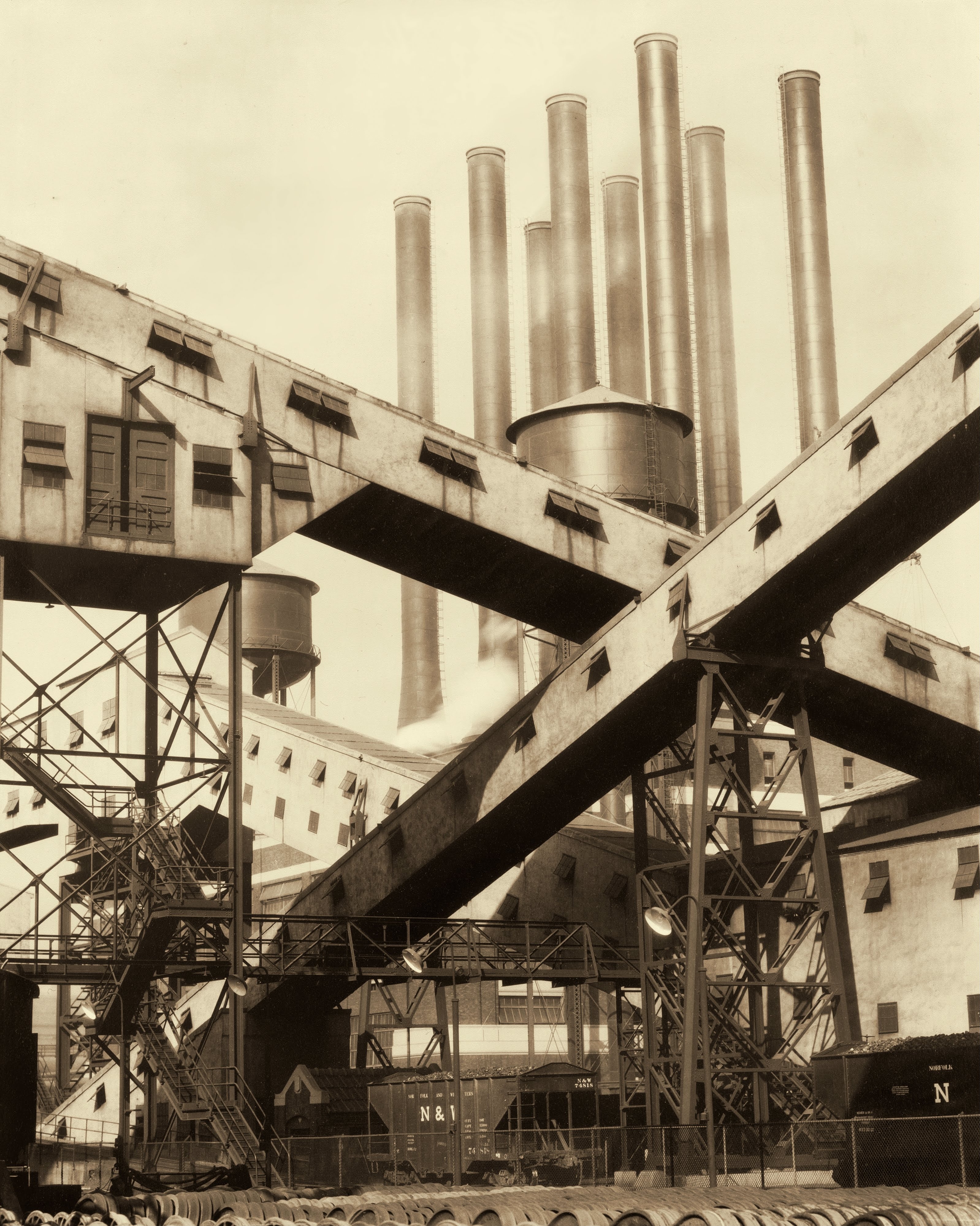
Criss-Crossed Conveyors, River Rouge Plant, Ford Motor Company, 1927, by Charles Sheeler. Image courtesy of Wikimedia Commons, MoMA Lane Collection.
INTRODUCTION
When the Ford Motor Company’s River Rouge factory complex was completed in 1928, it was the most advanced manufacturing facility in the world, employing thousands of workers in 93 buildings on 2,000 acres of land at the mouth of the eponymous Rouge River, and producing thousands of cars each day. Its monumental scale and capacity further enshrined Detroit as America’s model industrial city and Henry Ford as the world’s ultimate industrialist. 1 1 Ford Rouge Complex,” Encyclopedia of Detroit, Detroit Historical Society. Accessed September 30, 2024. https://detroithistorical.org/learn/encyclopedia-of-detroit/ford-rouge-complex. Reporters the world over flocked to Detroit to inform their readers about the factory, with Vanity Fair lauding Ford himself as an “organizing and merchandising genius,” and praising the complex as “the central ganglion of our nation . . . an American altar of the God-Objective of Mass Production.” 2 2 “By Their Works Ye Shall Know Them,” Vanity Fair, Vol. 29, No. 6. (February 1928), p. 62. Accessed September 30, 2024. https://archive.org/details/sim_vanity-fair_1928-02_29_6/page/62/mode/2up?view=theater.
The Yiddish press, too, turned their pens to the question of whether Fordism’s promises of social transformation and universal economic prosperity held true. Writers from across the ideological spectrum of American Yiddish letters, including Moshe Nadir, Melekh Epshteyn, and Joseph Opatoshu, made pilgrimages to Detroit and to the River Rouge complex in the late 1920s to see for themselves. Their reports, whether in the pages of Der Tog, Morgn Frayhayt, or the Forverts, interrogated, on one hand, the prospects of prosperity and progress enabled by Fordism and, on the other, the exploitation inherent to industrial capitalism and the newly crystallized Fordist political economy. Unsurprisingly, Yiddish writers tended to condemn Ford quite harshly for his open antisemitism and his exploitation and abuse of workers – all while grappling with the undeniably mesmerizing spectacle of the mechanized assembly line. 3 3 Ford and Fordism were hot topics in the Yiddish press of the late 1920s, particularly during and after the Sapiro libel trial of 1927. See: Louis Miller, “Sheloy osani Ford!” Der Tog, February 5, 1927, p.8; B. Ts. Goldberg, “Kindershe hent shafn shvere milyonen far Henri Ford,” Der Tog, April 16, 1927, p.7; Meylekh Epshteyn, “Ba Henri Ford,” Morgn-Frayhayt, March 4, 1928, p.7; Moshe Nadir, “Ford-verts,” Morgn frayhayt, December 22, 1928, p.7; and “Di shtot Detroyt,” Morgn frayhayt, December 23, 1928, p.5.
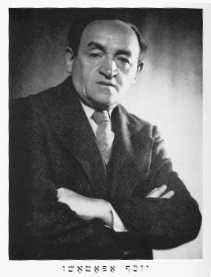
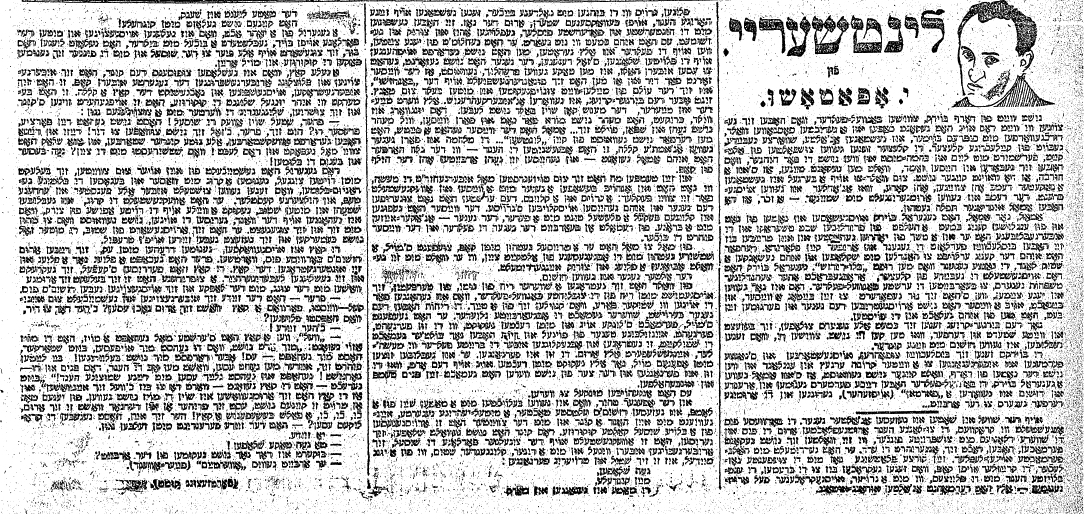
Opatoshu made his own peregrination to Detroit in the spring of 1929 and penned “In Ford’s Factory” (Bay Fordn in fabrik) which appeared in Der Tog and, with minor changes, in Warsaw’s Naye folkstsaytung, on May 17, 1929. 4 4 The exact date of its publication is difficult to ascertain due to a lack of digitized issues of Der Tog from 1929, but the article also appeared with minor changes in Warsaw’s Naye folkstsaytung on May 17, 1929. See Joseph Opatoshu, “Bay Fordn in fabrik,” Naye folkstsaytung, May 17, 1929, p.6. Immune to the “vast mechanical apparatus of enchantment” that was Fordist manufacturing, Opatoshu’s account of his guided tour at the River Rouge complex – an experience Ford still offers to visitors today – presented a human-centered alternative to the alienated, hyper-mechanical images of the factory which prevailed in popular reporting. 5 5 Eugene McCarraher, The Enchantments of Mammon: How Capitalism Became the Religion of Modernity (Harvard University Press, 2019), 364. Where the mainstream Anglophone press tended to portray the plant as “bereft of almost any human beings,” as “temple machinery innocent of toil, impregnable by injustice, [and] unsullied by lust for power or profit,” Opatoshu did nearly the opposite, making the reader constantly aware of the human presence – and human suffering – of the workers. 6 6 Ibid., 362. Approaching his assignment with his characteristic empathy and eye for injustice, his focus on the human backbone of Fordist production – and on Henry Ford’s personal greed as its motivating force – is the moral throughline of the story, even as he relates how he is overwhelmed and dazzled by the scale, power, and ferocity of the machinery by which he is surrounded.
Opatoshu’s rendering of technical language presented challenges in the process of translation. One term which appears throughout the original Yiddish text is “קריכנדיקע וואַרשטאַט / krikhndike varshtat,” literally “crawling workshop” or “workbench.” This appears to be an invented term by Opatoshu, used to render the English “assembly line.” Yet by choosing to use “krikhndike,” instead of a more literal rendering, Opatoshu imbued the machinery with a vivid sense of living motion. After wrestling with the question of whether to retain Opatoshu’s original phrasing or to prioritize usage of the already-familiar English term, the editors and I ultimately settled on using “crawling assembly lines” for the first appearance of the term in order to convey Opatoshu’s sense of movement, then simply “assembly lines” in each subsequent instance, with a couple of exceptions where context allowed.
Additionally, the wide variety of unfamiliar manufacturing processes that Opatoshu depicted were sometimes a challenge to parse. One such instance was his description of workers who “rode alongside” the assembly line “on low, padded carts.” Another appeared near the end of the piece: a vaguely phrased scene in which “di reder zenen aroyf af di shines.” In each of these cases, understanding the mechanical processes involved was an essential step in rendering the translation properly. Such an understanding would have been difficult if not for a 1928 documentary produced by Ford, showing the whole Model A assembly line. I encourage readers to watch it after reading (or re-reading) Opatoshu’s piece in order to gain a visual sense of the factory environment and the processes which he described.
Throughout, Opatoshu compares the factory and the industrial processes around and within it to living things: locomotives pant, cranes “stoop like camels,” and the factory itself moans, trembles, and shivers. Juxtaposed with this ensouled machinery are men: mechanized humans, workers who inhabit the machinery and are yet dwarfed by it, living soot-smeared half-lives at constant risk of injury or death. Particularly poignant is Opatoshu’s depiction of a worker, “a withered man without hands,” who has himself been incorporated into the machinery of the factory, “[holding] a whistle in his mouth” and blowing signals for shift changes – maimed by the machinery, then made a part of it.
Opatoshu’s depiction of the factory as a place where man and machine blur together is of a kind with Diego Rivera’s famous 1932 “Detroit Industry” frescoes. These monumental works, commissioned by the Ford Motor Company to adorn the walls of the Detroit Institute of Arts, portray the River Rouge factory as a living stage for the elemental interplay of animal and mechanical forces, where workers inhabit and resemble machinery, but ultimately exert mastery over it. Though Rivera’s work was commissioned by Ford, he used the frescoes as an opportunity to criticize the dehumanizing nature of industrial labor, its role in the promotion of war and the destruction of nature, and to suggest the liberatory possibilities of leftism. The frescoes drew criticism from Detroit’s industrialist class and were nearly destroyed. 7 7 “Detroit Industry Murals, Detroit Institute of Arts,” National Park Service, accessed August 5, 2025. https://www.nps.gov/places/detroit-industry-murals-detroit-institute-of-arts.htm Drawing on a tradition of Yiddish writing such as Morris Rosenfeld’s Sweatshop, Opatoshu’s work, like Rivera’s, assimilates the aesthetic vocabulary of Fordism – the ensouled machine, the supremacy of the mechanical, the factory as a site of primeval, divine creation – and turns it on its head. The reader is left with a sense of unease and concern for the “blunted and dulled” workers who suffer and toil in the shadow of great machines, risking their lives and their humanity “in Ford’s factory.”
Click here to download a PDF of the text and translation.
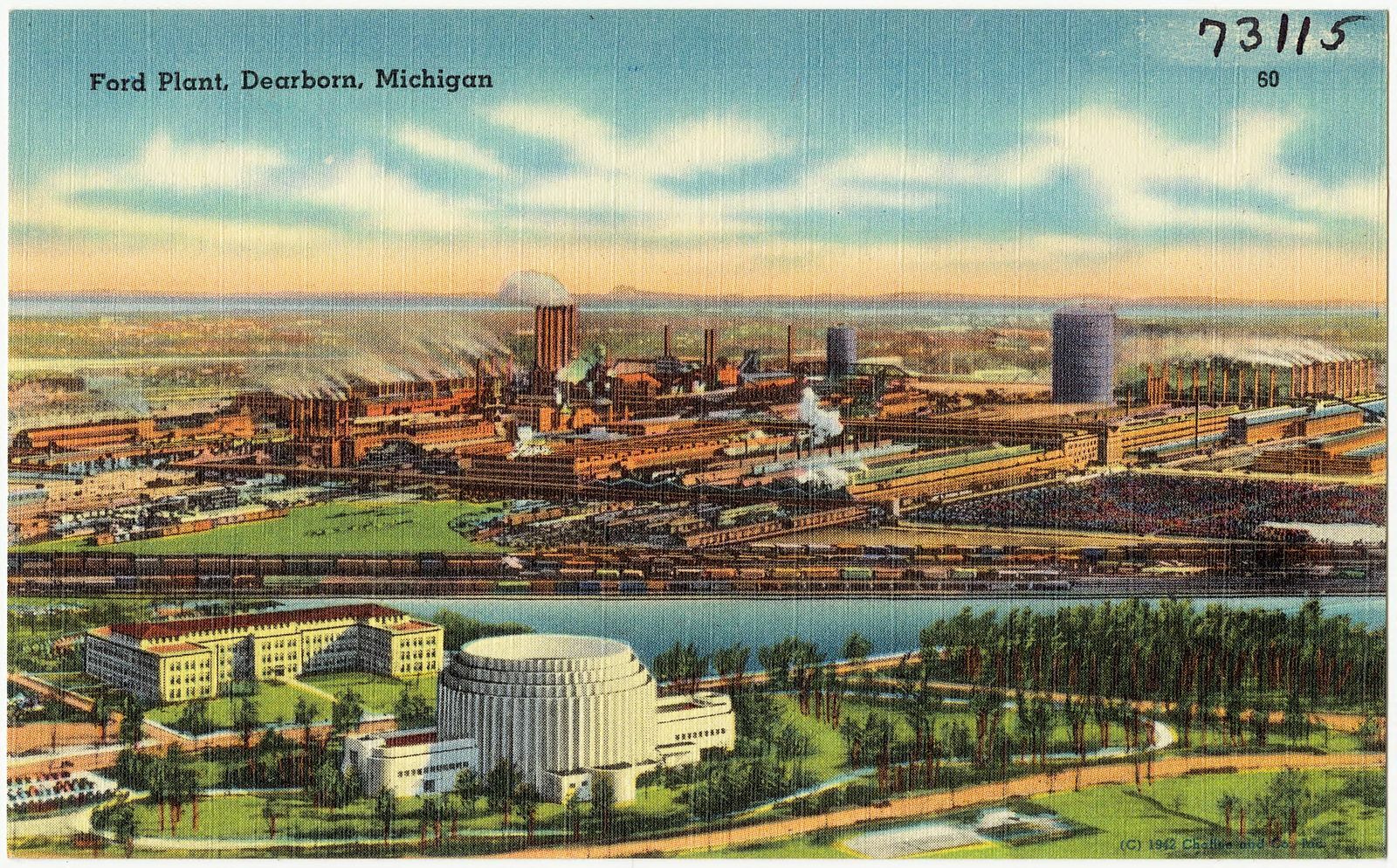
Ford Plant, Dearborn, Michigan, ca. 1930-1945, published by Tichnor Brothers. Image courtesy of Wikimedia Commons, Boston Public Library, Tichnor Brothers Collection.
הונדערט און דרײַסיק טויזנט אַרבעטער.— יעדע פֿופֿציק סעקונדעס ווערט פֿאַרטיק אַן אויטאָמאָביל.— פֿיר הונדערט עקסידענטס אַ מעת־לעת.— יעדע דרײַ־פֿיר מינוט טראָגט מען אין שפּיטאָל אַרײַן אַ פֿאַרוווּנדעטן אַרבעטער. די עקסידענטס אין פֿאָרדס פֿאַבריקן ווערן ניט פֿאַרצײכנט אין דער דעטרויטער פּרעסע. (אינפֿאָרמאַציע).
הינטער דעטרויט אין אַ ליכטיקער געבײַדע, וואָס איז ברייטער ווי העכער, ענלעכער אויף אַ מוזיי ווי אויף אַן אָפֿיס, קלײַבן זיך מענטשן פֿון דער גאַנצער וועלט. מען קומט אַהער אָנקוקן פֿאָרדס פֿאַבריקן. דאַכט זיך ניטאָ קיין מענטש, וואָס זאָל האָבן געווען אין דעטרויט און איז ניט פֿאַרפֿאָרן אַהער. בלויז צווישן די דעטרויטער תּושבֿים האָב איך באַגעגנט געבירטיקע, וואָס האָבן די פֿאַבריקן נאָך ניט געזען און זענען אַפֿילו ניט נײַגעריק זיי אָנצוקוקן. אין זײַן אייגענער שטאָט האָט מען פֿאָרדן ניט ליב. מען האַלט אים פֿאַר אַ פֿרעמדן, פֿאַר אַ קאַרגן, וואָס ניט נאָר ער קהלט זיך ניט, ער גיט אַפֿילו קיין אָרנטלעכע נדבֿה אויך ניט.
יעדער באַזוכער מוז אונטערשרײַבן אַ פּאַפּיר, אַז וואָס עס זאָל ניט געשען — צי ס'וועט עפּעס פֿאַלן אין קאָפּ אַרײַן, אַ מאַשין וועט אַרײַנכאַפּן אַ האַנט, אַ פֿוס, פֿײַערדיקער שמעלץ וועט אויסברענען אַן אויג, אַ שטיק לײַב, אַן אויוון, צי אַ קעסל וועט עקספּלאָדירן — וואָס פֿאַר אַ שלעק און פּורעניות ס'זאָל ניט טרעפֿן, קאָן קיינער ניט האָבן קיין טענות צו דער קאָמפּאַניע.
אונטערגעשריבן, זענען מיר — מאַנסבילן, פֿרויען, קליינוואַרג — אַרײַן אין אַ „באָס“, וואָס האָט געוואַרט פֿאַרן אָפֿיס. און ווי מען האָט זיך גערירט פֿון אָרט, האָט דער פֿירער אונדזערער, אַ דורכגעטריבענער שײגעץ, אָנגעהויבן צו זאָגן דעם פּיזמון זײַנעם, וואָס ער חזרט איבער יעדע שעה פֿאַר אַ נײַער פּאַרטיע באַזוכער:
— אַזוי פֿיל און אַזוי פֿיל טויזנטער אַקער לאַנד, אַזוי פֿיל און אַזוי פֿיל טויזנטער טאָן קוילן…
דער „באָס“ האָט זיך געוויגט איבער אַ וועג געגאָסן פֿון קאָנקריט און פֿון דעם שײגעצס זאָגעכץ איז מיר געבליבן אין די אױערן — מיליאָנען מיליאַסן, מיליאָנען מיליאַסן.
אַרום און אַרום האָבן זיך געריסן געבײַדעס, הויכע, העכערע, אָנגעפּיקעוועט מיט פֿאַרקאָפּטשעטע שויבן, מיט גלעזערנע דעכלעך און דעכער. די געבײַדעס האָבן דערמאָנט די אַלטע וואָקזאַלן אין פּאַריז, אין בערלין.
לאָקאָמאָטיוון האָבן געסאָפּעט, זיך געטראָגן מיט רוגזה, זיך געוועקסלט פֿון אײן פּאָר שינעס אויף אַ צווייטער, אַרויסגעוואָרפֿן שטיקער רויך, וואָס זענען זיך ניט צעפֿלויגן, נאָר געבליבן שטײן אין דער פֿײַכטער לופֿט און האָבן געקרעלט אין האַלדז, אין דער נאָז.
וווּ אַ וואָרף מיטן אויג — איבערגעוואַקסענע קוימענס פֿון גלאָזהוטעס און אײַזן־גיסערײַען, הײבמאַשינעס, צעהויקערט ווי קעמלען, בערג קוילן, בערג זאַמד, פֿאַרזשאַווערטע שיפֿסקעלעטן, וואָס ליגן איינער אויפֿן צווײטן, אײנער איבערן צווייטן.
דער „באָס“ האָט דורכגעשניטן די שינעס, געפֿאָרן איבער שמאָלע וועגלעך, זיך פֿאַרקירעוועט אויף אַ בריק, וואָס איז געהאַנגען איבער אַ לויפֿנדיק וואַסער. שיפֿן מיט פֿאַרריסענע נעז, מיט אָנגעצויגענע פֿענער, שלעפּשיפֿן און שיפֿלעך, אַ גאַנצער פֿלאָט איז געשטאַנען פֿאַראַנקערט און אַרבעטער, ווי היישעריקן, האָבן זיך געטראָגן פֿון אַלע זײַטן, אָנגעלאָדן און אויסגעלאָדן סחורה. רויטע אותיות האָבן געפֿלאַטערט איבער דער יבשה, איבערן וואַסער, דערצײלט וועגן דער לעגענדע „פֿאָרד“, וועגן דער מלוכה „פֿאָרד“.
דער „פֿירער“ האָט אויפֿגעפּראַלט אַ טאָפּלטע טיר און אַ זויערע כוואַליע, וואָס האָט געשמעקט מיט שיידוואַסער, זשאַווער, האָט אַ וויש געטאָן איבערן פּנים, שווער געמאַכט דעם אָטעם.
ס'קלאַפּערײַ, ס'פֿײַפֿערײַ, ס'בויערערײַ, ס'גראַגערײַ, וואָס איז געהאַנגען פֿאַר די אויגן ווי אַ נעפּל, האָט אויף אַ ווײַלע צוגענומען בײַ מיר די ראיה. ביסלעכווײַז האָבן זיך גענומען אויסשיילן רעדער, שווינדלטרעפּ, קריכנדיקע וואַרשטאַטן, שטאָלענע און קופּערנע קעסלען און וווּ אַ דריי מיטן קאָפּ — רערן, רערן, רערן. איבער דעם אַלעם האָבן זיך געגאַרטלט ברייטע לעדערנע פּאַסן, זיך געוויקלט אַרום די מאָטאָרן, אַרום די רעדער, געקרעכצט אין די ווענט, די שויבן, די אָפּגעדעקטע געדערעם פֿון די געווערקן, אַפֿילו דער שטיינערנער דיל — אַלץ האָט געציטערט, זיך געטרייסלט.
כ'האָב זיך מיט אַ מאָל אַ כאַפּ געטאָן פֿאַר אַ פֿוס, פֿאַר דער פּלייצע, דערפֿילט ס'בריט און כ'האָב זיך אומגעקוקט. מיר זענען געשטאַנען בײַ די ציגלנע אויוונס מיט די אָפֿענע פֿענצטערלעך, וווּ טויזנטער טאָן קוילן האָבן זיך געשמאָלצן, זיך געגאָסן און ס'פֿײַער האָט געפֿלייצט, דערציילט, אַז ס'איז די נשמה פֿון אַלע פֿאַבריקן. כ'האָב געקוקט אין פֿײַער אַרײַן דורך אַ בלויער שטיק גלאָז, געטראַכט וועגן מיסטישן „נהר דינור“ (פֿײַערטײַך) און ס'איז מיר קלאָר געוואָרן, פֿאַר וואָס דער אַמאָליקער מענטש האָט שטענדיק געדינט צום פֿײַער, וואָס רייניקט יעדע שמוץ און בלײַבט אַליין ריין.
One hundred and thirty thousand workers. – Every fifty seconds an automobile is produced. Four hundred accidents a day. – Every three to four minutes a wounded worker is taken to the hospital. – The accidents in Ford’s factories are not reported in the Detroit press. 8 8 This epigraph of sorts is an artifact of this piece having originally run in a newspaper, serving as a kind of “teaser” for the article and providing additional context for readers.This and the following footnotes are those of the translator.
Outside Detroit in a brightly lit building – wider than it is tall, more like a museum than an office – people gather from around the whole
world. They come to visit Ford’s factory.It seems that nobody comes to Detroit without making a stop here. The only exception, I’ve found, are some native Detroiters who haven’t yet seen the factory and aren’t even eager to take a look. Ford isn’t well-loved in his own city. He’s considered a stranger, a miser, and, what’s more, he doesn’t get involved with the community or give generously.
Every visitor to the Ford factory must sign a paper saying that whatever should happen – if something falls on his head; if a machine takes off a foot, a hand; if molten scrap burns out an eye, a chunk of flesh; if a furnace or boiler explodes; whatever disaster or calamity that occurs– then he won’t take the firm to court.
Thus undersigned, we – men, women and children – got into a bus that waited in front of the office. As the bus pulled away, the brat in the driver’s seat began reciting the same old story he tells on the hour for every new party of visitors. “This many thousands of acres of land, this many thousands of tons of coal…”
The bus rocked down a concrete road, and the brat’s remark rang in my ears – “A million millions, millions of millions.”
Taller and taller buildings rose up all around us, crammed with soot-blackened windowpanes, with glass eaves and roofs. The buildings evoked the old train stations of Paris and Berlin.
Locomotives panted, moving gruffly, switching from one set of rails to another, throwing off plumes of smoke which, rather than flying off every which way, stood still in the humid air instead and caught in one’s throat, in one’s nose.
Wherever you turned: the overgrown chimneys of glassworks and iron foundries, cranes stooped like camels, mountains of coal, heaps of sand, rusted skeletons of ships laid one atop the other, one over the other. 9 9 Ships past their prime were broken up on the factory grounds for scrap iron, as seen in this photograph.
The bus cut across the rails, drove along a small path, and turned onto a bridge suspended over running water. A whole fleet of cargo ships and boats, vessels with haughty noses and taut flags, rode at anchor while workers, like a swarm of locusts, moved along from all sides loading and unloading goods. Red letters fluttered over the land, over the water, telling of the Legendary Ford, of the Kingdom of Ford. 10 10 The Ford logo was indeed ubiquitous in the River Rouge turning basin and unloading inlet, the area Opatoshu describes. Cargo vessels of the Ford fleet deposited raw materials there for the consumption of the factory. The Ford fleet did not adopt a flag until the 1940s, and photos from the late 1920s and early 1930s show no flags in this area. That the logo “fluttered” is likely Opatoshu taking a bit of creative liberty. One can, however, see the Ford logo on train cars and on the smokestacks of ships in photographs from the time.
Our guide threw open a double door and a sour wave of air, tasting of nitric acid and rust, slapped me across the face and made it difficult to breathe.
All the clamor, the whistling, the drilling, and the rattling temporarily clouded my vision. Little by little, wheels began to resolve themselves, and then spiral conveyors, crawling assembly lines, 11 11 “Krikhndike varshtatn” – “Crawling workbenches.” steel and copper boilers and, with each turn of the head: pipes, pipes, pipes… Wide leather belts looped around everywhere, coiling around motors, around wheels, moaning in the walls. The windowpanes, the exposed entrails of the machinery, even the stone floor itself — everything shivered and trembled.
Suddenly I grabbed at my leg and shoulder, feeling a burning sensation. I looked about. We stood before the open portholes of the blast furnaces, where thousands of tons of coal melted, poured, and flashed into fire, announcing their role as the soul of all factories. Gazing into the flames through a blue piece of glass, I thought of the mystical “nehar dinur” (river of fire) 12 12 A “river of fire,” portrayed in Daniel 7:10 as flowing from beneath God’s throne in heaven. In the Zohar it is described as a place where “the souls of the righteous bathe and cleanse themselves” and “the souls of the wicked are sentenced in it and consumed by it like straw by fire.” (Zohar Vayikra 40:278, trans. Michael Berg) and it became clear to me why the ancients had worshiped fire since time immemorial: it is that which cleanses all filth and yet remains, itself, unblemished.
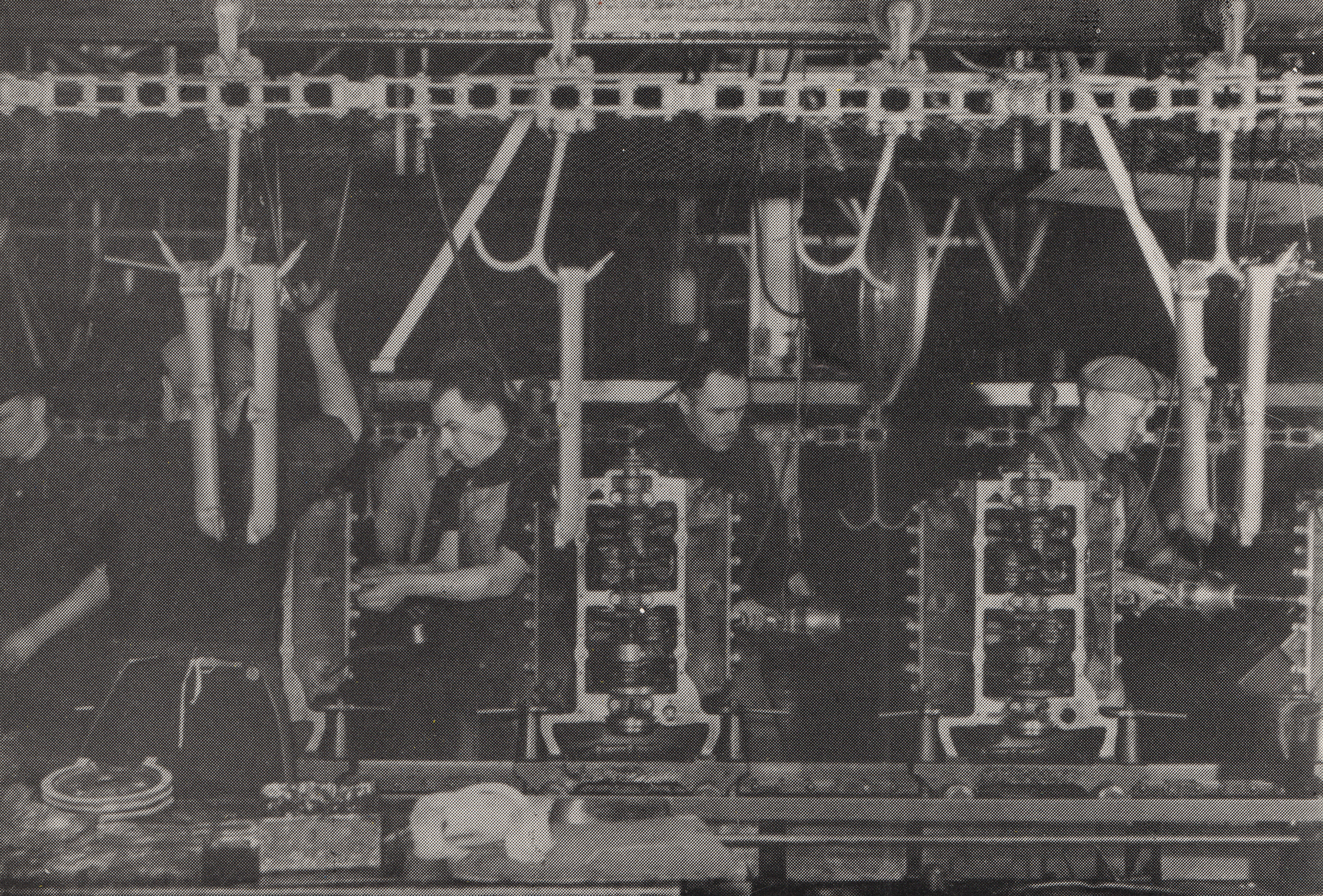
The engine line of the Ford Motor Company of Canada location in Ford City (now Windsor), Ontario, c. 1937. This scan is from a postcard issued by the Art Gallery of Windsor in 1994 as part of a retrospective on Ford City. Caption and image courtesy of Wikimedia Commons.
כּמעט צום לעצט האָב איך דערזען דעם מענטש. אויסגעשמירטע, פֿאַרחושכטע, שטייען די אַרבעטער אַרום די וואַרשטאַטן, אַרום די קעסלען, אַרום די אויוונס, זעען אויס קליין־נישטיק. יעדער האַלט אַן אַנדער אינסטרומענט, שטייט גרייט, װאַרט, דער קריכעדיקער וואַרשטאַט זאָל זיך דערנענטערן צו אים. דער וואַרשטאַט איז פֿול מיט רויע שטיקלעך מאָטאָרן. איינער לאָזט אַראָפּ די בויער־מאַשין, דער צווײטער פּאַסט צו אַ שרויף און איידער מען טוט אַ פּינטל מיטן אויג — דאָס שטיק מאָטאָר פֿאָרט שוין ווײַטער. אײן שטיק ווערט צוגעניטעוועט, צוגעשרויפֿט צום צווייטן און איידער וואָס ווען איז פֿאַרטיק אַ מאָטאָר.
די אַרבעטער שטייען איינער לעבן צווייטן, רעדן ניט, טשאַטעווען, באַפֿאַלן די רויע שטיקער אויטאָמאָבילן, ווי זיי וואָלטן מורא געהאַט, די אָפֿענע פּיסקעס פֿון די שנײַדמאַשינען, די פֿינקלדיקע בויערערס, די פּאַסן וואָס וויקלען זיך, די אַלע משחיתים זאָלן אַ מאָל ניט אַרײַנכאַפּן קיין האַנט, קיין שטיק קאָפּ.
אַרבעטער, וואָס פּאָרען זיך אונטער די סקעלעט־אויטאָמאָבילן, שאַרן זיך אויף אויסגעבעטע וועגעלעך, וואָס זענען צוגעפּאַסקעוועט צום געזעס, רוקן זיך נאָך די וואַרשטאַטן ווי קאַליקעס.
ס'איז געווען מיטאָגצײַט. יעדע פֿופֿצן מינוט האָט זיך געהערט אַ לאַנגער פֿײַף. אַרבעטער האָבן זיך געביטן. די וואָס האָבן שוין געהאַט געגעסן זענען אויסגעוואַקסן אַרום די וואַרשטאַטן, און די הונגעריקע זענען זיך צעלאָפֿן, זיך צעשטעלט ווער אַרום די אָפּטריטן, ווער אַרום די בלעכענע קעסלען מיט פּאַריק עסן. מען קויפֿט שיסלען זופּ, פֿלעשלעך מילך, „אויך מיר ביר“, סענדוויטשעס.
דאָס פֿײַפֿן שנײַדט זיך אַרײַן אין חלל, שרײַט איבער דעם געפּילדער. אָן אַ זײַט שטייט אַ דאַרער פּאַרשוין אָן הענט. ביידע הענט זענען אָפּגעריסן ביז איבער די עלנבויגנס. ער האַלט אַ פֿײַפֿל אין מויל און גיט סיגנאַלן.
מײַנער אַ באַקאַנטער, וואָס האָט זיבן יאָר געאַרבעט בײַ פֿאָרדן אין די פֿאַבריקן, ווײַזט מיט אַ פֿינגער אויפֿן סיגנאַליסט:
— פֿאַרלירט מען בײַ פֿאָרדן אַ האַנט, אַ פֿוס, צי גאָר בײדע הענט, איז מען פֿאַרזאָרגט מיט אַ שטעל אויפֿן גאַנצן לעבן.
אַן אויפֿזעער איז אונטערגעקומען, דערקענט מײַן באַקאַנטן. מען האָט אונדז פֿאָרגעשטעלט. דער אויפֿזעער האָט מיר אַרײַנגעשטעקט אַ קנאָך מיט צװײ פֿינגער און צוגעגעבן:
— אַ בוימאַשין האָט עס אָפּגעריסן.
— האָט איר כאָטש געקראָגן גוט באַצאָלט?
— פֿאָרד האָט זײַן פּרײַז — האָט דער אויפֿזעער געשמײכלט — צװיי הונדערט דאָלאַר פֿאַר אַ פֿינגער.
— אַזוי ביליק?
— פֿאָרד טענהט, אַז ס'קומט גאָרניט – דאָס גיט ער פֿון גוטסקײט.
— אַזוי האָט ער אײַך געזאָגט?
— ווער רעדט מיט אים, ווער זעט אים? כ'אַרבעט שוין דאָ פֿופֿצן יאָר, האָב איך פֿאָרדן דרײַ מאָל געזען. ס'ערשטע מאָל איז ער געקומען מיט אַן ענגלישן פּרינץ, ס'צווייטע מאָל מיט טשאַפּלינען און ס'דריטע מאָל איז ער געקומען מיט עפּעס אַ רוסישן פּרינץ.
דער אויפֿזעער האָט זיך געכאַפּט, אַז ער האָט זיך צערעדט און האָט אונדז געלאָזט שטײן. מיר זענען צוגעקומען צום אַרויסגאַנג. אויפֿן וואַרשטאַט איז שוין געשטאַנען אַ פֿאַרטיקער אויטאָמאָביל. אַן אָפּגעלאַקירטער, אַ פֿינקלדיקער. די רעדער זענען אַרויף אויף די שינעס. מען האָט אַרײַנגעגאָסן געזאָלין, אָנגעשרויפֿט דעם מאָטאָר און דער „גולם“ האָט באַקומען לעבן, אָנגעהויבן סאָפּען. דער אויטאָמאָביל איז אַרויס מיט אַ פֿײַף פֿון דער פֿאַבריק, זיך געטראָגן איבער אַ ליידיקן פּלאַץ אין אַ ראָד.
ס'האָט מיך אַרומגעכאַפּט אַ רחמנות אויפֿן מענטשן, וואָס בויערט לעכער, שרױפֿט שרײַפֿלעך פֿיר און צוואַנציק שעה אין מעת־לעת, ווערט טעמפּ נאָך פֿינף, זעקס יאָר אַרבעט, אַבי פֿאָרד זאָל אויפֿפֿירן זײַן משוגעת, אַרויסוואַרפֿן אין ווײניקער ווי אַ מינוט אַן אויטאָמאָביל.
כ'האָב זיך דערמאָנט, אַז פֿאָרד לײענט פֿאַרן שלאָף די ביבל, ווײס זיכער די מעשׂה מיט די זיבעציק מלכים, וואָס אַדוני־בזק האָט זיי אָפּגעהאַקט די גראָבע פֿינגער. ס'קען פֿאָרדן אַ מאָל אײַנפֿאַלן אַ נײַע משוגעת — אָפּצוהאַקן יעדן פֿון הונדערט און דרײַסיק טויזנט אַרבעטער אַ פֿינגער — פֿאַר זעקס און צוואַנציק מיליאָן דאָלאַר קען ער האָבן ס'פֿאַרגעניגן, קען ער דורכפֿירן זײַן משוגעת.
1929.
Then, at last, I saw the people. Greasy and gloomy, the workers stood around the workbenches, around the boilers and furnaces, appearing tiny and insignificant. Each man held a different tool, standing ready, waiting for the crawling workbench to draw close. The workbench was full of raw engine parts. One worker would lower a drilling machine, the second would adjust a bolt, and before you could blink—the engine part was already moving further along. One piece would get riveted, bolted to the second, and in an instant you had a whole engine.
The workers stood, one next to the other, lying in wait to pounce on the raw auto parts, careful to stay back from the open maws of the cutting-machines, the sparkling drills, the winding belts, terrified that all these demons might suddenly take off a hand or a chunk of their head.
Workers, busying themselves underneath the car skeletons, rode alongside on low, padded carts strapped to their backsides, sliding after the assembly line like cripples.
It was lunchtime. Every fifteen minutes a long whistle blew. Workers traded places. Those who had already eaten budded up around the assembly line and the hungry ones dispersed, some lining up by the bathrooms, others around the tin pots of steaming food. They bought bowls of soup, bottles of milk, sandwiches, and “you call that a beer?” 13 13 Prepackaged sandwiches, hot soup, milk, and other small treats were available for purchase by workers at the River Rouge plant during their 15-minute lunch break each shift. In 1929 Ford’s contracted food vendors fed 100,000 workers each day at the Rouge plant. “‘You call that a beer/Oykh mir bir” likely refers to root or ginger beer, or some other carbonated beverage, available for purchase. It may also be a facetious nod at the lengths to which Henry Ford went in order to discourage his workers from drinking alcohol. Ford employees who wanted to qualify for his famous “$5 a day” wage were required to cooperate with the company’s Sociological Department. The department conducted random inspections of their families, homes, and activities to ensure that they lived in “desirable” conditions and did not engage in “undesirable” behaviors such as drinking, speaking languages other than English at home, or hosting lodgers.
A whistle pierced the air, screaming over the clamor. On one side stood a withered man without hands. Both were torn off just above the elbow. He held a whistle in his mouth and gave signals.
An acquaintance of mine who had worked seven years at Ford’s factory pointed at the signaler:
“If you lose a hand, a foot, or even both hands at Ford’s, he gives you a job for life.”
An overseer came around and recognized my acquaintance. My acquaintance introduced us. He stuck out a stump of a hand–just two fingers–for me to shake, and added:
“A drill machine tore ’em off.”
“Did you at least get a good payoff?”
“Ford has his price,” the overseer smiled. “Two hundred dollars per finger.”
“That cheap?”
“Ford claims he really owes you nothing – but that he gives out of kindness.”
“He said this to you?”
“Who talks with him? Who sees him? I’ve worked here fifteen years already, and I’ve only seen Ford three times. The first time he came with an English prince, the second time with Chaplin, and the third with some sort of Russian prince.” 14 14Charlie Chaplin visited Ford’s Highland Park plant in 1923. Prince Edward, later King Edward VIII, visited the same plant in 1924. A worker such as this who had worked “fifteen years already” for Ford would have worked at Highland Park before the completion of the River Rouge plant in 1928. “Some sort of Russian prince” may in fact be a winking reference to visits by Soviet dignitaries. The USSR signed a deal with Ford Motor Company in 1929 to open two auto plants in Russia modeled after the River Rouge complex. See B. Smolyar, “Ford, Sovetn-Rusland, un tsvey Yidn,” Der Tog, July 17, 1929, p.4.
The overseer realized he’d been idle too long and left us to stand there.
We arrived at the exit. What we saw now on the assembly line was a finished automobile, lacquered and shining. The wheels got onto the rails. 15 15 Opatoshu describes the finished car rolling off the end of the assembly line, where its wheels were guided into a set of rails to keep the automobile still while workers made final adjustments. This process can be seen in this film. Gasoline was poured in, the engine was cranked, and the “golem” came to life and started panting. And then, with the blow of the whistle, the automobile drove out of the factory, to circle an empty lot.
I was overcome by pity for the man who drills holes and screws bolts for twenty-four hours a day, who grows blunted and dulled after five, six, years of work, all so that Ford might fulfill his mad goal of producing an automobile in less than a minute.
It was then I recalled that Ford reads the Bible before bed. Surely he knew the story of Adoyni-Bezek, who cut the thumbs off of seventy kings. 16 16 Judges 1:7 (JPS, 1985) – “And Adoni-bezek said, “Seventy kings, with thumbs and big toes cut off, used to pick up scraps under my table; as I have done, so God has requited me.” Adoni-Bezek is given the same treatment when he is captured by the Israelites – an act of poetic justice that Opatoshu would have known when making this reference. It could occur to Ford to do something crazy himself: he could cut a finger each from one-hundred-and-thirty-thousand workers so that, for twenty-six-million dollars, he could have the pleasure of seeing his madness through to the very end.
1929.


.jpg)
