Jun 30, 2025
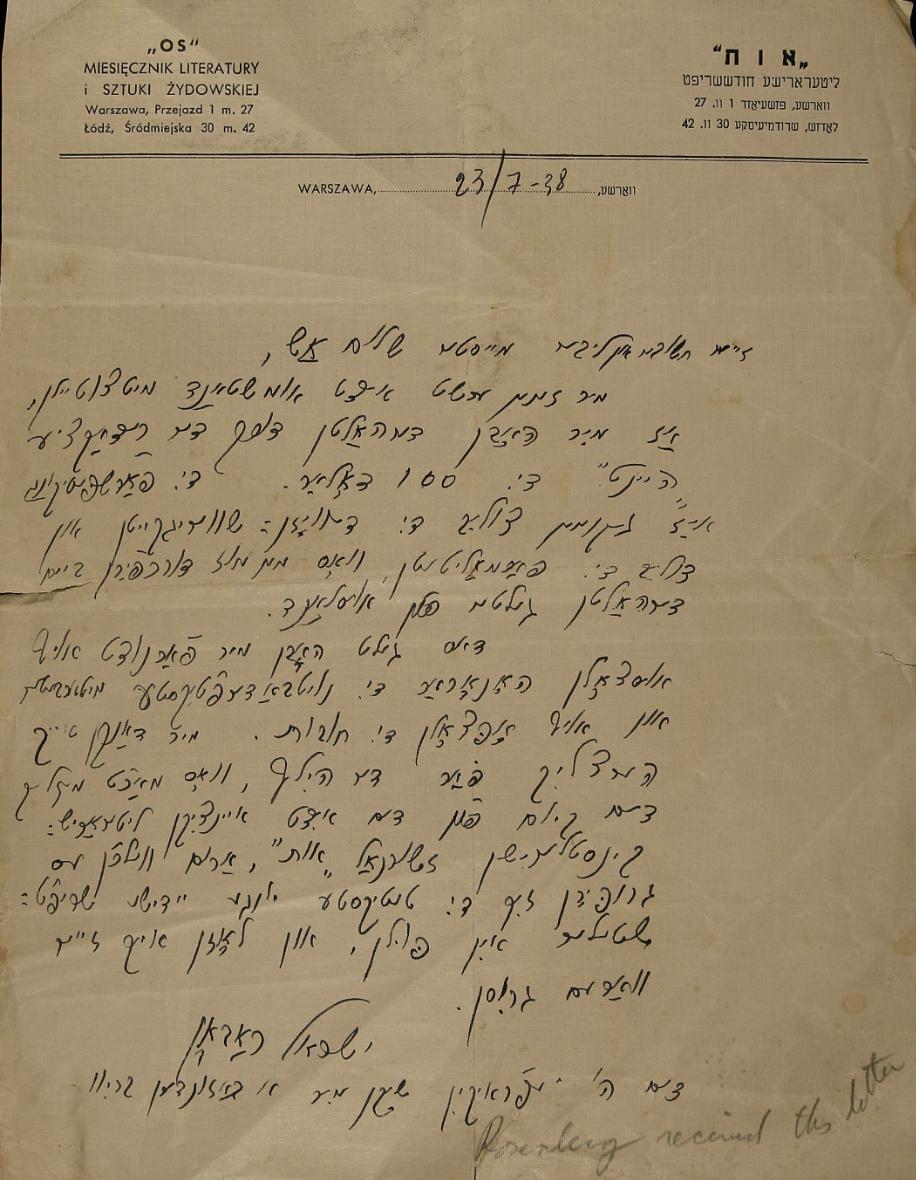
From Yisroel Rabon in Warsaw to Sholem Asch in New York, 23 July 1938, belatedly thanking him for his donation of 100 dollars, which is helping to enable the continued existence of Os, “the only literary-art journal around which young Jewish writers in Poland are congregating.” Yiddish. Polish and Yiddish letterhead: Os, Literary Monthly, Warsaw, Przejazd 1, m. 27; Łódź, Śródmiejska 30, m. 42. RG 602, Shalom Asch Papers, F85. Caption and image courtesy of YIVO.
INTRODUCTION
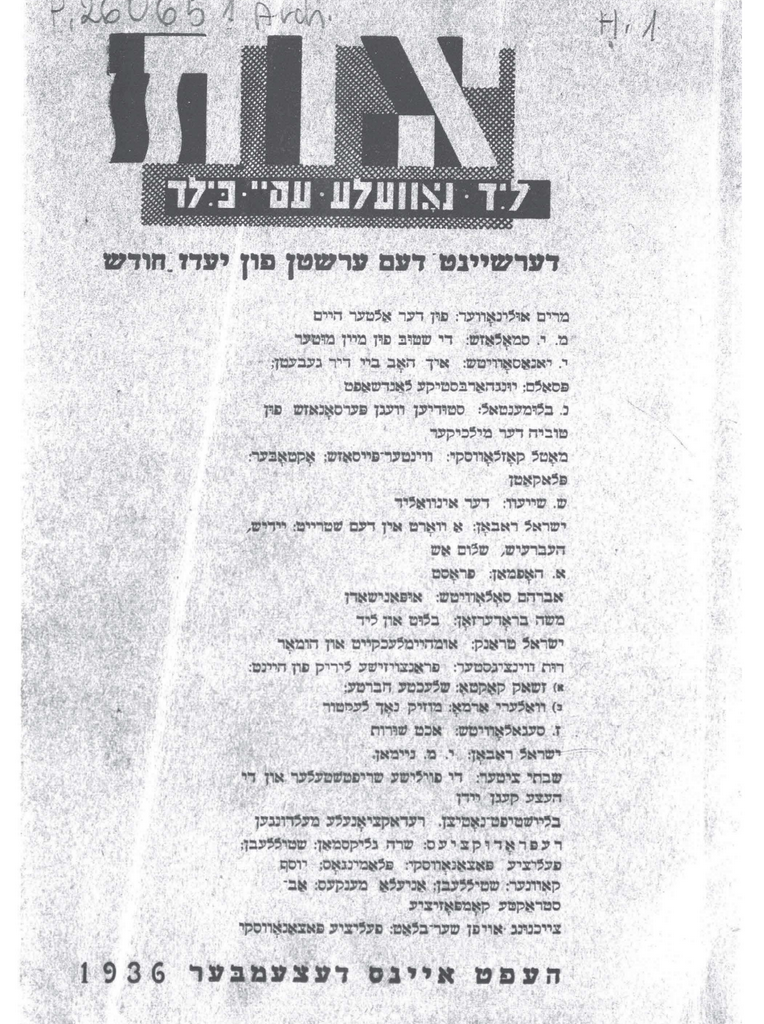
This essay by Yiddish novelist, poet, and critic Yisroel Rabon was published in December 1936 in the literary monthly Os (Letter), which Rabon himself edited. Rabon was born in Gowarczów in 1900 but spent most of his life in Lodz, which was the setting of his two published novels, Di gas (1928) and Balut: Roman fun a forshtot (1934). He also published several volumes of poetry and serialized novels in Yiddish newspapers, including Haynt (to which he obliquely alludes in this essay as having “the most honorable attitude towards Yiddish writers,” despite its “reactionary” political slant).
Scholarship on Rabon’s work has mostly focused on his fiction, which was controversial in its day for its grotesque depictions of sex and violence among Jews on the urban fringe. Khone Shmeruk, in a 1981 Hebrew essay recently translated by Tsiona Lida and published in In geveb, places Rabon’s fiction within the context of Yiddish shund literature, a genre which Rabon defended in his own essays on Yiddish literature. 1 1 Khone Shmeruk, “The History of “Shund” Literature in Yiddish,” In geveb, April 2023, trans. Tsiona Lida, https://ingeveb.org/texts-and-translations/the-history-of-shund-literature-in-yiddish. Miriam Udel has engaged with and complicated the characterization of Rabon’s Di gas (by Khone Shmeruk and others) as “above all, a chronicle of alienation, social fragmentation, and inter-war disaffection.” 2 2 Miriam Udel, “When Narration is the Only Salvation: Yisroel Rabon’s Modernist Picaresque,” Polin Studies in Polish Jewry, Volume 28, 2016, pp. 307-321, 309. However, relatively little attention has been paid to Rabon’s nonfiction and critical work, much of which he published (sometimes pseudonymously) in Os and other journals that he edited. In a 1938 letter to Sholem Asch, Rabon ostentatiously described Os as “the only literary-art journal around which young Jewish writers are congregating.” 3 3 Letter from Yisroel Rabon to Sholem Asch, 1938, RG 602, Shalom Asch Papers, F85. YIVO, https://encyclopedia.yivo.org/media/1400. Rabon appears to have cultivated a contrarian, bête noir persona with regards to the Polish Jewish literary establishment in Warsaw and Vilna (embodied in this essay by Max Weinreich, Yankev Pat, and Itzik Manger). Critic Y.Y. Trunk wrote that Rabon was “the most asocial writer in Yiddish literature in Poland…[who] believes in no manner of community.” 4 4Leksikon fun der nayer yidisher literatur, vol. viii (New York: Congress for Jewish Culture, 1981), 283. It is a characterization both uncharitable and somewhat believable.
“A Word in Edgewise” describes—at times with humorous irony, at times with great conviction—the ideological infighting between Yiddish cultural workers in Poland in the 1930s. Rabon takes special issue with the hypocrisy of a Yiddishism more concerned with signaling its own leftist virtues and combating the symbolic threat of Hebrew in Palestine than with supporting the apparently dwindling Yiddish cultural life in Poland. In doing so, Rabon gives voice to a Yiddishist pessimism of his age, distinct from the naivete or tragedy that post-war readers have so often projected onto interwar Yiddish writers. For example, it is jarring to read the phrase “der khurbn fun yidish” (the destruction of Yiddish) in a piece written in 1936. Rabon’s perspective defies simple categorization: he is a committed socialist with no great love for the Bund’s cultural politics, a promoter of Yiddish with respect for both modern and ancient Hebrew literature, and a Yiddish writer with a realist attitude towards Polish overtaking Yiddish as the primary language of Poland’s Jews. A modern reader may recognize some familiar and enduring themes of a culture war, largely fought through rumor, speculation, projection, and symbolic gesture.
I have taken liberties to shorten some of Rabon’s longwinded paragraphs into more readable English sentences, while attempting to preserve some of the humor and poignant word choice in the original Yiddish. I have also removed a digressive section, in which Rabon quotes at length some French and German literary critics to defend Sholem Asch against Itsik Manger’s critique of the former’s allegedly poor grammar and punctuation.
Click here to download a PDF of the text and translation.
שלום אַש איז געװען אין ארץ ישׂראל. ער האָט דאָרט אויף אַ פֿאָרלעזונג, צי אױף אַ באַנקעט, לױט די רײד פֿון דוד פּינסקי, געװאָרפֿן באַלײדיקנדיקע װערטער אױפֿן חשבון פֿון דעם ייִדישן לשון. אָבער גענוי, װאָס ער האָט אַזױנס געזאָגט, װײסט מען נישט. איך שאַץ נישט אונטער די גבֿית־עדות פֿון אַזאַ פּערזאָן, װי דוד פּינסקי, אָבער די שפּראַכן־פֿראַגע איז בײַ אונדז אַזאַ, אַז דאָס, װאָס קאָן הײסן באַלײדיקנדיק פֿאַרן ייִדישיסט דוד פּינסקי, קאָן אַ מאָל נישט הײסן באַלײדיקנדיק פֿאַר דעם ייִדישיסט פּלוני־בן־פּלוני. איך, למשל, זע נישט אײַן קײן שום דערנידעריקנדיקס אין דעם, װאָס מע זאָגט, אַז ייִדיש איז די שפּראַך פֿונעם שוסטערגעסל. עס איז נישט דערפֿאַר, װײַל מײַן דעמאָקראַטישע אײַנשטעלונג שטעלט דאָס שוסטערגעסל אַזױ הױך, נאָר פּשוט דערפֿאַר, װײַל עס איז באמת אַזױ׃ ייִדיש רעדט מען נאָר אין דעם שוסטערגעסל. אין די אײבערשטע גאַסן, אָן אונטערשיד, צי עס װױנען דאָרט ציוניסטן, צי בונדיסטן, קאָמוניסטן, צי רעװיזיאָניסטן, רעדט מען בײַ אונדז פּױליש. עס זענען אָבער דאָ אַזעלכע, און נישט ספּעציעל אָרטאָדאָקסאַלע, ייִדישיסטן, װאָס זענען גרײט אַרױסצורופֿן אײַך אױף אַ דועל, װען איר זאָגט זײ, אַז ייִדיש איז דאָס לשון פֿונעם שוסטערגעסל.
דער ייִדישער פּען־קלוב האָט באַשלאָסן צו רעאַגירן לױט אַן עקספּראָמפּט געשאַפֿענעם ערן־קאָדעקס אױף דער רעפּרימענדאַציע פֿון דער שפּראַך, אין װעלכער עס שאַפֿט שלום אַש און עס שאַפֿן זײַנע מיטגלידער; און בעת שלום אַש איז געקומען קײן װאַרשע, איז דעמאָנסטראַטיװ נישט געמאַכט געװאָרן קײן אױפֿנאַמע לכּבֿוד אים, הגם שלום אַש איז דער ערן־פֿאָרזיצער פֿון דער דאָזיקער אָרגאַניזאַציע. די זאַך איז אַרױסגעקומען פֿאַר דער עפֿנטלעכקײט, עס זענען געשריבן געװאָרן װעגן דעם עטלעכע אַרטיקלען און עס איז אַפֿילו דערגאַנגען בײַ אונדז, װי דער שטײגער איז, צו אַ ביסל זידלערײַ. אָבער װאָס אײגנטלעך אַש האָט געזאָגט אין ארץ־ישׂראל װעגן ייִדיש קענט איר נישט געװאָר װערן. מען מוז זיך פֿאַרלאָזן אױף דוד פּינסקיס אױסטײַטשנדיקער באַצײכענונג פֿון אַשס רײד׃ ער האָט באַלײדיקט!
זאָל מען מיך נישט חושד זײַן אין קײן העברעיִזם, אָבער אַז שלום אַש, װי אַ דיכטער מיט אַ פֿילנדיק געמיט און עמפֿינדלעכער אױפֿנעמװעלט, האָט געקענט אַרײַנפֿאַלן אין ביטערניש איבער דעם מצבֿ פֿון דער ייִדישער שפּראַך, ספּעציעל אין פּױלן, קומענדיק אין באַרירונג מיט דעם אױפֿװאַכנדיקן קולטור־לעבן אױף העברעיִש אין ארץ־ישׂראל, איז פֿאַרשטענדלעך. קײן שום מענטש מיט אָפֿענע אױגן און מיט דעם נישט־געפֿעלשטן װילן זיך צו האַלטן אין די ד' אַמות פֿון אמת, קאָן נישט אָפּלײקענען, אַז דער חורבן פֿון ייִדיש אין אַלע געביטן פֿון זײַן פֿאַראַנען זײַן איז מוראדיק גרױס.
קײן שום פֿאַרלאַג פֿון ייִדישע ביכער עקזיסטירט נישט מער אין פּױלן. די ייִדישע פּרעסע פֿאַלט פֿון טאָג צו טאָג. די צײַטונגען אין דער פּױלישער שפּראַך שלינגען זי אײַן אָן אָנשטרענגונג מיט די שאַרפֿע צײן פֿון לעבן.
עס איז גענוג אײן קורצער זאַכבאַװײַז, כּדי צו זען דעם אומגעהױערן פֿאַרנעם פֿון דער עקסטערמינאַציע פֿון ייִדיש אױפֿן געביט פֿון גוטענבערגס דערפֿינדונג, און אַלס פּועל־יוצא – דעם קאַטאַסטראָפֿאַלן צוריקגאַנג פֿון ייִדיש אַלס קולטורעלער פֿאַקטאָר און שפּראַכלעך באַדינונגס־מיטל פֿון די ייִדן אין פּױלן׃
אין לאָדזש זענען דערשינען פֿאַר דער מלחמה – בײַ דער ספּעציפֿישער שטאָטיש־רעגיאָנאַלער טענדענץ פֿון דעם לאָדזשער אינדוסטריעלן מיטלשטאַנד צו גערמאַניזאַציע – דרײַ טעגלעכע ייִדישע צײַטונגען מיט אַ טיראַזש פֿון אַ דרײַסיק טױזנט עקזעמפּלאַרן. אױף פּױליש האָט געפֿירט אַ װעגעטירנדיק־נעבעכדיקע עקזיסטענץ אײן בלאַט מיט קױם אַ זעקס הונדערט לעזער. הײַנט גײט די גאַנצע לאָדזשער ייִדישע פּרעסע אין מאַקסימום אַ פֿופֿצן הונדערט עקזעמפּלאַרן און עס גײען אַרױס עטלעכע פּױלישע בלעטער מיט אַ טיראַזש פֿון פֿיל צענדליק טױזנטער. די לעזער זענען אין נײַנציק פּראָצענט ייִדן, װײַל די לאָדזשער ייִדן שטעלן בכלל מיט זיך פֿאָר דעם גראַמאָטנעם עלעמענט פֿון דער באַפֿעלקערונג.
Sholem Asch was in Palestine. There, at some reading or banquet—according to Dovid Pinsky’s account—he hurled insults at the Yiddish language. But exactly what he said we do not know. I don’t discount the testimony of a personage like Dovid Pinsky, but—given the Language Question among us—what the Yiddishist Dovid Pinsky might consider insulting would not be insulting to the average Yiddishist. I, for one, don’t see anything demeaning in calling Yiddish the language of the cobbler’s alley. And that’s not because my democratic disposition holds the cobbler’s alley in such high esteem, but simply because that’s how it is: Yiddish is only spoken in the cobbler’s alley. On the main streets, whether their residents be Zionists or Bundists, Communists or Revisionists, we speak Polish. Still, there are those Yiddishists—and not particularly orthodox ones—who are ready to challenge you to a duel when you tell them that Yiddish is the language of the cobbler’s alley.
Based on some ad hoc honor code, The Yiddish Pen Club 5 5 The first PEN Club was founded in London in 1921, for the purpose of promoting cooperation and defending the rights of writers across national borders. Although PEN clubs around the world were initially created on a national-territorial basis, the Jewish PEN Club was founded in Vilna in 1926 by Yiddish and Hebrew writers whose interests were not represented by the Polish PEN Club in Warsaw. In 1929, a Hebrew PEN Club was founded in Palestine, at which the Vilna-based club--whose center of membership and activity was nevertheless Warsaw--changed its name to the Yiddish PEN Club. Sholem Asch was elected Yiddish PEN’s honorary president in 1932. See Aneta Stępień, “The Role of the Association of Jewish Writers and Journalists in Warsaw in Interwar Poland. The Perspectives of Isaac Bashevis Singer and Zusman Segalovitsh,” Irish Slavonic Studies, vol. 26, 2017, 177-194. decided to respond to this reprimand of its members’ working language (and Sholem Asch’s, too). When Sholem Asch came to Warsaw, there was a pointed lack of any reception in his honor, even though he is the honorary chair of that same organization. The affair came out into the open, several articles have been penned about it, and it’s even reached the point of name-calling, as is our habit. But what exactly Asch said in Palestine about Yiddish is unknowable. We can only rely on Dovid Pinsky’s interpretation of Asch’s speech: what he said was insulting!
Now don’t call me a Hebraist, but it makes sense to me that Sholem Asch, a sensitive and impressionable writer, could witness the awakening of Hebrew cultural life in Palestine and become embittered over the state of the Yiddish language, especially in Poland. No one with open eyes and a genuine will to stay within the realm of truth can deny that the destruction of Yiddish across sectors is frighteningly immense.
Not a single publishing house for Yiddish books in Poland remains. The Yiddish press declines from day to day. The Polish-language newspapers easily devour Yiddish publications, tearing in with the sharp teeth of a living language.
One brief anecdote suffices to illustrate the enormity of Yiddish’s extermination in the arena of Gutenberg’s invention—and the resulting catastrophic retrogression of Yiddish as a cultural factor and useful linguistic medium of Poland’s Jews:
Before the war, despite that particular tendency of Lodz’s industrialist middle class towards Germanization, three daily Yiddish newspapers were being published, with a circulation of thirty thousand copies. On the other hand, the only Polish paper led a pathetically anemic existence with barely six hundred readers. Today, the entire Yiddish press produces at most fifteen hundred copies. And there are several Polish papers with a circulation in the tens of thousands. Over ninety percent of their readers are Jews, because the Jews in general make up the literate element.
לאָדזש איז נישט קײן אוניקאַט אין דעם קולטורעלן לעבן פֿון די ייִדן אין פּױלן.
אין אַזאַ גרױסער פּראָװינץ, װי גאַליציע, מיט אַ ייִדישן קיבוץ פֿון איבער דרײַ הונדערט טױזנט נפֿשות, איז כּמעט נישטאָ קײן סימן פֿון אַ ייִדיש־קולטורעלן דופֿק. עס גײען אַרױס דאָרט פֿאַר דאָס דרײַ גרויסע ייִדישע צײַטונגען אױף פּױליש, װאָס מאַכן גלענצנדיקע געשעפֿטן. די אַ מאָל אומפֿאַנגרײַכע טעגלעכע לעמבערגער ייִדישע צײַטונג „טאָגבלאַט“ איז פֿאַרװאַנדלט געװאָרן אין אַ רחמנות־דערװעקנדיקן צען־גראָשנדיקן בלעטל, װאָס מאַכט דעם אײַנדרוק פֿון אַ קאָפּטשענדיק חלבֿן ליכטל בײַ אַ גוסס צוקאָפּנס.
קײן שום פּאָלעמישע רײד װעגן ייִדיש אַלס אײנציקע שפּראַך פֿון די ייִדישע פֿאָלקסמאַסן קאָן נישט אָפּלײקענען דעם פֿאַקט, אַז אױף אַלע עפֿנטלעכע ערטער און אין דער הײם רעדט די יוגנט, און ספּעציעל די יוגנט פֿון די פּאַרטײען מיט ייִדיש־פֿאָדערונגען צו די מלוכהשע און קאָמונאַלע אינסטאַנצן, אין אַן איבערװעגנדיקער מערהײט צװישן זיך אױף פּױליש. אין דער גרעסטער לאָדזשער ייִדישער ביבליאָטעק אױפֿן נאָמען פֿון באָראָכאָװ, אַן אינסטיטוציע פֿון די לינקע „פּועלי־ציון“, אַלזאָ, כּשרע ייִדישיסטן, װערן זיבעציק פּראָצענט ביכער געלײענט אין פּױליש און קױם קאַרגע דרײַסיק פּראָצענט ייִדיש. די טענה, אַז ייִדיש איז די אומגאַנגשפּראַך פֿונעם ייִדישן פֿאָלק, פֿאַלט אַװעק. קײן היציקע קאָנטראָװערסיעס און פּילפּול העלפֿט דאָ נישט.
אַלס באַשטרײַטונגס־פֿאַקט צו נעמען די פֿאָלקסצײלונג אין פּױלן אין יאָר 1931 איז אַן אומזין. אַלע װײסן אױסגעצײכנט, אַז ייִדן האָבן דאַן אָנגעגעבן ייִדיש אַלס מוטערשפּראַך בלױז צוליב דעמאָנסטראַטיװע טעמים און אַלס נדבֿה דער אַגיטאַציע פֿון די ייִדישע פּאַרטײען.
אױף די גאַסן פֿון לאָדזש, װאַרשע און אַנדערע שטעט זעט מען שױן הײַנט ייִדן מיט געדרײטע פּאות און מיט יופּיצעס, װאָס רעדן מיט זײערע קינדער און װײַבער „פּויליש“. (פּויליש אין גענדזן־פֿיסלעך).
שלום אַש, קומענדיק קײן ארץ־ישׂראל און זעענדיק דעם אױפֿשטײַגנדיקן העברעיִזם, זעענדיק די דאָרטיקע בכּבֿודיק אױסזעענדיקע פּרעסע אױף העברעיִש, די לעבהאַפֿטע טעטיקײט פֿון די צאָלרײַכע, װײַט נישט מעצענאַטישע, נאָר אױף געזונטע, געשעפֿטלעך־רוענדיקע יסודות, פֿאַרלאַגן, װאָס גיבן אַרױס ביכער, װעלכע האָבן פֿאַקטיש לעזער, זעענדיק, װי דאָס לשון פֿון תּנ"ך װערט גערעדט דורך טױזנטער קינדער, װי אַ נאַטירלעך־קרעפֿטיקע מוטערשפּראַך, האָט, פֿאַרגלײַכנדיק העברעיִש אין ארץ־ישׂראל מיט ייִדיש אין פּױלן, געקענט אַרײַנפֿאַלן אין אַ לױבגעזאַנג צו העברעיִש.
אין ארץ־ישׂראל איז העברעיִש די שפּראַך, די ליטעראַטור, די שולע, אַ לעבנס־פֿראַגע װי דאָס טאָג־טעגלעכע ברױט. אין ארץ־ישׂראל קױפֿט מען דאָס בוך פֿון העברעיִשן דיכטער און מען איז שטאָלץ מיט דעם נײַ־דערשינענעם בוך, װי מיט אַ דערשײַנונג.
װאָס טוען די ייִדישיסטן אין פּױלן פֿאַר דעם דיכטער אין ייִדיש?
קודם־כּל באַמיט מען זיך צו מאַכן פֿון אים אַ קאַריקאַטור, אַ מאַנעקען.
דער זײַל פֿון ייִדישיזם אין פּױלן, דער „בונד“, האָט „דעלעגירט“ אין דער ליטעראַטור אַרײַן, דעם ה' יעקבֿ פּאַט, װעלכער האָט צוזאַמענגענומען אַ חבֿרה גראַפֿאָמאַנען און אַ יאָר־צװײ אַרױסגעגעבן אַ ליטעראַרישע װאָכנשריפֿט, װאָס האָט געהאַט די הײליקע עובֿדה צו שיטן װאָך בײַ װאָך זאַמד און אַש אױף יעדן ייִדישן מחבר, װעלכער איז נישט געװען גענוג „מאַרקסיסטיש“ און „פּראָלעטאַריש“.
נישט פֿאַרשטײענדיק, אַז דער ייִדישער שרײַבער איז לױט זײַן סאָציאַלער אָפּשטאַמונג – װאָס דאָס איז, אַגבֿ, באַדײַטונגסלאָז פֿאַר דער קװאַליטעט פֿון זײַן שאַפֿן – פּראָלעטאַריש אין זײַן מענטאַליטעט, װאָס שלאָגט זיך אינטויִטיװ אָפּ אין דעם כאַראַקטער פֿון זײַנע װערק – האָט מען כּסדר פֿאַרמיאוסט יעדע װאָגיקע דערשײַנונג אינעם ייִדישן ליטעראַרישן װעלטל.
נאָך אײדער אַש האָט באַװיזן צו רעדן עפּעס בײזס װעגן ייִדיש, האָט ה' פּאַטס ליטעראַרישער אָרגאַן אַ „תּל געמאַכט“ פֿון דעם ערשטראַנגיקן װערק, אײנס פֿון די פּרעכטיקסטע בעלעטריסטישע שאַפֿונגען אין די לעצטע יאָרן, „דער תּהילים־ייִד“, בלויז דערפֿאַר, װײַל דער העלד פֿון דעם דאָזיקן ראָמאַן איז אַ פֿײַערדיקער אָנהענגער פֿון תּהילים און נישט פֿון קאַרל מאַרקסן. מען האָט פֿאַרשריגן אַלס נישטיקײט דעם גלענצנדיקן עפּאָס פֿון אַ בית־המדרש און רבנישער תּקופֿה, אַ װערק מיט מײַסטערהאַפֿט אױסגעהעמערטע געשטאַלטן, הױכער שילדערונגס־קראַפֿט און װירטואָזער אָפּשפּיגלונג פֿון אַ פֿאַרשװינדנדיקן ייִדישן לעבנס־שטײגער – „יאָשע קאַלב“ פֿון י.י. זינגער דערפֿאַר, װײַל די העלדן פֿון אָט דעם ראָמאַן רעדן נישט קײן װאָרט װעגן „קלאַסנקאַמף“ און „פּראָלעטאַריאַט“. (דער ראָמאַן און נישט די דראַמע).
דער רעזולטאַט פֿון אַזאַ און ענלעכער אונטערגראָבונגס־אַרבעט איז, אַז דער בונדיש געשטימטער עולם, װאָס צײלט זיך אין לאַנד אין די צענדליקער טױזנטער, װיל די װיכטיקסטע ייִדישע שרײַבער נישט נעמען אין האַנט, װײַל זײ זענען לױט ה' פּאַט „קאָנטעררעװאָלוציאָנער“ און נישט גענוג פּראָלעטאַריש, און די אײגענע „פּאָעטן“ װיל ער נישט קענען, װײַל זײ זענען פּשוטע טאַלאַנטלאָזיקײטן.
די „פֿאָלקסצײַטונג“ איז די אײנציקע צײַטונג אין װאַרשע, װאָס צאָלט דעם טרעגער פֿאַר אַרױפֿברענגען פּאַפּיר, דעם שיקייִנגל פֿאַר אױפֿהײבן אַן אות, דעם סטרוזש פֿאַר אױסקערן דאָס צימער, נאָר פֿאַר דעם ייִדישן דיכטער װײסט זי קײן גראָשן נישט צו באַצאָלן.
איך װיל נישט לױבן די ייִדישע פּרעסע אין איר באַציִונג צום ייִדישן שרײַבער, װאָס בנוגע דעם לאָזט זיך נאָך אַ סך װינטשן, אָבער למען־האמת מוז איך פֿעסטשטעלן, אַז דװקא די „רעאַקציאָנערע“ און העברעיִסטיש־ציוניסטישע צײַטונג „הײַנט“ האָט די אָרנטלעכסטע באַציִונג צום ייִדישן דיכטער, װעלכער באַשטײט אין 99 פּראָצענט פֿון געשװױרענע ייִדישיסטן. די װיכטיקסטע ייִדישע שריפֿטשטעלער און דיכטער אין פּױלן, װעלכע פֿאַרעפֿנטלעכן זײערע זאַכן אין דער דאָזיקער צײַטונג, קענען מײַנע װערטער באַשטעטיקן.
פֿיל פֿון די שרײַבער אױף ייִדיש, װעמען די טרױעריקע לאַגע פֿונעם ייִדישן קולטורעלן לעבן צװינגט פֿאַר דעם אײגענעם געלט אַרױסצוגעבן זײערע ביכער און דערנאָך דאָס דעפּאָנירטע קאַפּיטאַל אַרױסצונעמען אױף אײנפֿאַכע זאַכן פֿון ערשטן געברױך דורך פֿאַרקױפֿן אוממיטלבאַר דעם לעזער דאָס פֿאַרעפֿנטלעכטע בוך לױט דעם אָפּגעלעבטן פֿאַרצײַטישן אופֿן פֿון אַרומפֿאָרן איבער שטעט און שטעטלעך מיטן פּעקל ספֿרים, װײסן שױן פֿאָרױס, אַז די געשװױרענע ייִדישיסטן אין פּױלן, די בונדיסטן, געהערן נישט צו די קױפֿער.
אױב א. מאַנגער, װעלכער איז לעצטנס געװאָרן דער פּאָלעמישער ליטעראַטור־ און טעאַטער־קאָבאָלד פֿון דער בונדיסטישער „פֿאָלקסצײַטונג“, װעט איצט װעלן זײַן ערלעך, װעט ער מוזן באַשטעטיקן מײַנע װערטער, מחמת ער איז, לײַדער, מיטן לשון פֿון דער בולװאַר־צײַטונג, דער קעניג פֿון די װאַנדערנדיקע דיכטער, װאָס פֿאַרקױפֿן זײערע װערק אין שטעט און שטעטלעך.
Lodz is not unique in the cultural life of Jews in Poland.
In a province as large as Galicia, with a Jewish population of over three hundred thousand souls, there is almost no sign of a Yiddish cultural pulse. There are three large Jewish newspapers in Polish, and they sell brilliantly. The once extensive daily Yiddish newspaper in Lwow, the Togblat, has morphed into a pitiful ten-groszy pamphlet that gives the impression of a droopy tallow candle at the head of a deathbed.
No polemics about Yiddish as the only language of the Jewish masses can deny the facts: in public and at home, the youth—and especially the youth of the parties making Yiddish demands to the state and communal departments—overwhelmingly speak to each other in Polish. In the largest Jewish library in Lodz, named after Borochov—an institution of the Left Poaley Tsiyen, who are kosher Yiddishists—seventy percent of the books are in Polish and a measly thirty percent are in Yiddish. The claim that Yiddish is the vernacular of the Jewish people falls apart. No amount of heated debate and hairsplitting will do any good here.
Holding up the Polish Census of 1931 as key evidence is a fool’s errand. Everyone knows perfectly well that Jews marked Yiddish as their mother tongue in the census simply for demonstrative reasons, and as a token to the agitation of the Jewish parties.
6
6
Per the 1931 Census, which included questions about religion and mother tongue (but none about “nationality,” which had been a question on the 1921 Census), 79% of those identifying as Jews said they spoke Yiddish as their mother tongue, whereas 12% listed Polish and 8% listed Hebrew. Post-war scholarship echoes Rabon’s assertion that the self-reporting of Yiddish was inflated. Celia Stopnicka Heller, On the Edge of Destruction: Jews of Poland Between the Two World Wars, (Detroit: Wayne State University Press, 1977), 68.
Go on the streets of Lodz, Warsaw, and other cities today and you’ll see Jews with twisted peyos and frocks, speaking “Poylish” with their wives and children.
Sholem Asch arrived in Palestine and witnessed the rise of Hebraism. He saw the evidently respectable Hebrew press and the lively activity of the many publishing houses—funded by healthy sales, not by tycoons—that publish books which actually have readers. He heard the language of the Bible being spoken by thousands of children as a natural, robust mother tongue. Seeing all this, comparing Hebrew in Palestine with Yiddish in Poland, it’s no surprise Asch could have slipped into singing Hebrew’s praises.
In Palestine, Hebrew is the language, the literature, the schools—a matter as vital as daily bread. In Palestine, one buys a Hebrew poet’s book and looks proudly at the new release: what a wonder! What are the Yiddishists in Poland doing for the Yiddish writer?
First of all, they go out of their way to make him a caricature, a straw man.
The pillar of Yiddishism in Poland, the Bund, has “delegated” Mr. Yankev Pat to Literature. Pat assembled a gang of graphomaniacs, and for a few years they put out a literary weekly with the holy task of throwing sand and ash, week after week, on every Yiddish writer who isn’t sufficiently Marxist or Proletarian
These critics have badmouthed every significant phenomenon in our little Yiddish literary world. They fail to understand that the Yiddish writer’s social origin endows him with a proletarian mentality, which he intuitively instils in the character of his work. (Though it should be said that a writer’s social origin by itself is irrelevant to his literary quality).
Even before Asch apparently said something mean about Yiddish, Mr. Pat’s literary organ pilloried Asch’s first-rate work, Der tilim yid, which is simply one of the most marvelous, belles-lettristic creations in recent years. The reason? The protagonist of the novel is a zealous follower of the Psalms, rather than of Karl Marx. His splendid epos of synagogues and great rabbis was written off as insignificant. And yet what a work, with its masterfully crafted personages, powerful depictions, and a virtuosic recreation of a vanishing Jewish way of life. Yoshe Kalb by I.J. Singer (the novel, that is, not the play) was criticized because its heroes say nothing about the “class struggle” or the “proletariat”.
The result of this and similar defamation is that the Bund-supporting public, which numbers in the tens of thousands in this country, wants nothing to do with the most important Yiddish writers because they are, according to Mr. Pat, “counterrevolutionaries” and insufficiently proletarian. And he doesn’t care for our own “poets” because they simply lack any talent.
The Folkstsaytung is the only newspaper in Warsaw that pays the porter for delivering paper, the errand boy for picking up a letter of type, the custodian for sweeping the room—but it hasn’t a grosz to spare for the Yiddish poet. I don’t want to praise the Yiddish press and its attitude towards Yiddish writers, which leaves much to be desired, but for honesty’s sake I must state that even the “reactionary” and Hebraist-Zionist newspaper Haynt has the most honorable attitude towards Yiddish writers, ninety-nine percent of whom are sworn Yiddishists. The most important Yiddish prose writers and poets in Poland who publish their pieces there can corroborate my claims.
The sorry state of Yiddish cultural life forces many Yiddish writers to publish books with their own money. Then, to cover their basic needs, they must make back part of their investment through direct distribution to the reader via the outdated practice of traveling from city to shtetl with a bundle of books. These writers know already that the sworn Yiddishists in Poland, the Bundists, are not among the buyers. If Itzik Manger, who has recently become the Bundist Folkstsaytung’s polemical literature and theater sprite, is willing to be honest, he’ll have no choice but to back my words. He is, after all, the king of the wandering poets who sell their work in the cities and towns (to borrow, for a moment, the language of the boulevard paper).
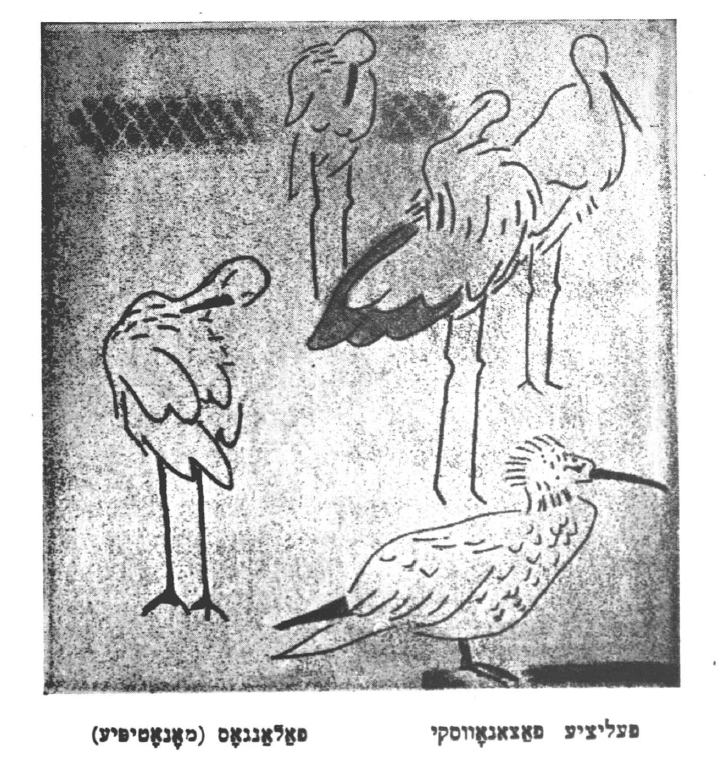
Monotype by Felicia Pacanowska printed between pages 16-17 of Rabon’s essay in Os.
אַזױ נאָך האָט זיך געשאַפֿן די פּאַראַדאָקסאַלע לאַגע, אַז די פּילאַרן פֿון דער ייִדישיסטישער באַװעגונג אין פּױלן האָבן אַרונטערגעריסן און דערשלאָגן אין די אױגן פֿון די ברײטע ייִדישע מאַסן דעם עיקר און דעם קווינטעסענץ פֿון דער קולטור־באַװעגונג אין ייִדיש, די ייִדישע ליטעראַטור, צוליב עפּעס אַ באָבע־מעשׂה װעגן אַ פּראָלעטאַרישער ליטעראַטור.
עס איז דערגאַנגען אַזױ װײַט, אַז עפּעס אַ בחור פֿון „בונד“, אָדער פֿון אַן אַנדערער ייִדישיסטישער פּאַרטײ, אַגיטירט פֿון די ליטעראַטור־ספּעצן פֿון דער „פֿאָלקסצײַטונג“, האָט בעת אַ פֿאָרלעזונג אַ געשרײ געטאָן מיט דער מוט פֿון אַ באַריקאַדן־קעמפֿער אין פּנים פֿון דעם באַקאַנטן דיכטער און אױסגעשפּראָכענעם, פֿאַנאַטישן ייִדישיסט און אַנטיהעברעיִסט, ז. סעגאַלאָװיטש׃
– אַראָפּ, קאָנטעררעװאָלוציאָנער! איר װעט בײַ אונדז נישט לײענען! גײט צו די „װײַסע“...
אין דער זעלבער צײַט װערן די ליטעראַרישע פֿאָרלעזונגען פֿון ה' יעקבֿ פּאַט, אַ מענטש מיט זײער צװײפֿלהאַפֿטע קענטענישן אין פֿראַגן פֿון ליטעראַטור, באַזוכט פֿון טױזנט־קעפּיקע המונים אין אַלע שטעט, װוּ ער קומט.
מיט דער הילף פֿון דער פּאַרטײ־קמיע באַרױבט ער דעם בראַװיסימאָ, װעלכער קומט דעם טאַלאַנטירטן ייִדישן ליטעראַט.
אױב די נשמה פֿונעם ייִדישן שרײַבער אין פּױלן איז שױן אַ ביסל אײַנגעביסן פֿון דעם װאָרעם פֿון ביטול צו ייִדיש, װי אַ געזונטער ליטעראַטור־שפּראַך, ליגט דערין נישט בלױז אַ פֿינגער פֿון די, אױף װעלכע איך האָב אָקאָרשט אָנגעװיזן, נאָר אפֿשר די גאַנצע האַנט.
די אָנטײל־נעמער פֿון ליטעראַרישן טאָג בעתן ייִװאָ־צוזאַמענפֿאָר געדענקען אױסגעצײכנט, װי ד''ר מ. װײַנרײַך, די סמעטענע פֿון ייִדישיסטישן װילנע, אַ מחבר פֿון עפּעס אַ מכירת־יוסף־שפּיל, װאָס געהערט בײַ אַנדערע פֿעלקער צום נאַציאָנאַלן גראַפֿאָמאַניע־אוצר און בײַ אונדז װערט עס באַצײכנט דורך די מלמדים פֿון װילנע כּמעט װי אַ װיסנשאַפֿטלעכע רעװעלאַציע, האָט מיט אַ טאָן פֿון אַ נאַ־שפּיץ אין ייִדישן קולטורעלן לעבן איבערמוטיק און גרינגשעצנדיק עפֿנטלעך דערקלערט, אַז דער ייִװאָ נעמט אַװעק דעם שײַכות צו דעם „ליטעראַטור־טאָג“, הגם אין אים האָבן זיך באַטײליקט די װיכטיקסטע מיטגלידער פֿון ייִדישן פּען־קלוב אין פּױלן, דאָס הײסט, די ייִדישע ליטעראַטור פֿון פּױלן האָט זיך פֿאַרזאַמלט אין ירושלים־„דלותּא“.
איך בין נישט קײן העברעיִסט, ,אַזױ װי מען פֿאַרשטײט דאָס אין אונדזער צײַטונגס־מעסיקער אומגאַנגשפּראַך, װײַל עס איז אַן אומזין צו טראַכטן און נאָך מער צו פֿאַרלאַנגען, אַז דאָס אָרט פֿון ייִדיש זאָל צװישן די ייִדן אין פּױלן פֿאַרנעמען די העברעיִשע שפּראַך. אָבער עס איז נישט קײן שום זינד קעגן ייִדיש, װען מען װינטשט זיך, אַז אױב אַ שפּראַך פֿון אַן אַנדער נאַציע זאָל ירשענען ייִדיש, איז שױן קוראַנטער, אַז עס זאָל ירשענען העברעיִש, װאָס איז פֿאָרט אַ שפּראַך פֿון ייִדישן פֿאָלק און עס איז געקומען אין איר צום אױסדרוק די ליכטיקע עמאַנאַציע פֿון דעם שטראַלנדיקן גײַסט פֿון די גרױסע פּאָעטן, װעלכע לײַכטן דורך דורות און יאָרטױזנטער, װעלכע װערן נאָך הײַנט באַװוּנדערט פֿון פֿעלקער און ראַסן – די נבֿיאים, און פֿיל אַנדערע געניאַלע דיכטער און דענקער, װי יהודה הלוי און ביאַליק – ריזן פֿון געזאַנג און געדאַנק.
אױב שלום אַש האָט זיך אױסגעדריקט שענדלעך און באַלײדיקנדיק װעגן ייִדיש, װי עס זאָגט דוד פּינסקי, איז ער װערט דעם פּסק. אױב אָבער ער האָט מיט ענטוזיאַזם גערעדט װעגן העברעיִש, װי װעגן אַ לעבעדיקער, שאַפֿנדיקער און דערװאַכטער שפּראַך – איז ער קײן שום פֿאַרברעכן נישט באַגאַנגען קעגן ייִדיש. די מאָס פֿון די מיראָװסקער האַלעס אין װאַרשע אָדער פֿון באַלוטער פּלאַץ אין לאָדזש, אַז העברעיִש און ייִדיש זענען צװײ פֿײַנטלעכע קראָמען, איז נישטיק און קרעמעריש.
עס איז די גרעסטע טיפּשות פֿײַנט צו האָבן אַ שפּראַך. אױב איר װעט צװישן אײראָפּעער אַ זאָג טאָן׃ „איך האָב פֿײַנט האָלענדיש“, װעט מען, װען מען װעט אַראָפּנידערן פֿונעם ניװאָ און אײַך ענטפֿערן אין אײַער סטיל׃ מײַן הער, איר זענט אַ שוטה.
אין אונדזער װעלטל זענען פֿאַראַן קולטור־טוער מיט דער אױסגעשפּראָכענער מאַרקע פֿון העברעיִש־האַסער. מע דאַרף אױף זײ נישט אָנװײַזן. מע קען זײ. עס איז גענוג צו זאָגן אַ גוט װאָרט װעגן לשון־קודש, כּדי דערקלערט צו װערן אַלס פֿאַשיסט. איך װײס אַז דער זעלבער גורל װעט מיך, אפֿשר, אױך נישט מײַדן. איך װעל באַשטימט אָפּגעשיקט װערן אין שװאַרצן לעגיאָן פֿון מוסאָליני. אין פֿסס״ר האָט מאַקסים גאָרקי דאָך מיט גאָרנישט ריזיקירט, דערקלערנדיק אױף אַן עפֿנטלעכן קאָנגרעס פֿון שרײַבער, אַז ח. נ. ביאַליק איז אַ געניאַלער דיכטער. מאַקסים גאָרקי האָט נאָך אַזעלכע װערטער דאָך געהאַט אַ לוויה פֿון אַ האַלבן מיליאָן מענטשן. יעקבֿ פּאַט װאָלט פֿאַר אַזעלכע רײד באַשטימט געפֿלױגן פֿון דער „פֿאָלקסצײַטונג“!
איך בין טיף איבערצײַגט, אַז איך װעל גאָר נישט זײַן אין סתּירה מיט מײַן אומדערשיטערלעכן גלױבן אינעם זיג פֿון סאָציאַליזם, װעלכער איז די אײנציקע רעטונג פֿון דער פֿאַרבלוטיקטער מענטשהײט, און מיט מײַן איבערצײַגונג, אַז ייִדיש איז אונדזער שפּראַך, אין װעלכער עס גליִען, װי שאַרלאַך רױטע טרױערבלומען, די כּמעט אַלע אין עלעגישן טאָן געהאַלטענע שאַפֿונגען פֿון דורות ייִדישע פּאָעטן, װעלכע עס האָט געברענגט אין היכל פֿון אונדזער קונסט דער געניוס פֿון די ייִדישע פֿאָלקסמאַסן, די אײַנװױנער פֿון דעם פֿאַראַכטן אָרעמען געסל, – אױב איך װעל זאָגן, אַז העברעיִש איז אױך אונדזערס אַ שפּראַך און װײַזט אַרױס אין ארץ־ישׂראל אַלע אַטריבוטן פֿון אַ לעבעדיק און נאַטירלעך ליטעראַטור־לשון.
אױך װעלן מײַנע איצטיקע װערטער נישט אַװעקנעמען מײַן נישט־װאַקלענדיק אָרט אין די רײען פֿון די, װעלכע פּראָטעסטירן װי אַמשאַרפֿסטן קעגן די פֿאַרפֿאָלגונגען אױף ייִדיש אין ארץ־ישׂראל.
[...]
מײַנע דאָזיקע פּאָר אָפּגעדרוקטע װערטער װעלן באַשטימט אַרױסרופֿן בײז בלוט בײַ דער פֿאַרװאַלטונג פֿונעם ייִדישן פּען־קלוב.
איך מײן, אַז עס איז די העכסטע צײַט צו זאָגן זיך דעם אמת, מעג ער אַפֿילו זײַן ברוטאַל, װי אַ שװערער סיבירער פֿראָסט, בפֿרט איצט, װען די ייִדישע ליטעראַטור איז פֿאַרװאַנדלט געװאָרן אין אַ פּאָר אױטאָרן, װאָס טראָגן זײערע פּעקלעך ביכער צו פֿאַרקױפֿן אױפֿן מאַרק פֿון די לעזער, װעלכע זענען גאָר נישט בנימצא.
דער ייִדישער שרײַבער איז זיכער נישט שולדיק אין דעם. מײַן מיטגעפֿיל צו אים, װען ער שלעפּט זיך איבער שטעט און שטעטלעך מיט דעם רענצל ספֿרים אױף דער פּלײצע. אױף די שולדיקע אין אַ גרױסער מאָס האָב איך אָנגעװיזן. דאָס פֿאַרברעכן זענען זײ באַגאַנגען. די שטראָף לײַדט אָבער אונדזער בידנע מאַמע־לשון ייִדיש.
And so: a paradoxical situation has been created. The pillars of the Yiddishist movement in Poland have crushed Yiddish literature—the very essence of the Yiddish cultural movement—in the eyes of the greater Jewish masses, and all because of some tall tale about proletarian literature.
It has reached the point that some fellow (belonging to the Bund or another Yiddishist party) grew so agitated by the Folkstsaytung’s literature wonks that he disrupted a reading by the well-known poet and outspoken, fanatical Yiddishist and anti-Hebraist, Z. Segalovitsh. “Down with the counterrevolutionaries! You won’t read to us! Go to the ‘Whites’…” he yelled, with all the courage of a barricade fighter.
Meanwhile, the literary readings of Mr. Yankev Pat, a man with very dubious knowledge of literary questions, draw audiences by the thousands in every city he goes.
With the help of the party badge, he steals the bravissimi owed to the talented Yiddish literati.
Perhaps the spirit of the Yiddish writer in Poland is now somewhat gnawed-on by the worm of contempt towards Yiddish as a healthy literary language. Should that be the case, I blame those mentioned above: they’ve gotten their fingers dirty in the matter—and likely their entire hands as well.
Dr. Max Weinreich is the cream of Yiddishist Vilna and the writer of some Mekhires-Yosef-Shpil,
7
7
Max Weinreich published Mekhires-Yosef in Berlin in 1923. It is in fact not a play, but a Yiddish narrative of the Biblical “selling of Joseph” episode, which was a common subject for Purim-shpiln and other Ashkenazi folk plays. Weinreich derived his source material from collections of midrashim. Perhaps the derivative nature of the work led Rabon to describe it as belonging “in a national graphomania treasury.”
which among other peoples would belong in a national graphomania treasury, but which our schoolteachers in Vilna have described almost as a scientific revelation. Attendees of the Literature Day
8
8
The official YIVO conference publication indicates that the “Yiddish Literature Day” (Tog fun der yidisher literatur) took place on August 17, 1935, and was organized by the Yiddish Pen Club. See Yidisher visnshaftlekher institut, Der alveltlekher tsuzamenfor fun yidishn visnshaftlekhn institut tsum 10 yorikn yoyvl (New York: YIVO, 1936), 8, 101-102, https://archive.org/stream/nyb....
at the YIVO conference will remember perfectly how Weinreich declared—in the confident, blithe, and direct tone of a Yiddish cultural bigshot—that YIVO was disavowing its association with Literature Day. All this, even though the most important members of the Yiddish Pen Club in Poland had taken part—that is to say, that Yiddish literature in Poland had gathered in Yerusholayim-Delute.
9
9
Rabon intentionally misspells ירושלים־דליטא “Yerusholayim Delite” (Jerusalem of Lithuania) as ירושלים־דלותּא “Yerusholayim Delute.” This is a jab at the prescriptivism of YIVO’s standard Yiddish, which adopted the Litvak pronunciation of the vowel “וּ”. Spelled this way, “daluta” resembles the Yiddish word דלות “dales,” meaning “poverty”.
I am no Hebraist, inasmuch as the word is understood in our newspaper industry: it’s nonsensical to think, and even more so to desire, that Hebrew should take the place of Yiddish among the Jews of Poland. But it is no sin against Yiddish when one hopes that, if another nation’s language should succeed Yiddish, Hebrew would be the rightful heir. Hebrew is clearly a language of the Jewish people, a medium of the luminous emanations, the radiant spirit of the great poets, shining through generations and millennia, and admired by the world’s peoples to this day. It is the language of the prophets, and many other brilliant poets and thinkers, like Yehuda Halevi and Bialik—giants of song and thought.
If Sholem Asch expressed insult and injury towards Yiddish, as Dovid Pinsky says, he deserves his sentence. But if instead, he only spoke about Hebrew enthusiastically, as one does about a living, creative, and awakened language, he has committed no crime against Yiddish. Measuring Hebrew and Yiddish against each other as if they were two rival stalls at the Mier Halls in Warsaw or Baluty Square in Lodz is small-minded. It is utter stupidity to hate a language. If you were to say to some Europeans, “I hate Dutch,” they would answer, should they even stoop to your level: “Mein Herr, you are a fool.”
In our little world there are cultural workers who brand themselves as outspoken Hebrew-haters. No need to name names—we know who they are. Say a good word about the Holy Tongue and you’re immediately declared a fascist. I know I may not be spared the same fate—surely I’ll be dispatched to Mussolini’s Black Shirts. In the USSR, Maxim Gorky risked nothing when he declared at an open writers’ conference that Hayyim Nachman Bialik is an excellent poet. Even after his pronouncement, half a million people attended Gorky’s funeral. But if Yankev Pat said something like that, he’d be sent packing from the Folkstsaytung at once!
I am deeply convinced that this isn’t in any sort of contradiction with my unwavering belief in the victory of socialism, which is the only salvation for bloodied mankind. I also hold the conviction that Yiddish is our language, in which the elegiacal creations of generations of Yiddish writers glow like the scarlet-red flowers of sorrow. It is the language which the genius of the Jewish folk masses, the dwellers of those scorned, impoverished alleys, brought into the temple of our art. But nor would I contradict myself if I were to say that Hebrew is also one of our languages, and that in Palestine it exhibits all the attributes of a living and natural literary tongue.
Nor do my words exclude me from the ranks of those who stridently protest the persecution of Yiddish in Palestine.
[...]
These few printed words of mine will surely be called bad blood by the board of the Yiddish Pen Club.
I think that it is high time to acknowledge the truth, even if it’s as brutal as a heavy Siberian frost. And especially now, when Yiddish literature has turned into just a few authors who haul their bundles of books to sell in the market of readers that are nowhere to be found.
The Yiddish writer is surely not at fault for this. My sympathies are with him, as he drags himself through cities and towns with a satchel over his shoulder. I’ve largely shown who’s at fault. They have committed the crime. But it’s our poor mameloshn, Yiddish, that bears the punishment.
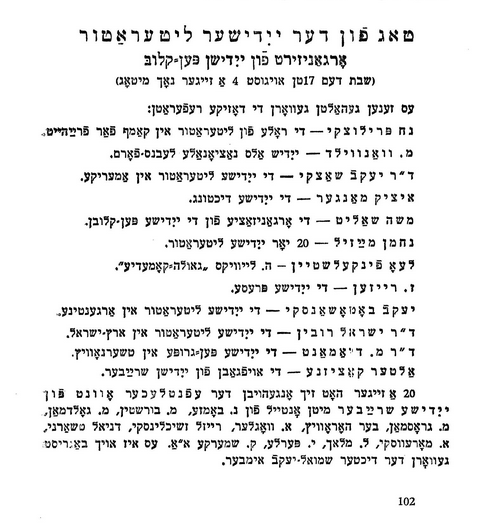
Program details for “Yiddish Literature Day” on August 17, 1935.
Yidisher visnshaftlekher institut, Der alveltlekher tsuzamenfor fun yidishn visnshaftlekhn institut tsum 10 yorikn yoyvl (New York: YIVO, 1936), 8, 102.
In geveb is turning t(s)en! If we want In geveb to continue to grow and thrive and remain a central address for the study of all things Yiddish online, we need your help to launch our second decade. Our goal is to raise $20,000 by our official tenth birthday: August 15, 2025. We invite you to donate to support In geveb and to honor everyone who has got us this far.