Mar 24, 2022
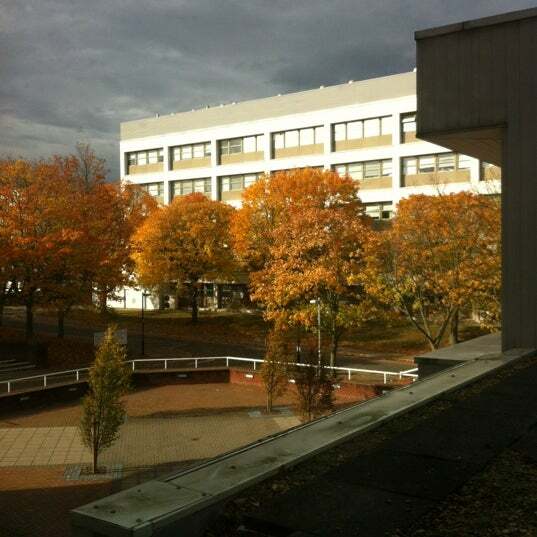
University of Warwick Library
Around five years ago, a couple of years after I’d started studying Yiddish as a heritage learner, I confided to a friend that I’d love to teach a class on Yiddish literature in translation. Their response was, “Why?” Given that we were both teaching in the University of Warwick’s English and Comparative Literary Studies department at the time, I have to admit that this wasn’t quite the reaction I was expecting. After all, if I couldn’t enthuse loudly and at length about Yiddish literature here, then where? I said to my friend, why wouldn’t I want to share writers like Esther Kreitman, or Celia Dropkin, or Peretz Markish, with our students? Coming late to Yiddish literature myself, I’d assumed that it was a secret everyone had been in on except me. Of course, my friend hadn’t heard of any of these people, so I pulled out the big names – Bashevis, Sholem Aleichem, Avrom Sutzkever. Nothing. In a burst of uncharacteristically energetic eloquence, I related the main headlines of Sutzkever’s life – the Paper Brigade, fighting as a partisan, walking to freedom through a minefield while using poetic meter to place his steps, testifying at the Nuremberg trials, and all this before his second life as Yiddish literature’s champion in Israel. When I finally paused for breath, my friend smiled kindly and told me that if I wanted anyone to sign up for a class like that, I’d need some more familiar names. What about including Philip Roth? Now there’s a Jewish writer everyone knows.
Happily, this somewhat discouraging initial assessment of Yiddish’s chances at Warwick wildly underestimated the intellectual curiosity of our students and my own stubbornness in getting this class started up. “Yiddish Literature in Translation: A World Beyond Borders” has been running since October 2019 and is hands down the most exciting, rewarding, and challenging teaching that I’ve ever undertaken. Putting together a syllabus from scratch was at times nerve-wracking, though. I didn’t want to misrepresent or limit the incredible range of Yiddish texts in translation, and without a preexisting model of how to teach Yiddish literature in this way, I first needed to understand how to situate our texts in relation to Yiddish and yidishkayt as a whole.
Identifying the challenges
Sadly, my friend’s confusion about Yiddish is far from unusual in the UK. If I buttonholed some random unfortunate person at the bus stop to proclaim the wonders of Yiddish literature, incomprehension would be an entirely reasonable response. However, even in a comparative literary studies department, Yiddish has no established presence. My department has run classes on Russian, Arabic, and East Asian literature in translation, while many of our other classes contain a wide selection of World Literatures, partly due to our commitment to decolonizing the curriculum but also because this is a core field of teaching and research for many of my colleagues. Despite this, nobody I spoke to had heard of Yiddish as a literary language, they had no associations with it other than that it was spoken by Jewish people, and some were even unsure how it differed from Hebrew. This lack of awareness is largely due to the apparent invisibility of secular Jewishness in the UK, and despite the excellent scholarship found in several higher-education institutions, there is an almost total absence of any discussion of Ashkenazi history and culture in our wider education system. As a student, the only time I encountered anything to do with my family’s heritage was when we were taught about the Holocaust and then the focus was on the unimaginable destruction itself, rather than the worlds that had been lost. Even my undergraduate degree in English and European Literature didn’t mention Yiddish literature or any other form of Jewish literature or culture. In fact, in my entire academic career I’d never met anyone who spoke Yiddish or studied Yiddish, so it never occurred to me that this wealth of texts was out there, waiting to be read. However, the more time I spent reading articles on theYiddish Book Center and In geveb websites, the more I realized that not only was there a huge range of Yiddish literature available online, enough had been translated for me to build a syllabus for our students. I started buying secondhand copies of every anthology of Yiddish literature in translation that I could find, chasing up interesting authors online via the YIVO encyclopedia and the Jewish Women’s Archive. The more fascinating authors that I found the more I wanted to share them and show our students what Yiddish literature could add to their understanding of World Literature.
Luckily for me, Warwick’s English and Comparative Literary Studies department is very open to new experiences. I could certainly propose a class on Yiddish Literature in Translation, and if enough students signed up then it would run. In UK institutions, a class usually runs for the equivalent of two semesters, so I would need to convince potential students that Yiddish was worth a quarter of their tuition time for the year. With this in mind, before I started to put together the Yiddish Literature in Translation class, I began smuggling elements of Yiddish Studies into my other teaching to pique people’s interest. For my Kafka lecture in one of our core first-year classes I focused on his confused relationship with Yiddish as a means of understanding “The Metamorphosis”, especially in relation to Gregor’s loss of language. Later, in my seminars on Clarice Lispector’s The Hour of the Star, I played my students part of a television interview with Lispector where the first question asked was about the origins of her name, a topic that had come up repeatedly in critical reactions to her work. We talked about how that sense of diasporic alienation is visible in the way Lispector’s protagonist, Macabéa, is marginalized even within her own narrative.
While my students may have been nonplussed by this unexpected detour into new literary territory, these initial discussions helped mold the eventual shape of the syllabus by clarifying the links between Yiddish, identity, and resistance. The more Yiddish literature that I read, the more I realized that resistance is often at the heart of these texts, regardless of where or when they were written. Often, that resistance takes the form of challenging political or cultural oppression, or fighting back against the dehumanization of the Holocaust and earlier acts of anti-Semitic violence. Sometimes, though, Yiddish literature undertakes resistance simply by making its speakers visible, building collective identity despite the challenges posed to Ashkenazi communities as they worked to define themselves in new or hostile environments. Ultimately, this concept of Yiddish as resistance became the key to building a narrative for the syllabus, since it encourages the students to anchor these unfamiliar texts in their social, political, and cultural contexts rather than focusing solely on the “otherness” of Yiddish literature.
While this sense of Yiddish as resistance became an informing principle for the class, it wasn’t the only one. Optional classes in Warwick’s English and Comparative Literary Studies department are open to students on our joint-honors degree programs as well as our own single-honors students, so while most would have a background in studying literature, their degrees would be based in the Philosophy department, or the School of Modern Languages or the Creative Writing Program. Since I couldn’t assume any previous knowledge about Yiddish on the part of my students, they would need plenty of contextualizing resources to not only help establish the shifting status of Yiddish as a language, but also to outline the broader movements of Ashkenazi communities and cultures. Luckily, the enormous range of online Yiddish scholarship meant I could curate digital supporting materials while also introducing the students to invaluable institutions like YIVO, In geveb and the Yiddish Book Center.
The class also needed to redress the literary balance in favor of female Yiddish writers. I was very much aware that earlier anthologies of Yiddish literature in translation focused almost entirely on the work of male authors, minimizing or completely ignoring the contributions made by women to this field. It was joyous to be able to devise a syllabus that reflected more contemporary works of translation, such as Ellen Cassedy’s edition of Yenta Mash’s On the Landing (2018), as well as ground-breaking anthologies such as the Found Treasures anthology (1994), edited by Freida Forman, Ethel Raicus, Sarah Silberstein, and Margie Wolfe, and Forman’s subsequent The Exile Book of Yiddish Women Writers (2013).
Finally, there was the need to acknowledge the various challenges presented by teaching any literature in translation. Since we would be encountering these Yiddish texts via English, the class needed to discuss translation and translation strategies alongside the literature itself. Sometimes this meant comparing multiple translations of the same poem or short story, while at other times it addressed the ways in which the original texts were altered or reframed to appeal to a non-Jewish readership. While our students are used to studying texts in translation, the act of translation itself hasn’t always been part of the discussion, so it felt vital to consider how a marginalized language and culture is affected by being mediated through English.
Designing the syllabus
With these informing principles in mind, the syllabus quickly took on its current form of four units, each addressing a broad geographical region of Yiddish literature. The first discusses Yiddish literature from Poland, with a special focus on Warsaw as both a cultural center of Yiddish and my own family’s old home. While I wouldn’t say that this class evolved purely as a way to tell stories about my ancestors, sometimes it is difficult to resist. Perhaps my broader, scholarly discussions of Yiddish as resistance are bound up with a deeper sense that there aren’t always many opportunities to share that heritage here in the UK, especially if you grow up outside an established Jewish community. And so our first literary author is Y. L. Peretz, mainly because he was one of the zeydes of Yiddish literature, but also because the only personal opinion my devout, Warsaw-based great-great-grandfather ever expressed was, “Peretz iz a gantser sheyner yid, ober er volt beser zikh nisht narish gemakht mit shraybn bikhlekh”. 1 1 This wonderful detail is noted with some disapproval in my great-great-uncle’s autobiography: Hersh Mendl, Zikhrones fun a yidishn revolutzyoner (Farlag Y. L. Peretz, Tel-Aviv, 1959), p.79.
Familial literary insights aside, this first unit sets a pattern that the other three continue, in that we start with the familiar and then expand our critical gaze. Once we’ve read some of Peretz’s short stories, we look at Isaac Bashevis Singer’s Satan in Goray (1933) and I. J. Singer’s The Brothers Ashkenazi (1936) in order to open up discussion on how Yiddish authors were responding to and adapting narrative forms and genres from other European literary traditions, such as the realist novel or historical fiction. Then, before anyone gets too comfortable with the patriarchal literary canon, we move to later short fiction by Sarah Hamer-Jacklyn and Lili Berger. These stories challenge the somewhat limited presentation of female identity seen in the previous texts while also beginning our discussion of Yiddish and resistance. Berger’s story “Jewish Children on the Aryan Side” (1978) is especially valuable, since it depicts active Jewish resistance to Nazi persecution, something that is often missing from Holocaust education in the UK. In this context, Yiddish literature becomes doubly significant, not only as testimony but also as an act of self-representation to challenge the popular narrative that my students have often encountered, that of assumed Jewish passivity in the face of existential threat.
This strategy of identifying canonical texts and then engaging with a wider sweep of Yiddish literature is also used in Units 2 and 3 of the syllabus, which look at literature connected with the Pale of Settlement and Soviet Yiddish literature respectively. I wanted my students to understand the concept of the shtetl and its far-reaching influence on Yiddish culture, so we begin with the Tevye stories of Sholem Aleichem, which also lead us into a discussion about the role of nostalgia in Yiddish literature more generally. Our other authors in this unit, Rokhl Brokhes, Kadya Molodowsky, and Avrom Sutzkever, were chosen so as to illustrate the legacy of the Pale’s social and economic restrictions, which were often apparent decades after the Pale itself was dissolved. Sutzkever is a vivid presence through this unit, not least because his poetry cements Yiddish as a site of resistance and survival, but also because the world could only be improved by more people knowing his work. When we listen to a recording of Sutzkever reciting his poem “Ver vet blaybn, vos vet blaybn”, Yiddish is revealed as a vital, powerful language, ready to stare down any assumptions of its demise. There is a similar moment in Unit 3, when we watch Peretz Markish’s impassioned speech against Hitler during a meeting of the Jewish Anti-Fascist Committee. We may be reading these authors’ works in English, but I wanted the students to hear Yiddish spoken not only as a literary language but also as a language of everyday life and of political dissent, which unified people across the world in acts of resistance.
Since Soviet history is not a common topic in UK secondary education, Unit 3 also needed to provide a considerable amount of contextual detail so as to clearly delineate the different phases of Soviet Yiddish literature. This means that we move from the initial wholehearted embrace of Soviet ideology seen in Dovid Bergelson’s “On the Eve of Battle” (1923), through increasing State hostility towards Yiddish in the 1930s with Moishe Kulbak’s The Zelmanyaners (1933-36). I’d never before taught a text like The Zelmanyaners, whose two halves reflect Kulbak’s increasing desperate attempts to satisfy the constantly changing requirements of Soviet literary ideology, with the novel’s characters and plot shifting dramatically from one section to another. When we reach the endgame of the late 1940s with the poetry of Leyb Kvitko and Peretz Markish, we return to Yiddish as resistance, with Markish’s clear-sighted awareness of his own impending arrest in “Mikhoels” standing in stark contrast to his earlier optimistic expressions of Soviet Yiddish identity. It was important that this part of the syllabus also consider the long-term impact of Soviet anti-Jewish policy, so we also read several short stories by Yenta Mash, whose writing from the 1980s and 1990s further expands the way in which we understand the writing of Yiddish as an act of defiance.
Unit 4 of the syllabus, which could easily have been a whole class in its own right, carries these discussions about resistance and identity even further by looking at Yiddish literature written outside of Eastern Europe. We start with some of Esther Kreitman’s London stories to reinforce the UK’s own, often forgotten relationship with Yiddish, but also to emphasize the dilemma presented by questions of assimilation and integration in many of this unit’s texts. Across the remaining weeks we see different writers take different approaches to reconciling their Yiddish selves with their new nationalities, testing both hybrid and dual identities. The experimental and sometimes shocking work of writers like Celia Dropkin, Yenta Serdatsky, and Jacob Glatstein emphasizes the gendered aspect of experiences of migration, while the stories of Chava Rosenfarb and Rokhl Korn anticipate the difficulties in trying to secure Yiddish’s future after the Holocaust. Despite their geographical distance from one another, we see these authors asking the same questions, trying to build connections through Yiddish to reinforce its literature as a transnational network. Our final week looks at Yiddish literature from Argentina, where the links between literature and politics that we saw earlier in Morris Rosenfeld and Mani Leyb are picked up again by Mordechai Alpersohn and Borukh Bendersky, while Mimi Pinzon takes us right back to the stories of Y. L. Peretz in her focus on the vulnerability of the individual who cannot escape marginalization.
Looking forward
In designing this syllabus, I hoped to capture some sense of Yiddish as a global language of resistance, but also to showcase the growing variety of texts now available in translation. Even so, it was soon clear that no single class could ever achieve that ambition. With this in mind, after the class ended in Spring 2021, I ran an informal Yiddish reading group throughout the summer months for those students who wanted to continue our discussions and who weren’t yet heartily sick of hearing me proclaim my love of this literature. We read translations of Yiddish texts from Australia and South Africa, as well as a wide range of additional texts from Europe, the US, and Canada, drawing links between previously studied authors and these new writers as we filled in our literary map of the Yiddish world.
Initially I had worried that the survey nature of the class would mean that I was missing out on the chance to engage in more depth with some of the core critical issues in Yiddish scholarship today. Although the syllabus incorporates a large number of secondary sources alongside our primary literary texts, there is so much to discuss that I’d have liked more space to, say, engage with the complexities of Soviet Yiddish literature in more depth, or broaden our discussion of Yiddish in the context of World Literature. Trying to do justice to the incredible diversity of Yiddish literature in just one module is a real challenge, and I always feel as though there is so much more to say about each of our authors, let alone all the others that we don’t discuss on the syllabus. Luckily, the class assessment is largely focussed on two long essays, so everyone has the chance to investigate their favorite authors in much more detail. While the Intermediate students choose from a set list of topics, the final year students can devise their own titles, resulting in essays on such issues as Yiddish as memorialization in the poetry of Avrom Sutzkever, challenges to the stereotypical views of motherhood in stories by Lili Berger and Sarah Hamer-Jacklyn, and the influence of Soviet ideology on the writing of Peretz Markish and Moyshe Kulbak. The summer reading group also encouraged the students to develop their own specific interests even further, with several going on to undertake independent research on aspects of Yiddish literature in the next stage of their studies. Finally, the arrival of Duolingo’s Yiddish course means that some of my earlier students are now learning the language for themselves, in some instances with the aim of eventually undertaking translation work themselves.
In teaching this class I am aware that I am trying to make up for lost time, because if I had encountered Yiddish literature as an undergraduate then I would have spent the last 25 years studying it, rather than just the last seven. Ultimately, I hope that this syllabus not only introduces Warwick’s students to Yiddish as a field of literary study but that it also encourages them to take an active part in the future of the discipline, as Yiddish literature continues to regain its visibility in the UK.
Click here to download a PDF of the syllabus.