Jun 21, 2024
I've been a Yiddish teacher at the Boston Worker's Circle for over ten years. As we were preparing to start classes this spring semester, we got an inquiry from a prospective Yiddish student who told us that he's blind, and he reads braille, and he wanted to know if we could make our classes accessible to him.
I'm also a software engineer, and a former teacher of the Deaf. Those two professions have little in common, other than the need to keep accessibility in mind as you do your work. When I taught at the school for the Deaf, we always spoke in ASL, never in English, so that anyone who wanted to eavesdrop on a conversation would be equally able to. And at my software job, where I build web applications in Ruby and JavaScript, I always imagine that I have a blind person sitting next to me, reminding me to make sure that the user interfaces I build are accessible to people who use a screen reader or braille display instead of a monitor, and a keyboard instead of a mouse. But although I often think about the needs of blind people in my line of work, and I'm aware that various alternative technologies exist that allow blind people to access the internet without using a screen or a mouse, I rarely get a chance to meet a blind person in real life. So when this email came in, I jumped at the chance. I told the Worker’s Circle office manager that I was volunteering to be the Yiddish program’s Accessiblity Coordinator, and that she could direct all such inquiries my way.
We got on the phone, Motl and I, to figure out which class would be the best fit for him. He told me that he'd been trying to learn Yiddish for a while, but that screen readers which read aloud English text just stop working when he points them at Yiddish. He figured that he could theoretically learn to read Yiddish in braille, but no braille software in the world offers Yiddish as one of the language options. He had, of course, been in touch with the Jewish Braille Institute, but despite their name, they had nothing in Yiddish in their catalog. Motl had also gotten in touch with Duxbury Systems, a company that makes braille software, and found out that they have an employee who happened to have grown up in a Yiddish-speaking household. Earlier this year, he’d convinced Caryn Navy, the “Yiddish braille Lady”, to start working on developing a Yiddish braille table. But with only one potential user, Yiddish wasn’t exactly a high priority for the company, and lately, his emails to the company had been going unanswered.
It was in this first conversation that I found out that Motl can already speak German, Russian, and Japanese fluently, and that he had learned to read Hebrew braille when he was growing up. This background knowledge told me that Motl fit the profile for someone who would be wise to skip the beginner Yiddish class, and jump directly into advanced beginners or intermediate Yiddish.
Conveniently, I was slated to teach both Advanced Beginner and Intermediate Yiddish classes that semester. In my advanced beginner class, we were using the textbook Colloquial Yiddish (available in a Kindle edition). I suggested that perhaps this Kindle edition, already in a digital format, might provide the access he needed, but Motl told me that he'd already tried it, and although the English sections came out fine, when the book switched to Yiddish, it came out as gobble-de-gook. I thought, okay, sure, but it's a different language, in a different alphabet, that you haven't started to learn yet! Yiddish looks like gobble-de-gook to everyone before they learn how to decode it. But I held my question for later, and we agreed that he would try my intermediate class, where we were reading the novel Fun Lublin Biz Nyu York by Kadya Molodowsky. In that class, my students take turns reading aloud from a Yiddish book, we look up the words we don’t know on verterbukh.org, and then we translate what we’ve read into English, sentence by sentence. I assured Motl that reading everything aloud would make the class accessible to him, even if we never sorted out the written language part of the puzzle.
As the Boston Worker’s Circle’s newly self-appointed Accessibility Coordinator, I offered to set up an additional weekly one-on-one tutoring session with Motl, so we could fill in any blanks that he would have from skipping the first three years of Yiddish classes. It was in our first tutoring session that I started asking questions. I had done some googling, and I found out that a widely-used Hebrew Braille system had existed for over 100 years. I explained that Yiddish is written in the Hebrew alphabet, so I couldn’t see why we needed a Yiddish braille table after all - he should be able to simply read the Yiddish book in Hebrew braille. In hindsight, I’m sure Motl had already tried that approach, and that he knew it wasn’t going to work, but my enthusiasm can be persuasive, and he agreed to indulge me and try it again.
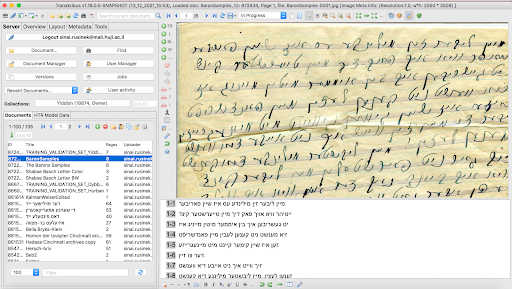
My class is reading a PDF copy of Fun Lublin Biz Nyu York that we downloaded from the Yiddish Book Center, which has provided the wonderful resource of digital Yiddish book downloads for free on the internet, making Yiddish literature accessible to anyone in the world who has an internet connection. But of course, those PDFs, incredible as they are, are not truly accessible to anyone in the world — they are just scanned pictures of printed text, which is not accessible to the blind, no matter what language it's in. We needed a text file. I knew that the Yiddish Book Center had recently been working on an OCR (optical character recognition) project to convert those scanned books into digital text files, but the only way I knew how to get to those OCR texts was through their full-text search, where you can type in a Yiddish word, and see it in context in all the books it appears in. I wrote to the Center asking if it would be possible to get the full text OCR of one of their books, and the next day, I got an email back from Michelle Sigiel, the Metadata Librarian at the Center, and she was happy to invite us to peruse the digital OCR stacks of the Yiddish Book Center.
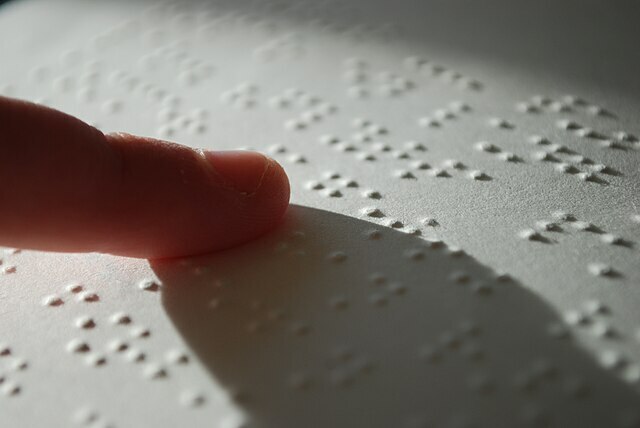
My student Motl uses a refreshable braille e-reader device that can take text files and render them in braille, using mechanical motorized dots that raise and lower and render a single 40-character line of text at a time. When he wants to read a book in Japanese, he loads the text file onto a USB drive, transfers the file into his braille e-reader. He selects the language from a menu of available languages, and the braille computer renders the book, one line at a time, in braille, which he reads with all ten fingers, sweeping from left to right across the display. When he gets to the end of the line, he clicks a button to advance to the next line, at which point the dots reconfigure themselves.
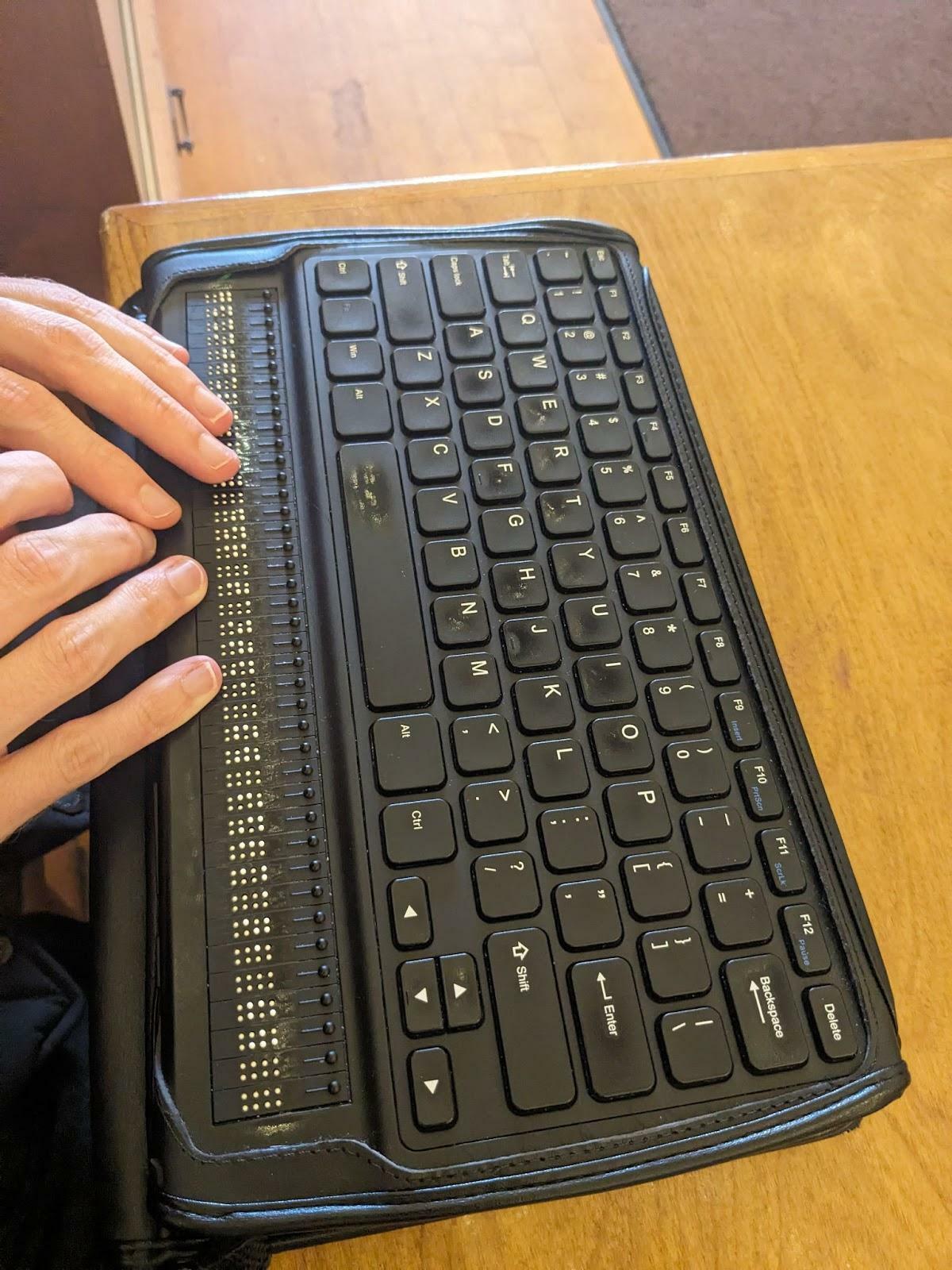
I copied the full-text OCR of our book into a text file, did some light editing to fix the page numbers, and emailed it to Motl. At our next tutoring session, he loaded up the text file in his braille computer, set the language to Hebrew, and we got to work. What we quickly found out was that there were a number of characters in the Yiddish book that rendered on the braille display as "mystery character". The komets-alef, the pasekh-alef, the tsvey-yudn, the pasekh-tsvey-yudn, the vov-yud, the veys, and the fey - all rendered as the same mystery character.
Before our next session, I did a find-and-replace on the mystery characters in the book and replaced them with equivalent Hebrew characters that were in the Hebrew braille table. I replaced the pasekh-alefs and komets-alefs with shtumer alefs, and I replaced the tsvey-yudn and pasekh-tsvey-yudn with two yuds. I replaced the feys with peys, and the veyses with beyses. When I sent him this revised edition of the book, everything rendered. To my surprise and delight, within a few minutes, Motl was able to read this Kadya Molodowsky book out loud to me in Yiddish, and was also able to translate each line, with very little help from me. Done and done, problem solved... or so I thought.
Motl was able to read the book, but this first solution still wasn't perfect. Everyone else in the class got to benefit from a distinction between the pasekh alef and the komets alef, between the pey and fey, between beys and veys. (Everyone had to guess whether it was a tsvey-yudn or a pasekh-tsvey-yudn, but that's part of the fun of intermediate Yiddish class, where you find out that not everything you want to read is in YIVO orthography.) The real solution to rendering the mystery characters in Yiddish braille was not to find-and-replace them away — we needed to create a separate braille table for Yiddish, that defined the mapping of each character in Yiddish to an equivalent character in braille.
I came to understand that braille is more complicated than just letters-to-dots. French and English have separate braille tables, even though they are written in the same alphabet. One reason for this is contractions. Because braille text can't be made bigger or smaller, and because it can only be printed on one side of the page, braille books are huge. In order to save space, most braille books are printed in contracted braille, where complex (and language-specific) systems of abbreviations and contractions are used to save space on the page. Even in uncontracted English braille, the word "and" is rendered as a single braille character, as is the suffix "-ed", as is the letter combination "sh". For Yiddish braille, space is also at a premium. On the refreshable braille display, Motl can only read a single line of 40 characters at a time, so having yud-yud take up two characters felt to him like a waste of space, and if we could figure out how to create a Yiddish braille table, we could map two-character letters like tsvey-yudn to a single braille character.
I knew what we had to do, but I did not know how we would do it. Even if I did figure out how to create a new braille table, I wasn't sure where would we put it, and how exactly it would get into Motl's braille e-reader. He suggested we might have to "hack" his device. I laughed at that — I am not that kind of software engineer — but I love a challenge. I started doing more research to try to learn how these braille displays work.
There are different layers of encoding that are involved in taking a Yiddish text and transforming it into braille. The first layer is unicode, the encoding system that allows us to write digital Yiddish text on one computer and read it on a different computer. I first started learning Yiddish 24 years ago, in the pre-unicode era. I remember that I could write an email in Yiddish on my computer, but what came out on the recipient's screen would be full of black boxes and mystery characters. Eventually that changed, and (through the work of an amazing team of software engineers and Yiddishists to whom I will endlessly be grateful), Yiddish's special characters were incorporated into unicode. The adoption of unicode encoding as the new standard made it possible to write and transmit Yiddish texts over the internet. The OCR Yiddish text that I got from the Yiddish Book Center is in unicode. Having a text in this digital format is the first step in transcribing a book from Yiddish into braille.
The next layer is the braille table. I found an open-source software program called LibLouis (named after Louis Braille) that contains braille tables for a long list of different languages. LibLouis didn't have Yiddish, but it is an open-source library, which means that anyone who is interested can look at its source code, and suggest changes to the software. I got to work writing a Yiddish braille table, mapping each unicode character in Yiddish to a corresponding combination of braille dots. Each six-dot braille character can be described by a set of numbered dots, top to bottom, left to right. Just like in Hebrew braille, alef would be dot 1, the top-left dot, the same braille character that represents the English letter A. Beys, like the English letter B, would be dots 12, the top-left and middle-left dots. Giml, like the English letter G, would be dots 1245, a square consisting of the the top two and middle two dots. Lamed, like the English letter L, would be a vertical stack of the dots 123. I had to make some decisions about pasekh alef and komets alef, tsvey-yudn and pasekh-tsvey yudn, not to mention the problem of how to choose three different S characters for samekh and sin and sof. Anxiety set in. How do I choose? And who was I to be making these decisions for all the blind Yiddish speakers of the world? I'm just some dude! So I started asking around for collaborators, people who could give me advice and double-check my work. I gathered a consortium of interested experts to get together and hash out the specifics of how to map Yiddish letters to braille.
We went back and forth a lot about the specifics. How to account for the variation in orthography? If one publisher puts a line over the fey and another publisher omits it, a sighted reader can see that it's still a fey, but if those are two different braille characters, a blind reader would have to learn to recognize the essential fey-ness of a totally different braille character. If a publisher omits the pasekh from their pasekh tsvey yudn (I'm looking at you, Kadya Molodowsky), a sighted reader can see that they are similar enough, and can make a guess. But with braille characters, it's either the same, or it's different. In braille, there's no "it's the same character but this one has an accent marker". In French braille, an unaccented "e" is a completely separate braille character from an accented é. There was no way to preserve the sameness as well as the differences between komets alef and pasekh alef. They had to be either the same, or they had to be different.
And then there were the bigger questions that troubled our Yiddish braille consortium. Is it even Yiddish if it isn't written in the alef-beys? The song Afn Pripetshik started playing in the back of everyone's mind, and we worried: everyone knows that it's "komets-alef, O", not "12356, O". How would Motl shep koyekh from the oysyes, when his oysyes were invented by Louis Braille? Of course, braille is a set of oysyes in which surely lign their own set of trern, and from which a tremendous amount of koyekh can be geshept. But Braille is always written left to right, and it is essentially its own alphabet — 64 characters onto which all the languages of the world can (and must!) be mapped. We wondered, would the essential Yiddishness of the letters survive the transition into this goyish series of dots?
In the jargon of open-source software, my request to add the Yiddish braille table to LibLouis is what we call a pull request. After I submitted my pull request, I got a response from the maintainers of LibLouis. They liked where I was going with this, but wanted me to add more explanation to the comments in the table: I needed to explain in the comments who I was, and why I should be the one to define how Yiddish would be transcribed into braille. They also asked me to write automated tests to verify that my table was working. I meticulously prepared unit test files — typing out sample sentences in Yiddish unicode and then copy-pasting braille dots, letter by letter, according to the table I had defined, to explicitly define what the expected output should be for each of my sample input sentences. I sent over my changes, and the LibLouis maintainers ran my tests — they failed. In software engineering, a failing test is a blessing — it is a sign that at least your tests are working, even if your code is not. And indeed, the test failure revealed that there was a mistake in my braille table. In order to run the tests on my computer, I had to install and compile the programming language C, and then Go, and then Java, and I had to learn to compile my version of LibLouis, install it on my computer as an executable file, and wade through their documentation to figure out how to run the tests against my version. In the process of writing tests and running them against my table, I discovered (and fixed) numerous errors in my work. By the time I finally got my tests passing, I had gone through many iterations, and had shaken many of the errors out of my braille table. In software, you can never prove that your code is entirely without error, but a comprehensive suite of tests can at least prove that it is working for the specific situations you've provided. The maintainers of LibLouis liked my changes, and they told me that they hoped to include the new Yiddish table in the June 2024 release of the software.
But in the meantime, I was still teaching Yiddish every week, and Motl was still reading from an imperfect copy of the book, transcribed imperfectly on a draft version of the braille table. We didn't have time to wait for the June release. Finding the unicode version of the text and creating the Yiddish braille table had gotten us close to the solution, but we still didn't have a way to transform our book into braille according to the table we had defined. It took me another month to figure out how to actually use my locally-compiled version of LibLouis and transform the text file into braille using the new table, and it was an entirely other hurdle to figure out how to open that file and look into it and verify that what had come out on the other end was actually the braille that I expected. The process is not perfectly smooth yet — there's still some finding-and-replacing involved — so it might be another few months until I have put all the pieces together to open an online Yiddish braille e-bookstore. But we've more or less solved the accessibility problem, and my student Motl is now happily reading Yiddish (and understanding it, thanks to his solid background in Hebrew, German, and Russian, not to mention my famously mediocre instructional techniques), through the row of 40 mechanical dots on his braille computer.
Epilogue:
Here is the first page of Fun Lublin Biz Nyu York, in Yiddish, rendered into a text file in unicode, thanks to the Yiddish Book Center’s OCR project, after my manual edits:
פֿון לובלין ביז ניו יארק
קאדיע מאלאדאווסקי
________________
5
דער ערשטער טאָג אין ניו-יאָרק
15-טער דעצעמבער 1939.
אָנגעקומען הײַנט אין אַ שײנעם טאָג, אפֿשר איז דאָס אַ סימן, אַז מיר װעט זײַן גוט אין אַמעריקע. די טאַנטע איז זײער ענלעך צו מײַן מוטער עה"ש, נאָר זי האָט ניט אַזאַ גוטן שמײכל װי מײַן מוטער האָט געהאַט. דער פֿעטער שװײַגט, זעט אױס ניט צופֿרידן, װאָס איך בין געקומען. סעלמאַ איז אזױ אַלט װי איך, און אַזױ הױך װי איך. זי האָט צו מיר הײַנט אַרױסגערעדט אַ פּאָר װערטער. "װי פֿילסטו?" און "דו ביסט מײַן קאָזין", מער קען זי ניט רײדן קײן אידיש, זאָגט זי. מאַרװין איז אַלט אַ יאָר זעכצן. ער האָט מיר בלױז געזאָגט "האַלאָ" און איז אַװעק פֿון שטוב. די טאַנטע האָט באַטראַכט מײַנע זאַכן. זי און סעלמאַ האָבן געלאַכט פֿון מײַנע זאָקן, פֿון מײַנע העמדער און פֿון מײַנע קלײדער. אין לובלין בין איך געװען גוט אָנגעטאָן. װעט מען פֿון מיר שטענדיק לאַכן אין אַמעריקע? די טאַנטע האָט אַ הױב געטאָן אַלע מײַנע קלײדער און אַ זאָג געטאָן: שמאַטעס! מען דאַרף איר קױפֿן אַ "דרעס" און אַ "העט". איך האָב קױם אײַנגעהאַלטן די טרערן. די טאַנטע האָט מיך באַלד אױפֿגענומען װי אַן אָרעמע קרובה. אפֿשר װאָלט בעסער געװען, װען איך װאָלט געבליבן אינדערהײם. װאָס װעל איך דאָ טאָן? זײ רײדן אַלע ענגליש. איך פֿאַרשטײ גאָרניט. מיר דאַכט זיך, אַז זײ רײדן װעגן מיר און מיר דאַכט זיך אױך, אַז איך בין טױב געװאָרן צו צװאַנציק יאָר.
אין אָװנט זײַנען אַרײַנגעקומען צו אונדז עטלעכע שכנות אָפּנעמען בײַ מיר געריסן פֿון דער "אַלטער הײם". זײ זײַנען אַלע מיט געפֿאַרבטע באַקן און מיט געפֿאַרבטע ליפּן. איך האָב פּשוט מורא דאָס אַרױסזאָגן, בײַ מיר אין די אױגן זעען זײ אױס, װי צעלאָזענע. אַפֿילו פֿדױען פֿון פֿערציק-פֿופֿציק יאָר זײַנען אױך געפֿאַרבטע. יעדערע פֿון זײ האָט דערצײלט װעגן איר הײם. בײַ מיר האָבן זײ זײער װײניק געפֿרעגט. מיר האָט זיך געדאַכט, אַז זײ האָבן מיך אַרײַנגעכאַפּט איך זאָל אױסהערן
________________
In our version of Yiddish unicode braille, which is always written left to right, the same page looks like this:
⠋⠬⠝⠀⠇⠬⠃⠇⠚⠝⠀⠃⠚⠵⠀⠝⠚⠬⠀⠚⠁⠗⠟⠀
⠟⠁⠙⠚⠑⠀⠍⠁⠇⠁⠙⠁⠧⠎⠟⠚⠀⠀
⠀
⠸⠸⠸⠸⠸⠸⠸⠸⠸⠸⠸⠸⠸⠸⠸⠸
⠀
⠼⠑⠀
⠀
⠙⠑⠗⠀⠑⠗⠩⠞⠑⠗⠀⠞⠷⠛⠀⠁⠚⠝⠀⠝⠚⠬⠤⠚⠷⠗⠟⠀
⠼⠁⠑⠤⠞⠑⠗⠀⠙⠑⠮⠑⠍⠃⠑⠗⠀⠼⠁⠊⠉⠊⠲⠀
⠷⠝⠛⠑⠟⠬⠍⠑⠝⠀⠓⠴⠝⠞⠀⠁⠚⠝⠀⠯⠀⠩⠢⠝⠑⠍⠀⠞⠷⠛⠂⠀⠁⠋⠩⠗⠀⠁⠚⠵⠀⠙⠷⠎⠀⠯⠀⠎⠚⠍⠝⠂⠀⠯⠵⠀⠍⠚⠗⠀⠧⠑⠞⠀⠵⠴⠝⠀⠛⠬⠞⠀⠁⠚⠝⠀⠯⠍⠑⠗⠚⠟⠑⠲⠀⠙⠚⠀⠞⠯⠝⠞⠑⠀⠁⠚⠵⠀⠵⠢⠑⠗⠀⠑⠝⠇⠑⠡⠀⠮⠬⠀⠍⠴⠝⠀⠍⠬⠞⠑⠗⠀⠑⠓⠐⠩⠂⠀⠝⠷⠗⠀⠵⠚⠀⠓⠷⠞⠀⠝⠚⠞⠀⠯⠵⠯⠀⠛⠬⠞⠝⠀⠩⠍⠢⠡⠇⠀⠧⠚⠀⠍⠴⠝⠀⠍⠬⠞⠑⠗⠀⠓⠷⠞⠀⠛⠑⠓⠯⠞⠲⠀⠙⠑⠗⠀⠋⠑⠞⠑⠗⠀⠩⠧⠴⠛⠞⠂⠀⠵⠑⠞⠀⠁⠪⠎⠀⠝⠚⠞⠀⠮⠬⠋⠗⠚⠙⠝⠂⠀⠧⠷⠎⠀⠁⠚⠡⠀⠃⠚⠝⠀⠛⠑⠟⠬⠍⠑⠝⠲⠀⠎⠑⠇⠍⠯⠀⠁⠚⠵⠀⠁⠵⠪⠀⠯⠇⠞⠀⠧⠚⠀⠁⠚⠡⠂⠀⠁⠬⠝⠀⠯⠵⠪⠀⠓⠪⠡⠀⠧⠚⠀⠁⠚⠡⠲⠀⠵⠚⠀⠓⠷⠞⠀⠮⠬⠀⠍⠚⠗⠀⠓⠴⠝⠞⠀⠯⠗⠪⠎⠛⠑⠗⠑⠙⠞⠀⠯⠀⠏⠷⠗⠀⠧⠑⠗⠞⠑⠗⠲⠀⠦⠧⠚⠀⠋⠚⠇⠎⠞⠬⠢⠴⠀⠁⠬⠝⠀⠦⠙⠬⠀⠃⠚⠎⠞⠀⠍⠴⠝⠀⠟⠷⠵⠚⠝⠴⠂⠀⠍⠑⠗⠀⠟⠑⠝⠀⠵⠚⠀⠝⠚⠞⠀⠗⠢⠙⠝⠀⠟⠢⠝⠀⠁⠚⠙⠚⠩⠂⠀⠵⠷⠛⠞⠀⠵⠚⠲⠀⠍⠯⠗⠧⠚⠝⠀⠁⠚⠵⠀⠯⠇⠞⠀⠯⠀⠚⠷⠗⠀⠵⠑⠡⠮⠝⠲⠀⠑⠗⠀⠓⠷⠞⠀⠍⠚⠗⠀⠃⠇⠪⠵⠀⠛⠑⠵⠷⠛⠞⠀⠦⠓⠯⠇⠷⠴⠀⠁⠬⠝⠀⠁⠚⠵⠀⠯⠧⠑⠟⠀⠋⠬⠝⠀⠩⠞⠬⠃⠲⠀⠙⠚⠀⠞⠯⠝⠞⠑⠀⠓⠷⠞⠀⠃⠯⠞⠗⠯⠡⠞⠀⠍⠴⠝⠑⠀⠵⠯⠡⠝⠲⠀⠵⠚⠀⠁⠬⠝⠀⠎⠑⠇⠍⠯⠀⠓⠷⠃⠝⠀⠛⠑⠇⠯⠡⠞⠀⠋⠬⠝⠀⠍⠴⠝⠑⠀⠵⠷⠟⠝⠂⠀⠋⠬⠝⠀⠍⠴⠝⠑⠀⠓⠑⠍⠙⠑⠗⠀⠁⠬⠝⠀⠋⠬⠝⠀⠍⠴⠝⠑⠀⠟⠇⠢⠙⠑⠗⠲⠀⠁⠚⠝⠀⠇⠬⠃⠇⠚⠝⠀⠃⠚⠝⠀⠁⠚⠡⠀⠛⠑⠧⠑⠝⠀⠛⠬⠞⠀⠷⠝⠛⠑⠞⠷⠝⠲⠀⠧⠑⠞⠀⠍⠑⠝⠀⠋⠬⠝⠀⠍⠚⠗⠀⠩⠞⠑⠝⠙⠚⠟⠀⠇⠯⠡⠝⠀⠁⠚⠝⠀⠯⠍⠑⠗⠚⠟⠑⠢⠀⠙⠚⠀⠞⠯⠝⠞⠑⠀⠓⠷⠞⠀⠯⠀⠓⠪⠃⠀⠛⠑⠞⠷⠝⠀⠯⠇⠑⠀⠍⠴⠝⠑⠀⠟⠇⠢⠙⠑⠗⠀⠁⠬⠝⠀⠯⠀⠵⠷⠛⠀⠛⠑⠞⠷⠝⠒⠀⠩⠍⠯⠞⠑⠎⠖⠀⠍⠑⠝⠀⠙⠯⠗⠋⠀⠁⠚⠗⠀⠟⠪⠋⠝⠀⠯⠀⠦⠙⠗⠑⠎⠴⠀⠁⠬⠝⠀⠯⠀⠦⠓⠑⠞⠴⠲⠀⠁⠚⠡⠀⠓⠷⠃⠀⠟⠪⠍⠀⠁⠴⠝⠛⠑⠓⠯⠇⠞⠝⠀⠙⠚⠀⠞⠗⠑⠗⠝⠲⠀⠙⠚⠀⠞⠯⠝⠞⠑⠀⠓⠷⠞⠀⠍⠚⠡⠀⠃⠯⠇⠙⠀⠁⠪⠋⠛⠑⠝⠬⠍⠑⠝⠀⠧⠚⠀⠯⠝⠀⠷⠗⠑⠍⠑⠀⠟⠗⠬⠃⠓⠲⠀⠁⠋⠩⠗⠀⠧⠷⠇⠞⠀⠃⠑⠎⠑⠗⠀⠛⠑⠧⠑⠝⠂⠀⠧⠑⠝⠀⠁⠚⠡⠀⠧⠷⠇⠞⠀⠛⠑⠃⠇⠚⠃⠝⠀⠁⠚⠝⠙⠑⠗⠓⠢⠍⠲⠀⠧⠷⠎⠀⠧⠑⠇⠀⠁⠚⠡⠀⠙⠷⠀⠞⠷⠝⠢⠀⠵⠢⠀⠗⠢⠙⠝⠀⠯⠇⠑⠀⠑⠝⠛⠇⠚⠩⠲⠀⠁⠚⠡⠀⠋⠯⠗⠩⠞⠢⠀⠛⠷⠗⠝⠚⠞⠲⠀⠍⠚⠗⠀⠙⠯⠡⠞⠀⠵⠚⠡⠂⠀⠯⠵⠀⠵⠢⠀⠗⠢⠙⠝⠀⠧⠑⠛⠝⠀⠍⠚⠗⠀⠁⠬⠝⠀⠍⠚⠗⠀⠙⠯⠡⠞⠀⠵⠚⠡⠀⠁⠪⠡⠂⠀⠯⠵⠀⠁⠚⠡⠀⠃⠚⠝⠀⠞⠪⠃⠀⠛⠑⠧⠄⠳⠭⠴⠴⠂⠶⠄
⠣⠗⠝⠀⠮⠬⠀⠮⠧⠯⠝⠮⠚⠟⠀⠚⠷⠗⠲⠀
⠁⠚⠝⠀⠷⠧⠝⠞⠀⠵⠴⠝⠑⠝⠀⠯⠗⠴⠝⠛⠑⠟⠬⠍⠑⠝⠀⠮⠬⠀⠁⠬⠝⠙⠵⠀⠑⠞⠇⠑⠡⠑⠀⠩⠡⠝⠬⠹⠀⠷⠏⠝⠑⠍⠑⠝⠀⠃⠴⠀⠍⠚⠗⠀⠛⠑⠗⠚⠎⠝⠀⠋⠬⠝⠀⠙⠑⠗⠀⠦⠯⠇⠞⠑⠗⠀⠓⠢⠍⠴⠲⠀⠵⠢⠀⠵⠴⠝⠑⠝⠀⠯⠇⠑⠀⠍⠚⠞⠀⠛⠑⠋⠯⠗⠃⠞⠑⠀⠃⠯⠟⠝⠀⠁⠬⠝⠀⠍⠚⠞⠀⠛⠑⠋⠯⠗⠃⠞⠑⠀⠇⠚⠏⠝⠲⠀⠁⠚⠡⠀⠓⠷⠃⠀⠏⠩⠬⠞⠀⠍⠬⠗⠁⠀⠙⠷⠎⠀⠯⠗⠪⠎⠵⠷⠛⠝⠂⠀⠃⠴⠀⠍⠚⠗⠀⠁⠚⠝⠀⠙⠚⠀⠁⠪⠛⠝⠀⠵⠑⠑⠝⠀⠵⠢⠀⠁⠪⠎⠂⠀⠧⠚⠀⠮⠑⠇⠷⠵⠑⠝⠑⠲⠀⠯⠋⠚⠇⠬⠀⠋⠙⠪⠑⠝⠀⠋⠬⠝⠀⠋⠑⠗⠮⠚⠟⠤⠋⠬⠋⠮⠚⠟⠀⠚⠷⠗⠀⠵⠴⠝⠑⠝⠀⠁⠪⠡⠀⠛⠑⠋⠯⠗⠃⠞⠑⠲⠀⠚⠑⠙⠑⠗⠑⠀⠋⠬⠝⠀⠵⠢⠀⠓⠷⠞⠀⠙⠑⠗⠮⠢⠇⠞⠀⠧⠑⠛⠝⠀⠁⠚⠗⠀⠓⠢⠍⠲⠀⠃⠴⠀⠍⠚⠗⠀⠓⠷⠃⠝⠀⠵⠢⠀⠵⠢⠑⠗⠀⠧⠢⠝⠚⠟⠀⠛⠑⠋⠗⠑⠛⠞⠲⠀⠍⠚⠗⠀⠓⠷⠞⠀⠵⠚⠡⠀⠛⠑⠙⠯⠡⠞⠂⠀⠯⠵⠀⠵⠢⠀⠓⠷⠃⠝⠀⠍⠚⠡⠀⠯⠗⠴⠝⠛⠑⠡⠯⠏⠞⠀⠁⠚⠡⠀⠵⠷⠇⠀⠁⠪⠎⠓⠑⠗⠝⠀
⠸⠸⠸⠸⠸⠸⠸⠸⠸⠸⠸⠸⠸⠸⠸⠸
When converted to ascii braille, a version of braille that maps the 64 braille characters to the set of ascii characters on your keyboard, you can start to see the extensive overlap between all the braille tables of the world. This ascii version of the braille text is essentially what my student is reading as he feels his way through the dots:
f+n l+bljn bjz nj+ jarq
qadje maladavsqj
________________
#e
der er%ter t(g ajn
nj+-j(rq
#ae-ter de!ember #aici4
(ngeq+men h0nt ajn &
%5nem t(g1 af%r ajz d(s & sjmn1
&z mjr vet z0n g+t ajn &merjqe4
dj t&nte ajz z5er enle* !+ m0n
m+ter eh"%1 n(r zj h(t njt &z&
g+tn %m5*l vj m0n m+ter h(t
geh&t4 der feter %v0gt1 zet a[s
njt !+frjdn1 v(s aj* bjn
geq+men4 selm& ajz az[ < vj
aj*1 a+n &z[ h[* vj aj*4 zj h(t
!+ mjr h0nt &r[sgeredt & p(r
verter4 8vj fjlst+50 a+n 8d+
bjst m0n q(zjn01 mer qen zj njt
r5dn q5n ajdj%1 z(gt zj4 m&rvjn
ajz < & j(r ze*!n4 er h(t mjr
bl[z gez(gt 8h&l(0 a+n ajz &veq
f+n %t+b4 dj t&nte h(t b&tr&*t
m0ne z&*n4 zj a+n selm& h(bn
gel&*t f+n m0ne z(qn1 f+n m0ne
hemder a+n f+n m0ne ql5der4 ajn
l+bljn bjn aj* geven g+t
(nget(n4 vet men f+n mjr %tendjq
l&*n ajn &merjqe5 dj t&nte h(t &
h[b get(n &le m0ne ql5der a+n &
z(g get(n3 %m&tes6 men d&rf ajr
q[fn & 8dres0 a+n & 8het04 aj*
h(b q[m a0ngeh<n dj trern4 dj
t&nte h(t mj* b&ld a[fgen+men vj
&n (reme qr+bh4 af%r v(lt beser
geven1 ven aj* v(lt gebljbn
ajnderh5m4 v(s vel aj* d( t(n5
z5 r5dn &le englj%4 aj* f&r%t5
g(rnjt4 mjr d&*t zj*1 &z z5 r5dn
vegn mjr a+n mjr d&*t zj* a[*1
&z aj* bjn t[b gev'\x0017'
<rn
!+ !v&n!jq j(r4
ajn (vnt z0nen
&r0ngeq+men !+ a+ndz etle*e
%*n+? (pnemen b0 mjr gerjsn f+n
der 8<er h5m04 z5 z0nen &le
mjt gef&rbte b&qn a+n mjt
gef&rbte ljpn4 aj* h(b p%+t m+ra
d(s &r[sz(gn1 b0 mjr ajn dj a[gn
zeen z5 a[s1 vj !el(zene4 &fjl+
fd[en f+n fer!jq-f+f!jq j(r
z0nen a[* gef&rbte4 jedere f+n
z5 h(t der!5lt vegn ajr h5m4 b0
mjr h(bn z5 z5er v5njq gefregt4
mjr h(t zj* ged&*t1 &z z5 h(bn
mj* &r0nge*&pt aj* z(l a[shern
________________
And here's the link to my pull request, hopefully to be included in the June 2024 release of LibLouis. Anyone who wants to can suggest changes, and improvements to the software. If that sounds like you, I'd love to hear from you. https://github.com/liblouis/li...