Oct 21, 2025
INTRODUCTION
I first heard of Lea Kalisch through that ever-reliable network known as “Jewish/Yiddish geography.” A friend from Switzerland sent me a link to her music video “Eshet Chayil of Hip Hop,” where Lea raps, sings, and confidently sports a shtrayml. There was something about her creative boldness that immediately stood out.
Not long after, our mutual friend Veronica Laputska insisted we connect. “You’re both interested in Jewish prostitution,” she said. And so, it was Hanukkah 2022 when Lea and I finally met in NYC. Within minutes, we were knee-deep in stories of Jewish sex work.1
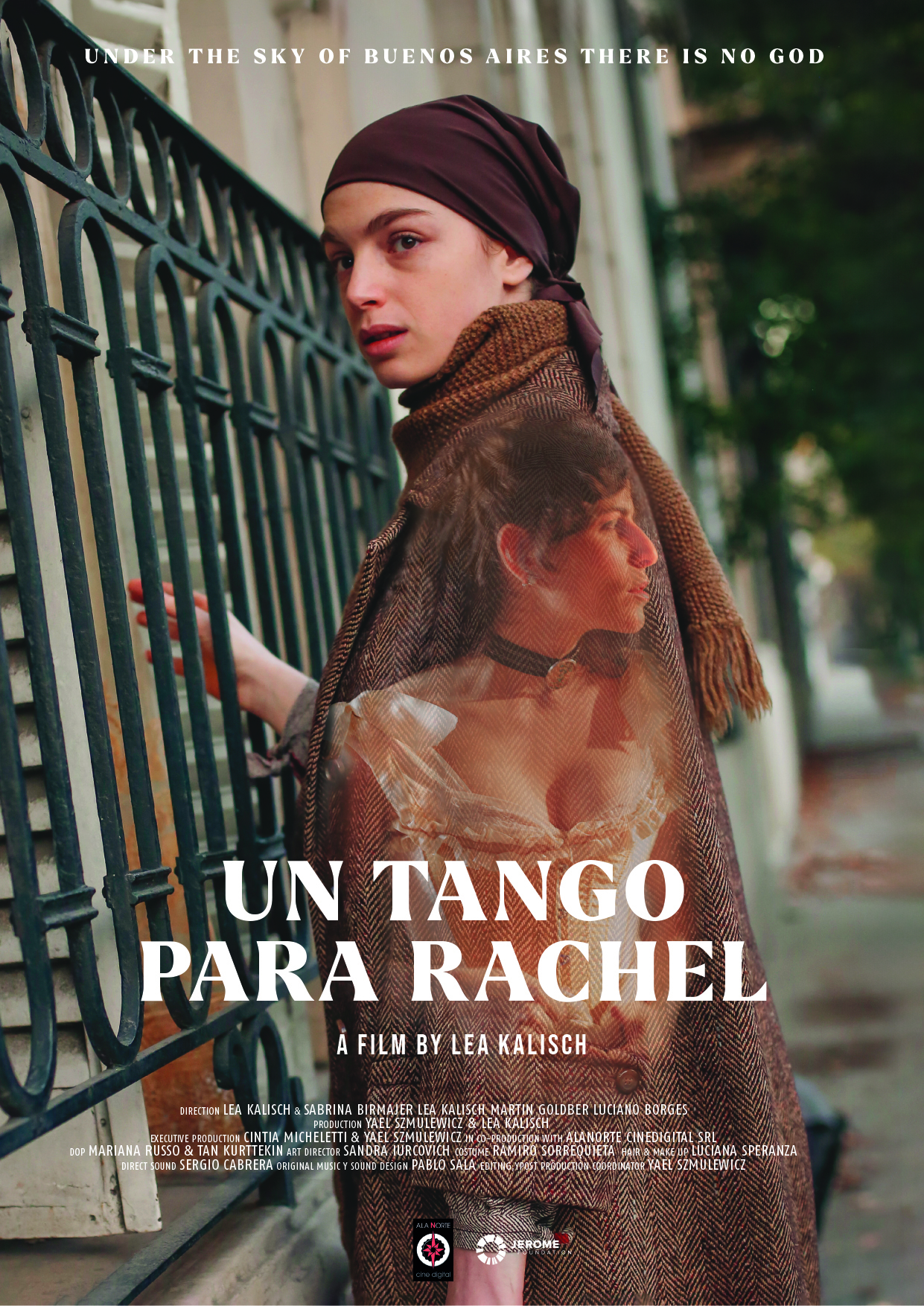
At the time, she had a seed of an idea. “I’ve always been fascinated with prostitution—ever since I was a child,” she told me, half-laughing but also entirely serious. That long-held fantasy eventually became the framework for Un Tango Para Rachel, a short film that Lea wrote, directed, and starred in. The film, which premiered in March 2025 in Vienna, is a meditation on femininity, Jewishness, and intimacy, weaving Yiddish song with tango dance against the charged backdrop of early twentieth-century Buenos Aires.
This interview delves into the intense and vulnerable process behind Lea’s first-ever film. We explore what it means to create a world that balances historical imagination with emotional truth, how Yiddish language animates the story’s texture, the difficult creative choices Lea made along the way, and how stubborn vision fueled the entire project.
Joanna Spyra: Your film intertwines Yiddish, tango, and explorations of intimacy, desire, and Jewish identity. What first drew you to this combination of themes, and how did the idea for the film begin to take shape?
Lea Kalisch: It all really began in 2021, when I attended Yiddish New York. There, I learned the song “Oy, unter dem himl, ligt di shtot Bunos-Ayres,” which actually appears twice in the film.2 I became obsessed with it! I started digging, but information on the song itself was limited. Around the same time, I happened to watch a lesbian love story on a plane—something in that film stirred me. Suddenly, all these pieces started circling in my mind: women, intimacy, Yiddish . . .In addition, I’d studied tango intensively about a decade earlier, but I hadn’t realized at the time there was this whole history of Jewish prostitution in Argentina. That’s why this song became so instrumental in my understanding of the connections. These elements—music, movement, marginalized histories—started forming into something cohesive.
During COVID, I read The Third Daughter by Talia Carner—a novel about a young Jewish girl trafficked to Argentina—and devoured it in two days while holed up in a farmhouse in Wisconsin. That book gave me the final push. I reached out to the author, and later also to musicians, composers, filmmakers, and researchers. I began reading everything I could about Jewish prostitution.
By the summer of 2023, I felt I had gathered enough information. It was time to make something. I’d never made a film before—only music videos—but I knew this idea belonged on screen, not on stage, even though I’m trained in theater. Film could hold the world I wanted to build—the stage would feel like an imitation.
I applied for my first-ever grant—the Jerome Hill Artist Fellowship3—and was awarded it. I also joined a mentorship program with Israeli-American filmmaker Ela Thier.4 That gave me the know-how and funding to move forward. I started writing the script in September 2023, just two weeks before my wedding, and in February 2024 I traveled to Argentina with a full draft of the script and my tango shoes . . .

JS: How did tango frame the way you told the story, and what did it let you express that other narrative tools might not have?
LK: I felt there was space in Jewish art for something that wasn’t only intellectual. So much of Jewish creative expression centers on the mind—language, thought, and genius. But where is the body? Where is dance, touch, movement? I grew up dancing. I was an athlete. I longed for a Jewish artistic language that could be felt, embodied, lived—one rooted in physicality and intimacy, not just ideas. Tango offered that language. It’s more than a dance—it’s a study of society. It stages gender roles, power dynamics, and silent forms of communication. I had danced tango for years, but learning both how to follow and how to lead as a woman transformed the way I experienced the form and myself. Especially in queer tango scenes, roles are fluid. Women lead, men follow, and respect replaces hierarchy. I now prefer dancing with women as we often switch roles mid-dance. The connection feels more mutual, more communicative. Still, traditional milongas in Buenos Aires can be deeply gendered and intimidating—women sit on one side, men on the other, and body language becomes a kind of unspoken gatekeeping. Sometimes you sit the whole night without being asked to dance. That’s why knowing how to lead as a woman is so empowering—you can take the initiative and be the one asking. This is becoming more common everywhere, especially in places with vibrant queer tango communities like Berlin and Minnesota, where the atmosphere is much more open and inclusive.
JS: And how did your time in Argentina feed into that experience, and how did it set the film in motion?
LK: When I came to Argentina in February 2024, I spent three weeks tango dancing and meeting people. On the recommendation of my tango teacher, Tomas Howlin, who said, “I know a Jewish woman who’s a filmmaker and specializes in tango,” I connected with Yael Szmulewicz.5 That meeting changed everything: She became the main producer of the film. Honestly, she’s the other half of this project. Without her, Un Tango Para Rachel wouldn’t exist. She brought in the entire team and contributed her thirty years of experience in the film industry. And that’s how we began making the film.
JS: You directed, wrote, and acted in this film. What was the hardest part of juggling those roles?
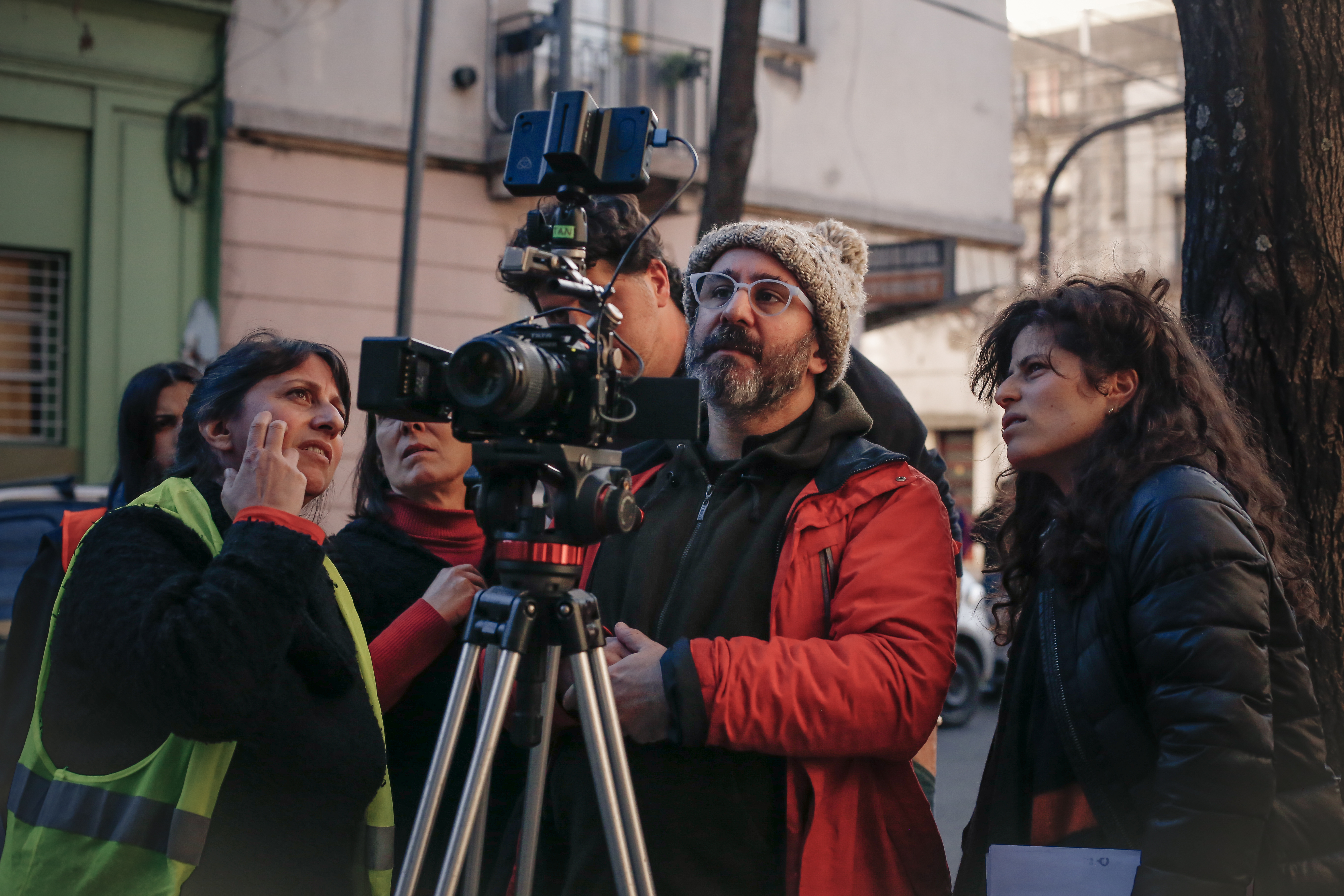
LK: It was brutal. Directing requires strategy—thinking about camera angles, lighting, and pacing—while acting demands complete emotional immersion. Switching between those modes felt almost schizophrenic. At times, I couldn’t fully enjoy acting because I was constantly worried about everything else happening on set. There were moments when I considered handing over directing duties, but my mentor told me, “This is your vision. Don’t compromise—you’ll regret it.” She was right. It was chaotic and messy, but ultimately, it had to be me shaping the story. I was fortunate to have amazing collaborators—Yael, my producer, often stepped in to support directing when I was in a scene, and our cinematographers, Mariana Russo and Tan Kurttekin, brought unique skills and perspectives. Without them, balancing all three roles would have been impossible.
JS: Why did you insist on including Yiddish in the film?
LK: I actually wrote the script in English. I knew the language would shift a bit later—language always changes lines—but I wanted to focus on the structure first. It made things more accessible in the early stage. But I always knew the final versions of the film had to include both Spanish and Yiddish. That was a non-negotiable for me. I’m a multilingual person, and I believe that if you want to create meaningful crossings—across cultures, across histories—you need to move between languages too. And the characters in this story would have been multilingual—living as immigrants, as Jews, navigating different worlds. It was essential for the film to reflect that linguistic layering.
JS: Once you made that decision, how did you navigate the practical side of bringing multiple languages into the film?
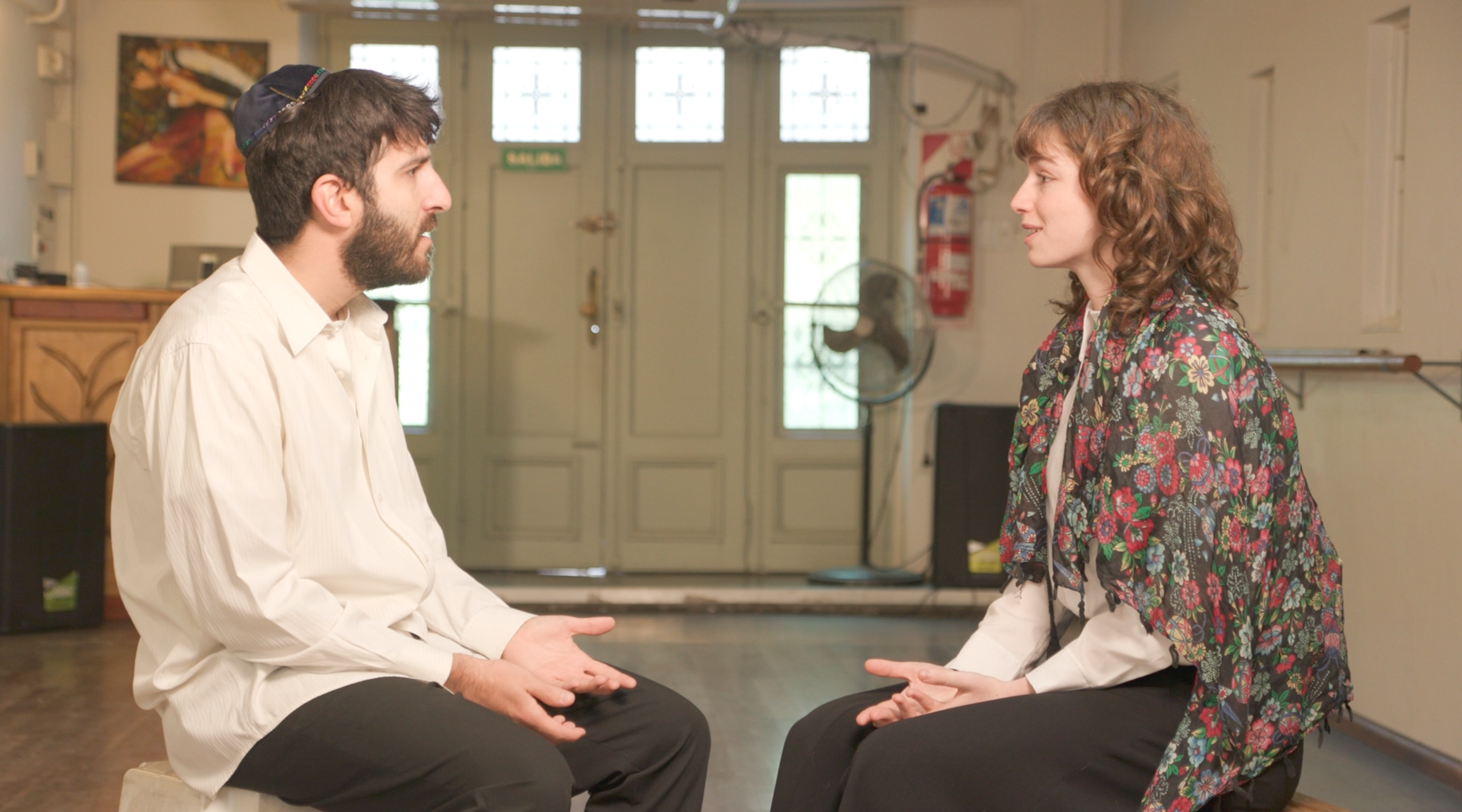
LK: Figuring out who speaks which language in the film was a real challenge. We had to make adjustments because the actors weren’t native Yiddish speakers, which caused me plenty of stress and sleepless nights—I care deeply about authenticity. But I also knew I wasn’t going to fly in Yiddish-speaking actors just for these roles. I wanted to work with local talent. Interestingly, Sabrina Birmajer, who plays Rachel, and Martín Goldber, the actor portraying Rachel’s husband, are both Jewish off-screen as well. Their grandparents spoke Yiddish. I even met Martín’s bobe—we went out for dinner and spoke Yiddish together! Another actor, Luciano Borges, who plays the pimp, isn’t Jewish but speaks some German, and his Yiddish audition was incredible. And that was the world back then! No standard Yiddish accent. People spoke with all kinds of inflections depending on their background. So yes, it was risky. People might say, “Why not just do it all in Spanish?” But language carries taste, texture, and memory. Subtitles exist. We don’t have to flatten everything to one language just to make it easy. In the end, the Yiddish in the film might not be perfect, but it is not made for the 0.002 percent of the world who are Yiddish experts. It’s for people who want to feel something layered and . . . and to me, that’s what language does.
JS: I must say, when I first saw the film title, I worried it might echo the usual tropes around Jewish prostitution, which I find often flatten the nuance of those stories. But the film surprised me in the best possible way. Is there more to the story behind choosing that title?
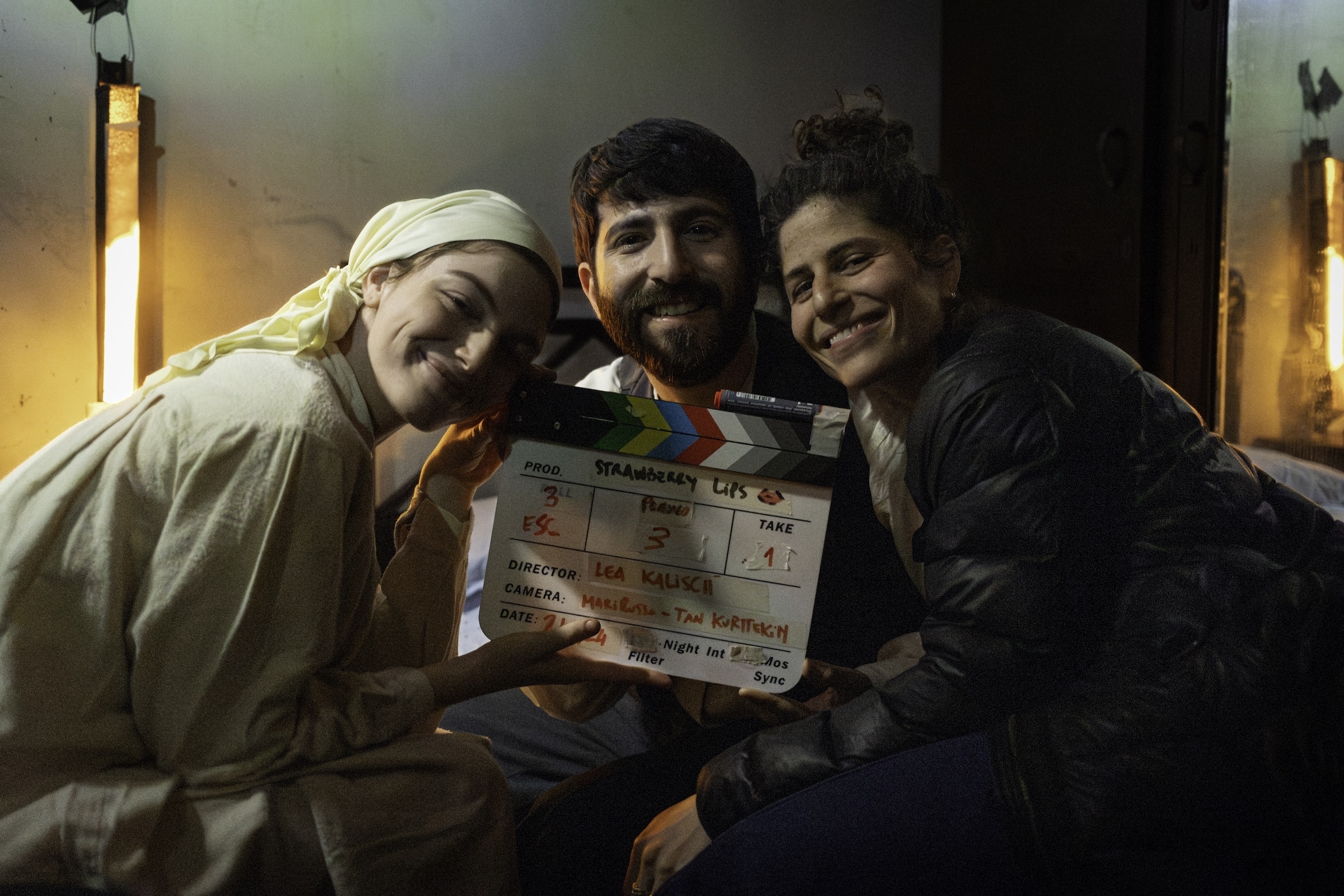
LK: The film actually had a completely different title originally. When I was writing the script, it was called Strawberry Lips.
JS: Oh, wow! Now that you mention it, that makes a lot of sense, especially considering the scenes with the blush and the close-up on the lips.
LK: Right? That was my working title throughout the entire production. I loved it because of the symbolism—the redness of the lips and the metaphor it carried. But we ended up changing it. Even though it worked beautifully in English, I needed something that would also resonate in Spanish or Yiddish, and it just didn’t translate well. And some people felt it sounded too erotic or even pornographic. It didn’t really give a clear sense of what the film was about. It could have been about strawberries . . . or something very sexual. It just didn’t guide the viewer at all. Eventually, I realized I wanted a title that would give people a better idea of the film right away. So we went with something more obvious. We knew that the words “tango” and “Rachel” would be recognizable to most people regardless of language. That helped create an immediate connection. And even though Strawberry Lips didn’t become the final title, it shaped the story—it helped me write the script the way I did. So in that sense, it still lives inside the film.
JS: Can you say more about the decision to shoot the film in Argentina and the experience of working there?
LK: Everything happened in Spanish, and filming in Argentina during its economic crisis was both crazy and a blessing. Inflation was at 300 percent, but having US dollars made some costs cheaper. The film industry there had suffered a lot, so people were eager to work, and it felt right to shoot the story in Argentina.
I went back for the in-person casting, still unsure which role I’d take on. Both spoke to different sides of me—the more religious woman who questions, who is curious and full of desire, and the bold, unrestrained woman who embodies femininity and fearlessness. I auditioned for both parts, but it quickly became clear that Sabrina was made to play Rachel. She brought such authenticity to the role, and the chemistry between us naturally pushed me toward the part of the prostitute. It felt like the right balance, allowing each of us to fully inhabit the characters we were meant to play.
Most of the film was shot in a freezing, century-old house in Buenos Aires owned by an elderly pianist who stayed in one room while we used the rest as our set. It was authentic and magical.
After a week of shooting, we spent months in post-production, with late-night editing sessions (full of stress, laughter, and gluten-free ricewaffles) in Argentina; then, working remotely, I logged on from Vienna, a bus stop on tour in the Czech Republic, or a café in San Diego.