Apr 15, 2026
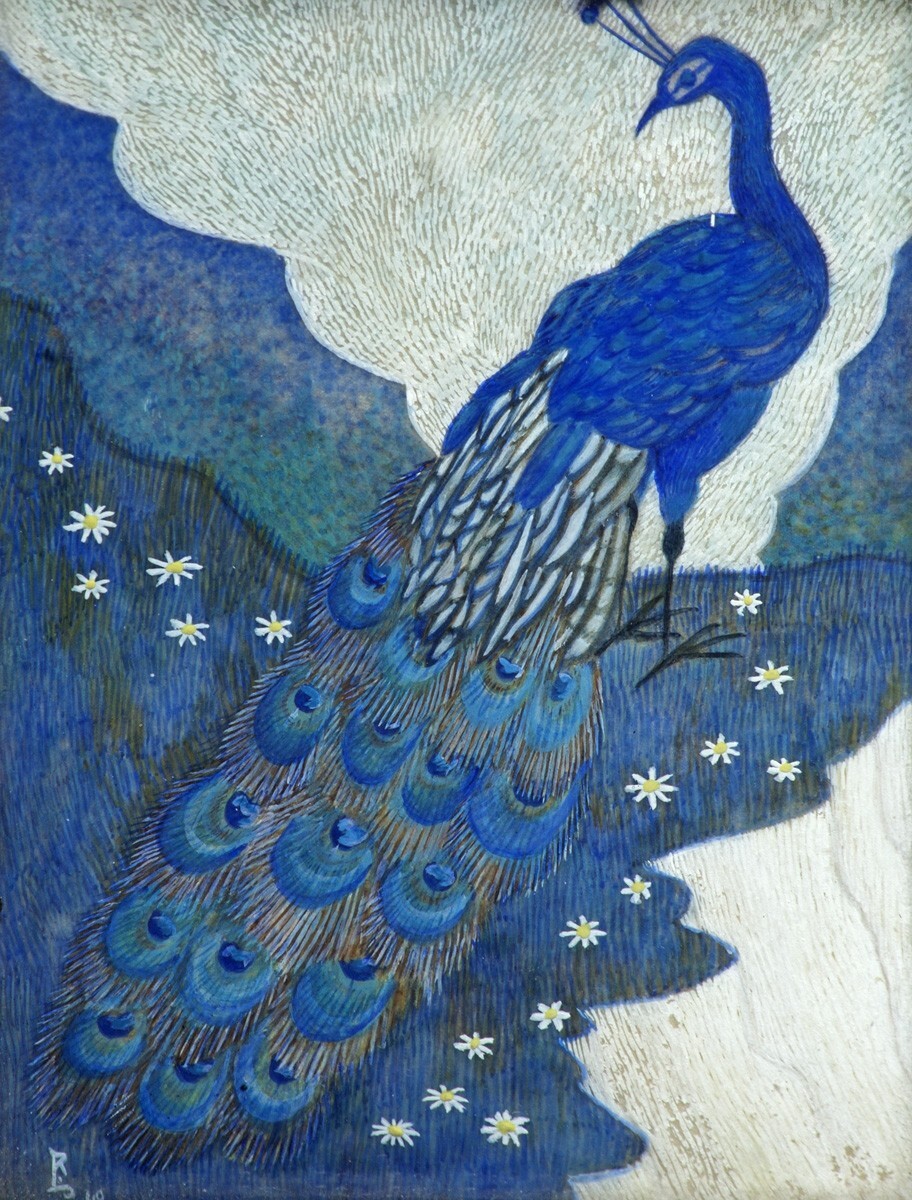
Raymond Lister (1919–2001), The Peacock and the Cloud
Tempera (?) on ivory
Russell-Cotes Art Gallery & Museum
INTRODUCTION
This piece is part of a series of reflections celebrating the 10th anniversary of In geveb’s publication. Biz hundert un tsvantsik, In geveb!
The last poem in In geveb (1919), a two-volume collection of poems written by Yehoash (Solomon Blumgarten, 1872–1927), is a sweeping song of multitudes, reminiscent of Walt Whitman’s Song of Myself. Yehoash writes:
געזאַנג פֿון גראָז,
געזאַנג פֿון ערד,
געזאַנג פֿון גאָלד־אַרץ אין נעדערעם פֿון אַ פּעלז,
געזאַנג פֿון צין־װײַסן טײַך,
באָדענדיג דעם לײב פֿון דער לבֿנה,
געזאַנג פֿון אױסגעלאָש׳נעם װאָלקען
בײַם שװעל פֿון דער פֿאַרטונקטער זון,
געזאַנג פֿון הונגערדיגען װאָלף
װאָס יאָמערט אױף זײַן שנײ־סטעפּ,
געזאַנג פֿון לאָקאָמאָטיװ מיט פֿײַערדיגע אױגען,
יאָגענדיג דורך שװאַרצע רעגענדיגע פּרעיִריִס...
..
געזאַנג פֿון אַלע בײנער אין די קבֿרים,
געזאַנג פֿון אַלע טױטע נעכט,
און אַלע אומגעבאָרענע באַגינענס –
אַלע זײַנען מײַנע,
סאַי איך זע, סאַי ניט,
סאַי איך הער, סאַי ניט.
אַלע װעלען אָנקומען צו מיר
אױף אומגעזעהענע װעגען –
אױב איך װעל לעבען גענוג מיליאָנען יאָהר.
Song of grass,
Song of earth,
Song of golden-land in the bowels of a hide,
Song of tooth-white river
Where the moon’s body bathes,
Song of extinguished cloud
At the darkened sun’s edge,
Song of ravenous wolf
Howling on the snowy steppe,
Song of a locomotive with blazing eyes,
Speeding through rainy, dark prairies…
…
Song of all the bones in the graves,
Song of all the dead nights,
And all the unborn mornings –
They are all mine,
Whether I hear them or not,
Whether I see them or not.
They will come to me
From unforeseen paths –
If I should live
Millions of years.
The poem offers a catalogue of the frightful power and majesty of the world in its variety: nature and technology, dark and day, known and unknown. The bold capaciousness of the song is punctuated by the notion that it both can all be contained in print, in a poem, and also, paradoxically, can’t be written down because to do so would take millions of years.
At our own In geveb (named for Yehoash’s poetry collection), we have celebrated ten years of expansive Yiddish Studies scholarship. In geveb: A Journal of Yiddish Studies published its first articles, essays, translations, and teacher resources in August 2015, and we have been publishing steadily, sometimes as often as three times a week, ever since. This is a tremendous accomplishment involving hundreds of contributors, readers, and supporters, not to mention the hundreds of hours of editorial labor. What we have produced is an audaciously broad vision of the field of Yiddish Studies—one that is inclusive of the voices of junior scholars and of Yiddishists outside academia, one that encompasses fields in which Yiddish as such is not at the center but the scholarship is relevant for people studying Yiddish, one that brings together scholars and cultural activists from around the world.
And if we should continue for millions of years, just maybe we could publish all there is to say about the field of Yiddish Studies. We have so much more work to do, and so much more energy still to keep doing this good work.
In celebration of our 10th anniversary last year, we gathered a collection of blog posts and testimonials that help us take stock of the impact of all we have accomplished in the past decade. These pieces were gathered over the course of our 10th year of publishing, and we’re very grateful to have had a wide-ranging response: reflections from readers, contributors, editors, and founders of the journal.
We kicked off our 10th-anniversary celebration with a panel at YIVO in New York, co-sponsored by YIVO and the Yiddish Book Center, on April 3, 2025. Panelists included former peer review associate for In geveb Elena Hoffenberg, founding co-editor of In geveb and past president of In geveb’s board of directors Eitan Kensky, and members of In geveb’s board of directors Eddy Portnoy and Rachel Rubinstein. The evening was introduced and moderated by chief editor of In geveb Jessica Kirzane and president of In geveb’s board of directors Mindl Cohen. We’re including that video here as a forshpayz to the blog reflections included in our collection.
We’d like to conclude this introduction to our special issue of reflections on our 10-year anniversary by thanking all of you—readers, teachers, students, writers, editors, supporters, friends, colleagues, Yiddishists, and Yiddish-curious alike—we could not exist without you, and you are the building blocks of our future. Biz milyonen, In geveb!