Jun 05, 2025
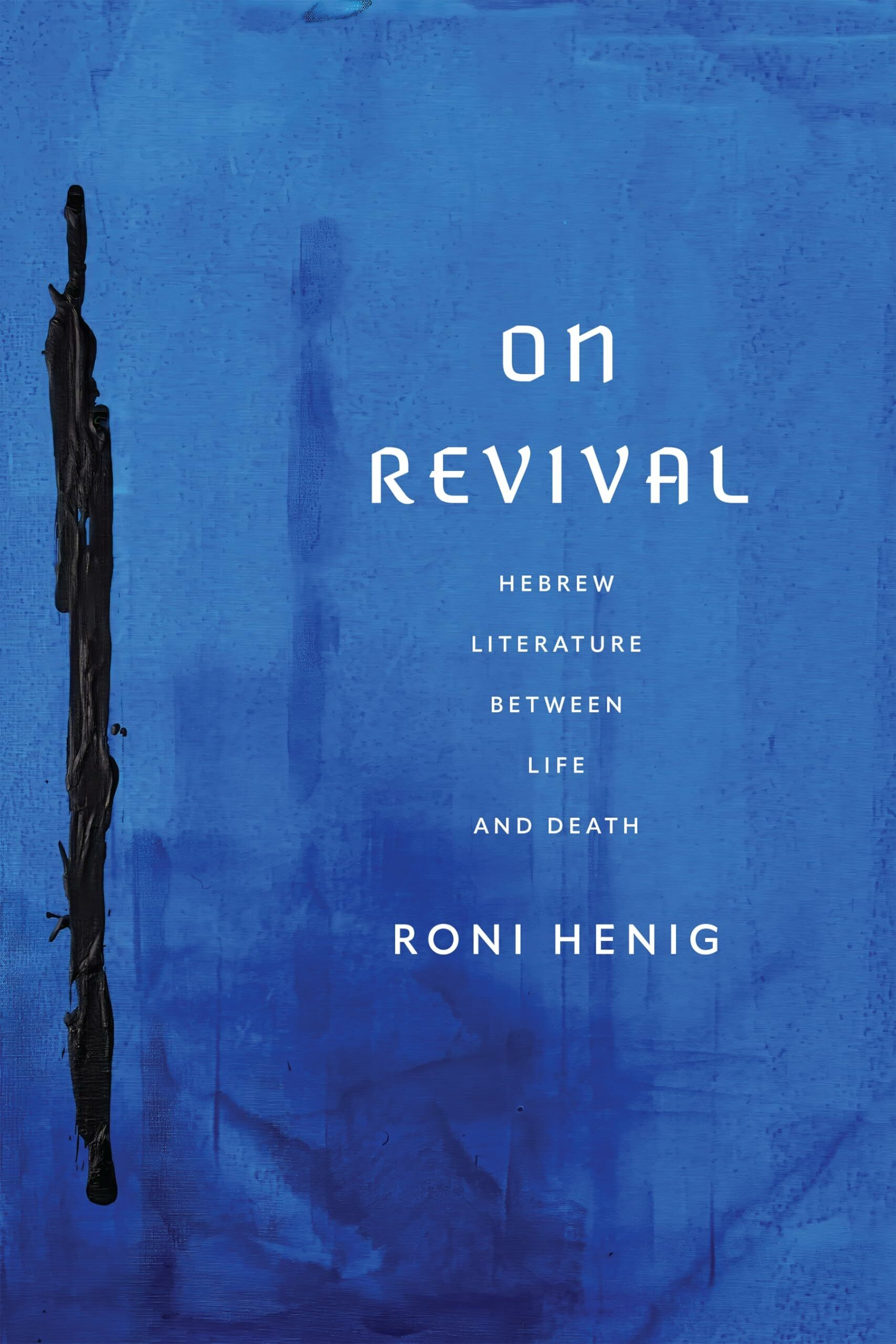
Roni Henig. On Revival: Hebrew Literature Between Life and Death. University of Pennsylvania Press, 2024. 284 pp. $54.95.
NPR recently ran another in a long line of segments and articles about the revival of Yiddish. “Yiddish is making a comeback,” reads the headline. What follows is a story familiar to In geveb readers:
Before World War II, some 11 million people spoke Yiddish, the historic language of Ashkenazi Jews. The language nearly disappeared because of the Holocaust and assimilation, but experts are kvelling, as they say the language is showing some chutzpah and making a comeback.
The story of the life, death, and rebirth of Yiddish is punctuated by what are meant to be comical insertions of Yiddish words that have entered the American lexicon, letting the audience ‘in on the joke’ and seemingly implying that just reading this article makes one a participant in the revival. All you need to do is pepper your speech with Yinglish and you can call yourself a necromancer. The segment then dutifully zooms in on current Yiddishist cultural activism in Los Angeles, pulling quotes from recent events hosted by Der Nister, a hybrid synagogue and cultural center, and interviewing experts and community leaders. The outro music is a remix of Lou Reed’s “Walk on the Wild Side.”
In her recent book, On Revival: Hebrew Literature Between Life and Death, Roni Henig argues that while discourses around language revival may have, on the surface, the aim of normalizing a language, bringing the language back into the hierarchical family of national languages, they also bring with them a series of ambivalences and contradictory dynamics, leaving the language in a liminal space. The process of revival, the obsession with it, is “entwined with mourning” such that the language always remains “neither dead nor fully alive.” (2) Thinking beyond notions of origin, nativity, and possession in language, Henig offers a reflection on the paradoxes of ethnolinguistic nationalism and what it might mean, instead, to linger on the stuttering, nomadic, and ghostly modes of an undead language. The NPR segment, like many before it and likely to come, does not want to dwell in this uncertainty and instead proclaims the imminent return of Yiddish to its former glory—even as it revels in occasionally reducing the language to a series of post-immigration jokes.
Though Henig focuses on Hebrew and the critical interventions of modern Hebrew writers (often despite their own ideological commitments to Zionism and Jewish nationalist revival), she has plenty to say about Yiddish along the way that might help us read this NPR piece and the recurring tendency to frame the language under the narrative of revival. After all, as Henig explains, embedded in the Zionist turn to Hebrew is an incomplete process of mourning for Yiddish, for an abandoned mother tongue. Expertly parsing the gendered implications of this loss, Henig explains how neither language fully compensates for the limitations of the other, instead describing how they fold over one another, not only through calques and obscured borrowings but through their affective (dis)placement within the faltering modern Jewish subject. In a striking examination of the essays of Rachel Katznelson, Henig describes the fraught exchange enacted by Hebrew writers between the “poor mother” of Yiddish and the “dead mother” of Hebrew, a process that attempts to reject the vernacular intimacy of Yiddish in favor of a “Hebrew revolution of the self” that constantly threatens “self-annihilation.” (112-113) The revolution is never completed of course, as some remainder of Yiddish, even if reduced to a distant echo, haunts the new Hebrew—a language that eludes possession and full rebirth at every turn.
This is indeed Henig’s strategy throughout: to identify attempts to forge a new modern subject and a reinvented nationalism through the travails of language revival—only to find at each turn how much the language itself and the writers and intellectuals who wrangle with it are led astray from the normalizing goal. Henig explores repeated failures that in the end prove not the unique slipperiness or untranslatability of Hebrew but the contradictions and paradoxes of the project of European nationalism writ large. Henig’s case studies take on some of the pillars of Hebrew literature and Zionist thought—from the famed skirmishes between Ahad Ha’am and M.Y. Berdichevsky to the tortured meditations of Hayim Nakhman Bialik and Yosef Hayim Brenner—while also introducing Rachel Katznelson, a writer seldom considered an equal to these cultural giants but who certainly deserves the attention. Because many of these are figures who have been extensively studied in Hebrew literary studies, and because she takes on the very central term of that field, Henig at times has to wade through swaths of secondary material and repeatedly summarize the state of the field, which can weigh the book down. Still, Henig is able to turn to new vistas throughout this work, in particular in her insistence on underscoring the gendered aspects of revival and problematic feminization of the Hebrew language. Henig argues powerfully that the proposed rebirth of Hebrew is not a triumph but a constant and repeated confrontation with a broken promise, a failure which produces new modes of critical engagement with modern Jewish culture.
Can the same be said of Yiddish as it faces, again and again, its death? The direction of all this is quite different of course for the two languages. According to the nineteenth century stereotype, Hebrew was a dead language—a language of holy text, a language of divine wrath—that could not be adequately revived for the modern world, while Yiddish—a vernacular, a feminized language of the profane—could never fully die since it was indelibly attached to the masses. This implies a certain teleology: in emerging from mythic death, Hebrew must then come to constitute a dynamic contemporary reality; it is the very language of Jewish sovereignty reimagined. But, as Henig argues, this revival does not mean that the “dead” language has disappeared. In the constant effort to normalize Hebrew, one constantly invites, blindly, its “apocalyptic thorns”, as Gershom Scholem described it (see Henig’s stunning analysis of his famed letter “Confession on the Subject of Our Language”). Its theopolitical stores are never fully discarded. The opposite—they remain with the language, infusing the already destructive nationalist project with colossal genocidal violence. In this way, Hebrew doubly invites death—through the messianic return of the dead Hebrew letter and through the vicious colonialist logic of European nationalism.
Yiddish, it seems, cannot aspire to such sovereignty nor such a return to death. Or, we might say, Yiddish’s association with death is more lively in some paradoxical way. Its ghosts appear more familiar, less monumental; its horizons may still be messianic, but the prophecy comes out in muted tones. Some of this has to do with the limits of metaphor. As Henig reports, the revival of Hebrew is tied up with European nationalist rhetorics of biologization: according to nineteenth century nationalist thinkers, nations and their languages have bodies, sick bodies that need to be strengthened; the land becomes a female body to be fertilized, while entities that threaten the coherence of the nation are imagined to be monstrous others to be controlled or annihilated. The process of revival comes to combat that weakness, to shore up national life in language. Yiddish, in contrast, does not measure up to such biological coherence. The cultural porousness of Yiddish, whether we name this condition as “fusion” or as “taytsh,” makes it difficult, if not impossible, to imagine the language within a biological metaphor. Yiddish moves too quickly, its ghostly figure slips between fingers, its komponentn too malleable and multilingual to cohere within a single body. There is no single Yiddish landscape to conquer and plunder. This is what makes the slogan “Yiddish lebt!” so strange and always aspirational. It is impossible to revive Yiddish because it never fully lived in the normalized sense of the term.
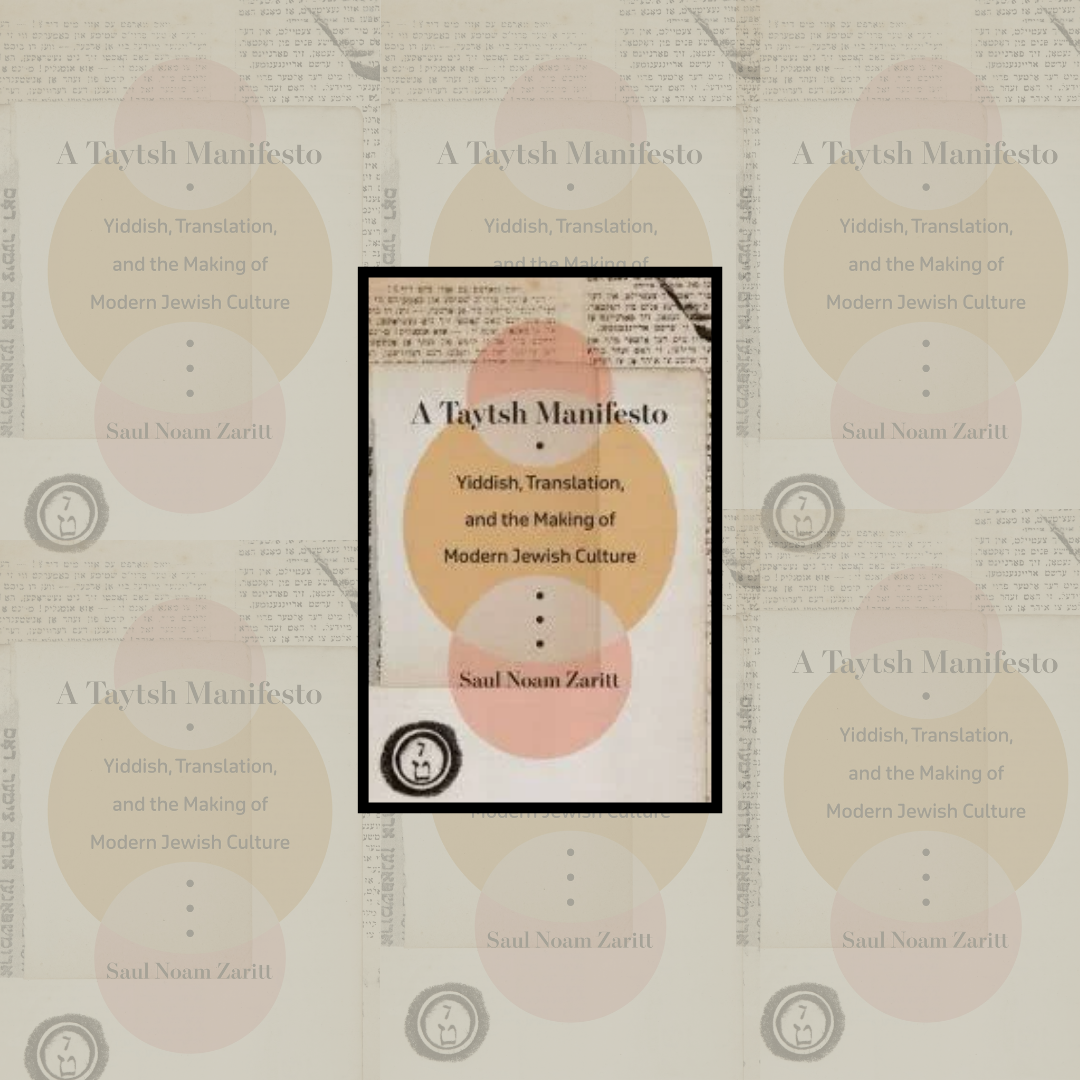
It is this in-between state—in the midst of an admission that the body does not function as is demanded of it—where Henig finds some way forward. The book concludes: “Is it at all possible to become dysfluent in one’s language, to unlearn its laws and conventions, and instead make the words speak differently? Such a linguistic horizon is perhaps the lesson and lingering promise of revival.” (171) In a conversation we had some months after the publication of her book, and in the wake of more violence in and around Hebrew, Henig expressed to me that it was difficult for her to return to the optimism of these final lines. I was reminded of the optimism embedded in my own taytsh manifesto, and I wondered what the implications of such a call to dysfluency, translation, and undecidability might be. I hesitate as well.
And still the somber yet playful tone of Lou Reed’s “Walk on the Wild Side” echoes in my ears as I listen again to the end of the NPR segment. The song’s mournful invitation overlays portraits of several of Andy Warhol’s “superstars” and other queer and trans artists and performers of 1970s New York. Each verse describes a transformation, a process of becoming, that also falters at times and that ends not in a triumph but in a repeated call to “walk on the wild side.” This might indeed be the best way to end another report on Yiddish’s revival: an invitation tinged by mourning but not confined by it, an invitation not to some knowable future for Yiddish (or for Hebrew), to some coherent way of speaking and writing, but to some elsewhere, wild and undetermined.
In geveb is turning t(s)en! If we want In geveb to continue to grow and thrive and remain a central address for the study of all things Yiddish online, we need your help to launch our second decade. Our goal is to raise $20,000 by our official tenth birthday: August 15, 2025. We invite you to donate to support In geveb and to honor everyone who has got us this far.