Jan 12, 2026
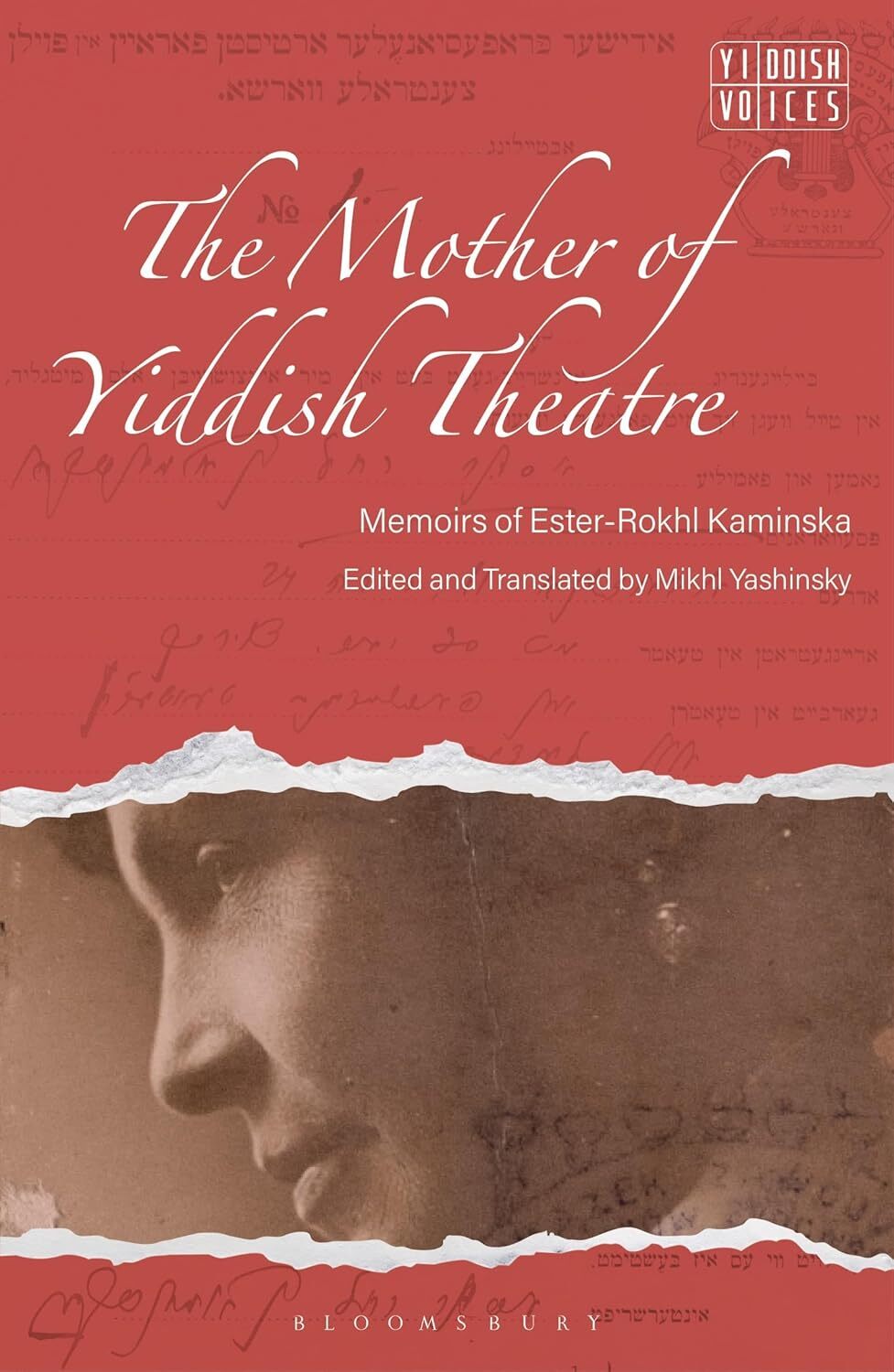
Ester-Rokhl Kaminska. The Mother of Yiddish Theatre: Memoirs of Ester-Rokhl Kaminska, transl. Mikhl Yashinsky, with a preface by Tova Feldshuh. Bloomsbury Academic, 2025. 288 pp. $20.65 [paperback].
Ester-Rokhl Kaminska picks blackberries better than anyone else. When she lights Shabbos candlesticks, they shine brighter than any other Shabbos candlesticks. Yes, 80,000 mourners gathered to grieve after her death, their lives forever changed by her contributions to Yiddish theater. Yes, her daughter, Ida Kaminsky, was an Academy Award nominated actress. Kaminska did found the Literarishe trupe (Literary Troupe), forging ahead as an artistically rigorous pioneer, defining a discipline still in its infancy. But this is not what you learn about Kaminska in her own words. Instead, you learn that the shul next to her home growing up was said to be inhabited by corpses chanting prayers after dark: "Probably, they did it just to add to my terror!" (3) This attention to quotidian majesty, where the texture of daily life is evoked in humorous and emotional detail, is what makes Mikhl Yashinsky's new translation, The Mother of Yiddish Theatre: Memoirs of Ester-Rokhl Kaminska (Bloomsbury), so enticing.
The volume binds together an unfinished memoir that was originally published in installments but never gathered in book form. Yashinsky assembles and edits these individual pieces into a coherent narrative with evocative chapter names like “The Fate of Yiddish Theatre Depends on Me—So Says a Goye.” Kaminska was born in Porozove, in modern-day Ukraine, in 1870, and hit the heights of her career during the late 1890s. She died of cancer in 1925, ending the memoir abruptly before she could report on any of the success and renown of her later life. Together with Yashinsky's contextualizing introduction, Kaminska's words here walk a fine line between primary source material, best fit for academic research, and formally compelling literature, intriguing for its psychological and artistic implications.
Though the memoir is titled The Mother of Yiddish Theatre, it mostly covers Kaminska's youth. We see no fame, success, or reflection on artistic theory or technique. This absence in the original compelled Ab Cahan of the Forverts to urge Kaminska to skip over the material of her origins. When Kaminska refused, Cahan passed, and she found a publisher in Warsaw's Moment. Since we don’t see any depiction of Kaminska’s acting at its height in the memoir, her talent as a writer overtakes the impression of her talent as an actress. Certain turns of phrase reminded me of confessional modernist women writers who would be penning their own memoirs fifty years later, like the Danish poet Tove Ditlevsen. I couldn't get Ditlevsen out of my mind while reading this book. While her and Kaminska’s cultural and historical circumstances were quite different, they both wrote about the developing psyche of a young, female artist growing up in an environment where it was not only highly unlikely that they would actualize their potential, but where their aspirations were deemed dangerously deviant by their respective communities. Ditlevsen's work has recently been reappraised in translation, since Farrar, Straus and Giroux republished her momentous Copenhagen Trilogy memoirs in 2021. Readers’ desire to understand complex motives and origins in female artistic giants should easily be extended to Kaminska, who freely admits to rabid ambition, failures as a parent, and a rejection of class and gender expectations. This memoir unveils a subjectivity that oscillates between extreme self-confidence (see my first paragraph) and devastating loneliness, emotional isolation, and the inability to connect on an intimate level with those around her.
I was unexpectedly moved by revealing reflections throughout, like Kaminska's description of herself as a girl with Purim pocket money: “I'd go to the market and buy a hot bagel, then gobble it up on the way home. And as I'd walk, I'd have this terrible urge for everyone to look at me” (6). This desire to be seen is paired with a lack of familial warmth, which bleeds into Kaminska's romantic life, where she constantly balances a desire to be validated for her craft and loved for her soul.
“Sad as it is to tell, I ultimately felt no great and lasting devotion from anyone in my family,” writes Kaminska, sixty-four pages into describing her impoverished elderly parents. Although their death sent her into a spiraling depression, they, and the network of siblings that brought her out of the shtetl and into the modern city of Warsaw, did not understand her. “They all loved me, to be sure, but whatever kind of love this was, I simply could not appreciate. . . . Still today, I do not know whether they truly did not grasp my potential, or simply did not see the point in my progressing so” (64).
Kaminska is unafraid to dwell on this disconnect, freely expressing her need for artistic validation as a precursor for love: “Five times I became engaged, and all of my young men loved me to distraction, despite the fact that I have no dowry to speak of. But in time, I grew to hate every one of them. I would inevitably find some fault, often a musical one—either this one had no ear to speak of, or that one no voice” (47). I'm reminded again of Ditlevsen, who remarks, in her own memoirs, that any suitor worth considering “has to like poems and he has to be able to advise me as to what I should do with mine.” 1 1 Tove Ditlevsen, Childhood: The Copenhagen Trilogy,Book 1 (Farrar, Straus and Giroux, 2021), 177. How rare for women to admit the need for a romantic partner able to appreciate, support, and indulge in their chosen work, defining a criteria of attraction based in artistic development, artistic needs.
In his introduction, Yashinsky remarks on the recursive quality of Kaminska’s writing. Similar anecdotes are told again and again: the trouble obtaining a performance permit, the departure and return to living with siblings, struggling on the road, and the eking out of limited resources. To be sure, the overall tone of Kaminska's writing is matter-of-fact, direct, and absent of ornamentation—or, to borrow a phrase I learned from Yashinsky's introduction, on fliterlekh, without sequins. But these structural maneuvers create surprising emotional resonance. Yashinsky beautifully links Kaminska’s literary repetition to the repetition of life itself in the theater, where days look very similar to each other and the same words, the same climaxes, return day in and day out. This repetition makes Kaminska's moments of poetic clarity glitter especially brightly when they do appear. One passage in particular struck me with its poetic use of ellipses:
As we settled onto the audience seats—fresh beams of wood that still smelled of melted pine resin—reminiscences of my childhood years came flooding back. I was transported to Porozove, to its forests . . . where I picked berries . . . where I sang songs right alongside the Gentile youngsters . . . I was taken over by some strange and unexpected yearning (133).
Kaminska’s ellipses evoke absence, the breath between memories, emotions that can’t properly be named. Through them, we enter into a fractured, fragmented, emotional state, liberated from the literalism we find elsewhere in the memoir.
This volume also has much to offer those interested in the gender dynamics of Yiddish theater. It's clear early on that Kaminska's choice to become an actress was considered transgressive, connecting her, in the eyes of her family, to sex workers and Roma. Perhaps to preempt this association, Kaminska offers countless examples of her piety and connection to religious tradition, often framing herself as more connected to Jewish law than the women around her. “The rabbi himself used to say that my work was the most kosher, as well as the most beautiful,” Kaminska declares right at the start of the memoir, while discussing the making of matzo in her shtetl (12). The ordering is important: kosher, then beautiful.
I don't want to overstep and imply that Kaminska was not as religious as she describes herself, but in a relatively slim volume where many details are omitted, I'm intrigued at the juxtaposition, in the same passage, of the following: "If I wanted to become a true artist, it was imperative that I learn to stop feeling shame," with anecdotes of forgoing treyf meals on the road that her other troupe members readily ate (81). She admits to societal scandal upon her marriage to fellow actor Avrom-Yitskhok Kaminsky, a wedding arranged quite quickly and as a means for Kaminska to finally have her family's blessing before returning to her life as a touring actress. Her community assumes the scandalously fast wedding—the two had been together as a couple for only a few months—implies premarital sex. But Kaminska admits to her readers that the real scandal was that she’d been willing to marry anyone who would allow her to resume her life's work, thereby reassuring her siblings that she would not be living in sin or taken advantage of without a guardian. The scandal is in Kaminska's own heart, where she is aware that her romantic criteria are different from those of the women around her—not in the matter of religious norms. This inner divide becomes embodied at times. Kaminska describes instances on the road when she would play two female parts in the same production and be billed twice: one role with her maiden name, and the other with her married name.
One anecdote throws this division, between Kaminska the Jew and Kaminska the artist, into particularly sharp relief, showing how theater can subvert certain gender norms but not others. Short of another woman actor to play a role in Shmendrik, Kaminska's theater troupe recruits a woman they see lingering barefoot outside their makeshift theater. When this woman, who we later come to know as Crazy Beylke, makes her stage debut, the audience erupts in angry yells, surprising Kaminska's cohort and resulting in Beylke's immediate expulsion from the stage. We don’t understand exactly why the audience hates Beylke so much, but Kaminska identifies her from that moment on as a “pariah” of the community, describing her inclusion as the troupe “[disgracing] themselves” (119). The troupe decides to have one of their male actors perform in drag rather than continue to welcome an outcast. Kaminska reports that Beylke is later harassed by “people shouting after her in the streets, ‘Little actress!’ ‘Barefoot actress!’ ‘Beylke the comedienne!’” until she takes ill and dies (124). This anecdote underscores the potential stakes for Kaminska's own respectability, the risks of not appearing pious or conformist within certain already rebellious bounds. It’s clear that her professional title can be yielded as a “fatal” insult if she loses her shoes, so to speak.
The threat of being lumped in with sex workers rises again towards the end of the memoir, when Kaminska and the other actresses in her troupe are asked to dine privately with government officials who are considering providing a permit for the troupe’s upcoming performances. It’s clear that the women’s sexual availability is being considered as part of the deal. But Kaminska shrewdly sidesteps the expectation by reframing the meeting in terms of Jewish familial rites: she describes how the dinner table was “covered in a tablecloth, as if for, pardon the comparison, a Jewish engagement party,” and then refers to the officials as “in-laws” with her new position as “mother-in-law of this little party” (140). The other women proceed to get drunk and rowdy, flirting with the goyish officials and taunting them from their hotel windows after leaving the dinner party. Before the officials can “get in a coaxing word with the girls, or devil knows what else,” Kaminska ushers each girl back to her bed, making sure the door is firmly locked behind her (141).
This account of negotiating with antisemitic, gate-keeping government officials also speaks to the nuts-and-bolts logistics work of Yiddish theater that is so meticulously documented in this volume. Kaminska began her career at a time when Yiddish theater was illegal. In numbingly repetitive anecdotes, Kaminska and her collaborators scheme to obtain permits, or alter their repertoire to appear to be performing in German. Their lack of resources often leads to performances in less than traditional venues, and I believe any student of Yiddish theater will be delighted to hear some of the practical ways Kaminska's troupe brought productions to life. A barn with “thankfully no more than two horses” is transformed when they “[purchase] red paper, [tear] it into streamers, and [hang] them around the audience's benches . . . [and] cut down a bunch of little trees, then [arrange] them around the space” (109). In another shtetl, the stage is decorated with colored paper lanterns. These concrete visuals added color to my imaginings of performances I've only ever seen documented in black and white.
These details feel relevant to Yiddish theater today, something undoubtedly on my mind because of Yashinsky's parallel life as a contemporary Yiddish actor. In his introduction, Yashinsky describes translating The Mother of Yiddish Theatre in bits and pieces backstage, while performing a play specifically mentioned as a part of Kaminska's early repertoire: The Sorceress. This parallel translation and performance is a moving example of integrated contemporary art-making, using the past as a site for generation and sustenance. The linguistic specificity of Yiddish theater, and the impact it had on young Kaminska, works as a clear rallying cry for this kind of continuation: “I felt something quite different now to the emotions I had experienced in the goyish theater where I had seen Faust,” writes Kaminska, about her first experiences seeing Yiddish theater. “Here, they were speaking the same language that I did” (34).
It's a simple observation, but within the narrative context of Kaminska’s memoir, the power of this experience is enormously clear. The laws that Kaminska's troupe had to circumvent were an attempt to target her ethnic identity, resulting in some failed and some successful attempts to stifle the innate Yiddishness of her work. Performances free to exist on their own terms develop new significance. Before Kaminska’s memoir is cut short, she begins to describe the role of the press in nurturing her art, articulating how Yiddish writers were crucial for facilitating understanding and appreciative Yiddish speaking audiences. Translations like this one help combat cultural amnesia. Yashinsky’s aesthetic choices as a translator maintains this individuality, choosing to keep Yiddish words which convey affectionate intimacy—“narele,” “nu,” “artistke”—and preserving a distinctive humor. “My sister . . . began telling me about all that I’d soon be seeing in Warsaw, and all that I could become there: a dressmaker, a hatmaker; in a word, anything,” Kaminska winks at us (22). Yashinsky’s poetic sensibility is particularly visible in lines like “I . . . got instantly swallowed up in the vast hora of men and women swirling around the station,” where the culturally specific term does not get flattened into “dance.” The inclusion of “fraidy-cat” is slightly less satisfying; I wish I could have heard Kaminska’s own, Yiddish evocation of her shyness (51).
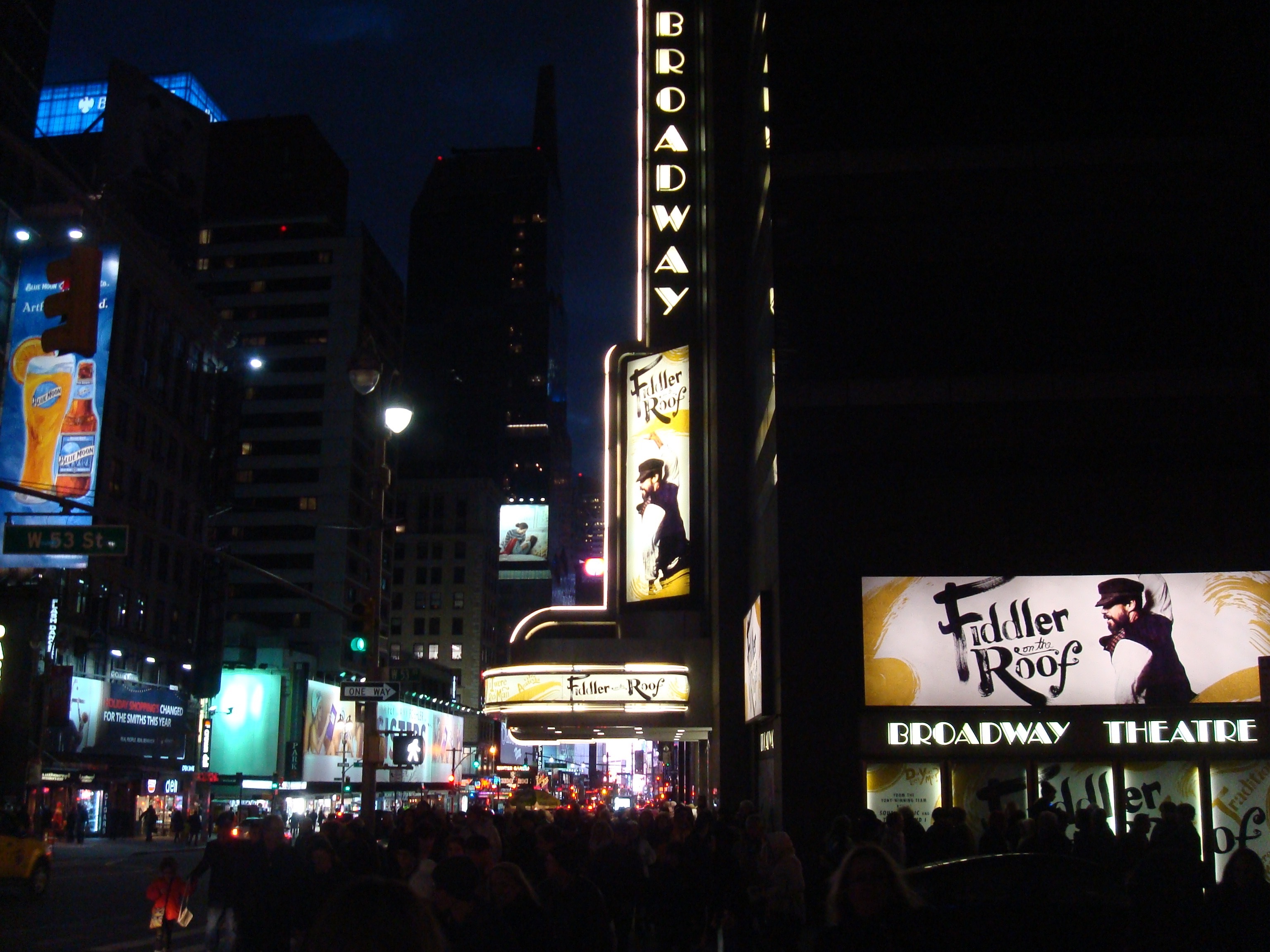
Shortly after finishing The Mother of Yiddish Theatre, I saw Yashinsky act in the Yiddish version of Fiddler on the Roof in Los Angeles. Sitting in a huge auditorium, without the need of ribbons and trees from the great outdoors to inspire a sense of wonder, I felt how much the cathartic potential of Yiddish performance remained present and alive. Spoken in Yiddish, the words to a familiar American classic felt less contrived, replacing some of the stuffy inflections and gestures entrenched in classic Broadway productions. Somehow, the very-old had made the less-old new again.